2027 Online BCBA Programs for Military Members and Veterans

Co-Founder and Chief Data Scientist
Choosing an online BCBA program as a service member, veteran, or military spouse is not just a question of convenience. The right program must fit deployments, relocations, family obligations, VA or military education benefits, supervised fieldwork requirements, and the certification rules that determine whether you can sit for the BCBA exam.
Board Certified Behavior Analysts work in applied behavior analysis, a field used in autism services, schools, behavioral health clinics, rehabilitation programs, telehealth, and organizational settings. For military-connected learners, online study can make the pathway more realistic, but only if the program is properly aligned with certification requirements and offers practical support for fieldwork, advising, and benefits processing.
This guide explains what online BCBA programs for military members and veterans include, how eligibility works, what to look for in accredited options, how certification and licensure differ, what coursework covers, how long programs take, and what career and salary outcomes may look like after certification.
Key Things You Should Know
- Military members and veterans can access online BCBA programs offering flexible schedules and VA benefits, improving affordability and accessibility amid rising demand for behavior analysts nationwide.
- Over 75% of accredited online BCBA programs in 2025 provide specialized military support services, including tailored counseling and career transition resources.
- Projected job growth for BCBAs remains above 20% through 2030, with veterans often leveraging military discipline to excel in Applied Behavior Analysis roles.
What Are Online BCBA Programs for Military and Veterans?
Online BCBA programs for military members and veterans are graduate-level pathways that prepare students to meet the education requirements for Board Certified Behavior Analyst certification while studying remotely. They are usually designed for learners who need more flexibility than a campus-based program can provide because of active-duty obligations, relocation, employment, caregiving, or transition into civilian life.
A strong military-friendly BCBA program does more than place lectures online. It should help students understand certification steps, plan supervised fieldwork, use military education benefits, and stay on track when service-related disruptions occur. Some programs may also review military transcripts or service records for prior learning where institution policy allows, though students should confirm whether that credit applies to degree requirements, certification coursework, or electives.
What these programs usually include
- Remote coursework: Classes may be asynchronous, live online, or a mix of both, allowing students to complete assignments around work or service schedules.
- Certification-aligned content: Coursework covers behavior assessment, intervention design, ethics, measurement, data analysis, supervision, and professional practice.
- Fieldwork planning: Students still need supervised experience, often completed through local agencies, clinics, schools, telehealth providers, or approved practicum arrangements.
- Military and veteran support: Useful services may include GI Bill guidance, Tuition Assistance processing, deployment accommodation policies, military advising, and career transition support.
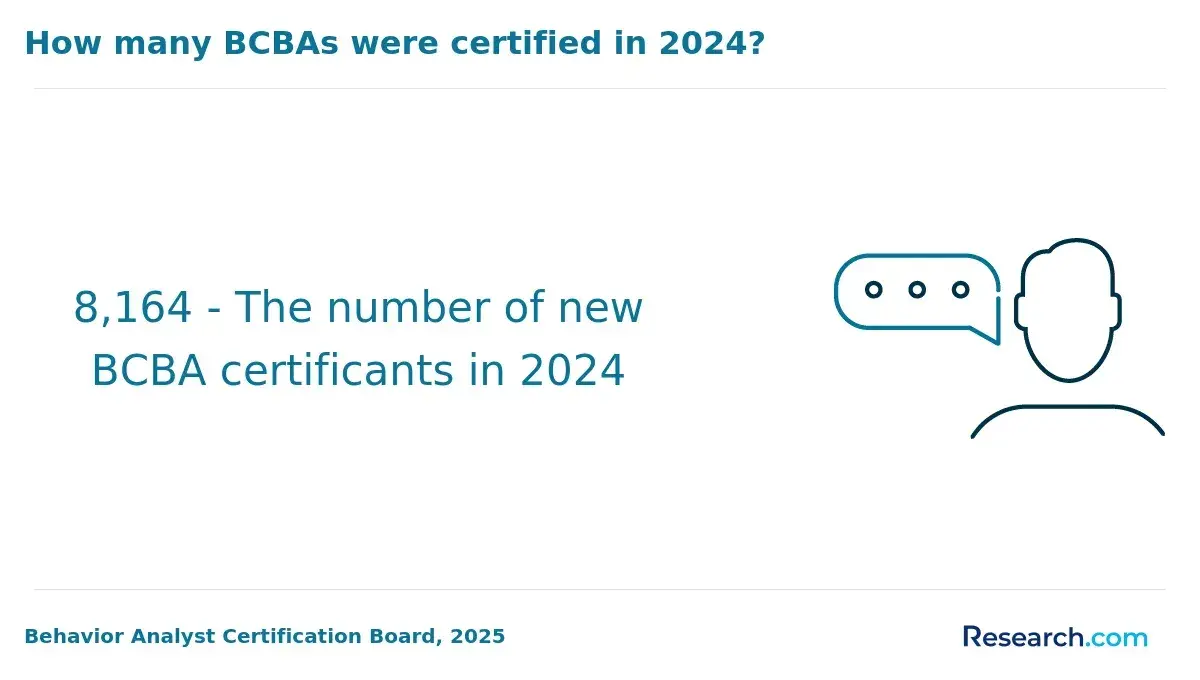
These programs are especially relevant because demand for behavior analysts has expanded alongside behavioral health and autism-related services. The Autism CARES Act is one policy factor tied to expanded autism services, and the number of BCBAs has increased by 18% recently. That growth can create opportunities for veterans who want a mission-driven career in health, education, or human services.
Before enrolling, students should verify that a program’s coursework is accepted for BCBA eligibility and that the school is appropriately accredited. For cost-focused comparisons, Research.com’s guide to BCBA accredited programs can help identify affordable online options.
How Do Military and Veterans Qualify for BCBA Programs?
Military members and veterans generally qualify for BCBA-focused graduate programs by meeting the same academic standards as civilian applicants, then using military-specific documentation and benefits where applicable. The core requirement for BCBA certification is graduate-level education that satisfies Behavior Analyst Certification Board requirements, along with supervised fieldwork and a passing exam score.
Most online BCBA pathways are built for students who already hold, or are pursuing, a master's degree in a relevant area such as psychology, education, behavior analysis, or a related human services field. Military education or experience in behavioral health, rehabilitation, counseling, leadership, training, special operations support, medical services, or family support services may strengthen an application, but it does not automatically replace BACB-required coursework or supervised experience unless the school and certifying body recognize it for a specific purpose.
Common eligibility steps
- Confirm degree fit: Check whether your undergraduate and graduate background meets the program’s entry standards and BCBA pathway requirements.
- Submit military records if relevant: Joint Services Transcripts, Community College of the Air Force records, DD214 documentation, or service records may be requested for benefit eligibility or transfer-credit review.
- Plan funding early: Veterans and active-duty students often use the GI Bill, Tuition Assistance, or institution-specific military scholarships to reduce tuition costs.
- Map fieldwork before enrolling: Candidates must complete BACB-approved graduate-level coursework and accrue either 1,500 hours of supervised independent fieldwork or 2,000 hours of practicum experience.
- Check state rules: Certification and state licensure are separate issues in many locations, so military-connected students who may relocate should review requirements in each state where they may practice.
Programs that offer military-specific cohorts or flexible scheduling can make the process easier for students balancing service, employment, or family obligations. Still, flexibility should not be confused with reduced standards. The program must prepare students to meet BACB coursework expectations and complete supervised experience correctly.
The Department of Veterans Affairs 2025 Transition Outcomes Report states that veterans certified as BCBAs achieve employment 25% faster in behavioral health roles compared to non-certified peers. That finding underscores why students should prioritize programs that lead cleanly to certification eligibility rather than choosing only by tuition or speed.
Students comparing graduate options can also review ABA masters programs designed for online and military-connected learners.
What Are the Best Accredited Online BCBA Programs?
The best accredited online BCBA programs for military members combine recognized institutional accreditation, certification-aligned coursework, transparent costs, flexible scheduling, and realistic fieldwork support. For military and veteran students, the “best” option is not always the fastest or cheapest program; it is the one that lets you complete the degree, satisfy certification requirements, use benefits efficiently, and avoid delays caused by missing supervision or ineligible coursework.
National University's online MS in Applied Behavior Analysis is one notable option. The program has a total cost of $21,080 for 45 quarter credits and is fully covered by the GI Bill, which can make it a strong choice for eligible students seeking a lower out-of-pocket pathway. Its structure is designed to prepare graduates to sit for the BCBA exam, which is a required step toward certification.
How to compare online BCBA programs
| Factor | Why it matters for military and veteran students |
| Accreditation and certification alignment | The institution should be properly accredited, and the coursework should meet BACB eligibility expectations so students do not face certification delays. |
| GI Bill and military benefits support | Schools with experienced veteran services staff can help prevent billing, housing allowance, enrollment verification, and benefit-use problems. |
| Program length and credit requirements | Credit structure should align with your timeline, deployment risk, transfer plans, and exam eligibility goals. |
| Course delivery format | Asynchronous or low-residency formats may work better for active-duty students, working veterans, and military spouses. |
| Fieldwork supervision | Remote learners need a clear plan for supervised experience, local placements, and approved supervision before they begin the program. |
| Total cost | Tuition, fees, supervision costs, books, and exam-related expenses should be compared against GI Bill coverage, Tuition Assistance, scholarships, and discounts. |
When selecting top online BCBA programs with military discounts, students should ask direct questions: Is the coursework accepted for BCBA eligibility? Does the school help locate fieldwork sites? Are there deployment or stop-out policies? Can the program certify enrollment correctly for VA benefits? Are advisors familiar with military transcripts?
Psychology.org's rankings emphasize many of these same criteria when identifying strong BCBA programs. Students who want a shorter route should also compare ABA masters online options, while still confirming that speed does not compromise fieldwork planning or certification readiness.
BCBA certification is granted by the Behavior Analyst Certification Board after a candidate meets education, coursework, supervised experience, and exam requirements. Licensure is different: it is controlled by individual states and determines whether and how a BCBA may practice in that jurisdiction. Military members, veterans, and spouses should pay close attention to both because relocation can affect where and how they are authorized to work.
Core BCBA certification requirements
- Graduate education: Candidates need a master's degree in a relevant field such as psychology, education, or behavior analysis from an accredited institution.
- Required coursework: Coursework must cover approved content areas such as ethics, measurement, behavior assessment, intervention, supervision, and data-based decision-making.
- Supervised experience: Candidates generally complete 1,500 hours under qualified BCBA supervision, with variability depending on whether the supervision follows the 7th edition task list or older guidelines.
- Certification exam: Candidates must pass the BACB certification exam, which tests applied behavior analysis knowledge, ethical practice, assessment, intervention, measurement, and professional responsibilities.
Some pathways also reference 2,000 hours of practicum experience depending on program structure and the applicable supervision model. Because requirements can change, students should use the BACB as the authoritative source and confirm details with their program before registering for courses or beginning fieldwork.
Licensure considerations
State licensure requirements vary. Some states require a separate behavior analyst license in addition to BCBA certification, while others rely more directly on BACB certification or have different rules depending on setting and client population. This is especially important for military families who may move across state lines or plan to provide telehealth services.
Financial support can also affect the certification pathway. For military members pursuing BCBA certification requirements for military members in the US, the VA Yellow Ribbon Program may be significant. In 2025, participating schools helped reduce out-of-pocket costs by 40%, covering an average of $12,500 in additional tuition for veteran ABA students.
Students who are earlier in their education may want to review flexible undergraduate options such as online bachelors in applied behavior analysis, but they should understand that BCBA certification requires graduate-level preparation.
Admission requirements for online BCBA programs vary by institution, but most programs look for evidence that applicants can succeed in graduate-level applied behavior analysis coursework and complete supervised fieldwork. Military and veteran applicants should prepare both academic documents and service-related records early so admissions and benefits offices can process them without delaying enrollment.
Typical application requirements
- Bachelor's degree: Programs commonly require a bachelor’s degree in psychology, education, behavior analysis, or a related field, though some admit students from other backgrounds with prerequisites.
- Official transcripts: Applicants often need a minimum GPA, usually around 3.0 on a 4.0 scale.
- Prerequisite coursework: Some programs require prior study in behavior analysis, ethics, research methods, psychology, education, or statistics.
- Resume or CV: A detailed resume can highlight military leadership, training, human services experience, healthcare experience, or work with children, families, or clinical populations.
- Letters of recommendation: Programs may ask for academic, professional, or supervisory references who can speak to the applicant’s readiness for graduate study.
- Personal statement: Applicants may need to explain their career goals, interest in applied behavior analysis, and preparation for online learning.
- Military documentation: Veterans and active-duty students may need service documentation to qualify for military tuition benefits, transfer-credit review, or veteran-specific advising.
GRE scores are not always required, but highly competitive programs may request them. Background checks may also be part of the process because many behavior analysts work with children, individuals with disabilities, clients in healthcare settings, or other protected populations.
One common mistake is applying before confirming fieldwork feasibility. Online students should verify whether they can complete supervised fieldwork or internships locally, whether the program helps identify sites, and whether supervision fees are included in tuition or charged separately.
Military discounts can change the cost calculation. Purdue Global offers a 14% per-credit tuition discount for veterans in its online ABA master's program, resulting in an average savings of about $4,200 compared to standard tuition rates. Applicants should ask admissions and financial aid staff to provide a written estimate that separates tuition, fees, discounts, military benefits, and any remaining out-of-pocket costs.
An online BCBA curriculum teaches students how to assess behavior, design evidence-based interventions, measure progress, apply ethical standards, and supervise behavior-analytic services. The coursework is practical and data-driven because BCBAs are expected to make decisions based on observable behavior, environmental variables, and measurable outcomes.
Core curriculum areas
- Behavior assessment: Students learn preference assessments, functional behavior assessments, interviews, observation methods, and tools for identifying why a behavior occurs.
- Intervention design: Coursework covers reinforcement, prompting, shaping, chaining, extinction, antecedent strategies, and behavior-reduction procedures.
- Measurement and data analysis: Students practice collecting, graphing, interpreting, and using behavioral data to make treatment decisions.
- Skill acquisition: Programs teach how to build communication, adaptive, academic, social, vocational, and daily living skills.
- Ethics and professional conduct: Ethical training is integrated throughout the program and focuses on client dignity, informed consent, scope of competence, confidentiality, supervision, and responsible practice.
- Collaboration and consultation: Students learn to work with families, educators, clinicians, caregivers, administrators, and multidisciplinary teams.
- Supervision and program management: Many programs include training in supervising technicians, monitoring treatment fidelity, documenting services, and managing programs.
Some programs include specialized content for autism spectrum disorder, traumatic brain injuries, rehabilitation, severe behavior, schools, telehealth, or military-connected populations. These topics can be useful for veterans interested in VA healthcare, family services, school-based roles, or behavioral health programs serving clients with complex needs.
Fieldwork is where students connect theory to practice. Depending on the program, supervised experience may take place through local clinics, schools, community agencies, home-based service providers, telehealth models, or approved practicum sites. Military-connected students should make sure the program can support fieldwork if they relocate or change duty stations.
BCBAs earned a median annual salary of $92,500, with military veterans making approximately 12% more due to leadership experience, according to the BLS Occupational Outlook Handbook, 2025 Update. While salary depends on location, setting, licensure, experience, and role, the curriculum is designed to prepare graduates for applied, supervisory, and consultative responsibilities across several sectors.
Online BCBA programs typically take 1.5 to 3 years, depending on whether the student enrolls full time or part time, whether the program is accelerated, and how quickly supervised fieldwork can be completed. Some accelerated full-time tracks can be completed in about 12 months if practicum requirements are met on schedule, but that pace may not be realistic for every military-connected student.
Part-time options are often better for active-duty personnel, working veterans, military spouses, and students managing family responsibilities. These formats can extend completion closer to three years, but they may reduce the risk of burnout and make it easier to keep up with fieldwork, employment, and benefit requirements.
Cost considerations
Tuition for online BCBA master's degrees generally ranges between $15,000 and $40,000 total. Per-credit tuition is usually between $500 and $1,000. Students should also budget for books, technology fees, practicum or supervision fees, background checks, graduation fees, and certification exam-related costs where applicable.
Military and veteran students should compare the published tuition price with the actual net cost after benefits. GI Bill eligibility, Tuition Assistance, school-based military discounts, scholarships, employer tuition support, and Yellow Ribbon participation can significantly change what a student pays out of pocket.
| Question to ask | Why it matters |
| Is tuition charged per credit, per term, or as a flat program rate? | The pricing model affects total cost if you need to pause, repeat a course, or switch enrollment status. |
| Are supervision or practicum fees included? | Fieldwork costs can change the true price of the program. |
| Does the school participate in military or VA education benefits? | Benefit processing can determine whether the program is financially realistic. |
| Can the program accommodate deployment or relocation? | A flexible leave or transfer policy may prevent lost time and lost tuition. |
| Does the timeline match certification requirements? | Finishing courses quickly does not help if fieldwork cannot be completed on time. |
Employment outcomes can strengthen the return-on-investment case for some students. According to the Georgetown University Center on Education and the Workforce 2025 ROI Report, veterans recoup their educational costs within an average of 18 months post-graduation. They also enjoy a lifetime earning premium of about $1.2 million compared to non-certified career paths.
Before enrolling, students should evaluate length, total cost, accreditation, certification alignment, fieldwork access, and benefit eligibility together. A cheaper program may become expensive if it delays certification, while a faster program may be difficult to complete during active service or major life transitions.
BCBA certification can lead to clinical, educational, administrative, research, consulting, and telehealth roles. Most BCBAs work in settings that provide behavioral assessment and intervention, particularly for individuals with autism spectrum disorder, developmental disabilities, behavioral challenges, or rehabilitation needs. Military and veteran BCBAs may also bring valuable experience in leadership, crisis response, training, team coordination, and service to high-need populations.
Common BCBA career paths
- Clinical behavior analyst: Provides assessment and intervention services in clinics, homes, community programs, or telehealth settings.
- School-based BCBA: Supports students, teachers, special education teams, and behavior intervention plans in public or private schools.
- Clinical supervisor: Oversees behavior technicians, trainees, treatment plans, data review, and service quality.
- Behavioral health consultant: Works with mental health facilities, rehabilitation programs, or interdisciplinary care teams.
- Special education program coordinator: Helps school districts design, implement, and monitor behavior support systems.
- Organizational behavior management specialist: Applies behavior principles to workplace training, safety, productivity, and performance improvement.
- Researcher: Develops, evaluates, or improves behavior intervention methods and service models.
- Program director or policy advisor: Leads disability services, autism programs, public agencies, nonprofits, or behavioral health initiatives.
Veteran BCBAs often find employment quickly, with 85% securing positions in VA-affiliated clinics within six months, outperforming civilian peers by 20%, according to the Military Officers Association of America's 2025 Education Impact Study.
Military-connected BCBAs may work with veterans and families affected by PTSD, traumatic brain injury, rehabilitation needs, developmental disabilities, caregiver stress, or behavioral challenges. Telehealth also expands opportunities for professionals who want to serve clients in rural, underserved, or geographically dispersed communities.
The credential can be especially useful for veterans who want to combine military experience with evidence-based behavioral services. However, career options still depend on state licensure, supervision history, practice setting, specialization, and employer requirements.
The salary outlook for BCBAs is strong because demand spans healthcare, education, autism services, private clinics, home-based care, government programs, and consulting. Actual pay varies widely by state, employer, experience, licensure, specialization, caseload, and whether the role is direct service, supervisory, or administrative.
Entry-level BCBAs can expect annual earnings between $55,000 and $65,000, varying by location and employer type. With experience and additional credentials, salaries often increase to $80,000-$100,000. Senior professionals in supervisory, leadership, or consulting roles may earn over $110,000.
What affects BCBA pay?
- Work setting: Pay can differ between private clinics, home-based service providers, schools, hospitals, VA-affiliated programs, government agencies, and consulting firms.
- Location: Urban centers may offer higher salaries, but they can also involve higher living costs and more competition.
- Specialization: Expertise in autism spectrum disorder, severe behavior, traumatic brain injury, telehealth, supervision, or organizational behavior management can influence compensation.
- Experience and leadership: Supervisory responsibilities, program management, staff training, and clinical oversight often increase earning potential.
- Additional credentials: Advanced degrees, state licensure, supervisor qualifications, and specialized training may improve competitiveness.
Military members and veterans transitioning into applied behavior analysis careers may find that their leadership experience, documentation skills, discipline, and familiarity with structured systems are valued by employers. They may also be competitive for VA healthcare roles, military family support programs, rehabilitation services, and nonprofit organizations serving veterans.
Flexible online ABA training approved by the VA supports higher program completion rates, with military students reporting 30% better success compared to traditional classroom formats, as noted in EDUCAUSE Review's 2025 Online Learning for Veterans Analysis. Students should still evaluate salary alongside licensure rules, fieldwork access, benefit eligibility, and the types of clients they want to serve.
What Is the Job Demand for BCBAs Serving Military?
Job demand for BCBAs serving military members, veterans, and their families is rising as behavioral health, rehabilitation, developmental disability services, and telehealth continue to expand. By 2030, BCBA roles in telehealth for veterans' families are expected to rise by 32%, reflecting expansions in behavioral support through the Department of Veterans Affairs, according to BACB Workforce Projections (2025-2030).
Military-connected BCBAs may work with veterans experiencing PTSD, traumatic brain injury, behavioral health challenges, cognitive changes, developmental disabilities, or family adjustment needs. They may also support children in military families who need autism services, school-based behavior support, parent training, or continuity of care during relocations.
Common responsibilities in military and veteran-focused roles
- Delivering behavioral interventions for veterans with cognitive, adaptive, or behavioral impairments.
- Supporting families through caregiver training, parent coaching, and consultation.
- Collaborating with VA healthcare teams, schools, rehabilitation specialists, mental health providers, and other multidisciplinary professionals.
- Using telehealth to reach veterans and families in rural, remote, or underserved areas.
- Documenting outcomes and adjusting treatment plans based on behavioral data.
Career pathways may include government agencies, VA hospitals, telehealth service contracts, community behavioral health providers, autism service organizations, school districts, and nonprofits serving military-connected populations. Employers often value applicants who understand military culture, trauma-informed care, family systems, and interdisciplinary collaboration.
Prospective students interested in this area should look for programs that include telehealth training, ethical decision-making, supervised fieldwork options, and exposure to veteran or rehabilitation-related populations. The strongest preparation combines BCBA certification readiness with practical experience in the settings where military-connected clients actually receive care.
Other Things You Should Know About Applied Behavior Analysis
Yes, many 2027 online BCBA programs may grant credit for relevant military training or service. Acceptance of these credits typically depends on the nature of the training and alignment with program requirements. It's crucial to check with each program for their specific policy.
Yes, several scholarships are available specifically for military members enrolling in 2027 online BCBA programs. Organizations such as the Association of Professional Behavior Analysts offer financial support to eligible candidates, easing the financial burden for veterans and active-duty personnel pursuing BCBA certification.
Yes. Many ABA and BCBA programs accept Department of Defense Tuition Assistance and VA education benefits, including the Post-9/11 GI Bill. Before enrolling, verify that the school is approved by the VA and that the program is eligible for military education funding.
Yes, military experience can be advantageous in a career in applied behavior analysis. Skills gained in the military, such as discipline, leadership, and problem-solving, are valuable in this field. Many online BCBA programs recognize these skills and offer tailored pathways or support services for veterans and active-duty personnel transitioning into this profession.
- Behavior Analysts Serving Veterans https://behavior.org/behavior-analysts-serving-veterans/
- Military https://online.nsu.edu/military/
- Association for Behavior Analysis International Accreditation Board https://accreditation.abainternational.org/accredited-programs.aspx
- 11 Best BCBA Programs & Schools (In-Person & Online) https://www.crossrivertherapy.com/behavioral-analysts/best-bcba-programs
- Transitioning Careers - Basic Bank Training for Veterans | American Bankers Association https://www.aba.com/training-events/online-training/transitioning-careers---basic-bank-training-for-veterans
- Understanding Certification and Licensure in Behavior Analysis Practice https://www.abatechnologies.com/blog/understanding-certification-and-licensure-in-behavior-analysis-practice
- Choosing Excellence: Discover the Best BCBA Programs Online | Brighter Strides ABA https://www.brighterstridesaba.com/blog/bcba-programs-online/
- Board-Certified Behavior Analyst (BCBA) Salary Guide â Trusted Health https://www.trustedhealth.com/allied-career-guide/behavior-analyst/salary-guide
- BCBA® Certification and Licensure by State https://www.thebehavioracademy.com/blog/bcba-certification-and-licensure-by-state
- BCBA Career Path to Take - A New Start ABA https://www.anewstartaba.com/blog/bcba-career-path-to-take