
2027 Best Online Master’s in Computer Forensics Programs

Co-Founder and Chief Data Scientist
An online master’s in computer forensics is designed for professionals who want to investigate cyber incidents, recover and analyze digital evidence, support legal or internal investigations, and help organizations respond to increasingly complex attacks. The decision matters more now because cybercrime is no longer limited to isolated hacking attempts; organizations are dealing with AI-assisted attacks, ransomware, cloud breaches, blockchain-related exploits, malware-as-a-service, vishing, remote access trojans, banking trojans, hacktivism, and nation-state activity.
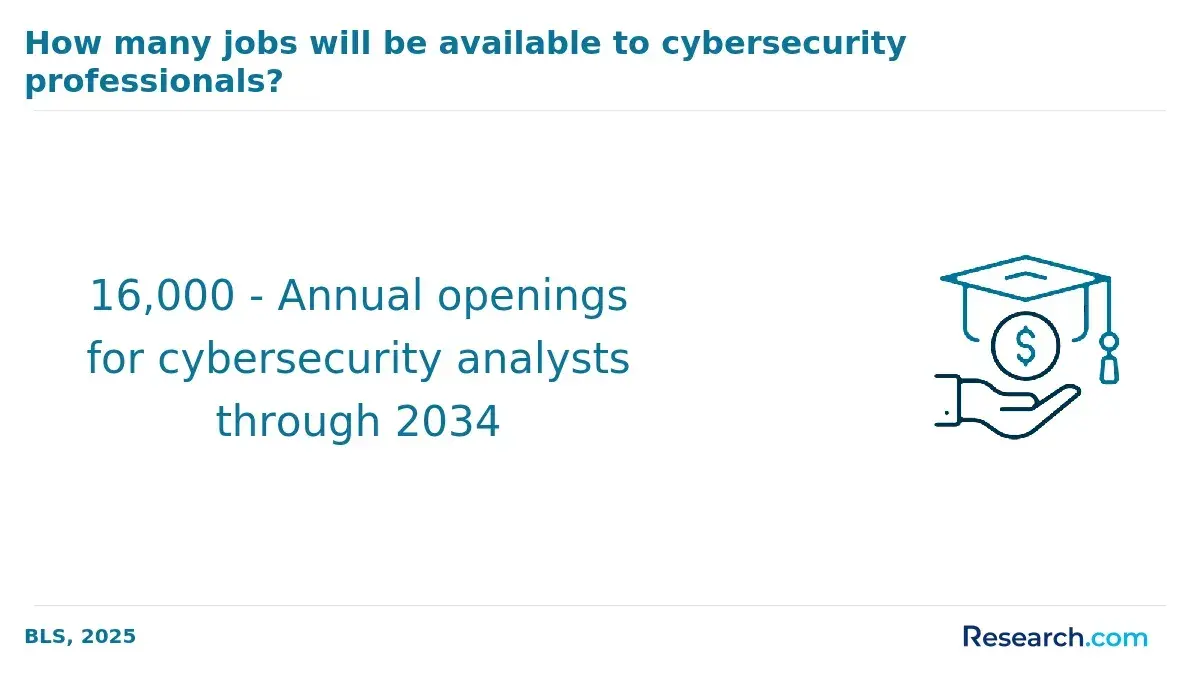
Demand for professionals with advanced cybersecurity and forensic investigation skills remains strong. The U.S. Bureau of Labor Statistics estimates 29% growth from 2024 to 2034 in this industry, with approximately 16,000 job openings projected each year, on average. At the same time, employers increasingly expect candidates to understand evidence preservation, incident response, legal constraints, cloud systems, malware behavior, and security tools—not just general IT support.
This guide explains how online master’s programs in computer forensics work, what they cost, what admissions requirements to expect, which courses and certifications matter, how to compare programs, and which online options Research.com evaluated for 2027. It is written for working IT professionals, cybersecurity analysts, investigators, military or law enforcement personnel, and career changers who want a practical way to decide whether this graduate path fits their goals.
Online Master’s Degree in Computer Forensics Table of Contents
- Can a computer forensics master’s be completed fully online?
- Online vs. campus-based computer forensics master’s programs
- Online master’s in computer forensics cost
- Admissions, certification, and skill requirements
- Typical courses in a computer forensics master’s program
- How to choose an online computer forensics master’s program
- Career services and student support
- Accelerated online master’s programs in computer forensics
- Interdisciplinary study and forensic expertise
- Accreditation and industry partnerships
- Emerging technologies in computer forensics
- Financial accessibility and affordability
- Artificial intelligence in digital evidence analysis
- Best online master’s in computer forensics programs
- Interdisciplinary expertise and career expansion
- Legal and ethical challenges in computer forensics
- Data science applications in digital investigations
- Emerging technologies in practical forensic training
Quick Answer: Is an Online Master’s in Computer Forensics Worth Considering?
An online master’s in computer forensics can be a strong option if you already have a technical background and want to move into digital investigations, incident response, cybercrime analysis, malware analysis, threat intelligence, or forensic leadership roles. It is especially useful when the program is accredited, includes hands-on labs, teaches evidence handling and legal procedures, and aligns with recognized cybersecurity or forensic certifications.
It may not be the best first step if you have no computing foundation. In that case, a bachelor’s degree, bridge coursework, or technical certifications may be a better starting point before graduate-level study. If your main goal is general software development, IT management, or artificial intelligence, a computer science, MIS, cybersecurity, data science, or AI program may fit better than a specialized digital forensics degree.
| Choose an online master’s in computer forensics if... | Consider another path if... |
| You want to investigate cyber incidents, preserve evidence, and analyze compromised systems. | You mainly want to become a general software engineer or developer. |
| You already have experience in IT, cybersecurity, networking, law enforcement, or digital investigations. | You lack basic programming, networking, operating systems, or security knowledge. |
| You need flexibility because you work full time or cannot relocate. | You need a highly structured in-person classroom environment. |
| You want graduate-level preparation for forensic, investigative, or cybersecurity leadership work. | You only need one narrow technical skill that a short certification course can provide. |
Reported cyber incidents continue to show why this field matters. Between October 2024 and August 2025, the most commonly reported cyber incidents worldwide were misuse at 62,200, affecting systems, followed by data leaks at 27,600, system compromises at 20,900, and other incidents such as ransomware and phishing. Many incidents are never reported publicly, which means the visible numbers do not capture the full scope of cyber risk.
Modern attackers can rent tools, automate reconnaissance, use AI to improve social engineering, and exploit complex environments that include cloud platforms, mobile devices, IoT systems, and remote work infrastructure. Computer forensics professionals help organizations answer critical questions after an incident: What happened? What systems were affected? What evidence can be trusted? What data was accessed? How can the attack be contained, documented, and prevented from recurring?
Can you get a degree completely online?
Yes. Many master’s programs in computer forensics, digital forensics, cybersecurity, and information assurance can be completed fully online. This delivery format works well for the field because much of the learning involves operating systems, forensic software, network logs, virtual machines, cloud labs, malware analysis environments, simulations, and written investigative reporting.
However, “online” does not always mean the same thing at every school. Some programs are fully online with no campus visits. Others are hybrid and may require in-person exams, an on-campus thesis defense, a residency, or field-based practicum work. Before enrolling, confirm whether the program requires any travel, live class attendance, proctored testing, or local site placement.
Online graduate education is now common across major universities, including institutions with global reputations such as Harvard, Yale, Cambridge, and MIT. In many U.S. programs, the diploma lists the degree title rather than the delivery format, meaning the credential generally does not say “online” on the diploma.
Employer acceptance has also improved. A 2025 report shows that 83% of HR professionals believe online degrees are equivalent in quality to degrees completed in face-to-face classes. Still, acceptance depends heavily on the institution’s reputation, accreditation, curriculum rigor, student projects, and the graduate’s ability to demonstrate skills.
Online vs. Traditional Master’s Degree in Computer Forensics
Online and campus-based computer forensics master’s programs often cover the same core subjects: digital evidence acquisition, incident response, network forensics, file systems, cyber law, malware analysis, and investigative reporting. The bigger differences are usually scheduling, access to physical labs, networking opportunities, cost structure, and learning style.
In many IT and cybersecurity programs, lab work has shifted to cloud-based or virtual environments. Students can image drives, examine logs, analyze malware samples in controlled settings, investigate network traffic, and complete simulated incident response exercises without being physically present in a campus lab.
Online study can be especially practical for working professionals because lectures, assignments, and labs may be asynchronous or scheduled outside traditional business hours. Campus programs may be better for students who want face-to-face faculty interaction, local internships, physical lab access, or a stronger campus network.
| Factor | Online master’s program | Traditional campus program |
| Flexibility | Usually better for full-time workers, military students, and students outside commuting distance. | Better for students who can attend scheduled classes on campus. |
| Hands-on labs | Often delivered through virtual labs, cloud environments, forensic tools, and simulations. | May include physical lab access, in-person demonstrations, and campus equipment. |
| Cost | May reduce commuting, relocation, room, board, and campus-related expenses. | May involve additional housing, travel, parking, and campus fees. |
| Networking | Can include virtual events, online cohorts, alumni networks, and remote career fairs. | May offer easier access to local employers, faculty offices, and in-person events. |
| Best fit | Working professionals who need schedule control and location flexibility. | Students who prefer structured in-person learning and campus resources. |
Cost is not automatically lower online, but online students may avoid expenses such as relocation, commuting, room and board, and some campus service fees. Some online programs also use the same tuition rate for in-state and out-of-state students, although this is not universal. Always compare the total program cost, not just the tuition rate.
How much does an online Master’s Degree in Computer Forensics cost?
Costs vary widely by institution, credit requirements, residency status, technology fees, and whether the program is housed in a public, private, nonprofit, or for-profit university. In 2025, the median in-state public annual tuition was $10,470, and the median out-of-state private annual tuition was $20,820 for computer forensics and degrees related to computer and information systems security. Students comparing this field with cybersecurity can also review Research.com’s guide to cyber security degree costs, since the price ranges are often similar.
The table below shows selected institutions and reported tuition figures. It is not a complete list of every program in the United States, and tuition can change. Confirm the latest tuition, fees, payment structure, and military or employer discounts directly with each school before applying.
| University | State tuition (USD) | Out-of-state tuition (USD) | Total graduates |
| Western Governors University | 6,380.00 | 6,380.00 | 1896 |
| University of Maryland Global Campus | 7,200.00 | 11,976.00 | 1301 |
| University of the Cumberlands | 9,875.00 | 9,875.00 | 1241 |
| The Pennsylvania State University | 15,025.00 | 24,413.00 | 756 |
| University of Phoenix-Arizona (484613) | 9,552.00 | 9,552.00 | 574 |
| American Public University System | 6,840.00 | 6,840.00 | 444 |
| Clover Park Technical College | 5,040.00 | 5,040.00 | 380 |
| ECPI University (248934) | 16,584.00 | 16,584.00 | 376 |
| Wilmington University | 11,430.00 | 11,430.00 | 295 |
| Gwinnett Technical College | 2,400.00 | 4,800.00 | 288 |
| George Washington University | 55,961.00 | 55,961.00 | 281 |
| The University of Texas at San Antonio (229027) | 5,724.00 | 17,730.00 | 268 |
| Champlain College | 42,564.00 | 42,564.00 | 262 |
| Northern Virginia Community College (232946) | 5,412.00 | 10,790.00 | 246 |
| Anne Arundel Community College | 7,230.00 | 12,240.00 | 220 |
| Bellevue University | 7,176.00 | 7,176.00 | 193 |
| Capella University | 14,148.00 | 14,148.00 | 179 |
| Augusta Technical College | 2,400.00 | 4,800.00 | 173 |
| San Antonio College | 6,450.00 | 13,980.00 | 153 |
| Colorado Technical University-Colorado Springs | 11,934.00 | 11,934.00 | 150 |
| Saint Cloud State University | 7,505.00 | 15,921.00 | 147 |
| St Petersburg College | 1,943.00 | 7,774.00 | 146 |
| Edmonds College | 3,727.00 | 9,118.00 | 133 |
| Tarrant County College District (228547) | 3,402.00 | 8,235.00 | 127 |
Some schools charge the same tuition to online students regardless of state residency. That can make a major difference for out-of-state applicants, but it should not be the only factor. A low advertised tuition rate may not include technology fees, graduation fees, exam proctoring, books, software, certification vouchers, or travel for required residencies.
How to estimate the real cost
- Multiply cost per credit by total credits. This gives you the baseline tuition figure.
- Add mandatory fees. Look for technology, online learning, graduation, student services, and course material fees.
- Check certification costs. Some programs include exam vouchers; others expect students to pay separately.
- Ask about transfer credits. Graduate transfer policies vary and may reduce total cost if accepted.
- Compare employer and military benefits. Tuition assistance, reimbursement, and military rates can change the final price substantially.
What are the requirements for an online Master’s Degree in Computer Forensics?
Most online computer forensics master’s programs expect applicants to have a bachelor’s degree and enough technical preparation to handle graduate coursework. If your current background is limited to an associate degree in computer science, you may need to complete a bachelor’s degree first. Research.com’s list of online computer science degree programs can help students who need that step before applying to graduate school.
Requirements vary by school, but applicants commonly submit academic records, recommendations, a statement of purpose, and evidence of technical readiness. Some programs prefer or require work experience in IT, cybersecurity, networking, law enforcement, or investigations. Students still exploring the broader computing field can review what a computer science degree can lead to before choosing a specialized forensic track.
Common admission requirements
- Bachelor’s degree from an accredited institution
- Official academic transcripts, often with a minimum GPA requirement such as 3.0 on a 4.0 scale
- Prior coursework in areas such as computer science, programming, algorithms, computer languages, hardware, networking, and mathematics
- GRE or GMAT scores, when required by the school
- TOEFL or IELTS scores for applicants whose first language is not English
- Letters of recommendation from faculty, supervisors, advisers, or professional contacts
- Statement of purpose or personal statement
- Professional experience in an IT-related role, when preferred or required
Certification requirements
A master’s degree is not always a substitute for professional certifications. Many employers use certifications to evaluate tool knowledge, security fundamentals, forensic procedures, audit skills, or incident response capability. The best certification depends on the role you want: digital forensic examiner, incident responder, penetration tester, security analyst, auditor, malware analyst, or manager.
| Certification |
| AccessData Certified Examiner (ACE) |
| ASIS International’s Certified Protection Professional (CPP) |
| ASIS International’s Physical Security Professional (PSP) |
| ASIS International’s Professional Certified Investigator (PCI) |
| Certified Computer Crime Investigator |
| Certified Computer Forensic Technician |
| Certified Ethical Hacker (CEH) |
| Certified Forensic Computer Examiner (CFCE) |
| Certified Information Systems Auditor (CISA): |
| Certified Information Systems Security Professional (CISSP) |
| CompTIA Advanced Security Practitioner (CASP+) Optional Voucher |
| CompTIA Cybersecurity Analyst (CySA+) |
| CompTIA PenTest+ |
| Computer Hacking Forensic Investigator (CHFI) |
| Cybersecurity Analyst Professional Certificate (IBM) |
| CyberSecurity Institute’s CyberSecurity Forensic Analyst (CSFA) |
| Cybersecurity Professional Certificate (Google) |
| EnCe: EnCase Certified Examiner |
| GIAC Advanced Smartphone Forensics (GASF) |
| GIAC Certified Forensic Analyst (GCFA) |
| GIAC Certified Forensic Examiner (GCFE) |
| GIAC Cyber Threat Intelligence (GCTI) |
| GIAC Network Forensic Analyst (GNFA) |
| GIAC Reverse Engineering Malware (GREM) |
| (ISC)² Certified in Cybersecurity (CC) |
| International Society of Forensic Computer Examiners (ISFCE) Certified Computer Examiner (CCE) |
| ISACA Certified Information Security Manager (CISM) Optional Voucher |
| Microsoft Certified Solutions Expert (MCSE): Data Management and Analytics |
| NICCS’ Certified Digital Forensics Examiner (CDFE) |
Because job requirements shift quickly, do not choose certifications only from a school brochure. Review current job postings, ask hiring managers which credentials matter, and check whether a program includes exam preparation, vouchers, labs, or tool-specific training.
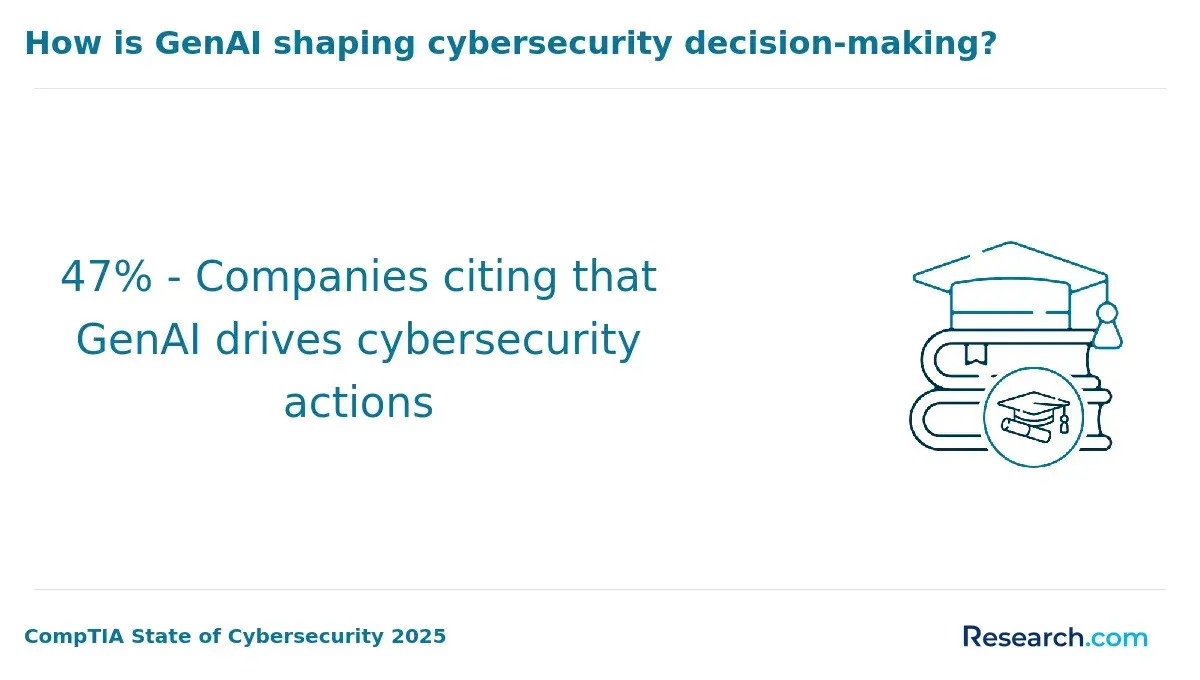
Certifications and graduate coursework can help professionals investigate threats such as ransomware, where attackers restrict access to data or devices until a demand is met. In 2025, ransomware attacks continued to escalate globally, with businesses accounting for 6,292 attacks, a 35% increase from 4,647 in 2024, while the most prolific ransomware group, Qilin, conducted 1,034 attacks. A strong computer forensics curriculum should help students understand how these attacks unfold, how evidence is preserved, and how investigative findings are documented.
Essential skills
- Programming knowledge: Forensic professionals do not always build production software, but they benefit from understanding how code behaves, how malware executes, how scripts abuse systems, and how software flaws become attack paths.
- Scripting ability: Scripting helps automate repetitive analysis, parse logs, extract artifacts, and reduce manual work during large investigations.
- Familiarity with multiple programming languages: Reading unfamiliar code can help investigators trace malicious activity, understand web server compromise, review suspicious files, and reverse-engineer malware behavior.
- Attention to detail: Digital evidence work requires precision because small errors in timestamps, file paths, hash values, metadata, or chain-of-custody records can weaken an investigation.
- Clear communication: Investigators must explain technical findings to executives, attorneys, law enforcement, clients, judges, regulators, and nontechnical stakeholders.
- Complex problem-solving: Cyber incidents often involve incomplete data, multiple systems, false leads, and attacker concealment techniques. Investigators need structured reasoning rather than one-size-fits-all answers.
- Analytical thinking: Pattern recognition, hypothesis testing, log interpretation, and evidence correlation are central to forensic analysis.
- Software and platform competence: Professionals need working knowledge of operating systems, forensic suites, databases, firewalls, endpoint tools, network monitoring platforms, scripting environments, and security software.
Everyday file types can carry significant risk. Of the 2024 new malicious file type detections by Sonicwall software, 38% were HTML-based, 22% were PDF files, and the remainder included scripts, executables, archives, and Office files. That mix shows why investigators must understand common user workflows as well as advanced technical attacks.
Courses to Expect in an Online Master’s Degree in Computer Forensics
A strong master’s curriculum should go beyond general cybersecurity awareness. It should teach students how to collect evidence correctly, analyze systems methodically, document findings, and understand the legal and ethical limits of investigations.
- Cybercrime: Students examine types of cybercrime, attacker motivations, victim profiles, investigative frameworks, and the laws that shape cyber investigations.
- Digital forensics: Coursework covers evidence acquisition, preservation, and analysis across computers, mobile devices, servers, cloud platforms, removable media, tablets, SD/CF cards, and other storage technologies.
- Network forensics: Students learn to review traffic, interpret protocols, identify signs of distributed denial-of-service attacks, SYN flood attacks, domain or IP spoofing, code injection, SQL injection, insider activity, and other network-based incidents.
In 2024, global cyberattack trends showed 656.4 million daily attacks, 239.6 million total incidents, and a rise in ransomware to 350.0 million attacks. These figures illustrate why programs increasingly emphasize incident response, malware analysis, threat intelligence, and evidence handling at scale.
- File systems and data recovery: Students study storage structures, deleted files, hidden partitions, metadata, recovery procedures, and concealment methods such as bit-shifting, hidden attributes, modified extensions, password protection, encryption, and steganography.
- Malware analysis: This area focuses on dissecting malicious software, understanding behavior, reviewing code, identifying indicators of compromise, and supporting mitigation strategies.
- Incident response: Students learn preparation, containment, evidence collection, communication, reporting, and post-incident review.
- Legal and ethical issues: Coursework should address privacy, confidentiality, chain of custody, court admissibility, authorization, use of offensive tools, evidence retention, and professional responsibility.
- Digital investigation techniques: Programs may include interviewing, investigative planning, report writing, timeline reconstruction, and case presentation.
- Cryptography and network security: Students study encryption, secure communications, cryptographic tools, and the role of encryption in evidence access and threat activity.
- Cyberthreat intelligence: This subject teaches students to gather, evaluate, and apply information about threat actors, campaigns, tactics, techniques, and risks.
- Computer programming and scripting: Graduate coursework may reinforce coding and automation skills used in malware review, artifact extraction, and forensic tool development.
- Blockchain and cryptocurrency: Students may study cryptocurrency tracing, blockchain records, cryptojacking, wallet evidence, and related investigative challenges. Cryptojacking attacks that evaded detection grew by 60% in the past year.
Things to Look for in an Online Master’s Degree in Computer Forensics
The best online master’s program is not simply the cheapest, fastest, or most recognizable. It is the program that matches your current skills, target role, budget, schedule, and need for practical forensic training.
- Accreditation: Confirm that the institution is accredited by a recognized accrediting body. Accreditation matters for financial aid, transfer credit, employer recognition, and further graduate study. If you plan to combine digital forensics with management information systems or pursue another degree later, review credit transfer rules carefully; Research.com’s guide to the MIS major may help you compare related paths.
- Faculty expertise: Look for instructors with current experience in cybersecurity, digital investigations, law enforcement, incident response, malware analysis, research, or forensic practice. Faculty in a cyber security degree online or computer forensics program should be able to connect theory with real investigative decisions.
- Curriculum relevance: The field changes quickly, so programs should update coursework to reflect current threats and tools. Topics to watch include quantum computing and encryption, AI-assisted malware, attack-as-a-service models, adaptive security, vulnerability exploitation, and ethical hacking.
- Hands-on labs: Prioritize programs with realistic labs involving forensic images, logs, malware samples, network traffic, cloud evidence, mobile devices, and reporting.
- Legal preparation: Digital evidence can be challenged. A strong program teaches chain of custody, admissibility, privacy, documentation, and expert communication.
- Career alignment: Check whether graduates move into the roles you want, such as digital forensics examiner, incident responder, threat intelligence analyst, security analyst, cyber investigator, or forensic consultant.
Questions to ask before applying
| Question | Why it matters |
| Is the institution properly accredited? | Accreditation affects recognition, aid eligibility, and future academic options. |
| Are labs virtual, simulated, tool-based, or purely theoretical? | Forensic hiring often depends on demonstrable practical skill. |
| Does the program cover legal evidence handling? | Technical findings may be useless if evidence is collected or documented improperly. |
| Are certification vouchers or exam preparation included? | This can reduce extra costs and improve job-market readiness. |
| Can working professionals complete the program part time? | Schedule structure affects persistence and graduation timeline. |
| What career services are available to online students? | Remote students should receive meaningful support, not second-tier access. |
What career support services are available for students in an online Master’s in Computer Forensics program?
Career support can determine whether a program helps you move from coursework to employment or advancement. Online students should ask whether services are available remotely and whether they are tailored to cybersecurity and forensic roles.
- Job placement assistance: Career offices may connect students with employers seeking cybersecurity, digital forensics, incident response, or investigation talent.
- Internships and practicums: Some programs use employer partnerships to give students applied experience in security operations, law enforcement, corporate investigations, or consulting environments.
- Certification preparation: Programs may align courses with credentials such as Certified Information Systems Security Professional (CISSP), Computer Hacking Forensic Investigator (CHFI), or other security and forensic certifications.
- Mentorship: Industry mentors, alumni advisers, or faculty coaches can help students choose career targets, build portfolios, and prepare for interviews.
- Networking events: Virtual career fairs, webinars, conferences, and alumni panels can help online students meet hiring managers and professionals in the field.
- Resume and portfolio support: Forensics students should be able to show case reports, lab work, scripts, incident summaries, and tool experience in a professional format.
How can accelerated online Master’s in Computer Forensics programs boost your career?
Accelerated online programs are designed for students who want to finish graduate training faster than a traditional two-year schedule. They can be useful for experienced IT or cybersecurity professionals who already understand core technical concepts and can handle a heavier academic pace.
Benefits of accelerated online master’s programs
- Shorter completion time: Some accelerated programs can be completed in as little as 12–18 months, compared to the standard two years.
- Concentrated curriculum: Coursework usually focuses on high-priority areas such as malware analysis, network forensics, incident response, cyber law, and investigative reporting.
- Work-compatible format: Online delivery can let professionals apply new concepts immediately in their current jobs.
- Potential cost efficiency: A shorter timeline may reduce some expenses, although students should still compare total tuition, fees, and workload demands.
Career implications
Accelerated study can help qualified professionals move more quickly toward roles in threat intelligence, ransomware response, forensic examination, cyber investigation, and security analysis. The trade-off is intensity. Students should be realistic about time management, lab complexity, and whether they can maintain strong performance while working.
Students comparing fast-track graduate models across fields can review Research.com’s guide to an accelerated master’s in psychology online to understand how accelerated formats are structured in other disciplines.
How Can Interdisciplinary Studies Enhance Your Computer Forensics Expertise?
Computer forensics is not only a technical discipline. It also draws on law, criminal justice, computer science, data analysis, communication, business risk, and ethics. Students who strengthen their background in algorithms, systems design, data analytics, and software behavior can become better investigators because they understand how systems are built and how attackers manipulate them.
An online master of computer science can complement forensic study for students who want deeper preparation in algorithms, data structures, machine learning, advanced computing, and technical problem-solving. This path may fit professionals who want to build forensic tools, automate evidence analysis, or move into advanced cyber defense research.
What do accreditation and industry partnerships contribute to program quality?
Accreditation helps verify that a college or university meets recognized academic standards. For computer forensics, that matters because the work involves high-stakes technical decisions, legal evidence, privacy, and organizational risk. Accreditation does not guarantee a job or a perfect program, but it is a baseline requirement students should not ignore.
Industry partnerships can also improve program value when they lead to current labs, internship options, guest instructors, research projects, employer connections, or certification alignment. Students who lack a computing foundation may need preparatory education before entering graduate study; a 2 year bachelor degree computer science option may help some learners close that gap.
What emerging technologies are impacting the field of computer forensics?
Digital investigations change whenever technology changes. Forensic professionals now need to understand cloud systems, encrypted communications, mobile ecosystems, connected devices, AI-generated content, cryptocurrency, and large-scale data analysis.
- Artificial intelligence and machine learning: AI-enabled tools can help identify anomalies, prioritize evidence, cluster related artifacts, detect patterns, and support triage in large data sets. Investigators still need human judgment to validate findings and avoid overreliance on automated outputs.
- Blockchain technology: Blockchain records can support transaction tracing and evidence verification, but cryptocurrency investigations also require knowledge of wallets, exchanges, mixers, fraud schemes, and jurisdictional issues.
- Cloud computing: Cloud forensics requires understanding distributed data storage, access logs, shared responsibility models, identity systems, and cross-border data challenges.
- Internet of Things: Smart cameras, wearables, vehicles, home devices, and industrial sensors can create valuable evidence while also introducing new privacy, extraction, and data-format challenges.
- Encryption and decryption tools: Strong encryption protects users and organizations, but it can complicate investigations. Forensic professionals must know lawful access methods and evidence-preserving procedures.
Students who want to pair digital forensics with AI expertise may also compare options such as the cheapest online masters in artificial intelligence, especially if their career goals include automated evidence analysis or AI-enabled threat detection.
The Financial Accessibility of Advancing Your Computer Forensics Career
Affordability is one of the biggest concerns for online graduate students. A master’s degree can support career growth, but it should be evaluated as an investment with real costs, opportunity costs, and uncertain outcomes.
Lower tuition does not automatically mean lower quality, and higher tuition does not automatically mean stronger career results. Compare accreditation, faculty expertise, lab access, certification preparation, employer partnerships, student support, and graduate outcomes alongside price.
Students weighing cost-sensitive options in computing can use Research.com’s guide to the most affordable online computer science degree to compare affordability strategies, tuition structures, and related programs. Although undergraduate and graduate costs differ, the same decision logic applies: focus on total cost, completion likelihood, employer recognition, and career relevance.
Ways to reduce cost
- Ask whether employer tuition reimbursement applies to the program.
- Check military, veteran, public service, or law enforcement tuition rates if relevant.
- Compare per-credit tuition with flat-rate term tuition.
- Confirm whether software, labs, and certification vouchers are included.
- Use transfer credits only if they do not weaken your preparation for advanced coursework.
- Apply for scholarships, grants, assistantships, or institutional aid when available.
How Can Artificial Intelligence Revolutionize Digital Evidence Analysis?
Artificial intelligence can help forensic teams handle large volumes of evidence more efficiently. Deep learning, neural networks, and other machine learning approaches can support pattern recognition, anomaly detection, event reconstruction, document review, image analysis, and threat modeling.
AI should be treated as a decision-support tool, not an unquestioned authority. Investigators must validate automated findings, document methods, understand model limitations, and explain conclusions clearly. Professionals who want a stronger foundation in this area may benefit from reviewing the best affordable online artificial intelligence degree programs.
Best Online Master’s in Computer Forensics Programs
The following programs represent online graduate options related to computer forensics, digital forensics, cybersecurity, and information assurance. Use this list as a starting point, then verify admissions requirements, tuition, accreditation, curriculum updates, and online attendance rules directly with each institution.
1. University of the Cumberlands
The University of the Cumberlands offers a fully online Master’s Degree in Information Systems Security. Its courses are mapped to Department of Homeland Security (DHS) and National Security Agency (NSA) cybersecurity education standards and are aligned with the (ISC)2 CISSP Common Body of Knowledge. The university is designated as a National Center of Academic Excellence in Cyber Defense (CAE-CD) by the NSA and the Department of Homeland Security (DHS), one among only just over 200 universities nationwide with CAE-CD designation.
- Program Length: 2 years
- Tracks/concentrations: N/A
- Tuition cost per credit: $ Online $355, Active Military/Veteran $315
- Required Credits to Graduate: 31 credits
- Accreditation: Southern Association of Colleges and Schools Commission on Colleges (SACSCOC)
2. Western Governors University
Western Governors University offers an online Master’s Degree in Cybersecurity and Information Assurance. The program extends beyond a narrow digital forensics curriculum and includes five top industry certifications within its curriculum at no additional cost.
The program ends with a capstone project in which students develop a proposal addressing a real-world IT business issue, drawing on knowledge and skills developed across the core coursework.
- Program Length: 22 Months (may be finished faster or slower)
- Tracks/concentrations: N/A
- Tuition cost: $4,555 per 6-month term
- Required Credits to Graduate: 34 credits
- Accreditation: Northwest Commission on Colleges and Universities (NWCCU)
3. University of Maryland Global Campus
The University of Maryland Global Campus (UMGC) offers a Master’s Degree in Digital Forensics and Cyber Investigation that can be completed fully online or in a hybrid format with online and onsite components. The program prepares students for investigative, leadership, and executive work involving cybercrime analysis and mitigation. Coursework supports preparation for popular certification exams and teaches students how to identify, preserve, analyze, and present evidence for legal prosecution and administrative proceedings. UMGC undergraduates who majored in cybersecurity technology may use an accelerated pathway to the master’s degree. A cybersecurity capstone requires students to apply their learning to professional cybersecurity issues.
- Program Length: must be fulfilled within five consecutive years
- Tracks/concentrations: N/A
- Tuition cost per credit: $694 per credit (in-state), $694 per credit (out-of-state), and $480 per credit (military)
- Required Credits to Graduate: 36 credits
- Accreditation: Middle States Commission on Higher Education
4. Champlain College
Champlain College Online offers an online Master’s Degree in Digital Forensic Science. Since 2006, it has held designation as a National Center of Academic Excellence in Cyber Defense Education by the U.S. National Security Agency and the Department of Homeland Security and as a National Center of Digital Forensics Academic Excellence by the Defense Cyber Crime Center (DC3) Air Force Office of Special Investigations. Champlain also houses the Senator Patrick Leahy Center for Digital Investigation & Cybersecurity. The program is taught by faculty with practitioner experience and is built to prepare students for agile digital forensics work.
- Program Length: 2 years
- Tracks/concentrations: N/A
- Tuition cost per credit: $795/credit (less for active-duty military)
- Required Credits to Graduate: 30-36 credits
- Accreditation: New England Commission of Higher Education (NECHE)
5. University of Central Florida
The University of Central Florida offers a fully online Master of Science in Digital Forensics. The program is designed for students who want to work as digital forensics examiners or continue to law school or terminal degree study. It also prepares students for certification exams, including CompTIA A+, GIAC Security Essentials, and CompTIA Network+ exams. A thesis option is available and requires an on-campus thesis defense. The degree reflects collaboration among the Computer Science, Forensic Science of Chemistry, Criminal Justice and Legal Studies departments and the National Center for Forensic Science, which is a member of the National Institute of Justice Forensic Resource Network of the Department of Justice. The Institute serves the needs of state and local law enforcement and forensic scientists.
- Program Length: 2 years
- Tracks/concentrations: N/A
- Tuition cost per credit: $369.65 In state/ $1,194.05 Out of state
- Required Credits to Graduate: 30 credits
- Accreditation: Accreditation Board for Engineering and Technology, Inc.
The broader cybersecurity market is also expanding. With the 2026 projected cybersecurity market size estimated at US$248 billion and the 2034 projected market volume at $699 billion, students have reason to evaluate advanced cybersecurity and forensic education carefully. The market outlook is promising, but individual outcomes still depend on experience, technical skill, certifications, location, employer demand, and the quality of the program completed.
How Can Interdisciplinary Expertise Expand Career Opportunities in Computer Forensics?
Computer forensics can intersect with business, healthcare, biotechnology, law, finance, communications, government, and national security. Professionals who understand another industry can investigate incidents more effectively because they know what data matters, how systems are used, and what risks are most serious.
For example, cyber investigations in life sciences may involve intellectual property, regulated data, laboratory systems, or research infrastructure. Students interested in adjacent fields can explore how graduate study applies to biotechnology masters degree jobs and consider whether technical forensics plus domain knowledge could open specialized opportunities.
What role do foundational degrees play in preparing for a Master’s in Computer Forensics?
A strong undergraduate background can make graduate computer forensics coursework much more manageable. Bachelor’s programs in computer science, cybersecurity, software engineering, information technology, criminal justice with technical coursework, or related fields can provide the programming, systems, networking, and analytical foundation needed for advanced study.
Students who want a development-focused route before specializing may consider an online software development degree. Software engineering preparation can be useful for understanding application behavior, vulnerabilities, secure coding, reverse engineering, and malware logic.
What legal and ethical challenges influence computer forensics practice?
Digital forensics is governed by strict legal and ethical expectations. Investigators must protect privacy, collect only authorized evidence, document chain of custody, preserve data integrity, avoid contamination, and understand whether findings may be used in court, arbitration, internal discipline, insurance claims, or regulatory review.
Cross-border data storage, cloud platforms, employee monitoring, encrypted devices, AI-generated evidence, and third-party systems can all create difficult questions. Coursework should prepare students to work with legal counsel, law enforcement, compliance teams, and business leaders. Students seeking broader technical and regulatory preparation may compare options such as the cheapest online cyber security degree.
How Can Data Science Applications Enhance Computer Forensics?
Data science can improve digital investigations by helping professionals process large evidence sets, detect anomalies, identify relationships, group similar artifacts, build timelines, and prioritize leads. Techniques such as data mining, machine learning, clustering, visualization, and statistical analysis are especially useful when cases involve massive logs, cloud records, endpoint telemetry, or communication data.
For students who want to combine forensic investigation with advanced analytics, the cheapest online data science master's degree can provide complementary skills that may strengthen work in threat hunting, fraud detection, cyber intelligence, and automated evidence review.
How Do Emerging Technologies Enhance Practical Training in Computer Forensics?
Modern computer forensics programs increasingly use virtual labs, simulated attacks, cloud environments, automated analysis tools, and realistic incident scenarios. These tools allow students to practice evidence acquisition, log analysis, malware review, network traffic investigation, reporting, and decision-making without waiting for access to a physical lab.
Students can also benefit from understanding how AI tools are built and evaluated. An AI degree online may be useful for professionals who want to develop or manage AI-assisted forensic systems, anomaly detection models, or automated triage workflows.
Future Trends in Computer Forensics
Computer forensics will continue to evolve as attackers adopt automation, AI, cloud exploitation, and commercialized attack platforms. There are now Cybercrime-as-a-Service (CaaS) platforms and attack-as-a-service models that make malicious tools more accessible. This increases the need for forensic professionals who can investigate incidents quickly, preserve reliable evidence, and help organizations improve defenses.
Automation will also grow on the defensive side. Forensic teams are likely to use more automated triage, behavior analysis, decryption support, anomaly detection, and evidence correlation. AI and advanced algorithms may improve speed, but they also create new validation and accountability challenges.
More degree options in cybersecurity, digital forensics, information security, computer science, and related fields are likely to attract professionals who want to upgrade their qualifications. Students still weighing the broader value of computing education can review Research.com’s guide on whether a computer science degree is worth it.
Common Mistakes to Avoid
- Choosing a program without checking accreditation: Accreditation should be verified before you invest time or money.
- Looking only at tuition: Total cost includes fees, books, software, labs, certification exams, and possible travel.
- Assuming every online program is fully online: Some programs require campus visits, thesis defenses, proctored exams, or field placements.
- Ignoring hands-on training: Digital forensics is a practical field. A mostly theoretical program may leave you underprepared.
- Overvaluing rankings: Rankings can help you start a search, but fit, curriculum, cost, support, and career alignment matter more.
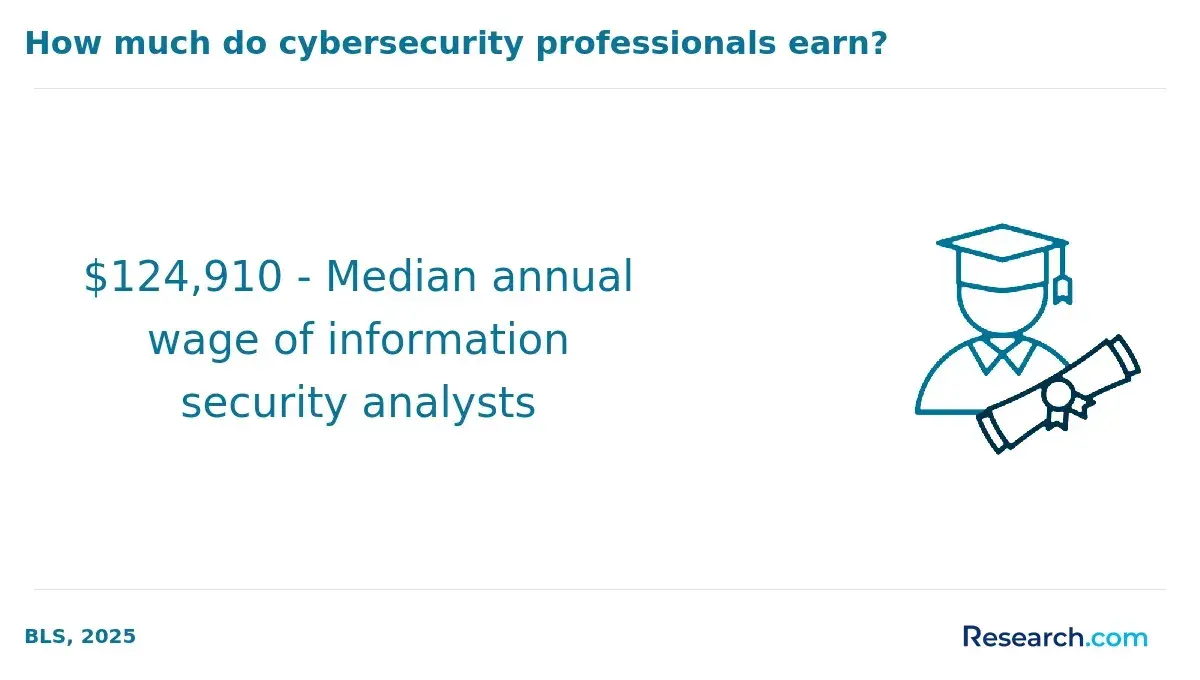
- Assuming salary outcomes are guaranteed: A degree may improve qualifications, but pay depends on experience, location, employer, certifications, clearance requirements, and role.
- Skipping legal and ethical coursework: Evidence handling mistakes can damage investigations and professional credibility.
- Choosing certifications randomly: Match certifications to the job postings and employers you are actually targeting.
Key Insights
- An online master’s in computer forensics is best for technically prepared students. It fits professionals who want to investigate cyber incidents, analyze evidence, support legal or organizational inquiries, and move into advanced cybersecurity roles.
- Demand is strong, but outcomes are not automatic. The U.S. Bureau of Labor Statistics estimates 29% growth from 2024 to 2034 in this industry, with approximately 16,000 job openings projected each year, on average. Your results still depend on skills, experience, certifications, location, and program quality.
- Online delivery can work well for digital forensics. Virtual labs, cloud simulations, forensic tools, and remote analysis environments make many programs practical for working adults.
- Accreditation, labs, and legal training are nonnegotiable. A credible program should teach technical investigation, evidence preservation, reporting, chain of custody, privacy, and ethical practice.
- Cost varies widely. In 2025, the median in-state public annual tuition was $10,470, and the median out-of-state private annual tuition was $20,820 for computer forensics and related computer and information systems security degrees. Compare total cost, not just tuition.
- Certifications can strengthen the degree. Credentials such as CEH, CISSP, CHFI, GIAC certifications, CISA, CySA+, and others may help depending on the role you want.
- Emerging technologies are reshaping the field. AI, cloud computing, blockchain, IoT, encryption, data science, and cybercrime-as-a-service are changing how evidence is created, hidden, collected, and analyzed.
- The right program should match your target role. A future incident responder, forensic examiner, threat intelligence analyst, cyber investigator, or security leader may need different courses, tools, certifications, and career services.
References:
- Cybersecurity Guide (2026, February 17). Top affordable online cybersecurity master degree programs. Cybersecurity Guide
- Data USA. (n.d.). Computer & Information Systems Security | Data USA. Data USA.
- IBM. (n.d.). What is Ransomware? IBM.
- Fortune Business Insights (2026, February 10). Cybersecurity Market Size to Reach USD 699.39 Billion by 2034 Analysis by Fortune Business Insights. Fortune Business Insights
- Ribeiro, A. (2026, January 15). Global ransomware attacks rose 32% in 2025, as manufacturers emerged as top target. Industrial Cyber
- SANS Institute. (n.d.). Digital Forensics Certifications. SANS Institute.
- Singh, S. (2025, October 11). Distance Learning or Regular College? What Employers Prefer in 2025. DegreeFYD
- Sonicwall (2025). 2025 Cyber Threat Report. Sonicwall
- Statista. (2025). Cybersecurity Worldwide | Statista Market Forecast. Statista.
- Statista (2025, November). Distribution of cyber incidents in organizations worldwide as of September 2025, by type. Statista
- Total Assure (2025, October 21). Cyber Attack Statistics by Year. Total Assure
- U.S. Bureau of Labor Statistics. (2025, August 28). Information Security Analysts: Occupational Outlook Handbook. U.S. Bureau of Labor Statistics.
- U.S. Bureau of Labor Statistics. (2025, August 28). Occupational projections, 2024–2034, and worker characteristics. U.S. Bureau of Labor Statistics
Other Things You Should Know About Online Master’s in Computer Forensics Programs
Most programs require a Windows PC or Mac with a current operating system, at least 8 GB of RAM, 256 GB of free storage, a webcam, and reliable broadband. Forensic labs often use tools such as EnCase, FTK, or Autopsy, so some courses require admin access or a virtual machine.
Typically, an online Master’s Degree in Computer Forensics can be completed in 18 to 24 months. However, the exact duration depends on the program structure, part-time or full-time enrollment options, and whether the student chooses to pursue any specializations.
The average tuition cost for an online Master's in Computer Forensics in 2027 ranges from $20,000 to $40,000, depending on the institution. Some programs may offer payment plans or financial aid to help manage costs. Always check with individual schools for precise figures.
A 2027 online Master's in Computer Forensics typically includes courses in digital evidence analysis, cyber law, and network security. Students can also expect training in computer ethics, forensic report writing, and hands-on laboratory work to simulate real-world scenarios in the field.
Courses typically include cybercrime, digital forensics, network forensics, malware analysis, incident response, legal and ethical issues, digital investigation techniques, cryptography, and network security.
In 2027, admission requirements for an online Master’s Degree in Computer Forensics typically include a bachelor’s degree in a related field, a minimum GPA (often around 3.0), professional references, and a statement of purpose. Some programs may also require relevant work experience or GRE scores.
Career opportunities include roles such as digital forensic examiner, cybersecurity analyst, incident responder, malware analyst, and roles in law enforcement and private sector cybersecurity teams.


