2027 How to Become a Cybersecurity Engineer: Salary, Education and Job Outlook

Co-Founder and Chief Data Scientist
Becoming a cybersecurity engineer is not just a matter of earning one credential and applying for jobs. The role sits between software, networks, cloud systems, risk management, incident response, and business operations, so the best path depends on your current background, target job, budget, and timeline. This guide explains how to become a cybersecurity engineer, what education and certifications employers commonly value, where the jobs are, how much related information security roles pay, and how to compare degree programs without relying on rankings alone.
The field matters because organizations continue to move sensitive data, customer transactions, infrastructure, and internal operations into digital environments that must be protected. For students, career changers, and IT professionals, cybersecurity can offer strong long-term opportunity, but it also requires continuous learning and hands-on practice. Use this guide to choose a realistic path, avoid common mistakes, and understand whether cybersecurity engineering fits your strengths and goals.
Quick Answer: How Do You Become a Cybersecurity Engineer?
Most cybersecurity engineers build the role through a combination of formal education, IT experience, security-focused certifications, and practical projects. A typical route starts with a bachelor’s degree in cybersecurity, computer science, information technology, or a related field, followed by entry-level IT or security work, certifications such as CompTIA Security+, CEH, CISSP, CISM, or cloud security credentials, and continued development in network security, secure systems, cloud platforms, scripting, and incident response.
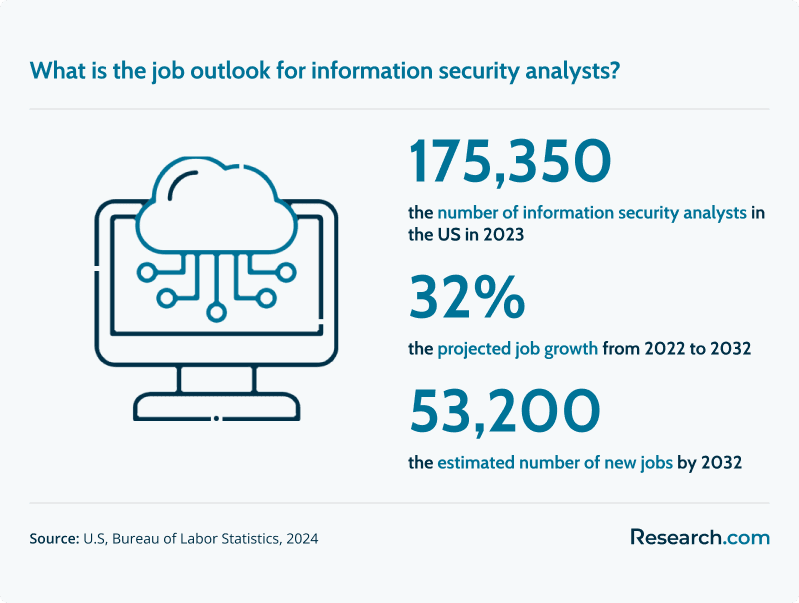
The career outlook is strong. Information security analysts had a median annual wage of $120,360 in 2023, and cybersecurity engineer-related roles are often aligned with that occupational category. The projected job growth for cybersecurity engineers is 32% from 2022 to 2032, with an estimated 53,200 new jobs by 2032. Salary and opportunity vary by role, industry, location, experience, and specialization.
Key Things You Should Know About Becoming a Cybersecurity Engineer
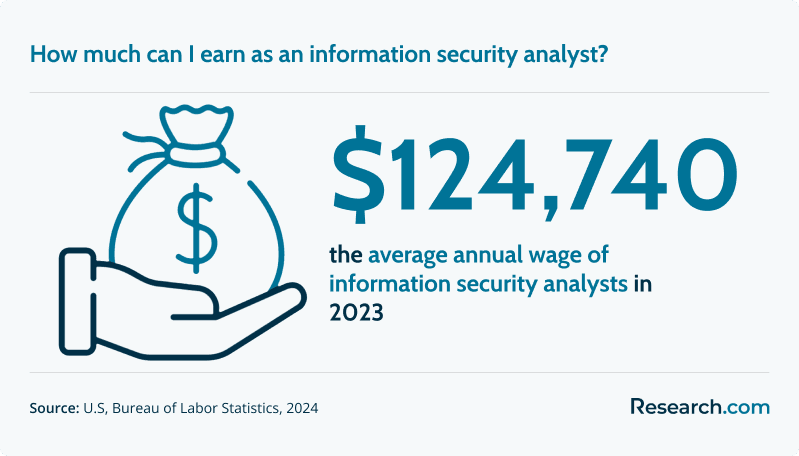
- Information security analysts earned an average annual wage of $124,740 in 2023.
- The career area is expanding quickly, with projected job growth of 32% from 2022 to 2032.
- Computer systems design and related services had the highest employment level for information systems analysts in 2023, with 40,290 professionals.
- Computer and peripheral equipment manufacturing was the highest-paying industry for information security analysts, with an average annual wage of $184,190.
- There were 175,350 information security analysts in the US in 2023, showing the depth of demand for cybersecurity talent.
- In 2023, information security analysts earned a median annual wage of $120,360, while the top 10% earned up to $182,370.
- Steps to becoming a cybersecurity engineer
- Education requirements and degree options
- Cybersecurity certifications worth comparing
- Current state of the cybersecurity industry
- Job outlook for cybersecurity engineers
- Cybersecurity engineer salary expectations
- Industries and workplaces hiring cybersecurity engineers
- Cybersecurity engineer responsibilities and daily work
- How flexible education supports cybersecurity career preparation
- Role overview for aspiring cybersecurity engineers
- Top Cybersecurity Programs for 2027
- Is cybersecurity worth pursuing?
- How emerging technologies affect cybersecurity strategy
- Soft skills needed in cybersecurity careers
- Preparing for privacy and compliance requirements
- Cybercrime and digital forensics career paths
- How data science supports cybersecurity defense
- Future trends shaping cybersecurity careers
- Associate degree pathways into cybersecurity
- Why programming strengthens cybersecurity expertise
- Cross-disciplinary skills and cybersecurity innovation
- Practical experience, networking, and career momentum
- Advanced cybersecurity specialization options
- Next-step planning for advanced cybersecurity roles
What Cybersecurity Engineering Students Often Value in Their Programs
Prospective students usually look for three things in a cybersecurity engineering degree: flexibility, applied labs, and career relevance. The strongest programs are not only convenient; they also help students practice with security tools, analyze realistic incidents, and build evidence of skill that can be discussed in interviews.
- Kim’s experience reflects a common need among working adults: the ability to study online while maintaining a full-time job. In her case, the applied training helped her qualify for a better-paying role before finishing the program. -Kim
- Harry emphasized the value of labs and real-world scenarios. For cybersecurity students, simulated attacks, defense exercises, and incident-response activities can make the transition from coursework to employment less intimidating. -Harry
- Tara entered cybersecurity from another career. Her situation highlights why program support, faculty access, and schedule flexibility can matter as much as course titles when evaluating an online cybersecurity engineering degree. -Tara
What are the steps to becoming a cybersecurity engineer?
The path to cybersecurity engineering is usually built in stages. Some professionals start in help desk, systems administration, networking, or software development. Others begin with a cybersecurity degree and move directly into analyst, SOC, or junior security engineering roles. The goal is to combine theory, tooling, and hands-on judgment.
- Choose a technical education path. Start with a bachelor’s degree in cybersecurity, computer science, information technology, software engineering, or a related field if you are new to the field. If you are comparing broad undergraduate options, Research.com’s guide to the best bachelor degree choices can help you understand salary-oriented degree categories. Students looking for a lower-cost IT foundation can also review the cheapest online IT programs.
- Build core IT knowledge first. Cybersecurity engineers need to understand operating systems, TCP/IP networking, cloud infrastructure, identity management, scripting, databases, and system administration. Security work is difficult if you do not understand what you are protecting.
- Get practical experience early. Look for internships, co-op roles, help desk jobs, junior network roles, SOC analyst positions, home labs, capture-the-flag exercises, open-source contributions, or volunteer IT security projects. Employers often want evidence that you can troubleshoot and respond under real constraints.
- Earn certifications that match your level. CompTIA Security+ is often useful for foundational knowledge, while CEH, CISSP, CISM, CCSP, CISA, GIAC credentials, and Cisco CyberOps can support more specialized or advanced goals. If your work connects to schools, archives, academic systems, or library technology, an online library science certificate may complement security work in education-focused environments.
- Practice security engineering skills. Focus on vulnerability management, secure configuration, access control, encryption, threat modeling, SIEM workflows, endpoint security, cloud security, incident response, and penetration testing fundamentals.
- Create a portfolio. Document labs, scripts, security architecture diagrams, incident write-ups, risk assessments, compliance projects, and safe penetration testing exercises. A portfolio helps employers see how you think, not just what courses you completed.
- Keep learning after you get hired. Threats, tools, privacy laws, cloud services, and AI-enabled attacks evolve quickly. Continuous learning is part of the job, not an optional add-on.
| Career Stage | Primary Goal | Examples of Evidence Employers May Value |
| Beginner | Learn computing, networking, and basic security concepts | Introductory coursework, home labs, CompTIA Security+, help desk or IT support experience |
| Early career | Move into security operations, junior engineering, or analyst roles | SOC experience, vulnerability scans, incident reports, scripting projects, cloud labs |
| Mid-career | Own systems, tools, or security programs | Architecture documents, incident-response leadership, CEH, CISSP, CISM, cloud security work |
| Advanced | Specialize or lead security strategy | Security architecture, governance work, forensics, IAM programs, CISO-track experience |
What are the educational requirements to become a cybersecurity engineer?
A bachelor’s degree is a common requirement for cybersecurity engineer roles, especially when the job involves secure system design, cloud architecture, risk management, or advanced troubleshooting. Relevant majors include cybersecurity, computer science, information technology, computer engineering, software engineering, and information systems. Students who want a faster academic route may compare accelerated computer science degree options, which are sometimes grouped with quick degrees that pay well.
A master’s degree is not always required, but it can be useful for advanced technical leadership, research-heavy roles, cybersecurity policy, security architecture, digital forensics, or management. If cost is a major concern, the cheapest online MS in computer science programs may be worth comparing with specialized cybersecurity graduate degrees.
Certifications can strengthen your profile, but they rarely replace practical competence. A strong candidate often combines a relevant degree, recognized credentials, and hands-on evidence of security work. Students balancing employment, family, or military obligations may also want to compare the most affordable online colleges for working adults.
| Education Option | Best For | Limitations to Consider |
| Associate degree in cybersecurity or IT | Students seeking a shorter, lower-commitment entry route or transfer pathway | May not satisfy bachelor’s degree requirements for some engineering-level roles |
| Bachelor’s degree in cybersecurity | Students who want a direct security-focused academic path | Program quality varies; hands-on labs and faculty expertise matter |
| Bachelor’s degree in computer science or IT | Students who want broader technical flexibility across computing roles | May require electives, projects, or certifications to show security specialization |
| Master’s degree | Professionals targeting leadership, policy, research, architecture, or specialized roles | Cost and time may not be justified without a clear career goal |
| Certificates and bootcamps | Working professionals who need targeted upskilling | Should be evaluated carefully for employer recognition and practical depth |
What are the top certifications for cybersecurity professionals?
The best cybersecurity certification depends on your experience level and intended role. Entry-level candidates usually need broad security foundations, while experienced engineers may benefit from credentials tied to management, auditing, cloud security, or advanced technical defense. Before paying for an exam, review prerequisites, renewal requirements, employer demand, and whether the certification aligns with jobs you actually want.
| Certification | Best Fit | What It Signals |
| Certified Information Systems Security Professional (CISSP) | Experienced security professionals moving toward senior technical or leadership roles | Broad knowledge of security and information assurance, including risk, assets, cryptography, and governance |
| Certified Ethical Hacker (CEH) | Professionals interested in ethical hacking, vulnerability assessment, and offensive security concepts | Understanding of attacker methods, tools, and vulnerability identification |
| CompTIA Security+ | Students, career changers, and early-career IT professionals | Foundational knowledge in network security, cryptography, threat detection, and mitigation; see CompTIA Security+ |
| Certified Information Security Manager (CISM) | Security professionals aiming for management, governance, or risk leadership | Knowledge of risk management, governance, and incident response from a management perspective |
| Certified Cloud Security Professional (CCSP) | Professionals working with cloud infrastructure, SaaS, IaaS, or cloud compliance | Cloud security architecture, design, operations, and compliance expertise |
| Certified Information Systems Auditor (CISA) | Security, audit, control, assurance, and compliance professionals | Ability to assess information systems, governance, controls, and risk practices |
| GIAC Security Essentials (GSEC) | Professionals who want a technically grounded security credential | Knowledge across access control, network security, cryptography, and security operations |
| Certified Cyber Security Professional (CCSP) | IT and information security professionals seeking cybersecurity specialization | Familiarity with network security, risk management, and incident response topics |
| Cisco Certified CyberOps Associate | Security operations center and threat detection candidates | Foundational ability to work with security monitoring, detection, and response using Cisco technologies |
Certifications are strongest when paired with proof of applied skill. A hiring manager is more likely to trust a candidate who can explain a lab, tool configuration, or incident investigation than someone who lists credentials without context.
What is the state of the cybersecurity industry?
The cybersecurity industry continues to expand as organizations rely more heavily on digital systems, cloud platforms, connected devices, and remote access. Rapid adoption of new technologies, with a growth rate of 5.3%, has increased the need for professionals who can protect infrastructure, applications, and data. GDP growth also affects security spending because organizations often invest more in cyber defense when business activity and technology budgets rise.
The field also faces pressure from the continued rise of cyber attacks. Organizations are prioritizing security programs, but the available talent pool has not kept pace in every area. The cybersecurity workforce shortage, with a growth rate of -1.6%, remains a challenge, as noted in a cybersecurity workforce shortage discussion from the World Economic Forum.
In 2023, high-employment industries for information systems analysts included computer systems design and related services, management of companies and enterprises, and credit intermediation and related activities. These sectors handle large volumes of sensitive data and depend on secure operations, which explains their need for cybersecurity expertise.
Overall, the market environment remains favorable, with total market growth of 7.3%. That does not mean every applicant will find a role immediately. Employers still screen for technical fundamentals, experience, communication skills, and the ability to adapt to new threats.
Pay also varies considerably by industry. Computer and peripheral equipment manufacturing was the top-paying industry for information security analysts, with an average annual wage of $184,190.
The chart below shows the highest-paying industries for information security analysts, including roles related to cybersecurity engineering.
What is the job outlook for cybersecurity engineers?
The job outlook for cybersecurity engineers is strong because nearly every sector now depends on secure networks, applications, identity systems, data storage, and cloud services. Recent data show that there were 175,350 information security analysts in the US in 2023. The field is projected to grow by 32% from 2022 to 2032, with an estimated 53,200 new jobs by 2032.
Demand is especially tied to cloud migration, ransomware risk, regulatory pressure, data privacy obligations, identity and access management, critical infrastructure protection, and the need for faster incident detection. However, job titles can vary. The same type of work may be listed as cybersecurity engineer, security engineer, cloud security engineer, application security engineer, security analyst, SOC engineer, or information security analyst.
How much do cybersecurity engineers make?
Cybersecurity engineers can earn competitive salaries, but pay depends on role scope, location, employer, industry, years of experience, clearance requirements, and specialization. Many cybersecurity engineer positions align closely with information security analyst labor data.
- The median annual wage for information security analysts was $120,360.
- The top 10% of earners in this field could make up to $182,370 annually.
- The average annual wage of information security analysts was $124,740 in 2023.
Cybersecurity pay should be evaluated in context. A high salary may come with on-call incident response, high-pressure breach work, complex compliance obligations, or specialized technical requirements. Computer and information technology occupations are also paid well overall, with computer and information research scientists at the top, with an estimated median wage of $145,080.
| Salary Factor | Why It Matters |
| Industry | Some industries pay more because of risk exposure, regulatory burden, or technical complexity. |
| Experience level | Senior engineers are usually expected to design systems, lead incidents, and mentor others. |
| Specialization | Cloud security, application security, forensics, IAM, and security architecture can command different pay ranges. |
| Location and work model | Remote, hybrid, government, contractor, and metropolitan roles may differ in compensation. |
| Credentials and portfolio | Degrees and certifications help, but employers also value proof of hands-on capability. |
Where can I work as a cybersecurity engineer?
Cybersecurity engineers work anywhere digital systems need protection. Common employers include technology companies, financial institutions, healthcare organizations, consulting firms, government agencies, manufacturers, retailers, educational institutions, and managed security service providers. Because cybersecurity needs span many sectors, interest in affordable cyber security degree online options has grown among students who want career flexibility without overextending their budgets.
Cybersecurity engineering is not one single job. Many professionals specialize based on the systems they protect or the type of risk they manage.
| Specialized Role | Main Focus | Typical Work |
| Network Security Engineer | Protecting network infrastructure | Firewalls, segmentation, intrusion detection, secure remote access, traffic monitoring |
| Application Security Engineer | Securing software and development workflows | Code review, vulnerability testing, secure SDLC practices, developer guidance |
| Cloud Security Engineer | Protecting cloud platforms and cloud-hosted data | Identity controls, cloud configurations, logging, encryption, compliance alignment |
| Penetration Tester or Ethical Hacker | Finding weaknesses before attackers do | Authorized testing, exploit validation, reporting, remediation guidance |
| Security Operations Center Engineer | Monitoring and responding to threats | SIEM tuning, alert triage, incident escalation, detection engineering |
| Identity and Access Management Engineer | Controlling who can access systems and data | Authentication, authorization, privileged access, single sign-on, least privilege |
According to data from 2023, the industries with the highest employment levels for information systems analysts included computer systems design and related services, with 40,290 professionals, and management of companies and enterprises, with 16,510 professionals. The chart below provides additional detail.
What do cybersecurity engineers do?
Cybersecurity engineers design, implement, test, and improve the defenses that protect an organization’s systems and data. While online cybersecurity courses can introduce useful concepts, engineering roles usually require deeper practical skill, troubleshooting ability, and cross-team collaboration.
- Design and deploy security controls for networks, servers, applications, endpoints, cloud platforms, and data systems.
- Assess risk by identifying vulnerabilities, misconfigurations, weak access controls, insecure code, and exposed assets.
- Monitor systems for suspicious activity and support incident response when alerts, intrusions, or breaches occur.
- Configure and maintain security tools such as firewalls, endpoint protection, intrusion detection systems, encryption tools, scanners, SIEM platforms, and identity systems.
- Work with IT, software development, legal, compliance, operations, and business teams to align security practices with organizational requirements.
- Update controls and procedures as threats, technology environments, and regulatory expectations change.
The role requires both technical depth and practical judgment. A cybersecurity engineer must know how attackers exploit systems, how defenders detect activity, and how to recommend fixes that are realistic for the organization.
The Role of Flexible Education in Shaping Cybersecurity Careers
Flexible education can make cybersecurity more accessible for working adults, military learners, parents, and career changers. Online programs are especially useful when they provide live or asynchronous labs, access to security tools, project-based assignments, faculty support, and career services rather than only recorded lectures.
Strong online cybersecurity programs often cover network security, ethical hacking, cloud security, governance, privacy, risk management, scripting, and incident response. The most useful programs also require students to practice with realistic scenarios, because cybersecurity hiring often rewards applied ability.
For professionals already employed in IT, an online cyber security degree can support upskilling without leaving the workforce. The key is to compare accreditation, transfer credit policies, lab access, total cost, and whether the curriculum fits your target role.
Top Cybersecurity Programs for 2027
How should you use this list?
A cybersecurity program ranking should be a starting point, not the final decision. Before enrolling, verify accreditation, cost per credit, total required credits, graduation requirements, delivery format, lab access, faculty background, student support, and whether the program aligns with your career goal. A lower-cost program with strong labs and transfer credit may be a better fit than a better-known name if it matches your needs.
How do we rank schools?
Our online cybersecurity engineering degree selections are based on research and data analysis using the Research.com methodology. Sources include the IPEDS database from the National Center for Education Statistics, Peterson’s database for program-level information, and the College Scorecard for cost and outcomes data.
1. Carnegie Mellon University
Carnegie Mellon University offers a Master of Science in Information Security (MSIS) with a technical emphasis on security and computer systems, along with research opportunities. Students may shape the program through certificates connected to areas such as NSA work or a deeper information security concentration. The curriculum is designed to strengthen advanced understanding of information security principles and network-related security challenges.
- Program Length: 2 years
- Tracks/concentrations: Information Security and Assurance
- Cost per Credit: $565
- Required Credits to Graduate: 60
- Accreditation: Middle States Commission on Higher Education
2. University of Texas at Dallas
The University of Texas at Dallas offers a Master of Science in Cybersecurity, Technology, and Policy for students from technical and non-technical backgrounds. The program prepares students for cybersecurity leadership by combining strategic, policy-oriented, and analytical perspectives.
- Program Length: 2 years
- Tracks/concentrations: Cybersecurity
- Cost per Credit: $654
- Required Credits to Graduate: 75
- Accreditation: Southern Association of Colleges and Schools Commission on Colleges
3. University of Maryland, College Park
The University of Maryland, College Park provides a Master of Engineering in Cybersecurity that draws from computer science, information technology, information assurance, and public policy. Coursework also addresses privacy, ethics, and regulatory issues relevant to security decision-making.
- Program Length: 2 years
- Tracks/concentrations: Cybersecurity
- Cost per Credit: $1,130
- Required Credits to Graduate: 30
- Accreditation: Middle States Commission on Higher Education
4. University of Michigan
The University of Michigan in Flint offers a Bachelor of Science in Cybersecurity and Information Assurance (CIA). The program prepares students for analysis and managerial work in cybersecurity by covering security principles, risk analysis, and mitigation practices.
- Program Length: 2 years
- Tracks/concentrations: Cybersecurity
- Cost per Credit: $542
- Required Credits to Graduate: 87
- Accreditation: Higher Learning Commission of North Central Association of Colleges and Schools
5. University of Arizona
The University of Arizona Global Campus offers a Bachelor of Science in Cyber & Data Security Technology. The program focuses on protecting systems, web applications, and social networking environments, with coursework that includes cyber and data security skills such as environmental surveillance and network reconnaissance.
- Program Length: 4 years
- Tracks/concentrations: Cyber and Data Security
- Cost per Credit: $542
- Required Credits to Graduate: 120
- Accreditation: WASC Senior College and University Commission
Questions to Ask Before Choosing a Cybersecurity Program
- Is the institution properly accredited, and is the accreditation recognized by employers or graduate schools?
- How many total credits are required, and what is the full estimated cost after fees?
- Does the program include hands-on labs, virtual cyber ranges, cloud projects, or incident-response exercises?
- Can prior credits, military training, certifications, or professional experience reduce the time to completion?
- Do courses prepare students for relevant certifications, and are exam costs included or separate?
- What career services are available for internships, apprenticeships, resume review, and interview preparation?
- Are faculty members active in cybersecurity research, consulting, government, or industry practice?
Is a career in cybersecurity worth it?
Cybersecurity can be worth pursuing if you enjoy technical problem-solving, continuous learning, and high-responsibility work. The field offers strong demand and competitive wages, but it is not a shortcut career. You will need to keep learning, document your skills, and become comfortable with ambiguity, pressure, and changing threats.
| Why Cybersecurity May Be Worth It | What to Consider Before Committing |
| Demand is strong as organizations respond to cyber threats and digital risk. | Entry-level competition can still be challenging without hands-on experience. |
| The average annual wage for information security analysts was $124,740 in 2023. | Salary outcomes are not guaranteed and vary by role, location, employer, and specialization. |
| The work can be meaningful because it protects data, systems, businesses, and people. | Incident response and security operations may involve stress, deadlines, and on-call work. |
| The field offers many specialties, including network security, cloud security, forensics, IAM, and application security. | Specializing too early can be risky if you have not built broad technical fundamentals first. |
Cybersecurity also connects closely to forensic investigation. Organizations, governments, and individuals face major losses from online fraud, breaches, and cybercrime, which creates demand for professionals who can trace attacks and preserve digital evidence. If investigative work interests you, compare forensic science colleges and related programs.
How are emerging technologies impacting cybersecurity strategies?
Artificial intelligence, cloud computing, Internet of Things devices, and increasingly complex software supply chains are changing how security teams work. These technologies can improve monitoring, automate repetitive analysis, and support faster detection, but they also create new attack surfaces and configuration risks.
Cybersecurity engineers now need to understand cloud identity models, API security, device security, data pipelines, and automated threat detection. A stronger computing foundation can help professionals adapt as tools change, which is why some students compare a computer science degree online accredited with a cybersecurity-specific program before deciding.
What essential soft skills are required for a successful cybersecurity career?
Technical knowledge is only part of cybersecurity work. Engineers must explain risk to non-technical leaders, write clear incident reports, collaborate with developers and system administrators, and make decisions when information is incomplete.
- Communication: Security recommendations must be understandable to executives, legal teams, developers, and end users.
- Critical thinking: Engineers need to separate real threats from noise and avoid reacting to every alert the same way.
- Problem-solving: Security incidents require fast investigation, root-cause analysis, and practical remediation.
- Teamwork: Cybersecurity depends on cooperation across IT, software, compliance, operations, and business units.
- Adaptability: Tools, threats, laws, and employer expectations change frequently.
Professionals who want to combine technical depth with AI-oriented leadership may also explore an online AI master degree, especially if their goals include automation, advanced analytics, or security leadership in AI-enabled environments.
How can cybersecurity engineers prepare for evolving privacy regulations?
Cybersecurity and privacy are closely linked. Security teams protect systems, while privacy rules govern how personal data is collected, used, stored, shared, and deleted. Cybersecurity engineers do not need to act as lawyers, but they do need to understand how regulatory requirements affect system design, access control, logging, encryption, and breach response.
1. Understand Key Privacy Regulations
Challenge: Privacy rules differ by country, state, and industry, so security controls must be mapped to the data and jurisdictions involved.
Regulations to monitor include:
- General Data Protection Regulation (GDPR): Enforced in the European Union and relevant to organizations that handle personal data of EU citizens.
- California Consumer Privacy Act (CCPA): Gives California residents control over certain personal information and places obligations on organizations that collect it.
- Health Insurance Portability and Accountability Act (HIPAA): Regulates privacy and security practices for patient health data in the U.S.
- Other Regional Regulations: Examples include Brazil’s LGPD and Canada’s PIPEDA, both of which address data protection within their jurisdictions.
2. Apply Data Privacy Best Practices
Challenge: Personal data often moves across systems, vendors, cloud environments, and internal teams, increasing exposure risk.
Practical controls include:
- Encryption: Protect sensitive data both in transit and at rest using strong encryption methods.
- Access Control: Use role-based access control, least privilege, and strong authentication to limit unnecessary exposure.
- Data Minimization: Collect only the data required for a defined purpose and delete it securely when retention is no longer justified.
3. Track Changes and Updates
Challenge: Privacy requirements can change, and organizations may operate across multiple regulatory environments.
Ways to stay current include:
- Attend privacy, governance, risk, and compliance workshops.
- Follow updates from organizations such as the European Data Protection Board (EDPB) and U.S. Federal Trade Commission (FTC).
- Participate in professional communities where security and privacy teams discuss implementation challenges.
4. Work Closely with Legal and Compliance Teams
Challenge: Security controls must support legal obligations, audit requirements, and business operations at the same time.
Collaboration strategies include:
- Meet regularly with legal and compliance teams to understand how privacy rules affect security architecture and incident response.
- Contribute to data protection impact assessments (DPIAs), privacy risk assessments, vendor reviews, and breach-preparedness planning.
Exploring Cybercrime and Digital Forensics as a Cybersecurity Career Path
Cybercrime and digital forensics focus on investigating incidents, preserving evidence, tracing malicious activity, and helping organizations or law enforcement understand what happened. This path can appeal to people who enjoy investigation, documentation, legal processes, and detailed technical analysis.
Digital forensic analysts may examine compromised devices, review logs, recover data, analyze malware activity, document timelines, and prepare findings that can be used by corporate leaders, insurers, attorneys, or investigators. Some professionals work for government agencies or law enforcement, while others serve corporations, consulting firms, or incident-response providers.
Students interested in this route can consider a dedicated cybercrime degree online, which may cover digital forensics, cyber law, fraud investigation, and advanced threat analysis. These programs can prepare graduates for roles such as digital forensic analyst, cybercrime investigator, and fraud detection specialist.
For cybersecurity engineers, forensic knowledge can also improve incident response. Understanding evidence handling, attack timelines, and post-breach analysis makes it easier to strengthen systems after an intrusion.
Can data science techniques revolutionize cybersecurity defense?
Data science can improve cybersecurity by helping teams analyze large volumes of logs, detect unusual behavior, build predictive models, and identify subtle patterns that manual review might miss. Machine learning and analytics are especially relevant in threat detection, fraud monitoring, anomaly detection, and risk scoring.
These techniques are not automatic solutions. Models can produce false positives, miss new attack methods, or reflect poor-quality data. Cybersecurity professionals who understand both security operations and analytics are better positioned to use these tools responsibly. An affordable data science masters online may be relevant for professionals who want to build stronger analytical and machine learning capabilities for security work.
What future trends are set to redefine cybersecurity career trajectories?
Cybersecurity career paths are being shaped by cloud security, AI-enabled tools, identity-first security models, software supply chain risk, critical infrastructure protection, and stronger privacy and compliance expectations. Technologies such as quantum computing, advanced analytics, and distributed ledger systems may also affect how organizations think about encryption, verification, detection, and response.
Professionals who stay adaptable will have an advantage. That may mean deepening expertise in cloud platforms, learning secure software development, improving data analysis skills, or studying AI systems. For those considering advanced study, one of the fastest masters in artificial intelligence online programs may support work at the intersection of AI and cybersecurity.
What opportunities are available for cybersecurity professionals looking to pursue an associate's degree?
An associate degree can be a practical entry point for students who want a shorter academic commitment, lower initial cost, or a pathway into a bachelor’s program. It can introduce core topics such as networking, operating systems, cryptography, threat analysis, and security fundamentals.
An associate of science in cybersecurity online may help students prepare for entry-level IT or security support roles, especially when paired with certifications and hands-on labs. However, students should check transfer agreements carefully if their long-term goal is a bachelor’s degree or engineering-level cybersecurity role.
How can developing programming skills enhance cybersecurity expertise?
Programming helps cybersecurity professionals understand how software fails, how attackers exploit logic flaws, and how defenders can automate detection and response. Python is commonly useful for scripting and automation, while Java, C++, and other languages can help with application security, reverse engineering, secure coding, and vulnerability analysis.
Security engineers who can write scripts, parse logs, automate repetitive tasks, and understand code-level vulnerabilities are often more effective than those who rely only on tools. Students who want a stronger software foundation can compare an online software development degree with cybersecurity-focused programs.
How does cross-disciplinary expertise boost cybersecurity innovation?
Cybersecurity increasingly overlaps with engineering, hardware, data science, law, business, and public policy. Cross-disciplinary knowledge can be especially valuable when securing embedded systems, industrial control systems, Internet of Things devices, medical technology, vehicles, and other environments where software and hardware interact.
Professionals with electrical engineering knowledge may better understand system architecture, signals, device behavior, and hardware-level risk. For learners interested in this direction, an affordable masters in electrical engineering degree can support work in areas where cybersecurity extends beyond traditional networks.
How crucial is practical experience and networking for cybersecurity success?
Practical experience is essential because cybersecurity work is applied, time-sensitive, and often messy. Labs, internships, mentorships, apprenticeships, capture-the-flag competitions, volunteer projects, and entry-level IT roles can all help students turn concepts into working judgment.
Networking also matters. Security communities, conferences, online forums, professional associations, alumni groups, and local meetups can expose you to tools, job leads, mentors, and real-world problem-solving. Before investing heavily in a degree, it can also help to ask whether is a cyber security degree worth it for your specific background, target role, and financial situation.
What are some advanced specialization options for a cybersecurity career path?
After building a broad technical foundation, cybersecurity professionals can specialize in areas that match their strengths. Some paths are highly technical, while others focus on investigation, governance, compliance, or executive leadership.
- Cloud Security Engineer: Protects cloud systems, cloud identities, data storage, workloads, and service configurations.
- Forensics Expert: Investigates cyber incidents, recovers evidence, and analyzes compromised systems.
- Cryptographer: Develops or evaluates encryption methods used to protect sensitive information.
- CISO (Chief Information Security Officer): Leads an organization’s overall security strategy, risk posture, budget, and governance.
Advanced roles often require a mix of experience, leadership ability, and credentials such as CISSP, CISM, or CEH. To compare long-term options, review the broader cybersecurity career path and identify which roles match your technical interests and preferred work environment.
Cybersecurity opportunities continue to appear across healthcare, finance, government, education, technology, manufacturing, and consulting. The professionals most likely to advance are those who keep learning, document their work, build practical experience, and adapt as threats and technologies change.
Common Mistakes to Avoid When Preparing for a Cybersecurity Engineering Career
- Choosing a program without checking accreditation. Accreditation affects transfer credit, graduate school options, and employer confidence.
- Focusing only on tuition. Compare total cost, fees, required credits, books, certification exams, equipment, and lost work time.
- Assuming certifications guarantee a job. Credentials help, but employers also want hands-on ability and communication skills.
- Skipping IT fundamentals. Cybersecurity engineers need to understand networks, systems, cloud platforms, and software before they can secure them well.
- Ignoring transfer credit policies. Students with prior college credit, military training, or certifications may be able to reduce completion time.
- Relying only on rankings. A program must fit your budget, schedule, learning style, and career goal.
- Specializing too early. Build a broad foundation before committing to cloud security, forensics, penetration testing, IAM, or governance.
Key Insights
- Cybersecurity engineering is a skill-based career that combines education, certifications, practical experience, and continuous learning.
- A bachelor’s degree in cybersecurity, computer science, IT, or a related field is a common route, but associate degrees, certificates, and graduate programs can also fit specific goals.
- The labor market is strong: information security analysts had a median annual wage of $120,360 in 2023, and projected job growth for cybersecurity engineers is 32% from 2022 to 2032.
- Certifications such as CompTIA Security+, CEH, CISSP, CISM, CCSP, CISA, GIAC credentials, and Cisco CyberOps can help, but they work best when paired with labs, projects, and real experience.
- Program selection should be based on accreditation, total cost, required credits, labs, faculty expertise, support services, and alignment with your target role—not rankings alone.
- Cybersecurity is worth considering if you enjoy technical problem-solving, high-impact work, and lifelong learning, but it may not suit people who want a static skill set or low-pressure work environment.
- AI, cloud computing, privacy regulation, data science, forensics, and cross-disciplinary engineering are reshaping cybersecurity career paths, making adaptability one of the most important long-term skills.
References:
- Statista. (2023). Cybersecurity - worldwide. Retrieved June 6, 2024, from Statista.
- U.S. Bureau of Labor Statistics. (2024). Computer and information technology occupations. Retrieved June 6, 2024, from BLS.
- U.S. Bureau of Labor Statistics. (2024). Information security analysts. Retrieved June 6, 2024, from BLS.
- U.S. Bureau of Labor Statistics. (2024). Occupational employment and wages, May 2023 - 15-1212 Information security analysts. Retrieved June 6, 2024, from BLS.
Other Things You Should Know About How to Become a Cybersecurity Engineer
Employers most often value the CISSP from (ISC)² for senior roles, the CompTIA Security+ for entry-level screening, and Cisco’s CCNP Security for network security work. The GIAC GSEC and CEH also appear in job postings, especially when hands-on technical proof is required.
In 2027, the job outlook for cybersecurity engineers is robust, with a projected growth rate of 33% according to the Bureau of Labor Statistics. This rapid expansion is driven by increased cyber threats and the demand for advanced security measures across various industries.
To become a cybersecurity engineer in 2027, it's recommended to have at least a bachelor's degree in cybersecurity, computer science, or a related field. Additional certifications like CISSP or CEH and a strong understanding of the latest technologies can enhance job prospects.