2027 Best Accredited Online Speech Pathology Degree Programs: Compare Tuition, Admissions, and Career Outcomes

Co-Founder and Chief Data Scientist

Reviewed by Rhea Paul, PhD
SLP Education & Research Expert
Choosing an online speech pathology degree is a high-stakes decision because the wrong program can delay licensure, clinical placement, or certification. The field is also expanding: the U. S. Bureau of Labor Statistics reported a $97,870 median annual wage for speech-language pathologists in May 2026. This guide is for future SLPs, career changers, and working adults comparing accredited online options. You will learn how to evaluate accreditation, tuition, admissions, flexibility, support services, and outcomes so you can choose a program that fits your budget, schedule, and licensure goals.
Key Things You Should Know
- The strongest online speech pathology programs are CAA-accredited at the graduate level, because most students need a qualifying master's degree, supervised clinical experience, and state licensure to become speech-language pathologists.
- Cost should be evaluated by total program price, not tuition alone; NCES data published in 2024 show average graduate tuition and required fees differ sharply between public and private institutions.
- Career value depends on licensure readiness, clinical placement quality, Praxis preparation, and employment fit; the BLS reported a $97,870 median annual wage for speech-language pathologists in May 2026.
Which Accredited Online Speech Pathology Degree Programs Offer the Best Overall Value?
The best overall value is usually not the cheapest program or the most recognizable brand. For speech pathology, value means the program helps you meet licensure and certification requirements, complete high-quality clinical placements, graduate on a realistic timeline, and avoid unnecessary debt.
Most aspiring speech-language pathologists need a master's degree in speech-language pathology, communication sciences and disorders, or a closely related discipline. Online bachelor's programs can prepare students for graduate admission, but they typically do not qualify graduates to practice independently as licensed SLPs.
The table below compares the main types of accredited online speech pathology pathways. Use it to narrow your search before comparing individual schools, because the right category often matters more than a school's position in a ranking.
| Program type | Best fit | Value strengths | Potential trade-offs |
| Public university online or hybrid master's program | Students who can access lower in-state or regional tuition | Often offers the strongest affordability if clinical placements are well supported | May have residency requirements, limited seats, or state-specific placement restrictions |
| Private nonprofit online master's program | Students who need national online access and structured advising | Often provides predictable cohort models, placement coordination, and frequent start dates | Tuition may be significantly higher than public alternatives |
| Part-time online master's program | Working adults, caregivers, and career changers | Allows students to keep working while progressing toward licensure | Longer time to completion can increase living costs and delay full-time SLP earnings |
| Online post-baccalaureate or leveling pathway plus master's degree | Students without a communication sciences background | Creates a route into the field for career changers | Adds prerequisite credits before the master's program begins |
| Online bachelor's in communication sciences and disorders | First-time college students or transfer students preparing for graduate school | Builds foundational coursework for SLP graduate admission | Usually does not lead directly to independent SLP licensure |
Programs commonly reviewed by online SLP applicants include public, private nonprofit, and hybrid options such as Eastern New Mexico University, Western Kentucky University, University of Northern Colorado, James Madison University, Baylor University, Emerson College, NYU, Nova Southeastern University, and University of St. Augustine for Health Sciences. Accreditation status, tuition, clinical placement policies, and state authorization can change, so students should verify each program directly before applying.
For many students, the strongest value comes from a CAA-accredited public or state-supported program with transparent clinical placement support. A higher-cost private online program may still be worth considering if it offers better schedule fit, faster completion, strong placement coordination, or access when public programs are geographically limited.
Avoid choosing based only on name recognition. A nationally known program can be a smart investment if it improves your clinical access and completion odds, but it is not automatically better than a lower-cost accredited program with strong advising and local placement relationships.
What Accreditation Should Students Look for in an Online Speech Pathology Degree Program?
Accreditation is the first filter students should apply. In speech pathology, the most important distinction is between institutional accreditation and programmatic accreditation. Institutional accreditation shows the college or university meets broad academic standards. Programmatic accreditation evaluates whether the speech-language pathology program meets professional preparation standards.
For students who want to become licensed speech-language pathologists, the key programmatic accreditor is the Council on Academic Accreditation in Audiology and Speech-Language Pathology, commonly called CAA. CAA accreditation is especially important at the master's level because it is closely tied to eligibility for professional certification and licensure pathways.
Use the following checklist before treating any online speech pathology program as a viable option:
- Confirm that the institution is accredited by a recognized institutional accreditor.
- Verify whether the graduate speech-language pathology program is CAA-accredited, in candidacy status, or not accredited.
- Ask whether the program meets education requirements for licensure in your state.
- Confirm whether online students receive the same clinical education, supervision standards, and faculty access as campus students.
- Check whether the program prepares students for the Praxis exam and the ASHA Certificate of Clinical Competence in Speech-Language Pathology pathway.
A common mistake is assuming that "online" accreditation is separate from campus accreditation. In most cases, the delivery format is not the issue; the key question is whether the institution and the specific graduate program meet recognized standards. Another red flag is a school that advertises SLP career preparation but cannot clearly explain clinical hours, state authorization, or licensure eligibility.
Students considering related healthcare education pathways should apply the same accreditation mindset across fields. For example, applicants comparing clinical online programs such as MA to LPN bridge programs online should also verify institutional approval, state eligibility, and supervised practice requirements before enrolling.
How Do Tuition Costs Compare Across Accredited Online Speech Pathology Degree Programs?
Tuition varies widely because online SLP programs may charge by credit, term, or cohort. Students also need to budget for fees, textbooks, technology, background checks, immunizations, travel to short residencies, and costs related to clinical placements.
NCES data published in 2024 show that average graduate tuition and required fees differ substantially by institution type, with public institutions generally lower than private nonprofit institutions. For readers, the practical takeaway is simple: compare total program cost, not the headline per-credit rate.
The table below shows the main cost categories students should compare across programs. It is not enough to ask, "What is tuition?" because two programs with similar tuition can have very different total costs once fees and clinical expenses are included.
| Cost factor | Why it matters | What to ask the school |
| Tuition model | Per-credit pricing can make longer programs more expensive, while cohort pricing may be more predictable | Is tuition charged per credit, per term, or for the full program? |
| Credit requirement | Graduate SLP programs often require a substantial sequence of academic and clinical coursework | How many total credits are required for graduation? |
| University fees | Online, technology, clinical, and student service fees can add materially to the bill | Which fees are mandatory for online students? |
| Residency or campus visits | Travel and lodging may affect affordability even if most coursework is online | Are any in-person intensives required? |
| Clinical placement expenses | Students may pay for background checks, health screenings, transportation, or professional liability coverage | Which placement-related costs are the student's responsibility? |
| Prerequisite coursework | Career changers may need leveling courses before starting the master's sequence | Can prerequisites be completed at lower cost before matriculation? |
When comparing tuition, build a side-by-side estimate using the same assumptions for every school. A practical comparison should include:
- Total tuition based on required credits
- Mandatory fees for the full program
- Estimated books, technology, and clinical compliance costs
- Residency travel costs, if applicable
- Lost income if the program requires full-time enrollment or daytime clinical availability
- Interest costs if you expect to borrow federal or private loans
Lower tuition usually improves ROI, but it should not override accreditation, placement quality, or licensure fit. A cheaper program that delays clinical placement or fails to meet your state's requirements can become more expensive in the long run.
How Competitive Is Admission to Accredited Online Speech Pathology Degree Programs?
Admission to accredited online speech pathology programs can be competitive because programs must manage faculty capacity, clinical placement availability, and supervision requirements. A flexible online format does not necessarily mean open admission.
Most graduate programs evaluate academic readiness, communication skills, prerequisite coursework, recommendations, and fit for clinical training. Some programs have moved away from requiring the GRE, but test policies vary by school and can change by cycle.
The table below summarizes common admissions factors and how applicants should interpret them. Use it to identify gaps before you submit applications, especially if you are changing careers or applying without a communication sciences background.
| Admissions factor | Common expectation | Decision impact |
| Bachelor's degree | Required for master's admission | Applicants without a CSD background may need leveling coursework |
| Prerequisite courses | Often includes anatomy, phonetics, language development, audiology, and speech science | Missing prerequisites can delay admission or increase total cost |
| GPA | Programs often look closely at overall GPA and prerequisite GPA | A strong prerequisite GPA can help demonstrate readiness |
| Letters of recommendation | Usually academic, professional, or clinical references | Strong letters can clarify clinical maturity and communication skills |
| Personal statement | Explains motivation, experience, and fit | Important for showing realistic understanding of the profession |
| Interview | Required by some programs | Assesses professionalism, interpersonal skills, and program fit |
| Observation or related experience | May be recommended or required | Helps applicants confirm career fit before committing to graduate study |
Applicants can strengthen their chances by applying strategically rather than broadly. A focused plan should include these steps:
- Identify programs that accept applicants from your state and support clinical placements near you.
- Complete missing prerequisites before applying or choose a program with an integrated leveling pathway.
- Use the personal statement to show specific understanding of SLP work in schools, healthcare, or early intervention settings.
- Request recommendations from people who can speak to your academic ability, communication skills, and reliability.
- Apply to a mix of program types, including at least one option with realistic cost and admissions fit.
Do not assume that a highly selective program is always better. Selectivity can signal demand, but it can also reflect limited seats. The better question is whether the program has the right academic standards, clinical support, and licensure alignment for your goals.
Which Learning Formats Offer the Greatest Flexibility in Online Speech Pathology Degree Programs?
Online speech pathology programs are rarely "anytime, anywhere" degrees. Because SLP preparation includes clinical training, supervision, and skill demonstration, many programs combine online coursework with scheduled live sessions, local clinical placements, and occasional campus intensives.
The format that offers the greatest flexibility depends on your work schedule, location, and clinical availability. Students who need maximum control over pacing may also want to understand how SLP programs differ from broader self paced online colleges, because licensure-oriented health programs usually have more fixed milestones.
The table below compares common online formats. Use it to decide whether a program's schedule fits your life before you focus on rankings or tuition.
| Format | How it works | Best for | Watch-outs |
| Synchronous online | Students attend live virtual classes at set times | Learners who want structure and real-time faculty interaction | May be hard for students with rotating work schedules |
| Asynchronous online | Students complete lectures and assignments within weekly deadlines | Working adults who need more schedule control | Clinical courses may still require scheduled meetings |
| Hybrid online | Online coursework plus campus visits or local intensives | Students who can travel occasionally for hands-on training | Travel costs and time off work must be planned early |
| Cohort-based | Students move through the program with the same group | Learners who value peer support and predictable sequencing | Less flexibility if you need to pause or reduce course load |
| Part-time online | Students take fewer courses per term over a longer timeline | Caregivers and working professionals | Graduation takes longer and clinical scheduling may still be demanding |
Current online education trends are improving access, but they do not remove the clinical nature of SLP training. Programs may use simulation, telepractice tools, digital case studies, and recorded skill demonstrations, but students still need supervised clinical experience with real clients or patients.
A common mistake is choosing the most flexible classroom format without checking clinical expectations. Before enrolling, ask whether clinical placements occur during business hours, whether evening or weekend placements are available, and how far students may need to travel.
What Student Support Services Improve Success in Online Speech Pathology Degree Programs?
Student support matters because online SLP programs combine graduate-level coursework with clinical skill development. A strong support system can reduce delays, improve placement readiness, and help students handle the transition from online learning to supervised practice.
The most valuable services are those that directly affect progression through the program. Look beyond general online tutoring and ask how the school supports SLP-specific milestones.
- Clinical placement coordination that explains who finds sites, how supervisors are approved, and what happens if a placement falls through
- Licensure advising that helps students understand state-specific education, exam, and post-graduate fellowship requirements
- Praxis preparation, including practice exams, content review, and feedback on weak areas
- Faculty office hours and small-group coaching for clinical reasoning, documentation, and treatment planning
- Technology support for telepractice platforms, video submissions, simulations, and learning management systems
- Career services with school, hospital, rehabilitation, pediatric, and private-practice employer connections
- Disability services and academic accommodations for students who need accessible learning support
Online healthcare programs increasingly compete on support quality, not just tuition. Students comparing clinical graduate routes in nursing, rehabilitation, and communication sciences can see similar advising and practicum-support issues in resources about an MSN to DNP program, where online coursework must also connect to supervised professional practice.
Red flags include vague placement promises, no clear licensure contact, limited access to faculty, or advising that focuses only on enrollment. Strong programs can explain how online students are monitored, supported, and evaluated from the first term through graduation.
Which Financial Aid Options Are Available for Accredited Online Speech Pathology Degree Students?
Accredited online speech pathology students may qualify for many of the same financial aid options as campus students, including federal loans, institutional scholarships, employer tuition assistance, state grants, and payment plans. Eligibility depends on enrollment status, degree level, accreditation, citizenship or eligible noncitizen status, and school participation in federal aid programs.
For graduate students, the federal Direct Unsubsidized Loan annual limit is $20,500. That figure matters because many SLP master's programs cost more than the annual limit, so students may need savings, scholarships, assistantships, employer support, or Graduate PLUS Loans to fill the gap.
Financial aid should be compared after you estimate total cost. Use the net price after grants and scholarships, not the advertised tuition, when deciding whether one program is more affordable than another.
- Federal Direct Unsubsidized Loans for eligible graduate students
- Graduate PLUS Loans for remaining approved costs after other aid
- Institutional scholarships from the college, department, or graduate school
- State workforce grants or shortage-area support, where available
- Employer tuition reimbursement for students working in schools, healthcare, or related settings
- Military and veteran education benefits for eligible students
- Professional association scholarships for communication sciences and disorders students
- Payment plans that spread costs across the term instead of requiring one upfront payment
Students comparing healthcare degrees should also look at how different fields handle employer support and loan planning. For example, many working clinicians evaluate affordability through completion-focused pathways such as RN to BSN programs, where tuition structure and employer benefits can strongly affect out-of-pocket cost.
Avoid borrowing based only on the maximum amount offered. A smarter approach is to calculate expected monthly payments, compare them with realistic entry-level earnings in your target setting, and ask whether the program's placement and licensure support justify the debt load.
Which Career Outcomes Are Associated With Accredited Online Speech Pathology Degree Programs?
Accredited online speech pathology programs are designed to prepare students for speech-language pathology roles in schools, hospitals, rehabilitation centers, skilled nursing facilities, early intervention programs, outpatient clinics, telepractice, and private practice. The degree itself is only one part of the pathway; graduates generally must also complete supervised clinical requirements, pass required exams, and meet state licensure rules.
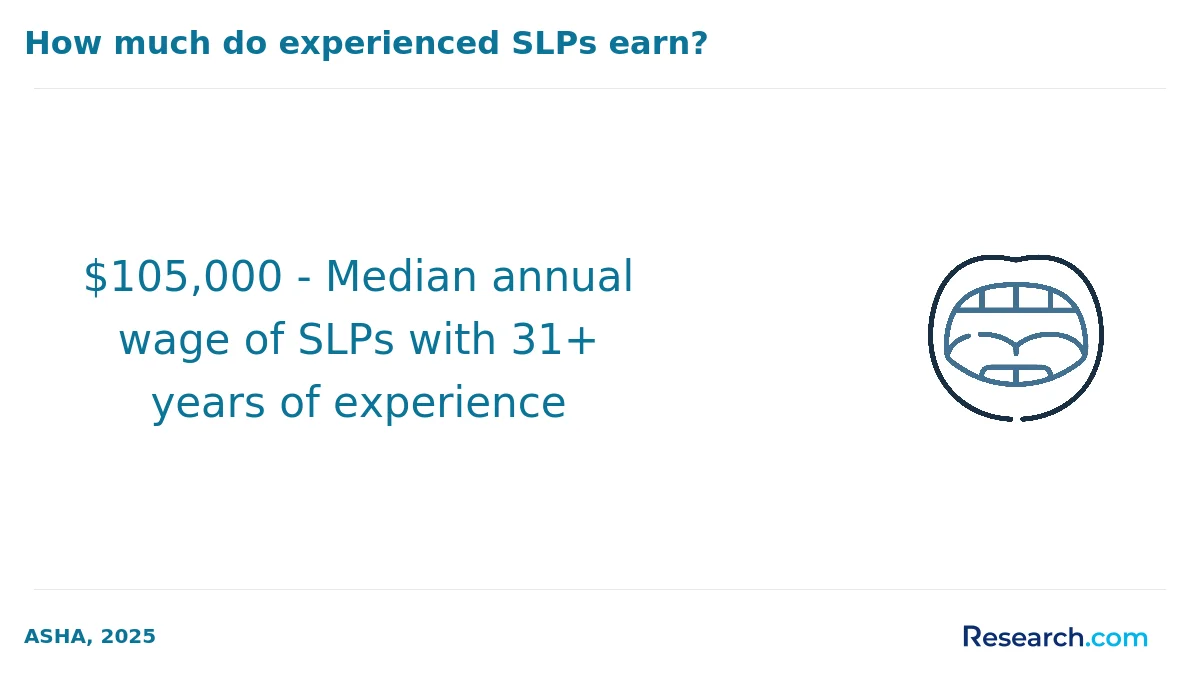
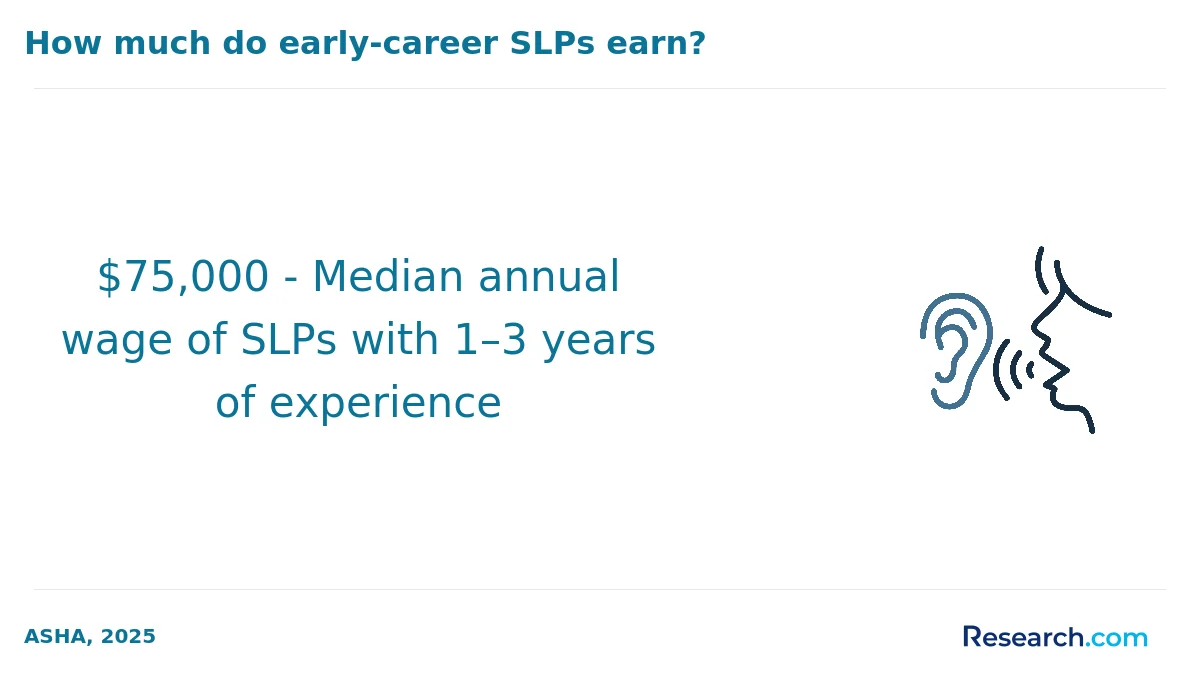
The BLS reported a $97,870 median annual wage for speech-language pathologists in May 2026. This is a national median, not a guarantee. Actual pay can vary by state, employer type, years of experience, caseload, work schedule, and whether the role is school-year or year-round.
The table below summarizes common career settings. Use it to think about which program features matter most for your intended work environment.
| Career setting | Typical responsibilities | Program features to prioritize |
| K-12 schools | Evaluate and support students with speech, language, fluency, and communication needs | School-based practicum, IEP documentation experience, pediatric assessment training |
| Hospitals | Work with swallowing, cognitive-communication, voice, and acute-care communication needs | Medical SLP coursework, adult practicum access, interprofessional training |
| Rehabilitation centers | Support patients recovering from stroke, brain injury, or neurological conditions | Adult neurogenic disorders, dysphagia training, evidence-based treatment planning |
| Early intervention | Serve infants, toddlers, and families in home or community settings | Family-centered practice, child language development, early assessment experience |
| Private practice or telepractice | Provide outpatient, pediatric, adult, or specialized communication services | Telepractice exposure, documentation skills, ethics, and business awareness |
Career outcomes are strongest when a program aligns clinical placements with the setting where you want to work. If you want a medical SLP role, ask how many students secure adult medical placements. If you want a school role, ask about school-based practicum availability and state education credential requirements.
Speech pathology is also part of a broader allied health labor market in which employers value licensure-ready graduates with supervised practice experience. Students comparing nutrition, rehabilitation, communication, and nursing-related fields may find useful parallels in guides to the best online registered dietitian programs, where accreditation and supervised practice also shape career eligibility.
AI and automation are affecting documentation, screening tools, and telepractice workflows, but they are not replacing the need for licensed clinical judgment. Future SLPs should look for programs that teach ethical technology use, evidence-based decision-making, and culturally responsive communication.
How Do Online and Campus-Based Speech Pathology Degree Programs Compare?
Online and campus-based speech pathology programs can both be rigorous, accredited, and licensure-oriented. The main differences are usually schedule structure, access to local clinical placements, peer interaction, travel requirements, and how students receive hands-on coaching.
The table below compares the two formats across decision factors that matter most for SLP students. Use it to decide whether convenience, campus access, or clinical infrastructure should carry more weight in your search.
| Decision factor | Online program | Campus-based program |
| Course access | Can reduce relocation needs and expand school choice | Requires regular presence on or near campus |
| Class interaction | May use live video, discussion boards, simulations, and virtual labs | Offers in-person discussion, labs, and informal faculty access |
| Clinical placements | Often arranged near the student, depending on state authorization and site availability | May rely on established local university-affiliated sites |
| Schedule flexibility | Often better for working adults, especially if part-time options exist | May offer more predictable daytime structure |
| Networking | Can include national cohorts and remote professional events | Often stronger for local employer relationships |
| Costs | May reduce relocation costs but can include technology and travel fees | May require commuting, housing, or relocation expenses |
Online programs make sense for students who cannot relocate, need to keep working, or live near potential clinical sites. Campus programs may be better for students who want in-person labs, have access to a strong local university clinic, or learn best through face-to-face interaction.
The biggest mistake is assuming one format is automatically easier. Accredited online SLP programs still require graduate-level academic work, clinical competencies, and professional standards. The best choice is the format that helps you complete the degree without compromising clinical preparation.
How Should Students Choose the Best Accredited Online Speech Pathology Degree Program?
The best accredited online speech pathology degree program is the one that meets licensure requirements, fits your schedule, provides credible clinical support, and has a total cost you can manage. Instead of choosing from a ranking alone, build a decision scorecard based on factors that affect graduation and career readiness.
A practical selection process should move from non-negotiables to preferences. Start with accreditation and licensure fit, then compare cost, admissions, flexibility, placement quality, and student support.
- Verify institutional accreditation and CAA status for the graduate program.
- Confirm the program accepts students from your state and supports licensure requirements where you plan to work.
- Calculate total cost, including tuition, fees, travel, clinical compliance expenses, and loan interest.
- Compare clinical placement policies, including who finds sites and how supervisors are approved.
- Review admissions requirements and identify missing prerequisites before applying.
- Ask about graduation timelines, Praxis preparation, and recent student outcomes.
- Choose the format that matches your weekly availability, not just your preferred learning style.
- Compare financial aid offers after scholarships and grants, not before.
When speaking with admissions counselors, ask direct questions that reveal program quality. Useful questions include:
- Is the master's program currently CAA-accredited, and when is its next review?
- Does the curriculum meet requirements for licensure in my state?
- How are online students matched with clinical placements?
- What happens if a local placement site becomes unavailable?
- Are campus visits required, and what costs should I expect?
- What percentage of students complete the program on time?
- How does the program prepare students for the Praxis exam and the clinical fellowship stage?
- Can I speak with current students or recent graduates from the online track?
Students should consider a different path if they are not ready for graduate-level science coursework, cannot make time for supervised clinical placements, or need a credential that leads to employment faster than a full SLP licensure pathway. In those cases, related support roles, communication sciences undergraduate study, or another healthcare program may be a better short-term fit.
The strongest overall choice usually balances affordability, accredited clinical preparation, state licensure alignment, and realistic completion. A program does not need to be the cheapest or most selective to be the best investment for your goals.
Other Things You Should Know About Speech Pathology
Usually no. A bachelor's degree in communication sciences and disorders can prepare you for graduate school, but independent SLP practice generally requires a qualifying master's degree, supervised clinical experience, exams, and state licensure.
A speech-language pathologist evaluates, diagnoses, and treats communication and swallowing disorders. A speech-language pathology assistant supports services under supervision, but scope of practice and education requirements vary by state.
Yes, clinical training is required. Some activities may use simulation or telepractice, but students should expect supervised clinical experiences with clients or patients in approved settings.
Possibly, but you should confirm state authorization, placement availability, and licensure requirements before enrolling. A program that works for one state may not automatically satisfy requirements in another.
References
- U.S. Bureau of Labor Statistics - Speech-Language Pathologists https://www.bls.gov/ooh/healthcare/speech-language-pathologists.htm
- ASHA EdFind - Accredited Speech-Language Pathology Programs https://find.asha.org/ed/
- O*NET OnLine - Speech-Language Pathologists https://www.onetonline.org/link/summary/29-1127.00
- California State University-Northridge - Master of Science in Communicative Disorders (Online) https://tsengcollege.csun.edu/programs/CDS
- Nova Southeastern University - SLP Program - Master of Science in Speech-Language Pathology https://osteopathic.nova.edu/degrees/masters/speech-language-pathology/index.html
- New York University - Online MS, Communicative Sciences and Disorders (Speech@NYU) https://steinhardt.nyu.edu/degree/online-ms-communicative-sciences-and-disorders
- University of North Carolina at Greensboro - Speech-Language Pathology, M.A. (Online) https://csd.uncg.edu/graduate/masters-of-arts-online/
- Emerson College - Master of Science (M.S.) in Communication Disorders (Speech@Emerson, online) https://speech.emerson.edu/