2027 Online Speech Pathology Degree Programs With No Letters of Recommendation Required

Co-Founder and Chief Data Scientist
Finding an online speech pathology program can be difficult when you do not have recent professors or supervisors available to recommend you. Streamlined admissions may help, but they do not replace the academic and clinical standards required for speech-language pathology careers.
The U.S. Bureau of Labor Statistics projects 19% employment growth for speech-language pathologists from 2023 to 2033, well above the average for all occupations. This guide explains where no-letter policies are most realistic, what schools review instead, and how to choose a legitimate program aligned with your goals.
Key Things You Should Know
- "No letters of recommendation required" means an applicant can submit a complete application without references; it does not mean transcripts, prerequisite coursework, GPA standards, essays, or interviews are waived.
- Fully online, entry-level bachelor's and degree-completion programs are more likely than CAA-accredited master's programs in speech-language pathology to use no-letter admissions; a master's degree is generally required for U.S. speech-language pathologist licensure.
- For career-qualifying graduate study, verify CAA accreditation, clinical-placement support, state licensure eligibility, and the full cost - not just simplified admissions. BLS projects 19% growth in speech-language pathologist employment from 2023 to 2033.
Which Online Speech Pathology Degree Programs Require No Letters of Recommendation?
Programs should be separated by degree level before comparing admissions policies. An online bachelor's degree in communication sciences and disorders (CSD), speech and hearing science, or speech-language pathology support studies may have institution-wide admissions requirements that do not include recommendations. These programs can prepare students for graduate school or related support roles, but they do not independently qualify graduates to become licensed speech-language pathologists.
Online master's programs intended to lead to speech-language pathology licensure are different. Most programs accredited by the Council on Academic Accreditation in Audiology and Speech-Language Pathology (CAA) use a holistic, selective review and commonly request two or three recommendations. A school may waive letters for a narrowly defined applicant group, such as an internal student or a person who recently completed a specified degree, but that is not the same as a standing no-letter policy.
This comparison shows where applicants are most likely to encounter a true no-recommendation requirement and what each route can lead to.
| Online program type | Likelihood of no-letter admissions | Typical purpose | Important limitation |
| Bachelor's in CSD or speech and hearing science | More common, especially for first-year or transfer admission | Builds academic foundations and graduate-school prerequisites | Does not qualify a graduate for SLP licensure |
| Post-baccalaureate prerequisite program | Varies by school | Helps non-CSD majors complete graduate prerequisites | Usually does not award an SLP-qualifying graduate degree |
| SLP assistant-focused certificate or bachelor's pathway | May be more common | Supports eligibility for assistant roles where permitted | Requirements and permitted duties vary by state |
| Master's in speech-language pathology | Less common | Prepares students for clinical fellowship and licensure steps | Must be CAA-accredited and meet state-specific requirements |
Do not rely on search snippets, third-party listings, or a school's general undergraduate admissions page. Open the application requirements for the exact online major, degree level, term, and applicant type. If the page says letters are "recommended," "encouraged," or "may be requested," treat them as strategically important rather than assuming they are unnecessary.
Students exploring broader health-care education pathways may also compare admissions structures in MA to LPN bridge programs online, though nursing and speech-language pathology have different professional accreditation and licensure rules.
What Are the Admission Requirements for Online Speech Pathology Degree Programs With No Recommendation Letters?
A no-letter policy removes one application component, not the school's responsibility to assess academic readiness. Requirements vary substantially between undergraduate, post-baccalaureate, and graduate options. Graduate programs may also set separate standards for applicants with a CSD degree and applicants completing prerequisites from another field.
The following materials commonly replace or supplement recommendation letters. Confirm the requirements in the current program application because schools can change them by admission cycle.
- Official transcripts from every college attended, including transfer and dual-enrollment coursework
- A minimum cumulative or prerequisite GPA, often with closer review of anatomy, statistics, phonetics, language development, and related courses
- Completion of prerequisite CSD coursework for master's-level admission
- A personal statement explaining academic preparation, career goals, and experience with communication disorders or service populations
- A resume documenting employment, volunteer work, observation hours, leadership, or relevant human-services experience
- Standardized test scores only when the program specifically requires them; many programs have reduced or eliminated GRE requirements
- An interview, recorded response, writing sample, or supplemental questions when the program wants more evidence of communication and professional skills
A bachelor's applicant may need only an application, transcripts, and placement information. A graduate applicant can face a much more detailed review even when letters are not required. For example, completion of prerequisite courses and evidence that clinical placement requirements can be met may carry more weight than an undergraduate program's basic admission checklist.
Applicants who are changing careers should inventory prerequisites early. A streamlined application does not make missing science, statistics, language-development, or introductory CSD courses disappear. Ask whether the school offers conditional admission, a formal leveling sequence, or a separate post-baccalaureate option.
Are Online Speech Pathology Programs With No Letters of Recommendation Easier to Get Into?
Not necessarily. A program can remove recommendations to reduce administrative friction for working adults, transfer students, and applicants without recent academic contacts while still applying rigorous standards to transcripts, prerequisite grades, writing, and interviews. "No letters required" describes an application rule, not an acceptance rate or academic quality level.
For a clinical master's program, admissions staff must still determine whether applicants can succeed in demanding graduate coursework and supervised clinical education. Programs may compensate for the absence of letters by examining prerequisite performance more closely, requiring a focused essay, or interviewing applicants. Some cohorts are small because clinical education capacity is limited, which can keep admission competitive regardless of the document list.
The distinction below can help applicants avoid interpreting convenience as lower selectivity.
| Admissions feature | What it can indicate | What it does not establish |
| No recommendations required | A simpler application process or a different evaluation model | Guaranteed admission or lower academic standards |
| No GRE required | Greater reliance on transcripts and other evidence | That GPA and prerequisite expectations are flexible |
| Rolling admission | Applications may be reviewed across a longer period | That places will remain available until the deadline |
| Fully or mostly online coursework | Distance-friendly academic delivery | That clinical experiences can be completed entirely from home |
Applicants should avoid programs that imply simple admission alone is evidence of career readiness. A better approach is to compare the stated minimum GPA with the profile of recently admitted students when available, the number of clinical placements supported, graduation outcomes, and whether the curriculum meets the requirements of the state where you plan to practice.
If your priority is a flexible pace while completing general education or prerequisite coursework, self paced online colleges can illustrate formats worth comparing. Clinical SLP preparation, however, generally follows sequenced courses and supervised placement schedules rather than a fully self-paced model.
What Do Online Speech Pathology Programs Evaluate Instead of Letters of Recommendation?
Recommendations traditionally provide outside evidence of an applicant's reliability, communication, maturity, and capacity for graduate work. When letters are not part of the application, a school usually looks for equivalent evidence across materials the applicant controls directly. This can benefit applicants with nontraditional backgrounds, but it also makes accuracy and specificity in the rest of the application especially important.
Admissions reviewers commonly assess the following areas in combination rather than relying on one score or document.
| Application evidence | What it may help demonstrate | How to strengthen it |
| Overall and prerequisite GPA | Academic consistency and readiness for advanced study | Explain meaningful academic improvement briefly and factually if needed |
| Personal statement | Career purpose, reflection, writing ability, and fit | Connect specific experiences to the program's population, format, and goals |
| Resume | Work ethic, relevant service, leadership, and transferable skills | Use concrete responsibilities and outcomes rather than broad job labels |
| Interview or recorded response | Professional communication, judgment, and readiness | Practice concise examples that show ethics, collaboration, and adaptability |
| Prerequisite coursework | Preparation in foundational CSD concepts | Confirm each course matches the program's required content and grade threshold |
A strong personal statement should not attempt to imitate a recommendation letter. Instead, explain why the degree is necessary for your intended role, what you learned from relevant work or observation, and how you will manage online coursework and required clinical commitments. Avoid unsupported claims about being "passionate" without examples.
Applicants moving from nursing or another clinical profession may find it useful to compare advanced-degree planning with an MSN to DNP program. Prior clinical employment can strengthen an SLP application, but it does not automatically fulfill CSD prerequisites or supervised clinical requirements.
How Can You Tell if an Online Speech Pathology Degree With No Recommendation Requirement Is Accredited and Legitimate?
Accreditation is the most important quality check for applicants whose goal is speech-language pathologist licensure. In the United States, an entry-level master's degree from a program accredited by the American Speech-Language-Hearing Association's Council on Academic Accreditation in Audiology and Speech-Language Pathology is the standard educational route toward certification and licensure. Institutional accreditation alone is not enough for a clinical SLP master's program.
Use these checks before paying an application fee or making an enrollment deposit.
- Confirm the institution's recognized institutional accreditation through the U.S. Department of Education or Council for Higher Education Accreditation directory.
- For a master's program leading to SLP practice, find the exact degree in the CAA program directory and check its current accreditation status.
- Review the program's disclosures for online students, including clinical education format, required in-person activities, and how placements are arranged.
- Check the licensing board requirements in the state where you expect to complete clinical training and later practice.
- Ask whether the curriculum supports ASHA certification requirements, including supervised clinical practicum and the post-graduate clinical fellowship pathway.
- Request current tuition, fees, technology costs, travel expectations, and policies for delayed or unavailable placements in writing.
A legitimate online program is not necessarily fully remote. Courses may be online while clinical practicum takes place in approved schools, hospitals, private practices, or other local sites under qualified supervision. Be cautious of any program that promises licensure without supervised clinical education, cannot explain state authorization, or is vague about accreditation status and placement responsibilities.
Employer perception generally follows the credential, accredited program quality, clinical preparation, and licensure eligibility - not whether lectures were online. This is why a no-letter policy should be one comparison point, not the deciding factor.
How Much Do Online Speech Pathology Degree Programs With No Letters of Recommendation Cost?
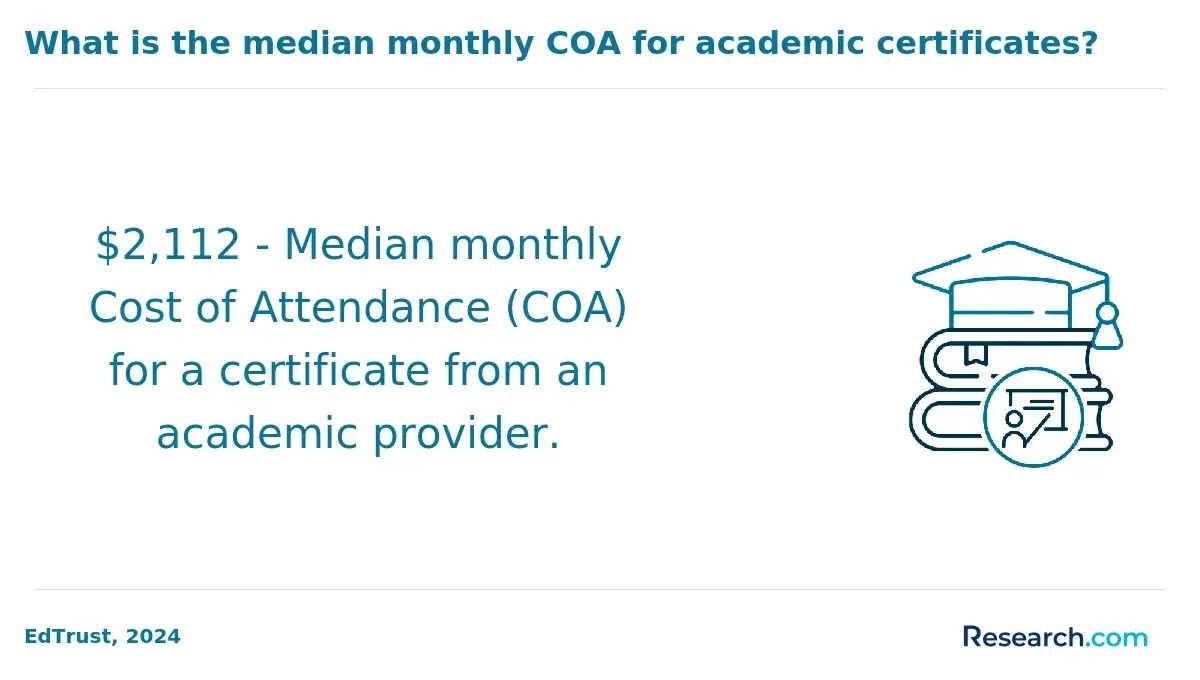
Admissions requirements do not determine tuition. A no-recommendation program may cost less, the same, or more than a program requesting letters, depending on public or private status, residency rules, credit requirements, clinical fees, and whether the degree is undergraduate or graduate level. Compare the estimated total program cost rather than only the advertised per-credit rate.
For career context, the U.S. Bureau of Labor Statistics reported a median annual wage of $95,410 for speech-language pathologists in May 2024. That figure describes workers in the occupation, not a starting salary or a return-on-investment guarantee; pay varies by setting, location, experience, and schedule.
The cost categories below are useful when requesting an individualized financial estimate from each school.
| Cost category | Why it matters for online SLP students | What to ask |
| Tuition and required credits | Programs may charge by credit, term, or cohort | What is the estimated tuition through graduation at my expected course load? |
| Mandatory university and program fees | Online, clinical, technology, graduation, and laboratory fees can add to tuition | Which fees are charged each term and which are one-time? |
| Clinical education expenses | Travel, background checks, immunizations, attire, and site-related costs may be student expenses | What costs should I expect before each placement? |
| Residency and campus requirements | Short intensives or simulations may require travel and lodging | How many required visits occur, where, and at whose expense? |
| Time away from paid work | Clinical schedules can limit employment flexibility | When do full-time daytime clinical commitments begin? |
Include the opportunity cost of reduced work hours during practicum. A lower tuition figure can be less affordable if the program provides little clarity about placement timing or requires repeated travel. Students interested in allied-health degrees with a nutrition focus can also review best online registered dietitian programs, but should evaluate each profession's distinct internship, accreditation, and credentialing costs.
Can You Get Financial Aid for an Online Speech Pathology Degree With Streamlined Admissions?
Yes, eligible students can generally seek federal financial aid for an online degree offered by an eligible institution, and a no-recommendation admissions policy does not by itself affect aid eligibility. Students should submit the Free Application for Federal Student Aid (FAFSA) early and verify that the specific online program participates in federal student aid programs.
Graduate and undergraduate aid packages differ. Undergraduates may be considered for need-based grants, Direct Loans, work-study, and institutional awards. Graduate students are commonly offered Direct Unsubsidized Loans and, if eligible and needed, Direct PLUS Loans. Scholarships can have separate deadlines and may still request essays, proof of employment, or recommendations even when the degree application does not.
Before borrowing, compare the school's cost of attendance with your realistic enrollment pattern. Ask the financial aid office how part-time enrollment, summer terms, clinical placements, repeated courses, and leaves of absence affect eligibility. Also ask whether institutional scholarships are available to online students and whether they renew automatically or require a separate application.
Keep admissions and financial aid tasks separate. Missing a recommendation letter may not block admission at a streamlined program, but missing verification requests, satisfactory academic progress rules, or loan counseling can delay aid disbursement.
How Long Does an Online Speech Pathology Degree With No Letters of Recommendation Take to Complete?
Completion time depends on the credential, prior coursework, program sequencing, and clinical education requirements - not on whether the application asks for recommendations. An online bachelor's completion program may be shorter for a student who transfers substantial general education credit. A post-baccalaureate sequence lengthens the path for students without CSD prerequisites. Master's programs commonly require multiple terms of sequenced academic and clinical preparation.
This timeline summarizes the planning variables that most affect duration.
| Pathway | Typical timing factors | Planning consideration |
| Bachelor's degree in CSD | Transfer credit, general education completion, and major sequence | Confirm that the curriculum includes prerequisites expected by target graduate schools |
| Post-baccalaureate CSD preparation | Number of missing foundational courses and course availability | Verify that credits are accepted by the graduate programs you may pursue |
| Master's in SLP | Lockstep cohorts, practica, externships, and comprehensive requirements | Plan for daytime clinical commitments even if lectures are online |
| SLP assistant pathway | State rules, degree level, and supervised experience requirements | Check whether the credential supports work in your intended state |
Ask for a term-by-term sample plan, not simply an advertised completion range. Students with caregiving or work obligations should identify when synchronous sessions, campus intensives, and clinical placements occur. A program that is asynchronous early in the curriculum may become schedule-intensive during practicum.
Applicants should also account for application timing. Cohort-based graduate programs may admit once per year, so postponing an application while completing missing prerequisites can shift the start date materially.
Can You Transfer Credits Into an Online Speech Pathology Degree Program With No Recommendation Letters?
Many online undergraduate programs accept transfer credit, but policies vary by institution, course equivalency, grade earned, age of the course, and residency requirement. No-letter admissions do not guarantee that previous credit will transfer. Request an official evaluation before assuming a faster completion date.
Graduate SLP programs are usually more restrictive because courses and clinical requirements are sequenced and tied to accreditation standards. A school may accept qualifying prerequisite courses from another institution, but it may not accept graduate clinical practicum hours or allow broad transfer of graduate SLP coursework. Students changing programs should ask about transfer limits before withdrawing from their current school.
To avoid costly surprises, take these steps before enrolling.
- Send official transcripts for a formal - not informal - transfer evaluation.
- Save syllabi, catalog descriptions, assignments, and course outlines for prerequisite courses that may need content review.
- Ask which credits apply specifically to the CSD major, not only to elective credit.
- Confirm the minimum grade required for each prerequisite and whether there is a recency limit.
- Get the resulting course plan in writing, including remaining credits and the earliest possible clinical-placement term.
Transfer students should prioritize academic fit over speed. A course that transfers as elective credit may not satisfy a graduate prerequisite in phonetics, language development, statistics, anatomy, or hearing science. If your long-term plan is graduate SLP study, compare prerequisite acceptance policies at several target master's programs before choosing an undergraduate or leveling provider.
How Should You Compare Online Speech Pathology Degree Programs That Do Not Require Letters of Recommendation?
Start with your career endpoint. A student seeking eventual SLP licensure needs a different program than someone pursuing a bachelor's degree, post-baccalaureate preparation, or an assistant-level role. Once the degree type is clear, compare each program's verified admissions policy alongside outcomes, cost, clinical design, and state eligibility.
Use this framework when narrowing a list. It keeps a convenient application feature in proportion to the factors that determine educational and career value.
| Comparison question | Why it matters | Strong sign |
| Are recommendation letters truly not required for my exact applicant category? | Policies may differ for transfer, graduate, international, or conditional applicants | The current application checklist explicitly states that no letters are required |
| Is the degree aligned with my target role? | A bachelor's, assistant credential, and clinical master's lead to different opportunities | The school clearly states the credential's career and licensure purpose |
| Does the master's program hold appropriate CAA accreditation? | Accreditation is central to the standard U.S. SLP licensure path | The exact program appears with a current status in the CAA directory |
| How are clinical placements handled? | Placement access affects progression, cost, and time to graduation | Written details explain support, geographic limits, requirements, and contingency policies |
| What is the total estimated cost? | Tuition excludes many required education expenses | A written estimate includes fees, travel expectations, and clinical-related expenses |
| Can graduates meet requirements in my state? | Licensure laws and distance-education authorization vary | The program provides state-specific disclosures and encourages board verification |
Common mistakes include assuming "no letters" means automatic admission, selecting a school before checking programmatic accreditation, overlooking prerequisite grades, and treating online delivery as a promise of fully remote clinical training. Another frequent error is comparing only tuition while ignoring placement travel, lost work time, and possible out-of-state intensives.
Before applying, email or call admissions with a short, specific set of questions: Is a recommendation letter required, optional, or conditionally requested for my application type? What materials are used instead? Is the online curriculum available to residents of my state? Who secures clinical sites? What is the estimated all-in cost through completion? Save the responses with the applicable catalog year.
A no-recommendation program is a good option for applicants who can demonstrate readiness through strong coursework, a purposeful statement, and relevant experience but lack suitable references. It is a poor reason by itself to choose a degree that does not support the credential, state authorization, clinical experience, or career outcome you need.
For readers comparing other online clinical advancement routes, RN to BSN programs offer a separate example of how program format and clinical expectations can differ by profession.
Other Things You Should Know About Speech Pathology
No. In the United States, the usual pathway requires a qualifying master's degree in speech-language pathology, supervised clinical experience, a clinical fellowship, examination requirements, and state licensure steps. An online bachelor's degree can be a useful foundation, but it is not the terminal credential for independent SLP practice.
Look for programs whose current application checklist explicitly omits letters. Strengthen the materials that remain, especially your transcript, personal statement, resume, and prerequisite record. If a program lists letters as optional, ask admissions whether submitting one would materially strengthen your application before deciding not to provide it.
Requirements vary. Some undergraduate and post-baccalaureate programs encourage observation or relevant volunteer experience, while graduate programs may specify observation, experiential learning, or other preparation. Confirm whether hours are required for admission, recommended only, or incorporated after enrollment.
Check the school's official program admissions page, the application portal checklist, and the catalog for your intended entry term. Then contact admissions and ask for written confirmation for your degree, campus or online format, and applicant category. Policies can change between admission cycles.
References
- Homepage https://speechpathologymastersprograms.com/
- Letters of Recommendation https://www.lsac.org/applying-law-school/jd-application-process/credential-assembly-service-cas/letters-recommendation
- Application FAQ https://jetprogramusa.org/application-faq/
- Recommender guide https://www.commonapp.org/counselors-and-recommenders/recommender-guide/
- 2025 Most Affordable Online Speech Pathology Master's Degrees https://www.onlineu.com/most-affordable-colleges/speech-pathology-masters-degrees
- How Much Does It Cost to Become a Speech Pathologist | Advanced Therapy Clinic https://www.advancedtherapyclinic.com/blog/how-much-does-it-cost-to-become-a-speech-pathologist
- College Admissions Rec Letters are a Waste of Time - Tex Admissions https://www.texadmissions.com/blog/2025/5/1/college-admissions-recommendation-letters-are-a-waste-of-time
- The Truth About Recommendation Letters https://www.ivywise.com/ivywise-knowledgebase/the-truth-about-recommendation-letters/
- Online MSLP Programs with No GRE Requirement for Admissions https://www.speechpathologydegrees.com/online/mslp-no-gre-required
- Does the Letter of Recommendation Still Matter in College Admissions? https://www.saraharberson.com/blog/letter-of-recommendation-still-matter-college-admissions