
2027 Weekly Start Online Degrees vs Self-Paced Accelerated Speech Pathology Degree Programs

Co-Founder and Chief Data Scientist

Reviewed by Rhea Paul, PhD
SLP Education & Research Expert
The key choice is not simply “online versus online.” For speech pathology students, the harder decision is whether to choose a weekly start format with regular deadlines or a self-paced accelerated format that gives you more control over speed. Both can work, but they serve different learners. A weekly start program is usually better for students who want structure, faculty touchpoints, and a predictable rhythm. A self-paced accelerated program may fit students who are highly organized, have protected study time, and want to finish faster.
According to the American Speech-Language-Hearing Association, online enrollment in communication sciences programs has increased by 35% over the last five years. That growth makes format comparison more important. In speech pathology, students must think beyond convenience: accreditation, clinical requirements, supervision, prerequisites, tuition model, and employer perception all affect whether a program is a practical path to the profession. This guide compares weekly start online degrees and self-paced accelerated speech pathology programs by structure, admissions, completion time, flexibility, difficulty, grading, tuition, instructor support, employer preference, salary outcomes, and graduate experience.
Key Benefits of Weekly Start Online Degrees vs Self-Paced Accelerated Speech Pathology Degree Programs
- Weekly start online degrees offer flexible enrollment, enabling students to begin courses anytime, which reduces wait time and supports continuous progress in speech pathology studies.
- Self-paced accelerated programs often lower overall costs by shortening program duration, allowing students to enter the workforce sooner and minimize tuition expenses.
- Both formats contribute to higher student success rates in speech pathology by accommodating diverse learning styles and schedules, with online completers showing 15% greater retention.
How Are Weekly Start Online Degrees and Self-Paced Accelerated Speech Pathology Programs Structured?
Weekly start online degrees and self-paced accelerated speech pathology programs differ mainly in how they control time. Weekly start programs create a steady academic rhythm. Self-paced accelerated programs shift more responsibility to the student. Before comparing cost or speed, students should understand how each model affects deadlines, faculty interaction, clinical readiness, and weekly workload.
Weekly start online degrees
- Course pacing: Courses usually open on a regular weekly schedule, with modules, readings, discussions, and assignments released in sequence. This helps students build consistent study habits.
- Term length: Courses commonly follow fixed terms lasting 4 to 8 weeks per course, which gives students a clear calendar for planning work, caregiving, and clinical obligations.
- Assignment schedule: Deadlines are typically weekly or biweekly. This structure can reduce procrastination risk, a concern noted by the U.S. Department of Education in relation to online learning persistence.
- Time commitment: Students can expect 15 to 20 hours weekly, including asynchronous lectures, readings, online discussions, projects, and occasional synchronous activities.
- Best fit: This format tends to work well for students who want accountability, instructor reminders, peer interaction, and a predictable workload.
Self-paced accelerated degrees
- Flexible pacing: Students decide when to study and how quickly to move through course material. This can be valuable for disciplined learners but risky for those who need frequent checkpoints.
- Variable term length: Completion speed depends heavily on how much time the student can devote. Motivated learners may move quickly, while students with demanding schedules may need more time.
- Assessment methods: Some evaluations may be available on demand, allowing students to test or submit work when ready rather than waiting for a classwide deadline.
- Time commitment: Weekly hours can vary widely. Students who want to accelerate must usually commit more study time over a shorter period while still meeting program and accreditation expectations.
- Best fit: This model is strongest for independent learners who can plan backward from graduation requirements, clinical milestones, and licensing goals.
| Feature | Weekly start online degree | Self-paced accelerated program |
| Schedule | Structured weekly progression | Student-controlled pace |
| Deadlines | Regular weekly or biweekly deadlines | Flexible or milestone-based deadlines |
| Accountability | Built into the course calendar | Depends more on student self-management |
| Interaction | Often more routine peer and instructor contact | Often more independent and asynchronous |
| Main advantage | Predictability | Speed and control |
Students comparing formats should also compare tuition, clinical placement support, and accreditation status. For a related cost-focused review, see online speech pathology programs masters. Students looking at other flexible online education pathways may also find BCBA programs online useful for comparison.
Are Weekly Start Online Speech Pathology Programs Easier to Get Into vs Self-Paced Accelerated Programs?
Weekly start online speech pathology programs are not automatically easier to get into than self-paced accelerated programs. Frequent start dates may make weekly start programs feel more accessible, but admissions standards are usually tied to academic quality, prerequisites, accreditation expectations, and clinical preparation rather than course pacing. A 2022 Council on Academic Accreditation report showed acceptance rates generally fall between 30% and 50% for online speech pathology programs regardless of pacing.
Applicants should compare admissions requirements program by program instead of assuming one format is less selective. The main factors are usually the same.
- GPA expectations: Both formats typically require a competitive GPA, usually around 3.0 or higher. A higher GPA can strengthen an application, especially when prerequisite grades are reviewed closely.
- Prerequisites: Foundational coursework in areas such as linguistics, anatomy, and communication is commonly required for weekly start online speech pathology admissions and self-paced accelerated speech pathology program acceptance alike.
- Standardized testing: GRE policies vary by institution. Some programs require it, some make it optional, and some do not use it. The policy is usually not determined by whether the program is weekly start or self-paced.
- Professional experience: Relevant work, volunteer, research, or observation experience can help demonstrate commitment to the field, especially for career changers.
- Personal statement: Admissions committees often look for evidence that applicants understand the demands of speech pathology, including clinical training, ethical practice, and service to diverse clients.
- Recommendation letters: Strong academic or professional references can help verify readiness for graduate-level work and online learning.
Common admissions mistakes
- Assuming frequent start dates mean open admission.
- Applying before completing required prerequisite courses.
- Overlooking accreditation status and clinical placement expectations.
- Choosing the fastest format without confirming it supports long-term licensure goals.
- Submitting a generic personal statement that does not explain why speech pathology is the right field.
Students considering adjacent helping-profession pathways may also compare requirements for the best online CACREP counseling programs, especially if they are still deciding between counseling, behavior analysis, and communication sciences careers.
How Long Does a Weekly Start Online Degree Take to Complete vs Self-Paced Accelerated Speech Pathology Degree?
Completion time affects tuition, financial aid planning, clinical scheduling, and when a student can begin pursuing full-time professional work. Nearly 60% of online learners prefer programs that offer quicker completion to minimize costs and enter the workforce sooner. Weekly start online degrees and self-paced accelerated speech pathology degrees can both shorten the path, but they do so in different ways.
- Term length: Weekly start degrees follow fixed semester or term schedules, typically lasting 12 to 18 months in accelerated formats. Self-paced speech pathology programs allow learners to progress continuously, often completing their studies between 9 months and 2 years.
- Pacing control: Weekly start students move through courses according to a predetermined timeline. Self-paced students can speed up or slow down based on work schedules, family responsibilities, health, and academic readiness.
- Credit load: Weekly start programs usually limit progress through scheduled course sequences. Self-paced learners may be able to take a heavier workload when prepared, which can reduce total time if the program permits it.
- Transfer credits: Both formats may accept previously earned credits. The actual time savings depend on transfer policies, course equivalencies, minimum residency requirements, and whether credits apply to required speech pathology coursework.
- Enrollment flexibility: Weekly start programs use fixed enrollment windows, while self-paced options may allow faster course access across the year. This can help students maintain momentum, but only if they can keep up with the workload.
- Clinical sequencing: Speech pathology students should verify how clinical experiences fit into the timeline. Even if coursework is self-paced, supervised clinical requirements may follow a separate schedule.
| Factor | Weekly start online degree | Self-paced accelerated degree |
| Typical accelerated completion range | 12 to 18 months | 9 months to 2 years |
| Student control over pace | Moderate | High |
| Risk to watch | Waiting for the next scheduled course | Falling behind without external deadlines |
| Best for | Students who want a clear completion calendar | Students who can sustain intensive independent work |
A professional who completed a self-paced accelerated speech pathology degree described the experience as flexible but demanding. He said the main challenge was balancing coursework with work and family while managing his own academic pace. “Knowing I could adjust my schedule helped me stay motivated through busy periods,” he said. He valued being able to start courses as soon as he felt ready, which helped him maintain momentum. At the same time, he noted that the flexibility required discipline; when the workload became overwhelming, he had to slow down and reset his plan.
How Flexible Are Weekly Start Online Degrees vs Self-Paced Accelerated Speech Pathology Programs?
Self-paced accelerated speech pathology programs are generally more flexible than weekly start online degrees, but that flexibility comes with more personal responsibility. Weekly start programs offer flexibility in location and frequent entry points, yet they still use fixed course calendars. Self-paced programs give students more control over when and how quickly they study, but they may provide fewer routine reminders and less peer momentum.
- Scheduling control: Weekly start programs follow set timelines and cohort-based schedules. Self-paced accelerated speech pathology programs allow students to decide when to study and how quickly to complete modules.
- Pacing speed: Self-paced programs often make faster completion possible for students who can devote substantial time. Weekly start degrees usually maintain a steadier pace to keep students aligned with course and cohort expectations.
- Start dates: Weekly start models offer scheduled but frequent start dates. Self-paced formats may permit immediate or more continuous enrollment, depending on the institution.
- Assignment deadlines: Weekly start courses usually require students to meet strict deadlines. Self-paced learners may have flexible deadlines or milestone-based assessments, but they still need to satisfy all academic and clinical requirements.
- Instructor interaction: Weekly start courses tend to include more routine communication, such as scheduled discussions, office hours, or live sessions. Self-paced study often relies more on asynchronous instructor contact.
- Ability to pause or accelerate progress: Self-paced programs make it easier to slow down during busy periods or accelerate when time is available. Weekly start programs usually require students to remain aligned with the course calendar.
Which format is more flexible for different students?
| Student situation | Usually better fit | Reason |
| Predictable weekly schedule | Weekly start online degree | Regular deadlines can support steady progress |
| Irregular work shifts or caregiving duties | Self-paced accelerated program | Students can study around changing availability |
| Needs instructor reminders and peer accountability | Weekly start online degree | The structure creates more external checkpoints |
| Can study intensively for long blocks | Self-paced accelerated program | Flexible pacing may shorten completion time |
According to data from the Online Learning Consortium (2023), 65% of adult learners favor self-paced courses for managing unpredictable schedules. That preference is understandable, but students should not treat flexibility as the only measure of fit. In speech pathology, clinical placement timing, faculty feedback, and supervised skill development matter as much as the online course calendar.
Are Self-Paced Accelerated Speech Pathology Degrees Harder Than Weekly Start Online Programs?
Self-paced accelerated speech pathology degrees are not necessarily harder in content, but they can be harder to manage. The academic expectations may be similar, yet the learning environment changes. In a weekly start program, the schedule creates structure. In a self-paced accelerated program, the student must create that structure independently.
- Workload intensity: Accelerated self-paced programs can compress coursework into shorter periods, requiring longer and more concentrated study sessions. Weekly start programs spread tasks more evenly across the term.
- Pacing expectations: Self-paced formats give students freedom, but that freedom can become a liability without a weekly plan. Weekly start programs reduce ambiguity by setting the next assignment, quiz, or discussion deadline.
- Self-discipline: Accelerated programs require strong self-motivation because there may be fewer external checkpoints. Weekly start options build accountability through scheduled instructor contact, peer discussions, and recurring due dates.
- Assessment structure: In self-paced programs, assessments may feel clustered if students rush through content or delay testing. Weekly start formats often use more frequent quizzes and assignments to check understanding along the way.
- Instructor interaction: Weekly start students usually receive more consistent opportunities for clarification and feedback. Self-paced learners may need to solve more problems independently before receiving guidance.
- Clinical preparation: Speech pathology requires applied communication, observation, and clinical reasoning. Students should choose a format that supports skill development, not just fast course completion.
How to judge whether self-paced acceleration is realistic
- Can you reserve regular study time each week without relying on last-minute work?
- Do you finish independent online tasks without reminders?
- Can you ask for help early instead of waiting until you are behind?
- Do you have a plan for clinical requirements, not only coursework?
- Are you comfortable learning complex material without frequent live explanation?
One graduate of a weekly start online speech pathology degree said the program’s steady pace and regular instructor support were essential during difficult weeks. She described balancing coursework with work and family as “intense but manageable,” explaining that weekly deadlines helped her avoid procrastination. Although the workload was demanding, the predictable structure made the degree feel achievable and gave her a sense of accountability that she believed would have been harder to maintain in a self-paced accelerated track.
How Does Grading Differ Between Weekly Start Online vs Self-Paced Accelerated Speech Pathology Programs?
Grading differs mainly in timing, feedback rhythm, and accountability. Weekly start online programs usually evaluate students at regular intervals. Self-paced accelerated programs may allow students to complete assessments when ready, which can reduce schedule pressure but increase the risk of uneven progress.
- Assessment frequency: Weekly start programs often use consistent quizzes, exams, discussions, papers, and projects throughout the term. Self-paced accelerated programs may have less frequent or more clustered assessments, depending on how quickly students move through content.
- Mastery requirements: Weekly start formats use recurring deadlines to confirm students are keeping pace. Self-paced learners may have more flexible deadlines, but they still must demonstrate mastery before progressing or completing requirements.
- Pacing of evaluations: Weekly start programs spread evaluations across the course. Accelerated formats can create assessment bursts when students move rapidly through units.
- Feedback timing: Weekly start students typically receive ongoing feedback that can be applied to the next assignment. In self-paced programs, feedback may be asynchronous and less predictable, which can affect how quickly students correct misunderstandings.
- Grading flexibility: Weekly start programs usually have stricter submission windows. Self-paced accelerated programs may provide more timing flexibility, but students must track requirements carefully to avoid accumulating unfinished work.
- Student stress pattern: Weekly start grading creates steady pressure. Self-paced grading can feel lighter at first but more intense if assessments pile up near a target completion date.
| Grading issue | Weekly start online program | Self-paced accelerated program |
| Feedback rhythm | More regular | More variable |
| Deadline pressure | Frequent and predictable | Flexible but self-managed |
| Risk | Missing weekly due dates | Delaying too many assessments |
| Best for | Students who benefit from recurring checkpoints | Students who can plan and monitor progress independently |
How Does Tuition Compare Between Weekly Start Online and Self-Paced Accelerated Speech Pathology Programs?
Tuition comparison depends on how the program charges students and how quickly the student completes the degree. A weekly start program may be easier to budget because charges are tied to terms or credit hours. A self-paced accelerated program may reduce total cost if the student finishes quickly, but it can become more expensive if progress slows and additional subscription periods or fees apply.
- Pricing structure: Weekly start programs typically bill tuition by credit hour per term, which creates consistent payments. Self-paced accelerated formats often use subscription or flat fees that provide course access within a fixed timeframe.
- Time-to-completion: Weekly start formats usually span 18 to 24 months with steady progress aligned to academic terms. Self-paced programs can finish faster, often within 6 to 12 months, depending on student motivation and workload.
- Cost predictability: Weekly start tuition is often more predictable because the calendar and billing cycle are fixed. Self-paced tuition can be more variable because total cost depends on completion speed.
- Course intensity: Students in self-paced accelerated programs may need a heavier workload to finish quickly enough to save money. Weekly start students usually follow a more evenly paced curriculum.
- Additional fees: Self-paced formats may charge extra if students exceed the subscription period or take longer than planned. Weekly start programs generally use standard term-based billing, although students should still review all fees.
- Transfer credits and prior learning: Both formats usually allow transfer credits or prior learning assessments, which can reduce total tuition by lowering required coursework.
- Financial aid timing: Students should confirm how the school handles aid disbursement, satisfactory academic progress, and enrollment status because accelerated pacing can affect planning.
Tuition questions to ask before enrolling
- Is tuition charged per credit, per term, by subscription, or as a flat program cost?
- What happens financially if I need to slow down?
- Are clinical placement, supervision, technology, graduation, or assessment fees separate?
- Can transfer credits reduce the total cost?
- Will the pacing model affect financial aid eligibility or payment timing?
The lowest advertised tuition is not always the lowest total cost. Students should calculate the realistic completion timeline, include fees, and compare the cost of taking longer than planned.
Do Weekly Start Online Speech Pathology Degrees Offer More Instructor Support Than Self-Paced Accelerated Programs?
Weekly start online speech pathology degrees often provide more routine instructor support than self-paced accelerated programs. The difference is not always faculty quality; it is usually the support design. Weekly start programs build instructor interaction into the course calendar. Self-paced programs expect students to initiate contact more often and manage questions independently between feedback points.
- Instructor availability: Weekly start online speech pathology instructor support tends to be more consistent, with scheduled sessions, office hours, and predictable communication windows. Self-paced accelerated speech pathology program guidance may rely more on asynchronous messages or on-demand help.
- Response times: Weekly start programs may provide quicker and more predictable responses because faculty are working with students on the same course timeline. Self-paced formats may involve longer waits when students are at different points in the curriculum.
- Structured interaction: Weekly start models often include live webinars, discussion boards, group activities, and scheduled check-ins. Self-paced programs may reduce required touchpoints to preserve flexibility.
- Live communication opportunities: Weekly start formats are more likely to offer real-time engagement with instructors and peers. Self-paced students commonly use email, messaging systems, recorded content, or asynchronous feedback.
- Academic advising touchpoints: Regular advising is often easier to integrate in weekly start programs because progress follows a shared calendar. Self-paced routes may offer advising, but students may need to request it proactively.
- Student independence: Self-paced students are generally expected to track requirements, seek clarification, and solve scheduling problems with less instructor oversight.
When instructor support matters most
- When completing prerequisite-heavy or clinically focused coursework.
- When preparing for supervised clinical experiences.
- When interpreting feedback on communication, assessment, or intervention assignments.
- When balancing academic deadlines with work or caregiving responsibilities.
- When a student is new to online learning or returning after time away from school.
Students comparing support models in other career-focused online degrees can also review executive MBA online programs to see how structured and flexible formats differ across professional fields.
Do Employers Prefer Weekly Start Online or Self-Paced Accelerated Speech Pathology Degrees?
Employers generally care more about accreditation, clinical preparation, supervised experience, communication skills, and program reputation than whether the online program used weekly starts or self-paced acceleration. However, program format can influence how employers interpret a graduate’s readiness. A structured weekly start format may signal sustained academic progress and collaboration, while a self-paced accelerated format may signal independence and drive.
- Perceived rigor: Employers may view weekly start online programs as rigorous because they use a structured academic calendar, set deadlines, and collaborative assignments. Some may question whether a self-paced accelerated format allowed enough time for deep skill development, especially if the program appears rushed.
- Completion timelines: Accelerated programs can help motivated students finish faster, but employers may want to understand how clinical preparation was completed. Weekly start formats align more closely with traditional pacing, which can feel familiar to hiring managers.
- Time management and adaptability: Weekly start programs require learners to manage deadlines, peer interaction, and instructor expectations. Self-paced accelerated tracks demonstrate initiative, persistence, and personal organization.
- Collaboration experience: Weekly start programs may include more peer discussions and group projects, which can support teamwork skills. Self-paced study can be more independent, so students may need to highlight clinical, volunteer, or workplace collaboration experience.
- Alignment with workforce needs: Employers looking for well-rounded preparation may favor structured programs, while some settings may value the autonomy shown by self-paced graduates.
A 2022 survey by the Council on Academic Accreditation in Audiology and Speech-Language Pathology found that 68% of employers favored candidates from programs with structured timelines, citing better readiness for clinical roles. That does not mean self-paced graduates are at a disadvantage in every setting. Students can strengthen employer confidence by choosing an appropriately accredited program, documenting clinical experience clearly, and explaining how their format prepared them for professional responsibilities.
Students thinking broadly about long-term earnings may also compare speech pathology with degrees that make the most money, while remembering that fit, licensure pathway, and career satisfaction matter alongside income.
Is There a Salary Difference Between Weekly Start Online vs Self-Paced Accelerated Speech Pathology Degrees?
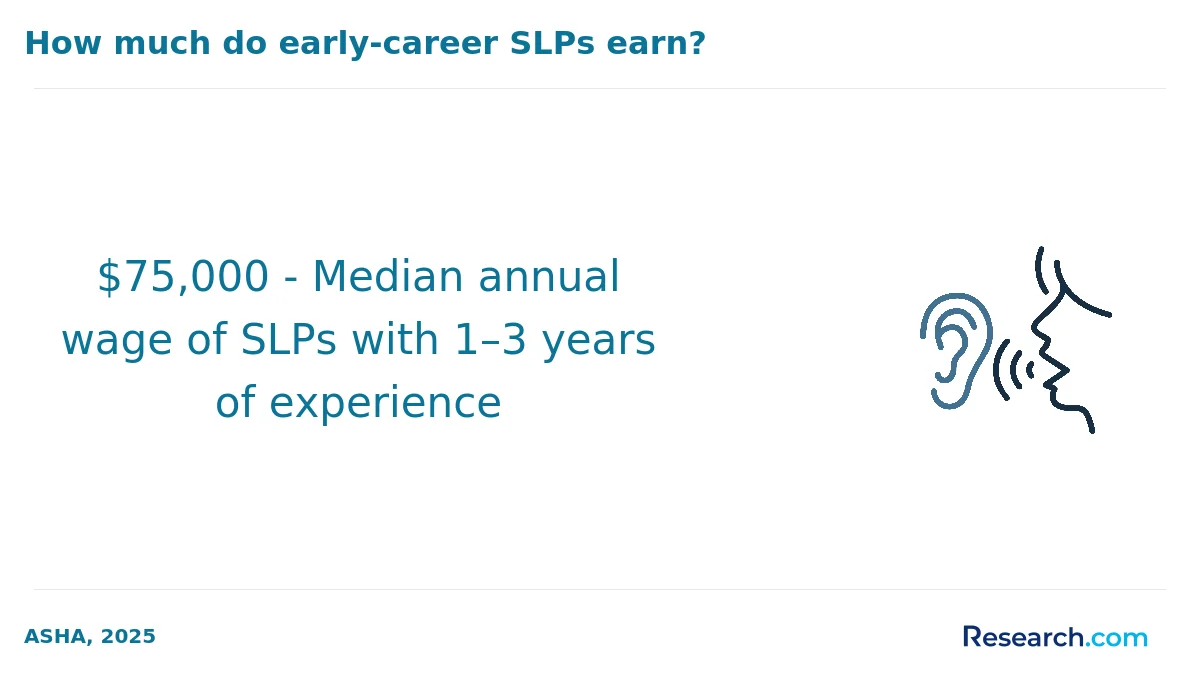
There is usually no automatic salary difference based only on whether a speech pathology degree was weekly start or self-paced accelerated. Speech pathology graduates typically start with median annual salaries ranging from $65,000 to $75,000 in the U.S. Actual salary outcomes depend more on credentials, clinical experience, employer type, location, specialization, and program reputation than on the online pacing model.
- Employer perception: Weekly start online programs often use cohort models, regular deadlines, and peer interaction, which can support perceptions of reliability and collaboration. Self-paced accelerated programs can show discipline and efficiency when graduates explain their experience well.
- Time-to-completion: Self-paced accelerated speech pathology degree salary outcomes may benefit from earlier workforce entry if the student completes the program faster and meets all professional requirements. The advantage comes from timing, not necessarily a higher starting wage.
- Skills and competencies: Starting salary is influenced by the depth of coursework, clinical preparation, supervision quality, and readiness for client-facing responsibilities. These factors can vary within both formats.
- Career advancement prospects: Program reputation, networking, field placements, and faculty connections can influence access to specialized roles and advancement opportunities over time.
- Return on investment: Students should compare tuition, fees, completion timeline, financial aid, and expected employment pathway. Those evaluating affordability may also review cheapest online college options, while checking whether each institution and program supports their professional goals.
The most practical salary question is not “Which format pays more?” but “Which format helps me graduate prepared, on time, at a cost I can manage, and with the clinical qualifications employers expect?” For many students, that answer will depend on discipline, support needs, and the quality of the specific program.
What Graduates Say About Their Weekly Start Online Degrees vs Self-Paced Accelerated Speech Pathology Degrees
- Westin: "I decided on the weekly start online speech pathology degree program because it suited my unpredictable work schedule. The flexibility helped me balance studying and part-time jobs smoothly. Though the average cost felt steep at around $30,000, I managed by applying for scholarships and spreading out payments. Now, as a practicing clinician, I feel more confident and prepared thanks to consistent, paced learning."
- Rica: "Choosing the self-paced accelerated speech pathology program was all about finishing quicker to enter the workforce sooner. I found the upfront costs challenging but tackled them with a mix of student loans and strict budgeting. This fast-track approach gave me the skills I needed rapidly, enabling me to secure a rewarding position in pediatric therapy without delay."
- Alyana: "Reflecting on my experience, the weekly start online speech pathology degree offered a structured path that kept me motivated each week. The cost, typically near $30,000, was significant, but I viewed it as an investment in my future and opted for employer tuition assistance. Professionally, this methodical pace enhanced my comprehension and client interaction skills, which has directly benefited my career growth."
Other Things You Should Know About Speech Pathology Degrees
In 2027, clinical practicum opportunities may differ based on the program type. Weekly start online degrees often have scheduled placements coordinated by the institution, while self-paced programs might offer more flexible options for students to arrange practica, depending on personal pacing and progress.
Both weekly start online and self-paced accelerated speech pathology programs usually require reliable internet access, a computer that supports video conferencing, and specific software for coursework and virtual clinical practice. However, weekly start programs may mandate fixed online class sessions or interactive coursework at scheduled times, which can require stricter technology readiness. Self-paced programs generally allow asynchronous participation but still expect students to engage with digital material, simulations, and occasional live assessments.
References
- U.S. Bureau of Labor Statistics - Speech-Language Pathologists https://www.bls.gov/ooh/healthcare/speech-language-pathologists.htm
- ASHA EdFind - Accredited Speech-Language Pathology Programs https://find.asha.org/ed/
- Audiology and Speech-Language Pathology Interstate Compact https://aslpcompact.com/compact-map/
- University of Scranton - Master of Science (M.S.) in Speech-Language Pathology https://www.scranton.edu/academics/pcps/health-and-human-performance/programs/speech-language-pathology/index.shtml
- Auburn University, Montgomery - Master of Science in Speech-Language Pathology https://www.aum.edu/degree/ms-speech-language-pathology/
- Emerson College - Master of Science (M.S.) in Communication Disorders (Speech@Emerson, online) https://speech.emerson.edu/
- University of North Carolina at Greensboro - Speech-Language Pathology, M.A. (Online) https://csd.uncg.edu/graduate/masters-of-arts-online/
- Baylor University - Master of Science in Speech-Language Pathology (Online) https://csd.robbins.baylor.edu/graduate/online-csd-graduate-program


