2027 Best Online Speech Pathology Master's Programs for Residents of Akron, OH

Co-Founder and Chief Data Scientist

Reviewed by Rhea Paul, PhD
SLP Education & Research Expert
Akron residents choosing an online speech-language pathology master's program need more than a flexible class schedule: they need a program that supports clinical training and the path to Ohio licensure.
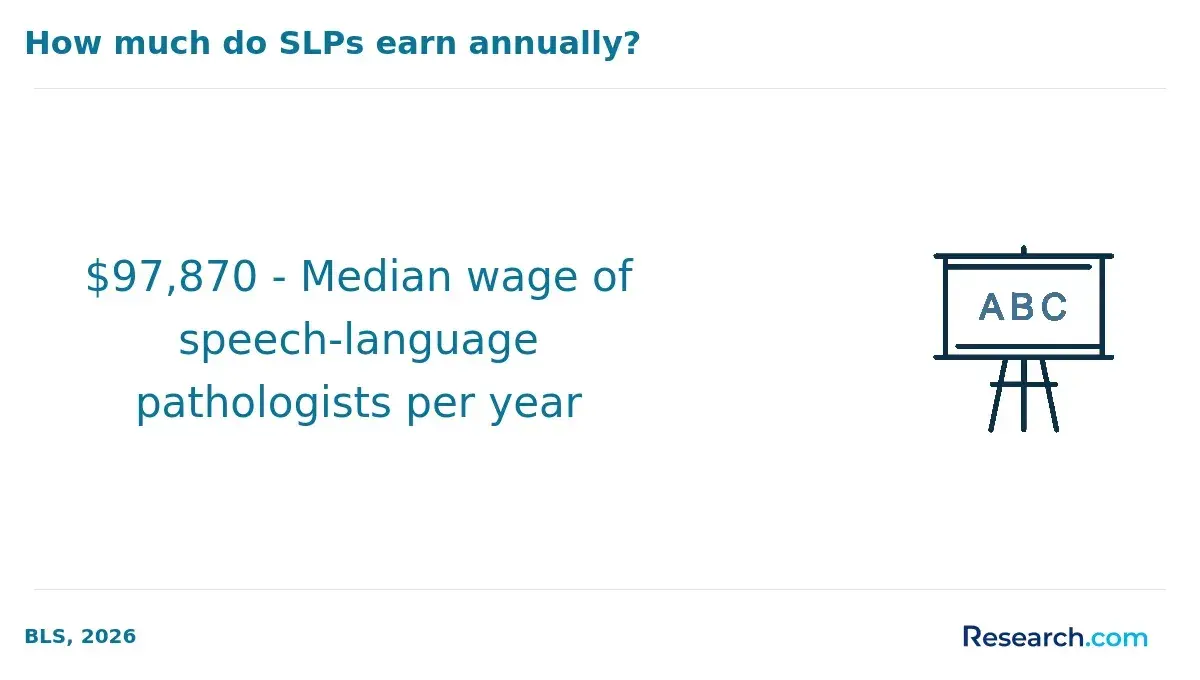
This guide compares credible distance-accessible options, explains what "online" means in a clinical degree, and shows how to evaluate accreditation, travel, placements, costs, and admissions before applying. The payoff can be substantial: the national median annual wage for speech-language pathologists was $97,870 in May 2025.
Key Things You Should Know
- For an Akron student planning to become a licensed speech-language pathologist, a CAA-accredited master's program and Ohio licensure compatibility matter more than whether every lecture is asynchronous.
- Online CAA-accredited options such as Baylor University, Emerson College, New York University, and the University of St. Augustine for Health Sciences combine remote coursework with required clinical training, immersions, or both; clinical-site availability in Akron is never automatic.
- The profession has strong national demand: the U.S. Bureau of Labor Statistics projects 17% employment growth for speech-language pathologists from 2025 to 2035, with about 12,500 openings annually on average.
Which online speech pathology master's programs can Akron residents enroll in?
Akron applicants can look beyond Ohio because several CAA-accredited programs deliver academic coursework at a distance. Admission eligibility, state authorization, clinical-placement capacity, and licensure disclosures can change, so applicants should obtain written confirmation that the school accepts Ohio residents before paying an application fee.
The following programs are practical starting points because they have established online or distance-accessible master's pathways in speech-language pathology or communication sciences and disorders. They are not interchangeable: the best option depends on travel tolerance, prerequisite background, pacing needs, and clinical-placement support.
| Program | Distance-learning model | Akron decision point | Potential fit |
| Baylor University | Online master's coursework with required clinical education and in-person components. | Confirm Ohio enrollment eligibility, immersion expectations, and whether the program can arrange or approve placements near Akron. | Students seeking a structured cohort and a health-professions-focused online model. |
| Emerson College | Online MS in Communication Sciences and Disorders with clinical education and required experiential components. | Ask about live-session timing, immersion travel, and the process for matching clinical sites in Northeast Ohio. | Applicants who want a well-established online pathway and can manage scheduled cohort work. |
| New York University | Online MS in Communicative Sciences and Disorders with clinical placements and required in-person learning experiences. | Verify travel dates well ahead of time and clarify how the school works with Ohio clinical partners. | Students comfortable with an intensive graduate experience and periodic travel. |
| University of St. Augustine for Health Sciences | Hybrid/online-oriented MS-SLP pathway combining distance instruction, clinical education, and required hands-on experiences. | Confirm Ohio authorization, residency requirements, and the expected geographic reach for clinical sites. | Students who value an interprofessional health-sciences environment and can accommodate required travel. |
Do not interpret "available online" as "available entirely from home." Speech-language pathology is a clinical profession, and every qualifying path includes supervised work with clients. Before narrowing your list, ask each admissions office whether it is accepting new Ohio cohorts, what travel is mandatory, and how it handles a placement shortage in the Akron-Cleveland area.
Applicants who first need to compare broad program structures can also review a speech pathologist degree online guide, then return to each school's own disclosures for Ohio-specific confirmation.
Which programs hold CAA accreditation or lead toward Ohio licensure?
CAA accreditation refers to accreditation by the Council on Academic Accreditation in Audiology and Speech-Language Pathology, the accreditor recognized by the American Speech-Language-Hearing Association (ASHA). For most Akron students seeking clinical SLP practice, graduating from a CAA-accredited master's program is the safest academic foundation for Ohio licensure, ASHA certification, and employer eligibility.
Baylor University, Emerson College, New York University, and the University of St. Augustine for Health Sciences have promoted CAA-accredited graduate SLP pathways. Accreditation status, reporting periods, and program locations should still be verified in the current ASHA CAA directory immediately before enrollment. A school's regional institutional accreditation alone is not a substitute for programmatic CAA accreditation.
The table separates terms that are often confused during program searches. It is especially important for applicants considering newer programs or programs that use a hybrid delivery model.
| Status or statement | What it means | What an Akron applicant should do |
| CAA accredited | The program holds accreditation from ASHA's specialized accreditor. | Confirm the exact program and delivery pathway are included, then request the school's Ohio licensure disclosure. |
| CAA candidacy | The program is progressing through the accreditation process but does not have full accreditation. | Read the candidacy notice closely and ask how graduation timing could affect eligibility for licensure or certification. |
| "Designed to meet licensure requirements" | The school believes its curriculum aligns with stated requirements, often subject to additional student obligations. | Ask which Ohio requirements remain your responsibility, including clinical experience, examinations, and supervised practice. |
| State authorization to enroll Ohio residents | The institution may offer education to students located in Ohio. | Do not mistake authorization for confirmation that the degree meets Ohio professional licensure requirements. |
A common and costly mistake is choosing a program because it says "speech therapy" or "communication disorders" without confirming CAA status. If your goal is school-based service, healthcare practice, or ASHA's Certificate of Clinical Competence in Speech-Language Pathology (CCC-SLP), request written answers from both the university and the Ohio licensing authority rather than relying on a general marketing page.
How do Akron accessible programs compare on format, clinicals, and outcomes?
The meaningful comparison is not simply online versus campus. Akron students should compare how often they must be present in person, whether live classes conflict with work, who secures clinical sites, and whether the program's completion path fits their prerequisite status.
This comparison focuses on decisions that frequently determine whether an online clinical degree is workable. Schools may revise schedules by cohort, so treat program materials as the starting point and obtain current cohort details in writing.
| Comparison factor | Why it matters for Akron residents | Better question to ask |
| Asynchronous versus live classes | Live sessions can affect work schedules despite an "online" label. | Which courses require attendance at a set time, and what time zone is used? |
| Campus immersions or residencies | Travel costs, time off, and caregiving plans can materially affect the total investment. | How many in-person experiences are required, where are they held, and are dates published before enrollment? |
| Clinical-placement model | A delayed placement can delay graduation and licensure preparation. | Does the school place students, approve student-found sites, or use a shared responsibility model? |
| Clinical setting variety | SLPs may work with children or adults across schools, hospitals, outpatient clinics, and other settings. | How does the program help students obtain broad populations and settings required for competencies? |
| Outcomes reporting | Completion, Praxis, employment, and program-completion data offer context beyond reputation. | Can the program provide its most recent CAA-required student outcome data and explain the reporting period? |
Programs with more required synchronous learning may suit students who want frequent faculty contact and cohort accountability. More asynchronous designs may fit working adults better, but they still require substantial clinical availability during standard business hours. Neither format is inherently better; choose the one your schedule can genuinely support.
Career prospects are favorable but should not be treated as an individual outcome guarantee. The Bureau of Labor Statistics projects 17% national employment growth for speech-language pathologists between 2025 and 2035. That outlook supports careful program selection, but local hiring, setting, experience, licensure, and employer needs still influence an individual job search.
What admission requirements do these programs usually ask Akron applicants to meet?
Most online SLP master's programs require a bachelor's degree, transcripts, recommendation letters, a statement of purpose, and evidence that applicants have completed communication-sciences-and-disorders prerequisites. Requirements differ sharply for applicants with a CSD bachelor's degree and career changers with another major.
Applicants from another discipline should not assume they can enter immediately. Many programs require leveling courses in areas such as phonetics, speech and hearing science, language development, anatomy and physiology of speech and hearing, and audiology before or alongside graduate study.
Before applying, organize the following information so each school can evaluate your readiness accurately.
- Official transcripts from every college attended, including any post-baccalaureate prerequisite courses.
- A course-by-course inventory of CSD prerequisites, with syllabi available if course titles are unclear.
- Current résumé or curriculum vitae showing relevant work, volunteer service, observation, research, or caregiving experience.
- Required letters of recommendation, ideally from people who can assess academic readiness, communication skills, and professional reliability.
- A focused personal statement explaining your interest in SLP, your clinical-population interests, and your plan for managing graduate study and clinical hours.
- Confirmation of each program's GPA policy, GRE policy if applicable, observation expectations, interview process, and application platform.
Use GPA requirements as a screening tool, not as the only measure of accessibility. A program with a lower published minimum may still be selective because cohort sizes and clinical capacity are limited. Career changers should compare post-baccalaureate coursework and integrated leveling options carefully; a shorter-looking master's path may become longer and more expensive if prerequisites are not included.
For applicants concerned about academic competitiveness, this overview of a speech language pathologist degree can help frame admissions questions, but each program's current admissions office remains the authority on eligibility.
How are practicum and clinical fellowship hours completed online from Akron?
Online coursework does not eliminate in-person clinical education. During the master's program, students complete supervised practicum experiences with real clients. After graduation, many new SLPs complete a Clinical Fellowship (CF), a mentored professional transition period that supports eligibility for the CCC-SLP.
ASHA's certification standards generally distinguish between graduate clinical practicum and post-graduate fellowship. Graduate students typically need at least 400 total supervised clinical clock hours, including at least 375 direct client-contact hours and 25 observation hours, subject to current ASHA standards and program verification. The CF is separate from those graduate hours.
For an Akron-based learner, the process usually works in the following sequence.
- Complete foundational coursework and any simulation or skills preparation required before direct client contact.
- Meet with the program's clinical education team to identify availability, geographic constraints, transportation limits, and population interests.
- Complete background checks, immunizations, drug screening, HIPAA training, and site-specific onboarding required by a school, healthcare provider, or district.
- Attend assigned or approved practicum sites under supervision by qualified clinical educators while documenting hours and competencies.
- Finish degree requirements, pass required examinations, obtain the appropriate Ohio license, and pursue a qualifying CF position if seeking ASHA certification.
Clinical placements may occur in schools, early-intervention programs, hospitals, rehabilitation facilities, outpatient clinics, skilled nursing settings, or university clinics. Availability changes by term. A program may try to secure sites near Akron, but it cannot ethically promise a particular facility, commute, population, or schedule before placement arrangements are complete.
Ask whether a school has existing Northeast Ohio affiliations, what happens if a site withdraws, whether students may identify potential sites, and whether a placement outside Summit County is possible. Never contact a potential site as if you are already authorized to place there; follow the university's clinical-affiliation procedures.
Which Ohio and national licensure rules matter for Akron speech pathology students?
Ohio professional licensure and national ASHA certification are related but different credentials. Ohio licensure permits professional practice under Ohio's rules, while the CCC-SLP is a national professional certification frequently preferred or required by employers, payers, and clinical fellowship positions.
Ohio applicants should plan around four separate checkpoints: a qualifying graduate degree, supervised clinical education, required examination performance, and the state's application and supervised-practice requirements. The Ohio Speech and Hearing Professionals Board is the authoritative source for current state rules, forms, fees, and any changes affecting temporary or full licensure.
| Credential or requirement | Why it matters | Practical Akron student action |
| CAA-accredited graduate degree | It is the conventional educational foundation for Ohio licensure and ASHA certification. | Verify the exact program's CAA status before committing or transferring. |
| Ohio SLP license | Required for professional practice in Ohio under the state's applicable rules. | Review the state board's current requirements early, especially before accepting a CF or job offer. |
| Praxis examination | Commonly required in the licensure and ASHA-certification pathway. | Confirm the current score, timing, and score-reporting instructions with the relevant authority. |
| Clinical Fellowship | Supports progression toward the CCC-SLP after the graduate degree. | Ensure the position, mentor, workload, and supervision arrangement meet current ASHA standards before starting. |
| Ohio Department of Education and Workforce credentials | School employment may involve additional educator credentialing requirements. | Ask prospective school employers and the state education agency which credential applies to the role. |
Telepractice adds another layer. If you provide services while physically located in Ohio, Ohio rules matter; if clients are located in another state, that state may also regulate the service. Do not assume an Ohio license alone authorizes multistate telepractice.
Students targeting the fastest possible transition from undergraduate study to clinical practice may want to compare 5 year SLP programs. These integrated pathways can reduce transitions between degrees, but they are usually best for students who commit early and meet the institution's progression standards.
How much do these online master's programs typically cost for Akron residents?
There is no single reliable "online SLP master's price" for Akron residents because schools use different tuition structures, cohort lengths, credit requirements, fee schedules, and residency policies. Private online programs commonly charge the same published rate regardless of a student's state, while public institutions may distinguish resident and nonresident pricing. Tuition also changes, so applicants should request a written estimate for their intended entering term.
Total cost is broader than tuition. The comparison below identifies the expenses that can change the affordability calculation most for a distance learner in Ohio.
| Cost category | Why it can vary | What to request from each school |
| Tuition | Programs may publish a per-credit rate, per-term rate, or cohort price. | Total tuition for the full degree based on your prerequisite status and expected pacing. |
| University and technology fees | Distance learners may still pay course, clinical, graduation, assessment, or technology fees. | A fee schedule showing mandatory recurring and one-time charges. |
| Travel and lodging | Immersions, campus visits, and distant clinical assignments may require travel. | Required locations, number of trips, dates, and whether any costs are included. |
| Clinical compliance expenses | Sites may require background checks, health documentation, drug screening, liability coverage, or training. | An estimated clinical-readiness budget and timing of each charge. |
| Lost work time and commuting | Practicum schedules can reduce paid-work availability and increase local transportation costs. | Typical clinical-day expectations and the school's policy on student employment during placements. |
Compare schools using the same unit: estimated tuition and mandatory fees through graduation, excluding or separately identifying variable travel and living costs. Do not compare one program's per-credit tuition with another program's full-program estimate; that can make a more expensive program look cheaper.
Financial aid may include federal Direct Unsubsidized Loans, Graduate PLUS Loans, scholarships, employer tuition assistance, and school-specific aid for eligible students. File the FAFSA early and ask whether scholarships apply to online cohorts. Borrow only after modeling the payment alongside realistic early-career earnings, living costs, and the possibility that clinical placements limit work hours.
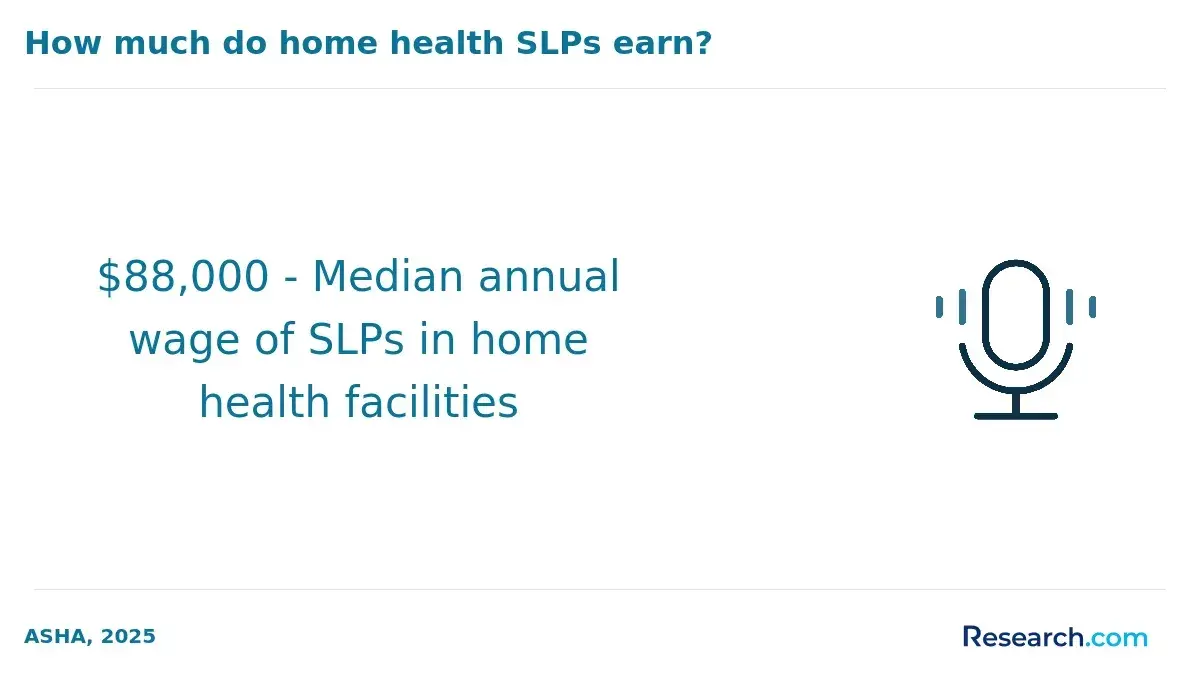
The national median annual wage for speech-language pathologists was $97,870 in May 2025, but local pay varies by setting, experience, employer, and credentials. Use a speech therapist salary resource to explore role and setting differences rather than treating a national median as a guaranteed return on tuition.
Which schools offer the strongest student support for Akron-based online learners?
For a clinical online degree, "student support" should mean more than a help desk. The strongest fit is usually the school that gives clear, responsive support for clinical placements, licensure questions, academic progression, disability accommodations, financial aid, and career preparation.
Established online providers such as Baylor, Emerson, NYU, and the University of St. Augustine commonly describe dedicated online-learning infrastructure and clinical education support. However, the actual quality of support for an Akron student depends on cohort capacity, the assigned advisor, clinical-site availability, and response time when a problem occurs. Ask for process details rather than accepting general assurances.
These questions help distinguish a polished online platform from meaningful clinical-program support.
- Who is my named point of contact for clinical placement, and how quickly does that office typically respond to placement concerns?
- Does the program have current or recent affiliation agreements in Northeast Ohio, and what is the contingency plan if no nearby site is available?
- Will an advisor review my Ohio licensure pathway, or does the school provide only a general state disclosure?
- What tutoring, writing, counseling, accessibility, library, and technology services are available to fully online graduate students?
- Can I speak with an admissions representative about current outcome data, leave-of-absence rules, and progression requirements?
- What career support is available for Clinical Fellowship searches in Ohio, including résumé review and employer networking?
A red flag is a school that cannot explain who is responsible for finding placements or gives only vague answers about Ohio eligibility. Another is a program that encourages enrollment before providing its licensure disclosure, travel expectations, and clinical placement policies in writing.
What distance learning details should Akron applicants verify before enrolling?
Verify the operational details before you enroll, not after your deposit is due. An online SLP degree can be rigorous and convenient, but it is not usually self-paced, fully remote, or compatible with unrestricted full-time work during clinical terms.
Use this final verification sequence to compare programs consistently.
- Confirm in writing that the university is accepting students located in Ohio for your intended start term.
- Check the program's current CAA accreditation status in the ASHA directory and save the relevant program record.
- Request the school's Ohio professional licensure disclosure and compare it with current Ohio board requirements.
- Ask for the full calendar of synchronous sessions, campus immersions, simulation activities, examinations, and expected travel.
- Request a term-by-term clinical education outline, including who locates sites, possible commuting radius, and requirements for student-found placements.
- Obtain an itemized estimate of tuition, mandatory fees, compliance costs, books, technology, travel, and likely timing of each expense.
- Confirm prerequisite gaps, transfer-credit rules, leave policies, maximum time to complete, and whether part-time enrollment is available.
- Review published student outcome data and ask what support is available if a student needs remediation or a replacement clinical placement.
Also assess your own logistics honestly. You may need a reliable computer, high-speed internet, quiet space for live sessions, dependable transportation, daytime clinical availability, and backup care arrangements. A program that appears less flexible on paper may be the better choice if it has clearer clinical coordination and a schedule you can sustain.
Which online speech pathology programs best fit Akron students' career goals?
No program is best for every Akron resident. The best choice is the CAA-accredited, Ohio-compatible program whose clinical model, travel requirements, pacing, and full cost match the career you intend to pursue.
This goal-based framework can narrow the shortlist without overstating differences among reputable programs.
| If your priority is | Look for | Be cautious about |
| Working while enrolled | Published part-time pacing, predictable live-session times, and transparent clinical-term expectations. | Assuming online coursework means practicum can occur evenings or weekends. |
| Minimizing travel | Few required immersions, dates announced early, and a clear explanation of clinical-site geography. | Programs that describe residency requirements only after admission. |
| Career change from another major | Clear prerequisite mapping, leveling options, and realistic time-to-degree planning. | Comparing only the advertised master's length while ignoring prerequisite coursework. |
| Ohio school-based practice | Strong pediatric and school-related clinical opportunities plus guidance on educator credentialing. | Assuming an SLP license automatically satisfies every school-employment requirement. |
| Medical or adult rehabilitation settings | Access to adult, hospital, rehabilitation, and dysphagia-related learning opportunities where available. | Choosing solely by brand without asking about clinical population exposure. |
| Lowest practical total cost | An itemized completion estimate, manageable travel requirements, financial-aid options, and a schedule that limits lost income. | Selecting on advertised tuition alone while excluding fees, travel, and delayed completion risk. |
A disciplined shortlist usually contains two to four programs. Apply only after each school confirms Ohio availability, CAA status, licensing disclosures, clinical placement procedures, required travel, and your prerequisite eligibility. If a school cannot provide those answers clearly, keep looking; uncertainty in a clinical degree can become expensive later.
Other Things You Should Know About Speech Language Pathology
You can complete substantial coursework online, but an entry-level SLP master's program cannot be entirely remote because supervised clinical education requires direct clinical experiences. Choose a CAA-accredited program that accepts Ohio residents and confirm its Ohio licensure disclosure before enrolling.
Not always. Applicants with another bachelor's degree may be eligible after completing prerequisite or leveling coursework. The exact courses, grades, and timing vary by program, so have your transcripts reviewed before assuming you qualify.
Policies vary. Some programs coordinate placements, while others expect students to help identify possible sites that the university must approve. No applicant should assume a placement in Akron, a specific facility, or a particular client population is guaranteed.
Ohio licensure for speech pathologists in 2027 demands a master's degree, completion of 350 clinical hours, and passing the Praxis Exam. Applicants must verify program accreditation by the American Speech-Language-Hearing Association. Online graduates are subject to the same standards as on-campus students.
References
- Graduate Programs in Speech-Language Pathology https://www.uakron.edu/sslpa/gslpp/
- Best Online Speech-Language Pathology (SLP) Programs 2026 https://onlinespeechpathologyprograms.org/best-online-slp-programs/
- 15 Best Online Masters in Speech Pathology Programs for 2026 https://speechpathologyprograms.net/online-masters/
- Best Online Master's in Speech Pathology (SLP) Programs https://www.onlinemastersdegrees.org/best-programs/speech-language-pathology-slp/
- Online Speech Pathology Programs: 2026 Guide https://www.speechpathology.org/online/