2027 Questions to Ask About Online Speech Pathology Degree Programs Before You Enroll

Co-Founder and Chief Data Scientist

Reviewed by Rhea Paul, PhD
SLP Education & Research Expert
Choosing an online speech pathology degree is not just a question of convenience. The program you select can affect whether you qualify for licensure, how easily you secure clinical placements, how much debt you take on, and how prepared you feel when working with clients. In the United States, employment for speech-language pathologists is projected to grow 17% from 2025 to 2035, much faster than average, which makes program quality and licensure alignment especially important.
This guide is for prospective students comparing online speech pathology programs at the graduate level, especially those who need flexibility but still want a credible path into clinical practice. It explains how to evaluate accreditation, admissions, curriculum, practicum requirements, licensure preparation, cost, financial aid, career paths, and salary expectations so you can choose a program based on evidence rather than marketing claims.
Key Benefits of Enrolling in Online Speech Pathology Degree Programs
- Online speech pathology programs offer flexibility by allowing students to access coursework anytime, accommodating diverse schedules and geographic locations without commuting constraints.
- Cost savings can be significant, as online formats reduce expenses related to housing, transportation, and often offer lower tuition compared to traditional programs.
- Balancing work, family, and education is more feasible through online programs, supporting steady progress toward certification while maintaining personal and professional responsibilities.
Is the Online Speech Pathology Degree Program Accredited?
Accreditation should be the first requirement you check when evaluating an online speech pathology degree. In this field, accreditation is not a minor quality signal; it can affect whether your degree is recognized for certification, state licensure, supervised clinical training, and employment. The Council on Academic Accreditation in Audiology and Speech-Language Pathology (CAA), under the American Speech-Language-Hearing Association (ASHA), is the primary accrediting body for speech-language pathology programs.
A CAA-accredited program has been reviewed for curriculum quality, faculty qualifications, clinical education, student outcomes, and alignment with professional expectations. Over 90% of employers and clinical sites prefer candidates from accredited programs, which makes accreditation important even before you apply for your first job.
How to verify accreditation before applying
- Check the accreditor directly: Do not rely only on a school’s marketing page. Confirm the program’s status through CAA or ASHA resources.
- Look at the exact program: Institutional accreditation is not the same as programmatic accreditation. A university may be accredited while a specific speech pathology program is not.
- Confirm the delivery format: If the program is online or hybrid, make sure the accredited program format matches the one you plan to enter.
- Ask about licensure alignment: Accreditation supports licensure readiness, but state boards may still have specific requirements for coursework, clinical hours, and documentation.
Enrolling in a non-accredited program can create serious problems, including limited eligibility for certification, difficulty obtaining state licensure, and weaker access to clinical placements. If you are also comparing other education pathways outside speech pathology, resources on fast-track EdD degrees may help you understand how accreditation and format differ across graduate programs.
What Are the Admission Requirements for Online Speech Pathology Programs?
Admission requirements for online speech pathology programs are designed to show that applicants can handle graduate-level clinical training and meet the academic foundation needed for licensure preparation. Requirements vary by school, but most programs look for a strong academic record, relevant prerequisites, and evidence that the applicant understands the responsibilities of the profession.
| Requirement | What it usually means | Why it matters |
| Bachelor's Degree | Most programs require a bachelor's degree from an accredited institution, ideally with coursework related to communication sciences. | It confirms that you have completed the undergraduate preparation needed for advanced study. |
| Minimum GPA | A cumulative GPA of around 3.0 is typically expected. | Programs use GPA as one indicator of readiness for intensive graduate coursework. |
| Prerequisite Courses | Common prerequisites may include anatomy, physiology, linguistics, psychology, or related communication sciences coursework. | These courses prepare students for clinical concepts introduced early in the program. |
| Standardized Tests | Some programs request GRE scores. | Where required, scores may be used alongside GPA, recommendations, and professional experience. |
| Letters of Recommendation | Recommendations often come from faculty, supervisors, or professionals who can speak to your academic ability and professional judgment. | They help admissions committees evaluate maturity, communication skills, and fit for clinical training. |
| Personal Statement | Applicants usually explain their motivation, career goals, and preparation for speech pathology. | A strong statement connects your background to the program’s mission and clinical expectations. |
Common admissions mistakes to avoid
- Applying before prerequisites are complete: Some programs allow conditional admission, but others require all prerequisites before enrollment.
- Ignoring clinical readiness: Admissions committees may look for evidence of communication skills, professionalism, and service experience, not just grades.
- Using a generic personal statement: A stronger statement explains why speech-language pathology fits your goals and why the specific program fits your needs.
- Failing to compare total cost: Admission is only one step. Before committing, compare tuition, fees, clinical placement support, and licensure outcomes. Students considering related helping professions may also review affordable online counseling degree programs as a cost comparison point.
What Classes Do You Take in an Online Speech Pathology Program?
Online speech pathology programs combine scientific foundations, clinical decision-making, assessment methods, intervention strategies, and supervised practice preparation. The strongest programs do more than deliver lectures online; they help students apply concepts to client cases, documentation, treatment planning, and ethical decision-making. More than 70% of students report that programs offering applied clinical components enhance their learning experience, even in virtual formats.
Common course areas
- Core foundational courses: These typically cover anatomy and physiology of speech, language acquisition, phonetics, and speech and language disorders. They build the scientific base needed to understand communication and swallowing conditions.
- Diagnostic and assessment studies: Students learn how to use standardized tools, informal measures, observation, case history, and clinical reasoning to evaluate communication challenges.
- Intervention and treatment planning: Courses often focus on designing evidence-informed treatment plans for children, adults, or specific disorder areas.
- Elective specializations: Electives may include voice therapy, pediatric speech pathology, cognitive-communication disorders, or other specialized clinical topics.
- Professional issues and ethics: Students examine documentation, cultural responsiveness, scope of practice, interprofessional collaboration, and ethical responsibilities.
When comparing curricula, look for courses that connect theory to clinical application. A program may be convenient, but it should still prepare you to evaluate clients, write reports, plan therapy, collaborate with families or care teams, and meet professional standards.
One student enrolled in an online speech pathology degree described the curriculum as demanding but valuable: “The variety really pushed me to think differently about communication challenges.” He found case-based courses especially useful because they required him to connect terminology, assessment results, and treatment decisions rather than memorize concepts in isolation. His main challenge was balancing technical language with practical application, but responsive instructors and online discussions helped close that gap.
How Long Does It Take to Complete an Online Speech Pathology Degree?
The time required to complete an online speech pathology degree depends on enrollment status, program design, prerequisite requirements, and clinical placement scheduling. Most students should plan not only for coursework but also for supervised clinical experiences, which can affect the final graduation timeline.
| Program pace | Typical timeline | Best fit |
| Full-time master's programs | Usually completed in about two years. | Students who can prioritize school and manage a steady clinical and academic workload. |
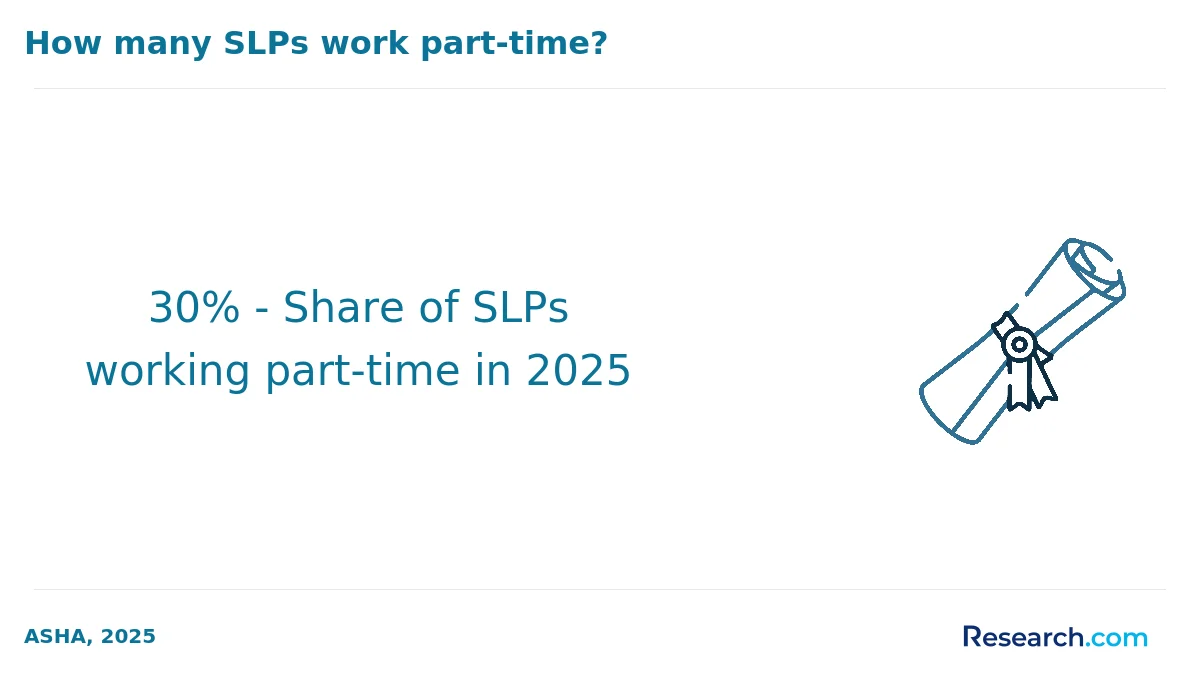
| Part-time options | Often extend from three to four years. | Working adults, caregivers, or students who need a lighter course load. |
| Accelerated programs | May shorten study duration to 18 months or up to two years. | Highly prepared students who can handle intensive coursework and limited scheduling flexibility. |
| Clinical internships and practicum requirements | Can add several months beyond coursework completion, depending on placement timing. | Students in areas where clinical sites are available and scheduling can be arranged early. |
Factors that can lengthen your timeline
- Missing prerequisites: If you did not major in communication sciences or a related field, you may need additional coursework before beginning graduate-level classes.
- Clinical site availability: Practicum schedules depend on approved supervisors, client populations, site agreements, and geographic access.
- Course sequencing: Some classes must be completed in order, so failing or delaying one course can postpone later requirements.
- Work and family obligations: Online learning offers flexibility, but clinical training may still require daytime or in-person availability.
Before enrolling, ask the program for sample full-time and part-time plans, expected weekly time commitments, and how early students begin arranging clinical placements. A flexible program is most useful when its timeline matches your real schedule.
Does an Online Speech Pathology Program Require Internships or Practicums?
Yes. Online speech pathology programs almost always require internships or practicums because speech-language pathology is a clinical profession. Coursework can be completed online, but students must still develop hands-on skills with clients under qualified supervision. These placements are commonly completed in schools, hospitals, clinics, rehabilitation centers, private practices, or other approved settings.
Practicums are essential for three reasons: they help students apply classroom knowledge, they support accreditation and licensure requirements, and they allow supervisors to evaluate clinical judgment, professionalism, documentation, and treatment skills. About 35% of online speech pathology students report that securing accessible, high-quality practicum sites is among the most significant challenges they face during training.
Questions to ask about clinical placements
- Who finds the placement? Some programs coordinate placements directly, while others expect students to identify possible sites with program approval.
- Are placements available near you? Distance matters because clinical hours may require repeated in-person attendance.
- What populations will you serve? A strong clinical plan exposes students to varied ages, disorders, and service settings.
- Are there extra fees? Some programs charge clinical placement, background check, immunization, or onboarding fees.
- How early should you start? Students should begin planning well before the practicum term to avoid delayed graduation.
A graduate of an online speech pathology degree explained that the coursework was flexible, but clinical placement required early action: “While the coursework was flexible and convenient, finding suitable practicum placements required proactive effort and early planning.” She described coordinating deadlines, personal obligations, and occasional travel to nearby clinics. The process was stressful, but she said the supervised experience was what made her feel ready for client work and licensure preparation.
Can You Get Licensed with an Online Speech Pathology Degree?
Yes, graduates of accredited online speech pathology degree programs can pursue licensure if the program meets state and national requirements. The delivery format alone is usually not the deciding factor. What matters is whether the program is properly accredited, includes required coursework, provides supervised clinical hours, prepares students for the Praxis Examination in Speech-Language Pathology, and supports the post-graduation clinical fellowship year.
Online programs typically combine virtual coursework with in-person clinical practicums arranged through approved sites. This structure allows students to complete academic work remotely while still meeting clinical training expectations. According to the American Speech-Language-Hearing Association (ASHA), nearly 90% of graduates from CAA-accredited programs meet certification standards within two years of completing their degree, showing the importance of choosing a program aligned with recognized professional standards.
Licensure checklist before you enroll
- Confirm CAA accreditation: This is often central to certification and licensure eligibility.
- Review your state board’s rules: Licensure requirements can vary by state, including documentation, clinical hour expectations, and application steps.
- Ask about Praxis preparation: Programs should explain how coursework and advising support exam readiness.
- Evaluate clinical placement support: Licensure depends on supervised experience, so placement quality is not optional.
- Clarify clinical fellowship guidance: Ask whether the program offers advising for the clinical fellowship year after graduation.
Students comparing flexible graduate options should keep licensure at the center of the decision. An online slp program can be a strong route into the profession when it is accredited, clinically rigorous, and aligned with the state where you plan to practice. For those evaluating a broader range of online graduate degrees outside healthcare, online executive MBA programs offer a useful contrast in how professional outcomes differ across fields.
How Much Do Online Speech Pathology Programs Cost?
The cost of an online speech pathology program includes more than tuition. Students should budget for credits, university fees, technology requirements, clinical placement expenses, books, materials, travel for practicums, and possible costs tied to licensure preparation. Tuition rates have increased by about 5% over the past five years, reflecting higher faculty expenses and investments in educational technology.
| Cost category | Typical cost detail | What to check |
| Tuition per credit | Most programs charge between $400 and $1,000+ per credit hour. Master's-level speech pathology degrees often require 60 or more credit hours, so tuition alone can add up to $24,000-$60,000 or higher. | Ask whether the rate differs for in-state, out-of-state, online, or cohort students. |
| Program and application fees | Application charges, technology fees, and clinical placement costs vary widely but generally total several hundred to a few thousand dollars. | Request a full fee schedule before enrolling. |
| Materials and supplies | Textbooks, software licenses, assessment tools, and equipment for virtual labs or telepractice may cost several hundred dollars annually. | Ask which materials are included and which must be purchased separately. |
| Clinical-related expenses | Costs may include travel, background checks, health records, immunizations, site onboarding, or professional documentation. | Estimate costs based on your location and likely practicum sites. |
| Accreditation and delivery format | Accredited programs with stronger clinical practicum support may cost more. | Compare price against licensure preparation, placement support, and student outcomes. |
How to compare value, not just price
- Calculate total program cost: Multiply credits by tuition and add required fees, materials, and clinical expenses.
- Ask about placement support: A cheaper program may become more expensive if you must locate distant clinical sites yourself.
- Consider time to completion: Longer timelines may increase indirect costs, including delayed full-time employment.
- Compare career fit: Students weighing return on investment across majors may also review data on the highest-paying bachelor's degrees to understand how education costs and earnings vary by field.
What Financial Aid Is Available for Online Speech Pathology Students?
Financial aid can make an online speech pathology degree more manageable, but students should understand the difference between aid that reduces cost and aid that simply postpones payment. With over 60% of students in related healthcare graduate programs using some form of financial aid, it is important to compare funding options early rather than after admission.
Common financial aid options
- Federal Student Loans: Federal loans often offer repayment protections and plan options that private loans may not. Students must complete the Free Application for Federal Student Aid (FAFSA) to determine eligibility.
- Grants and Scholarships: Grants and scholarships do not require repayment. Awards may be based on academic merit, financial need, professional goals, location, or commitment to underserved populations.
- Work-Study Programs: Work-study can help offset expenses through part-time employment. Eligibility is determined through the FAFSA.
- Employer Tuition Assistance: Students already working in healthcare, education, or related settings may qualify for tuition reimbursement or assistance from an employer.
- State Aid Programs: Some states offer grants, scholarships, or loan forgiveness programs connected to healthcare workforce needs, including speech pathology.
How to evaluate an aid package
- Separate gift aid from loans: Scholarships and grants reduce cost; loans must be repaid.
- Check enrollment rules: Some aid requires full-time status or a minimum number of credits.
- Ask whether online students qualify: Not all institutional awards are available to online or part-time learners.
- Look for service commitments: Loan forgiveness or workforce programs may require employment in specific locations or settings.
- Compare aid against total cost: A large scholarship may still leave a high balance if tuition and fees are substantial.
Students still exploring undergraduate or prerequisite pathways may find it useful to compare flexible options such as the easiest bachelor's degrees to get online, but speech pathology applicants should prioritize prerequisite completion, accreditation, and licensure alignment over convenience alone.
What Jobs Can You Get With an Online Speech Pathology Degree?
An online speech pathology degree can prepare graduates for the same broad professional direction as an on-campus degree when the program is accredited and includes required clinical training. Employment in the speech-language pathology field is expected to grow by 17% from 2025 to 2035, reflecting strong demand across schools, healthcare settings, rehabilitation services, private practices, and telepractice environments.
Common career paths
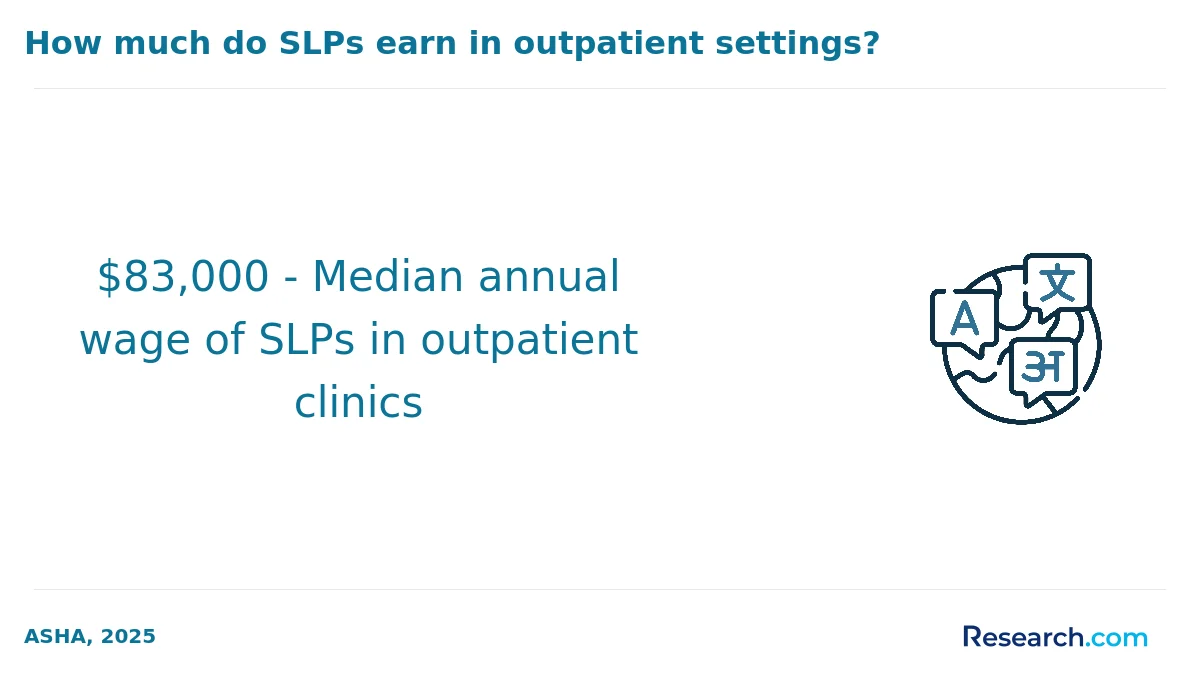
- Speech-Language Pathologist: Speech-language pathologists assess and treat speech, language, communication, and swallowing disorders. They may work in schools, hospitals, outpatient clinics, rehabilitation centers, private practices, or community settings.
- Clinical Supervisor: Clinical supervisors guide interns, fellows, or students in clinical practice. This role usually requires professional experience beyond entry-level practice.
- Telepractice Clinician: Telepractice clinicians provide remote speech therapy services through digital platforms, expanding access for clients who may have limited local services.
- Research Assistant: Research assistants support studies related to communication disorders, intervention methods, assessment tools, or clinical outcomes. This role may lead to further academic or clinical research opportunities.
Where online graduates may have an advantage
Online students often develop strong self-management, digital communication, and telepractice familiarity. These skills can be useful in remote service delivery, hybrid clinical models, and documentation-heavy environments. Many programs also use virtual simulations and online case discussions that reflect modern clinical workflows.
Challenges to plan for
- In-person clinical requirements: Even online students must complete supervised practicums required by licensing boards.
- State-specific review: Some states may apply stricter reviews of coursework or clinical documentation, especially for applicants educated online or out of state.
- Hands-on skill development: Students should seek varied clinical placements to avoid graduating with a narrow range of client experience.
- Technology dependence: Online coursework and telepractice training require reliable internet access, comfort with digital tools, and backup plans for technical issues.
The best job outcomes come from programs that combine accreditation, strong clinical placement support, licensure preparation, and relevant experience with diverse client populations.
What Is the Average Salary for Online Speech Pathology Graduates?
Salary expectations should be evaluated alongside program cost, debt, work setting, location, and long-term career goals. The U.S. Bureau of Labor Statistics reports that speech-language pathologists earned a median annual wage near $82,000 in 2022, with job growth projected at 21% through 2032. An online degree does not automatically limit salary potential if it meets accreditation and licensure expectations, but employer preferences, clinical experience, and local demand still matter.
Factors that influence earnings
- Level of education: Higher degrees, such as master's or clinical doctorates, can support access to specialized, supervisory, or advanced clinical roles.
- Specialization: Areas such as pediatric speech therapy or neurogenic communication disorders may affect earning potential depending on demand and setting.
- Experience: Entry-level salaries are usually lower, while compensation often increases with clinical expertise, certifications, and leadership responsibilities.
- Geographic location: Pay varies by region because of cost of living, healthcare funding, school budgets, and local workforce shortages.
- Work setting: Hospitals, private clinics, school systems, rehabilitation centers, and telepractice providers may use different pay structures.
How to judge salary against program cost
Do not compare tuition to salary in isolation. Consider how long the program takes, whether you can work while enrolled, how much aid you receive, whether clinical placements require travel, and how quickly the degree can move you toward licensure. A lower-cost program with weak clinical support may not be the better value if it delays graduation or licensure.
What Graduates Say About Enrolling in an Online Speech Pathology Degree
- : "I was initially drawn to the online speech pathology degree because of its affordable tuition, which averaged around $20,000 for the entire program. The flexibility allowed me to balance work and study without stress, and now I'm confidently working with diverse clients thanks to the comprehensive curriculum. This program truly transformed my career prospects. Westin"
- : "Choosing an online speech pathology degree was a thoughtful decision, especially considering the cost-effectiveness compared to on-campus options, roughly $18,000 to $22,000. The well-structured courses and interactive sessions made the learning experience engaging, even from home. Since graduating, I've seen a noticeable impact on my professional skills and job opportunities. Peter"
- : "The cost of the online speech pathology degree seemed reasonable, around $20,000, which fit well within my budget. Taking the program online challenged me to stay disciplined, but the accessible professors and practical assignments made it worthwhile. Today, I use what I learned every day in my practice, and it has elevated the quality of care I provide. Andrew"
Other Things You Should Know About Speech Pathology Degrees
In 2027, many online speech pathology programs are designed with working professionals in mind, offering flexible scheduling options such as asynchronous courses, part-time enrollment, and accelerated tracks to accommodate diverse work commitments and lifestyles, allowing students to balance their studies with their careers effectively.
Students should expect to use a reliable computer with high-speed internet, a webcam, and audio capabilities for interactive class sessions and telepractice training. Programs may require specific software for virtual labs or assignments, so confirming these technical details before enrolling can prevent disruptions. Access to a quiet, private workspace for synchronous activities is often essential.
References
- U.S. Bureau of Labor Statistics - Speech-Language Pathologists https://www.bls.gov/ooh/healthcare/speech-language-pathologists.htm
- ASHA EdFind - Accredited Speech-Language Pathology Programs https://find.asha.org/ed/
- O*NET OnLine - Speech-Language Pathologists https://www.onetonline.org/link/summary/29-1127.00
- West Virginia University - Speech-Language Pathology, M.S. - Online https://medicine.hsc.wvu.edu/communications-sciences-and-disorders/speech-language-pathology-ms/future-students/curriculum/online-slp-program/
- Delaware Valley University - Master of Science in Speech-Language Pathology (M.S.) https://delval.edu/programs/graduate-programs/speech-language-pathology
- University of North Carolina at Greensboro - Speech-Language Pathology, M.A. (Online) https://csd.uncg.edu/graduate/masters-of-arts-online/
- University of Scranton - Master of Science (M.S.) in Speech-Language Pathology https://www.scranton.edu/academics/pcps/health-and-human-performance/programs/speech-language-pathology/index.shtml
- Idaho State University - Master of Science in Speech-Language Pathology (Online/Distance Education) https://www.isu.edu/slp/programs-offered/slp-graduate-program/