2027 Are Online Speech Pathology Degrees Respected by Employers?

Co-Founder and Chief Data Scientist

Reviewed by Rhea Paul, PhD
SLP Education & Research Expert
Choosing an online speech pathology degree is not just a question of convenience. For most students, the real concern is whether employers, licensing boards, and clinical supervisors will view the credential as equal to an on-campus degree. That concern is reasonable because speech-language pathology is a regulated, clinical profession where accreditation, supervised practice, licensure eligibility, and certification matter more than marketing claims.
Employer confidence in online speech pathology programs has grown as more universities deliver rigorous remote coursework, clinical coordination, telepractice training, and simulation-supported learning. Recent data shows that nearly 40% of speech pathology professionals have pursued at least part of their education online, which reflects broader acceptance of digital education in healthcare and education fields. Still, not every online program carries the same weight.
This guide explains how employers evaluate online speech pathology degrees in 2026, what makes a program credible, when university reputation matters, how online and on-campus graduates compare, and which skills, certifications, and career factors have the greatest effect on hiring and advancement.
Key Benefits of Online Speech Pathology Degrees Respected by Employers
- Employers increasingly recognize online speech pathology degrees from accredited institutions as equivalent in quality to traditional programs, with over 75% of hiring managers expressing confidence in their graduates' competencies.
- Graduates of respected online speech pathology programs develop strong clinical skills through supervised practicum experiences combined with advanced coursework, preparing them effectively for diverse clinical environments.
- Data shows that online degree holders often experience improved career outcomes, including comparable job placement rates and salary ranges to on-campus graduates, reflecting the growing acceptance of online education in the field.
Which Accrediting Bodies Make an Online Speech Pathology Degree Legitimate?
For speech pathology, accreditation is the first credibility test. Employers may be open to online degrees, but they still expect the program to meet the professional standards required for licensure, certification, and supervised clinical preparation. A convenient online format cannot compensate for missing or weak accreditation.
The main accreditation and approval factors to verify are:
- Programmatic Accreditation from ASHA's Council on Academic Accreditation (CAA): For graduate-level preparation in speech-language pathology, CAA accreditation is central. The CAA reviews programs in audiology and speech-language pathology for curriculum quality, clinical education, faculty qualifications, student support, and outcomes. Graduating from a CAA-accredited program helps meet ASHA certification requirements and supports eligibility for state licensure. Institutions such as Ithaca College and Kansas State University hold this accreditation, which can strengthen employer confidence.
- Regional Accreditation: The university itself should also hold regional accreditation. This confirms that the institution meets broader academic standards and can affect credit transfer, financial aid eligibility, graduate school recognition, and employer acceptance across states. Regional accreditation does not replace CAA accreditation, but both matter.
- State Licensure Requirements: Speech-language pathology is regulated at the state level. Many states require graduation from a CAA-accredited program before a graduate can qualify for licensure. Students should check the rules in the state where they plan to work before enrolling, especially if the program is based in another state.
A strong online program should make its accreditation status easy to verify, clearly explain how clinical placements are handled, and state whether the curriculum is designed to support licensure. Students comparing online education options may also find broader planning resources, such as this guide to the best accelerated associates degree online, useful when evaluating format, cost, and completion timelines.
Does University Reputation Affect Employer Views of Online Speech Pathology Degrees?
Yes. University reputation can influence an employer's first impression of an online speech pathology degree, especially when a hiring manager is comparing several qualified applicants. A respected institution may signal stronger admissions standards, better clinical coordination, more established faculty, and a larger alumni network. However, reputation is not a substitute for accreditation, licensure eligibility, or clinical competence.
Employers tend to look at several reputation signals together:
- Accreditation status: A well-known university still needs appropriate speech pathology accreditation for the degree to carry professional value.
- Graduate outcomes: Job placement, Praxis preparation, licensure support, and alumni career paths can shape how employers view the program.
- Clinical partnerships: Relationships with hospitals, schools, clinics, and other service providers can improve the quality of supervised experience.
- Program consistency: Employers are more likely to trust online programs that have clear standards, experienced faculty, and transparent clinical expectations.
Universities like Arizona State University Online and the University of Florida are noted for strong online offerings and job placement outcomes. The University of Florida's reported 100% job placement within a year and high student recommendation rates at programs like ASU and Eastern New Mexico University can help reassure employers that graduates are prepared for practice.
Still, reputation usually opens the door; it does not secure the job by itself. In interviews, employers often give equal or greater weight to supervised clinical hours, state licensure progress, references, documentation skills, patient communication, and readiness for the setting. A graduate from a less famous but accredited program with strong clinical experience may be more competitive than a graduate from a better-known school who cannot demonstrate practical skill. Students exploring credential-based career options, including certificate programs that pay well, should use the same logic: recognition helps, but verified skills and outcomes matter most.
Do Employers Treat Online and On-Campus Speech Pathology Degrees Equally?
In many hiring situations, employers treat online and on-campus speech pathology degrees equally when the program is accredited, the graduate meets licensure requirements, and the candidate has completed appropriate supervised clinical training. The delivery format matters less than whether the graduate can practice safely, document accurately, collaborate with teams, and meet state and employer requirements.
Employers usually compare candidates across these criteria:
| Employer concern | What matters most |
| Degree legitimacy | CAA accreditation and institutional accreditation |
| Practice eligibility | State licensure requirements and certification pathway |
| Clinical readiness | Supervised clinical hours, practicum quality, and population experience |
| Workplace fit | Communication, documentation, collaboration, and caseload management |
| Technology readiness | Ability to use telepractice tools, electronic records, and remote care platforms |
ASHA-related accreditation standards help reduce the gap between online and campus-based programs because both formats must meet professional benchmarks. When an online program includes rigorous clinical placements and prepares students for licensure, most employers focus on performance rather than modality.
There are still exceptions. Some hiring managers may be cautious if an applicant's online program lacks clear clinical training, has limited local placement support, or is not well understood in the employer's region. Students can reduce that risk by choosing an accredited program, documenting clinical experiences carefully, building strong supervisor references, and being ready to explain how their online training prepared them for in-person and remote service delivery.
Employers are becoming more familiar with AI-supported online instruction, but trust depends on how the technology is used. AI-powered virtual classrooms can strengthen training when they support adaptive learning, structured feedback, simulation, documentation practice, and teletherapy preparation. They do not replace supervised clinical education or professional judgment.
In a credible program, AI tools should help students practice and measure specific competencies. Adaptive learning systems can identify weak areas. Virtual simulations can expose students to clinical scenarios before they enter practicum placements. AI tutors may provide feedback on coursework or case analysis. Teletherapy and simulation-based clinical training, found at institutions like PennWest and Baylor, can also help students prepare for service delivery in schools, hospitals, private practices, and remote environments.
Outcome data matters more than the technology label. Baylor's online graduates have demonstrated strong outcomes with an 89.63% Praxis pass rate and a 96.8% employment rate between 2020 and 2023. Results like these give employers more reason to trust online programs that use technology within a professionally supervised, accredited curriculum.
Some skepticism remains, especially for roles that require intensive face-to-face clinical interaction, complex caseloads, or swallowing-related care. Employers may ask how much direct client contact the applicant completed, what populations they served, and how supervisors evaluated performance. Students considering an slp online masters program should look beyond virtual classroom features and confirm the program's accreditation, clinical placement process, licensure alignment, and graduate outcomes.
Employers value online speech pathology graduates when they can show both clinical competence and professional reliability. The strongest candidates do not simply say they completed an online program; they demonstrate that the format helped them become organized, technologically capable, independent, and prepared for modern service delivery.
The skills employers commonly look for include:
- Communication skills: Speech-language pathologists must explain evaluations, treatment plans, progress, and recommendations to clients, families, teachers, physicians, and care teams. Online students often develop strong written and verbal communication through discussion boards, video meetings, case presentations, and remote collaboration.
- Technological proficiency: Online graduates are usually familiar with learning platforms, telepractice tools, video conferencing, electronic documentation, and digital resources. This is valuable as telehealth and hybrid service models continue to expand.
- Clinical reasoning and problem-solving: Employers want graduates who can connect assessment data to treatment goals, adjust interventions, and respond appropriately when a client does not progress as expected.
- Time management and self-motivation: Online study requires planning, discipline, and follow-through. These habits transfer directly to managing caseloads, deadlines, documentation, and continuing education.
- Advocacy and empathy: Speech pathology requires patience, cultural awareness, and client-centered care. Employers look for graduates who can support clients and families with professionalism and compassion.
- Collaboration and teamwork: SLPs often work with educators, occupational therapists, physicians, nurses, psychologists, social workers, and caregivers. Online group projects and remote clinical experiences can help students practice collaboration across distance and disciplines.
To make these skills visible, graduates should prepare examples from clinical placements, telepractice activities, case reports, and supervisor feedback. Students comparing affordable graduate options can also review cheapest online master degrees programs while paying close attention to whether the curriculum builds the employer-valued skills above.
Yes. Professional certification can help validate an online speech pathology degree because it gives employers an external measure of competence. A degree shows completion of an academic program; certification and licensure show that the graduate has met professional standards beyond the classroom.
The most important validation factors include:
- ASHA Certification (CCC-SLP): The Certificate of Clinical Competence in Speech-Language Pathology (CCC-SLP) is widely recognized as the gold standard credential in the field. It signals that the professional has met rigorous standards tied to education, supervised experience, examination, and ethics.
- Licensure and State Requirements: State licensure is required for professional practice in many roles. Many states require or recognize credentials such as the CCC-SLP when determining whether a speech-language pathologist is qualified to practice.
- Career Advancement and Employer Trust: Certification can make an online graduate easier for employers to evaluate. It may support stronger job prospects, higher salaries, and leadership opportunities, although outcomes still depend on experience, setting, location, and performance.
Certification is especially useful for graduates worried that employers may question the online format. Once a candidate holds the same recognized professional credentials as campus-trained peers, the degree format often becomes less important in hiring conversations.
One professional who completed an online speech pathology program described certification as the point when his credentials felt fully accepted. He said the CCC-SLP process "gave me a real sense of legitimacy and confidence." Preparing for certification also strengthened his clinical judgment because it required him to revisit assessment, treatment planning, ethics, and documentation in a structured way.
After certification, he said, "doors that were once closed began to open, and employers started recognizing my qualifications without hesitation." His experience reflects a common pattern: certification does not erase the need for strong training, but it can reassure employers that an online graduate meets the same professional expectations as other qualified SLPs.
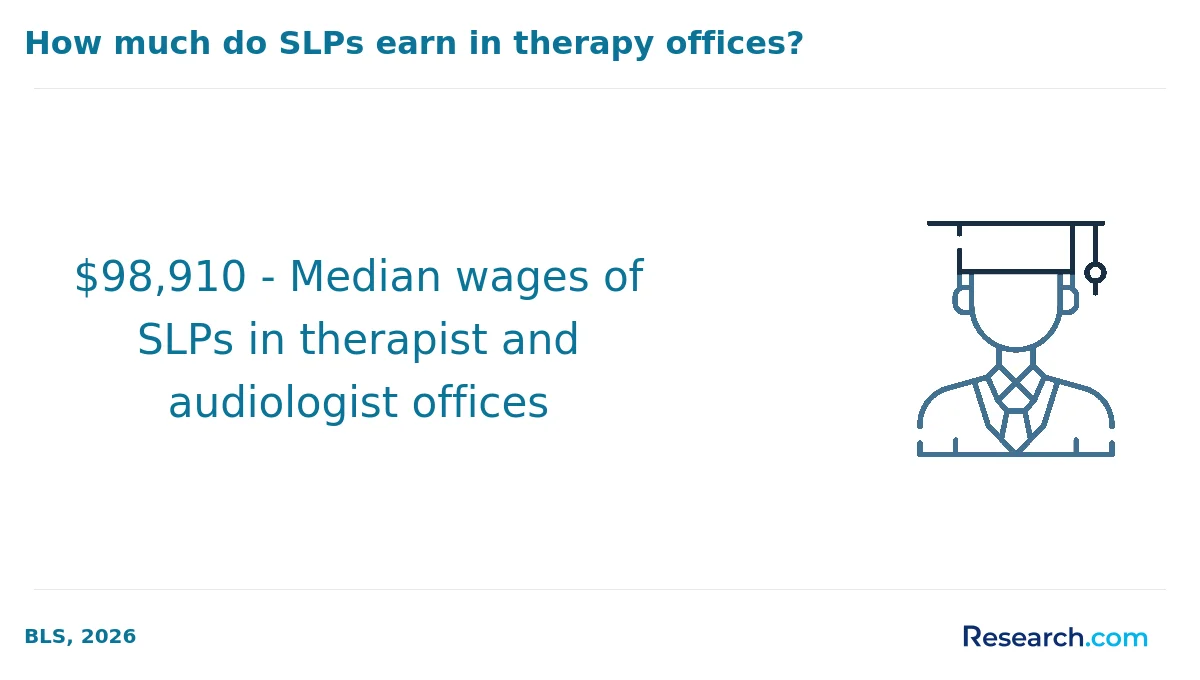
Degree format alone usually does not determine salary. Online and on-campus speech pathology graduates can compete for similar pay when they graduate from accredited programs, meet licensure requirements, and qualify for the same roles. Compensation is more strongly affected by work setting, location, certification, experience, and job responsibilities.
The main factors that shape salary parity include:
- Accreditation of degree program: Employers and licensing boards commonly expect a master's degree from a program accredited by the Council on Academic Accreditation (CAA). If online and on-campus graduates meet the same educational and clinical standards, salary expectations are generally comparable.
- Licensure and certification: State licensure and the Certificate of Clinical Competence (CCC-SLP) through the American Speech-Language-Hearing Association help standardize professional qualifications. Employers are more likely to base compensation on credentials and scope of practice than on learning format.
- Work setting: Salaries vary across sectors. Healthcare salaries average $87,000 compared to $72,623 in educational roles, reflecting differences in setting, demands, schedules, and funding structures rather than degree origin.
- Geographic location: Cost of living, regional demand, and employer budgets affect pay. Higher salaries in states such as California or New York are common regardless of whether the degree was completed online or on campus.
- Experience and advancement: Earnings tend to rise with professional experience, ranging from about $62,900 for early-career SLPs to $134,160 after nearly two decades, independent of the delivery format of the degree.
- Employment structure: Telepractice, school contracts, hospital employment, private practice, and home health roles can differ in pay, benefits, caseload expectations, and scheduling flexibility.
Students should be cautious about programs that imply an online degree automatically leads to higher pay. Salary outcomes depend on licensure, certification, clinical preparation, and the job market. Those comparing return on investment may also want to review options described as a quick degree that pays well, while remembering that speech pathology careers require meeting regulated professional standards.
An online speech pathology degree can support career growth when it leads to the same licensure, certification, and clinical competencies expected from traditional programs. Its biggest advantage is often flexibility: working professionals may be able to complete advanced education without relocating or leaving employment.
Online speech pathology degrees can support advancement in several ways:
- Strong Employment Outcomes: Graduates from accredited online programs may enter the field with employer confidence when their training includes rigorous clinical preparation and licensure alignment.
- Competitive Salary Potential: Online degree holders can qualify for the same licensed roles as on-campus graduates when they meet the same professional requirements. Salary growth then depends on setting, specialization, experience, and leadership responsibilities.
- Diverse Career Pathways: Speech-language pathologists may work in schools, hospitals, rehabilitation centers, outpatient clinics, home health, telepractice, and private practice. Online graduates with strong clinical experience can move among these settings as their interests and credentials develop.
- Growing Job Market: Demand in the field can create opportunities for promotion, specialization, supervision, and program leadership. Online graduates who can document outcomes, manage caseloads, and mentor others may be well positioned for advancement.
One professional who pursued an online speech pathology program said the format changed her career path because it allowed her to keep working while completing clinical requirements. After graduation, she earned a promotion to a supervisory position within a year. She credited the program's mix of academic theory and applied clinical preparation, saying, "The program's blend of theory and practical application prepared me for leadership challenges I hadn't anticipated."
Her experience shows the main career value of a strong online program: it can make advancement possible for students who need flexibility, while still requiring the same discipline, supervised training, and professional readiness employers expect.
Graduates of accredited online speech pathology programs are hired across the same broad employment settings as other qualified SLPs. Most employers focus on licensure, certification status, clinical experience, and fit for the population served rather than whether coursework was completed remotely.
Common hiring settings include:
- School Districts and Educational Agencies: Public, charter, and private schools hire speech-language pathologists to support K-12 students with communication needs. These roles may include evaluations, therapy, IEP participation, consultation with teachers, and family communication. Experience with remote service delivery can be useful in hybrid or virtual education environments.
- Telehealth Providers and Digital Therapy Platforms: Teletherapy companies often value graduates who are comfortable with digital tools, remote assessment support, online documentation, and virtual rapport-building. Online graduates may be especially prepared for these workflows if their programs included telepractice training.
- Healthcare Organizations and Rehabilitation Centers: Hospitals, outpatient clinics, and rehabilitation facilities hire SLPs to work with communication, cognitive-communication, voice, fluency, and swallowing-related needs. These employers usually pay close attention to clinical placement quality and supervised experience.
- Home Health Agencies: Home health employers recruit SLPs who can work independently, travel to client homes, coordinate with care teams, and document services accurately. Flexibility, professionalism, and judgment are especially important in these roles.
Recent hires and postings reflect hundreds of remote and onsite opportunities, often offering competitive salaries. Students pursuing a low cost online bachelors degree in speech pathology should remember that many clinical SLP roles require graduate-level preparation and licensure, so a bachelor's degree is often a step toward further study rather than the final credential for independent practice.
The credibility of online speech pathology degrees will continue to depend on whether programs can prove quality, not simply deliver coursework online. Employers are likely to become more accepting of online credentials as long as programs maintain accreditation, document clinical competence, and produce graduates who perform well in real practice settings.
Key trends shaping credibility include:
- AI-Driven Learning Validation: Artificial intelligence is increasingly used to track student progress, personalize instruction, and support competency measurement. These tools may help programs identify skill gaps earlier and provide clearer evidence that students are meeting expected standards.
- Accreditation Expansion and Global Collaboration: More online programs are earning accreditation from respected organizations like the American Speech-Language-Hearing Association (ASHA) and the Higher Learning Commission. Broader collaboration around standards can help employers compare programs more confidently.
- Hybrid Clinical Training Models: Programs are combining teletherapy, simulation-based practice, local clinical placements, and brief on-campus experiences. Employers are more likely to accept these models when students receive meaningful supervision and direct client experience.
- Employer Partnerships and Skill-Based Hiring: Universities are building closer relationships with healthcare providers, schools, and clinics to align coursework with workforce needs. As employers focus more on demonstrated competencies, graduates from well-designed online programs can compete effectively.
- Positive Reputation and Career Demand: Employment for speech-language pathologists is projected to grow 17% from 2025 to 2035, driven by shortages in schools and healthcare. This demand may increase openness to accredited online graduates, especially when programs show strong licensure, Praxis, and employment outcomes.
The strongest future online programs will be transparent about outcomes, clinical placement support, accreditation, technology use, and licensure alignment. Programs that cannot provide that information may face continued skepticism from employers and students alike.
Here's What Graduates of Respected Online Speech Pathology Programs Have to Say About Their Degree
- Orly: "Completing my online speech pathology degree allowed me the flexibility to balance work and study, which was crucial as a single parent. This program opened doors to diverse employment opportunities, from schools to healthcare facilities, and gave me the confidence to advance within my field. I now lead community workshops focused on early childhood communication development, making a real difference where it matters most. The skills and knowledge I gained have been invaluable for my professional growth and personal fulfillment."
- Imani: "Finishing my online speech pathology degree was a turning point in my career. The comprehensive curriculum prepared me for licensing and competitive job markets, allowing me to secure a position in a top rehabilitation center shortly after graduation. I appreciate how the online format connected me with professionals nationwide, which expanded my perspective and expertise. This degree has truly elevated my career prospects and helped me cultivate a deeper passion for supporting individuals recovering from stroke and trauma."
- Silvana: "The online speech pathology degree program gave me unparalleled access to professional development opportunities without relocating or pausing my job. Its flexible structure enabled me to specialize in pediatric speech therapy, which perfectly fits my passion for helping children communicate effectively. Since graduating, I've been promoted and now mentor incoming therapists in my clinic. The blend of practical experience and academic excellence empowered me to impact lives while advancing steadily in my career."
Other Things You Should Know About Respectable Online Speech Pathology Degree Programs
In 2027, employer perceptions may be increasingly positive as online education becomes more mainstream and as accredited programs demonstrate effectiveness. It's essential for graduates to consider how a program's specific accreditation and reputation can enhance acceptance by employers.
Yes, if the program is accredited by the Council on Academic Accreditation in Audiology and Speech-Language Pathology and includes the required clinical practicum hours. State boards also require the national Praxis exam and supervised fellowship before issuing a speech-language pathologist license.
Accreditation is critical for employer acceptance; programs accredited by the ASHA Council on Academic Accreditation (CAA) are recognized for meeting academic and clinical standards. Employers often verify accreditation status before hiring. Lack of accreditation can significantly reduce career prospects.
- U.S. Bureau of Labor Statistics - Speech-Language Pathologists https://www.bls.gov/ooh/healthcare/speech-language-pathologists.htm
- ASHA EdFind - Accredited Speech-Language Pathology Programs https://find.asha.org/ed/
- ETS Praxis - Speech-Language Pathology (5331) https://praxis.ets.org/test/speech-language-pathology-5331.html
- Emerson College - Master of Science (M.S.) in Communication Disorders (Speech@Emerson, online) https://speech.emerson.edu/
- Idaho State University - Master of Science in Speech-Language Pathology (Online/Distance Education) https://www.isu.edu/slp/programs-offered/slp-graduate-program/
- Delaware Valley University - Master of Science in Speech-Language Pathology (M.S.) https://delval.edu/programs/graduate-programs/speech-language-pathology
- University of North Carolina at Greensboro - Speech-Language Pathology, M.A. (Online) https://csd.uncg.edu/graduate/masters-of-arts-online/
- California State University-San Marcos - Online MS in Speech-Language Pathology https://www.csusm.edu/slp/programs/mastersonline/index.html