2027 Best Speech Pathology Degrees for Working Adults

Co-Founder and Chief Data Scientist

Reviewed by Rhea Paul, PhD
SLP Education & Research Expert
Working adults considering speech pathology usually face a practical question first: can they earn the credential needed for advancement without leaving their job? The answer depends on program format, accreditation, clinical placement support, cost, and how well the schedule fits real work and family obligations. Approximately 45% of speech pathology students are over 25, which helps explain the growing demand for part-time, online, hybrid, and career-change pathways.
Speech-language pathology is also a field where credentials matter. A flexible program is useful only if it prepares students for required clinical experiences, licensure-related expectations, and employer standards. Traditional campus programs may be difficult for full-time workers because daytime classes and fixed clinical schedules can limit access. That barrier matters in a field expected to grow 17% by 2035.
This guide explains the speech pathology degree options most relevant to working adults, including admissions, coursework, completion time, cost, financial aid, support services, accreditation, salary potential, and career outcomes. Use it to compare programs based on fit, not just convenience.
Key Things to Know About Speech Pathology Degrees for Working Adults
- Many speech pathology programs offer flexible scheduling with evening, weekend, or part-time options, accommodating working adults balancing employment and study.
- Online or hybrid degree formats have grown by over 35% to meet demand, providing accessibility without sacrificing clinical practicum requirements.
- Accelerated pathways and dedicated support services help working professionals complete degrees efficiently while maintaining job responsibilities, with employment rates exceeding 85% post-graduation.
What Are the Best Speech Pathology Degrees for Working Adults?
The best speech pathology degrees for working adults are accredited programs that combine scheduling flexibility with strong clinical preparation. Convenience alone is not enough; students should look for programs that help them complete required coursework, secure appropriate clinical experiences, and stay on track while employed.
For most professionals, the strongest options fall into a few categories:
- Online or hybrid master's in speech-language pathology: These programs are often the best fit for adults who need remote coursework but still must complete supervised clinical experiences. Many use online classes while arranging in-person practicum placements in approved settings near the student when possible. Students comparing affordability and structure can also review online slp masters options as part of their search.
- Part-time graduate programs: A part-time plan can make a demanding degree more manageable for full-time employees. The trade-off is a longer timeline, but the reduced course load may lower stress and make it easier to maintain income while studying.
- Post-baccalaureate certificates: These are useful for career changers who did not complete undergraduate prerequisites in communication sciences and disorders. A certificate may not replace a graduate degree, but it can help students qualify for master's-level admission.
- Programs with adult neurogenic disorder coursework: Adults already working in healthcare, rehabilitation, or elder care may benefit from programs that include preparation in aphasia, dysphagia, cognitive-communication disorders, and related adult clinical areas.
- Asynchronous or low-residency formats: Asynchronous coursework lets students complete lectures and assignments around work shifts. Low-residency models may require occasional campus visits, so students should check travel expectations before enrolling.
When comparing programs, working adults should ask three questions: Is the program accredited for the credential I need? Can the school support clinical placement requirements in my location? Can I realistically handle the weekly workload with my job? A low-cost program is not a good value if it delays graduation or does not meet professional requirements.
Cost-conscious adult learners often compare flexible degrees across fields before committing. For example, reviewing the structure of affordable online MBA programs can help students see how scheduling, tuition, and return-on-investment considerations differ between professional graduate pathways.
What Are the Admission Requirements for Working Adults in Speech Pathology Degree Programs?
Admission requirements for working adults in speech pathology programs usually include academic preparation, prerequisite coursework, recommendations, and evidence that the applicant can succeed in a rigorous clinical graduate program. Nearly 40% of graduate students enroll part-time, so many schools now review applicants with work experience, family responsibilities, and nontraditional timelines in mind.
Applicants should expect the following requirements or review factors:
- Bachelor's degree: Most graduate programs require a completed bachelor's degree. Applicants without a communication sciences and disorders background may need prerequisite or leveling coursework before full admission.
- Prerequisite coursework: Common prerequisites may include anatomy and physiology of speech and hearing, phonetics, language development, audiology, and communication disorders. Working adults should confirm whether prerequisites can be completed online or part time.
- GPA expectations: Competitive GPAs remain important. Some programs may consider conditional admission, recent prerequisite performance, or professional growth when an applicant's older academic record is weaker.
- Prior work experience: Experience in healthcare, education, rehabilitation, childcare, behavioral health, or related settings can strengthen an application. It does not usually replace academic requirements, but it can show readiness for client-centered work.
- Standardized test policies: GRE or other testing requirements vary. Some programs waive tests for applicants with significant professional experience, strong academic records, or advanced degrees.
- Professional recommendations: Letters from supervisors, faculty, or clinical professionals should speak to reliability, communication skills, ethical judgment, and ability to manage graduate-level work.
- Statement of purpose: Adult applicants should use this essay to explain career goals, relevant experience, scheduling readiness, and why speech-language pathology is the right next step.
Working adults should also evaluate admissions support. Strong programs are clear about prerequisite gaps, application timelines, clinical expectations, and whether part-time enrollment is allowed. Programs that are vague about clinical placement or scheduling may create problems later.
Applicants comparing accreditation-dependent fields may also find it useful to examine how other programs handle standards and flexibility, such as CACREP-accredited online counseling programs.
What Coursework Is Required in Speech Pathology Degree Programs for Working Adults?
Speech pathology coursework for working adults is designed to build both scientific knowledge and clinical decision-making skills. Flexible programs may deliver lectures online or in the evening, but the subject matter remains demanding. Studies show that more than 40% of speech pathology students are adult learners focused on advancing or shifting their careers.
Common required coursework includes:
- Communication sciences and disorders: Students learn the foundations of speech, language, hearing, swallowing, and communication. This content supports later clinical assessment and treatment planning.
- Anatomy and physiology of speech and hearing: This area covers the structures and systems involved in speech production, hearing, respiration, phonation, resonance, and swallowing.
- Speech-language development: Students study typical and atypical language development across the lifespan. This helps future clinicians distinguish developmental variation from disorders that require intervention.
- Phonetics and speech sound disorders: Coursework in phonetics helps students transcribe and analyze speech patterns. Speech sound disorder content prepares them to assess articulation and phonological concerns.
- Clinical methods and practice: Students learn assessment procedures, treatment planning, documentation, goal writing, and evidence-based intervention methods.
- Neurological bases of communication: This coursework explains how nervous system conditions affect speech, language, cognition, voice, and swallowing. It is especially relevant for students interested in hospitals, rehabilitation centers, and adult care.
- Audiology and aural rehabilitation: Many programs include hearing-related coursework so students understand hearing loss, screening, amplification, and communication support strategies.
- Ethics and professional issues: Students study confidentiality, cultural responsiveness, scope of practice, documentation standards, legal responsibilities, and professional conduct.
- Clinical practicum or fieldwork: Supervised clinical training is central to speech pathology preparation. Working adults should ask when placements occur, whether daytime availability is required, and how placements are assigned.
The biggest challenge for employed students is not usually watching lectures; it is completing clinical requirements. Before enrolling, students should confirm whether clinical hours can be completed near home, whether weekend or evening placements are possible, and how much daytime availability the program expects.
Adult learners who want broader preparation in behavior, cognition, or human development may also compare related options such as an affordable online psychology master's degree, though psychology programs do not replace speech pathology training for speech-language pathology practice.
Completion time depends on enrollment pace, prerequisites, clinical scheduling, and the number of hours a student works each week. On average, part-time students who are employed tend to complete their degrees in about 3 to 3.5 years, compared with the two years typical for full-time students.
The main timeline factors include:
- Program format: Online and hybrid formats can reduce commuting time and make coursework easier to schedule, but they do not eliminate clinical requirements.
- Course load: Part-time enrollment can protect work-life balance, but it usually extends the degree timeline. Full-time enrollment may be faster but harder to sustain with a demanding job.
- Prerequisite needs: Career changers may need leveling courses before starting graduate coursework. These courses can add time unless they are built into the program plan.
- Prior credits: Transferable coursework or completed prerequisites may shorten the path, depending on the school's policies.
- Clinical placement timing: Practicum and externship schedules can be less flexible than online classes. Students may need daytime availability, reduced work hours, or employer cooperation during intensive clinical terms.
- Accelerated options: Condensed courses or intensive sessions may help motivated students finish faster, but they can be difficult for adults with full-time work or caregiving responsibilities.
A realistic plan is better than the fastest plan. Working adults should map the full degree, including clinical terms, before enrolling. It is also wise to ask current students how many hours per week they spend on readings, assignments, group work, and practicum preparation.
One professional who earned a speech pathology degree online while working full time described the experience this way: "There were moments I doubted managing both, especially during clinical practicum weeks. But having a flexible online platform made it possible to study after late shifts. It wasn't easy, but breaking tasks into small daily goals kept me moving forward." The lesson is clear: flexibility helps, but steady planning and employer support often matter just as much.
For working adults, the cost of a speech pathology degree includes more than tuition. Students should budget for fees, books, clinical requirements, travel, lost work hours, and the longer timeline that can come with part-time study. Part-time enrollment in these programs has grown by 15% over the last decade, reflecting the demand for flexible pathways that allow students to keep working.
Major cost factors include:
- Tuition per credit: Tuition rates vary widely by institution type and residency status, often ranging from $400 to $1,200 per credit hour.
- Program duration: Earning a master's degree, usually needed for certification, takes about 2 to 3 years. Part-time students may spread costs over a longer period, but they may also pay additional term-based fees.
- University fees: Registration, technology, clinical practice, student services, and graduation fees can add several hundred or even thousands of dollars.
- Materials and textbooks: Specialized textbooks, assessment materials, software, and therapy resources can cost over $1,000 throughout the program.
- Clinical placement expenses: Students may need to pay for background checks, immunizations, liability insurance, travel, parking, or relocation for placements.
- Study format: Online programs may reduce commuting and housing expenses, but they may still require campus visits or in-person clinical experiences.
- Work schedule impact: Some clinical terms may require reduced work hours. Lost income should be included in the true cost calculation.
To compare programs accurately, working adults should calculate total cost of attendance rather than looking only at tuition. Ask each school for a full cost estimate, including fees and expected clinical expenses. Also confirm whether tuition differs for online, out-of-state, or part-time students.
Many adults reduce out-of-pocket costs through employer tuition reimbursement, scholarships, federal aid, payment plans, or a slower course load that lets them continue earning while enrolled.
Financial aid can make a speech pathology degree more realistic for working adults, but students need to plan early. Aid rules may depend on enrollment status, program accreditation, income, academic progress, and whether the student is taking prerequisites or degree-applicable graduate courses.
Common financial aid options include:
- Federal aid: Students who complete the FAFSA may qualify for federal loans, grants, or work-study depending on eligibility, income, enrollment status, and academic progress. Graduate students should pay close attention to loan limits and repayment obligations.
- Employer tuition assistance: Some employers reimburse tuition or provide education benefits for job-related study. These programs may require minimum grades, manager approval, or a commitment to stay with the employer for a specified period.
- Adult learner scholarships: Scholarships for returning students can help reduce debt. Applicants may need to show career goals, academic readiness, financial need, or community service.
- State and institutional grants: Grants that do not require repayment may be available through states, universities, or healthcare workforce initiatives. Eligibility often depends on residency, program type, or service commitments.
- Departmental awards: Some speech pathology departments offer scholarships, assistantships, or small awards to graduate students. Working adults should ask whether part-time or online students are eligible.
- Flexible payment plans: Installment plans can spread tuition payments across a semester or year. They do not reduce total cost, but they can help with cash flow.
- Loan repayment or service programs: Graduates who work in high-need schools, healthcare settings, or underserved communities may find repayment options tied to employment, depending on program rules.
A professional who completed a speech pathology degree while working full time said the financial aid process felt overwhelming at first. "I was worried about juggling deadlines and paperwork on top of my job and family," she recalled. Employer tuition assistance changed her outlook by reducing financial pressure.
She also found a local scholarship that matched her return-to-school goals. Her advice was to combine multiple aid sources instead of relying on one option: "It wasn't easy, but the right financial help made it possible to focus on learning and maintaining balance."
Support services can determine whether a flexible speech pathology program is truly workable for adults with jobs and family obligations. Strong programs do more than offer online classes; they help students plan schedules, manage clinical requirements, solve technology issues, and stay academically prepared.
The most useful services include:
- Academic advising: Advisors should help students plan course sequences, understand prerequisites, avoid scheduling conflicts, and prepare for clinical milestones. Working adults should ask whether advisors have experience supporting part-time and online learners.
- Clinical placement support: This is one of the most important services for speech pathology students. Programs should clearly explain how placements are found, approved, supervised, and scheduled.
- Flexible scheduling: Evening, weekend, asynchronous, or part-time options can make coursework manageable. However, students should verify whether flexibility also applies to labs, intensives, and practicum requirements.
- Online learning support: Reliable technical help, accessible learning platforms, recorded lectures, and digital library services are essential for students studying outside normal campus hours.
- Tutoring and faculty access: Courses in anatomy, neurology, phonetics, and research methods can be challenging. Tutoring, review sessions, and responsive faculty can help students stay on pace.
- Mentoring: Peer mentors, alumni mentors, and faculty mentors can help adult learners manage time, prepare for clinical work, and understand career options.
- Career services: Resume support, interview preparation, licensure guidance, and employer connections can help students translate the degree into advancement.
- Mental health resources: Counseling, wellness workshops, and stress-management support are valuable for students balancing deadlines, work expectations, and personal responsibilities.
Before enrolling, working adults should ask how often support services are available outside standard business hours. A program designed for adult learners should not require every appointment, help session, or advising meeting to happen during the workday.
Speech pathology degrees for working adults may be accredited, but students must verify accreditation before applying. Accreditation means a recognized body has reviewed the program's curriculum, faculty qualifications, student outcomes, and clinical training standards. For speech pathology, this matters because education requirements are closely tied to professional certification, state licensure, employer acceptance, and eligibility for federal financial aid.
Accreditation is especially important for adult learners because flexible formats can vary widely in quality. Nearly 40% of graduate students in health-related fields today are adults seeking flexible programs that fit their busy lives. A program that is online, hybrid, or part time should still meet the same academic and clinical expectations as a campus-based pathway.
Students should confirm the following before enrolling:
- Program-level accreditation: Make sure the speech pathology program itself has the appropriate recognition for the career outcome you want.
- Institutional accreditation: The college or university should also be properly accredited, which can affect financial aid eligibility and credit transfer.
- Licensure alignment: Ask whether the program meets educational requirements in your state, especially if you plan to complete an online program based elsewhere.
- Clinical training standards: Confirm that required supervised experiences are built into the program and accepted for your professional goals.
- Disclosure for online students: Online programs should clearly state any state authorization, residency, campus visit, or placement limitations.
An accredited speech pathology degree has stronger long-term value because it is more likely to be recognized by employers, licensing boards, certification bodies, and other institutions. Working adults should treat accreditation as a nonnegotiable requirement, not a bonus feature.
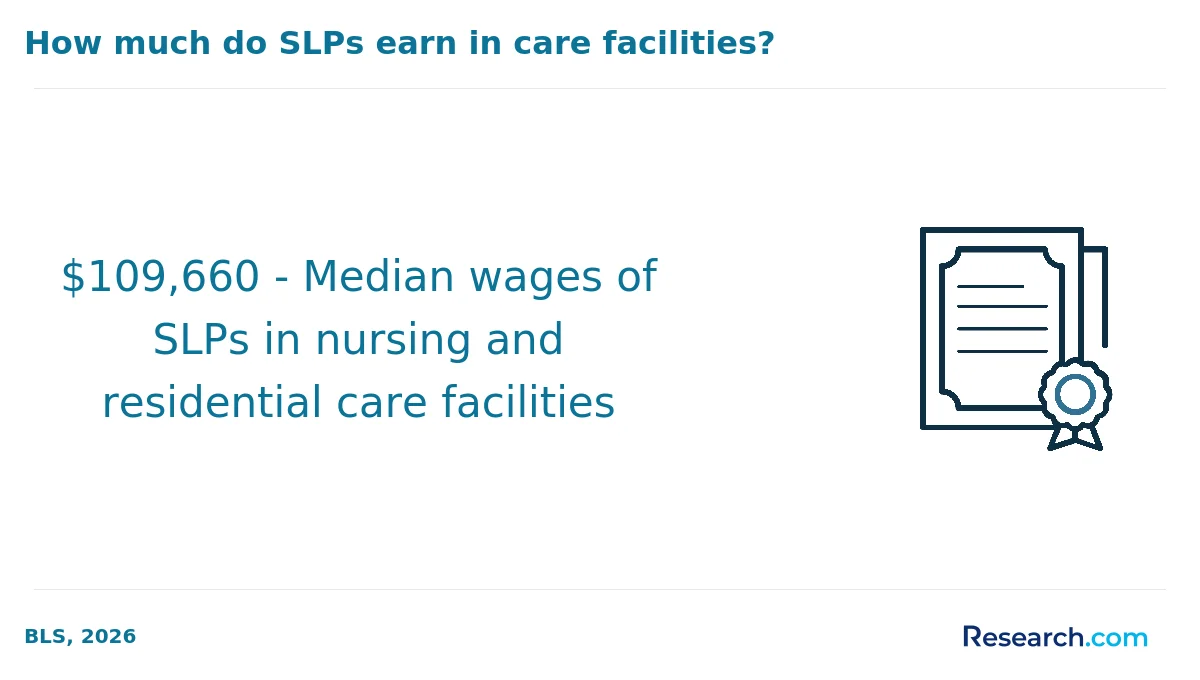
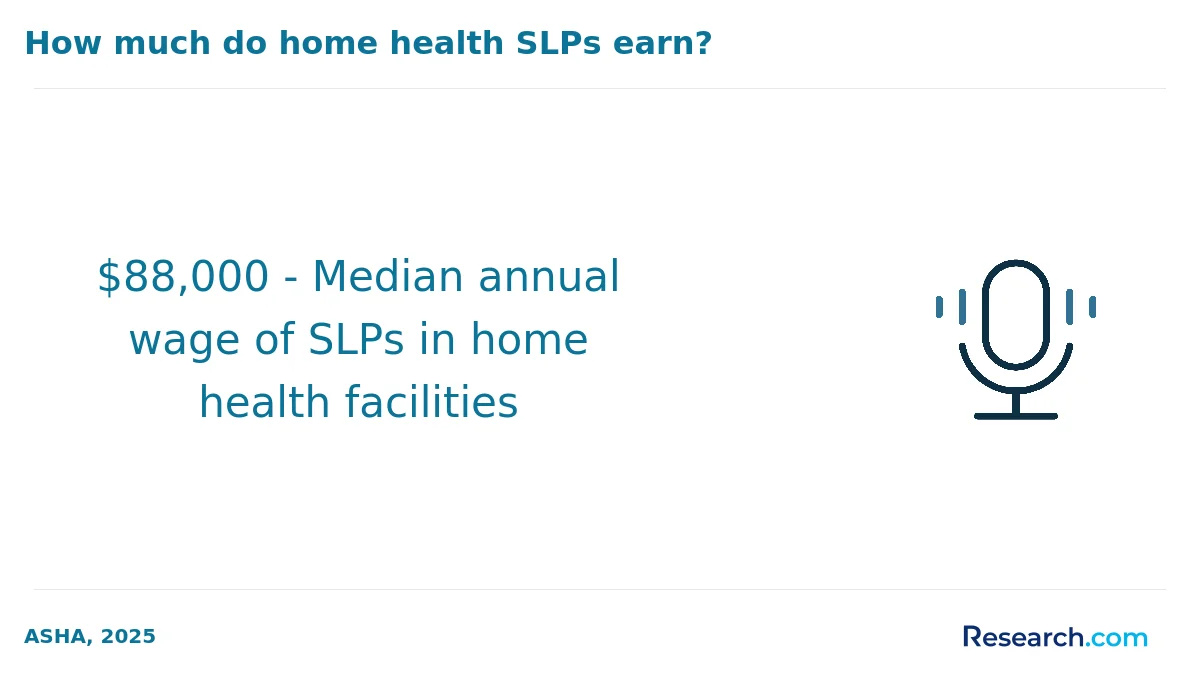
A speech pathology degree can increase salary potential for working adults, especially when it qualifies them for licensed clinical roles, specialized practice, supervisory responsibilities, or advancement within healthcare and education settings. Earnings for graduates typically range from $60,000 to $90,000 annually, though actual pay depends on location, employer, experience, credentials, and work setting.
Several factors influence salary growth:
- Industry demand: Healthcare and education employers need qualified speech-language professionals, which can support stable job opportunities and competitive compensation.
- Role advancement: A degree may help professionals move into clinical, supervisory, coordinator, or specialist positions that offer greater responsibility and higher pay.
- Employer policies: Some organizations use degree attainment, licensure, certification, or advanced credentials to determine pay increases, stipends, or promotion eligibility.
- Years of experience: Salary often rises as professionals build clinical judgment, complete supervised hours, and demonstrate stronger outcomes with clients or patients.
- Specialization: Focus areas such as pediatric, geriatric, or neurological speech pathology can improve marketability when they match employer needs.
- Work setting: Schools, hospitals, rehabilitation centers, private practices, universities, and administrative offices may offer different compensation structures.
Working adults should be cautious about assuming an automatic raise. The degree is most valuable when it leads to a required credential, a recognized change in role, or access to employers that pay more for advanced clinical preparation. Students should compare total program cost with realistic salary outcomes in their local labor market.
Those evaluating long-term financial return can also compare speech pathology with other high-paying degree paths to understand how education level, licensure, and field demand affect earnings.
A speech pathology degree can prepare working adults for clinical, specialist, supervisory, research, and administrative roles, depending on the degree level, licensure status, certification, experience, and setting. For many adults, the goal is not just entry into the field but advancement into work that offers more responsibility, stability, or specialization.
Common career paths include:
- Speech-language pathologist: In this clinical role, professionals assess, diagnose, and treat communication and swallowing disorders. State licensure and appropriate graduate preparation are typically central to practice.
- Clinical supervisor: Supervisors guide clinicians, review documentation, support treatment quality, and help manage clinical operations. This path generally requires experience as well as strong communication and leadership skills.
- Speech pathology specialist: Specialists may focus on pediatric, geriatric, neurological, voice, fluency, feeding, swallowing, or cognitive-communication needs. Advanced coursework and targeted clinical experience can support this direction.
- Program coordinator: Coordinators organize services across schools, hospitals, rehabilitation centers, or community programs. The role may involve scheduling, compliance, staff coordination, and program improvement.
- Researcher: Researchers study communication disorders, intervention outcomes, assessment tools, and clinical methods. Graduate-level research training can support work in universities, hospitals, or research organizations.
- Healthcare administrator: Experienced professionals may move into department leadership, clinic management, compliance, or service-line administration. Additional management training may be helpful for this path.
- Educational consultant or school-based specialist: Professionals with school experience may support intervention planning, special education teams, teacher collaboration, and communication-related student services.
Job opportunities with a speech pathology degree are broad, but requirements vary by state and employer. Working adults should identify the exact role they want before selecting a program, then confirm whether the curriculum, clinical placements, and credential pathway match that goal.
Adults looking for faster graduate pathways in other fields sometimes compare options such as one-year online master's programs, but speech pathology timelines are often shaped by clinical and licensure-related requirements that cannot always be accelerated.
What Graduates Say About Their Speech Pathology Degrees for Working Adults
- Westin: "Choosing an online speech pathology degree while continuing to work full-time felt like the perfect balance for me. Although the average cost of around $30,000 was a serious investment, the flexibility allowed me to manage my finances and schedule effectively. Completing the program opened up new career opportunities that wouldn't have been possible otherwise, making every penny and hour spent truly worthwhile."
- Peter: "Enrolling in a part-time speech pathology degree was a strategic move to enhance my skills without sacrificing my current job. Understanding that the cost can vary but generally averages near $30,000 helped me plan carefully and access financial aid. Reflecting on my progress, the degree has significantly boosted my professional credibility and confidence in client interactions."
- Andrew: "Balancing work and pursuing an online speech pathology degree was challenging but manageable, especially given the financial commitment of about $30,000 on average. I appreciate the program's design for working adults, which allowed me to apply real-world experiences as I learned. This degree has been a catalyst in advancing my career and expanding my professional network."
Other Things You Should Know About Speech Pathology Degrees
In 2027, universities like Northwestern University and Emerson College excel in offering top online Speech Pathology programs tailored for working adults. These programs provide flexibility and academic rigor, enabling professionals to balance work with study effectively.
Working adults often manage part-time Speech Pathology program workloads by leveraging asynchronous online classes and weekend courses, allowing them to balance professional duties. Programs typically require 10-15 hours of study per week, providing the flexibility needed to accommodate career responsibilities.
In 2027, universities like Emerson College and New York University offer Speech Pathology programs with flexible clinical practicum experiences, catering to working adults by utilizing evening and weekend schedules, as well as local placements, to accommodate students' professional commitments.
- U.S. Bureau of Labor Statistics - Speech-Language Pathologists https://www.bls.gov/ooh/healthcare/speech-language-pathologists.htm
- ASHA EdFind - Accredited Speech-Language Pathology Programs https://find.asha.org/ed/
- ETS Praxis - Speech-Language Pathology (5331) https://praxis.ets.org/test/speech-language-pathology-5331.html
- University of North Carolina at Greensboro - Speech-Language Pathology, M.A. (Online) https://csd.uncg.edu/graduate/masters-of-arts-online/
- Ithaca College - Online Master of Science in Speech-Language Pathology https://slponline.ithaca.edu/programs/masters-speech-language-pathology-online
- Pepperdine University - Master of Science in Speech-Language Pathology https://healthscience.pepperdine.edu/online-masters-in-speech-language-pathology/
- Idaho State University - Master of Science in Speech-Language Pathology (Online/Distance Education) https://www.isu.edu/slp/programs-offered/slp-graduate-program/
- Pennsylvania Western University - Master of Science in Speech-Language Pathology https://online.pennwest.edu/programs/speech-language-pathology-grad/index.php