
2027 Can You Get Licensed With an Online Speech Pathology Degree? Requirements, Rules, and What to Know

Co-Founder and Chief Data Scientist

Reviewed by Rhea Paul, PhD
SLP Education & Research Expert
Choosing an online speech pathology program is not just a question of convenience. The real issue is whether the degree will qualify you for state licensure, supervised practice, certification, and the clinical roles you want after graduation. Many prospective speech pathology students hesitate to enroll in online programs because licensure eligibility can be hard to verify before admission.
About 70% of speech pathologists in the U. S. hold master's degrees, and most states expect applicants to complete graduate-level education, clinical training, an examination, and supervised professional experience. Online study can meet those expectations, but only when the program is properly accredited and structured to satisfy the licensing rules in the state where you plan to practice.
This guide explains how online speech pathology degrees relate to licensure, what state boards usually review, how clinical hours work, which exam is commonly required, and what career options may be available with or without a license. It is designed for students comparing online programs, career changers planning a path into speech-language pathology, and graduates preparing for licensing steps after completing their degree.
Key Benefits of Getting Licensed with an Online Speech Pathology Degree
- Licensure with an online speech pathology degree ensures eligibility to practice legally, enhancing professional credibility and meeting state board requirements essential for clinical roles.
- Licensed professionals gain access to diverse employment settings, including schools, hospitals, and private practice, fostering greater job mobility and flexibility nationwide.
- Licensed speech pathologists typically experience higher earning potential and increased advancement opportunities compared to non-licensed peers, with a median salary growth of 20% over five years.
Can You Get Licensed With an Online Speech Pathology Degree?
Yes, you can get licensed with an online speech pathology degree if the program meets the same academic, accreditation, clinical, and supervised-experience standards required of campus-based programs. State licensing boards generally care less about whether coursework was delivered online and more about whether the degree came from an acceptable program and included the required clinical preparation.
For most students, the safest path is a master's degree from a program accredited by the Council on Academic Accreditation (CAA) of the American Speech-Language-Hearing Association (ASHA). CAA accreditation signals that the program has been reviewed for curriculum quality, faculty qualifications, clinical education, and professional preparation. It does not automatically issue a state license, but it is often a key eligibility requirement.
Accredited online speech pathology programs usually combine remote coursework with in-person clinical practicum experiences. Students may complete lectures, assignments, simulations, and discussions online while arranging supervised clinical placements in schools, hospitals, rehabilitation centers, clinics, or other approved settings. This hybrid structure is what allows online students to build hands-on skills while maintaining flexibility.
What to verify before enrolling
- CAA accreditation: Confirm the program's status directly through official accreditation sources, not only through marketing materials.
- State authorization: Make sure the program is allowed to enroll students from your state and can support licensure preparation where you intend to practice.
- Clinical placement support: Ask whether the school finds placements, approves student-found sites, or requires travel to specific locations.
- Licensure disclosures: Review whether the program states that it meets, does not meet, or has not determined requirements for your state.
- Exam and fellowship preparation: Check how the curriculum prepares students for the licensing exam and post-graduate supervised experience.
Licensure matters because it determines whether you can provide regulated speech-language pathology services independently in many settings. Licensed professionals may work in healthcare, education, early intervention, private practice, and related environments, depending on state scope-of-practice rules. It also protects clients by requiring practitioners to meet legal and professional standards before delivering clinical services.
Do Licensing Requirements for Speech Pathology Vary by State?
Yes. Speech pathology licensing requirements vary by state, even though many states rely on similar national standards. A program that prepares graduates well for one state may still require additional documentation, coursework review, exams, or supervised experience verification in another state.
Approximately 20% of states require different versions or combinations of national exams, supervised clinical hours, and state-specific jurisprudence assessments. These differences can affect online students in particular because the school may be located in one state while the student plans to practice in another.
Common areas where state rules differ
- Exams: Many states use the national speech-language pathology exam, while some add a jurisprudence exam or state-specific legal and ethics requirement. Students should check whether their state requires only the national exam or an additional assessment.
- Supervised Clinical Experience: The number of required supervised clinical hours typically ranges from 400 to 700 hours of supervised clinical work. States may also define who can supervise, where hours may be completed, and how hours must be documented.
- Continuing Education: Renewal requirements differ by state. Some boards require annual continuing education, while others use a biennial schedule. Missing renewal or continuing education requirements can delay practice authorization.
- Scope of Practice and Renewal Policies: States may define allowable services, telepractice rules, assistant supervision, documentation duties, and renewal procedures differently. These details matter if you plan to work across state lines or move after graduation.
How to reduce licensing risk
- Identify the state where you want to practice before applying to programs.
- Read that state's speech-language pathology licensing board requirements.
- Ask each program for a written licensure disclosure for your state.
- Confirm how clinical placements will be approved and supervised.
- Keep copies of syllabi, practicum logs, supervisor credentials, exam results, and degree documentation.
If you are comparing speech pathology with another career path, remember that a flexible program such as a business degree online follows a very different licensing model. Speech-language pathology is a regulated clinical profession, so state board requirements should be part of your program search from the beginning.
Are Online Speech Pathology Programs Different From Campus Programs for Licensure?
Online and campus speech pathology programs can lead to the same licensure pathway when they meet the same accreditation and clinical training standards. The delivery format alone does not determine licensure eligibility. What matters is whether the program is accredited, whether it includes required clinical experiences, and whether graduates can document that they completed the education required by their state board.
Over 40% of accredited programs offered fully or partly online curricula as of 2023, reflecting broader acceptance of distance learning in speech-language pathology education. However, students should not assume that every online program is equal. Some programs offer strong placement support and clear licensure disclosures, while others place more responsibility on students to secure local clinical sites.
| Licensure factor | Online programs | Campus programs |
| Accreditation | Must meet CAA standards if the program is CAA-accredited | Must meet the same CAA standards if the program is CAA-accredited |
| Coursework | Delivered through online classes, live sessions, recorded lectures, or hybrid formats | Delivered primarily in person, often with some online learning tools |
| Clinical practicum | Completed in person, often at approved local or regional sites | Completed in person through campus clinics, partner sites, or external placements |
| Licensing review | Boards evaluate accreditation, coursework, hours, exams, and supervision | Boards evaluate the same core requirements |
| Student challenge | Finding and coordinating suitable clinical placements may require extra planning | Campus-based placement networks may be more centralized, but availability still varies |
Students comparing online masters in speech language pathology programs should look beyond tuition and schedule flexibility. The most important licensure-related questions are whether the program is accredited, how practicum placements are arranged, and whether the school has experience preparing graduates for the state where the student wants to work.
- Accreditation Requirements: Online and on-campus programs must satisfy the same CAA expectations when accredited by that body. Accreditation is one of the strongest indicators that the program is built around recognized professional standards.
- Clinical Practicum: All students need in-person clinical training. Online students should ask how early placements begin, whether placements are guaranteed, and what happens if an approved site is not available nearby.
- Curriculum and Assessments: Coursework should prepare students for assessment, diagnosis, intervention, ethics, documentation, and the Praxis Speech-Language Pathology exam. Delivery methods may differ, but expected competencies should not.
- Professional Perceptions: Employers and licensing boards generally prioritize accreditation, supervised clinical preparation, exam performance, and readiness for practice over whether lectures were completed online or on campus.
Does an Online Speech Pathology Degree Require Clinical or Practicum Hours?
Yes. Online speech pathology degree programs require clinical or practicum hours because speech-language pathology is a hands-on clinical profession. Students must demonstrate that they can assess clients, plan treatment, provide intervention, document services, and respond appropriately in real practice settings.
Online coursework can teach theory, methods, ethics, and evidence-based practice, but it cannot replace supervised client contact. That is why accredited online programs build in clinical placements even when most academic courses are delivered remotely.
- Required hours: Programs typically require about 400 or more clinical hours. These hours help students show competency across speech, language, communication, and related service areas.
- Types of placements: Students may complete practicum experiences in schools, hospitals, rehabilitation centers, private clinics, early intervention programs, or other approved sites. A mix of settings can strengthen career readiness.
- Supervision: Licensed speech-language pathologists supervise students, observe performance, provide feedback, and verify clinical documentation. Supervision rules may differ by program and state.
- Skills gained: Practicum training develops assessment, diagnosis, treatment planning, direct intervention, counseling, documentation, collaboration, and ethical decision-making.
- In-person arrangements for online students: Many online speech pathology programs coordinate local or regional placements, but the level of support varies. Some schools maintain established site networks, while others require students to identify possible locations for approval.
Questions to ask about clinical placements
- Does the program place students, or must students find their own sites?
- Can placements be completed near the student's home?
- Are there required campus visits, intensives, or travel periods?
- Who approves supervisors and clinical sites?
- What happens if a placement is delayed or canceled?
- How are hours tracked, verified, and reported for licensure?
Practicum hours needed for speech pathology licensure vary slightly by state, so students should compare program requirements with the rules of the licensing board where they plan to practice. Students interested in future leadership outside direct clinical practice may also explore options such as an executive MBA, but that type of credential does not replace speech-language pathology licensure requirements.
What Licensing Exam Is Required After Earning an Online Speech Pathology Degree?
After earning an online speech pathology degree, candidates commonly take the Praxis Examination in Speech-Language Pathology. This exam is managed by the Educational Testing Service (ETS) and is widely used in the United States as part of licensure and certification processes.
The exam is intended to confirm that candidates have the knowledge needed for safe, ethical, and effective entry-level practice. Approximately 85% of first-time test takers achieve a passing score, reflecting the preparation many graduates receive before sitting for the exam.
- Exam name and administration: The Praxis Examination in Speech-Language Pathology is administered by ETS and is commonly required after completing graduate preparation in speech-language pathology.
- Content coverage: The exam evaluates areas such as speech and language development, communication disorders, assessment methods, intervention approaches, professional ethics, and service delivery.
- Format and duration: It contains around 132 selected-response questions delivered by computer and is typically completed within a three-hour timeframe.
- Study and preparation: Candidates often use review books, practice exams, content outlines, faculty guidance, and structured study schedules. Strong preparation usually begins before graduation, not after.
- Retake policy: Candidates who do not pass may retake the exam after an established waiting period. Students should check current ETS and state board rules before scheduling a retake.
- Recognition of online degrees: Licensing boards generally recognize graduates of accredited online programs when the degree, practicum, and documentation meet state requirements. The Council on Academic Accreditation in Audiology and Speech-Language Pathology (CAA) remains an important accreditation reference.
Practical exam planning tips
- Review your state's required passing score before registering.
- Schedule the exam with enough time to receive scores before licensing deadlines.
- Use practicum cases and coursework notes to connect exam content with real clinical decisions.
- Keep official score reports because licensing boards may require direct verification.
Is Supervised Work Experience Required After an Online Speech Pathology Degree?
Yes. Supervised work experience is required after earning an online speech pathology degree in most states before a graduate can practice independently. This post-graduate period helps new clinicians move from student-level practicum work to professional clinical responsibility under the guidance of an experienced speech-language pathologist.
More than 90% of new speech pathologists participate in supervised clinical fellowships as part of state credentialing. This experience is often associated with the Clinical Fellowship Year (CFY) or a similar supervised professional practice requirement, depending on the terminology used by the credentialing body or state board.
- Duration: The supervised period is typically around 1,260 hours or approximately 9 months of full-time supervised clinical practice. Part-time schedules may extend the calendar length.
- Settings: Supervised work may take place in schools, hospitals, rehabilitation centers, private clinics, skilled nursing facilities, early intervention programs, or other approved environments.
- Mentorship: A licensed speech-language pathologist provides oversight, feedback, performance evaluation, and guidance on clinical judgment, documentation, ethics, and professional communication.
- Skill Development: The experience strengthens assessment, treatment planning, intervention, collaboration with families and teams, caseload management, and accurate recordkeeping.
- Career Readiness and Licensure: Successful completion helps demonstrate that a graduate is prepared for independent practice and can meet state licensure or certification expectations.
Online graduates should plan for this step early. A degree alone may not be enough to begin independent practice immediately. Before accepting a fellowship or supervised position, confirm that the supervisor, work setting, caseload, and documentation process satisfy the requirements of the state where you intend to become licensed.
Does Licensure Reciprocity Apply to Online Speech Pathology Graduates?
Licensure reciprocity may apply to online speech pathology graduates, but it is not automatic. Reciprocity means that a professional licensed in one state may have a streamlined path to licensure in another state. Each state still has authority over its own licensing rules, application process, fees, and documentation standards.
For online graduates, the main issue is usually not the online format itself. The bigger questions are whether the program was accredited, whether clinical and supervised experience requirements match the new state's rules, and whether the applicant can provide complete records.
- Eligibility Criteria: States vary in how they review applicants licensed elsewhere. They may require proof of accredited education, exam scores, supervised practice, good standing, and specific coursework.
- Program Accreditation and Standards: Many states look for alignment with American Speech-Language-Hearing Association (ASHA) standards, including completion of a Clinical Fellowship Year (CFY). An accredited online degree is generally easier to document than a program without recognized accreditation.
- State Agreements and Compact Licensure: Some states participate in interstate compacts or reciprocity agreements that may simplify movement across state lines. These arrangements are not universal, so applicants must verify the rules in each state.
- Application Procedures and Fees: Requirements may include license verification, transcripts, Praxis scores, supervised-experience forms, background checks, fees, and board-specific applications. Processing times can vary.
- Potential Limitations for Online Graduates: Some boards may request detailed verification of practicum hours, supervisor credentials, or program delivery. Keeping organized records from the beginning of the program can prevent delays later.
Best records to keep for future license transfer
- Official graduate transcripts
- Program accreditation documentation
- Course descriptions or syllabi
- Clinical practicum hour logs
- Supervisor names, credentials, and signatures
- Praxis score reports
- Clinical fellowship or supervised work verification
- Current and prior state license records
Students comparing long-term career options may also review broader resources on the easiest college majors with high pay, but speech-language pathology remains distinct because professional mobility depends heavily on licensure, not only on degree completion.
What Are the Pros and Cons of Online Speech Pathology Programs for Licensure?
Online speech pathology programs can be a strong route to licensure for students who need flexibility, live far from a campus, or want to remain employed while completing graduate study. Enrollment in accredited graduate programs has risen more than 20% recently, and online or hybrid options are part of that growth.
Still, online study is not automatically easier. Licensure-focused programs require demanding coursework, in-person clinical placements, careful documentation, and strong self-management. The best choice depends on your learning style, location, schedule, budget, and ability to complete supervised clinical experiences.
Pros
- Flexibility: Online coursework can make graduate study more manageable for students balancing employment, caregiving, or geographic constraints. This flexibility is especially valuable when synchronous sessions are limited or scheduled outside standard work hours.
- Accessibility: Students may be able to enroll in accredited programs without relocating. This can expand options for applicants who do not live near a campus-based speech pathology program.
- Local clinical exposure: When placements are arranged near home, students may build relationships with employers in the region where they want to work after graduation.
- Comparable licensure pathway: If the program is properly accredited and meets state requirements, online graduates can pursue the same licensing steps as campus graduates.
Cons
- Practical Experience Challenges: Coordinating supervised clinical hours locally can be difficult. Placement shortages, supervisor availability, and site approval delays can affect graduation timelines.
- Limited Networking: Online formats may reduce informal networking with faculty, classmates, supervisors, and local employers unless the program intentionally builds those opportunities.
- Employer Perceptions: Some employers may still ask questions about online degrees. Accreditation, clinical performance, references, and licensure usually matter more, but students should be prepared to explain their training clearly.
- Self-discipline requirements: Online students need strong time management, communication, and organization skills. Falling behind can affect both coursework and clinical planning.
- State-specific uncertainty: Students who enroll in an out-of-state online program must be especially careful about licensure disclosures and state board requirements.
Who is a good fit for an online licensure pathway?
An online speech pathology program may work well if you are comfortable with independent study, can attend required live sessions, have reliable technology, and are proactive about clinical placement requirements. A campus program may be a better fit if you want daily in-person interaction, prefer structured placement networks, or need more direct academic support.
Does Getting Licensed With an Online Speech Pathology Degree Affect Salary?
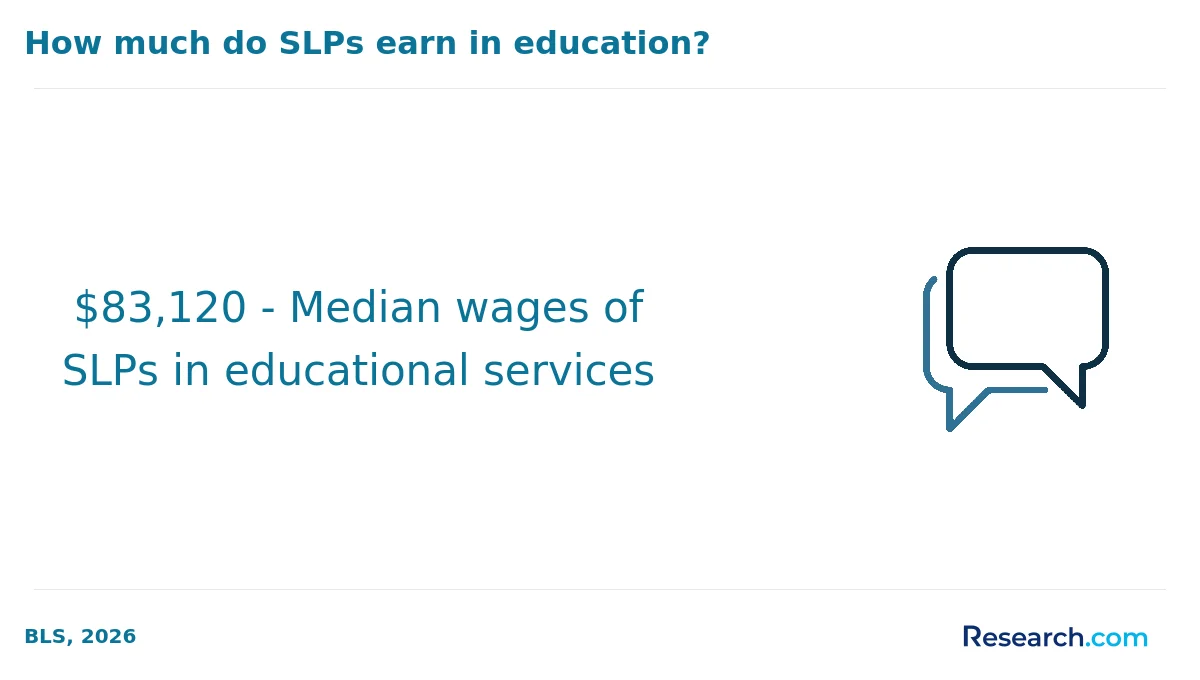
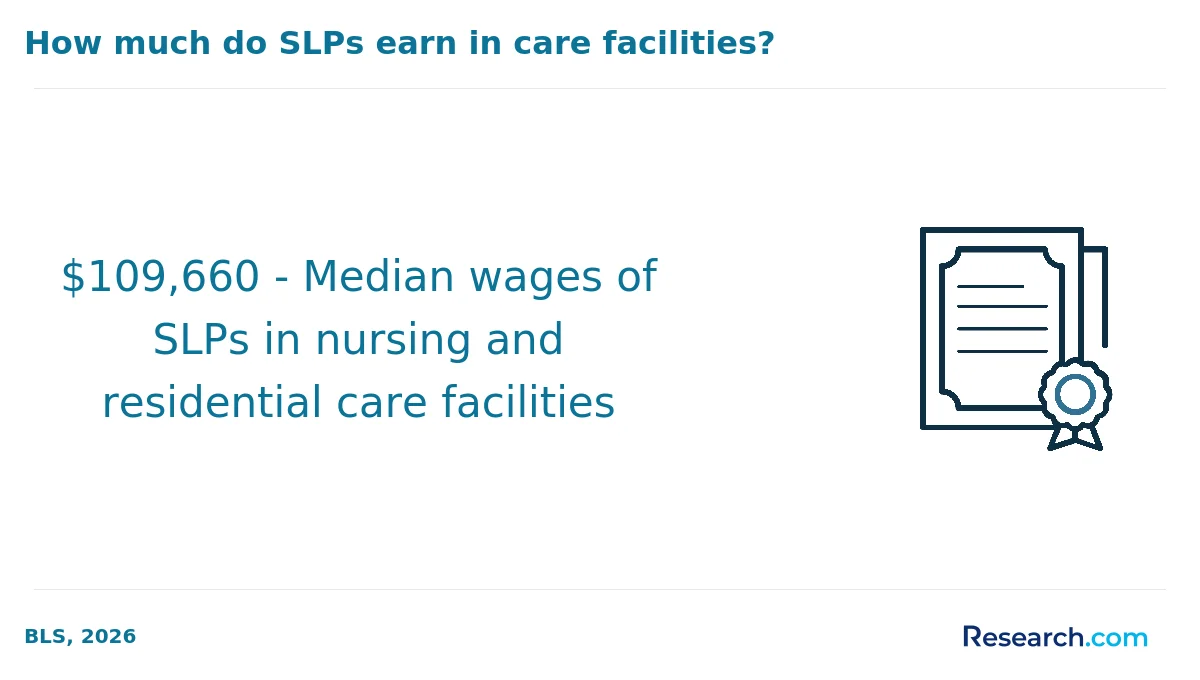
Yes. Licensure can affect salary because it determines eligibility for many clinical roles that involve assessment, diagnosis, treatment planning, direct intervention, and independent professional responsibility. The online format of the degree is usually less important than whether the graduate becomes licensed and can meet employer and state requirements.
Licensed speech pathologists earn approximately 15-20% more on average than those without certification or licensure, according to data from the Bureau of Labor Statistics. That difference reflects access to regulated roles, employer requirements, and the added responsibility associated with licensed clinical practice.
- Access to Higher-Paying Roles: Licensed professionals can qualify for positions in schools, hospitals, outpatient clinics, rehabilitation settings, and private practices that require independent clinical authority.
- Eligibility for Leadership Positions: Roles such as clinical supervisor, lead clinician, program coordinator, or administrator may require licensure because they involve oversight of services, staff, or compliance.
- Specialized Clinical Responsibilities: Licensure can support work with specific populations or disorders, including pediatric, adult, medical, educational, or swallowing-related services, depending on training and state scope of practice.
- Increased Job Security and Marketability: A valid license shows that a professional has met state standards. This can improve mobility across employers and strengthen applications for roles where licensure is mandatory.
Graduates should be cautious when comparing salaries. Pay can vary by state, employer type, caseload, years of experience, work schedule, specialization, and whether the role is school-based, medical, private, or administrative. Licensure improves eligibility for many roles, but it does not guarantee a specific salary.
Students considering broader career alternatives may compare different online degrees, but speech-language pathology is different from many nonclinical fields because salary potential is closely tied to state licensure and supervised professional preparation.
What Jobs Can You Get With or Without a License as an Online Speech Pathology Degree Holder?
Licensure strongly shapes what you can do with an online speech pathology degree. Licensed graduates can pursue clinical positions that involve evaluating and treating clients. Unlicensed graduates are usually limited to assistant, support, research, administrative, or nonclinical roles, depending on state rules and employer requirements.
Employment for licensed speech-language pathologists is expected to grow 17% between 2025 and 2035, reflecting strong demand for credentialed professionals. The distinction between licensed and unlicensed roles matters because it affects autonomy, scope of practice, supervision requirements, and earning potential.
Jobs With a License
- Speech-Language Pathologist: Evaluates and treats speech, language, communication, voice, fluency, cognitive-communication, and swallowing-related disorders. This role typically requires a master's degree, required exams, supervised experience, and state licensure.
- Clinical Therapist: Provides direct therapy services in healthcare, education, rehabilitation, or community settings. Licensed clinicians may develop treatment plans, document outcomes, collaborate with teams, and manage caseloads.
- Private Practice Clinician: Delivers services in an independent or group practice setting. Licensure is essential because private practice usually involves direct client care, billing, compliance, and professional liability responsibilities.
Jobs Without a License
- Speech-Language Pathology Assistant: Supports licensed clinicians by preparing materials, assisting with therapy activities, recording data, and helping with documentation under supervision. State rules determine whether this role is available and what credentials are required.
- Research Assistant: Supports studies related to speech, language, communication, cognition, hearing, swallowing, or education. This path may involve data collection, participant coordination, literature review, or lab support rather than independent clinical care.
- Healthcare Administrator: Works on scheduling, operations, compliance support, program coordination, or service delivery administration. This route may suit graduates who understand clinical environments but do not hold a license for direct practice.
Key career takeaway
If your goal is to diagnose and treat clients independently, plan for licensure from the start. If you are still deciding whether clinical practice is the right fit, assistant, research, or administrative roles may offer exposure to the field, but they do not provide the same scope of practice as licensed speech-language pathology positions.
What Graduates Say About Getting Licensed with an Online Speech Pathology Degree
- Wilson: "The affordability of the online speech pathology degree program was a huge relief compared to traditional programs, costing around $25,000 for the entire course plus licensure fees. The flexible schedule allowed me to balance work and study effectively, making the learning experience smooth and manageable. Since graduating, I've quickly advanced in my career, helping clients with confidence and ease."
- Patrick: "Although the cost of the online speech pathology degree was a significant investment, approximately $30,000 including exams and licensure, it was well worth it for the comprehensive education I received. The online format required discipline, but the interactive modules and expert faculty support kept me engaged. This degree truly transformed my professional life, opening doors to roles I once thought out of reach."
- Andrew: "Choosing an online speech pathology degree was a practical decision given the average cost near $27,000, which was competitive considering the flexibility it provided. The program's blend of theory and applied practice online allowed me to develop crucial skills despite not being on campus. Earning my license online gave me the credentials and confidence to excel in clinical settings immediately after graduation."
Other Things You Should Know About Speech Pathology Degrees
Accreditation is crucial for online speech pathology programs if you wish to meet licensure requirements in 2027. Accredited programs are recognized by certifying bodies, ensuring that the education meets professional standards necessary for practice and enhancing the possibility of obtaining licensure.
Many state boards require additional verification for online degrees to confirm program accreditation and clinical experience authenticity. Applicants may need to provide detailed transcripts, clinical practicum evaluations, and proof of supervision. Some boards also conduct supplementary background checks or require correspondence with the online institution to ensure compliance with licensing standards.
References
- U.S. Bureau of Labor Statistics - Speech-Language Pathologists https://www.bls.gov/ooh/healthcare/speech-language-pathologists.htm
- ASHA EdFind - Accredited Speech-Language Pathology Programs https://find.asha.org/ed/
- Audiology and Speech-Language Pathology Interstate Compact https://aslpcompact.com/compact-map/
- Auburn University, Montgomery - Master of Science in Speech-Language Pathology https://www.aum.edu/degree/ms-speech-language-pathology/
- New England Institute of Technology - Master of Science in Speech Language Pathology https://www.neit.edu/academics/graduate-degrees/speech-language-pathology-ms
- California State University-San Marcos - Online MS in Speech-Language Pathology https://www.csusm.edu/slp/programs/mastersonline/index.html
- California State University-Northridge - Master of Science in Communicative Disorders (Online) https://tsengcollege.csun.edu/programs/CDS
- New York University - Online MS, Communicative Sciences and Disorders (Speech@NYU) https://steinhardt.nyu.edu/degree/online-ms-communicative-sciences-and-disorders


