2027 Best Online Speech Pathology Master's Programs for Residents of Huntsville, AL

Co-Founder and Chief Data Scientist

Reviewed by Rhea Paul, PhD
SLP Education & Research Expert
Huntsville residents considering an online speech-language pathology master's degree need more than a flexible class schedule: they need a program that can support Alabama licensure, arrange appropriate clinical education, and meet ASHA certification standards. This guide compares the decision factors that matter most, including CAA accreditation, Alabama eligibility, required travel, tuition transparency, admissions preparation, and North Alabama practicum planning. It is designed for future SLPs who want to choose an online pathway without discovering a licensure or placement problem after enrolling.
Key Things You Should Know
- A Huntsville resident should prioritize a CAA-accredited master's program that confirms Alabama distance-education eligibility in writing; online delivery alone does not establish Alabama licensure eligibility.
- ASHA certification requires a qualifying graduate degree, at least 400 supervised clinical-practice hours, a passing Praxis score, and a Clinical Fellowship; clinical placements remain in person even when academic courses are online.
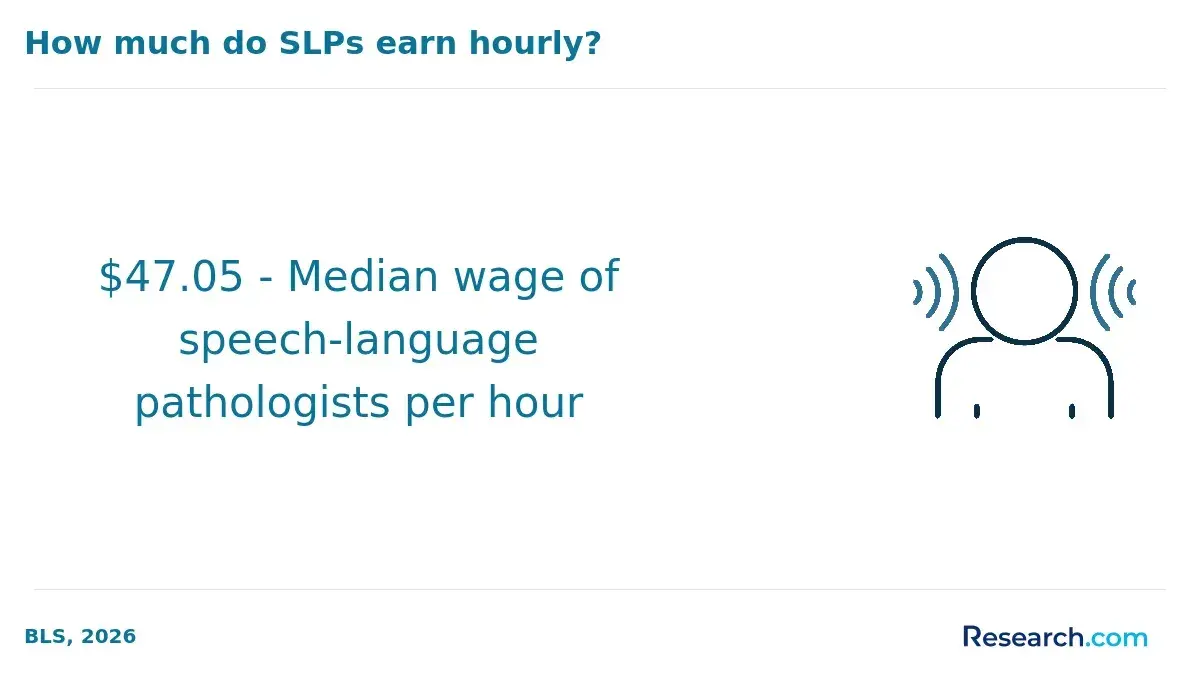
- The national median annual wage for speech-language pathologists was $97,870 in May 2025, while BLS projects 17% employment growth from 2025 to 2035; that opportunity should be weighed against total tuition, travel, and the time needed to complete supervised training.
Which online speech pathology master's programs accept Huntsville, Alabama residents right now?
For Huntsville applicants, "available online" is not the same as "open to Alabama residents." A school must be authorized to educate Alabama distance learners, its program must accept applicants for the relevant term, and its professional-licensure disclosure must not identify Alabama as a restricted state. Because state authorization and cohort availability can change, obtain a written confirmation from admissions before paying an application fee or deposit.
The programs below are established online or distance-delivered graduate SLP options with CAA-accredited pathways that Huntsville applicants commonly evaluate. They are best treated as a focused verification list rather than a guaranteed offer of admission or state eligibility.
| Program | Credential and accreditation focus | Why it may fit a Huntsville resident | Important verification before applying |
| Emerson College | Online MS in Communication Disorders; CAA-accredited program | Designed as an online graduate pathway with structured clinical education and immersive learning components. | Confirm current Alabama enrollment authorization, immersion travel, placement process, and total tuition for the entering cohort. |
| New York University Steinhardt | Online MS in Communicative Sciences and Disorders; CAA-accredited program | National online format may appeal to applicants seeking a large university program with scheduled live learning and clinical preparation. | Confirm Alabama eligibility, synchronous-session schedule in Central Time, in-person requirements, and whether local placement requests can be considered. |
| Baylor University | Online MS in Speech-Language Pathology; CAA-accredited program | Built for distance learners and includes clinical training requirements that may be relevant to working adults planning a career transition. | Confirm current Alabama disclosure status, required campus experiences, clinical-placement responsibilities, and cohort-specific charges. |
These are not interchangeable choices. Emerson, NYU, and Baylor may differ in cohort cadence, prerequisites, live-session expectations, clinical-placement processes, and travel. Applicants who want a broader starting point can compare online SLP master programs, then narrow the list using Alabama-specific written confirmations.
Ask each admissions office this direct question: "Can a new student living in Huntsville, Alabama enroll in this program for my intended term, complete required clinical education in Alabama when available, and use the curriculum toward Alabama SLP licensure?" Save the answer, including the staff member's name and date, with your application records.
How do online speech pathology programs for Huntsville residents differ by accreditation and approval?
Two approvals matter, and they address different risks. CAA accreditation evaluates the graduate SLP program's educational quality and is central to the usual ASHA certification route. State authorization and professional-licensure disclosure address whether an institution may enroll a student who lives in Alabama and what the school says about its curriculum's relationship to Alabama requirements.
The distinctions below help prevent a common and expensive mistake: assuming that institutional accreditation, program accreditation, and state licensure approval mean the same thing.
| Term | What it evaluates | Why it matters in Huntsville | What to check |
| Institutional accreditation | The college or university as a whole | Can affect federal financial-aid eligibility and transferability. | Verify the institution's recognized accreditor and financial-aid status. |
| CAA accreditation | The specific graduate program in speech-language pathology | Supports the education component commonly needed for ASHA certification and state licensure. | Look up the exact program and location or delivery format in ASHA's CAA directory. |
| CAA candidacy | A developmental accreditation status, not full accreditation | May carry meaningful enrollment and graduation-date risk for a student seeking certification. | Read the school's candidacy language and ask how accreditation timing affects your cohort. |
| Alabama state authorization | The school's ability to deliver distance education to Alabama residents | Determines whether a Huntsville applicant may enroll at all. | Review the school's state-authorization page and obtain confirmation for the intended start term. |
| Alabama licensure disclosure | The school's assessment of curriculum alignment with Alabama requirements | Indicates whether the academic program is intended to support the state pathway. | Read the disclosure for Alabama, not a general national statement. |
CAA accreditation is usually the strongest starting filter for a future clinical SLP. However, it does not eliminate every individual requirement. A graduate may still need the required clinical hours, passing Praxis results, supervised post-graduate experience, an application to the Alabama licensing board, and any additional state-specific documentation.
If a school uses phrases such as "not designed to meet licensure requirements in Alabama," "no determination has been made," or "students should contact the licensing board," pause before applying. The last phrase is not automatically disqualifying, but it means you should not rely on marketing language alone.
Which Huntsville-eligible online speech pathology programs best support Alabama licensure and ASHA CCC?
The strongest choice is not necessarily the lowest-cost or fastest program. For an Alabama resident whose goal is clinical practice, the best fit is typically a CAA-accredited program that confirms Alabama enrollment eligibility, provides a documented clinical education plan, and gives clear information about how graduates prepare for the ASHA Certificate of Clinical Competence in Speech-Language Pathology (CCC-SLP).
ASHA's standard certification path generally includes a graduate degree from a CAA-accredited program or an equivalent route recognized by ASHA, required supervised clinical practicum, a passing Praxis examination score, and a Clinical Fellowship. Alabama licensure is a separate state process. A program can support both goals, but neither credential is automatic simply because a student completes a master's degree.
Use this decision framework when comparing CAA-accredited online options.
| Priority | Best-fit program characteristic | Why it matters | Potential trade-off |
| Lowest licensing risk | CAA-accredited program with a clear Alabama licensure disclosure | Provides the clearest education pathway toward ASHA and Alabama requirements. | May have selective admission and fixed cohort scheduling. |
| Need to remain in Huntsville | Program that discusses student-supported local placements and has a transparent placement process | Improves the chance of reducing relocation pressure during practicum. | Local placement cannot be guaranteed because sites control availability. |
| Working-adult schedule | Part-time pacing or predictable synchronous sessions | Can make coursework easier to plan around employment and family responsibilities. | Clinical rotations often require daytime availability regardless of online coursework. |
| Lower financial exposure | Published tuition, clear fee schedule, and federal-aid participation | Lets the applicant estimate borrowing before committing. | Lower stated tuition may not include travel, technology, or clinical expenses. |
| Career-change readiness | Defined prerequisite or leveling pathway | Clarifies how applicants without communication-sciences coursework can become academically eligible. | Prerequisites may extend total time and cost. |
For most Huntsville residents, a CAA-accredited program with an affirmative Alabama disclosure is preferable to a program that merely calls itself "speech therapy" or "communication disorders" training. If your goal is research, education administration, or a non-licensure communication role, another graduate degree may be appropriate; it is not a substitute for the clinical SLP pathway.
What admission requirements do top online speech pathology master's programs impose on Huntsville applicants?
Admission to online SLP master's programs is typically competitive because cohort sizes, faculty supervision, and clinical placements are limited. Requirements vary by school, but applicants should expect academic preparation in communication sciences and disorders, evidence of readiness for graduate study, and materials that show they understand the clinical profession.
Many applicants need prerequisite coursework before applying. This is especially important for career changers whose bachelor's degree was in psychology, education, linguistics, health sciences, or another field. Prerequisites often cover areas such as phonetics, language development, speech and hearing science, anatomy and physiology of speech and hearing mechanisms, audiology, and statistics.
The following materials are common, but applicants should follow each school's current instructions rather than assuming a universal checklist.
- Official transcripts from every college or university attended, including any prerequisite coursework.
- A stated minimum GPA or holistic academic-review standard, which may differ for overall and prerequisite GPA.
- A personal statement explaining professional goals, relevant experiences, and readiness for graduate clinical training.
- Letters of recommendation, often from academic instructors, supervisors, or professionals who can evaluate communication and learning skills.
- A résumé showing work, volunteer, observation, research, caregiving, education, or healthcare experience when relevant.
- Completion or planned completion of prerequisite courses by the program's deadline.
- Interview, video response, writing sample, or other evaluative activity when required.
- Background checks, immunizations, drug screening, health documentation, and CPR requirements before clinical placements.
The GRE is not uniformly required. Do not spend money on an exam until the programs on your final list confirm that they require or meaningfully consider it. Instead, focus first on prerequisite grades, strong recommendations, a well-specific personal statement, and realistic understanding of clinical work.
Applicants comparing admission accessibility should distinguish between a program that is "holistic" and one that has no academic standards. Review the current requirements for speech pathology graduate programs alongside accreditation and licensure factors; an easier application process is not a benefit if the program cannot support your Alabama career goal.
A practical application sequence is to request transcript evaluations early, map missing prerequisites, attend a program information session, verify Alabama eligibility in writing, and apply only after confirming travel and clinical-placement expectations. This approach is especially useful for Huntsville applicants who may need to balance work at Redstone-area employers, healthcare organizations, schools, or family responsibilities.
How do tuition, fees, and distance-education costs compare for Huntsville-eligible speech pathology programs?
Published tuition alone is not a reliable comparison tool. One program may quote a per-credit rate, another may show a term price, and another may advertise an estimated program total that excludes travel or clinical costs. For an online clinical degree, Huntsville residents should compare the same cost categories across every offer before accepting admission.
Private online SLP programs commonly charge the same tuition regardless of the student's state of residence, while public programs may use resident, nonresident, or special online rates. Exact rates change by academic year and cohort, so use each university's current graduate tuition page and written financial-aid estimate rather than relying on older comparison articles.
This cost worksheet identifies the categories that should be compared on an equivalent basis.
| Cost category | How it is commonly quoted | Questions for a Huntsville applicant |
| Tuition | Per credit, per term, or total program estimate | How many billed credits are required, and is the rate locked for my cohort? |
| Mandatory university fees | Term-based technology, student-service, distance-learning, or clinical fees | Which fees apply to online students, and how many terms will I be charged? |
| Immersion travel | Usually not included in tuition | How many required visits are there, where are they held, and must I budget lodging and airfare? |
| Clinical education expenses | Variable | Who pays for background checks, drug screening, liability coverage, CPR, health records, parking, and commuting? |
| Course materials and technology | Variable | Are testing materials, software, headphones, webcams, or proctoring charges required? |
| Lost-work income | Not billed by the university | Can I reduce work hours during full-time daytime practicum blocks, and what is my backup plan? |
Request a written, itemized estimate for the entire degree, including the expected number of terms. Then compare federal Direct Unsubsidized Loan eligibility, Graduate PLUS borrowing, scholarships, employer education benefits, and any external scholarships. Federal aid eligibility depends on individual circumstances, and borrowing should be evaluated against the full repayment obligation rather than the monthly payment alone.
Cost-conscious applicants should also examine accelerated speech pathology programs online carefully. A shorter academic calendar can reduce the time before entering the workforce, but it can also make outside employment harder and may not reduce total tuition if the same credits are charged at the same rate.
A common error is choosing the lowest advertised per-credit rate without calculating fees, travel, and delayed income during practicums. The better comparison is the projected total out-of-pocket and borrowing cost through graduation, plus a realistic budget for the Clinical Fellowship period after graduation.
What clinical practicum and placement options exist in North Alabama for online SLP students?
Online SLP programs do not make clinical education virtual by default. Students must complete supervised clinical experiences with qualified supervisors, and placements may occur in medical, educational, early-intervention, rehabilitation, private-practice, or university-clinic settings. North Alabama has potential practice environments, but availability is controlled by individual sites and can change by term.
Huntsville-area possibilities may include school systems, outpatient rehabilitation providers, hospitals, pediatric clinics, early-intervention settings, skilled nursing facilities, and private practices. A possible site is not a confirmed placement. Programs may identify sites, ask students to help locate leads, or use a hybrid approach; applicants need to understand which model applies.
Before enrolling, ask clinical education staff the following placement questions.
- Does the program place students directly, require students to find their own sites, or use a shared model?
- Has the program previously placed students in North Alabama, without implying that a future placement is guaranteed?
- What happens if no appropriate Huntsville-area site is available for a required specialty or age group?
- Can I decline a placement that requires a long commute, temporary relocation, or daytime attendance that conflicts with my job?
- What supervision credentials, onboarding requirements, and background checks are required?
- How far in advance are placements usually confirmed?
- Will telepractice hours be available, and how are they supervised and documented?
Students should budget for commuting beyond Huntsville. A program may need to place a learner in Decatur, Madison, Athens, Florence, Birmingham, Tennessee, or another area if a suitable local site is unavailable. The appropriate decision is not to demand a guaranteed hometown placement, which few programs can promise, but to choose a school with a clear contingency plan and enough support for placement challenges.
Clinical scheduling is often the point at which working students encounter the greatest strain. Evening coursework can coexist with a daytime job, but school, hospital, and clinic rotations may require weekday daytime hours. Discuss this before enrollment, not after a clinical assignment is issued.
How do Alabama telepractice and school-based SLP regulations affect online master's graduates?
Telepractice expands service delivery, but it does not remove licensure obligations. An SLP who provides services to a client located in Alabama generally needs to meet Alabama's professional requirements, even if the clinician, employer, university, or technology platform is elsewhere. New graduates should confirm current requirements with the Alabama Board of Examiners in Speech-Language Pathology and Audiology before accepting telepractice work or completing supervised activities.
For clinical education, telepractice hours must be structured, supervised, documented, and accepted by both the graduate program and applicable certification standards. Students should not assume that observation through a video platform, informal remote volunteering, or unsupervised online work counts as direct clinical experience.
School employment can involve an additional credentialing layer. An Alabama public-school SLP role may require education-agency credentials or educator certification in addition to professional licensure or ASHA certification, depending on the position and district. A master's degree alone does not confirm eligibility for every school-based role.
These questions can help a graduate avoid regulatory surprises.
- Does the employer require an unrestricted Alabama professional license, a provisional credential, ASHA CCC-SLP, an educator credential, or more than one of these?
- Will I serve clients only in Alabama, or will the job involve clients located in other states that require additional licenses?
- Does the employer provide telepractice technology, privacy procedures, and supervisory support that meet its policies and applicable rules?
- Does my Clinical Fellowship position satisfy ASHA supervision and work-setting requirements?
Technology is increasingly central to assessment, documentation, augmentative and alternative communication, and telepractice, but it does not replace clinical judgment. Programs that teach secure documentation, evidence-based telepractice, and interdisciplinary communication may be useful for future practice; still, licensure and supervision rules remain the controlling requirements.
What should Huntsville residents verify about regional and CAA accreditation before enrolling?
Verify accreditation before submitting a nonrefundable deposit. Institutional accreditation matters for the university, but the clinical degree should also have the correct programmatic status through ASHA's Council on Academic Accreditation. Check the exact degree, delivery pathway, and campus named in the school's materials because a university's general reputation does not establish CAA status for every program.
A careful verification process should include the following steps.
- Find the program in ASHA's CAA accreditation directory and record whether it is accredited, in candidacy, on probation, or has another listed status.
- Read the university's current catalog to confirm the degree title, required credits, clinical requirements, and graduation conditions.
- Review the school's distance-education authorization and professional-licensure disclosure specifically for Alabama.
- Ask admissions to confirm in writing that the school may enroll a student residing in Huntsville for your intended start term.
- Ask whether the program's curriculum is designed to meet Alabama educational requirements for SLP licensure and what requirements remain the student's responsibility.
- Keep copies of disclosures, emails, and the catalog applicable to your cohort.
Be especially careful with candidacy. Candidacy may be an appropriate choice for some students, but it carries a different level of uncertainty from established accreditation. Ask whether graduates from your projected cohort will be regarded as graduating from an accredited program if full accreditation is obtained, what occurs if accreditation is delayed, and whether the school has a written teach-out or contingency plan.
Another red flag is vague language such as "accredited university," "approved curriculum," or "aligned with ASHA standards" without a direct statement of CAA program status. Those phrases may describe useful qualities, but they are not substitutes for verified programmatic accreditation.
How do completion rates, Praxis pass rates, and job outcomes vary among Huntsville-eligible programs?
Completion, Praxis, and employment outcomes can reveal whether a program supports students through the full professional pathway, but they must be compared carefully. CAA-accredited programs report student-outcome information under defined reporting practices, yet reporting periods, cohort sizes, and calculation methods may differ. A single strong percentage should not outweigh accreditation, Alabama eligibility, affordability, or clinical-placement feasibility.
Ask each program for its most recent published outcome report and compare the same reporting period. The information below explains how to interpret the primary measures.
| Outcome measure | What it can indicate | How to use it responsibly |
| Program completion rate | Whether students commonly finish within the program's defined time frame. | Ask what counts as completion, whether leaves of absence are included, and how part-time students are treated. |
| Praxis pass rate | How graduates performed on a certification-related examination. | Confirm the reporting window, number of test takers, and whether the rate reflects first attempts or eventual passes. |
| Employment rate | Whether graduates reported work in the profession or related placements after graduation. | Ask how employment is defined, when graduates were surveyed, and how many outcomes were known. |
| Clinical Fellowship support | Whether graduates receive career guidance as they transition to supervised practice. | Ask about alumni support, not just job-placement language. |
BLS projects about 12,500 openings for speech-language pathologists each year, on average, from 2025 to 2035. That national outlook is encouraging, but it is not a promise of a Huntsville opening, a particular employer, or a starting salary. Local hiring conditions vary by healthcare system, school district, setting, specialty, reimbursement environment, and licensure timing.
When estimating return on investment, use national labor data as context rather than as a personal earnings guarantee. The May 2025 national median annual wage was $97,870; readers can explore role and setting differences through this overview of SLP salary information. Your actual compensation may be higher or lower based on experience, setting, productivity expectations, geographic market, and benefits.
The best program for one Huntsville applicant may therefore be the one with transparent outcomes and a manageable clinical plan, not necessarily the one reporting the highest isolated metric. Request the data, note the cohort size, and compare it with total cost and travel demands.
What consumer-protection risks face Huntsville students considering non-accredited or out-of-state SLP programs?
The largest risk is paying for a degree that does not lead to the credential you need. Non-CAA-accredited programs, programs with unclear state authorization, and programs that make broad claims about "speech therapy" careers can leave students unable to follow the expected ASHA or Alabama licensure pathway. This risk is particularly serious when federal loans, private loans, or lost work income are involved.
Watch for these warning signs before signing an enrollment agreement.
- The school cannot clearly identify the program's CAA accreditation status or directs you only to institutional accreditation.
- The program does not publish an Alabama professional-licensure disclosure or will not confirm whether Alabama residents may enroll.
- Marketing suggests that coursework alone makes someone a licensed SLP, without discussing practicum, Praxis, state licensure, or the Clinical Fellowship.
- The school promises local clinical placement but will not explain its written placement process, student responsibilities, or contingency plan.
- Tuition is advertised prominently while mandatory fees, travel, clinical costs, and refund terms are difficult to locate.
- The program pressures applicants to deposit before they receive a catalog, financial-aid estimate, or written answer about Alabama eligibility.
- Outcome claims lack a reporting period, cohort size, or explanation of how completion and employment were calculated.
Out-of-state does not mean unsuitable. Many reputable CAA-accredited online programs are based outside Alabama. The decisive issue is whether the school is currently authorized to enroll you, whether its curriculum supports the Alabama pathway, and whether you can realistically meet its clinical and travel requirements.
Before committing, retain the catalog, tuition schedule, refund policy, accreditation record, Alabama disclosure, and clinical-placement policy. If an answer is unclear, contact the relevant licensing authority directly and ask the school to clarify its position in writing. That documentation is more valuable than a verbal assurance from a recruiter or a general website statement.
Other Things You Should Know About Speech Language Pathology
Yes, potentially. Many programs accept students from other academic backgrounds, but they usually require prerequisite communication-sciences coursework before or during admission preparation. The amount of leveling needed depends on your transcript and the individual program.
Some students work during online coursework, especially in part-time formats. However, clinical practicum and externship schedules often require daytime availability. Ask for a sample clinical schedule before assuming the program can fit around a full-time job.
Often, yes. Many online programs require immersions, skills assessments, orientations, or other in-person activities. Clinical placements are also generally in person, even when lectures and assignments are delivered online. Confirm the number, location, and timing of required trips.
Alabama licensure is the state authorization to practice under Alabama law. ASHA CCC-SLP is a national professional certification with its own education, examination, and Clinical Fellowship requirements. Employers may prefer or require one or both, depending on the setting.
References
- Best Online Master's in Speech Pathology (SLP) Programs https://www.onlinemastersdegrees.org/best-programs/speech-language-pathology-slp/
- Best Online Speech Pathology Programs https://www.forbes.com/advisor/education/healthcare/best-speech-pathology-programs-online/
- Best Online Masters in SLP Programs | CAA-ASHA Included https://www.speechpathologydegrees.com/online/masters-slp