2027 Online SLP Master's Programs for Oklahoma Residents: Eligibility, Tuition, and Clinical Placements

Co-Founder and Chief Data Scientist

Reviewed by Rhea Paul, PhD
SLP Education & Research Expert
Choosing an online speech-language pathology master's program from Oklahoma involves more than finding a flexible format. Your school must be properly accredited, authorized to enroll Oklahoma students, able to support required clinical training, and aligned with Oklahoma licensure rules.
This guide explains how to evaluate online options, estimate the full cost, confirm clinical-placement responsibilities, and avoid enrolling in a program that creates a licensure barrier after graduation.
Key Things You Should Know
- An Oklahoma resident should enroll only after confirming in writing that the program is CAA-accredited, authorized to serve Oklahoma students, and designed to meet Oklahoma educational licensure requirements.
- Online SLP master's degrees are not fully remote in the clinical sense: students must complete supervised practicum experiences and a post-graduate Clinical Fellowship before independent Oklahoma practice.
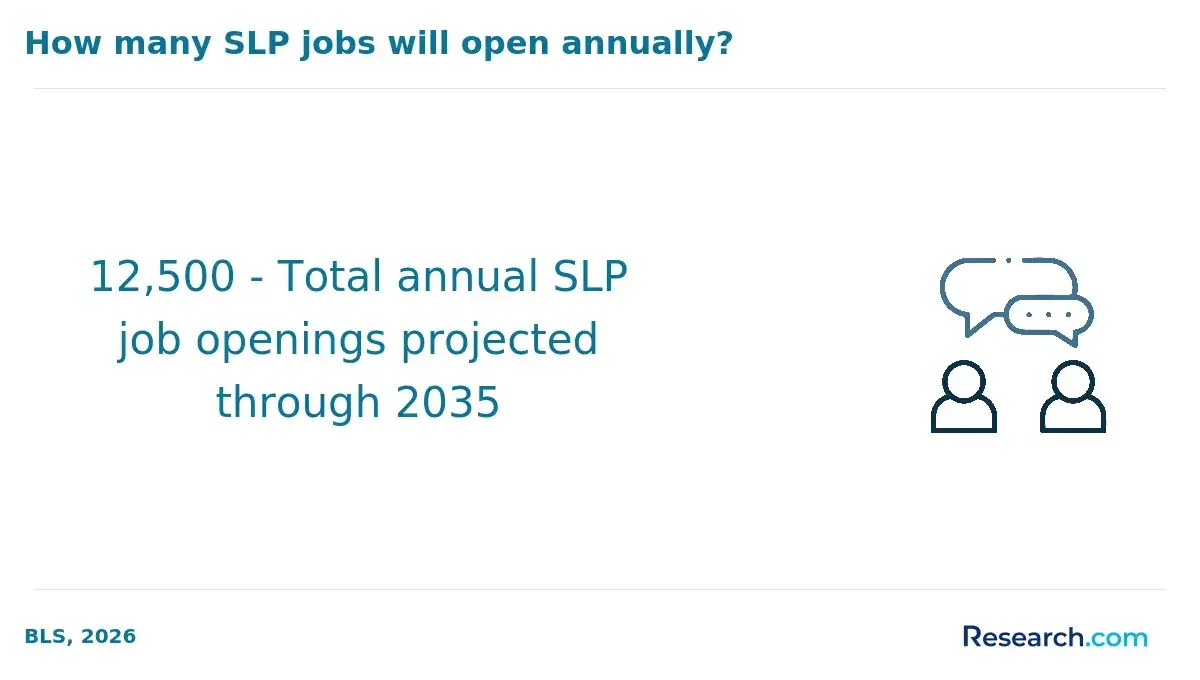
- The U.S. Bureau of Labor Statistics projects 17% employment growth for speech-language pathologists from 2025 to 2035, with about 12,500 annual openings nationally, but employment and salary outcomes still vary by setting, location, experience, and licensure status.
Which online SLP master's programs accept Oklahoma residents and meet state licensure requirements?
The most accurate answer is conditional: an online SLP program is a viable option for an Oklahoma resident only when the university confirms current Oklahoma enrollment eligibility and its professional-licensure disclosure does not identify Oklahoma as restricted. State authorization, clinical-site availability, and licensure disclosures can change between application cycles, so a national online format alone is not proof that you can enroll or become licensed in Oklahoma.
Several universities operate CAA-accredited or CAA-recognized master's pathways with online or distance-based delivery models. The schools below are examples to investigate, not a guarantee of Oklahoma availability. Applicants should obtain a written confirmation from admissions and review the school's current professional-licensure disclosure before paying an enrollment deposit.
| Program to investigate | Format consideration | Oklahoma-specific question to ask | Important trade-off |
| Baylor University MS in Communication Sciences and Disorders | Online academic delivery with clinical education requirements | Is Oklahoma currently authorized for enrollment, and can required placements be completed in Oklahoma? | Clinical travel, schedule, and placement availability may affect the real cost and timeline. |
| Emerson College MS in Speech-Language Pathology | Online graduate coursework with clinical experiences | Does the current licensure disclosure state that the curriculum meets Oklahoma educational requirements? | A cohort-based schedule may include live classes and fixed clinical sequencing. |
| New York University MS in Communicative Sciences and Disorders | Distance-learning pathway with clinical training components | Can the university approve Oklahoma sites and disclose any required travel or residency expectations? | Private-university tuition and living costs during placements can be substantial. |
| University of Cincinnati MS in Speech-Language Pathology | Distance or hybrid availability may vary by cohort and location | Is the specific online pathway available to a new Oklahoma applicant, rather than only to selected regions? | Program availability and clinical placement arrangements can differ from campus-based options. |
Use this comparison as a screening tool rather than a ranking. A school may be academically strong but still be a poor match if it cannot secure or approve Oklahoma clinical sites, requires travel that you cannot accommodate, or does not make a clear Oklahoma licensure determination.
When comparing online SLP programs, prioritize eligibility documentation over broad marketing language such as "available nationwide." Ask whether the answer applies to your intended start term, your degree track, and your anticipated clinical placement location.
For many Oklahoma residents, an in-state campus or hybrid program may be the lower-risk choice when it offers local faculty relationships and established regional clinical partnerships. An out-of-state online program can make sense for students who need distance coursework or cannot relocate, but it requires more deliberate verification before enrolling.
How do Oklahoma Board of Examiners in Speech-Language Pathology rules shape online program eligibility?
The Oklahoma Board of Examiners in Speech-Language Pathology determines whether an applicant qualifies for an Oklahoma license; the university does not issue that license. A degree format is not automatically disqualifying, but the educational program, clinical preparation, examination, supervised experience, and application must satisfy the Board's current standards.
In practical terms, an online student should plan around the same professional pathway as a campus student: graduate from an appropriately accredited program, complete qualifying supervised clinical education, pass the required national examination, complete required post-graduate supervised experience, and apply to the Oklahoma Board. The precise sequence, documentation, and temporary or provisional licensing options should be confirmed directly with the Board because regulatory requirements can change.
The following distinctions help applicants understand why "online" is not the key legal question.
| Requirement area | What Oklahoma applicants need to verify | Why it matters for online enrollment |
| Graduate education | That the degree is from a program acceptable under current Oklahoma requirements. | A university may offer online coursework without offering a degree that supports clinical licensure. |
| Clinical practicum | That the program documents supervised graduate clinical experience in a form the Board can accept. | Students cannot replace clinical training with simulations alone. |
| Praxis examination | The Board's current required examination and passing-score policy. | Testing requirements are separate from degree completion. |
| Clinical Fellowship | Current supervision, duration, setting, and documentation standards for post-graduate experience. | A graduate must find an eligible supervised position before independent practice. |
| Application and background requirements | Current application forms, fees, background checks, and any jurisprudence or documentation rules. | Administrative requirements can delay employment if addressed late. |
A common mistake is treating ASHA certification, university graduation, and Oklahoma licensure as interchangeable. They overlap substantially, but they are separate decisions made by separate entities. Plan for all three where your career goal requires them: the degree, Oklahoma licensure, and the Certificate of Clinical Competence in Speech-Language Pathology from the American Speech-Language-Hearing Association.
Before choosing a school, ask its licensure specialist whether its curriculum has been evaluated specifically against Oklahoma requirements. If the answer is "we have not determined," treat that as a material risk rather than an administrative detail.
What accreditation and ASHA CAA recognition must an online SLP program have for Oklahoma licensure?
For a future clinical speech-language pathologist, the central accreditation question is whether the graduate program is accredited by the Council on Academic Accreditation in Audiology and Speech-Language Pathology, commonly called CAA. CAA is the specialized accreditor associated with ASHA for graduate education in speech-language pathology and audiology.
Applicants should distinguish among an institution's general regional or institutional accreditation, programmatic CAA accreditation, and CAA candidacy. Institutional accreditation alone does not establish that a master's program meets the professional education expectations used in SLP licensure and certification pathways. CAA candidacy can be meaningful, but it is not the same status as full accreditation, so students should understand exactly how candidacy affects their graduating cohort before enrolling.
This table shows the accreditation questions that matter most when evaluating a distance program.
| Status or claim | What it means | Applicant action |
| CAA-accredited program | The graduate program has CAA accreditation status. | Confirm the accreditation applies to your specific degree and delivery pathway. |
| CAA candidate program | The program is in the accreditation process under CAA policies. | Ask how the status applies to your cohort and what happens if status changes. |
| University is accredited | The institution has institutional accreditation. | Do not assume this replaces CAA programmatic accreditation. |
| ASHA-aligned curriculum | The school describes alignment with professional standards. | Request the actual CAA status and Oklahoma licensure disclosure. |
Verify the program in ASHA's EdFind directory and CAA accreditation records, then compare those results with the university's current catalog. The directory is useful for identifying accredited programs, but the school's current disclosure and the Oklahoma Board's rules control the enrollment and licensure decision.
Another red flag is a program that promises preparation for "communication disorders careers" but does not clearly state that it is a master's degree in speech-language pathology with appropriate CAA status. Such programs may support related work but may not qualify graduates for clinical SLP licensure.
How do tuition, mandatory fees, and distance-learning surcharges compare across online SLP programs for Oklahomans?
Tuition comparisons are difficult because online SLP programs may publish a per-credit rate, a cohort rate, a term rate, or different rates for campus and distance students. The most useful comparison is the estimated total educational cost for the required degree sequence, not the lowest advertised per-credit figure.
Oklahoma residents should request a written estimate covering the full program and identify whether the school charges one nationwide online rate or a nonresident rate. A public university's online program may not extend Oklahoma resident tuition to students living outside that institution's state, while a private university may charge the same tuition regardless of residence.
The cost categories below should be included in every comparison. They prevent an applicant from comparing tuition-only figures with an estimate that includes required program costs.
| Cost category | What to request from the school | Why it changes the comparison |
| Required tuition | Total required credits and the applicable rate for an Oklahoma distance student. | Credit totals vary, so per-credit prices are not directly comparable. |
| Mandatory university fees | Technology, student service, clinical, graduation, and distance-learning fees. | These charges may be assessed per term, per credit, or once. |
| Clinical education costs | Liability insurance, background checks, drug screens, health records, onboarding platforms, and site-specific requirements. | These costs often arise after admission and may recur by placement. |
| Travel and lodging | Required campus visits, skills intensives, simulations, or out-of-area clinical assignments. | Online coursework does not eliminate travel costs. |
| Living and opportunity costs | Expected clinical schedule and whether outside work remains realistic. | A program can be lower tuition but harder to complete while employed. |
A sound budgeting formula is: required tuition plus mandatory institutional fees plus clinical compliance costs plus required travel plus a realistic living-cost and reduced-work-income estimate. Request the estimate for your intended cohort and save the response; price sheets can change annually.
Applicants looking for lower advertised rates can review online masters speech pathology programs, but affordability should still be evaluated against Oklahoma eligibility, CAA status, clinical travel, and completion pacing. A lower tuition figure is not a lower total cost if it requires repeated travel or delays graduation because a placement cannot be arranged.
Do not assume tuition is locked when admitted. Ask whether your rate is guaranteed for the cohort, whether future increases apply to continuing students, and whether clinical semesters carry different charges. These questions are especially important in programs that sequence clinical experiences after academic coursework.
What funding options do Oklahoma residents have for online SLP master's tuition, including aid and employer support?
Most degree-seeking students begin with the Free Application for Federal Student Aid, commonly called the FAFSA, because it is used to determine eligibility for federal Direct Unsubsidized Loans and, for eligible graduate students, Direct Graduate PLUS Loans. Loan eligibility does not make a program affordable by itself, so combine aid planning with a full-program budget before accepting admission.
Oklahoma applicants can also investigate university scholarships, departmental awards, external communication-disorders scholarships, vocational rehabilitation support when applicable, military or veterans' education benefits, and employer tuition assistance. Availability, deadlines, enrollment requirements, and tax treatment vary, so confirm details with the funder rather than relying on prior-year awards.
These funding approaches serve different needs and should be compared before borrowing.
| Funding source | Potential fit | Key limitation to check |
| Federal graduate loans | Students who need broad access to education financing. | Borrowing limits, interest, origination fees, and repayment obligations. |
| University or department scholarships | Applicants with strong academic records, service experience, or a relevant background. | Many awards are competitive and may not renew automatically. |
| Employer tuition assistance | Employees working for school districts, health systems, rehabilitation providers, or public agencies. | May require continued employment, repayment if leaving, or preapproval. |
| Veterans' and military education benefits | Eligible service members, veterans, and dependents. | Program approval, enrollment intensity, and benefit-specific rules. |
| Private scholarships | Students willing to apply across multiple small awards. | Deadlines and eligibility rules may be narrow. |
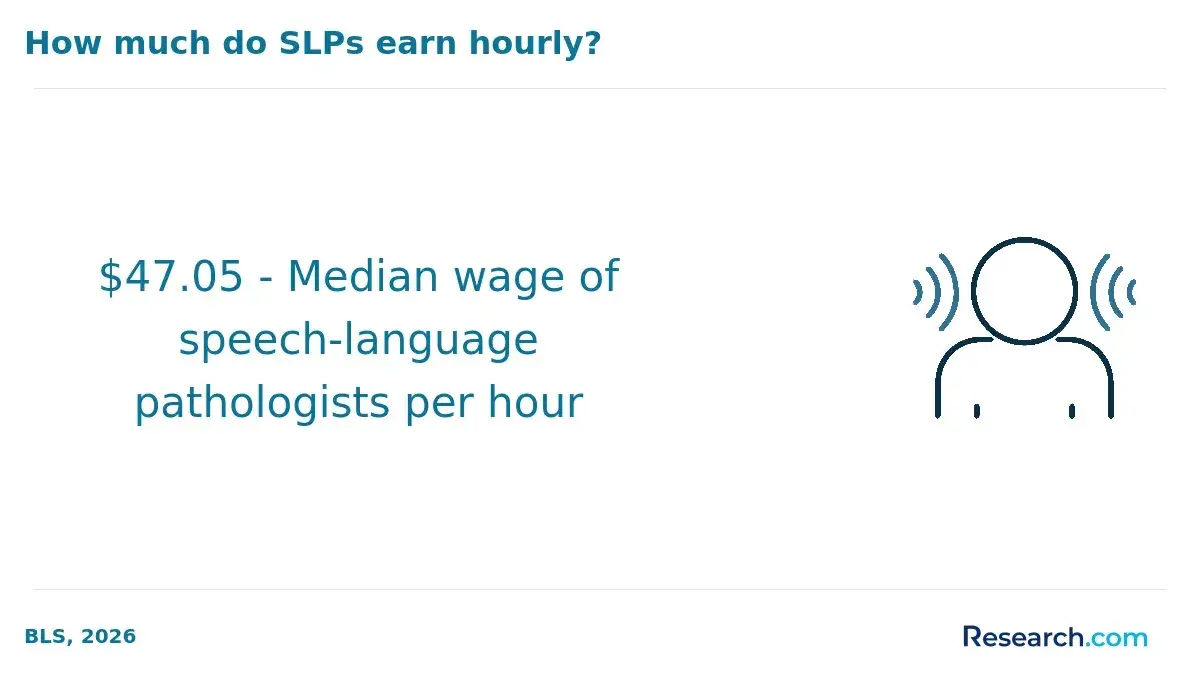
Before borrowing, estimate your repayment capacity conservatively. The Bureau of Labor Statistics reports a national median annual wage of $97,870 for speech-language pathologists in May 2025, but this is not a starting-salary guarantee and does not predict pay in a particular Oklahoma setting. School-based roles, medical settings, location, experience, hours, and benefits can all affect compensation.
For broader pay context, review how much do speech therapists make while keeping your own debt, expected work setting, and licensure timeline at the center of the decision. The best financing plan is generally one that minimizes high-cost borrowing without forcing a clinical schedule that makes successful completion less likely.
Ask each school whether assistantships exist for distance learners. Many traditional assistantships are tied to campus work and may not be practical for online students, but some departments offer scholarships or limited paid support that is open to all admitted students.
How are clinical placements arranged for Oklahoma-based students in out-of-state online SLP programs?
Clinical placement is the operational test of an online SLP program. Coursework may be delivered remotely, but clinical education involves real clients, approved sites, qualified supervisors, compliance paperwork, and a schedule that may resemble full-time professional work. A program's placement policy should therefore carry as much weight as its admissions rate or online convenience.
Online programs generally use one of three models: the university secures the site, the student identifies potential sites for university approval, or the parties share responsibility. "We support placement" is not the same as "we guarantee placement near your home," so applicants should ask for precise language about responsibility and geographic limits.
| Placement model | What the university typically does | What the Oklahoma student should clarify |
| University-arranged | Coordinates affiliation agreements and assigns or matches students where possible. | Whether a site within commuting distance is guaranteed, preferred, or not promised. |
| Student-identified, university-approved | Reviews sites and completes agreements if the setting and supervisor qualify. | Whether the student may contact sites directly and how long approval takes. |
| Shared-responsibility | Provides placement staff and resources while expecting student networking. | Which party is responsible if an Oklahoma site declines, withdraws, or lacks a contract. |
Before enrolling, request answers to the following questions in writing. They help reveal whether a school has a workable clinical plan rather than a general intention to support placements.
- Does the program currently place students in Oklahoma, and may it provide a non-identifying example of the types of settings used?
- Who initiates site outreach, and may I contact local districts, hospitals, clinics, or early-intervention providers myself?
- What happens if no suitable site is available within commuting distance of my home?
- Could I be required to travel or relocate temporarily for a practicum or externship?
- What is the typical weekly clinical schedule, and can placements occur during evenings or weekends?
- Will delayed placement affect tuition, degree completion, or financial-aid enrollment status?
Students seeking a faster academic timeline should be particularly cautious. Some accelerated speech pathology programs reduce time between terms, but clinical capacity can still determine the actual graduation date. A compressed curriculum is useful only if you can meet the intensity of coursework and accept the placement schedule when it is assigned.
A major red flag is a school that will not explain its policy when a placement falls through. Clinical sites can change capacity for reasons outside a student's control, but a credible program should explain backup planning, communication procedures, and whether students can continue progressing.
What supervision, site requirements, and clock-hour standards apply to SLP clinical practicums completed in Oklahoma?
Graduate clinical education must meet program, accreditation, and eventual licensure expectations. ASHA certification standards have long used a framework that includes at least 400 supervised clinical clock hours, including at least 375 direct client contact hours and at least 25 guided observation hours. Students should verify current standards because requirements and interpretation can change, and Oklahoma licensing documentation may have additional expectations.
For graduate practicum, the school - not the student alone - must determine whether a site, supervisor, client population, and activity count toward required competencies. Hours completed at an unapproved site or under an ineligible supervisor may not count, even if the work was clinically valuable.
The table summarizes core issues to confirm before beginning an Oklahoma placement.
| Clinical element | What to verify | Why it protects the student |
| Site agreement | A current affiliation agreement or other university approval is in place before client contact begins. | Prevents a completed experience from being rejected administratively. |
| Supervisor credentials | The supervisor holds the qualifications required by the university, CAA standards, and applicable Oklahoma rules. | Ensures valid supervision and acceptable documentation. |
| Supervision level | The required direct and indirect supervision, observation, feedback, and evaluation process. | Protects clients and supports competency development. |
| Clock-hour tracking | How direct contact, observation, screening, assessment, treatment, and non-countable activities are recorded. | Prevents inaccurate or incomplete hour records. |
| Population and setting breadth | Whether experiences cover the ages and communication or swallowing needs required by the program. | Helps build a defensible clinical record for certification and employment. |
| Compliance requirements | Background checks, immunizations, training, liability coverage, and site onboarding timelines. | Late paperwork can postpone a placement even after coursework is complete. |
Clinical education should not be confused with the post-graduate Clinical Fellowship. Practicum occurs while you are a graduate student under program supervision. The Clinical Fellowship occurs after the degree and is a mentored professional experience used toward ASHA certification and often relevant to state licensure progression.
Keep copies of your clinical-hour records, supervisor evaluations, site approvals, and compliance documents. Even when the university retains official records, maintaining your own organized file can make licensure, fellowship, and employment applications easier to complete.
How do state authorization and professional licensure disclosures affect Oklahoma residents enrolling in online SLP programs?
State authorization addresses whether a university may provide distance education to a resident of a particular state. Professional-licensure disclosures address whether a program's curriculum meets, does not meet, or has not been determined to meet the educational requirements for a regulated profession in that state. You need a satisfactory answer to both questions.
A university may participate in an interstate distance-education authorization arrangement and still state that it has not determined whether a particular SLP program meets Oklahoma licensure requirements. Conversely, a program may be educationally aligned with Oklahoma standards but unable to enroll residents if its authorization status changes. Treat these as separate checks.
| Disclosure outcome | What it means for an Oklahoma applicant | Recommended response |
| Meets Oklahoma educational requirements | The university states that its curriculum meets the applicable educational requirements. | Save the disclosure and still verify clinical and Board requirements. |
| Does not meet Oklahoma educational requirements | The school identifies a known curricular gap or incompatibility. | Do not enroll for Oklahoma licensure without a documented plan approved by the Board. |
| No determination has been made | The university has not evaluated the program against Oklahoma requirements. | Request clarification; consider this a significant uncertainty. |
| Oklahoma enrollment unavailable | The school cannot currently enroll Oklahoma residents in that program. | Choose another option or ask when eligibility may be reconsidered. |
Read the disclosure for the exact program, degree level, and state. A university-wide statement about online learning or a disclosure for a counseling, education, or nursing program does not answer the question for an SLP master's degree.
Also consider your likely future practice location. If you may move before or after graduation, verify requirements in each state where you expect to complete a practicum, Clinical Fellowship, telepractice assignment, or job. Licensure portability can be manageable, but it is easier to plan before enrollment than after completing a degree with a state-specific gap.
What verification steps should Oklahoma applicants follow to confirm a program's current licensure eligibility status?
Complete verification before applying if possible and always before making a nonrefundable enrollment decision. Written records matter because admissions representatives may provide general guidance, while licensure staff and state boards are better positioned to address regulatory questions.
Use the following sequence to create an evidence file for each program under consideration.
- Locate the program in ASHA's EdFind directory and confirm its current CAA accreditation or candidacy status, including whether the status applies to the degree pathway you intend to enter.
- Read the university's professional-licensure disclosure for Oklahoma and save a copy showing the page date or access date.
- Ask the university in writing whether Oklahoma residents may enroll in your intended term and whether any authorization restriction applies.
- Ask the clinical education office whether Oklahoma placements are currently possible, who secures sites, whether travel may be required, and what happens if placement is delayed.
- Compare the curriculum, supervised clinical education, Praxis, and post-graduate requirements against the current Oklahoma Board rules.
- Contact the Oklahoma Board directly if the university disclosure is unclear, contradictory, or silent about a requirement that affects your plan.
- Request a complete cost estimate that separates tuition, required fees, clinical costs, travel expectations, and potential rate increases.
- Keep the written responses, catalog pages, and disclosures in one folder until you are licensed.
Do not rely solely on a phone conversation, an old social-media post, a third-party ranking page, or another student's experience. Those sources can be useful for generating questions, but they cannot confirm current authorization or legal eligibility for your individual situation.
If a school refuses to provide a clear answer about Oklahoma eligibility, CAA status, or clinical placement responsibility, consider another program. Uncertainty is especially costly in a field where graduation alone does not permit independent clinical practice.
How do online SLP master's graduates from Oklahoma fare in Praxis outcomes, licensure rates, and employment trends?
Program outcomes should be evaluated at the program level, not assumed from the delivery format. CAA-accredited programs publish or make available outcome information that may include Praxis examination pass rates, program completion rates, and employment rates. Ask each school for its most recent reporting period, the number of graduates represented, and the definition used for each outcome.
A small cohort can produce a high percentage from only a few graduates, while a larger cohort may give a more stable picture. Outcome figures also do not show whether graduates obtained jobs in Oklahoma, how long licensure took, whether they worked full time, or whether they accepted their preferred setting. Use them as a quality signal, not as a personal guarantee.
| Outcome measure | What it can tell you | Question that adds context |
| Praxis pass rate | How graduates performed on the required national examination. | What was the cohort size and first-time pass rate? |
| Program completion rate | Whether students generally finish within the expected time frame. | Do delayed clinical placements affect reported completion timing? |
| Employment rate | Whether graduates reported employment or further education after graduation. | How soon after graduation was employment measured, and in what types of roles? |
| Licensure support | Whether the program helps graduates prepare documents and navigate state processes. | What Oklahoma-specific support is available after graduation? |
The national labor market remains favorable, although it should not be used as a promise of a specific job. The Bureau of Labor Statistics projects 17% growth in SLP employment from 2025 to 2035, much faster than the average for all occupations. For Oklahoma applicants, that outlook supports the long-term value of a properly licensure-qualifying degree, but local hiring conditions can differ by school district, medical employer, rural region, and specialty.
Telepractice technology continues to influence how SLP services are delivered, particularly for follow-up care and access in rural areas. It does not remove the need for professional licensure, competent supervision, privacy safeguards, or hands-on clinical preparation. Graduates who are comfortable with documentation platforms, video-service protocols, and interprofessional communication may have useful skills, but employers still evaluate clinical competence and state authorization.
When comparing schools, ask for outcomes alongside support services: Praxis preparation, career counseling, clinical fellowship guidance, alumni connections, and help identifying Oklahoma employers. The strongest option is not necessarily the one with the highest single published percentage; it is the one that combines credible outcomes with an achievable cost, clinical pathway, and Oklahoma licensure plan.
Other Things You Should Know About Speech Language Pathology
Yes, potentially. Many SLP master's programs accept applicants without a communication sciences and disorders bachelor's degree, but they may require prerequisite or leveling coursework before or during admission. Ask each program for an individualized prerequisite review because requirements vary.
Some students work during early coursework, but clinical practicum schedules can require daytime availability and may become difficult to combine with full-time employment. Ask for the expected weekly commitment by term and plan finances around the most intensive clinical periods.
They may. In addition to Oklahoma SLP licensure, public-school positions can involve state education agency rules, school certification pathways, or employer-specific requirements. Confirm requirements with the hiring district and relevant Oklahoma education authorities before selecting a program.
The answer depends on current Oklahoma Board rules, the work arrangement, supervisor qualifications, and where services are delivered. Confirm the arrangement with the Board and your employer before accepting a fellowship position, especially for telepractice or multi-state work.
References
- Master of Arts in Speech-Language Pathology https://alliedhealth.ouhsc.edu/Academics-Programs/Degree-Programs/MA-in-Speech-Language-Pathology
- Online Speech-Language Pathology Graduate Program https://csd.robbins.baylor.edu/graduate/online-csd-graduate-program
- Online MA in Communication Sciences & Disorders https://onlinelearning.csuohio.edu/programs/online-masters-communication-sciences-disorders
- Speech-Language Pathology Program Details https://mercy.edu/academics/programs/masters-speech-language-pathology-details