2027 Best Online Speech Pathology Master's Programs for Residents of Atlanta, GA

Co-Founder and Chief Data Scientist

Reviewed by Rhea Paul, PhD
SLP Education & Research Expert
Atlanta residents choosing an online master's in speech-language pathology need more than flexible classes: they need a program that can support Georgia licensure, arrange appropriate clinical education, and fit real work and family commitments. This guide compares the factors that make an online SLP program a strong option for Georgia students, including CAA accreditation, state authorization, Atlanta-area placement planning, travel expectations, and exam preparation. It is designed to help prospective students narrow their list before paying an application fee.
Key Things You Should Know
- A Georgia SLP license generally requires a qualifying graduate degree, supervised clinical experience, and a passing Praxis score; an online format does not waive these requirements.
- CAA accreditation is the most important screening criterion because it supports eligibility for ASHA certification and is commonly expected for Georgia licensure and employer hiring.
- The Bureau of Labor Statistics projects 17% employment growth for speech-language pathologists from 2025 to 2035, with about 12,500 openings annually nationwide, but program quality and local placement support still matter more than delivery format alone.
Which online speech pathology master's programs best serve Atlanta residents seeking licensure in Georgia?
The best online speech pathology master's program for an Atlanta resident is one that is CAA-accredited, authorized to enroll Georgia students, provides clear Georgia licensure disclosures, and has a workable plan for clinical placements and required travel. A well-known online program is not automatically a good fit if it cannot place students near Atlanta or requires frequent campus attendance that conflicts with work.
Several established programs are worth investigating because they offer distance-oriented graduate SLP study and publish information about clinical education or professional licensure. Availability, tuition, travel requirements, and Georgia enrollment status can change by cohort, so applicants should obtain written confirmation directly from each school before applying. Students beginning their search can also compare broader SLP masters online options while keeping Georgia-specific requirements at the center of the decision.
The comparison below is a practical starting point, not a universal ranking. "Best" depends on whether the applicant prioritizes local placement support, a structured cohort, lower travel demands, or a schedule compatible with employment.
| Program to investigate | Why it may suit an Atlanta resident | Key question to verify before applying |
| Emerson College, MS in Communication Disorders | Distance-focused program model with clinical education components and required in-person experiences. | Can the program currently enroll Georgia residents and support placements within reasonable commuting distance of Atlanta? |
| New York University, MS in Communicative Sciences and Disorders | Online pathway from a university with a CAA-accredited graduate program and structured clinical training. | What are the current immersion, travel, placement, and Georgia licensure-disclosure requirements for the intended cohort? |
| Baylor University, MS in Communication Sciences and Disorders | Online-oriented graduate pathway that may appeal to students seeking a cohort-based learning experience. | Does the program authorize enrollment from Georgia and what responsibility does the student have for finding sites or preceptors? |
| University of Cincinnati, MS in Speech-Language Pathology | Distance-delivery option to evaluate for students who want a public-university alternative. | Are Georgia residents eligible for the online track, and are any campus sessions or out-of-state clinical assignments required? |
Do not treat this table as confirmation of admission eligibility. Ask each admissions office for its current Georgia authorization statement, CAA status, total estimated charges, travel calendar, and clinical placement policy in writing.
How do Georgia licensure requirements shape the choice of online speech pathology master's programs?
In practical terms, Georgia applicants should seek a master's program with a curriculum and clinical education structure designed to support professional SLP preparation. CAA accreditation is particularly valuable because it is closely associated with the educational standards used for ASHA certification, and employers frequently recognize the Certificate of Clinical Competence as a preferred credential.
Before enrolling, confirm these points with both the university and the relevant Georgia regulator. They are more useful than relying on general statements that a program is "licensure-track."
- Confirm that the program is currently accredited by the Council on Academic Accreditation in Audiology and Speech-Language Pathology, or understand precisely what candidacy status means for your graduation date.
- Ask whether the school's Georgia professional-licensure disclosure says the program meets, does not meet, or has not determined Georgia educational requirements.
- Verify how the program documents graduate clinical hours, supervision, and completion of required competencies.
- Check the current Georgia requirements for the Praxis examination, postgraduate supervised experience, and the license application process.
- If you intend to work in a public school, separately confirm educator-certification expectations with the Georgia Professional Standards Commission.
A common mistake is assuming ASHA certification, state licensure, and a school credential are the same thing. They overlap, but they are separate credentials administered by different bodies and may require different paperwork or timelines.
Which accredited online speech pathology programs accept students from Atlanta and surrounding Georgia counties?
Atlanta, Fulton County, DeKalb County, Cobb County, Gwinnett County, and nearby communities are all within Georgia, so a program's state authorization decision usually applies statewide rather than by county. However, a school's ability to enroll Georgia residents is not the same as its ability to arrange a placement near a student's home.
CAA accreditation should be checked through the program's current listing rather than assumed from a university's reputation or a similarly named campus program. Some universities operate more than one track, and accreditation, delivery mode, or student eligibility can differ by track. Programs that publicly market online SLP education should still be asked whether their online cohort is included in the accredited program and whether Georgia residents are currently eligible to start.
This screening framework separates enrollment eligibility from clinical feasibility, which prevents an applicant from confusing one with the other.
| Question | What a useful answer looks like | Why it matters in metro Atlanta |
| May Georgia residents enroll? | A current, written confirmation for the intended start term. | State authorization can change and may differ by program or modality. |
| Is the specific graduate SLP program CAA-accredited? | A direct reference to the current accredited status and accredited degree track. | It supports professional credentialing and reduces licensure uncertainty. |
| Who secures clinical sites? | A clear explanation of whether the university, student, or both identify sites and finalize affiliation agreements. | Atlanta has many healthcare and school settings, but sites and supervisors are still competitive. |
| Can placements be completed near home? | A qualified answer explaining that proximity is attempted but cannot be guaranteed. | Students may face commuting, schedule, or temporary travel costs. |
| Are there required immersions? | Specific dates, locations, duration, and estimated non-tuition expenses. | Travel can materially affect affordability and work planning. |
If an admissions representative cannot provide a current answer, ask to speak with the clinical education office or licensure-disclosure contact. "We have had students in Georgia before" is not a substitute for a commitment about your own enrollment and placement circumstances.
What accreditation should Atlanta residents look for in online speech pathology graduate programs?
Atlanta residents should prioritize accreditation by the Council on Academic Accreditation in Audiology and Speech-Language Pathology, commonly called CAA. CAA is the specialized accreditor recognized by ASHA for graduate education in speech-language pathology. It evaluates whether a program meets standards related to curriculum, faculty, student outcomes, resources, and clinical education.
Institutional accreditation and programmatic accreditation serve different purposes. Institutional accreditation addresses the university as a whole; CAA accreditation addresses the graduate professional program. For a licensure-oriented SLP degree, both matter, but CAA status is the more decisive credential when comparing programs.
Use the program's current CAA listing to distinguish among these situations:
- Accredited: The program holds CAA accreditation and is generally the clearest option for students pursuing professional credentialing.
- Candidate for accreditation: The program is in a review process; applicants should ask how status at graduation affects ASHA certification and state licensure eligibility.
- Not listed for the intended degree track: Do not assume it leads to SLP licensure merely because the university offers communication-disorders courses.
Applicants should also look for transparent outcomes disclosures, a published curriculum, named clinical education staff, and a direct professional licensure disclosure for Georgia. Accreditation alone does not guarantee that an out-of-state program is authorized to enroll Georgia residents or can place every student locally.
How do online speech pathology programs compare in clinical placement options within the Atlanta metro area?
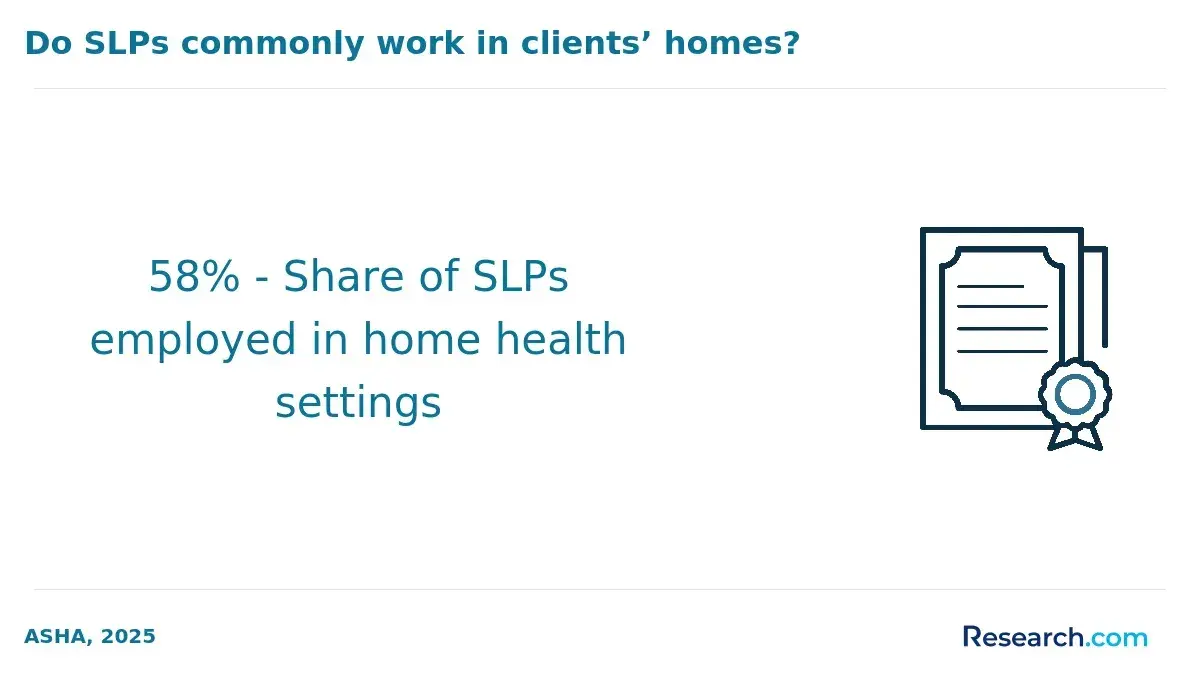
Clinical education is the least "online" part of an online SLP master's degree. Students typically complete supervised experiences in settings such as schools, hospitals, outpatient clinics, rehabilitation facilities, early-intervention programs, and university clinics. Atlanta's large healthcare and school ecosystem may create possibilities, but it does not guarantee a site, a qualified supervisor, or an affiliation agreement for a particular student.
Programs vary most in who leads placement development. Some maintain national clinical placement teams; others expect students to propose local sites; many use a shared model. Applicants comparing SLP online programs should treat placement infrastructure as more important than a broad claim of flexibility.
The following comparison shows the trade-off applicants should evaluate during interviews with clinical education staff.
| Placement model | Potential advantage | Potential limitation | Best fit |
| University-directed placement | More centralized support and clearer approval process. | Location and schedule may not be fully under the student's control. | Students who need institutional help finding sites. |
| Student-suggested placement with university approval | May allow students to identify settings near their home or workplace. | Suggested sites can be rejected or take time to contract. | Students with strong local professional networks and flexibility. |
| Shared placement model | Combines university oversight with local input. | Responsibilities can be misunderstood unless documented early. | Students willing to communicate proactively and plan ahead. |
Which online speech pathology programs offer Georgia-aligned curricula on K-12 and healthcare practice settings?
A Georgia-aligned program does not necessarily mean a Georgia-based program. It means the curriculum and clinical education can prepare a student for the populations, documentation, ethics, assessment, and interprofessional practice encountered in the settings where the student expects to work. For many Atlanta students, that includes both K-12 schools and healthcare organizations.
A strong entry-level SLP curriculum generally covers language development, speech sound disorders, fluency, voice, swallowing, motor speech, neurogenic communication disorders, augmentative and alternative communication, research methods, and clinical decision-making. Students aiming for school practice should also ask about coursework and practica involving educational teams, culturally and linguistically responsive assessment, individualized education programs, and school-age language and literacy needs.
Accelerated pacing can be appealing, but it requires careful planning because clinical hours and live patient-facing commitments cannot simply be compressed around a full-time job. Review a speech pathology accelerated program only after confirming that its sequence supports the experiences needed for your intended Georgia practice setting.
Use your intended first job to decide which curriculum questions matter most:
- For K-12 work, ask how the program prepares students for school-based eligibility decisions, collaborative service delivery, literacy-related language needs, and educator-certification planning.
- For medical work, ask about dysphagia education, adult neurogenic disorders, acute and rehabilitation settings, and the availability of medically oriented clinical experiences.
- For pediatric healthcare or early intervention, ask about family-centered practice, feeding-related education where applicable, developmental disabilities, and interdisciplinary collaboration.
- For bilingual or multilingual communities, ask how the program teaches difference-versus-disorder decision-making and supports culturally responsive service delivery.
No program can promise every specialty placement. The better choice is the one that candidly explains its curricular strengths, placement limits, and the experiences students commonly complete.
How does state authorization affect Atlanta students enrolling in out-of-state online speech pathology programs?
State authorization is a university's legal and regulatory ability to offer distance education to residents of a state. For an Atlanta student, an out-of-state university may be CAA-accredited yet still be unable to enroll new Georgia residents in a particular program or may have restrictions tied to clinical placements. This is why authorization must be confirmed separately from accreditation.
Professional licensure disclosures are equally important. Federal consumer-information rules require institutions to make disclosures about whether programs designed to lead to professional licensure meet the educational requirements in a student's state. Look for a Georgia-specific disclosure associated with the exact online degree, not a generic university statement.
Before submitting an application, request a written response that answers these questions:
- Is the university currently authorized to enroll a student physically located in Georgia in this online SLP program?
- Does the institution state that the program meets Georgia's educational requirements for professional SLP licensure, does not meet them, or has not made a determination?
- Can the university place or approve Georgia clinical sites, and are there geographic restrictions during any clinical term?
- Will a move to another state while enrolled affect authorization, tuition, placements, or licensure disclosures?
Keep these responses with your program records. Authorization policies can change, and a clear written record is more useful than an informal conversation when making a high-cost enrollment decision.
What do Atlanta-based students need to know about Praxis preparation and pass rates in online programs?
The Praxis Speech-Language Pathology examination is an important milestone for many graduates pursuing state licensure and ASHA certification. Georgia applicants should verify the current score requirement and application rules directly with the appropriate licensing authority because testing and credentialing policies can change.
A program's Praxis pass-rate disclosure can be useful, but it should not be read in isolation. Ask which graduating cohort is reported, how many test takers are included, whether the figure reflects first-time or eventual passers, and whether the school publishes the reporting period. A small cohort can make a percentage look unusually high or low, so the surrounding context matters.
Strong Praxis preparation is usually built into the curriculum rather than left to a short review course at the end. Look for cumulative assessment, faculty feedback on clinical reasoning, practice questions tied to coursework, and an exam timeline that does not overlap with the most demanding clinical placements.
The most useful question for an admissions team is not simply "What is your pass rate?" Ask: "What support do students receive if they need additional preparation, and when do you recommend taking the exam relative to graduation and clinical fellowship planning?" A specific, transparent answer suggests a more mature student-support process.
How can working professionals in Atlanta balance local employment with online speech pathology graduate study?
Online delivery can reduce relocation needs, but a licensure-track SLP master's degree is usually not a part-time hobby. Live classes, group assignments, simulations, campus immersions, and daytime clinical placements can create conflicts with a standard Atlanta work schedule. The key decision is whether the program's fixed obligations fit your life during every term, not merely during the first term of coursework.
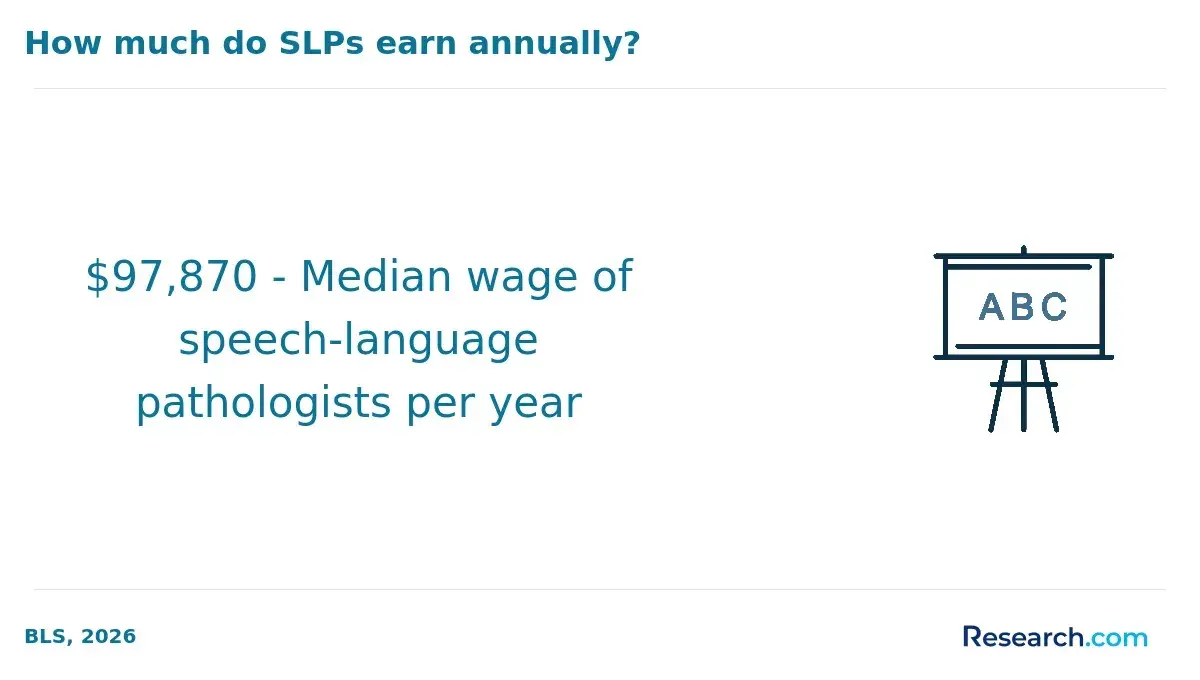
The career outlook can justify careful planning: the U.S. Bureau of Labor Statistics reports a median annual wage of $97,870 for speech-language pathologists in May 2025. That national figure is not a promise of an Atlanta salary, and actual pay varies by setting, experience, employer, and credentials. Use a realistic budget rather than assuming the speech language pathologist salary will immediately offset tuition, lost work hours, travel, and clinical placement costs.
Working students should build a term-by-term feasibility plan before enrolling. The following actions make the schedule risks visible early.
- Map every synchronous class, immersion, practicum, and clinical term against your work calendar before accepting admission.
- Ask whether clinical placements may require weekday daytime availability and how far in advance schedules are finalized.
- Discuss reduced hours, leave options, or flexible scheduling with your employer before the first clinical term rather than after a placement is assigned.
- Budget separately for tuition, fees, books, technology, transportation, background checks, health requirements, travel, and potential lost wages.
- Identify backup childcare, transportation, and household support for intensive clinical periods.
Students who cannot create protected daytime availability may be better served by postponing enrollment, reducing employment hours, or choosing a program with a formally available part-time pathway. Flexibility is valuable only when it is supported by a manageable clinical schedule.
What consumer-protection steps should Atlanta residents take to verify online speech pathology program quality?
Applicants should verify high-stakes claims independently before paying a deposit or taking out loans. The most common expensive mistake is relying on a program's marketing language without confirming accreditation, Georgia authorization, clinical placement procedures, and total cost for the exact degree track.
A careful verification process takes time, but it can prevent a mismatch that delays licensure or forces an unexpected relocation. Complete these checks before making a final enrollment decision.
- Check the program's current CAA status and confirm that the online or distance pathway is included in the accredited graduate program.
- Read the university's Georgia professional-licensure disclosure and ask for clarification when it says the determination is unknown or pending.
- Request an itemized estimate of tuition, mandatory fees, travel, intensives, clinical requirements, and other non-tuition expenses.
- Ask the clinical education office - not only admissions - who obtains sites, whether Georgia placements have been approved recently, and what happens if a placement is delayed.
- Review the student handbook for progression rules, remediation policies, background-check requirements, technical standards, and dismissal procedures.
- Confirm the current Georgia licensing pathway and separate school-based credential requirements with the relevant state agencies.
- Save written responses, catalogs, disclosures, and financial estimates dated for the term you plan to enter.
Red flags include vague answers about Georgia eligibility, promises of local placements without written qualifications, missing CAA information, pressure to enroll before receiving cost details, and claims that online delivery makes clinical training easy. A trustworthy program can explain what it controls, what depends on site availability, and what the student must do.
Other Things You Should Know About Speech Language Pathology
Yes, an online degree may support this goal if the specific program is appropriately accredited, authorized for Georgia students, meets applicable educational requirements, and provides the required clinical preparation. You must still meet Georgia's examination, supervised-experience, and application requirements.
Not always. Some programs admit students from other majors but require prerequisite or leveling coursework. This can add time and cost, so ask whether prerequisites must be completed before admission or can be taken as part of the program.
No. A school may work to arrange or approve placements near your home, but site availability, supervision capacity, affiliation agreements, and educational needs can affect the final location. Get the placement policy in writing and prepare for commuting or travel.
To become a licensed speech pathologist in Georgia after completing an online program, applicants in 2027 must pass the Praxis exam, complete a Clinical Fellowship, and submit an application to the Georgia Board of Speech-Language Pathology, ensuring all academic and clinical requirements are met.
References
- Master of Science in Speech Language Pathology https://www.south.edu/program/master-of-science-in-speech-language-pathology/
- Best Georgia Speech Pathology Degrees for 2026, Online... https://www.speechpathologydegrees.com/st/georgia
- Best Online Speech Pathology Programs https://www.forbes.com/advisor/education/healthcare/best-speech-pathology-programs-online/