2027 Online SLP Master's Alternatives to Calvin University: Compare Costs, Admissions, and Flexibility

Co-Founder and Chief Data Scientist

Reviewed by Rhea Paul, PhD
SLP Education & Research Expert
Choosing an online speech-language pathology master's program means balancing far more than a school's name: tuition, clinical placement logistics, travel, prerequisites, and state licensure eligibility can change the real value of the degree. Calvin University may be a strong fit for applicants seeking a faith-informed program, but other accredited options can offer different pacing, costs, or support models. This guide compares the decision factors that matter most before you apply.
Key Things You Should Know
- Calvin is one of several distance-learning pathways to an SLP master's degree, but applicants should compare required travel, clinical placement policies, and state eligibility before treating any online format as fully location-independent.
- Tuition should be compared as total required program cost, including fees, residency travel, background checks, clinical expenses, and prerequisite coursework - not simply as a per-credit rate.
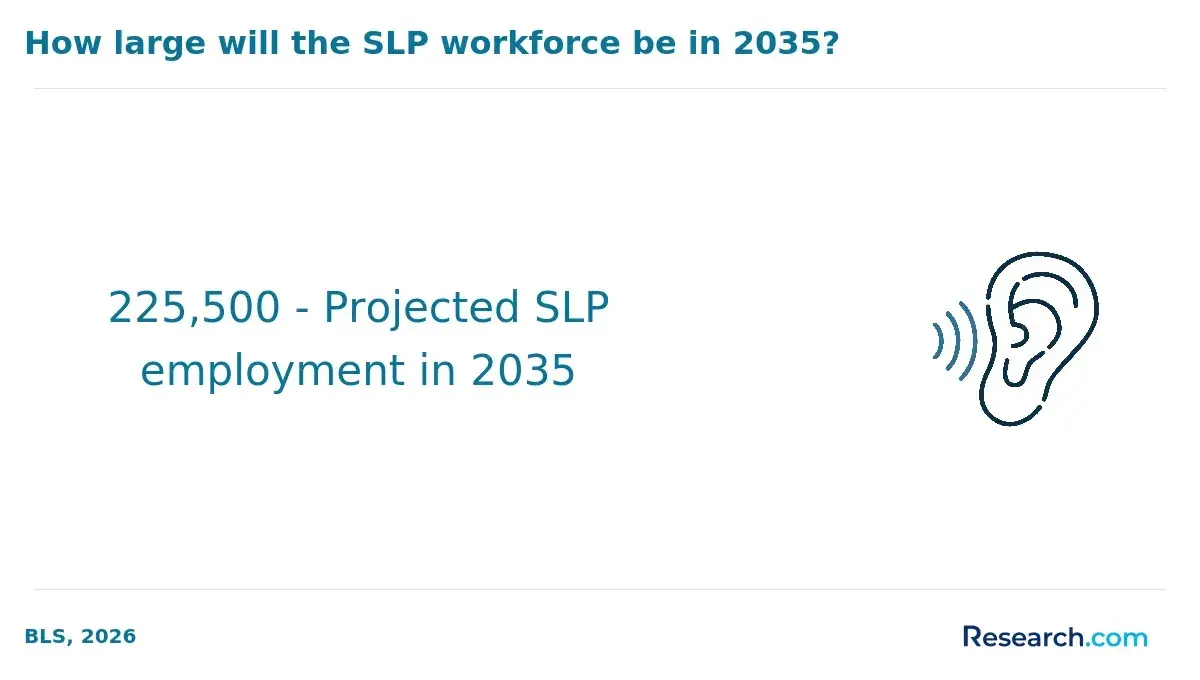
- A CAA-accredited master's degree is central to the standard clinical certification and licensure route; speech-language pathologist employment is projected to grow 17% from 2025 to 2035, with about 12,500 annual openings on average.
How does Calvin University's online SLP master's program compare with other accredited online options?
Calvin University's online SLP master's option is most relevant to students who want a cohort-based graduate experience with online academic coursework while completing supervised clinical education. Like other legitimate online clinical master's programs, it is not an entirely self-paced degree: SLP preparation requires faculty-directed instruction, skills assessment, and in-person clinical practicum hours.
The comparison below focuses on the features that most often separate Calvin from other distance-oriented choices. Applicants should confirm each program's current Council on Academic Accreditation in Audiology and Speech-Language Pathology (CAA) status and whether their state of residence is eligible before submitting an application.
| Program | Why it is a meaningful alternative | Format consideration | Best-fit question |
| Calvin University | Faith-informed university environment and online-oriented graduate delivery | Clinical education and any required in-person experiences remain essential | Do Calvin's cohort structure and mission align with your preferences? |
| Emerson College | Established online SLP pathway with full-time and extended pacing options | Students should plan for live learning expectations, immersions, and local clinical work | Do you need a more established part-time pathway? |
| Baylor University | Online-delivered clinical degree with a private-university cohort model | Program sequencing and in-person clinical requirements can affect work schedules | Do you want a structured, accelerated-style cohort experience? |
| Utah State University | Public-university alternative that may appeal to applicants focused on value | Distance education may include fixed academic and clinical commitments | Are public-university pricing and required attendance patterns a better fit? |
| University of St. Augustine for Health Sciences | Health-professions-focused institution with an online SLP pathway | Clinical placement and residency expectations require early planning | Do you prefer a rehabilitation-oriented institutional setting? |
CAA accreditation is the threshold issue, not a branding detail. Start with a current list of asha accredited online SLP programs, then narrow the list based on state authorization, clinical logistics, and total cost. A program can be academically online while still requiring travel or limiting enrollment in particular states.
Which online SLP master's programs are realistic alternatives for applicants targeting Calvin University?
A realistic alternative does something materially different for the applicant. It may offer an extended pacing option, a different prerequisite route, a public-university cost structure, a distinct religious affiliation, or clinical-placement policies that better suit the student's location. It should not simply be another program with "online" in its description.
Emerson College is a practical comparison for applicants who value a recognized online cohort model and may need choices around full-time versus longer pacing. Baylor University is relevant for students considering a private, structured online clinical program. Utah State University can merit review for applicants who want to investigate a public-university alternative, while the University of St. Augustine may appeal to students seeking a health-sciences-centered environment.
These alternatives are not interchangeable. A prospective student who needs to keep full-time employment should prioritize published live-session times and part-time availability over marketing language about flexibility. Someone changing fields should place prerequisite evaluation ahead of general admission selectivity. Applicants seeking a faith-centered educational context may find Calvin or another mission-aligned institution more suitable even when another option appears less expensive.
Broaden the search only after setting nonnegotiables: your licensing state, maximum debt or out-of-pocket budget, ability to travel, academic background, and work constraints. A general directory of online speech pathology masters can help identify additional programs, but each school's official disclosures should decide whether it stays on your shortlist.
How do tuition, fees, and total program costs differ among Calvin and its online SLP peers?
Online SLP pricing is difficult to compare because schools may publish tuition by credit, term, academic year, or program, and those figures often exclude clinical and travel expenses. The sound comparison is the estimated cost to finish the required degree as a student in your state, not the lowest advertised number.
Use this cost framework when requesting a written estimate from Calvin and each alternative. It prevents a lower tuition figure from masking higher non-tuition expenses.
| Cost component | Why it changes the comparison | What to request from the school |
| Required tuition | Credit requirements and institutional rates differ | Total tuition for the published curriculum, not one term |
| Mandatory university fees | Technology, clinical, graduation, and distance-learning fees may apply | A program-specific fee schedule and payment timing |
| Travel and lodging | Immersions, evaluations, or campus experiences can add substantial personal cost | Number, location, and typical duration of required visits |
| Clinical expenses | Background checks, drug screens, immunizations, liability coverage, and site travel are commonly student costs | A list of required clinical expenses and estimated ranges where available |
| Prerequisite coursework | Career changers may need undergraduate CSD courses before admission | Written evaluation of missing courses and their cost |
| Lost work income | Full-time clinical rotations may reduce a student's ability to work | Typical clinical schedule expectations by term |
Do not assume a private nonprofit program is automatically more expensive than a public option, or that a public option is automatically cheaper for every distance student. Residency policy, online tuition policy, credit total, required travel, and financial aid can reverse the apparent advantage. Ask each program for the net price after scholarships or institutional aid, but treat aid as individualized rather than guaranteed.
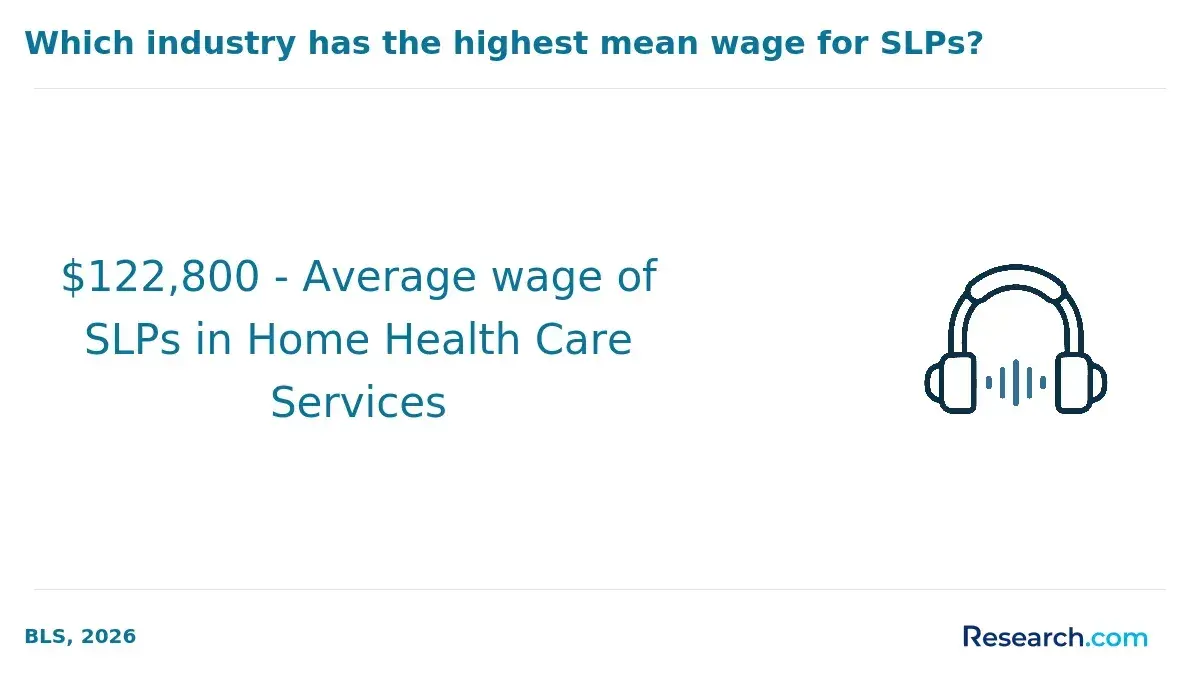
For career context, the U.S. Bureau of Labor Statistics reports a May 2025 median annual wage of $97,870 for speech-language pathologists. That national figure can help frame repayment planning, but it is not a graduate salary promise; wages vary by setting, experience, region, and hours worked. Review local compensation patterns alongside broader speech therapy salary information before borrowing.
What admission requirements and competitiveness distinguish Calvin's online SLP program from its alternatives?
Admissions comparisons should begin with academic readiness, not an assumed "easy" or "hard" label. Most CAA-accredited SLP master's programs evaluate a bachelor's degree, cumulative and major GPA, prerequisite preparation, recommendation letters, a personal statement, and evidence that the applicant understands the profession. Some programs also request interviews, recorded responses, observation exposure, or additional materials.
Calvin applicants should use the university's current application page to verify the required GPA, deadlines, standardized-test policy, prerequisite list, and any mission-related essay expectations. Those requirements can change by entering cohort. The same caution applies to Emerson, Baylor, Utah State, and the University of St. Augustine: a school's overall graduate admission policy may not be the policy for its clinical SLP cohort.
Competitiveness is more than minimum eligibility. A stated minimum GPA means an application can be reviewed; it does not show the academic profile of the admitted class or assure admission. Programs may give particular attention to grades in anatomy and physiology, statistics, phonetics, language development, audiology, and other communication sciences and disorders coursework.
Applicants can improve the quality of an application by taking these steps before applying:
- Request an official prerequisite review early, especially if your bachelor's degree is outside communication sciences and disorders.
- Compare each school's application deadline with the completion dates for outstanding prerequisite courses.
- Use recommenders who can address academic performance, communication skills, professionalism, and readiness for graduate clinical training.
- Explain relevant work or volunteer experience honestly without presenting observation hours as a substitute for missing academic requirements.
- Apply to a balanced group of programs only after confirming that each accepts residents of your state.
Applicants drawn to speed should be especially careful: a speech language pathology accelerated program still must include the academic and supervised clinical education needed for professional preparation. Faster pacing can be useful, but it may reduce the room available for outside work or prerequisite catch-up.
How flexible are course schedules, clinical placements, and part-time options across these online SLP programs?
"Online" does not mean on-demand. Most online SLP master's programs use a cohort sequence because clinical knowledge and skill development build in order. Classes may include synchronous meetings, group projects, exams with set windows, faculty supervision, and clinical assignments scheduled around site availability rather than student preference.
Calvin may suit students who can commit to its published cohort sequence and any in-person requirements. Emerson is often considered by applicants seeking to investigate both full-time and extended pacing choices. Baylor and similar accelerated cohort models may fit students able to prioritize school, while public-university distance programs can offer different structures but may still have fixed academic calendars.
Before deciding that a program is workable while employed, ask the program director or admissions team these schedule-specific questions:
- Are live classes required, and what days and time zones are used for the entering cohort?
- Is a formal part-time track available, or can students only take the standard full-time sequence?
- When do external practicums begin, and how many daytime hours are commonly expected?
- Can a student pause or decelerate after enrollment, and what financial or sequencing consequences follow?
- How many campus visits, immersions, or competency assessments require travel?
Clinical terms are generally the least flexible part of an SLP degree. A student may manage online lectures around work, but a placement site typically operates during business or school hours. Build a work-reduction plan before enrolling rather than assuming the final placements can be completed evenings or weekends.
Which accreditors and licensure pathways govern Calvin and comparable online SLP master's programs?
The central programmatic accreditor for U.S. graduate education in speech-language pathology is ASHA's Council on Academic Accreditation in Audiology and Speech-Language Pathology. CAA accreditation, candidacy, or a program's applicable accreditation status should be checked directly in ASHA's current directory because status and review dates can change.
For the usual professional pathway, a student completes a qualifying graduate degree, supervised clinical education, a post-graduate clinical fellowship, national examination requirements, and state-specific licensing steps. The Certificate of Clinical Competence in Speech-Language Pathology is a widely recognized professional credential, but state boards - not universities or ASHA alone - control state licensure.
Accreditation and authorization answer different questions. CAA status addresses educational quality standards. State authorization addresses whether a school can enroll a resident of a particular state. Licensure disclosures address whether the curriculum is designed to meet, or is known to meet, educational requirements in a particular state. A favorable answer to one does not automatically answer the others.
Before depositing, obtain written confirmation of the following from both the university and your intended licensing state:
- The program's current CAA status for your anticipated graduation period.
- Whether the university may enroll students residing in your state.
- Whether the program's curriculum is intended to meet your state's educational requirements for SLP licensure.
- Whether any state-specific courses, examinations, background checks, or supervised-hour rules apply after graduation.
This check matters especially for students who expect to move during the program. Notify the university before changing residence; a move can affect state authorization, clinical placement options, and the school's ability to continue serving you.
How do Calvin and alternative online SLP programs handle prerequisite coursework and leveling for career changers?
Career changers can enter the SLP field, but they should not assume every online master's program provides the same bridge. Some programs expect applicants to complete a defined undergraduate communication sciences and disorders sequence before applying. Others evaluate transcripts individually, offer leveling coursework, or admit students with conditions. The required coursework can lengthen both the timeline and the total budget.
Typical prerequisites may include introductory communication disorders, phonetics, speech and hearing science, language development, anatomy and physiology of speech and hearing mechanisms, audiology, aural rehabilitation, and statistics. Requirements vary by school, so one completed leveling package may not satisfy every program on a list.
Calvin and each alternative should provide a course-by-course determination in writing when possible. This is more reliable than comparing course titles alone, since schools may require particular content, laboratory experiences, grades, or recency standards. Ask whether online prerequisite courses are accepted and whether they must be completed before application, before enrollment, or by a specified point in the curriculum.
The best route depends on the applicant's starting point. A recent CSD graduate may be ready for a standard master's cohort. A student with several missing courses may benefit from completing lower-cost undergraduate prerequisites before applying. Someone missing most of the major may prefer a formal post-baccalaureate or leveling pathway rather than piecing together classes without advance approval.
What differences in clinical practicum models and local placement support matter for online SLP students?
Clinical education is where an online SLP program becomes local. Students must complete supervised experiences across appropriate populations and settings, but schools differ in how they develop, approve, and support placements. The strongest fit is not necessarily the program nearest to you; it is the one that can lawfully and realistically support required experiences where you live.
Programs commonly use one of three approaches: the school secures placements, the student identifies potential sites while the school completes affiliation agreements, or the responsibility is shared. "Student-supported placement" does not necessarily mean a student is left alone, but it does mean applicants should understand what help is actually provided and what happens if a site declines.
Compare the placement model using the questions below. Answers should be requested in writing because they can materially affect graduation timing.
| Clinical question | Why it matters | Potential warning sign |
| Who finds sites? | Clarifies the student's workload and level of institutional support | Vague assurances without a defined placement process |
| What if no local site is available? | Shows whether travel, delayed placement, or alternative sites are likely | No stated contingency plan |
| When are placements confirmed? | Determines whether work and housing plans can be made responsibly | Commitment requested before the process is explained |
| Can students use an employer site? | May matter for working adults, but conflicts and supervision rules apply | Assumption that employment automatically qualifies as practicum |
| What travel is expected during external placements? | Daily commuting and temporary relocation can affect total cost | Marketing claims of local placement without geographic details |
Students should also confirm whether placements include school-based, medical, pediatric, adult, telepractice, or specialty experiences relevant to their goals. No program can promise a particular site or specialty placement to every student, so choose based on the process and support system rather than an informal expectation.
How do program length, cohort pacing, and graduation timelines vary among these online SLP options?
Online SLP master's programs commonly follow a fixed cohort curriculum rather than allowing students to select courses freely. The advertised completion timeline usually assumes uninterrupted full-time enrollment, successful completion of every practicum, and timely availability of clinical sites. It is a planning benchmark, not a guarantee.
Calvin and other cohort-based alternatives can be attractive for students who want a clear sequence and a defined graduation target. The trade-off is lower flexibility if work, caregiving, illness, a course repeat, or a clinical placement delay disrupts the sequence. Programs with a formal part-time plan may better serve working adults, but they generally extend the time before graduation and earning eligibility.
When comparing timelines, distinguish these terms:
- Instructional duration: The number of terms of scheduled coursework and clinical education.
- Calendar duration: The months from orientation to expected graduation, including summers and breaks.
- Extended pacing: An approved part-time sequence that changes the normal cohort timeline.
- Delay risk: The possibility that incomplete prerequisites, a failed course, unavailable placement, or leave of absence extends completion.
Ask for the curriculum map for your entering cohort, not a generic catalog description. Students looking for a shorter path should compare the credit sequence, in-person requirements, and clinical calendar alongside resources on a speech language pathology accelerated program only if they can realistically meet the associated workload.
What consumer-protection checks should applicants use to vet online SLP alternatives to Calvin University?
A careful applicant verifies claims before paying an enrollment deposit. This is especially important in clinical fields, where an academic degree that does not fit the student's state, schedule, or clinical needs can be costly to correct later.
Use the following review sequence for Calvin and every alternative under consideration:
- Verify the program's current CAA status in ASHA's official accreditation directory.
- Read the university's state authorization and professional licensure disclosure for your state of residence and intended work state.
- Request the full curriculum, total required credits, current tuition schedule, mandatory fees, and all required travel or clinical expenses.
- Obtain a written prerequisite evaluation if your undergraduate degree is not in communication sciences and disorders.
- Ask how clinical sites are found, when placements are confirmed, and what happens if a local site is unavailable.
- Confirm live-session times, campus attendance, part-time rules, leave policies, and the academic consequences of a placement delay.
- Compare financial-aid offers by net cost, borrowing amount, and repayment implications rather than scholarship labels alone.
Common mistakes include relying on a school's general online-learning page instead of the program-specific disclosure, comparing tuition without fees and travel, assuming local clinical placement is guaranteed, and treating a minimum GPA as an admission forecast. Another red flag is pressure to enroll before the school provides clear answers about your state, prerequisites, or clinical model.
Calvin is likely worth closer consideration if its mission, structure, eligibility rules, and expected total cost fit your circumstances. An alternative is preferable when it solves a concrete constraint - such as part-time pacing, lower verified net cost, fewer travel demands, or a more workable clinical-placement plan - without compromising accreditation or licensure preparation.
Other Things You Should Know About Speech Language Pathology
Yes, but you will usually need communication sciences and disorders prerequisites or a formal leveling sequence before or during graduate study. Ask each program for a transcript review because requirements differ and missing courses can add meaningful time and cost.
Potentially, yes. The key factors are the program's applicable CAA accreditation status, completion of required clinical education, and satisfaction of the licensing rules in the state where you seek licensure. The delivery format alone does not determine eligibility.
Some students work during portions of an online program, but full-time employment can become difficult during intensive coursework and daytime clinical placements. Review the program's live class schedule and practicum-hour expectations before making that commitment.
ASHA certification is a national professional credential. State licensure is legal authorization from a state board to practice in that state. Many employers value or require certification, while licensure requirements vary by state and are mandatory for legal practice where applicable.
References
- ASHA EdFind - Accredited Speech-Language Pathology Programs https://find.asha.org/ed/
- Online SLP Master's Program https://www.misericordia.edu/speech-language-pathology/online-slp-masters-program
- O*NET OnLine - Speech-Language Pathologists https://www.onetonline.org/link/summary/29-1127.00
- Master of Arts in Speech-Language Pathology https://calvin.edu/majors-programs/master-arts-speech-language-pathology
- U.S. Bureau of Labor Statistics - Speech-Language Pathologists https://www.bls.gov/ooh/healthcare/speech-language-pathologists.htm