2027 Best Online Speech Pathology Master's Programs for Residents of Chattanooga, TN

Co-Founder and Chief Data Scientist

Reviewed by Rhea Paul, PhD
SLP Education & Research Expert
Chattanooga residents looking for an online speech-language pathology master's degree need more than a convenient virtual format: they need a CAA-accredited program that can support clinical education and align with Tennessee licensure rules. This guide compares strong online and hybrid options, explains what to verify before applying, and shows how to weigh cost, travel, scheduling, placement support, and career preparation. The goal is to help you identify programs worth contacting - not assume every online SLP degree works in Tennessee.
Key Things You Should Know
- A Tennessee-eligible, CAA-accredited master's degree is the essential starting point for Chattanooga applicants pursuing ASHA certification and Tennessee SLP licensure; online delivery alone does not establish eligibility.
- Clinical education is not fully virtual: students generally complete supervised practicum and externship experiences in person, and a Chattanooga-area placement is never guaranteed unless a school confirms it in writing.
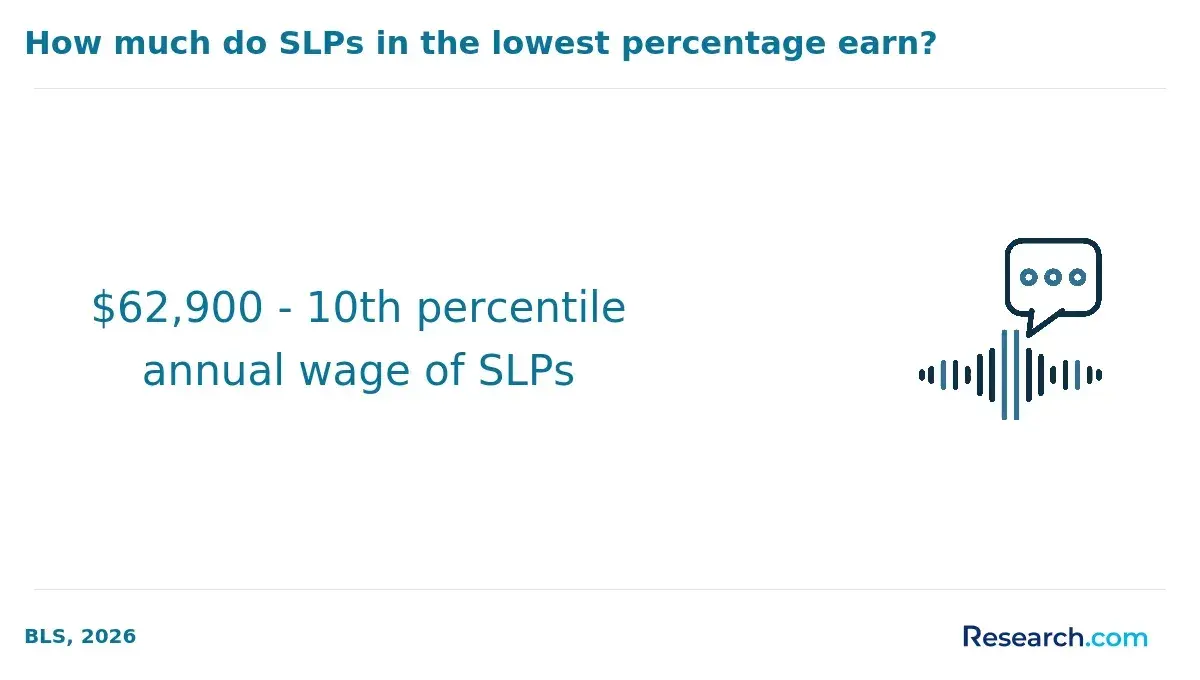
- The national median annual wage for speech-language pathologists was $97,870 in May 2025, while BLS projects 17% employment growth from 2025 to 2035; these figures support demand, but they do not predict an individual graduate's pay or job offer.
What are the best online speech pathology master's programs for Chattanooga residents?
The best online speech pathology master's program for a Chattanooga resident depends on whether the school can enroll Tennessee students, how it handles local clinical placements, how much travel it requires, and whether its pacing fits work and family responsibilities. A well-known school is not automatically the best choice if it cannot confirm Tennessee eligibility or expects campus visits that are impractical from southeastern Tennessee.
The programs below are useful starting points because they have established distance, online, or hybrid graduate SLP pathways and are commonly considered by students seeking a CAA-accredited route. Applicants should confirm current Tennessee availability, tuition, travel expectations, and accreditation directly with each school before submitting an application.
| Program | Delivery consideration | Why it may fit a Chattanooga resident | Important trade-off to verify |
| Emerson College | Online MS in Speech-Language Pathology with in-person clinical education | Designed for distance learners and structured around online coursework plus supervised placements | Current Tennessee eligibility, clinical-site availability, live-session timing, and total tuition |
| Baylor University | Online/hybrid MS in Communication Sciences and Disorders with clinical training | May appeal to students seeking a cohort-based, faith-informed private-university option | Required immersions, Tennessee disclosures, placement process, and mandatory fees |
| New York University | Online MS in Communicative Sciences and Disorders with clinical components | Can suit applicants seeking a large university's distance-learning infrastructure | Time-zone scheduling, travel requirements, tuition, and whether placements can be arranged near Chattanooga |
| James Madison University | Distance-oriented MS in Speech-Language Pathology pathway | May be a practical comparison for applicants who prefer a public-university model | Program pacing, required visits, Tennessee authorization, and cohort admissions cycle |
| University of Nebraska at Kearney | Distance education MS in Speech-Language Pathology pathway | Worth comparing for students who value a distance-program structure and public-university setting | Campus travel, clinical placement responsibilities, state eligibility, and current cost |
Use this as a comparison shortlist rather than a universal ranking. Emerson or NYU may make sense for applicants who value established online infrastructure; a public option may be more attractive when price and travel are favorable. Baylor may fit students comfortable with a private, cohort-based experience. The deciding evidence is the written response each program provides about Tennessee enrollment and clinical training.
A strong first outreach message asks admissions four direct questions: "May a Tennessee resident enroll?", "Does your current curriculum meet Tennessee educational requirements?", "Who secures clinical placements?", and "What travel is mandatory?" Save the answers, because policies can change by cohort and clinical-site availability.
Which online programs meet speech language pathology accreditation requirements?
For a future clinical speech-language pathologist, the central accreditation question is whether the graduate program is accredited by the American Speech-Language-Hearing Association's Council on Academic Accreditation in Audiology and Speech-Language Pathology (CAA). CAA accreditation is different from institutional accreditation and is the credential most closely tied to the educational pathway for ASHA certification.
Programs such as Emerson College, Baylor University, New York University, James Madison University, and the University of Nebraska at Kearney should be checked in the current CAA program directory before applying. Accreditation status can change, and applicants should confirm that the specific degree and delivery pathway - not merely the university - remains covered for their intended enrollment term.
Before paying an enrollment deposit, confirm these points with both the program and the CAA directory:
- The program's current CAA status is accredited rather than expired, withdrawn, or limited to a different degree pathway.
- Your expected graduation date falls within the program's applicable accreditation period.
- The curriculum includes the required academic and supervised clinical education components for the certification route you intend to pursue.
- The school can enroll Tennessee residents and has provided a current professional-licensure disclosure for Tennessee.
A common mistake is treating "online" as evidence of quality or licensure readiness. Online describes instructional delivery; it does not replace CAA accreditation, supervised clinical hours, the Praxis examination, a clinical fellowship, or state licensing requirements.
How do Chattanooga students verify Tennessee and state authorization status?
Complete the following verification sequence before applying or enrolling:
- Read the school's distance-education and professional-licensure disclosure pages for Tennessee-specific language.
- Email admissions and request written confirmation that the program currently accepts students physically located in Tennessee.
- Ask whether the curriculum is intended to meet Tennessee educational requirements for speech-language pathology licensure and whether the school identifies any unmet requirements.
- Confirm the Tennessee licensing board's current rules for degree accreditation, supervised clinical practice, examination, and post-graduate experience.
- Ask the clinical education office whether Tennessee placements are student-arranged, school-arranged, or a shared responsibility.
- Keep copies of replies and recheck requirements before graduation, because boards and university policies may change.
Students planning to relocate should repeat this process for the destination state. A program that is authorized for Tennessee may have different disclosures or enrollment restrictions elsewhere. This is especially important for military families, remote workers, and students who expect to complete a clinical rotation across state lines.
Which programs prepare graduates for ASHA certification and licensure pathways?
A CAA-accredited master's program is the academic foundation for the Certificate of Clinical Competence in Speech-Language Pathology (CCC-SLP), but it is not the final credential. Graduates typically also need qualifying supervised clinical education, a passing Praxis score, a clinical fellowship, and compliance with Tennessee's licensing process. Requirements should be confirmed with the relevant authorities because certification and state licensure are distinct credentials.
For Chattanooga applicants, the best preparatory programs are those that clearly document how online students complete clinical education, track competency requirements, prepare for the Praxis examination, and receive support through the transition to the clinical fellowship. Do not rely on a general statement that graduates are "license eligible" without asking what that means for a Tennessee resident.
The career case for completing the full pathway is favorable, though no program can promise an individual result. The Bureau of Labor Statistics reports a $97,870 median annual wage for speech-language pathologists in May 2025 and projects 17% employment growth from 2025 to 2035. Readers evaluating return on investment can also review how much do speech language pathologists make across different practice settings and roles.
Salary varies substantially by employer, experience, setting, location, and caseload. Medical facilities, schools, early-intervention providers, and private practices can have different pay structures and work schedules, so compare a program's cost with the type of work you realistically expect to pursue.
What admissions criteria matter most for Chattanooga applicants?
Admissions standards matter most when they reveal whether you are academically ready for graduate clinical training. Many SLP master's programs require a bachelor's degree, prerequisite coursework in communication sciences and disorders or related subjects, transcripts, recommendation letters, a statement of purpose, and evidence that the applicant can meet technical and clinical expectations. Individual requirements vary considerably.
Applicants without a communication sciences and disorders major should focus first on prerequisite gaps. A program may admit career changers, but it may require leveling courses before or during graduate study. Those courses add time, tuition, and workload, so they should be included in every comparison.
When reviewing admissions pages, compare the following factors rather than focusing on one published minimum:
- Required prerequisite courses, including whether they must be completed before enrollment.
- Minimum GPA and whether the school reviews the cumulative GPA, the last 60 credits, prerequisite GPA, or multiple measures.
- Whether GRE scores are required, optional, or not considered.
- Application platform, transcript evaluation rules, references, essays, interviews, and observation expectations.
- Whether admissions are cohort-based and whether the program offers one or multiple annual start dates.
- Technical standards, background checks, immunizations, transportation, and other requirements for clinical placements.
A lower published GPA threshold does not necessarily mean admission is easy, because available seats, prerequisite performance, essays, and clinical readiness can affect selection. Applicants seeking a broader view of admission accessibility can compare easiest SLP masters to get into, then verify each school's current requirements directly.
One avoidable mistake is applying only to programs with no clear plan for missing prerequisites. Build a timeline showing when each course will be completed, request transcript reviews early when available, and apply to a balanced group of programs with realistic schedules and costs.
How do online clinical placements work for Tennessee students?
Online SLP programs deliver much of the academic curriculum remotely, but clinical practicum and externship experiences occur in person under qualified supervision. These experiences may take place in schools, clinics, hospitals, early-intervention settings, rehabilitation facilities, or other approved sites. The clinical education office determines whether a site and supervisor meet program requirements.
Placement models differ. Some programs lead the search and match students with approved sites; others ask students to identify possible sites while the university manages contracts and approval. A shared model is common. None of these models guarantees that a student will train in Chattanooga, even when the student lives there.
Ask each program these placement questions before accepting an offer:
- Does the school secure placements, require student leads, or use a shared process?
- Has the program recently placed students in Tennessee or the Chattanooga region without requiring relocation?
- What happens if a local site declines, a contract is delayed, or a supervisor becomes unavailable?
- Who pays for background checks, drug screens, health records, travel, parking, housing, and placement-specific onboarding?
- Can clinical assignments require daytime availability, even if coursework is online?
- Are there required on-campus simulations, skills intensives, orientations, or assessments?
Clinical placement timing can be the biggest barrier for working adults. A program may offer asynchronous lectures but still require full-time weekday availability during externships. Ask for a sample term-by-term calendar, not simply a statement that the program is "flexible."
Which programs offer the strongest support for practicum and externships?
The strongest practicum support is not a marketing label; it is a documented system for approving sites, training supervisors, monitoring student progress, solving placement disruptions, and communicating expectations early. For a Chattanooga resident, responsiveness from the clinical education team is often more valuable than a school's national reputation.
Use the following indicators to compare support across otherwise similar programs:
| Support indicator | What strong support looks like | Why it matters in Tennessee |
| Placement ownership | The school explains exactly what it secures and what students must do | Prevents surprises when local sites have limited capacity |
| Early planning | Clinical staff begin discussing location and availability well before placement terms | Gives students time to plan for driving, work changes, and background checks |
| Supervisor approval | Clear process for vetting credentials, experience, and supervision capacity | Helps protect the usability of clinical hours for certification and licensure |
| Contingency process | Written plan for a canceled site, delayed affiliation agreement, or supervisor departure | Can reduce the risk of a delayed graduation timeline |
| Student accessibility | A named clinical contact and realistic response expectations | Distance learners need timely help when issues arise off campus |
During an admissions call, ask to speak with clinical education staff rather than relying only on a recruiter. Request examples of how the program supports students when a desired site is unavailable, without asking the school to promise a specific Chattanooga placement. A vague answer such as "we work with students" should prompt follow-up questions about responsibilities and contingencies.
How much do these online master's programs cost for Tennessee residents?
The true cost of an online SLP master's degree is more than advertised tuition. Private institutions may charge a consistent online rate, while public universities may use resident, nonresident, distance-learning, or program-specific tuition rules. Because rates, fees, and clinical requirements can change, obtain a written estimate for your intended start term instead of comparing promotional figures from different academic years.
A useful cost comparison separates predictable academic charges from expenses that depend on clinical placements and personal circumstances.
| Cost category | What to request from each program | Why it changes the comparison |
| Tuition | Per-credit rate, total required credits, and projected total tuition | A lower per-credit price may not mean a lower total if credit requirements differ |
| Mandatory university fees | Technology, distance-learning, graduation, and clinical-course fees | Fees can materially increase the billed amount beyond tuition |
| Clinical compliance costs | Background checks, immunizations, drug screens, liability coverage, and testing | These are often required before placement and may recur |
| Travel and residency costs | Required campus visits, lodging, mileage, parking, and meals | Travel from Chattanooga can make a seemingly lower-cost option more expensive |
| Lost-income exposure | Expected daytime practicum and externship hours | Reduced work availability can be a major household-budget factor |
Federal financial aid may be available to eligible graduate students, but borrowing capacity and terms should be reviewed carefully before committing. Compare net cost after grants or employer support, not only the initial sticker price. For a broader affordability framework, review options for an SLP degree online and then request Tennessee-specific estimates from each school.
A common budgeting error is assuming clinical semesters cost the same as lecture semesters. Ask whether tuition changes by credit load, whether travel is mandatory, and whether the program expects students to cover all placement-related expenses.
Which schools provide the best outcomes and student support services?
Outcome quality should be judged by evidence that matters for licensure and employment: CAA accreditation, completion and Praxis information when a school publishes it, clinical education support, advising access, and transparent professional-licensure disclosures. No school should be assumed to have better outcomes solely because it is older, private, public, or highly visible online.
For Chattanooga applicants, student support is especially important because distance learners may not have daily access to campus offices. Programs deserve closer consideration when they provide accessible academic advising, disability accommodations, financial-aid counseling, technology support, clinical education contacts, career services, and clear escalation paths when placements or schedules change.
Request the most recent information available from each program on cohort completion, Praxis performance, employment reporting, and clinical-fellowship support. Treat published outcomes carefully: cohort size, reporting method, time period, and whether results include only respondents can affect interpretation. The most decision-useful question is whether the school can explain its data and its support for students who encounter academic or placement difficulties.
Technology is also becoming more relevant to clinical practice. Telepractice platforms, electronic documentation, augmentative and alternative communication tools, and AI-enabled administrative tools may appear in workplaces. They can support service delivery and workflow, but they do not eliminate the need for supervised clinical judgment, privacy protections, and professional licensure.
How should Chattanooga applicants compare program fit, flexibility, and scheduling?
Choose based on the constraints that are hardest to change: Tennessee eligibility, accreditation, clinical-placement model, daytime availability, required travel, and total cost. Course convenience should come after those items. A program with mostly asynchronous classes can still be a poor fit if externships require you to leave work during weekdays or travel repeatedly.
Create a one-page comparison for every program under serious consideration. The following sequence keeps the evaluation focused on enrollment and licensure realities:
- Eliminate any program that cannot confirm current Tennessee enrollment eligibility and CAA accreditation.
- Compare written licensure disclosures and ask whether the school identifies any Tennessee-specific educational limitations.
- Map each program's required live classes, campus visits, practicum terms, and externship expectations against your work and caregiving calendar.
- Request a complete cost estimate that includes tuition, mandatory fees, travel, and clinical compliance expenses.
- Evaluate whether the placement model is workable if a Chattanooga-area site is unavailable.
- Apply only after you understand prerequisite requirements, start dates, application materials, and likely time to completion.
Accelerated pacing is useful only when you already have the prerequisites, financial capacity, and time for intensive clinical training. Students who need a faster pathway can explore 5-year accelerated speech pathology programs, but should confirm whether an accelerated option is available to their academic background and supports Tennessee licensure goals.
The best fit is usually the program that gives clear written answers, has a credible clinical-support process, and matches your real weekday availability - not the one with the shortest marketing timeline or the most polished website.
Other Things You Should Know About Speech Language Pathology
Yes, if the program is CAA-accredited, accepts Tennessee residents, provides required supervised clinical education, and supports the remaining certification and licensure steps. "Fully online" usually refers to academic coursework; clinical practicum and externships are completed in person.
Not always. Some programs consider applicants from other majors, but they commonly require prerequisite or leveling courses. Confirm the exact courses, deadlines, and added cost before applying.
Some students work during early academic terms, but in-person practicum and externship schedules may require substantial daytime availability. Ask for a sample clinical calendar and do not assume online coursework means evening-only training.
No. Clinical-site availability depends on approved facilities, supervisors, affiliation agreements, and program policy. Ask each school how it handles Tennessee placements and what happens if a local option is unavailable.
References
- Speech Pathology Guidemaps - Chattanooga https://www.utc.edu/enrollment-management-and-student-affairs/pre-health-professions-advising/speech-pathology-guidemaps
- 2026 Most Affordable Online Speech Pathology Master's... https://www.onlineu.com/most-affordable-colleges/speech-pathology-masters-degrees
- Best Online Speech Pathology Programs https://www.forbes.com/advisor/education/healthcare/best-speech-pathology-programs-online/