2027 Best Online Speech Pathology Master's Programs for Residents of Oxnard, CA

Co-Founder and Chief Data Scientist

Reviewed by Rhea Paul, PhD
SLP Education & Research Expert
Choosing an online speech-language pathology master's program from Oxnard is not simply a matter of finding a remote class format. Your program must support California licensure, provide qualifying supervised clinical education, and be authorized to enroll California students. This guide compares practical options and the questions that matter most: CAA accreditation, clinical-placement support, required travel, pacing, costs, and state disclosures. It is designed for future SLPs who want a careful path from graduate school to California practice.
Key Things You Should Know
- For California licensure, prioritize a master's program accredited by ASHA's Council on Academic Accreditation (CAA), supervised clinical training that meets California requirements, and a written California licensure disclosure.
- Online does not mean fully remote: most CAA-accredited online SLP programs require clinical placements near the student and may require campus immersions, live classes, or travel for assessments.
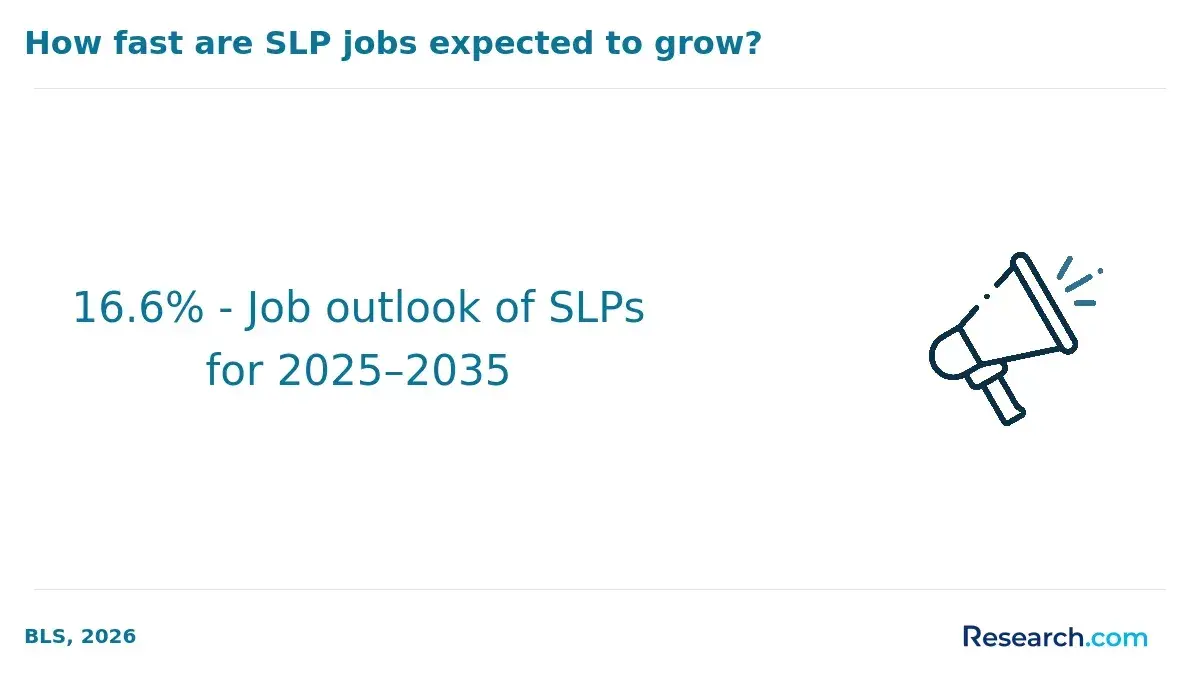
- Speech-language pathologists had a national median annual wage of $97,870 in May 2025, while BLS projects 17% employment growth from 2025 to 2035; these figures support demand but do not guarantee an individual job offer or salary.
Which online speech pathology master's programs accept students living in Oxnard, California today?
The strongest options for an Oxnard resident are not necessarily California-based. A practical shortlist starts with CAA accreditation, confirmation that California residents may enroll, a clinical-placement model that can work in Ventura County or within reasonable commuting distance, and transparent California professional-licensure disclosures.
The programs below are examples of established online or distance-delivered master's pathways that prospective California students should investigate directly. Enrollment eligibility, cohort availability, travel expectations, and state authorization can change, so obtain written confirmation before submitting an application or deposit.
| Program | Format considerations | Why it may fit an Oxnard resident | Key question to verify |
| California State University San Marcos, M.S. in Speech-Language Pathology | California-based graduate education with distance-learning elements and clinical education requirements. | May reduce interstate licensure uncertainty and can be appealing to students who want a California public-university option. | Current delivery model, campus obligations, and whether a placement can be arranged within commuting range. |
| University of St. Augustine for Health Sciences, M.S. in Speech-Language Pathology | Online coursework combined with required hands-on clinical education and immersive experiences. | Designed for distance learners and commonly considered by students seeking structured online delivery. | California enrollment authorization, current tuition, required residencies, and placement arrangements. |
| Baylor University, Online M.S. in Communication Sciences and Disorders | Online academic instruction with synchronous components, clinical rotations, and immersion requirements. | Can suit students willing to follow a cohort schedule and travel for required in-person experiences. | Exact California licensure disclosure and whether placement coordination covers the Oxnard area. |
| New York University, Online M.S. in Communicative Sciences and Disorders | Online graduate curriculum with in-person clinical experiences and program-directed fieldwork processes. | Potential option for students seeking an established online CSD program with structured support. | California authorization, travel expectations, and the availability of suitable clinical sites. |
| Emerson College, Online M.S. in Speech-Language Pathology | Online cohort model with clinical placements and required in-person immersion experiences. | May fit applicants who want a highly structured distance format and can accommodate travel. | Current California eligibility statement, clinical-site assignment process, and total mandatory costs. |
"Accepts California students" and "meets California licensure requirements" are separate claims. An admissions representative may confirm that you can enroll, but only a current written professional-licensure disclosure and the California licensing board's rules can show whether the curriculum supports your intended credential.
If prerequisites, GPA, or observation requirements are a concern, compare published admissions standards rather than assuming an online program is less selective. This overview of easiest online SLP programs to get into can help frame questions about admissions accessibility, but accreditation and licensure compatibility should remain nonnegotiable.
How do California licensure rules shape which online SLP master's programs Oxnard residents should choose?
California regulates the speech-language pathology license through the Speech-Language Pathology and Audiology and Hearing Aid Dispensers Board. An online degree can be a valid route, but the graduate program, clinical education, examinations, and post-degree supervised professional experience must satisfy California rules. The degree format alone does not determine eligibility.
For an Oxnard resident planning to practice as an SLP in California, program selection should be built around the licensing sequence rather than marketing terms such as "100% online." California applicants generally need a qualifying graduate degree, required supervised clinical experience, a passing national examination score, and a required supervised professional experience period before independent licensure.
| California licensure checkpoint | Why it affects program choice | What to confirm before enrolling |
| Qualifying graduate education | A CAA-accredited program provides the clearest educational foundation for clinical certification and many state licensure pathways. | Verify the program's current CAA accreditation status, not merely institutional accreditation. |
| Clinical practicum | California requires supervised clinical experience, while ASHA certification standards include at least 400 total clinical practicum hours, including 375 direct client-contact hours and 25 observation hours. | Ask how the program documents hours, supervision, and settings for California review. |
| Praxis examination | California licensure relies on the national SLP examination requirement. | Ask when the program recommends testing and what outcome data it publishes. |
| Required Professional Experience | Post-degree supervised experience is part of the California path to full licensure. | Understand whether the school offers career support; it cannot guarantee a required professional experience position. |
CAA accreditation is particularly important because it aligns the program with nationally recognized preparation standards. It is not a substitute for checking California's current rules. Licensure requirements can change, and a student's prior coursework, clinical history, and planned work setting may affect the board's review.
Students considering a faster academic path should distinguish an accelerated bachelor's-to-master's route from an online graduate program that meets California requirements. Some 5-year speech pathology programs can shorten the overall education timeline for eligible undergraduates, but they are usually not a shortcut for applicants who already need a stand-alone master's degree and clinical sequence.
Which accredited online speech pathology master's programs offer clinical placements accessible from Oxnard?
No school should promise a specific Oxnard placement unless it has confirmed one for your cohort. A more accurate question is whether the program has a formal placement team, accepts input about your geographic area, maintains appropriate supervision standards, and has a realistic process for securing sites in Ventura County or nearby Southern California communities.
CAA-accredited distance programs commonly use one of two models: the university secures and approves placements, or the student helps identify potential sites while the university retains final approval and affiliation responsibility. The first model usually offers more support; the second may provide more local flexibility but demands more time and professional outreach from the student.
| Clinical-placement model | Potential advantage for Oxnard students | Trade-off to investigate |
| University-coordinated placement | Less responsibility for initiating affiliations and vetting supervisors. | Location may depend on site availability; commuting outside Oxnard may still be necessary. |
| Student-assisted, university-approved placement | Can let a student suggest clinics, schools, hospitals, or private practices near home. | Suggested sites are not guaranteed to be approved or have capacity. |
| Regional clinical intensives or university clinic | Provides standardized faculty-supervised experiences. | May require travel, lodging, time away from work, and schedule flexibility. |
| Mixed model across multiple rotations | May expose students to pediatric, school, medical, and adult settings. | Each rotation can have different travel and scheduling demands. |
Before accepting admission, ask for the placement policy in writing and request a candid explanation of the school's recent ability to place California students. The school may protect privacy and decline to name sites, but it should be able to explain who initiates placements, how long approval can take, what happens if a site falls through, and whether students have previously completed placements in Southern California.
A program with modest travel but reliable clinical coordination may be the better choice over a cheaper program that leaves placement development largely to the student. Clinical rotations are required degree components, so a delayed site can delay graduation and increase living, travel, or loan costs.
What accreditation and institutional approvals must an online speech pathology program have for California practice?
Three separate approvals matter. First, the graduate SLP program should hold CAA accreditation. Second, the university must be institutionally accredited by an accreditor recognized for federal higher-education purposes. Third, the institution must be authorized to provide distance education to students located in California. These layers address different risks.
| Approval or status | What it evaluates | Why it matters to an Oxnard applicant |
| CAA accreditation | Professional education quality for graduate programs in audiology and speech-language pathology. | It is the core programmatic credential to check for an SLP master's degree. |
| Institutional accreditation | University-wide academic governance, financial stability, and educational standards. | It affects degree recognition and federal financial-aid eligibility. |
| California distance-education authorization | Whether an out-of-state institution may enroll California distance learners under applicable oversight arrangements. | It helps protect against enrolling in a program that cannot legally serve California residents. |
| California professional-licensure disclosure | The institution's assessment of whether its curriculum meets California educational requirements. | It provides a program-specific statement to compare with board requirements. |
CAA status is more meaningful than a school's general statement that it is "accredited." A university can be institutionally accredited while a specific SLP graduate program is not CAA-accredited. Likewise, CAA accreditation does not automatically prove that a school is currently authorized to offer distance education to every California resident.
Do not rely on a program's accreditation at the time an old webpage was published. Check the current ASHA CAA directory or EdFind listing, then save the program's current status page and California disclosure with your application materials. If a program is in candidacy rather than full accreditation, ask how that status affects graduates in the specific cohort you would enter.
How do Oxnard-based students verify CAA, institutional, and state authorization status for online SLP programs?
Verification should happen before you apply, again before you pay a deposit, and once more if the program changes modality or accreditation status. Get answers from official records and preserve them. Verbal reassurance from a recruiter is useful, but it is not a substitute for a published disclosure or written confirmation.
Use this sequence to create a defensible enrollment file.
- Find the exact degree and campus or online pathway in ASHA's CAA or EdFind directory, and record its current accreditation status and effective dates.
- Read the university's professional-licensure disclosure specifically for California; look for "meets," "does not meet," or "has not determined" language.
- Confirm with admissions in writing that the school may enroll a student physically located in California and that your intended start term is open to California residents.
- Ask the clinical education office who secures sites, whether students may propose sites, and what travel has been typical for recent California cohorts.
- Compare the program's curriculum and clinical-hour documentation with current California board requirements, then contact the board directly if your background or situation is unusual.
- Save the responses, catalog page, tuition schedule, and disclosure as PDFs or screenshots dated before enrollment.
Pay special attention to phrases such as "curriculum designed to meet requirements" or "may meet requirements." They are not necessarily negative, but they are less definitive than a statement that the program meets California educational requirements. Ask what remaining requirements the graduate must complete after the degree.
Applicants who lack communication-sciences prerequisites should also confirm whether leveling coursework is separate from the published graduate degree. It can affect admission timing, aid eligibility, total tuition, and when clinical training begins.
Which online SLP master's programs have strong track records with California Praxis and licensure outcomes?
A strong track record is best evaluated through program-specific, published outcomes rather than reputation alone. CAA-accredited programs are expected to make outcome information available, commonly including Praxis pass rates, program completion rates, on-time completion, and employment rates. Use the reporting period and cohort size when interpreting results.
For California-bound applicants, the most useful outcome question is not simply "What is your Praxis pass rate?" Ask whether the reporting cohort includes online students, whether results are first-time test takers, how many graduates were counted, and whether the program has experience supporting graduates through California's licensing sequence.
| Outcome measure | How to interpret it | Good follow-up question |
| Praxis pass rate | Shows whether graduates met the examination benchmark in the reported cohort; it does not prove California licensure completion. | Is this a first-time pass rate, and how many graduates were included? |
| Program completion rate | Can reveal whether students commonly finish the planned curriculum. | Does the figure include students delayed by clinical-placement availability? |
| On-time completion rate | Helps assess whether advertised pacing matches actual progress. | What are the most common reasons for delays in online cohorts? |
| Employment rate | Can indicate early career traction but may use varying definitions and reporting windows. | What counts as employment, and does the school track California graduates separately? |
National demand provides useful context but should not replace program-level evidence. The Bureau of Labor Statistics projects 17% growth in SLP employment from 2025 to 2035 and about 12,500 openings annually on average. That outlook supports the value of completing a licensure-ready program, yet school districts, medical employers, and settings differ in their hiring needs.
Use published outcome reports alongside local job research, not as a salary promise. For broader compensation context by setting and role, review this guide to speech and language therapist salary information, then compare it with potential tuition, required travel, and the time needed to reach independent California licensure.
How do clinical hour requirements and site arrangements work for Oxnard residents in online SLP programs?
Clinical education is the part of an online SLP program that cannot be completed solely through a learning platform. Students develop and document supervised competencies with real clients across settings and populations. Programs may use simulations as permitted within their curricula, but direct clinical work remains central to professional preparation.
ASHA certification standards require at least 400 clock hours of supervised clinical experience, including 375 direct client-contact hours and 25 guided observation hours. California has its own clinical and licensure rules, so an Oxnard student should ensure the university's plan supports both the degree requirements and the state application process.
The following questions will clarify whether clinical education is workable with your location, employment obligations, and transportation.
- How many rotations are required, and which terms include full-time or daytime clinical attendance?
- Does the university secure every placement, or must students locate prospective sites and supervisors?
- Can the school provide examples of the types of settings used for recent Southern California students without disclosing confidential site information?
- What maximum commute or travel radius, if any, does the program try to honor?
- Who pays for background checks, drug screening, immunizations, liability coverage, onboarding, parking, and travel?
- If a site cancels or cannot finalize an affiliation agreement, what is the contingency plan and likely effect on graduation timing?
Oxnard offers proximity to a range of school, outpatient, early-intervention, acute-care, and rehabilitation environments across Ventura County and the broader Los Angeles region, but availability fluctuates. Competition for placements is real, especially in school calendars and specialized medical settings. A local commute preference is reasonable; treating it as a guarantee can lead to disappointment.
Students who need to keep a full-time job should scrutinize clinical scheduling more than asynchronous coursework. Even a largely asynchronous academic curriculum can require weekday, daytime practicum hours that are incompatible with standard full-time employment.
What distinguishes online speech pathology programs hosted by California institutions from out-of-state options?
California-hosted programs may offer familiarity with state institutions, regional clinical networks, and California-focused advising. Out-of-state programs can offer additional cohort starts, distinctive online platforms, or different pacing structures. Neither category is automatically better; the right choice depends on verified licensure alignment and clinical feasibility.
| Decision factor | California institution | Out-of-state institution |
| California regulatory familiarity | May have more routine experience with California requirements and local systems. | Must show a clear, current California licensure disclosure and distance-education authorization. |
| Clinical-network proximity | May have established regional relationships, though no local site is guaranteed. | May rely on national placement processes or student-assisted site development. |
| Travel | Campus visits may be more reachable by car for some Southern California students. | Immersions can require flights, hotels, and additional time away from work. |
| Tuition structure | May differentiate resident and nonresident rates or use cohort pricing. | May charge one online rate regardless of location; compare total required charges. |
| Schedule options | Can be tied to campus-based academic calendars and clinic operations. | May offer multiple national cohorts, but live sessions can be scheduled in another time zone. |
For Oxnard residents, a California institution is often easier to investigate and may reduce travel uncertainty, but it is not inherently less expensive or more flexible. Conversely, an out-of-state program can be a good option if its California eligibility, CAA accreditation, immersion schedule, and clinical-placement process are documented clearly.
Compare actual delivery details: required live meetings in Pacific Time, number of immersion days, whether attendance is mandatory, and which expenses are excluded from tuition. "Online" is a delivery method, not a uniform student experience.
How do Oxnard students compare tuition, travel, and cost of attendance across online SLP programs?
Compare total educational cost, not headline tuition. Online SLP master's programs often publish either a per-credit charge, a per-term charge, or a program estimate. Those figures are not interchangeable unless they cover the same credits, fees, clinical terms, and required travel.
The comparison below shows the cost categories that should appear in your personal estimate. Request a written financial-aid and tuition breakdown for your intended cohort because rates and fees can change.
| Cost category | What to compare | Why it matters in Oxnard |
| Tuition | Total required credits multiplied by the applicable rate, or the published cohort price. | Check whether California residency changes the rate and whether prerequisite courses cost extra. |
| Mandatory university fees | Technology, student services, graduation, clinical, and distance-learning fees. | These may be charged each term and may not appear in an advertised tuition figure. |
| Immersion travel | Transportation, lodging, meals, local transit, and time away from work. | Out-of-state residencies can materially change affordability. |
| Clinical-placement expenses | Background checks, health requirements, insurance, professional attire, parking, and commuting. | Rotations may be outside Oxnard even when coursework is online. |
| Living and opportunity costs | Reduced work hours, childcare, technology, and exam costs. | Daytime practicum can be the largest unbudgeted constraint for working adults. |
Build a conservative budget with a travel contingency and at least one delayed-placement scenario. A lower advertised tuition rate can be offset by multiple required campus trips, more terms of enrollment, or a clinical assignment that requires extensive commuting.
Federal aid eligibility depends on the institution, program enrollment status, and your individual circumstances. Submit the FAFSA where appropriate, ask about scholarships and assistantships, and avoid assuming that private loans will cover every indirect expense. Compare several online speech pathology programs masters options using the same total-cost worksheet before deciding which is genuinely affordable.
What consumer-protection risks should Oxnard residents avoid when enrolling in online speech pathology programs?
The largest enrollment risks involve confusing a convenient online format with a licensure-ready professional degree. A credible program should answer direct questions about accreditation, California eligibility, clinical placements, travel, outcomes, and complete charges without pressuring you to commit immediately.
Watch for these red flags and use the corresponding safeguard before signing an enrollment agreement.
| Red flag | Why it is risky | Better action |
| "Accredited" without identifying CAA status | Institutional accreditation alone does not establish professional SLP program accreditation. | Verify the exact degree in the current CAA directory. |
| Unclear California disclosure | A program may accept enrollment without confirming curriculum alignment for California practice. | Request the current written California professional-licensure disclosure. |
| "Local placements guaranteed" without a written policy | Clinical-site capacity can change, and guarantees may be misleading. | Ask who places students, what happens after a cancellation, and whether travel may be required. |
| Tuition quoted without fees or travel | The actual cost can be substantially higher than the advertised figure. | Obtain a term-by-term estimate covering tuition, fees, immersions, and clinical requirements. |
| High-pressure deposit deadline | You may lose time to evaluate state eligibility, financial aid, and clinical feasibility. | Ask whether the deposit is refundable and wait for essential written confirmations. |
| Claims of guaranteed jobs, pay, or licensure | Employment, salary, examination performance, and board approval depend on multiple factors. | Use published outcomes and board rules, not guarantees, to assess risk. |
A practical final check is to compare each school's admissions materials with its catalog, CAA listing, financial-aid information, and licensure disclosure. If those documents conflict, ask for a written resolution from the appropriate office rather than relying on a verbal explanation.
Also review withdrawal, leave-of-absence, teach-out, and refund policies. Clinical education can create timing changes that matter financially, and students should know in advance how a delayed placement affects enrollment status, charges, and degree completion.
Other Things You Should Know About Speech Language Pathology
Yes, an online master's degree can support the path if the program is appropriately accredited, its curriculum and clinical education satisfy California requirements, and you complete the required examination and supervised post-degree experience. Verify all of these items before enrollment.
Not always. Many programs accept students with other bachelor's degrees, but they may require prerequisite or leveling coursework in areas such as phonetics, language development, anatomy, and audiology. These courses can add time and cost before graduate clinical training begins.
Some students work while completing early coursework, but clinical practicum often requires daytime attendance at assigned sites. Review each term's expected schedule before relying on full-time employment income.
Timing varies by program completion, examination scheduling, application processing, and the required supervised professional experience. Ask each school how it supports graduates through the post-degree phase, but confirm current requirements directly with the California licensing board.
References
- ASHA EdFind - Accredited Speech-Language Pathology Programs https://find.asha.org/ed/
- O*NET OnLine - Speech-Language Pathologists https://www.onetonline.org/link/summary/29-1127.00
- Online Speech-Language Pathology Graduate Program https://csd.robbins.baylor.edu/graduate/online-csd-graduate-program
- 2026 Most Affordable Online Speech Pathology Master's... https://www.onlineu.com/most-affordable-colleges/speech-pathology-masters-degrees
- Best Speech-Language Pathology Programs in America https://www.usnews.com/best-graduate-schools/top-health-schools/pathology-rankings