2027 Best Online Speech Pathology Master's Programs for Residents of Syracuse, NY

Co-Founder and Chief Data Scientist

Reviewed by Rhea Paul, PhD
SLP Education & Research Expert
Syracuse residents seeking an online master's in speech-language pathology need more than a flexible class schedule: they need a CAA-accredited degree, supervised clinical education, and a pathway that can satisfy New York licensure rules.
This guide compares practical online and hybrid options, explains what "online" really means in clinical SLP education, and shows how to verify New York eligibility before paying an application fee. It is designed for prospective SLPs who want to make a careful, licensure-focused enrollment decision.
Key Things You Should Know
- For New York practice, prioritize a master's program accredited by ASHA's Council on Academic Accreditation (CAA), then verify that the school accepts New York residents and supports clinical placements that meet New York requirements.
- "Online" SLP programs still require in-person clinical practicum and may require campus immersions; programs commonly arrange, approve, or assist with placements, but Syracuse-area placement availability should never be assumed.
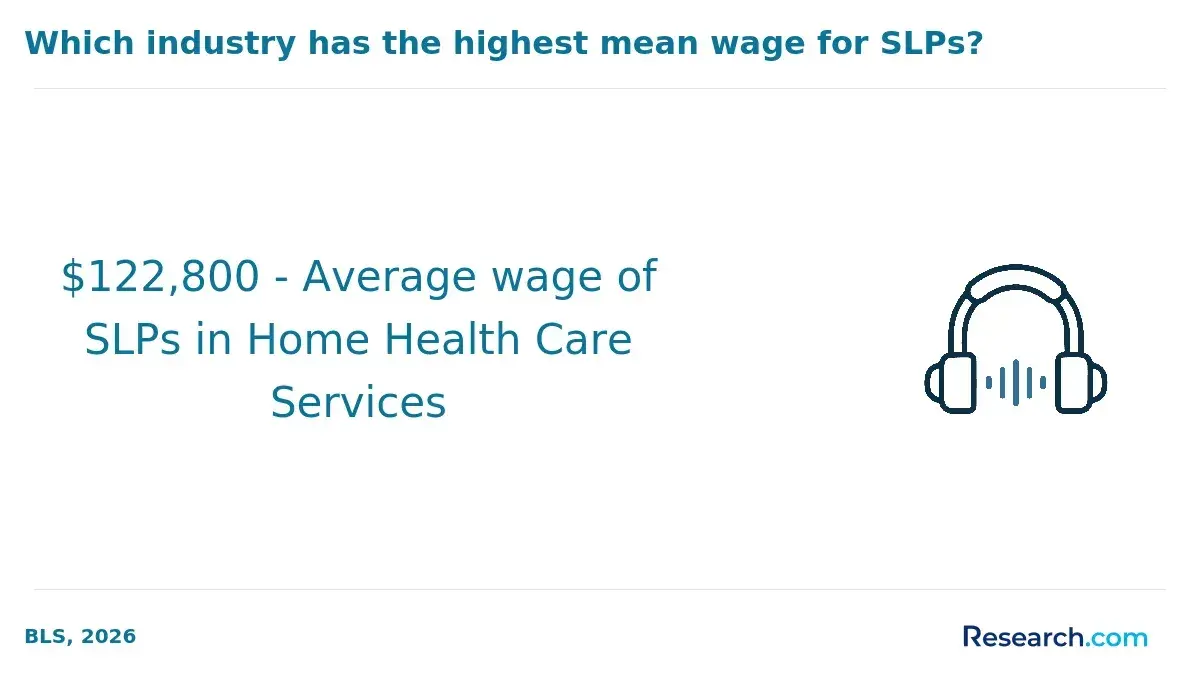
- The U.S. Bureau of Labor Statistics reports a $97,870 median annual wage for speech-language pathologists in May 2025 and projects 17% employment growth from 2025 to 2035, but licensure - not program convenience alone - is the gateway to those roles.
Which online speech pathology master's programs accept Syracuse residents and offer full licensure pathways?
The strongest options for a Syracuse resident are not necessarily schools located in Central New York. A viable program must be open to New York applicants, hold CAA accreditation, provide a supervised clinical sequence, and make disclosures consistent with New York professional licensure requirements. Enrollment authorization can change by cohort, so applicants should obtain written confirmation before applying.
The programs below are notable online or hybrid-entry master's pathways to investigate. "Licensure pathway" means the degree is designed to provide graduate clinical education toward professional licensure; it does not mean a school can issue a New York license or guarantee that every individual requirement has been met.
| Program | Delivery and travel considerations | Why it may fit a Syracuse resident | Key verification point |
| New York University, MS in Communicative Sciences and Disorders | Online coursework with required clinical education; program requirements and placement arrangements should be confirmed directly. | A New York-based option that may be especially relevant for applicants seeking a program familiar with state expectations. | Confirm current online-cohort availability, required in-person experiences, and placement expectations for the Syracuse area. |
| Emerson College, MS in Speech-Language Pathology | Online curriculum with clinical placements and required in-person immersion experiences. | Designed for distance learners and includes structured clinical education support. | Confirm current authorization for New York residents, immersion dates and costs, and whether local placement requests can be considered. |
| Baylor University, MS in Communication Sciences and Disorders | Online academic instruction paired with clinical experiences and in-person immersion requirements. | May appeal to applicants seeking a cohort-based distance format with faculty-guided clinical preparation. | Confirm New York eligibility, travel requirements, and the respective responsibilities of Baylor and the student in securing placements. |
| James Madison University, MS in Speech-Language Pathology | Distance or hybrid delivery may include campus-based requirements and local clinical training. | Potential fit for students comfortable with a hybrid structure rather than a fully remote academic experience. | Confirm the specific delivery track, New York state authorization, and the number and timing of required visits. |
| University of St. Augustine for Health Sciences, MS-SLP | Online coursework with on-campus residencies and in-person clinical rotations. | May suit applicants who want a structured health-professions model and can travel for required experiences. | Confirm CAA status for the applicable campus/program, New York enrollment eligibility, and all residency-related costs. |
These are comparison starting points, not a universal ranking. A lower-travel option may be best for a caregiver or full-time worker, while a program with more scheduled campus contact may appeal to someone who wants a tighter cohort structure. Applicants looking for broader context on admissions selectivity can also compare SLP programs online, but accessibility should never replace accreditation and state-authorization review.
A full licensure pathway usually requires three separate milestones: the graduate degree and clinical education, New York's state licensure application requirements, and, for many employers, ASHA's Certificate of Clinical Competence in Speech-Language Pathology (CCC-SLP). The post-graduate Clinical Fellowship is separate from the master's degree.
How do New York and ASHA certification rules shape online SLP options for Syracuse students?
New York regulates speech-language pathology as a licensed profession. For a Syracuse student, the central question is not whether lectures are streamed live or recorded; it is whether the total education and supervised clinical experience will be accepted for New York licensure. The New York State Education Department ultimately determines individual eligibility.
CAA accreditation matters because it evaluates whether an academic SLP program meets professional education standards. ASHA certification is related but distinct. The CCC-SLP is a voluntary national professional credential often requested or preferred by employers, while New York licensure is the legal authorization needed to practice in settings covered by state law.
In practical terms, applicants should expect an accredited graduate program to include graduate-level academic coursework, supervised clinical practica, and preparation for the Praxis examination. After graduation, the route commonly continues through a Clinical Fellowship and the applicable state licensing steps. Requirements can change, and a student's prior coursework, clinical hours, and intended work setting may affect the sequence.
The employment case for completing the credentialing sequence is meaningful, but it should be interpreted carefully. The BLS projects approximately 12,500 openings for speech-language pathologists each year, on average, from 2025 through 2035. That is a national labor-market estimate, not a promise of a Syracuse job or a prediction of a particular employer's pay scale.
Before enrolling, ask each school these licensure-specific questions:
- Does the institution currently enroll residents of New York in this exact program and cohort?
- Is the program currently CAA accredited, rather than merely seeking accreditation or holding approval for another location?
- Does the school's professional licensure disclosure state that its curriculum meets, or is designed to meet, New York educational requirements?
- How are clinical practicum sites approved, supervised, documented, and evaluated for a student living near Syracuse?
- What expenses are separate from tuition, including travel, background checks, immunizations, testing, and clinical-site requirements?
Do not rely solely on an admissions representative's verbal answer. Ask for the applicable licensure disclosure or a written email from the program and save it with your enrollment records.
Which accredited online speech pathology master's programs enroll New York residents and in-state placements?
CAA accreditation and New York enrollment eligibility must be checked separately. Accreditation applies to the specific program, while state authorization governs whether an institution may enroll a resident in a distance program. Placement policies are also distinct: a school may accept New York residents without promising a practicum within Syracuse or even within New York.
This comparison highlights the factors that should drive a Syracuse applicant's shortlist. Where a policy is cohort-specific or subject to clinical-site availability, the appropriate conclusion is "verify," not "assume."
| Decision factor | What a strong answer looks like | Why it matters in Syracuse |
| CAA status | The exact master's program appears in ASHA CAA records as accredited, with its current status clearly identified. | It supports educational quality review and is normally essential for a conventional licensure and CCC-SLP path. |
| New York resident eligibility | The school confirms it can enroll New York residents in the intended start term. | Authorization can differ by program, campus, modality, and cohort. |
| New York licensure disclosure | The institution provides a current disclosure addressing New York professional licensure requirements. | It helps identify curriculum gaps or restrictions before the student commits. |
| Clinical placement model | The program explains whether it places students, develops sites with students, or requires students to locate potential sites for approval. | Central New York may have limited capacity at some facilities, especially for particular populations or schedules. |
| Travel requirement | The school identifies all required immersions, simulations, orientation sessions, and campus visits in writing. | Flights, lodging, missed work, and childcare can materially change the total cost. |
| Scheduling model | The school specifies live-session times, asynchronous work, practicum hours, and full-time or part-time pacing. | Evening lecture flexibility does not mean daytime clinical rotations can be avoided. |
For many applicants, an in-state program familiar with New York's regulatory environment is attractive. Still, a nationally delivered program can be a better fit when it has a clear New York disclosure, realistic travel demands, transparent placement support, and a schedule that matches the student's work and family obligations.
A common mistake is treating a school's statement that it "helps" with placements as a placement guarantee. Request specifics: the school's role, the timeline for matching, what happens if a proposed site declines, and whether students have historically needed to travel outside their home region.
What accreditation and programmatic approvals must an online speech pathology master's have for New York practice?
The minimum prudent standard is a master's degree from a program accredited by the Council on Academic Accreditation in Audiology and Speech-Language Pathology. CAA accreditation is program-specific. A university's regional or institutional accreditation does not, by itself, establish that an SLP degree meets professional preparation expectations.
Applicants should distinguish the following approvals and credentials because they answer different questions:
- CAA accreditation: Evaluates the professional graduate program's educational standards, clinical education framework, faculty resources, and outcomes.
- Institutional accreditation: Applies to the college or university and can affect federal financial aid eligibility and transferability, but it is not a substitute for CAA accreditation.
- New York professional licensure disclosure: States the institution's determination about whether its curriculum meets New York educational requirements; it is not the license itself.
- State authorization or NC-SARA participation: Addresses an institution's authority to offer distance education to residents of a state; it does not determine clinical placement availability or professional licensure.
- ASHA CCC-SLP eligibility: Concerns the national certification pathway, which includes requirements beyond completing the degree.
Be especially cautious with "pre-accreditation," "accreditation pending," or "designed to prepare" language. A new program may be a reasonable choice for some applicants, but it carries more uncertainty than an already accredited program. Ask what status applies to your anticipated graduation date, whether current students are eligible for certification and licensure pathways, and what institutional protections apply if the status changes.
An online master's is not a shortcut around professional preparation. It is a delivery model for an intensive clinical graduate degree. Students should expect direct client contact, supervisor observation, competency assessment, and documentation requirements regardless of where online academic coursework occurs.
How do Syracuse-accessible online SLP programs handle clinical placements and externships within New York?
Clinical placement is the most location-sensitive part of an online SLP degree. Programs generally use one of three models: school-arranged placements, shared placement development in which the student suggests sites and the school completes approvals, or student-initiated outreach under strict program oversight. No model removes the need for a qualified supervisor and a formally approved affiliation agreement.
For a Syracuse resident, practicum may occur in settings such as schools, hospitals, rehabilitation facilities, outpatient clinics, early-intervention programs, or skilled nursing facilities. The site and population depend on program requirements, student readiness, supervisor capacity, and local agreements. A program cannot ethically promise a particular site before the placement process is complete.
Use this process to evaluate a school's placement plan before committing:
- Ask whether the program has recently placed students in Central New York or elsewhere in New York; request a general answer rather than names of sites or patients.
- Confirm who contacts potential sites, who signs affiliation agreements, and whether the student is prohibited from contacting facilities independently.
- Request the expected clinical sequence, including the approximate timing of observation, simulation, part-time practica, and full-time externships.
- Ask whether placement may require commuting beyond Syracuse, temporary travel, reduced work hours, or a change in schedule.
- Budget for clinical compliance costs, which may include fingerprinting, background checks, health screenings, vaccinations, liability coverage, transportation, and professional attire.
- Get the contingency plan in writing for delayed placement, a site cancellation, or insufficient supervisor availability.
Students who need to continue working should pay close attention to externship intensity. Programs may offer asynchronous coursework, but clinical schedules are often set by the site and can require weekday availability. A part-time academic track may therefore still include a period when outside employment is difficult to maintain.
Technology is changing clinical education through telepractice exposure, digital documentation, and simulation, but it does not eliminate the need for supervised competency-based training. Telepractice can broaden service models; it should not be mistaken for a guarantee that every required clinical hour can be completed from home.
Which online speech pathology master's programs have competitive outcomes and exam pass rates for NY graduates?
Outcome data can help distinguish programs, but applicants should compare like with like. The most useful measures are published Praxis pass rates, program completion rates, employment rates, and the number of students included in each reporting period. A 100% result from a very small graduating class does not necessarily provide the same evidence as a similar result across several larger cohorts.
CAA-accredited programs are expected to publish student outcome information, typically including completion, Praxis examination, and employment outcomes. For a Syracuse applicant, these figures should be a screening tool rather than a substitute for checking New York enrollment authorization and placement feasibility.
| Outcome measure | How to use it | Important limitation |
| Praxis pass rate | Review whether graduates meet the applicable Praxis benchmark over the school's stated reporting period. | Testing timelines and cohort size can affect the figure; ask how many graduates were included. |
| Program completion rate | Shows the share of students completing within the program's published time frame. | It may not explain withdrawals caused by work, health, finances, placement delays, or transfers. |
| Employment rate | Indicates whether responding graduates obtained professional employment or pursued further education under the program's reporting definition. | Definitions, response rates, geography, and job-search timing may differ by institution. |
| Clinical Fellowship support | Ask whether the program offers career advising, employer connections, or guidance for finding a CF position. | Support is not a job guarantee and may vary by local market and specialty interest. |
Ask each program for its latest published outcomes page and read the reporting notes. Also ask whether graduates have completed Clinical Fellowships in New York and what support is available when applying for state licensure. A school should be able to explain its outcomes transparently without implying that a particular score, job, salary, or placement is guaranteed.
Career prospects remain favorable nationally: BLS projects 17% growth in SLP employment from 2025 to 2035. That outlook supports demand for qualified clinicians, but individual outcomes still depend on licensure completion, clinical performance, geography, setting, and the populations a graduate is prepared to serve. Exploring what does a speech pathologist do can help applicants connect program choices with the settings and responsibilities they may eventually prefer.
How do tuition, fees, and financial aid compare among Syracuse-eligible online speech pathology programs?
Total cost is more important than a headline per-credit price. Online SLP degrees commonly include tuition, mandatory university fees, clinical-course charges, travel for immersions, testing, clinical compliance requirements, and lost earnings during intensive externships. Because tuition schedules and fee structures change, applicants should request a current written estimate for their entry term.
The comparison below shows the cost categories that make online programs financially different. It intentionally does not rank schools by an incomplete sticker-price figure.
| Cost category | What to compare | Why it changes the decision |
| Tuition basis | Per-credit rate, flat-term rate, or full-program rate; also confirm total required credits. | A lower per-credit rate can still lead to a higher total if required credits differ. |
| Mandatory fees | Technology, clinical, graduation, distance-learning, student-service, and course-specific charges. | Fees may be billed each term and are often excluded from promotional tuition figures. |
| Travel and residencies | Required visit count, location, length, airfare or mileage, lodging, meals, and time away from work. | Travel can materially narrow the price gap between a distant online program and a closer campus option. |
| Clinical expenses | Background checks, health records, drug screening where required, insurance, equipment, parking, and commuting. | These costs can occur repeatedly as sites and placement requirements change. |
| Financing | Federal Direct Unsubsidized and Graduate PLUS loan eligibility, scholarships, employer assistance, and payment plans. | Borrowing should be evaluated against total repayment obligations, not only the monthly in-school payment. |
For a fair comparison, build a personal cost worksheet using the same columns for every program. Include the number of terms, all known travel, an estimated clinical commuting allowance, and the income impact if an externship limits your work hours. Ask financial-aid offices whether institutional scholarships are available to distance learners and whether aid continues during clinical placements.
Online learning can reduce relocation costs, but it is not automatically the least expensive route. A nearby campus program may cost less overall if it avoids repeated flights and hotels, while a distant online program may be worth more if its schedule allows a student to remain employed longer. Applicants seeking a cost-focused starting point can review a speech pathologist degree online guide, then verify every figure directly with the institution.
What are the key differences between campus SLP programs near Syracuse and fully online options?
The best format depends on how a student learns, how much travel is realistic, and how much control they need over their location. Both campus and online pathways must provide rigorous graduate coursework and clinical education. The major difference is where academic instruction, faculty interaction, simulations, and administrative support occur.
This side-by-side comparison can help Syracuse applicants decide whether the convenience of distance coursework outweighs the advantages of a nearby campus community.
| Factor | Campus program near Syracuse | Online or hybrid program |
| Class participation | Usually face-to-face on a set local schedule. | May combine asynchronous work with scheduled live sessions across time zones. |
| Clinical coordination | May have established regional relationships and an on-site clinic. | May use national networks, remote coordination, or student-assisted site development. |
| Travel pattern | Regular local commuting is typical. | Daily commuting may be lower, but required immersions and distant placements can add episodic travel. |
| Peer and faculty access | Informal in-person contact may be easier. | Requires deliberate use of virtual office hours, cohort meetings, and online collaboration. |
| Work compatibility | Depends on local class and clinical schedules. | Coursework may be more flexible, but daytime practicum and externship demands remain substantial. |
| Best fit | Students who value local infrastructure, in-person instruction, and predictable regional engagement. | Students who need geographic flexibility and can manage independent study plus occasional travel. |
Fully online does not mean fully self-paced. Confirm whether live classes occur in Eastern Time, whether attendance is required, and whether group work has fixed meeting times. Syracuse students have an advantage with programs operating on Eastern Time, but a program in another time zone can still work if synchronous sessions fit their routine.
Students who already know they want the most compressed academic route should be cautious. Accelerated schedules can reduce elapsed time but may intensify clinical and financial pressures. Review 5 year accelerated speech pathology programs only if the pathway's prerequisite, clinical, accreditation, and New York licensure details match your situation.
How can Syracuse applicants verify state authorization, NC-SARA status, and consumer protections for online SLP programs?
State authorization concerns whether an out-of-state institution may legally provide distance education to a New York resident. NC-SARA, the State Authorization Reciprocity Agreement, can simplify authorization for participating institutions, but it is not a professional-licensure approval and does not compel a program to arrange a clinical placement in New York.
A careful verification process protects applicants from enrolling based on a vague marketing claim. Complete these checks before submitting a deposit:
- Locate the school's state authorization page and confirm that New York is listed for the exact online or hybrid program, not merely for the university generally.
- Read the school's professional licensure disclosure for speech-language pathology and identify whether New York is listed as "meets," "does not meet," or "not determined."
- Check the ASHA CAA listing for the exact degree program and campus or delivery location; do not assume another SLP program at the same university has the same status.
- Ask the program director in writing whether New York residents may enroll in your planned cohort and whether any restrictions apply to clinical education in New York.
- Review the institution's complaint process and retain copies of tuition disclosures, placement policies, refund terms, and licensure correspondence.
- Before graduation, confirm current New York licensing steps directly with the New York State Education Department because individual eligibility is evaluated by the state.
Consumer protections are especially important when clinical requirements make a program difficult to transfer. Review withdrawal and teach-out policies, ask whether tuition is locked for the cohort or can change annually, and understand what happens if a placement is delayed. Do not interpret NC-SARA participation as an endorsement of educational quality or as a substitute for CAA accreditation.
Another red flag is a school that will not clearly state whether it can enroll New York residents. If the answer is conditional, ask what condition remains unresolved and when a final answer will be provided. A transparent program should distinguish authorization, accreditation, placement logistics, and individual licensure decisions rather than blending them together.
What application timelines, prerequisites, and competitive admission factors affect Syracuse residents seeking online SLP degrees?
SLP master's admission is competitive because programs must maintain manageable clinical cohorts. Applicants should begin planning well before their intended start term, particularly if they need foundational communication-sciences coursework, observation experience, recommendation letters, or a transcript evaluation.
Requirements vary, but schools commonly evaluate undergraduate performance, prerequisite coursework, written statements, recommendations, experience with communication disorders or related populations, and readiness for graduate-level science and clinical work. Some programs admit students with non-CSD bachelor's degrees through prerequisite or leveling plans; others require most prerequisites before application.
A strong application timeline looks like this:
- Start by identifying CAA-accredited programs that confirm New York resident eligibility and reviewing their current deadline, cohort start date, and prerequisite list.
- Request official transcripts early and compare completed courses against each school's prerequisite chart; do not assume similarly named courses automatically transfer.
- Complete observation and volunteer experiences only where they are genuinely educational and ethically supervised; document dates, settings, and responsibilities accurately.
- Ask recommenders early and provide them with your résumé, goals, deadlines, and a concise explanation of the programs you are targeting.
- Write a statement that connects your preparation, communication skills, service orientation, and career goals to the school's format rather than offering generic praise.
- Submit financial-aid materials and compare admission offers using total program cost, travel, placement model, and licensure fit - not prestige alone.
Applicants changing careers should be realistic about the prerequisite timeline. A bachelor's degree in psychology, education, linguistics, health sciences, or another field can be relevant, but it does not automatically replace foundational CSD coursework. Ask whether prerequisite courses can be completed online, whether grades must meet a stated minimum, and whether the school will evaluate courses before you apply.
Common mistakes include applying before confirming New York authorization, overlooking required campus travel, choosing a program solely because it appears faster, and assuming that an employer will accept a non-CAA degree. The better approach is to build a shortlist of three to five programs, request written answers to the same questions from each, and compare the responses side by side.
Other Things You Should Know About Speech Language Pathology
Yes, if the degree is from a CAA-accredited program and you complete the required supervised clinical education, New York licensure steps, and other applicable requirements. The coursework may be online, but clinical education is in person or otherwise directly supervised and cannot be treated as optional.
Often, yes. Many online or hybrid programs require one or more immersions, orientations, simulations, or skills assessments on campus. Confirm the number, location, duration, and estimated travel cost before enrolling.
Some students work during the academic portion, especially in part-time formats. However, practicum and externship schedules may require daytime availability and can substantially limit employment. Ask each program for a sample clinical schedule rather than relying on the word "online."
Look for programs that accept non-CSD majors or offer a formal prerequisite plan. Have your transcripts reviewed, identify missing foundational courses, and compare the added time and cost against programs that require prerequisites before admission.
References
- Speech-Language Pathology, MS - Syracuse University https://courses.syracuse.edu/graduate/programs/speech-language-pathology-ms
- M.S. in Speech-Language Pathology - College of Arts... https://artsandsciences.syracuse.edu/degree-programs/ms-speech-language-pathology/
- Syracuse University: Master of Science (MS) - apps.asha.org https://apps.asha.org/eweb/ashadynamicpage.aspx
- Online Speech Pathology Programs: 2026 Guide https://www.speechpathology.org/online/