2027 Best Online Speech Pathology Master's Programs for Residents of Mesa, AZ

Co-Founder and Chief Data Scientist

Reviewed by Rhea Paul, PhD
SLP Education & Research Expert
Mesa residents who want to become speech-language pathologists need more than a flexible online degree: they need a CAA-accredited master's program that can support Arizona licensure, supervised clinical training, and ASHA certification requirements. This guide compares practical online and hybrid options, explains what to verify before applying, and helps prospective students weigh travel, cost, scheduling, prerequisites, and clinical-placement responsibilities before making a major investment.
Key Things You Should Know
- For Arizona licensure and ASHA CCC-SLP eligibility, prioritize a master's program accredited by ASHA's Council on Academic Accreditation, not simply a program described as "online speech therapy" or "communication disorders."
- Online SLP programs still require hands-on clinical education: students typically need at least 400 supervised clinical hours, including at least 375 direct client-contact hours under current ASHA certification standards.
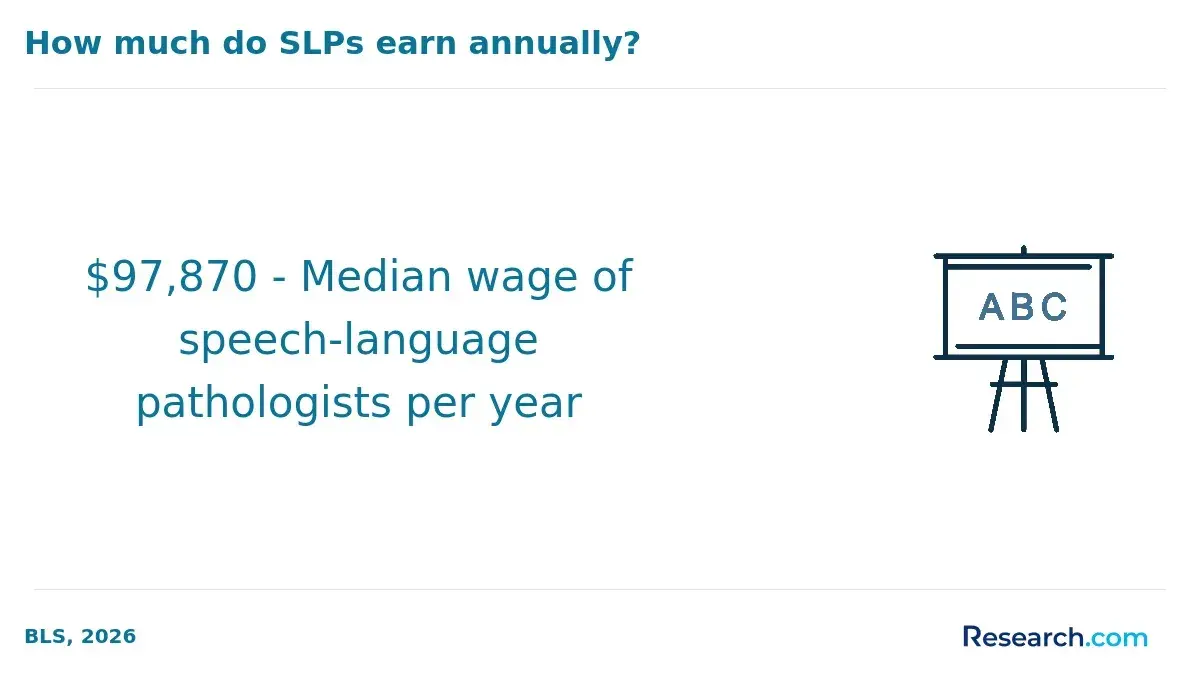
- The Bureau of Labor Statistics reports a $97,870 median annual wage for speech-language pathologists in May 2025 and projects 17% employment growth from 2025 to 2035, but licensure eligibility and successful clinical completion - not program convenience alone - determine whether the degree supports practice.
How do online speech pathology master's programs serving Mesa, AZ residents differ from standard online SLP degrees?
An online speech pathology master's is not the same as a general online communication sciences and disorders degree. A clinical speech-language pathology master's program is designed to prepare graduates for state licensure and the Certificate of Clinical Competence in Speech-Language Pathology, commonly called the CCC-SLP. It includes academic coursework, skills labs, supervised practicum, and external clinical placements.
A standard online degree in communication disorders may be useful for prerequisite completion, professional development, education-related roles, or preparation for graduate study. However, it may not provide the clinical clock hours, faculty supervision, or accreditation required to become a licensed SLP in Arizona.
For Mesa applicants, the most important distinction is whether the remote format is a clinical entry-level master's pathway. A credible program should clearly explain its CAA accreditation status, Arizona distance-education eligibility, placement process, live-learning expectations, and required campus experiences. Students comparing a speech pathologist online degree should also distinguish between a degree marketed as flexible and a program that can actually meet professional training requirements.
The comparison below summarizes the practical differences that matter most when evaluating online versus nonclinical or broadly academic programs.
| Program characteristic | Clinical online SLP master's | General online CSD-related degree |
| Primary purpose | Preparation for SLP licensure and certification | Academic preparation, prerequisite work, or related careers |
| CAA accreditation | Should be present for the clinical master's program | May not apply |
| Supervised practicum | Required | Often absent or limited |
| Clinical placements | Required in healthcare, school, or community settings | Usually not required |
| Arizona licensure relevance | Potentially supports eligibility when all state requirements are met | Usually does not independently meet requirements |
| Best fit | Future licensed speech-language pathologists | Students exploring the field or completing foundational coursework |
Online delivery also does not mean self-paced. Many clinical programs use a cohort model, scheduled synchronous classes, competency assessments, fixed practicum terms, and placement deadlines. Mesa students should be prepared to treat the program as a professional clinical commitment rather than a fully asynchronous academic option.
Which accredited online speech pathology master's programs currently accept students residing in Mesa, AZ?
The strongest options for Mesa residents are programs that combine CAA accreditation with a clearly established online or distance-learning clinical model. "Best" depends on the student's ability to travel, academic background, budget, and willingness to accept a placement that may not be near home.
The programs below are reasonable options to investigate because they publicly offer distance-oriented clinical SLP master's pathways. Enrollment eligibility, Arizona authorization, tuition, and clinical-placement availability can change, so applicants should obtain written confirmation for their individual circumstances before paying an application fee or deposit.
| Program | Distance-learning format | Why it may fit a Mesa resident | Important trade-off to verify |
| University of Arizona Master of Science in Speech-Language Pathology | Online-oriented clinical master's pathway with required experiential components | Arizona-based option that may reduce uncertainty around state-specific communication and regional clinical relationships | Current online cohort availability, required travel, exact Arizona placement process, and tuition by cohort |
| Emerson College Master of Science in Communication Disorders | Online clinical master's model with live instruction, simulations, and field placements | Designed for students seeking a distance format while completing required clinical education | Arizona state authorization, campus immersion expectations, placement radius, and total billed cost |
| Baylor University Master of Science in Communication Sciences and Disorders | Online clinical graduate pathway with synchronous and clinical components | May appeal to students who want a structured cohort and organized remote learning environment | Required immersion experiences, Arizona placement support, schedule intensity, and prerequisite expectations |
No school is universally best. The University of Arizona may be especially attractive to applicants who value an Arizona-based institution. Emerson or Baylor may fit applicants comfortable with a national cohort model and possible travel. A school should move off the shortlist if it cannot confirm that it accepts Arizona residents for the intended start term or if its placement model does not work with the student's employment and caregiving obligations.
Before choosing among these options, ask each admissions office for written answers to the following placement and authorization questions.
- Are Arizona residents eligible to enroll in the specific clinical SLP cohort for my intended start date?
- Is the clinical master's program currently accredited by ASHA's Council on Academic Accreditation?
- Does the school arrange, approve, or require students to locate practicum placements in the Mesa or greater Phoenix area?
- How many campus visits, immersions, skills assessments, or in-person orientations are mandatory?
- Does the school publish an Arizona professional-licensure disclosure for this program?
What licensure and ASHA CCC-SLP requirements must Mesa, AZ residents meet after an online master's?
Completing an online master's is only one stage of becoming an Arizona speech-language pathologist. Mesa graduates generally need to meet Arizona Board of Examiners requirements for licensure and, if they want the nationally recognized CCC-SLP, meet ASHA's academic, clinical, examination, and post-graduate fellowship standards.
CAA accreditation matters because ASHA certification and many employers expect graduates to complete a qualifying clinical graduate program. Accreditation does not automatically grant a license, and an online program's statements about "licensure preparation" should not be interpreted as a promise that every graduate will qualify without additional documentation or supervised experience.
For most students, the pathway includes the following professional milestones.
- Earn a qualifying graduate degree from a CAA-accredited speech-language pathology program.
- Complete required supervised clinical education, including the ASHA minimum of 400 total clinical hours and at least 375 direct client-contact hours.
- Pass the Praxis examination required for SLP certification and commonly used by licensing boards; applicants should confirm the current required score with ASHA and the Arizona licensing board.
- Complete the Clinical Fellowship, which under ASHA standards is a mentored professional experience of at least 36 weeks of full-time work or an equivalent part-time duration totaling at least 1,260 hours.
- Apply for Arizona licensure and, if desired, apply separately for ASHA CCC-SLP certification after meeting all applicable requirements.
Arizona requirements can change, and requirements may differ for school employment, healthcare employment, telepractice, and work across state lines. Graduates planning to work in Mesa Unified School District, private clinics, hospitals, early-intervention settings, or telehealth should confirm the credential required by that employer in addition to checking Arizona licensure rules.
A common mistake is assuming that CCC-SLP certification and Arizona licensure are the same credential. They overlap substantially, but they are administered separately. Another mistake is accepting verbal assurances from an enrollment representative instead of requesting the institution's current Arizona licensure disclosure in writing.
How can Mesa residents verify that an online speech pathology master's program is properly accredited and recognized?
Mesa residents should verify accreditation directly rather than relying on a school's marketing language. The relevant institutional standard for entry-level clinical SLP master's degrees is accreditation by ASHA's Council on Academic Accreditation in Audiology and Speech-Language Pathology.
Start with ASHA EdFind or the CAA program directory and confirm the exact degree, campus or distance-delivery pathway, and accreditation status. A university may have an accredited residential SLP program while a newer online pathway has a different approval history, delivery arrangement, or enrollment limitation. Ask whether the online cohort is included in the accredited program's scope.
Use this verification sequence before applying.
- Locate the program in ASHA's CAA directory and check whether it is accredited, in candidacy, or subject to any noted status conditions.
- Read the university's graduate catalog to confirm the exact degree title, credit requirements, practicum sequence, and graduation requirements.
- Review the university's professional-licensure disclosure specifically for Arizona residents.
- Ask the program director whether students residing in Mesa can be admitted and complete clinical placements under the program's current authorization arrangement.
- Save written responses concerning accreditation, placement responsibility, travel, and Arizona eligibility for your records.
CAA candidacy can be appropriate for some students, but it carries a different risk profile from long-established accreditation. Candidates should understand the school's teach-out plan, whether federal financial aid is available, how graduates are expected to document eligibility, and what happens if program status changes. Applicants who want the lowest regulatory uncertainty generally should favor an already accredited clinical pathway.
Red flags include vague references to "speech therapy certification," missing clinical-hour details, no state-specific disclosure, pressure to enroll before seeing placement policies, or a program that cannot identify whether Arizona residents are eligible. These signals do not prove a program is unsuitable, but they warrant careful follow-up.
Which online SLP programs offer Arizona-appropriate clinical placements, telepractice hours, and supervision for Mesa students?
Clinical education is the part of an online SLP master's that cannot be fully virtual. Programs may use telepractice simulations, remote supervision tools, virtual case-based learning, and online classes, but students still need supervised experiences with clients in approved settings.
Mesa students may have access to a broad metropolitan area that includes schools, pediatric clinics, hospitals, rehabilitation providers, and private practices. That local market can be helpful, but it does not guarantee a placement. Programs differ substantially in whether they secure sites, use a shared-placement model, or expect students to help identify possible sites.
This comparison identifies what to ask each program about Arizona-appropriate clinical training.
| Clinical factor | What a Mesa applicant should confirm | Why it matters |
| Placement responsibility | Whether the university places students, approves student leads, or expects students to find sites | A self-directed model can create delays or require wider travel |
| Arizona site agreements | Whether the program has active or recent affiliation agreements in Arizona | Existing agreements may reduce administrative barriers, but do not guarantee a specific site |
| Telepractice experience | How many hours may involve telepractice and how supervision is documented | Telepractice can build relevant skills but must still meet program and credential standards |
| Supervisor qualifications | How supervisors are selected, trained, and approved | Improper supervision can jeopardize clinical-hour documentation |
| Travel expectations | Whether placements may be outside Mesa, the Phoenix metro area, or Arizona | Travel, lodging, and lost work time can materially change affordability |
| Schedule control | Whether clinic hours can be completed evenings, weekends, or only during standard business hours | Most placements require daytime availability, affecting working students |
Ask for the school's written clinical handbook before enrollment. It should explain background checks, immunizations, drug screening, liability insurance, transportation expectations, remediation policies, supervisor requirements, and what happens if a placement falls through. These costs and obligations are often separate from tuition.
Telepractice is increasingly relevant because healthcare and school-based services use remote service delivery in some circumstances. Still, students should not assume that virtual hours eliminate in-person training or that every placement can be completed from home. The program must determine how each experience fits its competency and supervision standards.
How do tuition, fees, and total cost of attendance compare among Mesa-accessible online SLP programs?
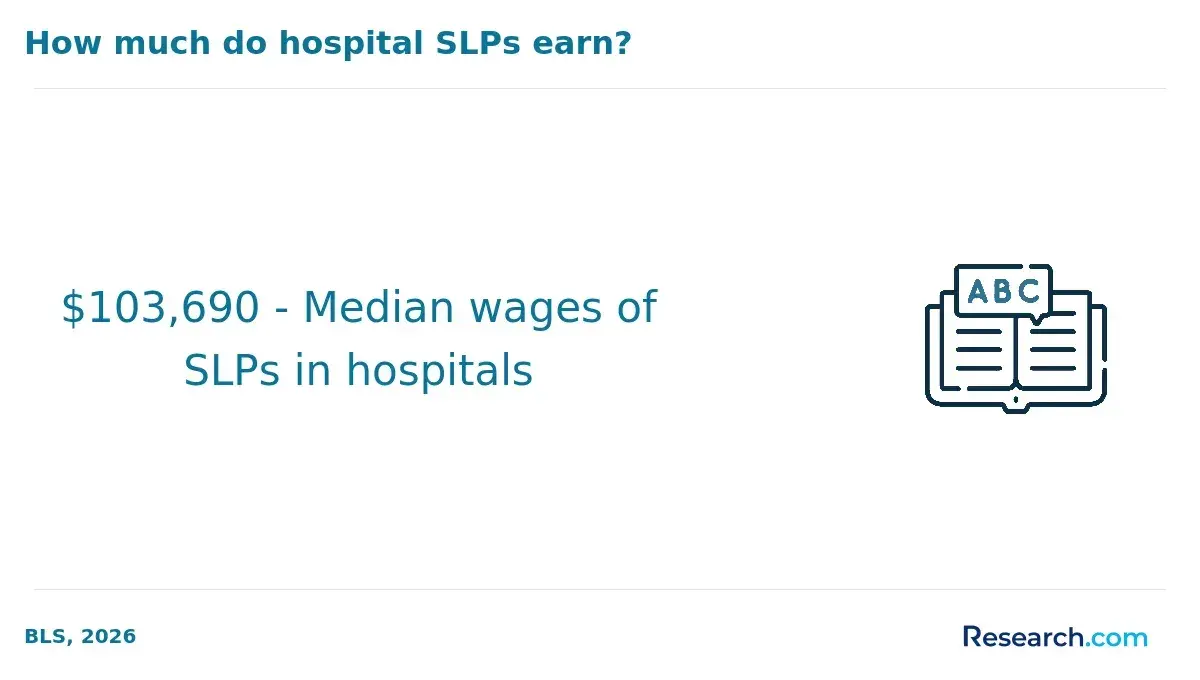
Tuition should be compared as a total program cost, not as a monthly payment or per-credit headline. Online clinical SLP programs may charge a uniform online rate, private-university rate, resident rate, or a combination of tuition and mandatory distance-learning fees. Programs also vary in total credit requirements, making per-credit comparisons incomplete.
For career context, the Bureau of Labor Statistics reports that the national median annual wage for speech-language pathologists was $97,870 in May 2025. That figure is useful for evaluating long-term earning potential, but it is not a starting salary estimate for Mesa graduates and should not be used as a guarantee of return on investment. Readers considering expected earnings can review information about speech pathologist salary with a masters degree alongside their own debt, household budget, and likely employment setting.
Request a written cost estimate for the full program, including terms when practicum limits outside employment. The following cost categories are more decision-useful than a single advertised tuition figure.
| Cost category | What to compare | Often overlooked? |
| Tuition | Required credits multiplied by the applicable rate, accounting for rate changes | No |
| Mandatory university fees | Technology, clinical, student-services, graduation, and course fees | Yes |
| Clinical compliance expenses | Background checks, immunizations, drug testing, CPR, insurance, and fingerprinting | Yes |
| Travel expenses | Campus immersions, clinical assignments, parking, mileage, lodging, and meals | Yes |
| Lost earnings | Reduced work hours during daytime practicum and externship terms | Yes |
| Licensure and examination costs | Praxis, application, fingerprinting, certification, and renewal expenses | Yes |
Applicants should compare financial-aid packages after subtracting grants and scholarships, not merely compare sticker prices. Federal graduate loans may be available to eligible students, but borrowing limits, interest, origination fees, and repayment obligations require separate review. A lower tuition program can be more expensive in practice if it requires repeated travel or significantly delays graduation because of clinical-placement constraints.
A practical approach is to create a two-year or three-year household cash-flow plan. Include tuition by term, anticipated work reduction during placements, travel, emergency savings, and post-graduation fellowship income expectations. Do not rely on a school's cost-of-attendance budget as a personal spending plan; it is an aid estimate and may not reflect Mesa-specific housing, childcare, or commuting costs.
What admission prerequisites and GPA expectations do competitive online speech pathology programs set for Mesa applicants?
Competitive online SLP programs usually expect applicants to have foundational coursework in communication sciences and disorders, language development, phonetics, speech and hearing science, anatomy and physiology of speech and hearing mechanisms, audiology, statistics, and related behavioral or biological sciences. Exact prerequisite lists vary, especially for career changers.
Many clinical SLP master's programs publish a minimum undergraduate GPA around 3.0, but meeting that minimum does not make admission automatic. Programs commonly review prerequisite GPA, overall academic record, essays, recommendations, observation experience, communication skills, interview performance when used, and readiness for demanding clinical training.
Applicants without a CSD bachelor's degree should identify whether a program offers leveling coursework, accepts post-baccalaureate prerequisites, or requires all prerequisites to be completed before the cohort begins. This may add time and tuition. Students looking for integrated pathways should compare 5 year speech pathology programs, while recognizing that an accelerated path may not suit students who need substantial prerequisite preparation or part-time flexibility.
The table below separates common admissions expectations from questions that require program-specific confirmation.
| Admissions area | Common expectation | What Mesa applicants should verify |
| Overall GPA | A published minimum, often around 3.0 | Whether the program uses cumulative, last-60-credit, or prerequisite GPA and whether exceptions are considered |
| Prerequisite courses | Foundational CSD and science coursework | Course equivalencies, expiration rules, and whether online prerequisites are accepted |
| Observation hours | May be required or strongly recommended | Whether documented guided observation is needed before application or before enrollment |
| GRE | Often optional or not required, depending on the school | Current policy for the specific cycle rather than an older web page |
| Recommendations | Academic or professional references | Number required and whether supervisors can substitute for faculty references |
| Interview or recorded response | Used by some programs | Scheduling requirements and whether applicants must attend live online sessions |
Applicants should avoid two common errors: applying before completing a prerequisite audit and submitting a generic personal statement. A strong statement explains why the applicant is prepared for client-facing clinical work, how they understand the program's time demands, and why the format fits their circumstances without implying that online study will be easier than campus study.
How do graduation rates, Praxis pass rates, and employment outcomes vary across online SLP options for Mesa residents?
Graduation, Praxis, employment, and retention outcomes can help Mesa applicants compare programs, but they must be interpreted carefully. The most useful reports come from a program's official CAA-required outcome disclosures, not from generalized rankings or social-media comments.
CAA-accredited programs are expected to make program outcome information available, typically including completion, Praxis examination, and employment measures for recent cohorts. Those figures may be based on small cohorts, may use different reporting windows, and may not isolate online students from campus students. Applicants should compare the same reporting period across schools whenever possible.
Use outcome data as a quality-control tool rather than as a prediction of your personal result.
| Outcome measure | What it can indicate | Limitation to consider |
| Program completion rate | Whether students generally finish within the stated program timeframe | May not explain leaves of absence, placement delays, or students who changed plans |
| Praxis pass rate | How graduates performed on a required professional examination | Does not measure clinical fit, debt burden, or Arizona licensure processing |
| Employment rate | Whether graduates reported professional employment after completion | Definitions, geographic reach, and reporting periods can differ |
| Time to completion | Whether the advertised pace is realistic for prior cohorts | May differ for students completing leveling coursework or part-time study |
The national employment outlook supports careful consideration of the field: BLS projects approximately 12,500 openings for speech-language pathologists each year on average from 2025 to 2035. However, labor demand does not remove the need to assess program quality, personal debt, local employer preferences, and the timing of the Clinical Fellowship.
Ask each school for its most recent outcome report and ask whether the figures include the online pathway you are considering. Also ask how many students needed an additional term because of incomplete clinical hours. A program that advertises a fast completion timeline but cannot explain its placement outcomes deserves extra scrutiny.
What should Mesa, AZ residents know about state authorization, distance education regulations, and consumer protections?
State authorization and professional licensure are related but different issues. State authorization concerns whether a university may deliver distance education to a resident of Arizona. Professional licensure concerns whether the curriculum and clinical preparation can support an application to practice as an SLP in Arizona.
Do not assume that a school's participation in a distance-education reciprocity arrangement automatically means its SLP degree meets Arizona licensing requirements. Likewise, an accredited degree may not be available to every Arizona resident if a school has enrollment restrictions, placement limitations, or unresolved state-authorization issues.
Before enrolling, obtain and save the following records.
- The school's Arizona professional-licensure disclosure for the exact clinical SLP program.
- Written confirmation that Arizona residents may enroll in the intended cohort.
- A current list of required in-person experiences, likely travel frequency, and clinical-placement responsibilities.
- The clinical handbook and student complaint process.
- The institution's refund, withdrawal, leave-of-absence, and teach-out policies.
Students should also understand consumer protections before making a nonrefundable commitment. Review the catalog version governing your cohort, identify who handles academic and clinical complaints, and document representations about placements and eligibility in email. If a school changes authorization or placement policy, written records can clarify what was promised and what options are available.
For Arizona practice, graduates should verify requirements directly with the Arizona Board of Examiners in Speech-Language Pathology and Audiology close to graduation. Licensing rules, forms, fees, and telepractice requirements can change after a student first enrolls.
How can Mesa-based students choose among online SLP programs based on specialization, scheduling, and support services?
The right online SLP program for a Mesa resident is the one that aligns with licensure, clinical access, and daily life - not simply the one with the most recognizable name or lowest advertised tuition. Start by eliminating programs that cannot document Arizona eligibility, CAA accreditation, and a workable clinical-placement process.
Next, choose based on the trade-off that matters most to your situation. A student who must keep working may prefer a longer pathway with predictable scheduling. A student seeking pediatric or school-based experience should ask about the range of pediatric placements, while someone interested in adult neurogenic disorders, medical SLP, dysphagia, bilingual services, or telepractice should ask how electives and clinical assignments support those interests.
Use these decision priorities to narrow your shortlist.
- Choose a locally connected or Arizona-based option if minimizing regulatory uncertainty, travel, and regional placement coordination is your highest priority.
- Choose a national online cohort model if you value structured remote coursework and can accommodate required immersions, daytime clinical work, and possible broader placement travel.
- Choose a program with formal placement support if you do not have professional contacts in local schools or clinics and cannot risk a delayed practicum.
- Choose a leveling-friendly pathway if your bachelor's degree is outside communication sciences and disorders and you need transparent prerequisite planning.
- Choose a program with clear specialty opportunities if your career goal requires specific exposure, such as bilingual practice, autism services, medical rehabilitation, voice, swallowing, or augmentative and alternative communication.
Support services matter because online clinical graduate study can be demanding. Ask about academic advising, disability accommodations, career services, clinical coordinators, technical support, tutoring, mental-health services, and faculty office hours. Programs that offer strong student support may be worth a higher price if they reduce the risk of delayed progression or unresolved placement problems.
Finally, compare program fit against alternatives. Some applicants may discover that a local campus-based option, a post-baccalaureate prerequisite sequence, or a carefully planned delayed application cycle is more practical than immediately starting a remote cohort. Explore different speech language pathology programs only after confirming that admissions accessibility does not come at the expense of accreditation, clinical quality, or Arizona licensure compatibility.
Other Things You Should Know About Speech Language Pathology
Possibly during some academic terms, but many students cannot maintain full-time employment once clinical practicum intensifies. Placements often occur during weekday business hours, and required travel or live classes can further limit work flexibility. Ask for a term-by-term schedule before enrolling.
Not always. Some programs accept career changers who complete specified prerequisite courses. However, prerequisites may add substantial time and cost, and schools differ on which courses they accept. Request an individual transcript evaluation before assuming you are eligible.
Employers generally focus on licensure eligibility, clinical competence, supervised experience, and professional communication. A CAA-accredited program with strong clinical preparation is more important than whether academic coursework was delivered online. Your practicum and Clinical Fellowship settings can also influence your early-career opportunities.
Some programs allow students to suggest potential sites, but the university must approve the site, supervisor, affiliation agreement, and learning plan before hours begin. Never independently promise a clinic or school that you can complete placement there until your program's clinical office confirms approval.
References
- Master of Science in Speech-Language Pathology https://www.atsu.edu/arizona-school-of-health-sciences/academics/master-of-science-in-speech-language-pathology
- MS in Speech-Language Pathology Program Online | GCU https://www.gcu.edu/degree-programs/masters-speech-language-pathology
- Communication Disorders, MS - ASU degree https://degrees.asu.edu/masters-phd/major/ASU00/LACOMDISMS/communication-disorders-ms