2027 Best Online Speech Pathology Master's Programs for Residents of Escondido, CA

Co-Founder and Chief Data Scientist

Reviewed by Rhea Paul, PhD
SLP Education & Research Expert
Escondido residents can pursue an online or hybrid master's degree in speech-language pathology without relocating, but "online" rarely means training can be completed entirely from home. Clinical practica, potential immersions, California licensure disclosures, and placement support can differ sharply by school. This guide compares the factors that matter most: CAA accreditation, California availability, travel expectations, cost structure, schedule, and clinical-training logistics. Use it to narrow your list before paying application fees or committing to prerequisite coursework.
Key Things You Should Know
- A California license generally requires a qualifying graduate degree, supervised professional experience, and successful completion of the national Praxis examination; confirm the current requirements with the California Speech-Language Pathology and Audiology and Hearing Aid Dispensers Board.
- CAA accreditation is the central quality and licensure checkpoint: an online program can be convenient, but it should not be assumed to qualify Escondido residents for California licensure without a current school disclosure.
- The U.S. Bureau of Labor Statistics projects 17% employment growth for speech-language pathologists from 2025 to 2035, with about 12,500 annual openings, making careful selection of an accredited, placement-capable program especially important.
Which online speech pathology master's programs serve Escondido residents?
Several distance-oriented, CAA-accredited master's programs may be viable for California residents, but availability can change by cohort, state-authorization status, and clinical-placement capacity. A program should be considered a serious option only after it confirms in writing that it accepts California applicants and can support a California clinical-training plan.
The options below are useful starting points because they are known for distance or hybrid delivery rather than because one is universally "best." Review the current catalog, admissions page, CAA directory entry, and California professional-licensure disclosure before applying.
| Program | Delivery model | Decision-relevant strength | Important trade-off to verify |
| Emerson College Master of Science in Communication Disorders | Online coursework with in-person clinical components | Established distance-learning format and structured clinical education | Required immersions, current California eligibility, pacing, and placement geography |
| Baylor University Master of Science in Communication Sciences and Disorders | Online academic coursework with clinical experiences | Designed for students seeking a distance-delivered SLP graduate program | Live-session expectations, travel, clinical-site assignment process, and total charges |
| New York University Steinhardt MS in Communicative Sciences and Disorders | Online pathway with supervised clinical education | Online route from a university with an established CSD program | California participation, campus or intensive requirements, and full-time schedule demands |
| Pacific University MS in Speech-Language Pathology | Hybrid or distance-supported model, depending on cohort structure | May suit students open to planned regional travel | Current California enrollment rules, on-campus requirements, and placement reach |
Residents comparing online masters in speech pathology should separate academic delivery from clinical delivery. Recorded lectures and remote advising may reduce commuting, but a clinical degree still requires supervised in-person work with patients or clients.
For an Escondido applicant, a strong first shortlist usually includes one program with a transparent California disclosure, one with a clinical-placement model you understand, and one financially realistic backup. Do not treat a school's national online marketing as confirmation that it currently enrolls California students.
Which programs hold CAA accreditation or lead to licensure eligibility?
For prospective speech-language pathologists, the most important institutional credential is accreditation by the Council on Academic Accreditation in Audiology and Speech-Language Pathology (CAA), the accreditor associated with the American Speech-Language-Hearing Association. Accreditation indicates that a program has met CAA standards; it does not by itself eliminate state-specific licensing steps.
Emerson College, Baylor University, NYU Steinhardt, and Pacific University should be checked in the current CAA program directory before an application is submitted. Accreditation statuses, including accreditation periods and any public notices, can change. Programs may also use terms such as accredited, candidate, or applicant; those terms are not interchangeable.
California applicants should use this distinction when evaluating a program:
| Item to verify | Why it matters in California | What to request from the school |
| Current CAA status | It is a core indicator of whether the degree follows recognized entry-to-practice educational standards | Current CAA listing and program accreditation date |
| California professional-licensure disclosure | Distance programs must disclose whether their curriculum meets, is intended to meet, or does not meet state requirements | Written disclosure specific to California SLP licensure |
| Clinical education plan | Licensure depends on supervised clinical training, not only online classes | Practicum and internship requirements, placement roles, and travel expectations |
| Post-degree requirements | A master's degree is not the final licensing step | Guidance on required supervised professional experience, examination, and application process |
A school may say its curriculum is designed to meet educational requirements while still requiring the student to complete separate California Board requirements. Ask for the disclosure in writing, retain it, and verify rules directly with the state board because state regulations can change after enrollment.
How do online programs compare on clinical placement support?
Clinical placement is often the decisive issue for Escondido students. Most online SLP programs coordinate, approve, or support placements, but the exact responsibility may range from school-led matching to a shared process in which students help identify potential sites. No applicant should assume that a nearby clinic, school district, or medical center will automatically be available.
The table highlights the questions that reveal whether "placement support" is genuinely workable for a student based in northern San Diego County.
| Placement model | What it can mean for an Escondido resident | Best question to ask |
| School-arranged placement | The university leads site matching, but geographic proximity and setting variety may still be limited | "Does the program place California distance students, and can you describe the usual placement radius?" |
| Student-assisted placement | Local professional contacts may help, but approval, contracts, and supervisor qualifications can delay a placement | "What happens if my suggested site cannot be approved?" |
| Hybrid placement network | Some experiences may be local while specialized rotations or intensives require travel | "Which clinical experiences can be completed near Escondido, and which may require travel?" |
| Fixed regional cohort sites | Predictability can be better, but the assigned area may not be near the student's home | "Are California sites available for my entering cohort, or are sites assigned elsewhere?" |
Also ask whether pediatric, school-based, medical, adult, and telepractice experiences are available. A program does not need to promise every setting near home, but it should clearly explain how it ensures required breadth of experience and qualified supervision.
A common mistake is choosing a lower-tuition program before learning that repeated out-of-area travel, unpaid time away from work, or short-notice placement changes could raise the actual cost. Compare the full clinical plan, not just the online course schedule.
Which California schools offer fully online or hybrid SLP degrees?
California has respected campus-based SLP master's programs, including programs within the California State University and University of California systems and private universities. However, a California-based school should not be presumed to offer a fully online entry-level SLP master's degree. In this field, fully remote academic delivery combined with in-person clinical education is more common than a degree with no travel or in-person obligations.
For Escondido residents, nearby campus-based or hybrid options may be attractive when they reduce relocation risk and make faculty contact easier. They may be less attractive for applicants who need evening flexibility, cannot commute consistently, or require a broader choice of pacing options.
| Option | Potential advantage for local students | Potential limitation |
| California campus-based program | Local professional networks and a clearer in-state training context | Regular in-person attendance and competitive local admission may limit flexibility |
| California hybrid program | Can combine some remote learning with planned campus engagement | Hybrid does not necessarily mean part-time, low travel, or local placements |
| Out-of-state online CAA program | Broader selection of delivery models and cohort schedules | Must verify California authorization, licensure disclosures, travel, and placement support |
"Fully online" should be treated as a question, not a label. Request a term-by-term schedule that identifies live classes, skills assessments, simulations, clinical rotations, immersion weekends, and any required travel before deciding that an option fits your work and family obligations.
What admission requirements matter most for Escondido applicants?
Admissions requirements matter as much as a program's online format. Most entry-level SLP master's programs expect a bachelor's degree, prerequisite coursework in communication sciences and disorders or approved equivalents, and foundational coursework required by ASHA standards. Applicants changing fields may need a post-baccalaureate sequence or leveling courses before, during, or in addition to the graduate curriculum.
Requirements vary by school and cycle, but these are the items most likely to affect an applicant's timeline and competitiveness:
- Prerequisite CSD courses, including anatomy and physiology of speech and hearing mechanisms, phonetics, language development, audiology, speech science, and speech or language disorders.
- ASHA foundational coursework in biological sciences, physical sciences, statistics, and behavioral or social sciences, when required by the program.
- Official transcripts and a stated GPA standard; some programs evaluate the overall GPA, prerequisite GPA, or both.
- Personal statement, recommendations, résumé or experience record, and, where required, an interview or recorded response.
- Application platform, deadlines, and any international transcript evaluation rules that apply to the individual applicant.
Reviewing SLP master's programs can help applicants identify different admissions approaches, but "easier" should never replace fit. A program with fewer barriers may still be a poor choice if its clinical-placement plan, California disclosure, or schedule does not work for you.
Applicants from outside communication sciences should calculate their actual prerequisite gap before applying. The common mistake is treating a general psychology, education, or linguistics degree as automatic fulfillment of CSD prerequisites. Send transcripts for an official or written preliminary review whenever a school offers one.
How much fieldwork and supervision do these programs require?
SLP graduate education combines didactic coursework with supervised clinical practice. CAA-accredited programs are designed around clinical education standards, and students generally complete substantial direct client-contact hours across practicum and internship experiences. The precise sequence, setting mix, and supervision structure are set by each program.
Applicants should distinguish three stages that are often mistakenly blended together:
| Stage | When it occurs | What to confirm |
| Graduate practicum | During the master's program | Required direct-contact hours, supervisor credentials, client populations, and site locations |
| Externship or internship | Usually later in the graduate sequence | Full-time attendance expectations, work restrictions, travel, and whether more than one setting is required |
| Post-graduate supervised professional experience | After the degree, as required for California licensure and professional credentialing pathways | Current California requirements, employer supervision capacity, and application timing |
Clinical terms can be confusing. A university may use practicum, clinic, externship, internship, or residency differently, so ask for the clinical handbook rather than relying on a marketing description.
Working students should plan conservatively. Clinical blocks can resemble a job schedule, may occur during daytime hours, and can require preparation, documentation, and supervisor meetings outside direct client contact. A program that permits part-time coursework may still require full-time availability during one or more placement terms.
What do tuition and in-state costs look like for California residents?
California residency does not automatically produce an in-state tuition advantage at a private online university or an out-of-state public university. Online programs may charge a single distance-learning rate, a per-credit rate, a term rate, or different rates by location and enrollment status. Tuition should therefore be compared only when the figures use the same basis.
Instead of relying on an advertised per-credit figure, request a written estimate that includes every required term. The cost categories below affect the real investment for an Escondido student.
| Cost category | Why it changes comparisons | What to request |
| Tuition | May be published per credit, per term, or as an annual amount | Total tuition for the required credit load and expected completion path |
| Mandatory university fees | Technology, clinical, health, enrollment, and graduation fees may not be included in tuition | Current fee schedule and whether fees change by term |
| Travel and lodging | Immersions, exams, or distant placements can add material costs | Required visit count, locations, duration, and whether travel is student-paid |
| Clinical and academic supplies | Background checks, immunizations, liability coverage, testing materials, and technology can be required | Clinical handbook cost list |
| Lost work time | Daytime placements may reduce earnings even when tuition is manageable | Typical weekly clinical hours by term |
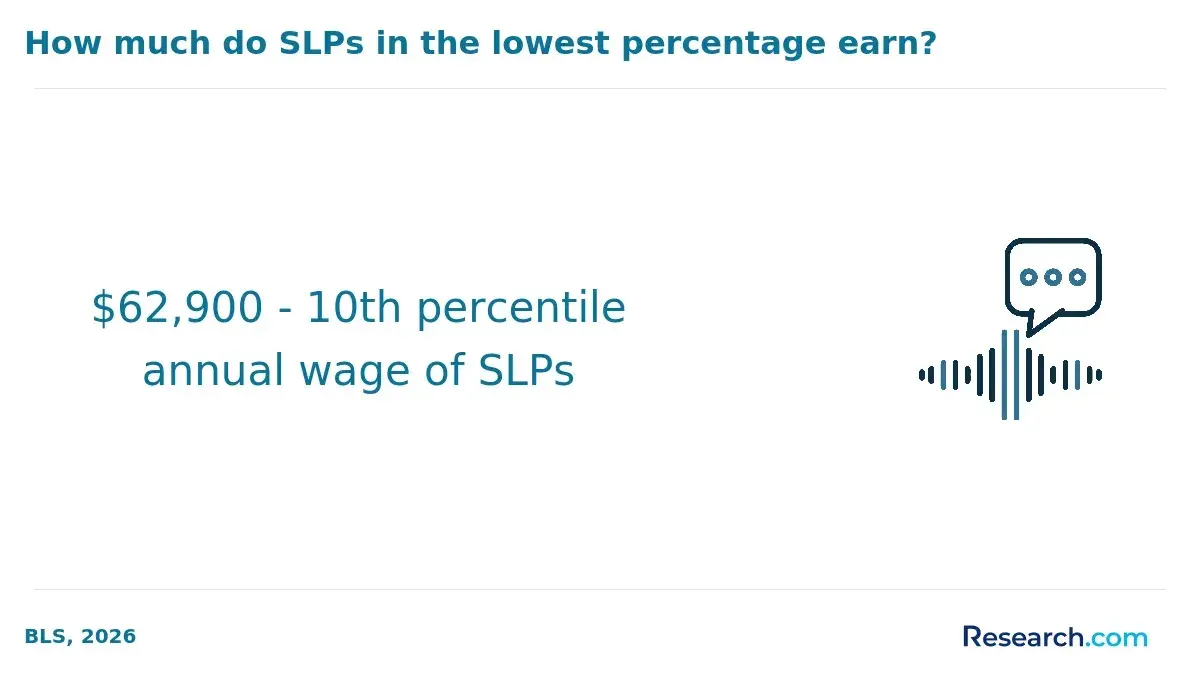
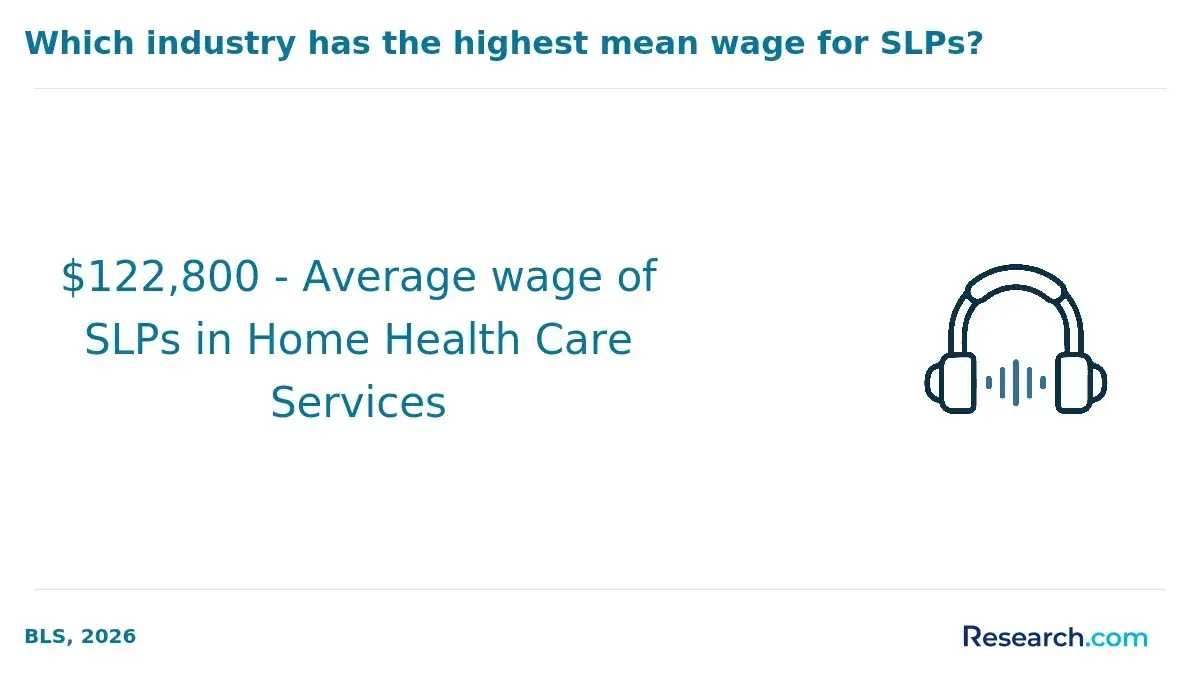
The financial upside should be interpreted carefully. The Bureau of Labor Statistics reports a May 2025 median annual wage of $97,870 for speech-language pathologists, but pay varies by setting, experience, region, and hours worked. Explore speech and language therapist salary information as career context, not as a repayment guarantee.
Compare net cost after grants, scholarships, employer assistance, and federal aid eligibility. Ask each financial-aid office whether institutional awards are available to distance students and whether clinical terms affect enrollment status or aid disbursement.
How do programs support part-time, working, or local students?
Online delivery can make graduate study more accessible, but entry-level SLP preparation remains intensive. The best fit for a working Escondido resident is usually the program whose clinical calendar and live-session schedule are compatible with the student's life - not simply the one with the most asynchronous coursework.
Programs commonly differ in the features below, and applicants should get answers for the specific cohort they would join:
- Whether courses are synchronous, asynchronous, or mixed, including the days and Pacific Time meeting hours for live sessions.
- Whether a part-time track exists from the first term through clinical education, rather than only during academic coursework.
- Whether summer enrollment is mandatory and whether leaves, deceleration, or cohort changes are permitted.
- When students must be available for daytime clinical practica and whether employment during placement terms is realistically manageable.
- How remote students access faculty advising, disability services, simulation technology, library resources, and career support.
Students seeking a shorter route should examine accelerated speech language pathology programs with particular care. A shorter published timeline may require summer enrollment, a heavy credit load, and limited ability to work; it is not automatically the lower-cost or lower-stress choice.
Local students should also ask about time-zone policy. An East Coast program may use evening sessions that begin late in California, while clinical communication and group work can occur at fixed times. Obtain a sample weekly schedule and compare it with commute, childcare, and work constraints.
Which outcomes data should applicants verify before enrolling?
Outcomes data helps distinguish a polished online presentation from a program with evidence of student progress. CAA-accredited programs commonly publish outcomes information, but readers should check the reporting period, cohort size, and definitions before drawing conclusions.
The most useful indicators are shown below. Review multiple years where available because a single small cohort can produce volatile results.
| Outcome | Why it matters | How to interpret it |
| Program completion rate | Shows whether students generally progress through the curriculum | Ask whether withdrawals, leaves, and part-time students are included |
| Praxis examination pass rate | Indicates performance on a common professional examination | Check the number of test takers and the reporting window |
| Employment rate | Offers evidence about early career entry | Confirm how employment is defined, how soon it is measured, and the response rate |
| Time to degree | Shows whether the advertised schedule is realistic for actual students | Ask for outcomes separated by full-time and part-time pathways when available |
| Clinical placement completion | Reveals a key operational risk for distance learners | Ask directly about placement delays, site changes, and support for California students |
National demand is favorable but does not replace program-level evidence: BLS projects 17% growth in SLP employment from 2025 to 2035 and about 12,500 openings per year on average. Use that outlook to assess the profession broadly, then use each school's completion, examination, and employment disclosures to assess whether its delivery model works for its students.
Red flags include missing outcomes reports, unclear reporting dates, employment claims without definitions, or admissions representatives unwilling to put California licensure information in writing. Strong results do not guarantee an individual outcome, but transparent reporting gives applicants a better basis for comparison.
How should Escondido students choose the right program?
The right program is the one that supports your route to California practice with a realistic schedule and total cost. A nationally recognizable name is less important than confirmed eligibility, clinical feasibility, and the ability to complete the degree without avoidable disruption.
Use this application sequence to reduce risk before you submit deposits or decline other offers:
- Confirm in writing that the program currently accepts California residents and provides a California professional-licensure disclosure.
- Verify current CAA accreditation status through the CAA directory and save the program's accreditation information.
- Request the clinical handbook and ask who secures sites, what happens if a site falls through, and whether any rotations may require travel beyond Escondido.
- Build a total-cost estimate that includes tuition, fees, travel, technology, clinical compliance costs, and likely lost wages during full-time placements.
- Compare a sample term schedule with your work and caregiving obligations, especially during practicum and internship terms.
- Review published completion, Praxis, and employment outcomes, then ask how the school supports students who need academic or placement assistance.
Choose a campus-based or nearby hybrid program if in-person networking, local faculty access, and a familiar regional training environment matter most. Choose a distance program if it has clear California authorization, a credible placement process, and a schedule that genuinely fits your responsibilities. Consider delaying enrollment for prerequisite completion or financial preparation if neither option currently meets those tests.
Other Things You Should Know About Speech Language Pathology
Yes, potentially. The key is not whether lectures are online; it is whether the degree is from an appropriately accredited program, the curriculum and clinical education meet California requirements, and you complete the state's additional licensing steps. Confirm the school's current California disclosure and verify requirements with the California licensing board.
Not always. Many programs admit students with other bachelor's degrees, but they commonly require specific CSD prerequisite courses. The amount of additional coursework depends on your transcript and the program's policy.
Do not assume so. Some programs arrange placements, others use a shared process, and availability depends on approved sites and qualified supervisors. Ask the program whether it has recently placed students in California and what happens if a local site is unavailable.
It may be possible during some academic terms, especially in a part-time pathway, but clinical practica and internships often require daytime availability and intensive weekly commitments. Review the clinical calendar before relying on continued full-time employment.
References
- Online MS in Speech-Language Pathology (SLP) | Pepperdine https://healthscience.pepperdine.edu/online-masters-in-speech-language-pathology/
- Speech-Language Pathology Essentials https://globalcampus.sdsu.edu/program/writing-language-communication/speech-language-pathology-essentials/
- Online SLP Master's Program https://www.misericordia.edu/speech-language-pathology/online-slp-masters-program
- Best Speech-Language Pathology Programs in America https://www.usnews.com/best-graduate-schools/top-health-schools/pathology-rankings