2027 Best Online Speech Pathology Master's Programs for Residents of Plano, TX

Co-Founder and Chief Data Scientist

Reviewed by Rhea Paul, PhD
SLP Education & Research Expert
Plano residents choosing an online speech-language pathology master's program need more than a flexible class schedule: they need a CAA-accredited degree, a realistic clinical-placement plan, and a program that supports Texas licensure. This guide compares practical online options and explains the questions that matter before applying. It also puts the investment in context: the U.S. Bureau of Labor Statistics reports a $97,870 median annual wage for speech-language pathologists in May 2025, although individual pay varies by employer, experience, and setting.
Key Things You Should Know
- A Plano applicant should prioritize a master's program accredited by ASHA's Council on Academic Accreditation (CAA), because graduation from an appropriately accredited program is central to the typical Texas SLP licensure and CCC-SLP pathway.
- Online does not mean placement-free: students usually complete supervised practicum and full-time clinical experiences in person, and may need to travel for required immersions, orientations, simulations, or placements.
- The national outlook remains favorable, with BLS projecting 17% employment growth for speech-language pathologists from 2025 to 2035 and about 12,500 annual openings; this does not eliminate the need to verify Texas eligibility and total program cost before enrolling.
Which online speech pathology master's programs can Plano, TX residents realistically enroll in this year?
Plano residents can often consider online or hybrid master's programs based outside Texas, but eligibility is not automatic. The strongest choices are programs that are CAA-accredited, explicitly accept Texas residents, provide clear professional-licensure disclosures, and have a defined process for arranging clinical education near a student's home or in an approved nearby region.
The programs below are examples of established distance-delivery options that prospective Texas students should investigate directly. Availability, cohort capacity, state authorization, tuition, and immersion requirements can change, so an admissions confirmation in writing is more reliable than a general website statement.
| Program | Delivery considerations for Plano residents | Decision advantage | Important trade-off to verify |
| Baylor University - Online MS in Speech-Language Pathology | Online coursework with required clinical education and program-directed experiential components. | Texas-based university and a format designed for distance learners. | Current Texas cohort availability, required travel, placement process, and full tuition. |
| Emerson College - Online MS in Communication Disorders | Online academic delivery with in-person clinical training arranged through the program's process. | Built specifically around an online graduate model. | Live-session expectations, clinical-site availability, travel, and Texas licensure disclosure. |
| New York University - Online MS in Communicative Sciences and Disorders | Distance coursework paired with hands-on clinical requirements. | May suit applicants seeking an established online graduate pathway. | Texas authorization, timing of placements, campus requirements, and total cost. |
| University of St. Augustine for Health Sciences - MS-SLP | Hybrid or online-oriented delivery may include required in-person learning experiences. | Health-professions-focused curriculum and multiple learning-site resources. | CAA status for the applicable track, Texas eligibility, mandatory travel, and clinical placement arrangements. |
There is no universally "best" choice. Baylor may appeal to applicants who prefer a Texas-connected institution; a national online program may fit someone who values a specific pacing model or admissions cycle. A lower advertised tuition rate is not automatically the better deal if it adds repeated travel, delayed placements, or a longer time away from paid work.
Applicants seeking a shorter academic timeline should compare program calendars carefully; accelerated SLP programs online can be useful for comparison, but acceleration does not remove required supervised clinical hours or make licensure rules less strict.
Which online speech-language pathology programs meet ASHA CAA accreditation and Texas licensure requirements?
For an entry-level SLP career, the most important institutional credential is accreditation by the American Speech-Language-Hearing Association's Council on Academic Accreditation in Audiology and Speech-Language Pathology. CAA accreditation is different from regional institutional accreditation and different from a school's marketing description of an "accredited university."
A Texas-ready pathway generally requires more than earning the degree. Students should expect to complete the academic degree, supervised clinical education, a clinical fellowship after graduation, required examinations, and the Texas licensing application process. Requirements and policies can change, so students should verify rules with the Texas Department of Licensing and Regulation and confirm how the chosen program documents clinical preparation.
This comparison shows why accreditation and licensure disclosure should be treated as separate checks.
| Item to verify | Why it matters in Texas | What a strong answer looks like |
| CAA program status | It supports the standard educational pathway used for professional certification and state licensure. | The exact degree track appears in ASHA CAA or ASHA EdFind records with current status. |
| Texas professional-licensure disclosure | Online programs must disclose whether their curriculum meets, does not meet, or has not been determined to meet Texas requirements. | A written disclosure specifically addressing Texas, not a generic national statement. |
| State authorization | A school must be authorized to provide distance education to Texas residents. | The institution confirms current authorization and enrollment eligibility for Texas. |
| Clinical education documentation | The licensing and certification path depends on supervised experience being properly recorded. | The program explains supervisors, evaluation records, hour tracking, and remediation procedures. |
Do not enroll based solely on an institution-wide accreditation claim, a recruiter's verbal assurance, or an outdated program list. Ask for the applicable CAA status and Texas licensure disclosure by email, save the response, and compare it with the current requirements published by the Texas licensing authority.
How does attending an out-of-state online SLP program work for Texas and Plano residents specifically?
An out-of-state online SLP program can be a legitimate choice for a Plano resident, but the student remains responsible for confirming that the university can enroll Texans and that its educational model aligns with Texas professional requirements. The school's location is less important than its authorization, CAA status, clinical-education structure, and documented Texas disclosures.
Before accepting an offer, obtain written answers to the following questions. These details determine whether the program is operationally workable from Plano rather than merely technically available online.
- Can a new student who lives in Texas enroll in the specific cohort and degree track?
- Does the program state that its curriculum meets Texas educational requirements for SLP licensure, or does it make a different disclosure?
- Which visits, intensives, orientations, simulations, or competency assessments require travel, and who pays for travel and lodging?
- Does the program secure clinical sites, approve sites proposed by students, or use a shared-responsibility model?
- What happens if a clinical placement cannot be finalized near Plano by the planned start date?
- Are live classes scheduled in Eastern, Central, or another time zone, and is attendance mandatory?
A program that says students may "assist" with finding placements can still be suitable, but it carries more uncertainty than a program that contracts and confirms sites centrally. Applicants who need predictable employment and family schedules should ask about the school's contingency process, not just its preferred placement process.
What admissions requirements do top online speech pathology master's programs expect from Plano applicants?
Admissions standards vary substantially because applicants enter SLP master's programs from communication sciences and disorders backgrounds, related majors, and career-changing fields. Strong online programs commonly evaluate academic preparation, prerequisite coursework, recommendation letters, a statement of purpose, relevant observation or service experience, and readiness for graduate-level clinical training.
Applicants with a bachelor's degree in communication sciences and disorders usually have the most direct academic path. Applicants from psychology, education, linguistics, health sciences, or unrelated majors may need prerequisite or leveling courses before starting graduate clinical coursework. A program's stated minimum GPA is a threshold, not a prediction of admission.
| Common requirement | What Plano applicants should check | Why it affects the application plan |
| Undergraduate prerequisites | Whether anatomy, phonetics, language development, audiology, statistics, and speech/hearing science courses are required. | Missing courses can add cost and delay the start date. |
| Academic GPA | Minimum overall GPA, prerequisite GPA, and whether recent coursework receives separate review. | Programs may weigh science and CSD preparation differently from overall GPA. |
| Observation experience | Required observation hours and acceptable verification method. | Observations help applicants understand the clinical role before committing. |
| Recommendations and essay | Required number and preferred recommender types. | These materials should show academic readiness, communication skills, and informed career motivation. |
| GRE or other testing | Whether scores are required, optional, or not accepted. | Policies differ by program and can change between cycles. |
Applicants who need a more accessible admissions route should still compare program quality, prerequisites, and clinical outcomes - not only GPA thresholds. This guide to easiest SLP masters to get into can help frame the comparison, but applicants should never treat "easier entry" as a substitute for verifying accreditation and Texas licensure fit.
A common mistake is applying before mapping prerequisites course by course. Create a spreadsheet with each program's required classes, grade minimums, application deadline, transcript evaluation process, and Texas eligibility statement. That work often prevents avoidable application fees and missed cohort deadlines.
How do clinical practicum and externship placements function for online SLP students living in Plano?
Clinical practicum is the supervised, patient-facing part of SLP education. Online students complete it in person under qualified supervision, often in university clinics, schools, hospitals, rehabilitation facilities, pediatric practices, skilled nursing settings, or other approved sites. Later externship experiences are commonly more intensive and may resemble a full-time work commitment.
Plano and the broader Dallas-Fort Worth area offer many potential healthcare and school-based environments, but no applicant should assume a particular district, hospital, or private practice will be available. Placement depends on affiliation agreements, site capacity, supervisor availability, the student's preparation, program requirements, and timing.
Programs use different placement models, and the model can affect both convenience and risk.
| Placement model | What the university does | What the student may need to do | Best fit |
| University-arranged | Identifies, contracts with, and assigns approved sites when possible. | Complete onboarding, background checks, health records, and travel as assigned. | Students who need the most administrative support. |
| Shared-responsibility | Approves sites and may assist with outreach or affiliation agreements. | Suggest local sites, provide contacts, and remain flexible if a site declines. | Students with local professional networks and schedule flexibility. |
| Student-initiated with approval | Sets standards and approves qualified sites and supervisors. | Do substantial outreach and avoid promising a site before formal approval. | Students who understand the added placement risk. |
Ask whether the program guarantees a placement, what "guarantee" specifically covers, and whether a delayed placement delays graduation. Also ask about commuting radius, evening or weekend possibilities, unpaid clinical commitments, immunizations, drug screening, liability coverage, and whether the school handles affiliation agreements. These are practical costs even when they do not appear on the tuition bill.
Which online SLP programs offer the best support for Texas Praxis prep and CCC-SLP certification?
The best support is not a branded test-prep package alone. For Texas-focused applicants, a strong program aligns coursework, clinical education, competency assessment, advising, and examination preparation with the path toward state licensure and ASHA's Certificate of Clinical Competence in Speech-Language Pathology (CCC-SLP).
The Praxis examination is an important milestone, but passing it alone does not make someone a licensed SLP. Graduates generally still need to satisfy state requirements and complete a supervised clinical fellowship for the CCC-SLP route. Confirm current examination and certification requirements directly with the relevant organizations because cut scores, policies, and documentation expectations may change.
When comparing programs, look for evidence of support across the entire pathway rather than a promise of a passing score.
- Faculty or advising staff who explain the sequence from graduation to Texas licensure, clinical fellowship, Praxis testing, and CCC-SLP application.
- Curriculum maps that cover adult and pediatric disorders, assessment, intervention, ethics, research, and clinical decision-making.
- Practice examinations, review resources, tutoring, faculty office hours, and clear remediation policies for students who need additional support.
- Transparent reporting of outcomes where the school publishes them, including how measures are defined and which graduating cohorts they represent.
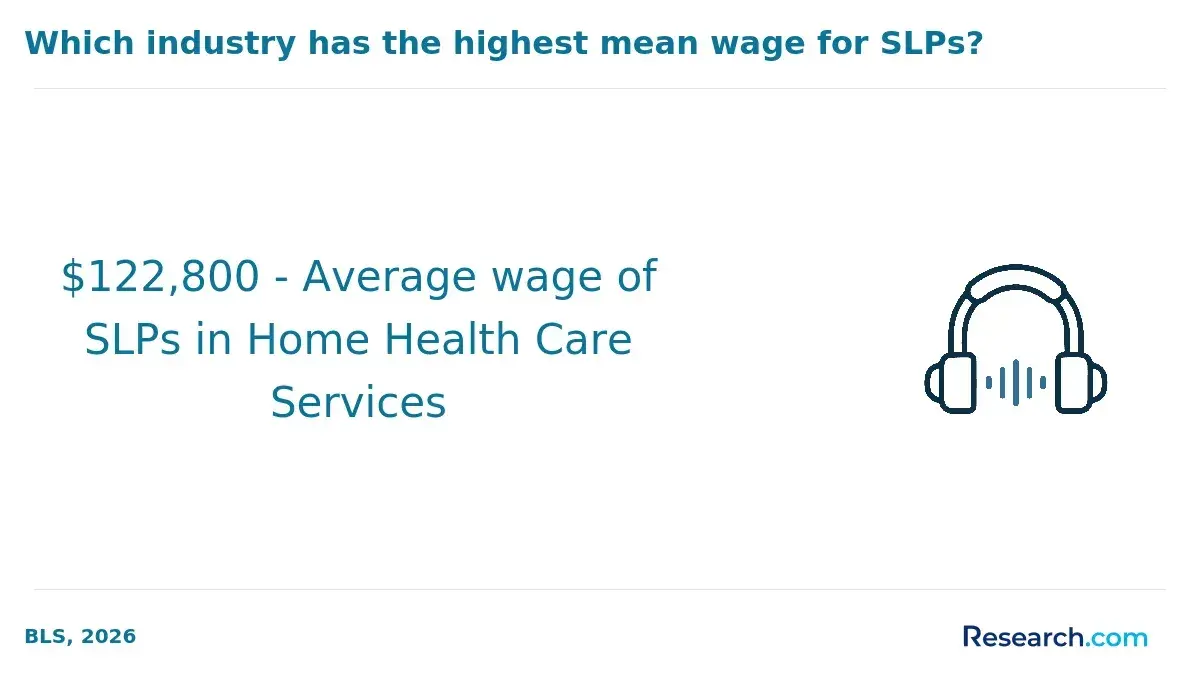
Career prospects are one reason careful preparation matters. BLS projects 17% growth in SLP employment from 2025 to 2035, indicating continuing demand, but employers still expect applicants to meet licensure and setting-specific requirements. After credentialing, professionals exploring compensation differences by setting can review highest paying SLP jobs while remembering that pay is influenced by region, experience, workload, and employer type.
How do tuition, fees, and total online program costs compare for Plano-based SLP students?
Cost comparisons are difficult because online SLP programs may publish tuition per credit, per term, or per academic year, while fees and travel are listed elsewhere. A Plano applicant should compare an institution's current written estimate for the entire required degree - not a single-credit price or an "as low as" figure.
The following cost categories create a more useful comparison than tuition alone.
| Cost category | How it affects a Plano student | How to compare it fairly |
| Required tuition | Usually the largest direct program expense. | Multiply the current applicable rate by required credits or obtain a full program estimate from the school. |
| University and technology fees | May be charged each term, course, or enrollment period. | Request a fee schedule for the expected program duration. |
| Clinical and compliance expenses | Can include background checks, drug screening, health records, liability coverage, and site onboarding. | Ask which items are mandatory, recurring, and paid by the student. |
| Travel and lodging | Can be significant for campus immersions or distant placements. | Estimate each required trip separately instead of assuming "online" eliminates travel. |
| Lost or reduced work income | Clinical schedules may make full-time employment impractical. | Build a monthly budget for intensive practicum and externship periods. |
Graduate federal Direct Unsubsidized Loans have an annual borrowing limit of $20,500 for eligible students, subject to federal rules and aggregate limits. That amount may not cover the full cost of attendance at every private or out-of-state program, so review scholarships, employer support, savings, and borrowing needs before committing.
Public tuition can be attractive, but a private program with a more predictable placement process or fewer required trips may be the better financial fit for some students. Applicants focused primarily on minimizing educational cost can compare cheapest speech pathology graduate programs, then independently confirm whether each option accepts Texas residents and meets their scheduling needs.
What technology, time commitment, and scheduling challenges should working adults in Plano anticipate?
Online SLP master's programs are academically rigorous professional degrees, not self-paced certificates. Students commonly manage recorded lectures, readings, discussion work, group projects, live classes, skills practice, examinations, documentation, and clinical preparation. The workload often increases sharply once direct patient or student care begins.
Working adults should distinguish between flexible coursework and flexible clinical training. A program may allow students to watch some lectures on their own schedule while still requiring live evening sessions, daytime client appointments, regular supervisor meetings, and full-time externship blocks. Central Time scheduling may be convenient for Plano residents, but programs based elsewhere can schedule mandatory activities in another time zone.
Before enrolling, test whether your home and work setup can reliably support the program's requirements.
- Use a dependable computer that meets the university's specifications, plus stable high-speed internet and a backup connection plan for live sessions.
- Identify a quiet, private area for telepractice simulations, client-related discussions, recorded assignments, and virtual proctoring when required.
- Map clinical terms against work obligations before accepting a cohort seat; do not assume that weekend clinical placements will be available.
- Discuss the anticipated practicum and externship schedule with employers early, especially if leave, reduced hours, or predictable daytime availability may be needed.
- Budget time for background checks, health compliance, travel, onboarding modules, documentation, and supervisor communication.
A frequent mistake is choosing a program based on asynchronous marketing language without asking about required live attendance. Request a sample weekly schedule for academic terms and an example schedule for the most intensive clinical term. If the school cannot explain the likely demands, treat that uncertainty as a decision factor.
How can Plano residents independently verify SLP program accreditation, state authorization, and complaint processes?
Independent verification protects applicants from relying on incomplete marketing claims. Check each issue separately because a university can be institutionally accredited while a particular SLP program lacks the professional accreditation or state eligibility needed for your goal.
Use this sequence before paying a deposit or making an irreversible enrollment decision.
- Search ASHA's CAA directory or ASHA EdFind for the exact program and degree track, then record the accreditation status and effective dates.
- Read the university's professional-licensure disclosure for Texas and save a dated copy or screenshot of the applicable statement.
- Email admissions or the program director to confirm that Texas residents may enroll in the intended cohort, and ask whether any restrictions apply to clinical education.
- Review the Texas Department of Licensing and Regulation's current SLP licensure requirements independently of the university's summary.
- Locate the university's student complaint process, distance-education complaint information, refund policy, withdrawal policy, and grievance escalation pathway.
- Ask for written clarification when a disclosure says "not determined," "may not meet," or does not mention Texas.
Red flags include pressure to enroll before receiving state-specific answers, unclear CAA status, promises that clinical placements will be easy without a written process, and tuition quotes that omit fees or travel. A transparent school should be able to identify the responsible office for accreditation, state authorization, licensure disclosures, financial aid, clinical education, and complaints.
What local Plano and North Texas school, medical, and private practice settings hire online-trained SLPs?
Once licensed, an SLP who completed an online master's program is generally evaluated on credentials, licensure, clinical skills, experience, and fit for the role - not simply on whether academic lectures were delivered online. Employers in Plano and North Texas may include public and charter schools, early-intervention providers, hospitals, inpatient and outpatient rehabilitation programs, pediatric therapy practices, skilled nursing facilities, home-health organizations, and university or specialty clinics.
The setting affects caseload, work calendar, patient population, documentation demands, supervision, and compensation structure. The table below helps applicants connect program choices with likely employment preferences.
| Employment setting | Typical population or focus | What students should seek in clinical preparation |
| Public schools | Children and adolescents with speech, language, literacy, social communication, and feeding-related needs where applicable. | School-based assessments, individualized education planning exposure, collaboration, and Texas school-setting expectations. |
| Pediatric private practice | Children receiving outpatient therapy, often after school or in family-centered schedules. | Pediatric language, speech sound disorders, parent coaching, documentation, and a range of therapy modalities. |
| Hospitals and rehabilitation | Adults and children with neurologic, swallowing, voice, cognitive-communication, and medically complex needs. | Medical terminology, dysphagia training, interprofessional communication, and acute or rehabilitation experience. |
| Skilled nursing and home health | Adults and older adults requiring functional communication, cognitive, swallowing, and caregiver support. | Adult caseload exposure, documentation efficiency, mobility planning, and experience across care environments. |
| Early intervention | Infants and toddlers with developmental communication and feeding needs. | Family-centered practice, developmental assessment, coaching, and home- or community-based service familiarity. |
Applicants interested in a specific setting should ask online programs whether they can request relevant clinical exposure. A request is not a guarantee, but it can help the placement team understand career goals. New graduates should also expect that some employers prefer or require a clinical fellowship candidate to work under specified supervision arrangements.
Other Things You Should Know About Speech Language Pathology
Yes, potentially. The degree must fit the applicable professional requirements, and you must complete the required clinical education, examinations, post-graduate fellowship, and Texas licensing steps. Verify CAA status, Texas eligibility, and licensure disclosures for the exact program before enrolling.
It depends on the program. Some schools arrange placements, some use a shared model, and others expect students to help identify sites. Ask for the written placement policy, typical travel expectations, and the process if a local placement is unavailable.
Some students work during earlier academic terms, but clinical practicum and externship requirements can significantly limit work hours. Review sample schedules and plan financially for periods with daytime or full-time clinical obligations.
Not always. Applicants with other majors may be admitted after completing prerequisite or leveling coursework. Each program sets its own prerequisite list, minimum grades, and timeline, so compare those requirements before applying.
References
- Online Speech-Language Pathology Graduate Program https://csd.robbins.baylor.edu/graduate/online-csd-graduate-program
- Online MS in Speech-Language Pathology (SLP) | Pepperdine https://healthscience.pepperdine.edu/online-masters-in-speech-language-pathology/
- Best Speech-Language Pathology Programs in America https://www.usnews.com/best-graduate-schools/top-health-schools/pathology-rankings