2027 Best Online Speech Pathology Master's Programs for Residents of Chula Vista, CA

Co-Founder and Chief Data Scientist

Reviewed by Rhea Paul, PhD
SLP Education & Research Expert
Choosing an online speech-language pathology master's program from Chula Vista requires more than finding a remote class format. You need a CAA-accredited degree, California enrollment authorization, a realistic clinical-placement plan, and coursework that supports California licensure and ASHA certification.
This guide compares the factors that matter most for local applicants, explains where online programs can create hidden travel or placement challenges, and gives you a practical process for narrowing your list before you apply.
Key Things You Should Know
- A California resident should apply only after confirming the program is CAA-accredited or has an accreditation status acceptable for their planned licensure timeline, is authorized to enroll California students, and provides a California-specific professional licensure disclosure.
- Online SLP master's programs are not fully remote in the clinical sense: students complete supervised practicum experiences and may need to attend campus immersions, secure placements beyond Chula Vista, or follow daytime clinic schedules.
- The U.S. Bureau of Labor Statistics reports a $97,870 median annual wage for speech-language pathologists in May 2025 and projects 17% employment growth from 2025 to 2035; strong demand does not remove the need to verify licensure eligibility before enrolling.
Which online speech pathology master's programs accept students living in Chula Vista, California?
The strongest options for a Chula Vista resident are not necessarily California-based. A suitable program must affirm that California residents may enroll, hold the appropriate Council on Academic Accreditation in Audiology and Speech-Language Pathology (CAA) status, and disclose whether its curriculum is designed to meet California's educational requirements for speech-language pathology licensure.
National distance programs commonly considered by California applicants include Emerson College's online Master of Science in Communication Disorders, NYU Steinhardt's online MS in Communicative Sciences and Disorders, and Baylor University's online MS in Speech-Language Pathology. Availability, state authorization, cohort openings, and licensure disclosures can change, so applicants should obtain written confirmation directly from each institution before paying an application fee or deposit.
The comparison below identifies the questions that separate a genuinely viable option from a program that is merely advertised as online. It is especially important because program websites may describe a national format while restricting enrollment or clinical activity in particular states.
| Program type or example | Why it may appeal to a Chula Vista applicant | Important verification before applying |
| National CAA-accredited online cohort program | Structured online coursework and a defined clinical education sequence | California enrollment authorization, California licensure disclosure, required immersions, Pacific Time live-session schedule, and clinical placement process |
| California hybrid public-university pathway | Potentially closer faculty, regional clinical partnerships, and California-focused guidance | Whether instruction is truly distance-accessible, required campus attendance, and whether commuting from Chula Vista is realistic |
| Campus-based California MS-SLP program | Established local clinical infrastructure and direct access to faculty and clinic resources | Daily attendance expectations, commute or relocation burden, and whether the program offers a part-time or hybrid option |
A program can be a good match if you can accommodate its clinical and travel design. It is a poor match if the school cannot clearly explain who arranges California placements, what happens when a site declines a student, or whether the curriculum supports your intended California credential.
Applicants comparing broader online speech pathology programs should treat admission accessibility as only one factor. A lower barrier to application does not outweigh accreditation, state eligibility, supervised clinical education, or total cost.
How do top online speech pathology master's programs compare for Chula Vista residents?
There is no universally best online SLP program for Chula Vista residents. The best fit depends on whether you need California licensure support, can attend required immersions, have flexibility for daytime clinical work, and can absorb tuition and travel costs. A program with a polished online platform may still be impractical if it expects frequent travel or leaves students largely responsible for finding placements.
This comparison framework helps applicants evaluate programs on comparable terms rather than relying on reputation alone. "Not published" should prompt a direct question to admissions; it should not be interpreted as a favorable feature.
| Decision factor | Strong fit for a Chula Vista resident | Potential trade-off or red flag |
| CAA status | Current CAA accreditation confirmed in the ASHA EdFind directory | Unclear status, reliance on general institutional accreditation, or a timeline that does not fit your graduation plan |
| California disclosure | Written statement addressing California professional licensure requirements | Generic national language without a California determination |
| Clinical placement model | School has dedicated placement staff, transparent policies, and a contingency process | Student is expected to independently secure all sites without defined support |
| Required travel | Number, location, duration, and estimated cost of immersions are stated | "May be required" language without details or a travel budget |
| Schedule | Live class times work in Pacific Time and clinic requirements are explained early | Evening-course marketing that obscures daytime practicum obligations |
| Cost transparency | Published tuition basis, fees, required travel, and clinical expenses | Only a starting per-credit rate or tuition excluding program-specific expenses |
Choose a national online cohort program when you value a planned sequence and can travel when required. Choose a nearby hybrid or campus program when local faculty access, known regional clinical networks, and reduced long-distance travel matter more than the convenience of asynchronous coursework. Neither format eliminates the workload of graduate clinical preparation.
For applicants entering the field without a communication sciences and disorders degree, prerequisite time can be the deciding factor. Review 5 year accelerated speech pathology programs separately from entry-level master's programs, because accelerated undergraduate-to-graduate pathways are generally designed for students who start earlier in their academic preparation.
Which accredited online speech pathology programs best support California licensure and ASHA certification?
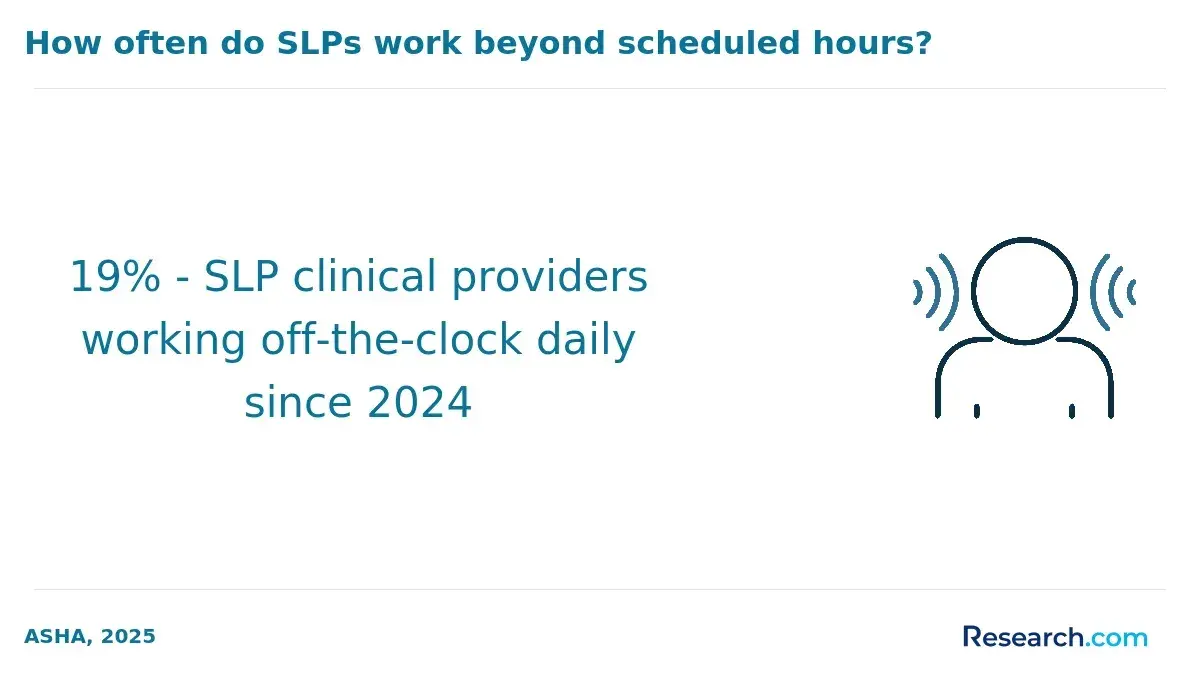
For a future California speech-language pathologist, the safest starting point is a master's degree from a program accredited by the CAA. CAA accreditation is central to the academic pathway for the ASHA Certificate of Clinical Competence in Speech-Language Pathology (CCC-SLP), but it is not the only requirement for California practice. California licensure involves separate state rules, and school-based employment can involve additional credentialing through the California Commission on Teacher Credentialing.
A program best supports California goals when it provides a clear California licensure disclosure, aligns clinical education with applicable certification standards, tracks supervised clinical hours, and can explain how graduates document requirements. The school should not imply that graduation alone confers a license, because post-graduate supervised experience, examinations, applications, and state-specific steps may still apply.
Use the following sequence before committing to a program. It reduces the common mistake of assuming a nationally accredited online degree automatically resolves every California credentialing requirement.
- Find the program in ASHA EdFind and confirm its current CAA status for the period in which you expect to graduate.
- Read the institution's California professional licensure disclosure and ask admissions to confirm that California residents may enroll.
- Review the California Speech-Language Pathology and Audiology and Hearing Aid Dispensers Board requirements for the license you intend to pursue.
- If you plan to work in California public schools, separately review the California Commission on Teacher Credentialing requirements for the role and setting you want.
- Ask the program how it documents practicum hours, supervisors, competencies, and post-graduate certification guidance.
CAA accreditation should be confirmed close to enrollment, not just when you first create a school list. Accreditation categories and program disclosures can change, particularly for newer distance pathways or programs transitioning from candidacy to accreditation.
What accreditation should Chula Vista applicants look for in online speech pathology master's programs?
Look first for CAA accreditation, issued through ASHA's Council on Academic Accreditation in Audiology and Speech-Language Pathology. Institutional accreditation alone is not a substitute for programmatic CAA accreditation when your goal is clinical SLP practice, state licensure, or the CCC-SLP.
Applicants should distinguish among institutional accreditation, CAA accreditation, and CAA candidacy. These labels serve different purposes, and a program's specific status at graduation can matter more than broad claims that a university is accredited.
| Term | What it indicates | How to use it in your decision |
| Institutional accreditation | The college or university meets broad academic and administrative standards | Necessary for many aid and transfer purposes, but insufficient by itself for an SLP clinical career decision |
| CAA accreditation | The SLP graduate program has been evaluated against specialized educational standards | Prioritize this status and verify it in ASHA EdFind |
| CAA candidacy | A newer program is progressing through CAA review under a defined status | Read the school's disclosure carefully and confirm how its status affects your expected graduation and credential pathway |
Do not rely on a school representative's verbal assurance alone. Save the current accreditation listing and licensure disclosure with your application materials, then recheck them before enrolling. This documentation is useful if policies, cohorts, or program delivery conditions change.
Accreditation is also a quality screen, not a guarantee of personal fit. A CAA-accredited program can still be a poor choice if its clinical-placement model, schedule, travel obligations, or total cost does not work for your household and employment responsibilities.
How do state authorization rules affect Chula Vista residents enrolling in out-of-state online programs?
State authorization determines whether an out-of-state institution may provide distance education to a California resident. Professional licensure disclosures address a related but different issue: whether the curriculum is designed to meet educational requirements for a California license. You need both answers before enrollment.
California participation and institutional practices can change, so schools should state their current position directly. Ask the admissions or compliance office - not only a recruiter - whether the institution may enroll a student located in California for the full program, including clinical coursework and placements.
Get the following points in writing because they affect whether you can continue without disruption if your location or practicum plan changes.
- Confirmation that the program accepts students physically located in California at enrollment and throughout the degree.
- Its California professional licensure determination and the date that determination was last reviewed.
- Whether a California clinical placement requires a separate agreement, background check, immunization record, drug screen, or fingerprinting process.
- Whether you may complete placements across county lines or must travel to another region if local sites are unavailable.
- What happens if you move to another state during the program.
A frequent error is treating an online degree as location-neutral. Coursework may cross state lines easily, but clinical supervision, institutional authorization, site contracts, and professional licensing are location-sensitive. Chula Vista residents should also consider whether placement availability may extend into greater San Diego County or, if necessary, beyond it.
Which California universities offer online or hybrid speech pathology pathways accessible from Chula Vista?
California applicants should consider both nearby campus-based programs and hybrid pathways, but should not assume a public university offers a fully online entry-level MS-SLP simply because some courses use online technology. In speech-language pathology, "hybrid" can mean a mixture of online instruction, scheduled campus labs, university clinic work, and off-campus practicum.
For a Chula Vista resident, San Diego-area and Southern California programs may reduce travel distance for campus obligations, while a California program elsewhere may still require periodic travel or relocation for clinic experiences. The practical question is not whether the institution is in California; it is how often and when you must be physically present.
Use this local screening approach when comparing California institutions. It prevents the common mistake of equating geographic proximity with schedule flexibility.
- Ask whether core courses are available online, synchronous, asynchronous, hybrid, or campus-only.
- Request a sample term-by-term schedule showing labs, clinic assignments, and daytime commitments.
- Confirm whether clinical placements are assigned near the student's home, near the university, or wherever the program has capacity.
- Calculate realistic travel time from Chula Vista for each required campus activity, including early-morning or multi-day obligations.
- Ask whether California-resident tuition applies to the exact program and whether summer terms carry a different rate.
California-based options can be especially sensible for applicants who want faculty familiar with state requirements or who prefer regional clinical relationships. A national distance program may be better for someone who needs a fixed online academic structure and can travel for immersions. In either case, the program must still confirm California eligibility and placement procedures.
What are the clinical placement realities for online speech pathology students based in Chula Vista?
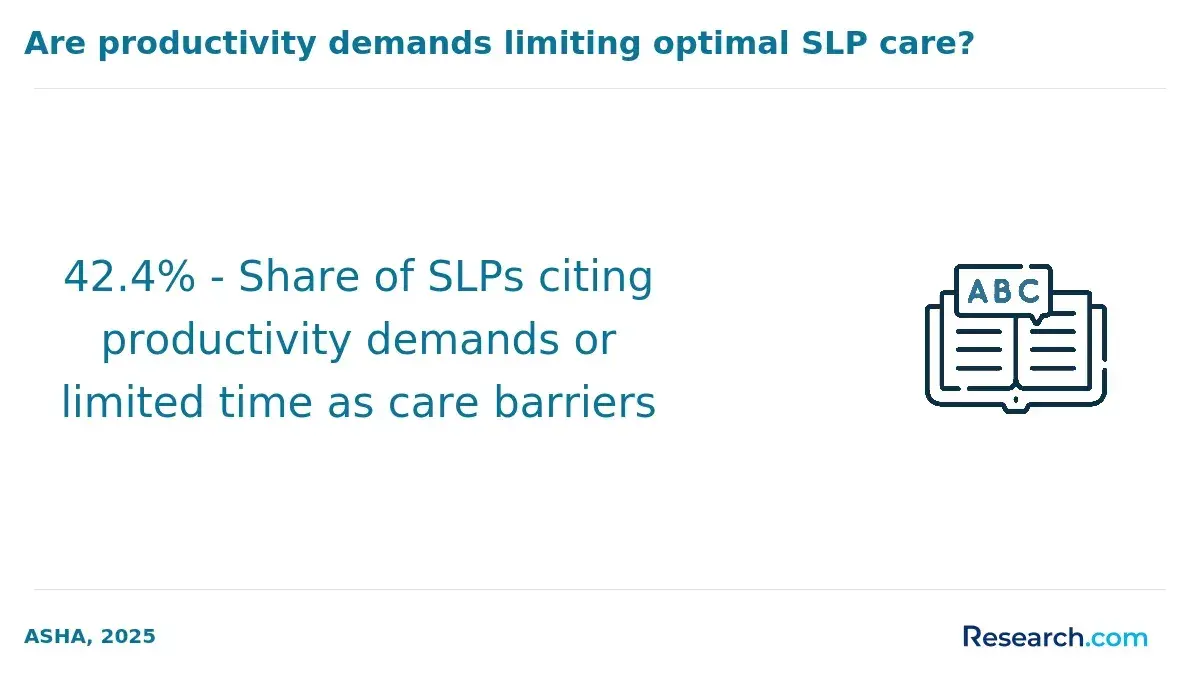
Clinical education is the least "online" part of an online SLP master's degree. Students typically progress from simulation, observation, or campus clinic work to supervised practicum in settings such as schools, hospitals, rehabilitation facilities, outpatient clinics, or private practices. Placements must meet program standards and are shaped by site capacity, supervisor availability, population needs, background-clearance timelines, and affiliation agreements.
Chula Vista provides access to a large regional healthcare and school ecosystem, but no applicant should assume that a program will place them in the city or even within a preferred commuting radius. A clinical site's willingness to host a student may change from term to term, and bilingual service needs do not automatically create a placement assignment.
The table summarizes what to ask before you make a decision. These answers are more predictive of day-to-day feasibility than a program's general claim of being online.
| Placement question | Why it matters | Useful answer from a program |
| Who secures placements? | Clarifies your workload and the school's responsibility | A named clinical education team, process timeline, and explanation of student participation |
| Can placements be in San Diego County? | Addresses commute feasibility without assuming local availability | Historical regional experience described without a promise of a specific site |
| Are daytime hours required? | Determines compatibility with employment and caregiving | Expected clinical-hour ranges and notice provided before assignment |
| What travel may be required? | Reveals potential added cost and disruption | Required immersion locations plus placement-related travel expectations |
| What if no nearby site is available? | Tests the program's contingency planning | Clear options, timelines, and possible effect on progression or graduation |
Ask about bilingual and multicultural clinical preparation if you expect to serve the diverse communities of South San Diego County. This can be a meaningful curriculum and placement consideration, but avoid treating a Spanish-speaking background as a substitute for formal clinical training, supervisor approval, or employer requirements.
Technology is increasingly part of clinical practice through telepractice platforms, electronic records, and remote consultation. It can expand service delivery, but it does not remove supervision, privacy, competency, or state-practice requirements. Students should expect programs to teach evidence-based clinical judgment rather than assume software replaces it.
How do tuition, fees, and cost of living compare for Chula Vista residents in leading online programs?
Tuition is only one part of the investment. An online SLP master's program may charge by credit, by term, or as a cohort price; those figures are not interchangeable. A lower per-credit rate can still lead to a higher total if the program requires more credits, separate clinical fees, repeated travel, or an extended enrollment period.
The most useful comparison is your estimated total program cost, built from official figures for the same academic year and enrollment plan. Do not compare an in-state public-university annual estimate with a private university's per-credit rate as if they represent the same amount.
| Cost category | What to include | Why it matters for Chula Vista residents |
| Tuition | All required credits or terms, including summer enrollment | Online programs may use a uniform rate rather than California resident tuition |
| Mandatory academic fees | Technology, clinical education, graduation, lab, and student-service fees | These can be billed separately from advertised tuition |
| Clinical compliance costs | Background checks, fingerprinting, immunizations, drug screening, health insurance, and CPR training when required | Requirements can differ by clinical site and may recur |
| Travel and lodging | Immersions, campus labs, and distant placements | Travel can materially change the value of a seemingly remote program |
| Income impact | Reduced work hours, dependent care, parking, and commuting | Daytime practicum can limit paid employment even when classes are online |
Federal student aid eligibility depends on the institution, program, enrollment level, and your individual aid record. Complete the FAFSA when applicable, compare institutional scholarships with renewal conditions, and ask whether aid is distributed evenly across terms. A scholarship that applies only to initial coursework may not offset later clinical terms.
Return on investment should be evaluated conservatively. The BLS reports a national median annual wage of $97,870 for speech-language pathologists in May 2025, but earnings vary by setting, experience, employer, hours, and local market. For career context, review how much do speech therapists make while treating salary information as market context rather than a repayment guarantee.
Before selecting a school, request a written cost-of-attendance estimate and create two budgets: one assuming local placements and one assuming at least one out-of-area placement or immersion. The second budget is often the better test of affordability.
What admissions requirements and prerequisite courses do top online speech pathology programs expect?
Admissions requirements vary, but most entry-level SLP master's programs expect a bachelor's degree, specified communication sciences and disorders prerequisites, transcripts, recommendation letters, a statement of purpose, and evidence that the applicant can succeed in graduate science and clinical coursework. Many programs use CSDCAS, while others accept applications through their own systems.
Applicants without a CSD background are not automatically excluded, but they may need a leveling or post-baccalaureate sequence before entering the clinical master's curriculum. This can add time and tuition, so compare the complete path rather than only the graduate-program length.
The requirements below are common screening points. Each school's current admissions page and catalog control, especially for deadlines, prerequisite rules, GPA expectations, and test policies.
| Requirement area | What programs often review | Smart applicant action |
| Academic record | Overall and prerequisite GPA, rigor, and trends in coursework | Calculate your GPA using the school's stated method rather than assuming a universal formula |
| Prerequisites | Foundational CSD courses plus related sciences, statistics, or social science requirements | Create a course-by-course audit and ask whether older or online credits are accepted |
| Observation or exposure | Experience that demonstrates informed interest in the profession | Follow the school's exact documentation requirements and avoid overstating informal shadowing |
| Recommendations and essay | Academic readiness, communication skills, resilience, and understanding of the field | Choose recommenders who can provide specific evidence, not merely a title |
| Interviews or supplemental tasks | Professional judgment, communication, and fit with cohort expectations | Prepare examples showing ethical awareness, collaboration, and realistic understanding of clinical training |
Do not delay prerequisite planning until the application deadline approaches. Some courses must be completed before matriculation, and some programs require them by the application date. If you are changing careers, build in time for sequencing, transcript evaluation, and potential retakes.
A second common error is applying only to programs marketed as flexible. Clinical graduate education remains intensive, and admissions committees may assess whether applicants understand the academic and placement workload. Explain your preparation plan honestly, particularly if you will be balancing work, caregiving, or a cross-border commute.
How can Chula Vista applicants verify program quality, graduation outcomes, and job placement data online?
Quality verification should combine official program data with targeted questions. Start with ASHA EdFind for CAA status, then review the university's program outcomes page, graduate catalog, clinical handbook, tuition page, and California professional licensure disclosure. If a claim is not documented, ask for the current policy in writing.
Outcomes need context. Graduation rate, Praxis examination pass rate, employment rate, cohort size, and time-to-completion may be calculated differently across schools. A high percentage is meaningful only when you know the reporting period, denominator, graduating cohort, and whether the figure is independently required or institutionally defined.
Use this due-diligence checklist before reducing your list to final applications. It helps distinguish transparent programs from those that provide attractive but incomplete marketing information.
- Confirm current CAA status in ASHA EdFind and compare the listed program name with the degree you would actually receive.
- Download the California licensure disclosure and verify that it applies to online students, not only campus students.
- Review published student-outcome data for the reporting year, definitions, and cohort size.
- Request the latest tuition and fee schedule plus an estimate of clinical, travel, and compliance expenses.
- Ask the clinical education office how placements are arranged for California students and what happens if local placement capacity is limited.
- Attend an information session or speak with an admissions representative, then summarize important answers by email for confirmation.
- Check the withdrawal, progression, leave-of-absence, and teach-out policies before paying a nonrefundable deposit.
Be cautious with rankings that do not explain how they assess California authorization, clinical placement support, licensure compatibility, or total cost. These are often more consequential for a Chula Vista resident than a broad institutional ranking. If a school will not answer a basic compliance or placement question clearly, consider that a decision-relevant warning sign.
Applicants looking to prioritize affordability can use lists of online masters SLP programs as an initial research tool, then independently verify each program's current price, accreditation, California eligibility, and clinical obligations before treating it as a low-cost option.
Other Things You Should Know About Speech Language Pathology
Potentially, but "fully online" usually refers to academic coursework. You will still need supervised clinical education and must satisfy California licensing requirements. Choose a CAA-accredited program that confirms California enrollment eligibility and provides a California licensure disclosure.
Policies vary. Some programs maintain clinical education teams that arrange or approve placements, while others expect significant student participation. Ask exactly who contacts sites, whether a local placement is guaranteed, and what happens if a proposed supervisor or site is not approved.
Some students work during portions of the program, but full-time employment can become difficult during clinical practica because placements may require daytime weekday hours. Review a sample clinical schedule before assuming an online format is compatible with a full-time job.
No. The CCC-SLP is a professional certification issued by ASHA, while California licensure is issued under state requirements. They are related credentials, but each has its own rules, application process, and continuing requirements. School-based roles may also require a separate California education credential.
References
- Online MS in Speech-Language Pathology https://ce.csueastbay.edu/programs/speech-language-pathology/
- Online Master's Program | Speech-Language Pathology https://www.csusm.edu/slp/programs/mastersonline/index.html
- Best Online Master's in Speech-Language Pathology for 2026 https://healthscience.pepperdine.edu/online-masters-in-speech-language-pathology/article/best-online-masters-in-speech-language-pathology-programs-guide.htm
- Best Speech-Language Pathology Programs in America https://www.usnews.com/best-graduate-schools/top-health-schools/pathology-rankings