2027 Best Online Speech Pathology Master's Programs for Residents of San Jose, CA

Co-Founder and Chief Data Scientist

Reviewed by Rhea Paul, PhD
SLP Education & Research Expert
San Jose residents can pursue an online master's in speech-language pathology without relocating, but "online" does not mean entirely remote or automatically California-license eligible. The right program must accept California students, hold appropriate accreditation, provide workable clinical training, and support the steps required by the California Speech-Language Pathology and Audiology and Hearing Aid Dispensers Board. This guide compares practical program models, explains the licensure rules behind the decision, and gives you a verification process to use before paying an application fee.
Key Things You Should Know
- A California applicant should prioritize a master's program accredited by ASHA's Council on Academic Accreditation (CAA), then obtain written confirmation that the school accepts California residents and can support California licensure requirements.
- Online SLP programs still require supervised clinical education; expect local placement coordination, substantial practicum hours, and possible campus immersions, simulations, or travel outside San Jose.
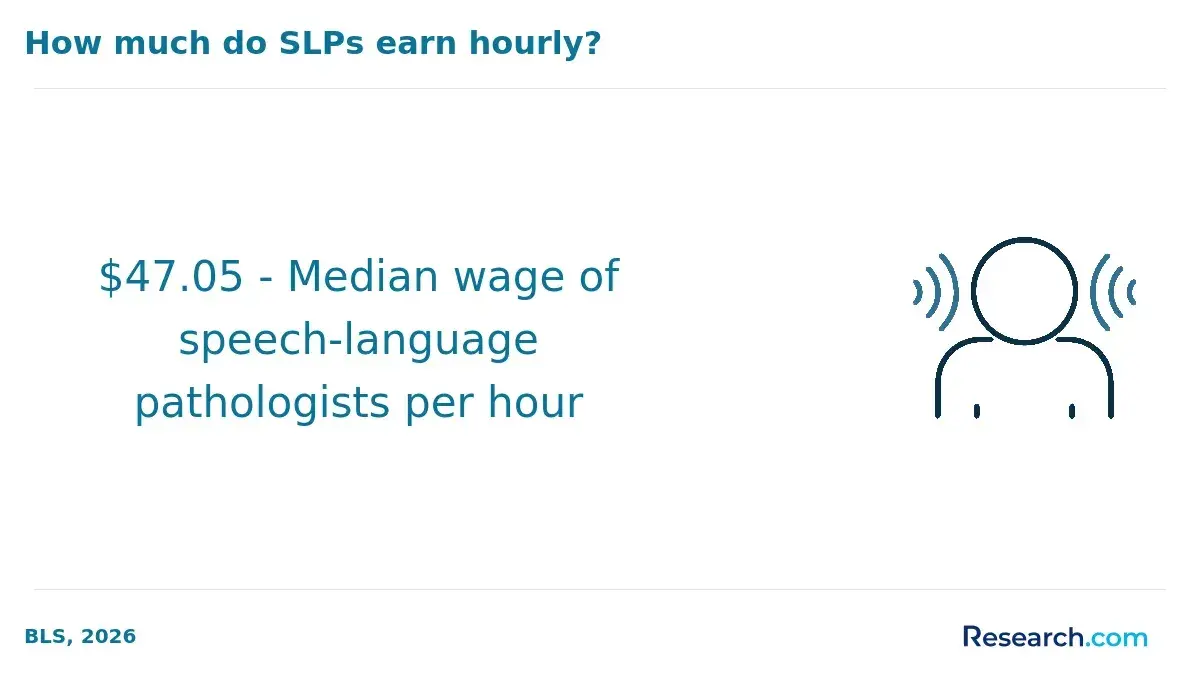
- The U.S. Bureau of Labor Statistics reports a $97,870 median annual wage for speech-language pathologists in May 2025 and projects 17% employment growth from 2025 to 2035, but California licensure - not program convenience alone - is the essential first gate to working in the field.
Which online speech pathology master's programs accept San Jose residents and meet California licensure rules?
The strongest options for a San Jose resident are not necessarily California-based schools. They are CAA-accredited programs that confirm California enrollment eligibility, disclose their professional-licensure position, and have a clinical-placement process that works for a student living in the Bay Area. Because authorization and placement capacity can change, treat a school's current written confirmation as more important than a general statement that a program is "available online."
The programs below are examples of established online or hybrid CAA-accredited pathways frequently considered by applicants seeking distance-based study. Enrollment availability, tuition, travel expectations, and California disclosures should be reconfirmed directly with each institution before applying.
| Program | Delivery considerations for Bay Area students | Clinical-training model | Best fit |
| Emerson College, MS in Speech-Language Pathology | Online coursework with required in-person learning experiences; accelerated cohort structure may limit schedule flexibility. | School-supported clinical education with placements completed in approved settings. | Applicants seeking a structured, full-time online cohort and prepared for required travel. |
| New York University, MS in Communicative Sciences and Disorders | Online academic study with required clinical training and in-person components that may require travel. | Clinical placements arranged through the program's processes and requirements. | Students who want a large university program and can accommodate a paced cohort calendar. |
| Baylor University, MS in Communication Sciences and Disorders | Online coursework in a cohort-based format; confirm live-session timing and California authorization. | Clinical experiences include supervised training in approved settings. | Applicants who prefer a structured curriculum and can manage an intensive pace. |
| Calvin University, MS in Speech-Language Pathology | Distance-oriented program with required practical and residency-related expectations; confirm current travel requirements. | Supervised practicum and clinical education coordinated under program policies. | Students seeking a faith-informed private-university environment and distance delivery. |
These are comparison starting points, not universal recommendations. A school can be CAA-accredited and still be a poor fit if it cannot enroll California residents during your start term, cannot identify a viable clinical-placement path, or requires travel that conflicts with work and family obligations.
Applicants who need a broader starting list can review online speech pathology programs, then narrow options using California-specific eligibility and clinical-placement questions rather than price or brand alone.
How does California's speech-language pathology licensure apply to online out-of-state master's programs?
California licenses the individual, not the delivery format of the degree. An online or out-of-state master's program can be an appropriate pathway when its education and supervised clinical preparation satisfy California requirements and the graduate completes the state's post-degree steps. However, a degree alone does not authorize someone to practice independently as a speech-language pathologist in California.
For most applicants, the pathway involves completing a qualifying graduate degree, passing the national Praxis examination required by California, completing the required supervised Required Professional Experience (RPE), and applying to the California licensing board. California's RPE requirement is generally completed after graduate school under an approved supervisor; it should not be confused with the clinical practicum hours built into the master's program.
The distinction matters because a program's clinical education supports graduation and professional preparation, while the RPE supports California licensure. ASHA certification uses related but separate terminology: the Clinical Fellowship is a post-graduate mentored experience. Some jobs prefer or require the Certificate of Clinical Competence in Speech-Language Pathology (CCC-SLP), while California state licensure remains the legal requirement for practice where a license is required.
Before enrolling in an out-of-state program, ask the school to address these points in writing:
- Whether the program accepts residents located in California for your intended cohort.
- Whether the curriculum is designed to meet California educational and clinical-preparation requirements for licensure.
- Whether the school has identified any California-specific limitation, additional requirement, or negative licensure determination.
- How the program documents clinical hours, supervision, and degree completion for a California licensing application.
- Whether graduates have support locating information about RPE registration and post-graduate supervision in California.
Do not rely on an admissions representative's verbal assurance alone. Licensing rules may change, and boards make final determinations on individual applications. Keep copies of the program's disclosure, your catalog year, clinical-hour records, syllabi if requested, and correspondence about California eligibility.
What accreditation should San Jose applicants verify for online speech pathology master's programs?
The accreditation that matters most for an entry-level clinical SLP master's degree is accreditation by the American Speech-Language-Hearing Association's Council on Academic Accreditation in Audiology and Speech-Language Pathology (CAA). CAA accreditation is a major quality and licensure signal because it evaluates the academic and clinical education program, not merely the university's general institutional standing.
Check the program itself in ASHA EdFind or the CAA program directory. Confirm its current status and review whether it is fully accredited, a candidate program, or on a status that warrants more detailed discussion. Institutional accreditation is also important, but it does not replace CAA accreditation for an SLP clinical-degree decision.
This table separates credentials that applicants often confuse.
| Item to verify | Why it matters | What to ask |
| CAA accreditation of the specific master's program | Supports eligibility for professional certification and is central to employer and licensure expectations. | "What is the program's current CAA status, and does it cover my anticipated graduation date?" |
| Institutional accreditation of the university | Helps establish that the degree is issued by a recognized institution and may affect aid and transferability. | "Which institutional accreditor recognizes the university?" |
| California professional-licensure disclosure | Shows whether the school has evaluated its curriculum against California requirements. | "Does the school determine that this program meets California SLP licensure educational requirements?" |
| State authorization to enroll California students | A school must be permitted to provide distance education to students where they live. | "May a student physically located in California enroll in this program for my start term?" |
A common mistake is selecting a general communication, linguistics, special education, or nonclinical speech-related master's degree because it sounds similar to speech-language pathology. Those programs can be valuable for other careers, but they may not provide the clinical education needed for SLP licensure. If your goal is clinical practice, choose a degree explicitly identified as a CAA-accredited graduate program in speech-language pathology or communication sciences and disorders with an SLP clinical track.
Which ASHA-accredited online speech pathology programs are most accessible to Bay Area residents?
"Accessible" has several meanings for Bay Area applicants: eligibility to enroll from California, manageable travel, a clinical-placement structure that does not require relocation, reasonable synchronous class times in Pacific Time, and a pace compatible with work or caregiving. No single program is best on every measure.
Consider the trade-offs before prioritizing convenience. A faster, tightly sequenced cohort can reduce time away from the workforce, but it may require daytime clinical availability and leave little room to repeat a course. A program with fewer campus visits may still require local daytime placements that are difficult to combine with full-time employment. Students who need a shorter sequence should compare published formats of accelerated SLP programs carefully, especially their clinical workload and California eligibility.
A program is usually more accessible when it gives clear answers about California enrollment, offers transparent travel expectations, has a defined process for clinical placement, and provides a realistic schedule for practicum terms. It is less accessible when answers remain vague until after a deposit is paid.
How do San Jose-friendly online speech pathology programs differ in clinical placement options?
Clinical education is the most location-sensitive part of an online SLP degree. Coursework can often be completed from home, but students must develop assessment and treatment skills under qualified supervision with real clients. Programs vary in how they identify sites, approve supervisors, use simulation, and respond when a local placement falls through.
CAA standards for graduate SLP education include a minimum of 400 supervised clinical-clock hours, including at least 375 direct client-contact hours and 25 observation hours. Those are educational minimums; they do not guarantee a placement in Santa Clara County or mean that every student will complete every experience close to home.
When comparing schools, identify which placement model they use:
- Program-arranged placement: The university contracts with or identifies sites and assigns students when possible. This can reduce administrative burden but does not guarantee a specific city, setting, or commute.
- Shared-responsibility placement: The school provides a placement team while the student may suggest sites, network locally, or complete required paperwork. This is common in distance programs and requires early planning.
- Student-initiated placement: The student has substantial responsibility for finding an eligible site and supervisor, subject to university approval. This can offer local flexibility but creates greater risk if the student's network is limited.
Ask programs whether they have previously placed students in Northern California, but do not treat a past placement as a promise of a future one. Bay Area health systems, schools, private practices, and early-intervention providers may have their own affiliation rules, onboarding timelines, background checks, immunization requirements, and supervisor availability constraints.
Also ask whether the school can require a placement outside your immediate area, whether you may decline a distant assignment, and whether delayed placement affects graduation. These answers reveal the practical risk behind an otherwise appealing online format.
What should San Jose residents know about out-of-state authorization and SARA participation for these programs?
State authorization addresses whether an institution may provide distance education to a student located in California. It is separate from professional licensure. A school may be authorized to teach a California resident but may not represent that its program meets California SLP licensure requirements. Conversely, a curriculum may appear academically appropriate while a school pauses enrollment from a state because of authorization or placement issues.
The State Authorization Reciprocity Agreement (SARA) can simplify distance-education authorization among participating states, but applicants should not assume that SARA resolves every issue. Professional programs with required clinical placements can have additional state-specific considerations, and California's relationship to interstate authorization processes has changed over time. The only safe approach is to obtain the school's current California enrollment determination.
Use this short screening sequence before investing in applications:
- Find the university's state-authorization or professional-licensure disclosure for the exact SLP program.
- Confirm that you will be physically located in California while enrolled and ask whether that affects eligibility.
- Ask whether the school has a positive, negative, or undetermined determination for California SLP licensure requirements.
- Confirm that clinical placements, telepractice activities, and required travel can be completed while you reside in California.
- Save the response and compare it with California board requirements before making an enrollment commitment.
Be cautious with broad language such as "available nationwide." It may describe online coursework, not admission eligibility, clinical-placement availability, or licensure compatibility. A precise written disclosure is more useful than marketing language.
How can San Jose applicants compare tuition, fees, and total cost across online speech pathology programs?
Compare total educational cost, not a single advertised tuition number. Private online programs often publish a per-credit rate, while other schools present term-based tuition or a program estimate. These figures are not directly comparable unless you account for required credits, mandatory fees, travel, clinical expenses, and the income you may forgo during full-time practicum terms.
The cost categories below help San Jose applicants build a realistic side-by-side estimate. Obtain current figures from each university because tuition schedules, fees, and cohort requirements can change.
| Cost category | What to include | Why it matters for online students |
| Tuition | Required credits multiplied by the applicable per-credit rate, or the published cohort total. | Clarifies whether a lower rate actually applies to the full degree. |
| Mandatory university fees | Technology, student services, graduation, clinical, and course-specific fees. | Online delivery does not eliminate required fees. |
| Clinical costs | Background checks, drug screening, immunizations, CPR, liability coverage, attire, and site onboarding. | These costs can arise at multiple placements and may not be included in tuition. |
| Travel and lodging | Campus immersions, skills labs, required residencies, and placement-related travel. | San Jose students should estimate flights, hotel stays, local transportation, and missed work. |
| Living and opportunity costs | Reduced work hours, childcare, commuting, and routine living expenses. | Clinical schedules may make full-time employment unrealistic in later terms. |
Request a written cost-of-attendance estimate and ask whether tuition is locked for the cohort or can increase while you are enrolled. Financial aid eligibility depends on the school, enrollment intensity, and your individual circumstances. Federal Direct Unsubsidized and Graduate PLUS loans may be available to eligible graduate students, but borrowing should be evaluated against the full repayment obligation rather than only the monthly payment.
Career outlook can support the investment case, but it should not substitute for a personal budget. The Bureau of Labor Statistics reports that speech-language pathologists had a median annual wage of $97,870 in May 2025. That national figure does not predict an individual new graduate's salary, especially during supervised post-graduate experience. Review local job postings, employer pay structures, and the broader speech language pathologist salary landscape when estimating return on investment.
What admission prerequisites do competitive online speech pathology programs expect from California applicants?
Most clinical SLP master's programs expect foundational coursework in communication sciences and disorders, a competitive undergraduate record, recommendation letters, a personal statement, and evidence that the applicant understands clinical practice. Requirements vary considerably, particularly for applicants whose bachelor's degree is outside communication disorders.
Common prerequisites include anatomy and physiology of speech and hearing mechanisms, phonetics, language development, speech and hearing science, audiology, speech-language disorders, statistics, and social or behavioral science coursework. Programs may also require or recommend observation hours. The exact course title is less important than whether the institution determines your prior course content is equivalent.
Applicants from unrelated majors should expect one of three routes: complete prerequisites before applying, enroll in a formal post-baccalaureate or leveling sequence, or choose a program that incorporates leveling coursework. The third option can be convenient, but it may extend time to graduation and increase total cost. Competitive applicants should not assume that a school without a GRE requirement is easy to enter; holistic review still considers academic preparation, writing, references, and fit.
Before applying, make a prerequisite audit using official transcripts and each school's published list. Then contact admissions only for unresolved equivalency questions. Readers seeking programs with varied selectivity can also compare SLP master's programs, while remembering that admission accessibility does not replace accreditation or California licensure verification.
Strong applications usually show a realistic understanding of the profession. Discuss relevant experiences accurately, such as work in education, healthcare, disability services, bilingual community programs, or caregiving, without presenting observation as clinical practice. If a program uses CSDCAS, begin early because transcript verification and reference submissions can take time.
How do online speech pathology graduates from California fare on Praxis exams and job placement?
Graduates of CAA-accredited online programs can pursue the same California licensure pathway as graduates of campus-based programs when they satisfy all applicable requirements. Employers generally focus on licensure eligibility, clinical readiness, supervised experience, and fit for the setting rather than whether academic lectures were delivered online.
For outcome comparison, use school-published data carefully. Programs may report Praxis pass rates, program completion rates, employment rates, and timeframes differently. A rate based on a small graduating cohort or a measure taken at graduation may not be directly comparable with a rate measured months later. Ask each school for its most recent CAA-required outcome data and the definitions behind the figures.
The most useful questions are not simply "What is your job-placement rate?" Ask whether the measure includes only job seekers, whether it refers to SLP positions, how long after graduation graduates were surveyed, and whether graduates obtained the supervised roles needed for licensure. For California applicants, also ask what support is available as graduates search for RPE supervisors and positions.
Demand conditions remain favorable nationally: BLS projects 17% growth in SLP employment from 2025 to 2035 and about 12,500 openings per year on average over the decade. This indicates broad demand, not a guarantee of a particular job, setting, wage, or timeline in San Jose. School districts, medical settings, early-intervention programs, and private practices can have different hiring cycles and credential expectations.
Technology is changing service delivery as well. Telepractice, digital assessment tools, electronic documentation, and remote supervision systems can expand access, but they do not eliminate the need for ethical decision-making, in-person clinical competencies where appropriate, and compliance with employer and state rules. Choose a program that teaches evidence-based practice and prepares students to evaluate technology rather than treating online delivery itself as a clinical specialization.
What steps should San Jose residents follow to verify program legitimacy and avoid licensure risks?
The safest decision process is document-based. Verify the program before you apply, then verify key details again before accepting an offer because authorization, tuition, and clinical arrangements can change between application and enrollment.
Follow these steps to reduce avoidable risk:
- Confirm the exact graduate SLP program's current CAA accreditation status through ASHA's official directory.
- Read the institution's professional-licensure disclosure and obtain written confirmation that California residents may enroll in your intended cohort.
- Compare the program's stated California licensure determination with the current requirements of the California SLP licensing board.
- Ask for a detailed explanation of clinical placement responsibility, required travel, likely daytime commitments, and procedures if a placement is delayed.
- Calculate total cost using tuition, mandatory fees, travel, clinical expenses, and likely changes to your work schedule.
- Review the latest published program outcomes, including the reporting period and denominator for Praxis, completion, and employment data.
- Keep all disclosures and admissions communications in your records, along with your catalog year and clinical documentation.
Red flags include a school that will not clearly identify CAA status, offers only vague statements about California eligibility, implies that online coursework alone qualifies you for licensure, promises a placement near your home, or pressures you to pay before answering authorization and clinical questions. A legitimate program should be able to explain its academic requirements, clinical model, costs, and disclosures in plain language.
For most San Jose residents, the best choice is the program that provides the clearest California eligibility confirmation and the most realistic clinical plan within an affordable total budget - not necessarily the shortest, cheapest, or most heavily advertised option.
Other Things You Should Know About Speech Language Pathology
Possibly during some academic terms, but many students need to reduce work hours during clinical practicum. Placements often follow daytime schedules at schools, clinics, hospitals, or early-intervention programs. Ask each program for a typical weekly time commitment by term and whether clinical hours can be completed evenings or weekends.
No. Many programs consider applicants from other majors, but they generally require prerequisite communication-science courses before or during the graduate pathway. Completing prerequisites can add time and cost, so obtain a transcript evaluation before deciding between programs.
An SLP license is important for clinical practice, but school-based work can involve additional employer, district, or credentialing requirements. Confirm requirements with the employing school district, county office of education, and the relevant California authorities before relying on a program for a specific school role.
Timing varies by prerequisite background, program format, clinical scheduling, examination timing, and completion of the post-graduate RPE. A student entering with all prerequisites may complete the master's degree in roughly two to three years depending on the program, followed by the supervised post-graduate requirements and licensing process.
References
- Online MS in Speech Language Pathology (SLP) https://www.sjsu.edu/online/programs/speech-language-pathology-masters-degree.php
- Online Master's in Speech Pathology Programs: 2026 Guide https://speechpathologymastersprograms.com/
- 2026 Most Affordable Online Speech Pathology Master's... https://www.onlineu.com/most-affordable-colleges/speech-pathology-masters-degrees
- Best Speech-Language Pathology Programs in America https://www.usnews.com/best-graduate-schools/top-health-schools/pathology-rankings
- Best Online Speech Pathology Programs https://www.forbes.com/advisor/education/healthcare/best-speech-pathology-programs-online/