2027 Online SLP Master's Programs for Rural Students: Access, Travel, and Local Training

Co-Founder and Chief Data Scientist

Reviewed by Rhea Paul, PhD
SLP Education & Research Expert
Rural students can pursue an online master's in speech-language pathology (SLP), but "online" rarely means entirely remote. Accreditation, state authorization, required campus visits, dependable broadband, and local clinical placements can determine whether a program is workable.
This guide explains how to evaluate those practical requirements before applying, including how to confirm certification and licensure alignment, estimate travel obligations, and build a local placement plan that supports a career in schools, hospitals, or telepractice.
Key Things You Should Know
- A qualifying SLP master's degree should be accredited by ASHA's Council on Academic Accreditation (CAA); graduation from a CAA-accredited program is the standard educational route toward ASHA certification and most state licenses.
- ASHA certification standards require at least 400 supervised clinical practicum hours, including 375 direct client-contact hours and 25 observation hours, so rural students should expect in-person local training even in primarily online programs.
- The U.S. Bureau of Labor Statistics reports a $97,870 median annual wage for speech-language pathologists in May 2025 and projects 17% employment growth from 2025 to 2035, but job access and pay can differ substantially by rural region, employer, and state license rules.
How can rural students realistically access accredited online SLP master's programs with limited local options?
Rural access begins with finding a CAA-accredited program that accepts residents of your state and can support clinical education near your home. An online academic format can reduce relocation and weekly commuting, but it does not remove the need for supervised practicum, reliable participation in live classes when required, and occasional travel. Start with online speech pathology graduate programs as a way to compare format and affordability, then verify every program detail directly with the university.
Students with limited nearby options should distinguish between an online program's academic delivery and its clinical-placement reach. A school may offer online coursework nationwide while limiting enrollment because it cannot authorize distance education in a particular state, arrange required supervision there, or confirm that its curriculum meets local licensing rules.
The comparison below shows the practical factors that matter more to a rural applicant than a program's online label alone:
| Evaluation factor | What a rural student should verify | Why it affects the decision |
| CAA accreditation | Current accreditation status and anticipated graduation date coverage | CAA accreditation is central to ASHA certification and commonly required for state licensure. |
| State eligibility | Whether the program accepts students living in your state | State authorization restrictions can prevent enrollment before academics begin. |
| Clinical network | Whether the program has placed students in your region or permits student-suggested sites | Local sites may be scarce, especially for adult medical or specialty pediatric experience. |
| Course schedule | Required live-session days, times, attendance rules, and time zone | Fixed daytime sessions can conflict with work, caregiving, or long travel distances. |
| Travel model | Number, length, location, and timing of campus visits or intensives | Airfare, lodging, weather, and missed work can materially change affordability. |
| Technology expectations | Minimum internet speed, webcam, testing, and telepractice requirements | Unstable broadband can affect participation and clinical training. |
Public universities with regional missions can be a strong fit when they have established relationships with rural school districts, hospitals, and early-intervention agencies. Larger private programs may offer broader online infrastructure, but applicants should not assume that means local placement availability. The best fit is the program that documents eligibility, communicates clearly about placement responsibility, and has a travel schedule you can realistically sustain.
What travel and on-site requirements do online SLP programs impose on rural enrollees?
Travel requirements vary widely. Some online SLP programs require one or more campus immersions for skills instruction, assessment practice, simulations, orientation, or capstone activities. Others deliver these elements remotely but still require students to report in person to clinical sites during externships. A program is not truly low-travel unless its official materials specify no campus visits or clearly define the limited visits required.
Rural applicants should request a term-by-term calendar before accepting admission. It should identify mandatory campus dates, possible make-up requirements, clinical start dates, and any occasions when students may need to travel beyond their local area for a specialized placement.
These cost categories help applicants calculate the real difference between a low-tuition program with frequent travel and a higher-tuition program with fewer required trips:
| Cost or scheduling factor | Often overlooked rural impact | How to evaluate it |
| Campus immersion travel | Long drives, flights, hotel stays, meals, and weather-related disruptions | Ask for required dates for the full cohort schedule, not only the first term. |
| Clinical commuting | Daily mileage can be substantial when the nearest approved site is far away | Estimate round-trip distance, parking, vehicle costs, and travel time for each placement. |
| Lost work hours | Full-time practicums can reduce paid employment or employer benefits | Compare clinical hour demands with your household budget and leave options. |
| Backup lodging | Seasonal roads or long distances may make daily travel unsafe | Build a contingency fund for temporary lodging near a placement if needed. |
| Required supplies | Headsets, cameras, assessment materials, and background-check expenses may not be in tuition | Request a written list of fees and technology requirements. |
A rural student should not reject a program solely because it includes an immersion. A short, predictable campus experience may be manageable and educationally valuable. The red flag is uncertainty: avoid enrolling when the institution cannot explain the expected number of visits, whether attendance is mandatory, or how clinical travel will be handled.
How do online SLP programs structure local clinical placements and school-based practicums for rural students?
Online SLP programs generally use affiliated sites, student-identified sites, or a hybrid of both. The university remains responsible for ensuring that practicum experiences meet educational standards, but students may be asked to help identify potential sites and complete onboarding documents. In rural communities, that work can take time because a site must have appropriate client populations, an eligible supervisor, sufficient caseload variety, and capacity to train a student.
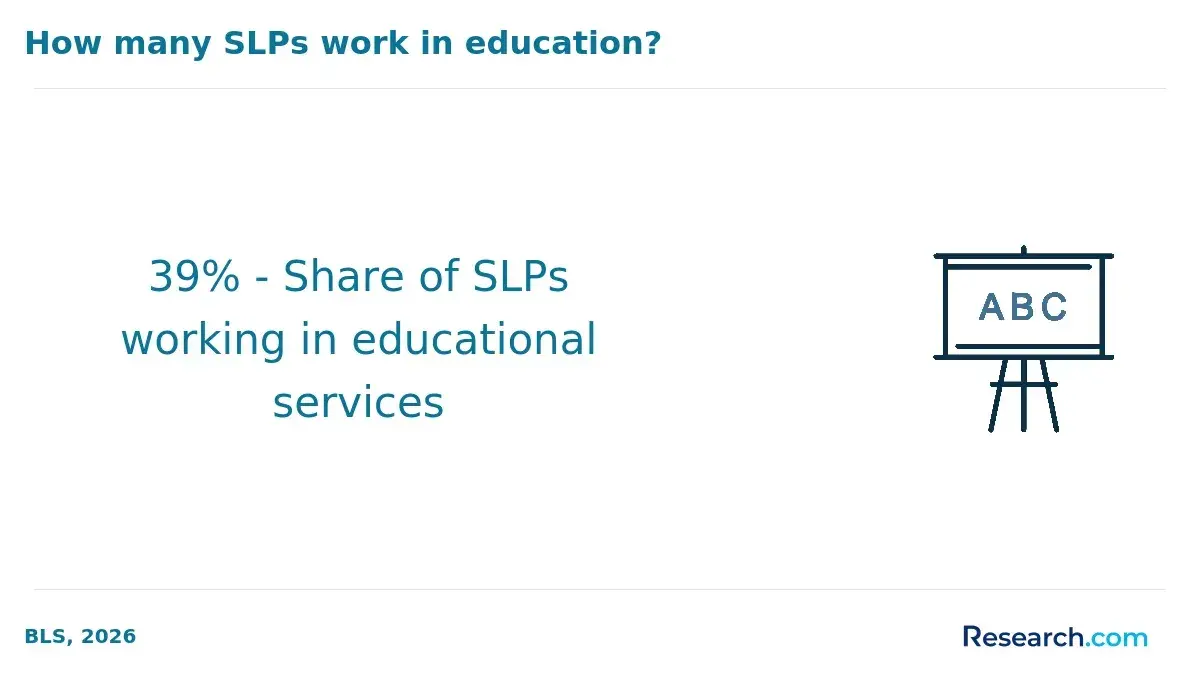
School-based placements are often more available in rural areas than hospital-based adult placements, but a complete clinical education needs breadth. Programs may sequence early pediatric experiences, later medical or adult-focused placements, and specialty opportunities in ways that require travel or telepractice exposure.
The following placement models create different levels of control and risk for rural enrollees:
| Placement model | How it works | Best fit | Main caution |
| University-arranged placement | The program secures or assigns an approved site. | Students who need strong administrative support. | Assignment may be outside the student's preferred town or commuting radius. |
| Student-suggested placement | The student identifies a local school, clinic, hospital, or agency for university approval. | Students with local professional connections. | A willing employer is not automatically an approved clinical site. |
| Shared-responsibility placement | The student proposes leads while the clinical team manages affiliation and approval. | Many rural applicants seeking nearby options. | Timelines can be long when contracts and supervisor verification are needed. |
| Regional or travel placement | The program uses a site in another community when local capacity is insufficient. | Students able to budget for temporary travel or housing. | Costs and family obligations can become barriers late in the program. |
Before enrolling, ask whether students have ever completed placements in your county or neighboring counties, without treating past availability as a guarantee. Ask who signs affiliation agreements, how long approval commonly takes, whether the school can use a supervisor already employed at the site, and what happens if a site withdraws. These questions reveal whether the program has a workable rural-placement process rather than a vague promise of support.
Students interested in school employment should also ask about school-calendar timing, special education documentation, and whether the placement offers experience with culturally and linguistically responsive service delivery. Local knowledge can be valuable in rural practice, but it does not replace the program's obligation to provide appropriate supervision and a range of competencies.
Which accrediting bodies and state boards govern online SLP preparation and rural licensure pathways?
Several organizations affect an SLP student's path, and each has a different role. The most important distinction is that university accreditation, professional program accreditation, national certification, state licensure, and school employment credentials are related but not interchangeable.
This overview helps rural applicants verify the right authority for each decision rather than relying on a program's general statement that it is "accredited:"
| Organization or authority | Primary role | What the student should confirm |
| ASHA Council on Academic Accreditation | Accredits graduate education programs in audiology and speech-language pathology. | The program's CAA status and whether accreditation applies to your expected graduation pathway. |
| ASHA | Sets standards for the Certificate of Clinical Competence in Speech-Language Pathology (CCC-SLP). | That coursework, clinical education, Praxis requirements, and postgraduate fellowship planning align with certification standards. |
| State SLP licensing board | Issues and regulates licenses to practice in that state. | Degree, examination, supervised experience, background check, and renewal requirements in the state where you intend to work. |
| State education agency | Sets credentials or endorsements for public-school SLP roles in many states. | Whether a separate school credential, educator license, or agency approval is required. |
| Institutional accreditor and state authorization office | Oversees institutional quality and legal authority to deliver distance education. | Whether the university is authorized to enroll residents of your state. |
CAA accreditation is particularly important because it supports the standard route to the CCC-SLP. However, a CAA-accredited degree does not automatically issue a state license, grant authority to work in public schools, or ensure eligibility in every state. Licensure is location-specific, so rural students who may work near a state border should check both states before enrolling.
The career outlook makes this verification worthwhile. The Bureau of Labor Statistics projects 17% employment growth for speech-language pathologists from 2025 to 2035, with about 12,500 openings projected annually on average. Demand can create opportunities, but an employer cannot waive a state's licensing requirements simply because a local community needs providers.
How can rural students verify that an online SLP program meets ASHA certification standards?
The safest approach is to verify the program's current CAA status through ASHA's official accreditation listings and then obtain written answers from the program about your individual route to graduation. Do not rely only on a university's marketing language, old social media posts, or a claim that its courses are "ASHA aligned."
For most applicants, ASHA certification preparation involves a graduate degree from a CAA-accredited program, required knowledge and skills, a qualifying supervised clinical practicum, a passing Praxis examination score, and completion of the Clinical Fellowship after graduation. Specific standards and implementation policies can change, so students should review current ASHA requirements during application planning and again before graduation.
Use this verification sequence before paying a deposit or relocating for a placement:
- Confirm that the exact master's program, not merely the university, holds current CAA accreditation, or clearly understand its candidacy status and associated risks.
- Ask whether your anticipated graduation date falls within the program's accredited period and whether the school has any enrollment restrictions for your state.
- Request a written clinical-education explanation showing how the program documents observation, direct client contact, supervision, and competency requirements.
- Ask how the curriculum prepares students for the Praxis examination and whether required content is delivered online, in person, or through intensives.
- Check your intended state licensing board's rules independently, including any requirements that go beyond national certification standards.
CAA candidacy can be meaningful, but it is not identical to full accreditation. Applicants considering a newer program should understand the school's teach-out and student-protection information, the timing of accreditation decisions, and the consequences if status changes. A more established accredited program may be the lower-risk choice when a student cannot afford uncertainty.
Applicants evaluating accelerated options should be especially careful about prerequisites and sequencing. Some 5 year accelerated speech pathology programs combine undergraduate and graduate study, but the clinical and certification requirements still apply; faster completion should not be confused with fewer professional requirements.
What distance-education and state authorization rules affect rural students enrolling in out-of-state SLP programs?
State authorization rules determine whether an institution may offer distance education to a student who is physically located in a particular state. A rural address does not create an exception. Before applying, confirm that the program can enroll you where you live and ask what happens if you move during the program, including a move across a state line for a clinical placement.
Many institutions participate in interstate authorization arrangements, but participation does not settle professional licensure eligibility. Programs often publish professional licensure disclosures that classify states as meeting, not meeting, or not determined to meet educational requirements. "Not determined" should prompt direct follow-up, not an assumption that the degree will work.
Rural learners should obtain written answers to the following questions because program staff, admissions systems, and licensing rules can change:
- Can I enroll while residing in my current state, and are there county- or placement-specific restrictions?
- Does the program state that its curriculum meets the educational requirements for SLP licensure in my intended work state?
- What notice must I provide before moving, beginning an out-of-state placement, or completing telepractice with clients in another state?
- Does the university arrange clinical contracts in my state, and are there locations where it cannot place students?
- Are there separate requirements for a school-based credential in addition to an SLP license?
A common mistake is treating enrollment permission as proof of licensure compatibility. These are separate determinations. Another is waiting until the final practicum to ask about a move or cross-border placement. Raise these issues before admission, document the response, and recheck the rules before accepting a job offer in another state.
How do online SLP programs handle supervision, telepractice training, and technology access in rural communities?
Online delivery does not lower supervision expectations. During clinical education, students need qualified supervision, timely feedback, secure documentation processes, and opportunities to demonstrate clinical skills. Programs may use video observation, secure conferencing, recorded sessions when permitted, simulation, and on-site supervision, but the exact arrangement depends on the site, client consent, university policy, and applicable privacy rules.
Telepractice is increasingly relevant for rural service delivery because it can connect clients with providers who are not locally available. It is not a substitute for all in-person experiences, and it adds practical requirements: private treatment space, reliable upload and download capacity, secure platforms, client access, and supervisors familiar with remote service delivery.
The technology check below can prevent an otherwise strong program from becoming difficult to complete from home:
| Technology area | What to verify | Rural planning response |
| Internet reliability | Live-video expectations, attendance consequences, and minimum connection specifications | Test service at the exact location where you will attend class and identify a backup location. |
| Privacy | Requirements for client discussions, telepractice, and recorded instruction | Plan a private room and avoid using unsecured public networks for protected information. |
| Equipment | Computer, operating system, webcam, headset, and assessment-related specifications | Budget for equipment replacement and ask whether loaner devices are available. |
| Technical support | Support hours and escalation procedures during clinical or evening sessions | Choose a program with support available when your required sessions occur. |
| Telepractice eligibility | State, site, supervisor, and client-consent rules | Confirm that telepractice hours, if offered, fit the program's clinical plan and local regulations. |
Students should also ask whether faculty offer practice with electronic documentation, remote assessment considerations, and culturally responsive communication in low-resource settings. Technology can expand access, but it should be introduced as a clinical skill with appropriate supervision rather than treated as a workaround for unavailable local placements.
What funding, employer partnerships, and service-commitment programs support rural SLP students and placements?
Rural students often combine several funding sources because clinical semesters can restrict employment. Federal student aid may be available to eligible degree-seeking students, while institutional scholarships, state workforce programs, school-district support, and employer tuition assistance can reduce the amount that must be borrowed. Availability, eligibility, and service obligations differ by location and funding cycle.
Employer partnerships can be especially useful when a rural school district, hospital, early-intervention agency, or health system has difficulty recruiting SLPs. In return for tuition support, paid clinical work where permitted, or a stipend, an agreement may require the student to work for the employer after licensure. Such commitments can be a good fit when the location and job conditions match the student's goals, but they should be reviewed carefully before signing.
Compare support offers by their full obligations, not just the advertised award amount:
| Funding approach | Potential benefit | Key question to ask |
| University scholarship | May reduce tuition without a work commitment. | Is the award renewable through clinical semesters, and what academic conditions apply? |
| School district or employer assistance | Can connect funding with a future local position. | What repayment applies if you cannot obtain licensure, relocate, or leave early? |
| State rural workforce program | May target underserved communities or shortage areas. | Which counties, employers, service years, and professions qualify? |
| Federal loan financing | Can cover eligible educational expenses when grants are insufficient. | What is the projected total borrowing after tuition, fees, travel, and lost income? |
| Paid assistantship or related work | May provide income and relevant experience. | Can the work schedule coexist with fixed clinical requirements? |
Read service agreements for the definition of qualifying employment, the service period, licensure deadline, default penalties, and whether part-time work counts. A commitment tied to a community where you intend to stay can lower financial risk. It is less suitable when you are uncertain about specialty, family location, or interstate mobility.
Career return should also be evaluated realistically. The national median annual wage for SLPs was $97,870 in May 2025, but that figure does not predict a new graduate's wage, rural pay scale, benefits, or loan affordability. Use speech language pathologist salary information as context, then compare local job postings and employer pay schedules where you plan to practice.
How do completion, Praxis pass, and job placement outcomes compare for rural versus nonrural online SLP students?
There is no single national, standardized public dataset that reliably compares completion rates, Praxis pass rates, or job placement outcomes for rural versus nonrural students in online SLP master's programs. Programs may publish aggregate outcome data, but their definitions, cohort sizes, reporting periods, and delivery formats differ. A rural applicant should not infer that a national figure predicts success in a specific community.
Instead, use published program outcomes as one screening tool and ask for context that reveals whether the program can support students with rural placement and travel constraints. Completion and examination performance are useful only when the school explains who is included in the denominator and how outcomes are measured.
This table identifies the outcome evidence worth requesting and the limitation to keep in mind:
| Outcome measure | Useful evidence | Important limitation |
| Program completion | Cohort completion over a clearly stated time period | Figures may not separate online, part-time, rural, or transfer students. |
| Praxis performance | Pass-rate reporting with the exam period and number of test takers | Small cohorts can make a percentage unstable or less meaningful. |
| Employment outcomes | Job-placement definitions, time frame, and types of employers | Employment does not necessarily indicate rural placement or desired setting. |
| Clinical-placement success | Written explanation of placement support and contingency processes | This information is often qualitative rather than publicly reported. |
| Graduate retention support | Advising, remediation, technology help, and leave policies | Support availability may vary by cohort or individual circumstances. |
Ask admissions or clinical education staff whether they can describe how the program supports students who live far from campus, need placements in frontier or remote areas, or experience broadband disruption. They may not be able to provide rural-specific outcome statistics, but their answers should be concrete about timelines, escalation steps, and student responsibilities.
Admissions selectivity is another area where applicants should seek clarity rather than shortcuts. Resources discussing the easiest SLP masters programs to get into can help identify admission variables, but an apparently more accessible program is not automatically the right rural choice if it cannot enroll you, support local clinical training, or meet your licensure goals.
What practical steps should rural applicants take when evaluating online SLP programs and local training options?
The strongest rural application strategy starts before submitting applications. Build a short list only after checking professional fit, state eligibility, accreditation, travel, and clinical feasibility. This prevents the expensive mistake of choosing a program based on tuition or online marketing alone.
Use the following process to make a decision with fewer late-stage surprises:
- Identify the state or states where you expect to seek licensure and school employment, including any neighboring state where you may commute for work.
- Confirm current CAA accreditation status and review the program's professional licensure disclosure for each intended work state.
- Contact admissions to verify that residents of your state may enroll and ask whether a move during the program changes authorization or clinical eligibility.
- Request the full curriculum sequence, synchronous-session schedule, campus-visit calendar, clinical-hour expectations, and complete list of mandatory fees.
- Map possible clinical sites within a realistic driving radius, but do not contact sites as though placement is guaranteed until you understand the university's process.
- Ask the clinical education office how affiliations, supervisor approval, site shortages, and failed placements are managed in rural areas.
- Create a total-cost budget that includes tuition, fees, technology, travel, background checks, health requirements, commuting, housing, and likely reductions in work hours.
- Compare funding offers and service commitments against your long-term willingness to live and work in the sponsoring community.
- Keep written records of program statements about state eligibility, travel, placement support, and licensure alignment.
Several warning signs deserve extra weight: a program will not provide a clear travel calendar; staff describe placements only as "student responsibility" without explaining approvals; the licensure disclosure is missing or vague for your state; or tuition is advertised without a realistic account of clinical travel. These issues do not always make a program unsuitable, but they require answers before enrollment.
A rural student may be well served by an online program when its structure protects access: established state authorization, transparent academic scheduling, credible local-placement support, and a budget that covers the full path to licensure. Consider an on-campus or regional hybrid program instead if it offers substantially stronger placement relationships, lower total travel burden, or more reliable clinical supervision in your area.
Other Things You Should Know About Speech Language Pathology
No. SLP preparation requires supervised clinical education with client contact. Coursework may be online, but students should expect in-person clinical experiences and possibly campus-based skill intensives, depending on the program.
Not always. Some programs accept applicants with other bachelor's degrees but require prerequisite or leveling coursework. This can increase cost and time, so ask for an individualized prerequisite evaluation before applying.
Usually, graduates must first meet state licensing requirements and complete any required post-graduate supervised experience. Public-school roles may also require a separate educator credential or state education-agency approval.
Ask programs how they handle regional placements before enrolling. You may need to suggest potential sites, commute to a neighboring community, complete part of training away from home, or choose a program with an established placement network in your region.
References
- Emerson College Online Master's in Speech Pathology https://speech.emerson.edu/
- Online Master of Science in Speech-Language Pathology https://slponline.ithaca.edu/programs/masters-speech-language-pathology-online
- Distance MS Speech-Language Pathology https://www.umt.edu/speech-language-hearing-occupational-sciences/graduate_learning/ms_slp/distance_ms_slp.php
- 2026 Most Affordable Online Speech Pathology Master's... https://www.onlineu.com/most-affordable-colleges/speech-pathology-masters-degrees
- Online Master's in Speech Pathology Programs: 2026 Guide https://speechpathologymastersprograms.com/