2027 Best Online Speech Pathology Master's Programs for Residents of Austin, TX

Co-Founder and Chief Data Scientist

Reviewed by Rhea Paul, PhD
SLP Education & Research Expert
Austin residents can complete an online speech-language pathology master's degree without moving, but "online" does not mean fully remote. Clinical practica, live classes, campus immersions, and Texas licensure disclosures can materially change which program is practical. This guide compares reputable CAA-accredited options, explains the Texas licensing path, and shows how to verify clinical-placement and consumer-protection details before paying an application fee. It is designed for prospective SLPs who want a degree that can lead to Texas practice - not simply an online credential.
Key Things You Should Know
- A Texas-eligible, CAA-accredited master's program is the safest starting point for Austin applicants because CAA accreditation supports eligibility for ASHA certification and is central to the usual Texas licensure pathway.
- ASHA certification standards require at least 400 supervised clinical practicum hours, including 375 direct client/patient-contact hours; placement availability near Austin must be confirmed in writing before enrollment.
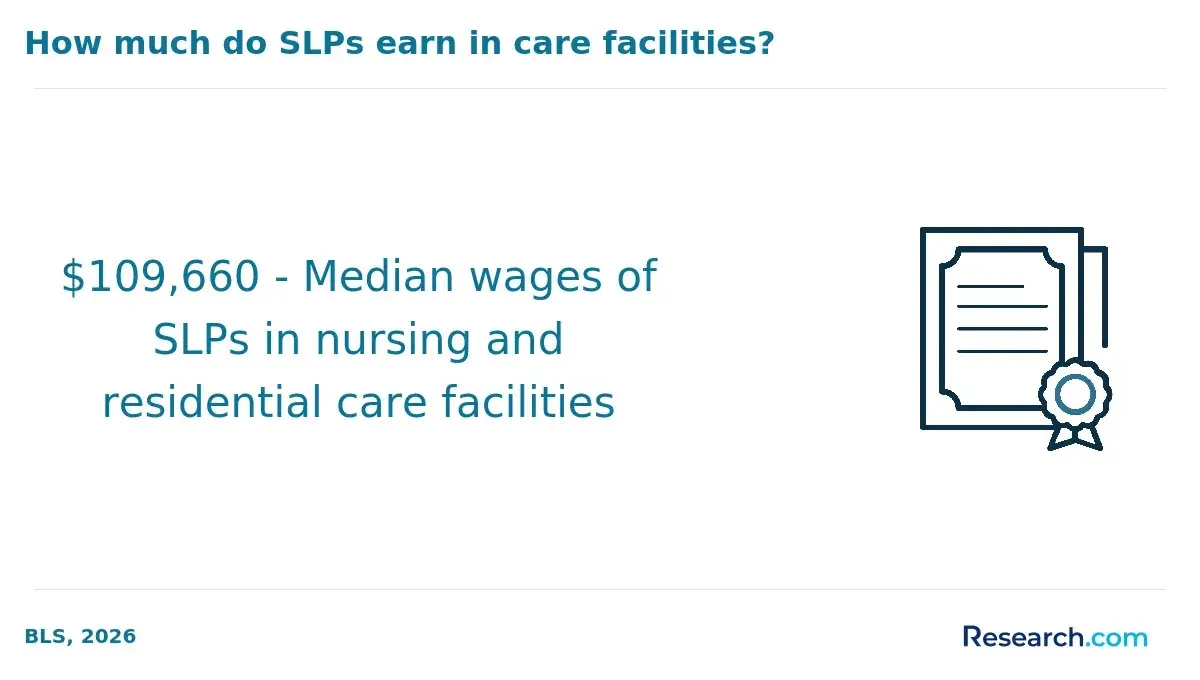
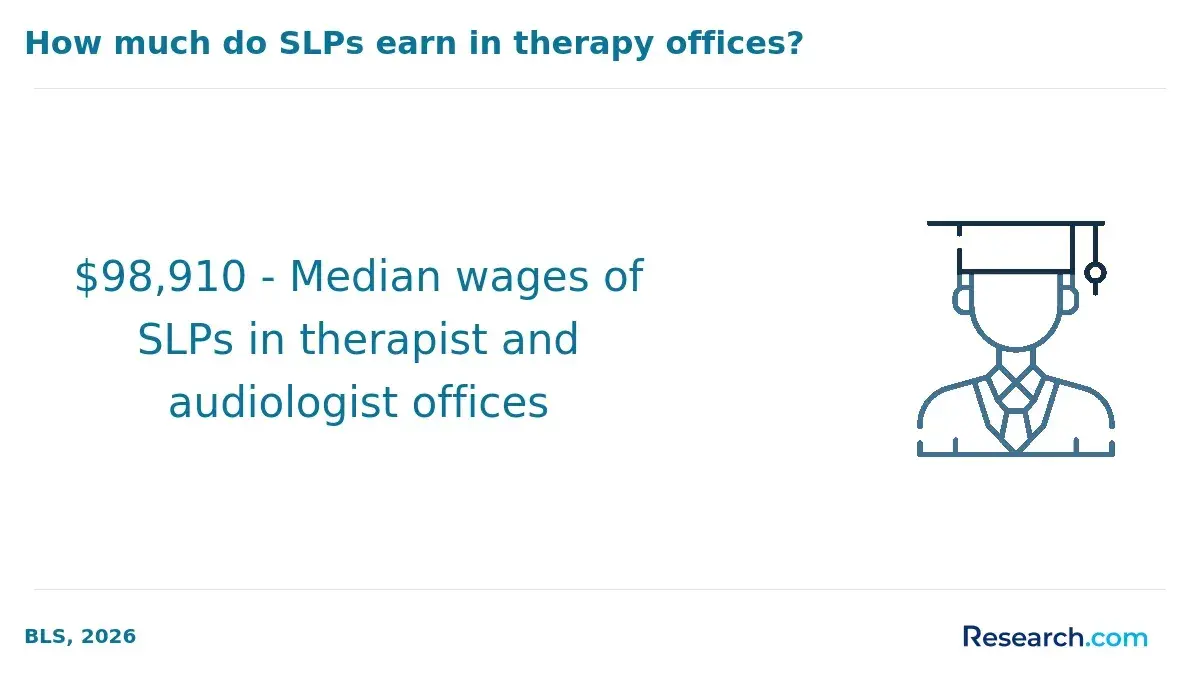
- The Bureau of Labor Statistics projects 17% employment growth for speech-language pathologists from 2025 to 2035, with a May 2025 national median annual wage of $97,870, but school, medical, and private-practice pay varies by setting and location.
Which online speech pathology master's programs can Austin residents enroll in without relocating?
Several universities deliver the academic portion of a CAA-accredited SLP master's program online and have historically considered applicants from Texas. Enrollment eligibility can change with state authorization, cohort capacity, and clinical-placement agreements, so an Austin applicant should obtain a current written confirmation from each school before applying.
The programs below are practical starting points because they are widely known for distance or hybrid graduate SLP delivery. They are not interchangeable: travel expectations, cohort pacing, prerequisite policies, and clinical-placement processes differ.
| Program | Delivery model | What an Austin applicant should confirm | Potential fit |
| Baylor University, MS in Communication Sciences and Disorders | Online coursework with required clinical education and program-directed experiences | Texas eligibility, current immersion or campus requirements, and whether Austin-area placements can be pursued | Applicants seeking a structured cohort and a Texas-based university |
| New York University, MS in Communicative Sciences and Disorders | Online graduate coursework with supervised clinical experiences | Current Texas authorization, required intensives, live-session schedule in Central Time, and placement process | Applicants comfortable with private-university tuition and an out-of-state program |
| Emerson College, MS in Speech-Language Pathology | Online coursework, clinical placements, and required experiential components | Texas enrollment status, immersion expectations, placement lead time, and synchronous attendance requirements | Applicants seeking an established online cohort format |
| Other CAA-accredited hybrid or distance options | Varies substantially by university | Whether Texas residents are admitted, whether the school arranges placements, and all travel requirements | Applicants who need a lower-cost, public-university, or part-time alternative |
Do not treat a school's acceptance of Texas residents as a promise of an Austin clinical site. A program may admit a student yet require travel to a placement, may ask the student to help identify sites, or may delay a clinical sequence when a qualified supervisor is unavailable.
Readers comparing a broader set of online SLP master's programs should first filter for CAA status and Texas eligibility, then compare the remaining options on travel, total billed charges, and placement support rather than marketing claims about flexibility.
How do Texas licensure rules shape online speech-language pathology master's options for Austin students?
Texas regulates speech-language pathology through the Texas Department of Licensing and Regulation. For an Austin resident, the degree choice should be made backward from licensure: select a qualifying graduate program, complete supervised clinical education, pass the required examination, and complete the supervised professional experience required by the state.
CAA accreditation is especially important because it is the clearest indicator that a program meets nationally recognized educational standards for entry-level SLP preparation.
A program can be delivered online, but its curriculum and clinical education still need to support Texas requirements. An institution's general statement that its degree is "accredited" is not enough; applicants should identify the accreditor and review the school's Texas professional-licensure disclosure.
Texas rules and application procedures can change. Before accepting an offer, ask the university whether its curriculum is designed to meet Texas educational requirements and ask TDLR which requirements apply to the license category and application route you expect to use when you graduate.
These questions help reveal whether an online format is truly compatible with a Texas career plan.
- Is the specific master's program currently accredited by ASHA's Council on Academic Accreditation, rather than merely offered by an accredited university?
- Does the university state that Texas residents may enroll and that the curriculum meets, or is intended to meet, Texas educational requirements for SLP licensure?
- Will the program document clinical hours, supervisor qualifications, course completion, and degree conferral in a form usable for a Texas license application?
- What happens if a Texas clinical placement cannot be secured on the planned timeline?
A degree is only one part of the professional path. Students should budget time after graduation for the supervised clinical fellowship or other state-required professional experience and for licensing processing; they should not assume they can begin independent practice immediately after the final course.
Which accredited online SLP master's programs offer clinical placements accessible from Austin, TX?
No university can responsibly guarantee an Austin placement years in advance because sites, contracts, client populations, and supervisor availability change. The more meaningful distinction is whether the program's clinical education office actively develops and approves sites, supports affiliation agreements, and has a documented process for students who cannot secure a local placement.
Baylor, Emerson, and NYU are examples of CAA-accredited programs that use supervised clinical education as part of their distance-learning pathways. Austin applicants should ask each program whether it has recently placed Texas students in Central Texas, but they should treat a "yes" as historical context - not as a guaranteed assignment.
This comparison identifies the placement facts that matter more than a school's claim that clinical work is "local."
| Placement factor | Why it matters in Austin | Strong answer from a program | Red flag |
| Site sourcing | Local hospital, school, outpatient, and early-intervention sites may have limited capacity | A dedicated clinical team coordinates, approves, and documents placements | The school gives no clear answer about who is responsible for finding a site |
| Supervisor qualifications | Hours may not count if supervision does not satisfy program, ASHA, or Texas expectations | The school verifies licensure, certification, experience, and supervision documentation | The student is told to arrange supervision independently without a vetting process |
| Travel contingency | A suitable site may be outside Austin or outside Texas | The school explains likely travel ranges, costs, and alternatives before enrollment | Travel is described vaguely or disclosed only after a deposit is paid |
| Placement timing | A delayed placement can extend the degree and increase living costs | The school explains its placement timeline and delay policy | No written policy exists for an unavailable site |
Students who need maximum control over geography may prefer a campus-based Texas program with established regional contracts, even if it is less convenient academically. Students who can travel or accept a placement beyond Austin may have more online choices.
A related option for applicants who have not yet completed a bachelor's degree is to examine 5-year speech pathology programs. Those accelerated pathways are generally a different decision from an online master's for degree holders, and students should still verify accreditation and state-licensure alignment.
What accreditation should Austin residents verify for online speech pathology master's programs?
Verify programmatic accreditation first. For entry-level SLP preparation, the key accreditor is the Council on Academic Accreditation in Audiology and Speech-Language Pathology, commonly called ASHA CAA. Institutional accreditation of the university does not replace CAA accreditation of the specific graduate program.
CAA status may be accredited, in candidacy, or another designation reflected in the CAA directory. Candidacy can be appropriate for a newer program, but it requires additional due diligence because applicants need to understand the status, expected review timeline, and the implications for graduating cohorts. A school should explain this plainly in writing.
Use the following verification sequence before applying. It protects against a common mistake: assuming that an online communication-disorders degree automatically leads to SLP licensure.
- Find the exact degree title and delivery pathway in the ASHA CAA program directory.
- Confirm that the program's accreditation status applies to the cohort and modality you would enter.
- Read the university's Texas professional-licensure disclosure and save a copy dated before enrollment.
- Ask admissions whether any prerequisite, leveling, clinical, or travel condition applies specifically to Texas residents.
- Confirm the current Texas licensing requirements directly with TDLR before making an irreversible financial commitment.
Accreditation is not a placement guarantee, a tuition guarantee, or a guarantee of individual licensure. It is, however, a foundational quality and eligibility checkpoint that should eliminate many unsuitable options early.
How do major online SLP programs serving Texas compare on cost, format, and time to degree?
Online SLP programs often cost more than applicants expect because tuition is only one component. Mandatory fees, clinical supplies, background checks, immunizations, travel, lodging for immersions, and unpaid practicum time can materially affect the total investment. Private online programs also commonly charge a uniform rate rather than a Texas public-university resident rate.
The comparison below avoids presenting changing tuition figures as fixed totals. Applicants should request a written, cohort-specific cost sheet showing tuition, fees, required travel, and the number of terms needed under their planned pace.
| Program | Typical format considerations | Time-to-degree consideration | Cost comparison approach |
| Baylor University | Online cohort coursework with clinical requirements and possible travel components | Full-time cohort pacing may suit students able to prioritize school and practicum availability | Request total program tuition, clinical fees, and travel estimates; compare the total, not the per-credit figure alone |
| New York University | Online coursework with clinical education and program-directed experiential requirements | Program sequence and prerequisite completion determine actual completion timing | Ask for billed tuition by term and the separate cost of required intensives, if applicable |
| Emerson College | Online cohort design with supervised clinical training and potential residency expectations | Part-time or extended pacing, where available, may reduce weekly load but can increase living-cost exposure | Compare published tuition and mandatory fees against the number of required credits and planned terms |
| Texas public-campus alternatives | Often primarily in person, sometimes with limited hybrid elements | May follow a traditional full-time academic calendar | Texas resident tuition can be a meaningful benchmark, but commuting and reduced schedule flexibility also carry costs |
For career context, the national median annual wage for speech-language pathologists was $97,870 in May 2025, according to the U.S. Bureau of Labor Statistics. That figure is useful for long-range planning, but it is not a starting-pay estimate and should not be used to justify excessive borrowing without reviewing local job postings, likely setting, debt, and household budget.
Choose a shorter, intensive pathway only if you can reliably meet live-class, practicum, and travel demands. Choose a longer or part-time path when employment, caregiving, or financial stability matters more than the fastest completion date.
Those comparing admissions accessibility across online speech language pathology programs should remember that a lower barrier to admission does not remove the clinical, accreditation, or licensure requirements.
What are the clinical clock-hour and supervision requirements for Texas SLP licensure and ASHA certification?
ASHA's current certification standards require a minimum of 400 supervised clinical practicum hours. At least 375 hours must involve direct client or patient contact, and 25 hours may be guided clinical observation. These are minimum national certification standards; a graduate program may require additional experiences or distribute hours across populations and settings in a particular way.
For Texas practice, applicants should also expect a post-degree supervised professional experience component, commonly described as a clinical fellowship or supervised internship, along with examination and application requirements.
ASHA's Clinical Fellowship framework is commonly associated with 1,260 hours over at least 36 weeks of full-time equivalent experience. Texas applicants should verify the current state standard directly because state rules, forms, and supervision conditions govern the Texas license.
This timeline separates the education stage from the supervised transition to independent practice.
| Stage | Core requirement | What Austin students should document |
| Graduate practicum | At least 400 supervised clinical practicum hours under ASHA certification standards | Hours, direct-contact totals, supervisor information, setting, population, and program verification |
| Degree completion | Master's degree meeting applicable educational standards | Official transcript, degree date, and program completion documentation |
| Examination | Required professional examination for the chosen credentialing path | Official score report and current state-required score information |
| Postgraduate supervision | State-required supervised professional experience and applicable ASHA Clinical Fellowship requirements | Supervisor eligibility, dates, hours, evaluations, and signed state forms |
| License application | Texas application, background-check, fee, and documentation requirements | Current TDLR checklist, not an outdated checklist from a school or social-media post |
A frequent mistake is counting all work hours as direct clinical hours. Observation, preparation, paperwork, and administrative tasks may be valuable training but are not automatically interchangeable with direct-contact hours. Let the university's clinical education office determine how each experience is recorded.
How can Austin applicants confirm that an online SLP program's practicum sites meet Texas board rules?
Confirm placement compliance before you enroll, not when practicum begins. The program should be able to describe its approval process, supervisor screening, affiliation-agreement procedure, and contingency plan if a Central Texas site is unavailable.
Use this practical sequence when speaking with admissions and clinical education staff.
- Request the program's current Texas professional-licensure disclosure and ask whether any enrollment restriction applies to Austin residents.
- Ask who secures the clinical site, who signs the affiliation agreement, and whether the student is expected to recruit sites.
- Ask whether the program has placed students in the Austin area recently, while recognizing that past placements do not guarantee future availability.
- Ask what credentials and documentation the program requires from a Texas-based supervisor before hours begin.
- Request the written policy for delayed, denied, or out-of-area placements, including whether a delay changes tuition or graduation timing.
- Save the answers, the name of the staff member, and the date; verbal assurances are difficult to rely on later.
A strong program will not promise a particular school district, hospital, or clinic. Instead, it will explain a repeatable process for ensuring that settings, supervisors, and experiences are approved before a student starts accruing hours.
Students interested in hospital-based work should also understand that specialty income can vary sharply by employer and region. For context on specialized roles, review NICU SLP salary information as career exploration, not as a forecast of what a new graduate will earn.
Which Texas and out-of-state universities run online SLP master's programs recognized for ASHA CAA accreditation?
CAA accreditation is program-specific, and delivery models evolve. Austin applicants should use the ASHA CAA directory as the final verification tool rather than relying on a university's general accreditation statement or an old rankings page.
The following universities are commonly considered by students seeking CAA-accredited SLP master's education with online or distance-oriented components. Inclusion here is a starting point for verification, not a statement that every program currently accepts Texas residents or offers a fully online degree.
| University type | Examples to investigate | Important limitation for Austin residents |
| Texas-based | Baylor University and Texas public universities with CAA-accredited SLP graduate programs | Texas location does not automatically mean all coursework is online or that part-time distance enrollment is available |
| Private out-of-state online providers | Emerson College and New York University | Confirm Texas state authorization, live-session timing, travel, placement support, and total billed cost |
| Hybrid or distance-oriented public programs | CAA-accredited public universities that advertise limited-residency or distance pathways | Some restrict enrollment by state, require extensive campus attendance, or prioritize regional placement areas |
When comparing these institutions, ask for the exact CAA status of the degree pathway, not just the department. Also ask whether the program has any disclosure stating that it does not determine eligibility for Texas licensure; that language does not necessarily disqualify the program, but it means you must obtain clearer evidence before proceeding.
What admission prerequisites do online speech pathology master's programs commonly require from Austin applicants?
Most entry-level SLP master's programs expect applicants to have foundational coursework in communication sciences and disorders or equivalent prerequisites. Applicants with a bachelor's degree in speech-language-hearing sciences may be ready for direct admission, while career changers often need leveling courses before or alongside graduate study.
Requirements vary by school, but Austin applicants commonly encounter the following admissions components.
- A bachelor's degree from an institution recognized by the university's graduate admissions policies.
- Specified prerequisite courses in areas such as phonetics, speech and hearing science, language development, anatomy and physiology, audiology, and speech-language disorders.
- Statistics and biological, physical, or social and behavioral science coursework consistent with ASHA certification standards.
- Official transcripts, recommendations, a statement of purpose, and a résumé or record of relevant experience.
- A minimum GPA requirement or holistic review process; GRE policies vary and should be checked for the intended entry term.
- Background-check, immunization, health, and onboarding requirements before clinical placements begin.
Do not assume that taking prerequisites makes a student automatically competitive for admission. Leveling courses establish academic preparation; they do not guarantee a seat in a cohort.
Ask whether a program gives preference to its own post-baccalaureate students and whether prerequisite grades must be completed before application, admission, or matriculation.
Applicants changing careers should also consider timeline risk. A lower-cost sequence of prerequisites may be financially sensible, but it can add multiple terms before the master's degree begins. An integrated option may be faster, but only if its cost and clinical format fit your circumstances.
How should Austin residents evaluate online SLP programs for consumer protection, complaints, and state authorization?
Before paying a deposit, verify that the institution is authorized to deliver distance education to Texas residents and that the program has clear complaint, refund, withdrawal, and teach-out policies. State authorization addresses whether a school may offer education across state lines; it does not prove that the degree meets Texas SLP licensure requirements.
Consumer-protection review is particularly important for clinical degrees because a disruption in placement access can delay graduation. The following checks help Austin residents identify avoidable risk.
- Read the university's Texas distance-education and professional-licensure disclosures for the exact program.
- Review the graduate catalog for tuition, fee, withdrawal, leave-of-absence, transfer-credit, and graduation policies.
- Find the institution's student complaint process and the external agency identified for unresolved complaints.
- Ask whether financial aid can continue if clinical placement is delayed and whether additional tuition is charged for an extension.
- Confirm whether the program participates in a state authorization reciprocity arrangement or uses another authorization basis, while remembering that professional licensure remains separate.
- Request written clarification when admissions materials conflict with the catalog, clinical handbook, or licensure disclosure.
Red flags include pressure to enroll before written answers are available, unclear responsibility for placements, language that avoids naming the accreditor, or estimates that omit required travel and clinical costs. A careful applicant compares official documents, not only recruiter conversations.
The national employment outlook remains favorable: BLS projects 17% growth in SLP employment between 2025 and 2035 and about 12,500 openings per year on average. That demand supports careful career planning, but it does not eliminate the need to choose a program with a sound path to Texas licensure.
Other Things You Should Know About Speech Language Pathology
Yes, potentially. The delivery format is less important than whether the specific program is appropriately CAA-accredited, accepts Texas residents, provides qualifying supervised clinical education, and supports the educational requirements for Texas licensure. You must also complete Texas's other licensing requirements.
Often, yes. A program may try to arrange placements near Austin, but no applicant should assume every rotation will be local. Some programs also require campus immersions, simulations, or intensives. Ask for all expected travel requirements in writing.
Graduation is followed by examination, application processing, and required supervised professional experience. The exact timeline depends on the Texas rules in effect, the speed of document processing, and when you secure an approved supervised position.
Prerequisites typically include a bachelor's degree in communication disorders or a related field, completion of specific coursework like phonetics, and a minimum cumulative GPA. Some programs may also require GRE scores, letters of recommendation, and a personal statement specific to 2027 admissions.
References
- Graduate Program | Speech, Language, and Hearing Science https://slhs.utexas.edu/graduate
- Online MS in Speech-Language Pathology (SLP) | Pepperdine https://healthscience.pepperdine.edu/online-masters-in-speech-language-pathology/
- Hybrid Online MS-SLP Program | Full & Part-Time | USAHS https://www.usa.edu/college-of-rehabilitative-sciences/master-science-speech-language-pathology-ms-slp/
- Best Online Master's Programs in Speech-Language... https://www.bestcolleges.com/healthcare/masters/speech-pathology/