2027 Best Online Speech Pathology Master's Programs for Residents of Columbia, SC

Co-Founder and Chief Data Scientist

Reviewed by Rhea Paul, PhD
SLP Education & Research Expert
Choosing an online speech-language pathology master's program from Columbia is not simply a matter of finding a flexible format. The degree must support South Carolina licensure, provide appropriate supervised clinical education, and fit your ability to travel for placements or required residencies.
This guide compares practical program features that matter most to South Carolina applicants: CAA accreditation, state eligibility, clinical placement arrangements, scheduling, cost transparency, and post-graduation requirements. It is designed to help prospective SLPs narrow their list before investing in applications, prerequisites, or tuition.
Key Things You Should Know
- For South Carolina practice, prioritize a master's program accredited by the ASHA Council on Academic Accreditation (CAA), with clinical training and documentation that can support state licensure and ASHA certification pathways.
- Online does not mean fully remote: accredited SLP programs generally require supervised in-person clinical practicum, and some require campus immersions, live classes, or travel outside Columbia when local placements cannot be confirmed.
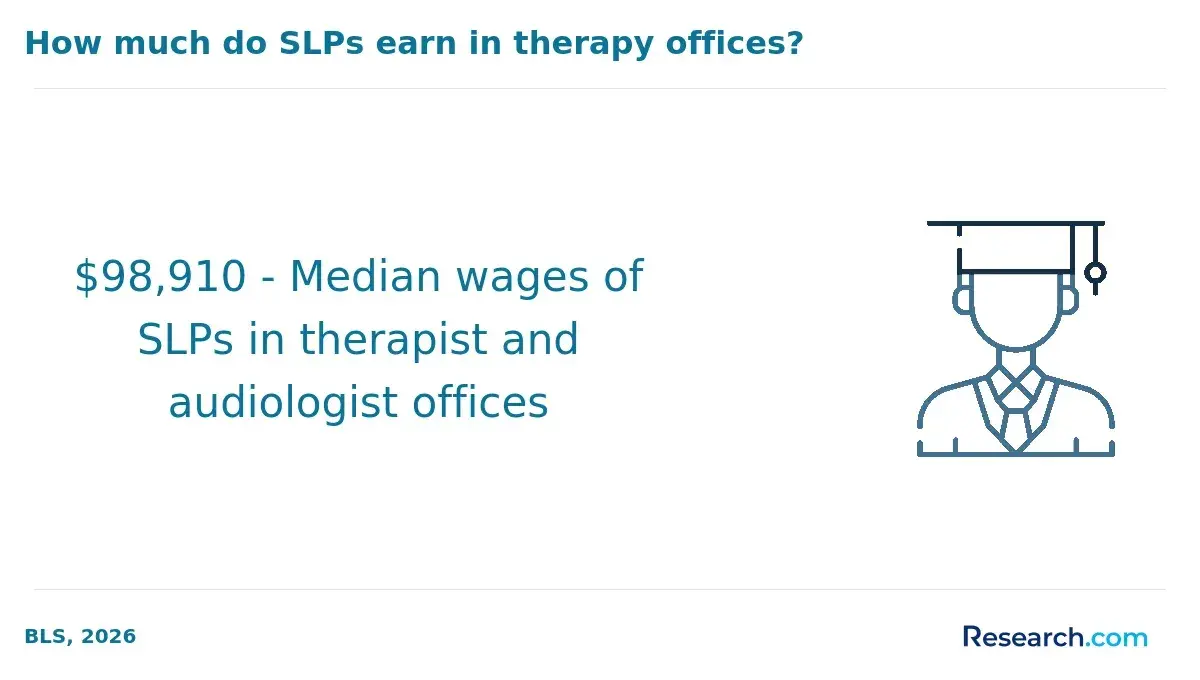
- The U.S. Bureau of Labor Statistics reports a $97,870 median annual wage for speech-language pathologists in May 2025 and projects 17% employment growth from 2025 to 2035, but a qualifying graduate degree, supervised experience, examination, and state license are still necessary before independent practice.
Which online speech pathology master's programs can residents of Columbia, SC realistically enroll in?
Columbia residents should define "best" by licensure fit rather than by name recognition alone. A realistic option must accept South Carolina residents, maintain CAA accreditation, disclose how it handles distance clinical education, and provide a workable plan for any required travel. Admission eligibility and state authorization can change, so applicants should obtain written confirmation from each university before paying an application fee.
The programs below are examples of established distance or hybrid master's pathways that prospective South Carolina students commonly investigate. They are not interchangeable: clinical-placement policies, live attendance, travel, prerequisite expectations, and tuition structures can differ substantially.
| Program | Distance-format consideration | Clinical-placement consideration for a Columbia resident | Decision fit |
| Emerson College | Online master's pathway with scheduled academic requirements and clinical education. | Clinical placements are part of the curriculum; confirm whether a placement can be arranged in the Midlands and whether travel may be required. | Consider if you want an established online cohort model and can accommodate a structured sequence. |
| Baylor University | Online SLP master's format with a cohort-based design and required clinical experiences. | Students complete supervised clinical training; ask specifically about South Carolina site availability, placement lead time, and travel contingencies. | Consider if a private-university online format and guided clinical coordination fit your budget. |
| New York University | Online graduate study in communicative sciences and disorders may include synchronous and experiential components. | Practicum requirements are not replaced by online coursework; request the current policy for South Carolina clinical sites. | Consider if you can meet academic scheduling expectations and potential residency requirements. |
| University of Akron | Distance-learning SLP options have historically combined online academic work with required clinical training. | Confirm current South Carolina enrollment authorization, clinical-site responsibilities, and any campus attendance requirements. | Consider if you want to compare a public-university option against private online programs. |
Use this table as a screening tool, not a guarantee of admission or placement. A school may be able to enroll South Carolina students yet still be unable to secure a specific Columbia-area clinical site for a particular term.
Applicants comparing online speech pathology programs should avoid treating admissions accessibility as the only criterion. A program that is easier to apply to may be a poor choice if its clinical schedule, state disclosures, or prerequisite requirements do not match your circumstances.
How do Columbia, SC licensure rules shape which online speech pathology degrees are acceptable?
South Carolina licensure is governed by the state's speech-language pathology and audiology licensing authority, not by a university. The board evaluates whether an applicant's education, supervised experience, examination results, and application documentation meet current state requirements. That means an online degree can be acceptable, but only if its underlying academic and clinical preparation satisfies the board's standards.
For most aspiring speech-language pathologists, the safest degree-selection route is a CAA-accredited master's program designed to support ASHA certification and state licensure. CAA accreditation does not itself issue a South Carolina license, but it substantially reduces the risk that core education and clinical-training requirements will be misaligned.
Before enrolling, ask the school for a South Carolina-specific professional licensure disclosure. The disclosure should state whether the program is designed to meet educational requirements for South Carolina licensure, whether the school accepts South Carolina residents, and whether any known restrictions apply. Keep a copy because policies and state regulations can change while you are enrolled.
A Columbia applicant should also separate three related but distinct credentials: the graduate degree, a South Carolina license, and ASHA's Certificate of Clinical Competence in Speech-Language Pathology (CCC-SLP). Employers may prefer or require the CCC-SLP, while independent practice requires compliance with state licensing rules. Your eventual work setting - such as a hospital, school district, rehabilitation provider, or private practice - may add its own hiring expectations.
What accreditation and program approvals must an online speech pathology master's hold for South Carolina practice?
The central programmatic credential to verify is accreditation by the American Speech-Language-Hearing Association's Council on Academic Accreditation in Audiology and Speech-Language Pathology. A program may be fully accredited or, in limited circumstances, hold candidacy status. These statuses have different implications, so applicants should verify the exact status for their expected graduation period rather than relying on an old advertisement.
Accreditation is only one layer of review. The university itself should also hold institutional accreditation recognized by the U.S. Department of Education or the Council for Higher Education Accreditation. Institutional accreditation supports the legitimacy of the institution and federal aid eligibility, while CAA accreditation evaluates the professional SLP program.
Use the following distinction when evaluating a school's claims.
| Credential or approval | What it evaluates | Why it matters to a South Carolina applicant |
| Institutional accreditation | The university's overall academic and administrative quality. | Helps establish that the degree comes from a recognized institution and may affect financial-aid access. |
| CAA accreditation | The speech-language pathology program's professional curriculum, faculty, assessment, and clinical education. | Is the strongest indicator that the degree aligns with the standard education pathway used for ASHA certification and state licensure. |
| South Carolina licensure disclosure | The university's stated assessment of its curriculum against South Carolina educational requirements. | Addresses the state where you expect to seek authorization, rather than merely where the university is located. |
| State authorization for distance education | Whether the university may offer education to residents in a particular state. | Determines whether the school can legally enroll and teach a South Carolina resident in the current cycle. |
Do not assume that wording such as "prepares students for certification" means the program is CAA-accredited. Ask for the program's exact accreditation status, next review information if published, and any disclosures relevant to your cohort. If a school cannot clearly document these points, choose a program with more transparent professional oversight.
Which accredited online speech pathology programs offer clinical placements accessible from Columbia, SC?
No reputable school should promise a Columbia clinical placement before it has evaluated site capacity, supervisor credentials, patient population, and your stage in the program. Clinical education requires more than a convenient location: the site must provide qualifying experiences and appropriately credentialed supervision. A program that says it "supports" placements may still ask students to help identify sites or travel when local capacity is limited.
When comparing accredited options, focus less on an unverified list of local partners and more on the school's documented placement process. This is particularly important for students pursuing an online master's degree while remaining employed in the Columbia area.
Ask every admissions or clinical-education representative the following questions in writing before committing.
- Does the program currently enroll new students who live in South Carolina?
- Will the program arrange, approve, or require me to locate clinical sites and supervisors?
- Has the program recently placed students within commuting distance of Columbia, and can it describe the process without identifying patients or confidential sites?
- What happens if a local site withdraws, lacks the needed patient population, or cannot provide enough supervised hours?
- How far may I be expected to travel, and are out-of-area housing, transportation, and background-check costs mine to pay?
- Are there campus immersions, simulations, synchronous clinical meetings, or intensive experiences that require travel?
Programs such as Emerson College, Baylor University, NYU, and the University of Akron may be worth asking about, but availability must be confirmed for the specific intake term. Placement arrangements can be affected by healthcare-site capacity, school calendars, supervisor availability, affiliation agreements, immunization requirements, and background checks.
For applicants who need to coordinate clinical education with work or caregiving, a broader comparison of online SLP programs masters can help identify programs whose cost and delivery models justify the travel and scheduling demands. Lower advertised tuition is not necessarily lower total cost if repeated travel or unpaid placement time is required.
How do South Carolina's Praxis, clinical hours, and supervision requirements affect online program choice?
Your online program must create a credible route to the academic and clinical milestones required after graduation. For the ASHA CCC-SLP pathway, graduate students generally complete at least 400 supervised clinical practicum hours, including at least 375 hours of direct client or patient contact and 25 guided observation hours. Programs structure these experiences differently, but online delivery does not eliminate them.
South Carolina applicants should also plan for the national Praxis examination in speech-language pathology and a supervised post-graduate experience. ASHA's current certification standards use a Praxis score of 162 for the CCC-SLP pathway, but state boards can set or revise their own licensing requirements. Verify South Carolina's current required score, examination policy, application forms, and post-graduate supervision rules directly with the licensing authority before scheduling the exam.
The practical implication is simple: select a school that has a clear, documented sequence for clinical practica and can explain how graduates obtain supervision after the degree. The timeline can be difficult to compress if a placement is delayed or if you need to work full time during clinical training.
The following factors deserve special attention because they can determine whether an online format is feasible for you.
- Whether practicum courses run during standard daytime clinic, school, or medical-facility hours.
- Whether you must reduce work hours during external placements to meet attendance and patient-care expectations.
- Whether the program tracks hours, supervisor credentials, evaluations, and competencies in a format accepted for certification and licensure review.
- Whether the university offers guidance for finding a Clinical Fellowship or other supervised post-graduate position after graduation.
A program that offers excellent asynchronous coursework but cannot explain its clinical progression is not a strong fit for a student who needs a reliable path to South Carolina practice.
What are the main differences between ASHA CAA-accredited and non-CAA online speech programs?
CAA-accredited master's programs are specifically evaluated against standards for professional education in speech-language pathology. For a prospective clinician, that status is usually more consequential than whether lectures are online, live, recorded, or held on campus. It signals that the program has undergone profession-specific review of curriculum, faculty, student outcomes, and clinical education systems.
Non-CAA online programs may still offer useful coursework in communication disorders, linguistics, education, healthcare, or related fields. However, they may not provide the graduate professional degree and supervised clinical preparation expected for the conventional SLP licensure and CCC-SLP route. They can be appropriate for someone seeking research knowledge, support roles, or a nonclinical academic credential, but they require far more careful licensure review.
| Feature | CAA-accredited SLP master's program | Non-CAA online speech-related program |
| Primary purpose | Prepares students for professional SLP practice pathways. | May focus on related academic, educational, research, or support knowledge. |
| Clinical practicum | Includes structured clinical education as part of the professional program. | May not include qualifying supervised clinical practicum. |
| ASHA certification alignment | Typically designed around the educational component of the CCC-SLP pathway. | May not meet the educational or clinical prerequisites for certification. |
| South Carolina licensure fit | Usually the more defensible starting point, subject to board review and other requirements. | Must be individually evaluated; do not assume eligibility. |
| Best fit | Students who intend to become licensed speech-language pathologists. | Students who do not need a clinical SLP license or who are completing a separate prerequisite path. |
If your goal is diagnosis and treatment of speech, language, voice, swallowing, fluency, or cognitive-communication disorders as an SLP, do not substitute a speech-related degree for a CAA-accredited clinical master's without receiving written confirmation from the South Carolina licensing authority.
How can Columbia, SC residents verify an online SLP program's institutional and programmatic accreditation?
Verification should take place before you apply, not after you have accepted an offer. Schools sometimes use broad phrases such as "accredited university" or "licensure-track curriculum," which do not answer whether the specific SLP program has the professional accreditation and state compatibility you need.
Use a short verification sequence and save the responses in a folder with your application materials.
- Search the ASHA EdFind directory or CAA accreditation listings for the exact university and degree program, then record the published accreditation status.
- Check the university's official catalog to confirm that the degree is a master's in speech-language pathology, communication sciences and disorders, or the institution's equivalent professional clinical degree.
- Review the university's professional licensure disclosure for South Carolina and confirm that it applies to online students, not only campus-based students.
- Ask admissions whether South Carolina residents are eligible for your intended cohort and whether any authorization restrictions affect clinical courses.
- Ask clinical education staff for a written explanation of placement responsibilities, travel expectations, and what occurs if a placement cannot be secured locally.
- Contact the South Carolina licensing authority if your background, degree title, prior coursework, or intended program does not clearly fit the ordinary pathway.
Applicants who already hold a bachelor's degree outside communication sciences and disorders should also ask whether they need leveling coursework. Prerequisites may add time and tuition, and a school's prerequisite sequence may not transfer cleanly to another SLP program if you change plans.
Which public and private universities commonly serve Columbia, SC residents through distance SLP programs?
Private and public institutions can both be viable choices for South Carolina residents. The more useful comparison is whether each school offers a CAA-accredited clinical master's pathway, permits South Carolina enrollment, handles clinical education responsibly, and provides a schedule you can sustain. Institutional type alone does not determine quality, licensure suitability, or return on investment.
Private universities with prominent online or hybrid SLP pathways often include Emerson College, Baylor University, and New York University. Public institutions with distance-oriented options have included universities such as the University of Akron. Availability, format, and authorization policies can change, so treat these as starting points for research rather than a fixed statewide eligibility list.
The comparison below explains the trade-offs that often matter more than the public-versus-private label.
| Institution type | Potential advantage | Potential trade-off | Best question to ask |
| Public university | May offer comparatively favorable tuition for residents or a transparent per-credit structure. | Out-of-state distance students may not receive the same price as in-state campus students, and enrollment may be limited. | What is the total tuition and required-fee estimate for a South Carolina online student? |
| Private nonprofit university | May operate a nationally structured online cohort with dedicated distance-learning support. | Published tuition can be higher, and clinical travel can add meaningful costs. | What costs are excluded from tuition, including travel, clinical compliance, and technology? |
| Campus-based university with hybrid elements | May offer local faculty, clinics, or regional professional connections. | May require more fixed attendance, commuting, or daytime availability than an online-first model. | Which courses, intensives, and clinical experiences require in-person attendance? |
Students interested in a combined undergraduate-to-graduate route may also compare best 5 year speech pathology programs. Those pathways can reduce transitions between degrees for eligible students, but they are usually more relevant to undergraduates than to career changers who already hold a bachelor's degree.
How do tuition, fees, and residency status compare for online speech programs open to South Carolinians?
Online SLP tuition should be compared as a complete degree cost, not as a single per-credit headline. A private program may charge a uniform online rate regardless of residence, while a public institution may use in-state, out-of-state, or distance-specific pricing. Neither model is automatically cheaper for a Columbia resident.
Because published prices and required fees can change by academic year and cohort, request a written estimate covering the entire program. Do not compare a total-program estimate from one university with another school's one-semester tuition figure.
| Cost category | What to verify | Why it changes the real cost |
| Tuition basis | Per credit, per term, or full-program tuition; total required credits; and any annual increase policy. | Lets you compare like-for-like estimates across schools. |
| Residency treatment | Whether a South Carolina online student receives in-state, out-of-state, or flat online tuition. | Public-university savings may not extend to nonresident distance learners. |
| Mandatory university fees | Technology, student services, graduation, clinical, laboratory, or distance-learning fees. | Fees can materially increase the amount due beyond advertised tuition. |
| Clinical education expenses | Background checks, drug screening, immunizations, liability insurance, travel, parking, lodging, and professional attire. | These costs are often paid directly by the student and may vary by placement. |
| Lost-work-time exposure | Expected daytime practicum hours and whether clinical blocks limit employment. | Reduced earnings can be a larger financial impact than a modest tuition difference. |
Federal financial aid may be available to eligible students enrolled in qualifying programs, but borrowing should be based on a realistic budget and not on an assumed salary outcome. The national median annual wage for speech-language pathologists was $97,870 in May 2025, according to the Bureau of Labor Statistics; local pay, work setting, experience, and hours can differ significantly. Explore how much do speech language pathologists make as career-planning context, not as a guarantee of what you will earn after graduation.
For a disciplined cost comparison, ask each school for the same information: required credits, tuition rate, all mandatory fees, estimated clinical expenses, travel requirements, expected completion pattern, and whether tuition can rise after enrollment. Then compare your projected borrowing and lost-income exposure alongside price.
What consumer-protection risks should Columbia, SC applicants watch for in online speech pathology degrees?
The largest risk is enrolling in a program that is academically interesting but does not lead to the professional credential you need. Online marketing can make related degrees, certificates, assistant-level training, and clinical SLP master's programs appear similar. They are not equivalent for South Carolina licensure.
Watch for the following red flags before signing an enrollment agreement or accepting federal or private loans.
- The school cannot clearly state the program's CAA accreditation status or directs you only to general university accreditation.
- The program does not publish a South Carolina professional licensure disclosure or will not confirm whether South Carolina residents may enroll.
- The school describes clinical training vaguely and will not explain who arranges placements, what travel may be required, or how it handles unsuccessful placement searches.
- The advertised tuition excludes mandatory fees, clinical compliance costs, travel, or the additional coursework required for students without a communication sciences background.
- Recruitment materials imply that an online degree alone qualifies you for independent practice, without discussing examination, supervised experience, and state licensing.
- An adviser pressures you to enroll before giving written answers about accreditation, total cost, clinical obligations, and state eligibility.
There are also less obvious risks. Some students assume that a local healthcare employer will accept them for practicum, only to learn that affiliation agreements and supervisor qualifications are required. Others assume that evening online courses mean evening clinical placements. Ask early, budget conservatively, and keep all written disclosures.
For many Columbia residents, the strongest choice is not necessarily the lowest-tuition or shortest-advertised program. It is the CAA-accredited option that can document South Carolina eligibility, offer a credible clinical plan, disclose full costs, and fit your ability to complete required daytime training.
Other Things You Should Know About Speech Language Pathology
Yes, an online or hybrid master's may support South Carolina licensure if it meets the state's education requirements and includes required supervised clinical preparation. Choose a CAA-accredited program, confirm South Carolina eligibility in writing, and complete the examination, supervised experience, and licensing steps required at the time you apply.
Not always. Many programs admit career changers, but they commonly require prerequisite or leveling courses in areas such as phonetics, language development, anatomy and physiology of speech and hearing, audiology, and speech science. Leveling coursework can add substantial time and cost, so request a transcript evaluation before applying.
Do not assume it will. Some programs coordinate placements, some require substantial student participation, and many use a shared process. Even when a university supports placement development, local site availability is not guaranteed. Ask about the current South Carolina process, your responsibilities, possible travel, and contingency plans.
Completion time varies with prerequisites, course sequence, pacing, clinical availability, and whether you attend full time. A student who already has the required undergraduate background may finish more quickly than a career changer who must complete leveling courses first. Clinical placement timing can also affect the actual completion date.
References
- Speech-Language Pathology, M.S. https://sc.edu/study/majors_and_degrees/speech-language-pathology-ms.php
- Master of Science Program (MS) https://communications-disorders.ecu.edu/education/masters-ms/
- Speech-Language Pathology https://www.fmarion.edu/healthsciences/speechlanguagepathology/
- Online Master's in Speech Pathology Programs: 2026 Guide https://speechpathologymastersprograms.com/
- South Carolina Speech Pathology Degrees https://www.speechpathologydegrees.com/st/south-carolina