2027 Best Online Speech Pathology Master's Programs for Residents of Reno, NV

Co-Founder and Chief Data Scientist

Reviewed by Rhea Paul, PhD
SLP Education & Research Expert
Reno residents can pursue an online master's in speech-language pathology (SLP), but "online" does not remove the need for supervised clinical training, state eligibility confirmation, and CAA accreditation. This guide helps prospective students compare realistic pathways, understand Nevada licensure requirements, anticipate travel and placement obligations, and avoid programs that cannot support a clinical SLP career. The strongest choice is usually the program that can document Nevada eligibility and provide a workable clinical-placement plan - not simply the one with the lowest advertised tuition.
Key Things You Should Know
- For Nevada clinical licensure, prioritize a master's degree from a program accredited by the ASHA Council on Academic Accreditation (CAA), plus the supervised postgraduate experience and examination requirements Nevada applies.
- Online SLP master's programs still require in-person clinical practicum and externship experiences; Reno students should get written clarification about placement support, travel expectations, and responsibility for finding sites before paying a deposit.
- The U.S. Bureau of Labor Statistics projects 17% employment growth for speech-language pathologists from 2025 to 2035, with about 12,500 annual openings nationwide; demand does not make every online degree licensure-eligible.
Which online speech pathology master's programs are realistically accessible to residents of Reno, NV?
A realistic online SLP option for a Reno resident must clear four practical tests: the institution must authorize enrollment in Nevada, the degree must hold CAA accreditation, the curriculum must support Nevada licensure requirements, and the school must have a feasible way to arrange required in-person clinical education. A school's national advertising alone does not establish that all four conditions are met.
Fully online coursework is common, but entry-level clinical master's programs are typically hybrid in practice. Students complete lectures, case discussions, assessments, simulations, and some advising online, while acquiring supervised clinical hours at approved sites. Many programs also require short campus immersions, skills intensives, or orientation events.
The comparison below identifies program types that are commonly worth investigating for Reno applicants. Enrollment authorization, tuition, cohort availability, residency requirements, and state disclosures can change, so applicants should confirm the current terms directly with each university before applying.
| Pathway type | What a Reno student can expect | Best fit | Key caution |
| Out-of-state CAA-accredited online cohort | Online academic courses with local or regional clinical placements and possible travel for intensives | Working adults able to plan clinical rotations in advance | Confirm Nevada enrollment and placement support in writing |
| Hybrid CAA-accredited program | Distance learning plus scheduled campus skills labs or periodic residencies | Students who value direct faculty contact and can travel | Travel, lodging, and missed-work costs may be substantial |
| Nevada-based campus program | Primarily local instruction and university-directed clinical training | Students seeking the least interstate uncertainty | May offer less schedule flexibility than distance cohorts |
| Post-baccalaureate or leveling route followed by a master's | Prerequisite coursework before applying to an entry-level graduate program | Career changers without communication-sciences coursework | Leveling courses do not replace the graduate clinical degree |
For applicants comparing a larger field of distance options, these online speech therapy programs can be a useful starting point. Treat any broad list as a research tool rather than proof of Nevada eligibility.
How do Nevada licensure rules shape which online speech pathology degrees are acceptable?
Nevada licensure is the central filter for a Reno applicant who intends to practice as a speech-language pathologist. An online degree is not disqualified because instruction is delivered remotely; what matters is whether the degree and supervised clinical education satisfy the requirements enforced by Nevada's licensing authority.
In general, a licensure-bound SLP pathway includes a qualifying graduate degree, supervised clinical practicum completed during graduate study, a supervised clinical fellowship or equivalent postgraduate experience, and a passing national examination.
Requirements, forms, supervision standards, and temporary-license rules may be updated, so applicants should consult Nevada's current licensing instructions before choosing a program.
The practical implication is simple: do not enroll based only on a school's statement that its curriculum is "designed for certification." Ask whether the institution has evaluated its program for Nevada professional licensure and whether any known curricular, clinical, or state-authorization limitations apply to Nevada residents.
Use this checklist when speaking with admissions and licensure-disclosure staff. It separates general program marketing from the facts that affect your ability to work in Nevada after graduation.
- Ask whether Nevada residents may enroll in the specific online or hybrid SLP cohort you are considering.
- Ask whether the program's current curriculum is intended to meet Nevada educational requirements for SLP licensure.
- Request confirmation of the program's current CAA accreditation status and review its published accreditation record.
- Ask how the school documents graduate practicum hours, supervisor qualifications, and clinical competencies.
- Verify whether the school can place students in Nevada or whether you must identify sites and obtain approvals yourself.
- Confirm whether a campus visit, simulation intensive, or out-of-state clinical rotation is required.
Certification through the American Speech-Language-Hearing Association (ASHA) and state licensure are related but distinct credentials. Many employers prefer or require ASHA's Certificate of Clinical Competence, while Nevada practice authority is determined by state law and licensing rules. Plan for both rather than assuming one automatically substitutes for the other.
What accreditation and ASHA CAA recognition should Reno applicants verify before enrolling online?
For an entry-level SLP master's degree, CAA accreditation is the most important quality and eligibility signal to verify. The Council on Academic Accreditation in Audiology and Speech-Language Pathology is ASHA's specialized accreditor for graduate education programs that prepare speech-language pathologists and audiologists.
Applicants should distinguish among accreditation terms. "Regionally accredited university," "health sciences program," and "ASHA-aligned curriculum" do not necessarily mean that the specific clinical master's program holds CAA accreditation.
Similarly, a program in candidacy status is not identical to a fully accredited program, even though candidacy may matter under particular rules for enrolled students. Read the status, effective dates, and any public notices carefully.
The table explains why accreditation wording changes the risk profile of an enrollment decision.
| Status or claim | What it means | How a Reno applicant should respond |
| CAA-accredited program | The specific graduate clinical program has recognized specialized accreditation | Still verify Nevada enrollment eligibility and clinical-placement logistics |
| CAA candidate program | The program is pursuing accreditation and operates under candidacy provisions | Confirm how candidacy affects your cohort, certification path, and Nevada licensure review |
| Institutionally accredited university | The university has broad institutional accreditation | Do not assume this makes the SLP degree licensure-qualifying |
| Online speech or communication degree | May be academic, assistant-level, or nonclinical | Confirm whether it is an entry-level clinical SLP master's program |
CAA status is necessary but not the only decision factor. A program may be accredited and still have limited enrollment authorization, required travel, a selective admissions process, or a placement model that is impractical for a student who cannot leave Reno for extended periods.
Which accredited online SLP master's programs explicitly accept students from Nevada and the West?
Schools periodically change where they can enroll distance students because professional-licensure disclosures and state authorization rules evolve. For that reason, a responsible Reno-focused comparison should identify programs to investigate while avoiding a blanket claim that any university accepts every Nevada applicant in every term.
Well-known distance or hybrid entry-level SLP pathways that Reno residents may investigate include programs offered by Baylor University, Emerson College, New York University, the University of St. Augustine for Health Sciences, and the University of Akron.
Each institution should be evaluated using its current CAA listing, state authorization page, program licensure disclosure, and admissions materials. Availability may depend on the program format, start term, clinical site capacity, and an applicant's location.
This comparison highlights the questions that matter more than brand recognition. "Verify" means a prospective student should obtain a current, program-specific answer before treating the option as available.
| Program to investigate | Delivery consideration | Reno-specific question to verify | Potential trade-off |
| Baylor University online SLP pathway | Distance coursework with clinical education requirements | Whether Nevada enrollment and Nevada placements are currently supported | Clinical and travel requirements can affect work schedules |
| Emerson College online SLP pathway | Online cohort model with clinical experiences | Current Nevada authorization and placement process | Private-university tuition may affect borrowing needs |
| New York University online SLP pathway | Online graduate pathway with fieldwork requirements | Required immersions, timing, and Nevada clinical-site availability | Travel planning can be essential |
| University of St. Augustine for Health Sciences SLP pathway | Hybrid or distance-oriented learning model | Whether the selected format accepts Nevada residents and meets state disclosures | Program structure can vary by campus or cohort |
| University of Akron online SLP pathway | Distance learning with supervised clinical training | Nevada participation, site approval, and any residency expectations | Out-of-state coordination may take extra lead time |
Applicants who value a faster sequence should compare advertised calendars with clinical capacity, rather than assuming every accelerated option shortens the total path. A review of accelerated speech pathology programs online can help identify formats to investigate, but accelerated pacing only works when prerequisite, practicum, and travel demands fit your circumstances.
No program is universally best. A working professional with limited travel flexibility may prefer a school with clearly scheduled intensives and strong placement coordination. A student with a lower budget may prefer a public option or an in-state campus pathway, even if it takes longer or has fewer online courses.
How do clinical practicum and placements work for online SLP students living in Reno?
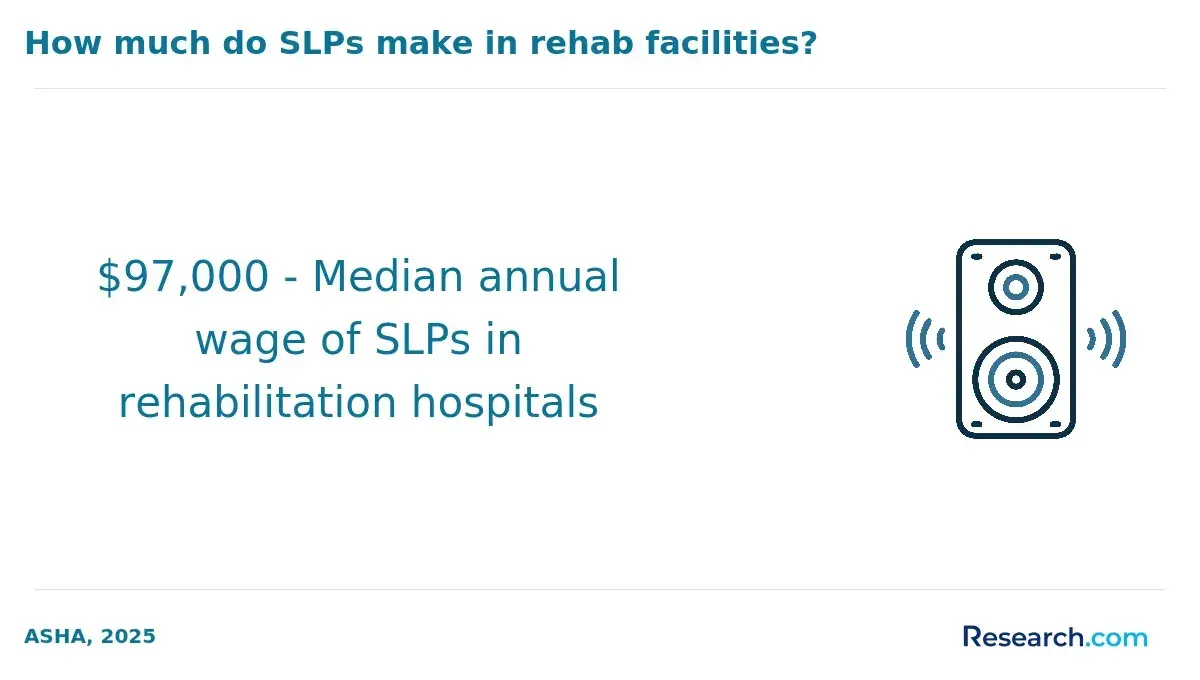
Online SLP students develop clinical competence in person. Coursework may be remote, but screening, assessment, intervention, documentation, counseling, and supervised client contact must occur in approved clinical environments. Depending on the program and stage of study, sites may include university clinics, schools, hospitals, rehabilitation settings, early-intervention programs, skilled nursing facilities, or private practices.
Placement models differ considerably. Some universities maintain a clinical education team that identifies and contracts with sites; others expect students to help locate potential sites, after which the university reviews supervisors and affiliation agreements.
A "student-assisted" model can work well for an applicant with strong local healthcare relationships, but it is riskier for someone who needs the school to secure every placement.
Before choosing a distance program, ask for a written explanation of the placement model. The following factors usually determine whether an online option is practical from Reno.
- Whether the program has previously placed students in northern Nevada or can identify approved placement partners there.
- Whether students are permitted to suggest prospective sites and how long affiliation agreements typically take.
- Whether the school guarantees placements, assists with placements, or makes no guarantee of placement location.
- Whether clinical rotations may require travel outside Reno or outside Nevada.
- Whether daytime availability is required, even when academic classes are scheduled in the evening.
- Whether students must pay for background checks, health clearances, drug screening, liability coverage, transportation, and travel.
Clinical training is often the least flexible portion of an online SLP degree. A student may be able to watch lectures after work but still need to attend a school or medical placement during regular business hours. Applicants with full-time jobs should ask how many hours per week are typical during each clinical term and whether part-time progression is available.
What are the differences between Nevada-based and out-of-state online SLP pathways to licensure?
A Nevada-based pathway can reduce administrative uncertainty because faculty, clinics, and program staff are more likely to work routinely with Nevada requirements and local partners. That does not automatically make it the best choice: an out-of-state online program may offer a better schedule, preferred curriculum, or stronger distance-student support. The decision turns on documented eligibility and the total burden of clinical education.
The table compares the practical trade-offs rather than treating online delivery as a single category.
| Decision factor | Nevada-based pathway | Out-of-state online or hybrid pathway |
| Licensure familiarity | Often more direct familiarity with Nevada requirements | Must be confirmed through current state-specific disclosures |
| Clinical network | May have established local relationships | May use national placement staff, student leads, or travel-based rotations |
| Travel burden | Usually lower for academic and clinical activities | May include required immersions or rotations outside Nevada |
| Schedule flexibility | Varies by campus and cohort structure | May offer online coursework but clinical hours remain location- and schedule-dependent |
| Tuition comparison | May offer resident pricing when applicable | Often charges a uniform distance rate or private tuition rate |
| Administrative risk | Potentially fewer interstate authorization issues | Requires careful verification before enrollment and before each clinical placement |
Choose a Nevada-centered route when staying local, minimizing travel, and relying on familiar state processes matter most. Consider an out-of-state distance program when it can provide written Nevada eligibility confirmation, a credible placement plan, and a schedule that meaningfully improves on local alternatives.
Do not confuse an online bachelor's degree, a speech-language pathology assistant pathway, or a communication-disorders certificate with an entry-level clinical master's degree. They can be useful steps, but they do not independently qualify a graduate for SLP licensure.
How do costs, funding, and employer tuition benefits compare across online SLP options for Nevadans?
The least expensive published tuition rate is not always the lowest-cost route. Reno applicants should compare the full academic and clinical budget: tuition, mandatory university fees, travel to intensives, housing during required visits, clinical compliance costs, books, technology, and income reduced by daytime placements.
Schools commonly publish either per-credit tuition, annual tuition, or a program estimate. These figures are not interchangeable.
A per-credit rate requires the program's total required credits to estimate tuition, while a total estimate may exclude travel, fees, or future rate changes. Request a personalized cost-of-attendance estimate and ask what assumptions it uses.
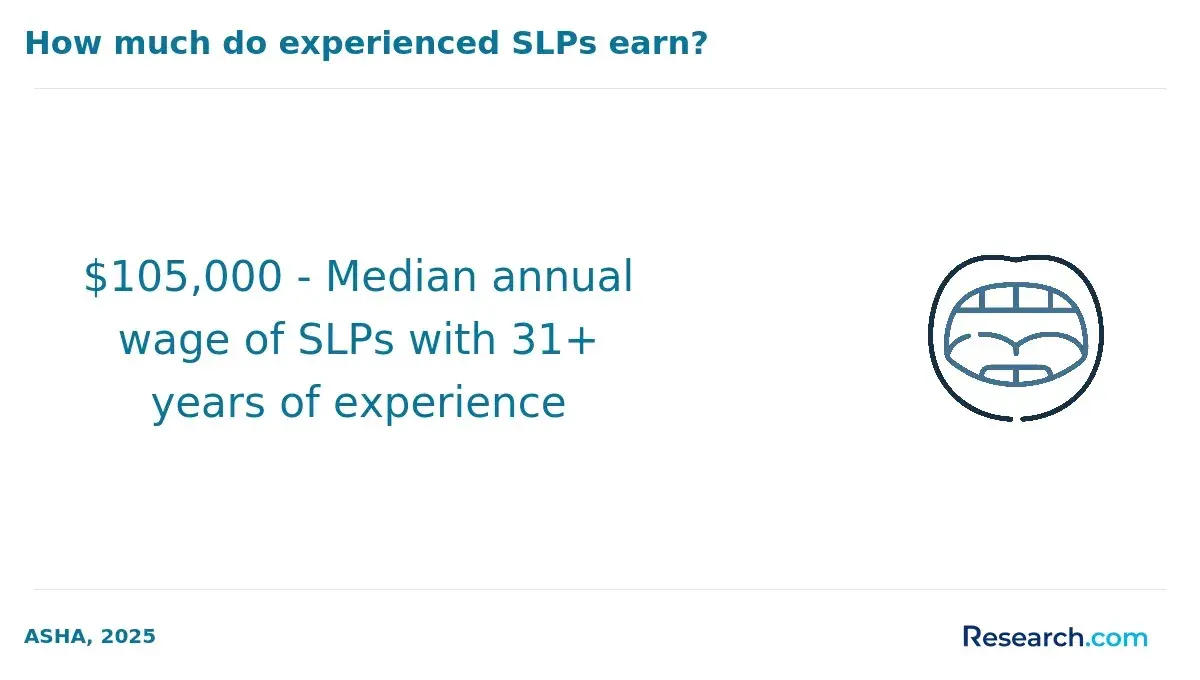
For career context, the U.S. Bureau of Labor Statistics reports a median annual wage of $97,870 for speech-language pathologists in May 2025. That is a national occupation-level median, not a prediction of starting pay in Reno or a guarantee that student debt will be manageable. Use it as one input alongside your expected debt, clinical schedule, and likely employment setting.
The following cost categories help applicants compare programs fairly even when institutions publish tuition differently.
| Cost category | Why it matters for an online student | What to request |
| Tuition and mandatory fees | Forms the core bill and may change annually | Total credits required, current rate, and mandatory-program fees |
| Travel and lodging | Can materially raise the cost of required intensives or distant placements | Number, location, and typical duration of required visits |
| Clinical compliance expenses | Background checks, immunizations, insurance, and screenings may be required | Itemized estimate of student-paid clinical requirements |
| Lost work income | Daytime practicum can reduce available work hours | Typical weekly clinical schedule by term |
| Financing | Loans can cover eligible costs but increase repayment obligations | Financial-aid package, scholarship rules, and borrowing guidance |
Federal student aid may be available to eligible students enrolled in qualifying degree programs, and some employers offer tuition assistance. Health systems, school districts, rehabilitation organizations, and public agencies may set their own benefit rules, service commitments, or employment-status requirements.
Ask human resources whether benefits apply to graduate clinical degrees, whether payment is upfront or reimbursement-based, and whether clinical-placement scheduling affects eligibility.
Career earnings can vary by setting, experience, schedule, and geographic market. Applicants interested in comparing work settings and advancement opportunities can explore roles associated with the highest paid SLP career paths, while recognizing that compensation should not be the sole basis for selecting a clinical specialty.
Which online speech pathology programs offer the strongest support for rural and bilingual Reno communities?
Reno-area clinicians may serve families with varied linguistic, cultural, economic, and geographic circumstances, including patients who travel from rural northern Nevada. A strong program for this context does more than offer a general multicultural course.
It should build practical skills in culturally responsive assessment, interpreter collaboration, family-centered counseling, telepractice ethics, and clinical decision-making that avoids misidentifying language difference as disorder.
Because program websites may describe these features differently, applicants should compare curriculum, faculty expertise, clinic partnerships, and placement processes rather than relying on broad diversity statements.
Ask whether the program offers supervised opportunities with bilingual populations, school-age learners, early intervention, adults with neurogenic disorders, or rural and telehealth settings relevant to your intended work.
The best fit depends on your goals. A student preparing to work in school districts may prioritize pediatric placements, special-education collaboration, and bilingual assessment training. Someone interested in medical SLP may prioritize dysphagia, voice, cognitive-communication, and adult rehabilitation experiences. Neither emphasis is inherently better; both need enough supervised breadth to support entry-level practice.
Telepractice is increasingly relevant for improving access across rural communities, but it is not a substitute for foundational in-person clinical competence. Applicants should ask how the program teaches privacy, technology troubleshooting, caregiver coaching, assessment limitations, and state-specific practice considerations in telehealth services.
How can Reno applicants safeguard themselves against unaccredited or non-licensure-eligible SLP programs online?
The biggest avoidable mistake is enrolling in a program because its marketing uses phrases such as "speech therapy," "communication sciences," or "ASHA-aligned" without confirming that it is the correct entry-level clinical degree. A nonclinical degree may have academic value, but it may not qualify the graduate for Nevada SLP licensure, the clinical fellowship pathway, or common employer requirements.
Warning signs are not always proof of poor quality, but they require careful investigation. The list below identifies common risks and the safer alternative.
- Do not rely on institutional accreditation alone; verify CAA status for the specific SLP graduate program.
- Do not assume an online program accepts Nevada residents; obtain confirmation for your intended start term.
- Do not accept vague assurances about placements; ask whether the school guarantees, coordinates, or merely approves clinical sites.
- Do not compare only per-credit tuition; request expected total tuition, fees, travel costs, and clinical compliance expenses.
- Do not overlook required daytime availability; obtain a term-by-term estimate of clinical hours before leaving a job or arranging childcare.
- Do not assume candidacy, accreditation, and licensure treatment are identical; ask how your specific entering cohort is affected.
- Do not interpret an easy admissions message as proof of career eligibility; verify prerequisites, practicum, and state requirements first.
Applicants looking at less selective pathways should be especially cautious about terminology. Resources describing online speech pathology programs may help you identify admissions patterns to research, but selectivity should never outweigh CAA accreditation, Nevada compatibility, and a workable clinical-training plan.
Keep a written record of each school's responses, including the date, staff member, program name, and any linked disclosure or email confirmation. This creates a more reliable comparison than memory or social-media advice.
What application timelines and prerequisite strategies best position Reno residents for online SLP admission?
Strong preparation begins well before an application deadline because SLP programs often require foundational coursework and carefully documented observation or experience. Applicants with a bachelor's degree in communication sciences and disorders may be ready to apply directly if they meet course and GPA expectations.
Career changers often need leveling coursework in areas such as phonetics, speech and hearing science, language development, anatomy and physiology of speech and hearing, audiology, and speech-language disorders.
Prerequisite requirements are program-specific. One school may accept equivalent courses from an accredited college, while another may require particular content, grades, labs, or recency. Do not spend money on a generic package of leveling courses without first comparing it against the requirements of each target program.
A disciplined timeline gives Reno applicants time to address prerequisites and clinical logistics rather than submitting an application that is technically complete but poorly matched to the program.
- Start by identifying CAA-accredited programs that currently permit Nevada enrollment and publish licensure disclosures for the degree format you want.
- Request an unofficial prerequisite review from each target school before registering for leveling classes whenever that service is available.
- Build a course map showing completed prerequisites, remaining requirements, grade targets, and the earliest application cycle you can realistically enter.
- Prepare transcripts, résumé, recommendation requests, personal statement materials, and any required observation or experience documentation well ahead of deadlines.
- Ask admissions whether the cohort has synchronous sessions, required intensives, and daytime clinical terms that could conflict with work or caregiving.
- Apply to a balanced group of programs that differ meaningfully in cost, pacing, travel burden, and placement model.
- Before accepting an offer, re-confirm CAA status, Nevada eligibility, financial aid, total estimated cost, and clinical-placement expectations.
Admission to a master's program is competitive, and meeting minimum requirements does not ensure acceptance. Applicants can improve the quality of their decision by emphasizing academic readiness, informed career motivation, communication skills, and realistic awareness of clinical training demands rather than choosing a program solely because it appears quick or convenient.
Other Things You Should Know About Speech Language Pathology
Possibly, if the specific degree is CAA-accredited, the university permits Nevada enrollment, the curriculum and clinical education meet Nevada requirements, and you complete the required licensure steps. The academic coursework may be online, but supervised clinical training is in person.
Many programs require at least one immersion, skills intensive, orientation, or campus-based activity. Others may have limited or no campus visits but still require clinical rotations that could be outside Reno. Ask for the current travel calendar before applying.
Some students work during early academic terms, but full-time employment can become difficult during practicum and externship periods. Clinical placements frequently require weekday availability, and the required hours may change by term and site.
The timeline depends on the program length, completion of graduate clinical requirements, Nevada's postgraduate supervised-experience rules, examination timing, and processing of your application. Ask both the school and Nevada's licensing authority for current requirements rather than relying on a standard timeline.
References
- Speech Language Pathology https://nevadastate.edu/academics/soe/speech-language-pathology/
- Online Master's in Speech Pathology Programs: 2026 Guide https://speechpathologymastersprograms.com/
- Best Speech-Language Pathology Programs in America https://www.usnews.com/best-graduate-schools/top-health-schools/pathology-rankings
- 2026 Most Affordable Online Speech Pathology Master's... https://www.onlineu.com/most-affordable-colleges/speech-pathology-masters-degrees
- Best Online Speech Pathology Programs https://www.forbes.com/advisor/education/healthcare/best-speech-pathology-programs-online/