2027 How to Become a Mental Health Counselor in Atlanta, GA: Education Requirements & Certification

Co-Founder and Chief Data Scientist
Becoming a mental health counselor in Atlanta means preparing for a regulated clinical career, not just choosing a graduate program. You need the right counseling education, supervised experience, exam preparation, and Georgia licensure documents before you can practice independently. The decision matters because the path usually takes several years, graduate school can be expensive, and not every counseling-related degree leads smoothly to licensure.
This guide explains how to become a mental health counselor in Atlanta, Georgia, including education requirements, financial aid options, the licensure process, certification choices, salary expectations, in-demand specializations, work settings, and common mistakes to avoid. It is designed for students, career changers, and out-of-state counselors who want a practical roadmap before investing time and money.
Quick Answer: How Do You Become a Mental Health Counselor in Atlanta?
To become a licensed mental health counselor in Atlanta, you generally need a qualifying graduate degree in counseling or a closely related field, graduate-level practicum or internship experience, Associate Licensed Counselor status, 3–4 years of supervised post-graduate clinical experience, a passing score on the National Counselor Examination, and approval from the Georgia Composite Board. Full independent practice typically requires the Licensed Professional Counselor credential.
| Step | What You Need to Complete | Why It Matters |
| Undergraduate preparation | Bachelor’s degree in counseling, psychology, social work, or a related field | Builds the foundation for graduate admission and clinical training |
| Graduate education | CACREP-accredited, CHEA-recognized, or board-aligned counseling program | Determines whether your coursework meets Georgia licensing expectations |
| Clinical training | At least 600 practicum or internship hours during graduate school | Provides supervised client-facing experience before post-graduate practice |
| Post-graduate supervision | 1,800–2,400 supervised clinical hours over 3–4 years | Required before independent licensure |
| Examination | National Counselor Examination through the NBCC | Demonstrates professional counseling knowledge for licensure |
| License maintenance | 35 continuing education hours every two years | Keeps the license active and supports ethical, current practice |
Key Benefits of Becoming a Mental Health Counselor in Atlanta, GA
- Atlanta offers a strong employment environment for counselors, with nearly 20% projected growth in mental health counseling jobs through 2033 as behavioral health services expand.
- Mental health counselors in Atlanta earn about $72,495 annually, while experienced professionals may earn up to $97,600 depending on credentials, specialization, employer, and practice setting.
- The career path is clearly regulated: candidates must complete a qualifying graduate degree, 600 practicum hours, 1,800–2,400 supervised clinical hours, and the NCE exam before full licensure.
- Education requirements for mental health counselors in Atlanta
- Financial aid options for counseling students
- Georgia licensure steps for mental health counselors
- License endorsement and reciprocity rules
- Counseling certifications available in Atlanta
- High-demand counseling specializations
- Mental health counselor salary in Atlanta
- Job demand for counselors in Atlanta
- Mental health counselor vs. marriage and family therapist licensure
- Common Atlanta work settings for counselors
- Professional development resources
- Challenges of entering the profession
- Burnout prevention and career sustainability
What Are the Academic Requirements to Become a Mental Health Counselor in Atlanta, GA?
Atlanta mental health counselors must complete graduate-level counseling education that satisfies Georgia licensing standards. The most important decision is choosing a program that prepares you for licensure, not simply a program with “counseling” in the title.
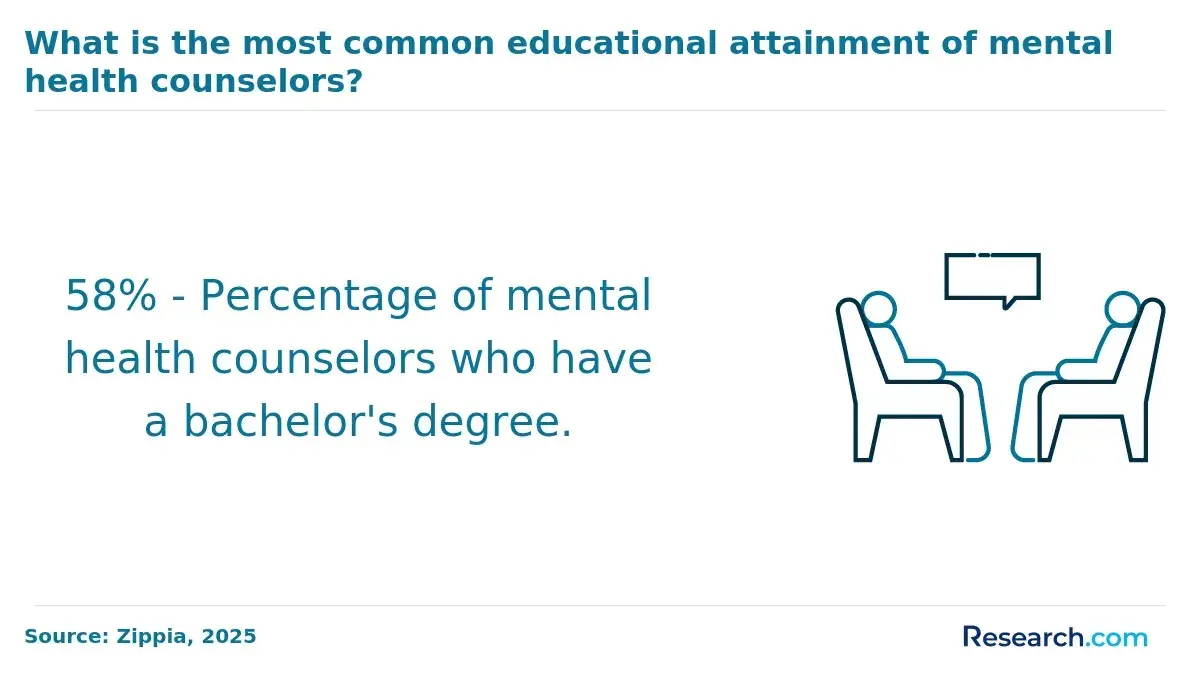
- Start with a relevant bachelor’s degree: Most future counselors major in psychology, counseling, social work, human services, or another behavioral science field. Students who need flexibility can compare a counseling degree online before applying to graduate school.
- Complete a qualifying master’s degree: Georgia expects graduate preparation in counseling or applied psychology from a CACREP-accredited, CHEA-recognized, or otherwise board-aligned program.
- Check the required curriculum areas: Your graduate coursework should cover nine core areas, including ethics, assessment, counseling methods, human development, multicultural counseling, and related clinical foundations.
- Finish supervised practicum or internship training: Graduate students must complete at least 600 hours of supervised clinical experience as part of their program.
- Confirm accreditation before enrolling: If a program is not CACREP-accredited, verify that its coursework and clinical components align with Georgia’s requirements before you commit.
- Plan for a long timeline: Education alone can take at least six years, and the full pathway to independent licensure often reaches around eight years once supervision and exams are included.
| Education Stage | Typical Focus | Decision Point for Students |
| Bachelor’s degree | Human behavior, research basics, psychology, social systems, communication | Choose courses and experiences that strengthen graduate applications |
| Master’s degree | Counseling theory, diagnosis, ethics, assessment, treatment planning, practicum | Prioritize licensure alignment and supervised clinical placement quality |
| Post-graduate supervision | Direct client care, case documentation, supervision, professional judgment | Select a supervisor and setting that match your long-term specialty goals |
Institution category: private not-for-profit
Reported share: 42.8%
Are There Financial Aid Programs for Mental Health Counselors in Atlanta, GA?
Yes. Counseling graduate students in Atlanta may be able to reduce costs through university aid, assistantships, scholarships tied to rehabilitation counseling, and employer-supported training. The best option depends on your school, specialization, enrollment status, and willingness to work in shortage or public-service settings after graduation.
- Rehabilitation Services Administration Scholarship at Georgia State University: This award may cover up to 60 in-state credit hours, including tuition, fees, and stipends for books and transportation. Some out-of-state tuition waivers are limited, and many graduates are later hired by the Georgia Vocational Rehabilitation Agency.
- RSA Grant at Mercer University: Mercer provides up to $17,550 in tuition support across three semesters for students in the M.S. in Clinical Rehabilitation Counseling program. Applicants must meet admission requirements, keep a 2.75 GPA, and submit the required materials.
- Atlanta Women’s Foundation Grants: These funds go to nonprofits rather than individual students, but counselors working for funded organizations may gain access to professional development and training focused on women and girls affected by poverty and mental health barriers.
- Graduate assistantships: Institutions such as Georgia State and Mercer may offer roles that include tuition support and stipends in exchange for research, teaching, or administrative support.
Students should compare the full cost of attendance, not only tuition. Fees, supervision costs, textbooks, transportation, exam fees, and unpaid internship hours can affect affordability. If cost is a major concern, researching the cheapest CACREP accredited programs online can help you identify programs that balance licensure preparation with lower tuition.
| Cost-Reduction Option | Best For | Question to Ask Before Applying |
| RSA scholarship or grant | Students interested in rehabilitation counseling or public-service pathways | Is there a service commitment, employment expectation, or eligibility restriction? |
| Graduate assistantship | Students who can work while enrolled | How many hours are required, and does the role include tuition remission? |
| Employer support | Students already working in behavioral health or social services | Will the employer reimburse graduate counseling credits or certification training? |
| Affordable accredited online program | Students needing flexibility and lower relocation costs | Does the program meet Georgia’s coursework and practicum expectations? |
What Is the Licensure Process for Mental Health Counselors in Atlanta, GA?
Georgia’s counseling licensure process is designed to verify that applicants have the academic preparation, supervised clinical experience, exam performance, and ethical training needed for independent practice. In Atlanta, the license is issued through the Georgia Composite Board of Professional Counselors, Social Workers, and Marriage and Family Therapists.
- Earn a graduate degree in counseling or a closely related field. A 600-hour practicum or internship may reduce later supervised-hour requirements.
- Apply for the Associate Licensed Counselor credential so you can begin post-graduate supervised clinical work.
- Complete 3–4 years of supervised experience, typically totaling 1,800 to 2,400 hours depending on your graduate practicum background.
- Pass the National Counselor Examination administered by the NBCC. Georgia may soon require a specialty mental health counseling exam.
- Submit your full licensure application to the Georgia Composite Board with exam results, supervision records, transcripts, and the $100 fee.
- Keep the license active by completing 35 continuing education hours every two years, including required ethics and core counseling content.
| Licensure Milestone | Common Risk | Better Approach |
| Choosing a graduate program | Assuming any counseling-related degree qualifies | Confirm Georgia board alignment before enrolling |
| Starting supervision | Working hours that do not count toward licensure | Document supervision arrangements and clinical duties from the beginning |
| Preparing for the NCE | Waiting until the application deadline to study | Create an exam plan while completing supervised experience |
| Submitting documentation | Missing transcripts, verification forms, or supervision records | Keep a licensure folder with signed documents and official records |
Is There License Reciprocity for Mental Health Counselors in Atlanta, GA?
Georgia does not provide automatic full reciprocity for counselors licensed elsewhere. If you are moving to Atlanta with an out-of-state counseling license, you must apply through licensure by endorsement with the Georgia Composite Board of Professional Counselors, Social Workers, and Marriage and Family Therapists.
Endorsement applicants generally need to have held an equivalent counseling license for at least two years before applying. Georgia may also require official transcripts, exam scores, proof of practicum or internship experience, copies of prior licenses, and direct license verification from every state where the applicant has been licensed.
The practical takeaway: do not assume your current license will transfer without review. Before relocating, compare your coursework, exam history, supervision hours, and license standing against Georgia’s endorsement requirements.
What Counseling Certifications Can You Get in Atlanta, GA?
Licensure and certification are not the same. A license determines whether you can legally practice independently in Georgia. Certifications can strengthen your professional profile, signal advanced skills, or qualify you for specialized responsibilities.
- Licensed Professional Counselor: The LPC is the state credential for independent counseling practice. Applicants must complete qualifying graduate education, supervised clinical experience, and the National Counselor Examination.
- National Certified Counselor: The NCC is a national credential from the NBCC. It requires graduate education, clinical experience, and passage of the NCE or NCMHCE, and it can improve professional recognition.
- Specialty post-graduate certificates: Schools such as Richmont Graduate University offer advanced training in areas including trauma, addictions, and marriage and family therapy. These certificates can help counselors focus their practice.
- Certified Professional Counselor Supervisor: The CPCS is intended for experienced LPCs who want to supervise counseling interns and associates. It can support leadership roles in clinical and academic environments.
| Credential | Primary Purpose | Best Fit |
| LPC | Legal authority for independent counseling practice in Georgia | Counselors planning private practice, clinical employment, or long-term independent work |
| NCC | National professional recognition | Counselors who want a portable professional credential in addition to state licensure |
| Post-graduate certificate | Specialized skill development | Licensed or license-track counselors focusing on trauma, addiction, family systems, or related areas |
| CPCS | Supervisor qualification | Experienced LPCs who want to supervise developing counselors |
What Types of Counseling Specializations Are in Demand in Atlanta, GA?
Atlanta’s need for counseling services is shaped by population growth, mental health awareness, substance use concerns, school-based needs, cultural diversity, and broader access to telehealth. Specialization can help counselors build deeper expertise and compete for roles that require targeted clinical skills.
- Trauma and crisis counseling: Trauma-informed counselors support clients recovering from acute stress, violence, loss, or crisis events in schools, hospitals, nonprofit agencies, and community programs.
- Addiction and substance abuse counseling: Counselors in this area work with clients affected by opioid, alcohol, and other substance use issues through treatment planning, relapse prevention, and recovery support.
- Youth and school counseling: Professionals serving children and adolescents help address emotional, behavioral, academic, and family-related concerns while coordinating with parents, teachers, and support teams.
- Family and couples counseling: Counselors with training in relational dynamics support couples, parents, blended families, and households navigating conflict, communication problems, and transitions.
A focused graduate certificate can help practicing or license-track counselors develop marketable expertise. Students comparing flexible training options may review a best rated online graduate counseling certificate to understand how certificate programs differ by specialization and format.
| Specialization | Typical Client Needs | Common Work Settings |
| Trauma and crisis counseling | Post-crisis recovery, grief, acute stress, safety planning | Hospitals, schools, community agencies, crisis programs |
| Addiction counseling | Substance use treatment, relapse prevention, recovery support | Outpatient clinics, residential programs, community health centers |
| Youth and school counseling | Student mental health, behavioral concerns, family coordination | Schools, youth programs, nonprofit agencies |
| Couples and family counseling | Relationship conflict, parenting stress, blended family adjustment | Group practices, private practice, family service organizations |
How Much Do Mental Health Counselors Typically Earn in Atlanta, GA?
Licensed mental health counselors in Atlanta earn an average annual salary of $72,495, or about $34.85 per hour. Counselors with the LCPC credential average $74,900, with most salaries ranging from $67,400 to $83,400.
Early-career counselors typically start around $56,300. More experienced counselors may earn up to $84,600, while top earners can approach $97,600. Clinical mental health counselors average $63,808 per year.
Related roles can pay in a similar range. Licensed Mental Health Therapists earn around $83,361, and Marriage and Family Therapists average $74,474. When comparing career paths, factor in graduate tuition, unpaid or lower-paid training periods, supervision costs, and the cost of getting counseling degree before assuming a salary figure represents immediate return on investment.
| Role or Career Stage | Reported Atlanta Salary | What Can Influence Earnings |
| Mental health counselor average | $72,495 annually | License status, employer type, specialty, caseload, benefits |
| LCPC credential holders | $74,900 average; most between $67,400 and $83,400 | Credential recognition, clinical experience, practice setting |
| Entry-level professionals | Around $56,300 | Associate status, supervision requirements, agency pay structure |
| Experienced counselors | Up to $84,600 | Years in practice, specialization, leadership responsibilities |
| Top earners | Approach $97,600 | Advanced specialization, private practice, high-demand settings |
Are Mental Health Counselors in Demand in Atlanta, GA?
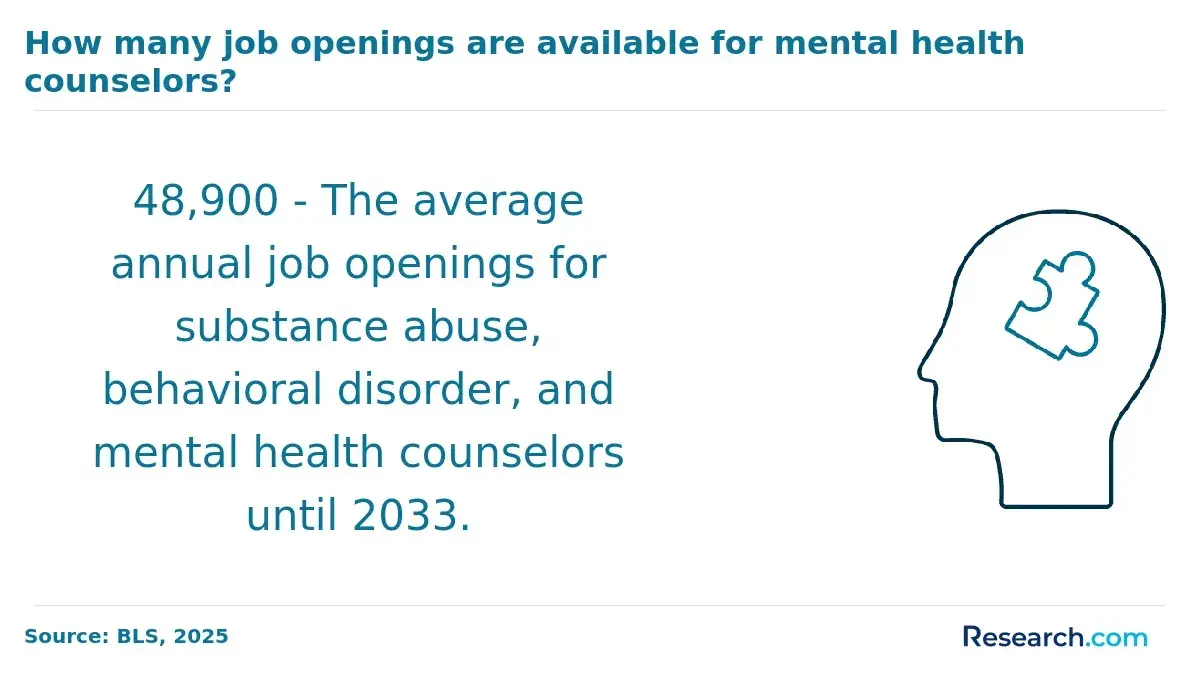
Yes. Atlanta reflects the wider growth in behavioral health employment, with nearly 20% projected growth in mental health and substance abuse counseling roles through 2033. Demand is supported by population growth, increased recognition of mental health needs, and expanded behavioral health services.
Across Georgia, more than 1,300 mental health counseling jobs are expected to be added over the next decade. The state’s need is linked to workforce shortages, rising demand for care, and broader access to counseling services.
Atlanta has more than 400 active job postings for clinical mental health counselors, making it one of the state’s major hubs for counseling employment. Qualified counselors may find opportunities in healthcare, community agencies, schools, telehealth, nonprofits, and private practice.
What Are the Differences in Licensure Requirements for Mental Health Counselors and Marriage and Family Therapists in Atlanta, GA?
Mental health counselors and marriage and family therapists both provide therapy, but their training models and licensure expectations differ. Mental health counseling programs typically emphasize individual and group counseling, assessment, ethics, diagnosis, and treatment planning. Marriage and family therapy programs focus more heavily on relational systems, family dynamics, couples work, and systemic intervention.
The right path depends on the population and treatment model you want to use. If your goal is broad individual mental health practice, the LPC pathway may fit better. If you want to specialize in couples, families, and relational systems, review the MFT license requirements in Atlanta before choosing a graduate program.
| Pathway | Training Emphasis | Best Fit |
| Mental health counselor | Individual therapy, group counseling, assessment, mental health treatment planning | Students who want a broad counseling scope across clinical settings |
| Marriage and family therapist | Couples therapy, family systems, relational patterns, systemic treatment | Students who want to specialize in families, couples, and relationship-centered care |
Where Do Mental Health Counselors Typically Work in Atlanta, GA?
Atlanta counselors work across healthcare, education, public service, nonprofit, corporate, and virtual care environments. The best setting depends on your license level, specialty, preferred client population, and tolerance for administrative demands.
- Hospitals and behavioral health clinics: Counselors provide therapy, participate in treatment planning, and coordinate with physicians, psychiatrists, nurses, and case managers.
- Community and government agencies: These roles often involve crisis response, case coordination, recovery support, and services for vulnerable groups, including veterans.
- Employee assistance programs: Counselors in EAP settings provide short-term support, referrals, stress management, and workplace wellness services.
- Private practice and group practices: Licensed counselors may offer therapy for anxiety, trauma, depression, relationship concerns, and other clinical needs.
- Nonprofit organizations: Nonprofit counselors often focus on affordable, culturally responsive, or community-based mental health services.
- Telehealth platforms: Virtual counseling expands access and can offer flexible scheduling, though counselors still need to follow Georgia licensing rules and ethical standards.
What Professional Development Resources Are Available to Mental Health Counselors in Atlanta, GA?
Professional development is not optional for counselors who want to maintain licensure, improve clinical judgment, and stay current with ethical standards. Atlanta counselors can use continuing education workshops, local association events, university-based training, supervision groups, and specialty certificate programs to build skills throughout their careers.
Professional associations can also help counselors find mentorship, referral networks, legislative updates, and training on emerging clinical issues. If you are still comparing therapy-related career paths, review how to become a therapist in Atlanta through this guide to how to become a therapist in Atlanta.
Is It Challenging to Become a Mental Health Counselor in Atlanta, GA?
Yes. The pathway is achievable, but it is academically, financially, and emotionally demanding. Students must complete graduate school, supervised clinical training, licensing exams, and continuing education while preparing for work with clients facing serious and complex life problems.
Atlanta’s multicultural population also creates a strong need for culturally responsive counseling. Less than 18% of therapists nationwide identify as people of color, while nearly half of Atlanta’s population does. This gap makes cultural humility, community awareness, and inclusive practice essential for counselors entering the field.
Cost can be another barrier. Standard session fees average around $140, which can limit access for clients and affect how counselors structure services, insurance participation, sliding-scale options, or community partnerships. Students should also evaluate whether a specialization fits both their mission and budget; for example, asking Is substance abuse counseling degree affordable? can help clarify training costs before committing.
Common Mistakes to Avoid
- Choosing a program before checking licensure alignment: A degree that sounds relevant may still fail to meet Georgia’s coursework or practicum expectations.
- Looking only at tuition: Fees, books, commuting, exam costs, supervision, and unpaid internship time can change the real cost.
- Assuming online programs are automatically acceptable: Online study can work, but the program must still meet Georgia’s academic and clinical requirements.
- Waiting too long to plan supervision: Post-graduate hours must be properly supervised and documented to count toward licensure.
- Expecting salary outcomes immediately: Higher earnings usually depend on licensure level, specialization, experience, and employer type.
- Ignoring burnout risk: Counseling work requires emotional stamina, consultation, boundaries, and sustainable caseload management.
How Can Mental Health Counselors Manage Burnout in Atlanta, GA?
Burnout prevention should begin during training, not after exhaustion sets in. Mental health counselors in Atlanta often manage high caseloads, trauma exposure, documentation pressure, insurance requirements, and emotional labor. Sustainable practice requires boundaries, consultation, supervision, manageable scheduling, and personal support systems.
- Use supervision and consultation consistently: Regular clinical feedback helps reduce isolation and supports ethical decision-making.
- Set realistic caseload limits: A full schedule is not always a sustainable schedule, especially for trauma, crisis, or high-acuity work.
- Build peer support: Local professional groups, supervision circles, and specialty networks can provide referral support and shared problem-solving.
- Continue skills training: Training in trauma-informed care, stress resilience, ethics, and documentation can reduce avoidable stress.
- Reassess specialization if needed: Some counselors shift settings or populations over time. Those interested in addiction treatment can review how to become a substance abuse counselor in Atlanta for a more focused pathway.
Career Realities for Mental Health Counselors in Atlanta, GA
Many counselors are drawn to Atlanta because the city offers varied clinical settings and a diverse client population. That variety can be professionally rewarding, but it also requires strong cultural competence, adaptability, and a willingness to keep learning.
New counselors often benefit from Atlanta’s supervision opportunities, continuing education options, and large behavioral health network. At the same time, they must prepare for demanding caseloads, documentation requirements, client access barriers, and the emotional weight of clinical work.
The most successful counselors tend to approach the profession as both a service career and a long-term clinical discipline. They choose licensure-aligned education, document supervision carefully, specialize intentionally, and protect their own well-being while helping others.
Key Insights
- Atlanta offers strong demand for mental health counselors, with nearly 20% projected job growth through 2033 and more than 400 active clinical mental health counselor postings.
- The licensure path is structured and lengthy: expect graduate education, at least 600 practicum or internship hours, 1,800–2,400 supervised hours, the NCE, and continuing education every two years.
- Program choice matters. Before enrolling, confirm that the master’s degree is CACREP-accredited, CHEA-recognized, or otherwise aligned with Georgia’s counseling licensure standards.
- Salary potential is solid but not guaranteed. Atlanta mental health counselors average $72,495 annually, while earnings vary by experience, license level, specialization, and work setting.
- Financial aid, RSA-funded opportunities, assistantships, and affordable accredited programs can reduce the cost of entry, but students should calculate the full cost of attendance.
- High-demand specializations include trauma and crisis counseling, addiction counseling, youth and school counseling, and couples and family-focused work.
- Out-of-state counselors should not assume automatic reciprocity. Georgia uses an endorsement process and requires documentation of licensure, education, exams, and supervised experience.
- Burnout prevention is part of career planning. Sustainable counselors use supervision, peer support, reasonable caseloads, continuing education, and clear professional boundaries.
Related Articles for Nearby Cities
- 2027 How to Become a Mental Health Counselor in Huntsville, AL: Education Requirements & Certification
- 2027 How to Become a Mental Health Counselor in Nashville, TN: Education Requirements & Certification
- 2027 How to Become a Mental Health Counselor in Charlotte, NC: Education Requirements & Certification
- 2027 How to Become a Mental Health Counselor in Jacksonville, FL: Education Requirements & Certification
- 2027 How to Become a Mental Health Counselor in Winston-Salem, NC: Education Requirements & Certification
- 2027 How to Become a Mental Health Counselor in Lexington, KY: Education Requirements & Certification
- 2027 How to Become a Mental Health Counselor in Greensboro, NC: Education Requirements & Certification
- 2027 How to Become a Mental Health Counselor in Louisville, KY: Education Requirements & Certification
- 2027 How to Become a Mental Health Counselor in Memphis, TN: Education Requirements & Certification
- 2027 How to Become a Mental Health Counselor in Durham, NC: Education Requirements & Certification
References:
- ACP. (n.d.). Georgia counseling license requirements | ACP, LCP in GA. Retrieved from PublicHealthOnline
- BetterHelp. (n.d.). Which states offer reciprocity for LPC licensure for mental health counselors? Retrieved from BetterHelp
- Counseling Compact. (n.d.). Counseling Compact. Retrieved from CounselingCompact.gov
- CounselingDegreeGuide.org. (n.d.). Counseling license reciprocity guidelines by state. Retrieved from Counseling Degree Guide
- Counseling.org. (n.d.). Licensure requirements for professional counselors. Retrieved from Counseling.org
- Georgia State University. (n.d.). Clinical mental health counseling, M.S. Retrieved from GSU
- Licensed Professional Counselors Association. (n.d.). Home - Licensed Professional Counselors Association | LPCA. Retrieved from LPCA Georgia
- MentalHealthCounselorLicense.com. (n.d.). Georgia mental health counselor licensure | LPC requirements in GA. Retrieved from Mental Health Counselor License
- Online Counseling Programs. (n.d.). How to become a licensed counselor (LPC) in Georgia. Retrieved from Online Counseling Programs
- Psychology.org. (n.d.). Counseling license requirements in Georgia. Retrieved from Psychology.org
Other Things You Should Know About Becoming a Mental Health Counselor in Atlanta, GA
The Georgia Composite Board of Professional Counselors, Social Workers, and Marriage and Family Therapists issues LPC and LPC Associate licenses in Georgia. Applicants must meet the board’s education, supervision, and examination rules before practicing in Atlanta, and renew licenses on the board’s schedule.
In Atlanta, aspiring mental health counselors must complete a minimum of 3,000 hours of supervised work experience under a licensed professional after earning their graduate degree. This supervision helps ensure counselors are prepared for independent practice.
To become a licensed mental health counselor in Atlanta, GA, you must pass the National Clinical Mental Health Counseling Examination (NCMHCE). This exam assesses your ability to apply knowledge and skills required for competent practice in the field.