2027 Best Online Speech Pathology Master's Programs for Residents of San Diego, CA

Co-Founder and Chief Data Scientist

Reviewed by Rhea Paul, PhD
SLP Education & Research Expert
Choosing an online speech-language pathology master's program from San Diego involves more than comparing course delivery. California licensure, state authorization, supervised clinical placements, travel expectations, and CAA accreditation can determine whether a program supports your goal of becoming an SLP.
This guide compares practical program options and explains what San Diego residents should verify before applying. It is designed to help prospective students weigh affordability, flexibility, clinical training, and California career readiness without assuming every online program works the same way.
Key Things You Should Know
- A California-eligible online SLP master's should be CAA-accredited, authorized to enroll California residents, and able to document clinical education that supports California licensure requirements.
- Online does not mean fully remote: clinical practicum, externships, simulations, live classes, and occasional campus immersions may require fixed schedules or travel outside San Diego.
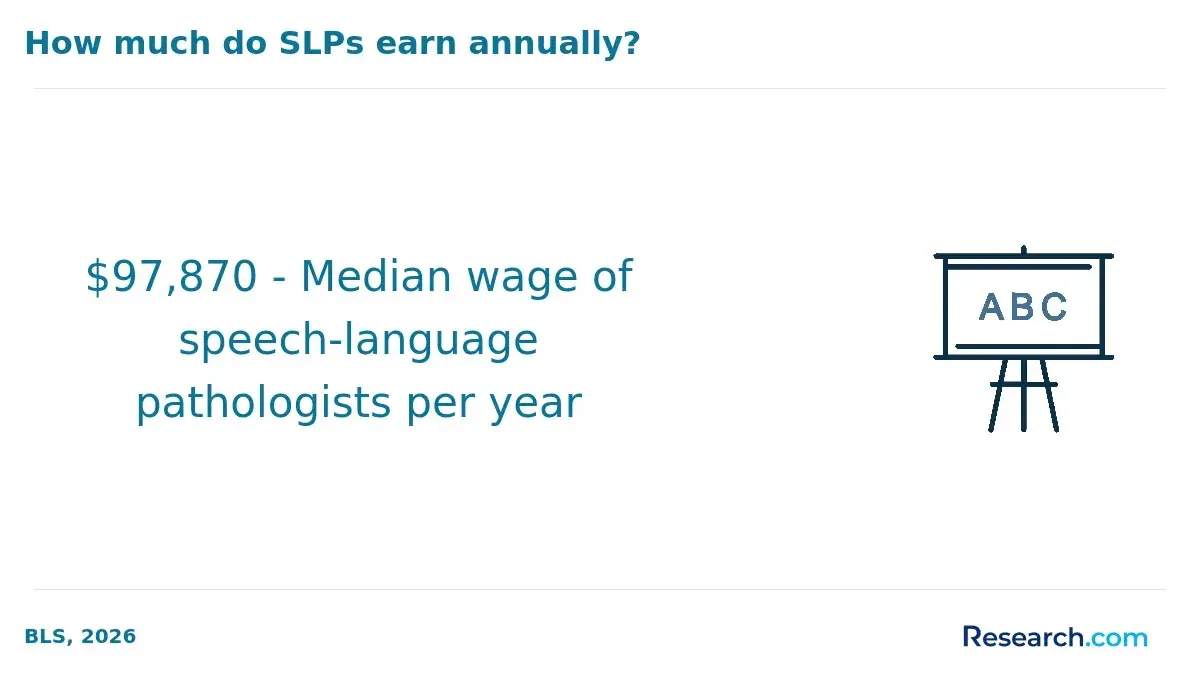
- The national median annual wage for speech-language pathologists was $97,870 in May 2025, and BLS projects 17% employment growth from 2025 to 2035; strong demand does not remove the need to complete California's licensing steps.
Which online speech pathology master's programs admit and serve residents of San Diego specifically?
San Diego residents can consider nationally delivered online master's programs, but admission availability must be confirmed for the specific term. California does not participate in the State Authorization Reciprocity Agreement, so a school's ability to teach students in San Diego depends on its own California authorization or exemption, not simply on its online format.
The programs below are prominent online or distance-delivered pathways worth screening. Their inclusion is not a guarantee of California enrollment, local clinical placement, or California licensure eligibility; applicants should obtain written confirmation from each school before paying an application deposit.
| Program | Format considerations | Why it may fit a San Diego resident | Important confirmation needed |
| Emerson College, MS in Communication Disorders | Online coursework with required clinical education and program-directed placement processes | Designed for distance learners and commonly considered by applicants seeking a structured online cohort | Current California authorization, residency or immersion requirements, and whether placements can be pursued in Southern California |
| Baylor University, MS in Communication Sciences and Disorders | Online academic instruction combined with supervised clinical experiences and scheduled program requirements | May suit students who want a cohort model and planned clinical progression | California enrollment availability, live-session expectations, travel requirements, and placement geography |
| New York University, MS in Communicative Sciences and Disorders | Distance-delivered graduate study with clinical education requirements | May appeal to applicants seeking a large university program with online delivery options | Whether the current online pathway accepts California residents and how clinical assignments and required visits are handled |
Program availability can change because of state authorization, clinical capacity, or cohort planning. If admissions selectivity is a major concern, review realistic preparation strategies alongside lists of the easiest SLP masters to get into, but do not choose a program solely because it appears less selective. Accreditation, placement support, and California compatibility matter more after admission.
A strong applicant should ask admissions four direct questions: "May a California resident enroll in this cohort?" "Is the online track currently CAA-accredited?" "What travel is mandatory?" and "What happens if a placement cannot be secured near San Diego?" Written answers are more useful than general marketing language.
How do online San Diego-eligible speech pathology programs compare on accreditation and licensure readiness?
For an aspiring California SLP, the most important comparison is not school reputation alone. A program must combine recognized academic accreditation, appropriate clinical education, transparent state disclosures, and a feasible plan for placements and post-graduate supervised practice.
This comparison framework shows the difference between an online program that is merely convenient and one that is positioned to support a California licensure pathway.
| Decision factor | What a strong option should show | Why it matters in California |
| CAA status | Accredited status in the ASHA Council on Academic Accreditation directory, with the degree pathway clearly covered | CAA accreditation is the clearest benchmark for academic and clinical preparation and supports later CCC-SLP eligibility planning |
| California licensure disclosure | A current disclosure stating whether the curriculum meets, is intended to meet, or has not been determined to meet California requirements | Schools must not be assumed to meet California requirements simply because they enroll online students nationally |
| Clinical placement model | Clear responsibility for finding, approving, supervising, and replacing placements | Placements can be competitive across San Diego health systems, schools, and private practices |
| Required travel | Published information about residencies, skills intensives, orientation, and exams | Travel changes the true cost and may conflict with work or family commitments |
| Schedule design | Specific information on live sessions, daytime clinic hours, and cohort sequencing | Pacific Time students need to know whether synchronous requirements fall during work hours |
CAA accreditation is especially valuable because it evaluates graduate education in speech-language pathology against profession-specific standards. Still, it is not a substitute for a California license. A graduate must separately satisfy the Speech-Language Pathology and Audiology and Hearing Aid Dispensers Board's education, examination, and required professional experience rules.
For most applicants, an accredited program with transparent California disclosures and a detailed placement process is a better choice than a cheaper program that cannot answer where, when, and under whose supervision clinical education will occur.
Which online master's in speech pathology best balances cost, quality, and flexibility for San Diego residents?
No single online SLP master's program is best for every San Diego resident. The strongest choice depends on whether your limiting factor is upfront cost, ability to attend daytime clinical experiences, tolerance for travel, prerequisite readiness, or need for a predictable cohort schedule.
Use the following fit-based comparison rather than treating one advertised tuition figure or completion timeline as decisive.
| Priority | Best-fit program characteristics | Trade-off to accept |
| Lower borrowing need | Transparent per-credit and required-fee disclosures, fewer required trips, and an efficient path without unnecessary leveling courses | Lower tuition does not necessarily include travel, technology, background checks, clinical compliance, or lost work time |
| Maximum schedule predictability | Published cohort calendar, known live-class times, and early notice of practicum terms | Structured cohorts can leave less room to slow down if work or caregiving changes |
| Minimal travel | Limited or no mandatory campus intensives, with requirements stated in writing | Even a low-residency program may require local daytime clinical work that limits employment hours |
| Fast completion | Continuous full-time cohorts with prerequisites completed before enrollment | Accelerated pacing can increase weekly workload and reduce flexibility during clinical terms |
| Strong California career alignment | CAA accreditation, California-specific licensure disclosure, and robust placement oversight | These features may cost more than a program with fewer student-support services |
Applicants who have already completed communication sciences and disorders prerequisites may be able to consider accelerated speech pathology programs. An accelerated plan makes sense only when it preserves enough time for demanding clinical work and does not require you to take on unsustainable employment or borrowing.
For many working adults, the best value is not the shortest program. It is the program whose clinical calendar, travel expectations, and total out-of-pocket cost are realistic enough to finish on time. Compare the full degree cost, not just the per-credit price, and include tuition increases that may apply after the first academic year.
What accreditation and approvals must an online speech pathology program have for California SLP licensure?
A prospective California SLP should start with CAA accreditation and then evaluate state-specific requirements separately. The Council on Academic Accreditation in Audiology and Speech-Language Pathology is ASHA's specialized accreditor for graduate programs in the field. A program may be delivered online, in person, or in a hybrid format; what matters is whether the specific degree pathway holds the appropriate current accreditation status.
California licensure is administered by the Speech-Language Pathology and Audiology and Hearing Aid Dispensers Board. Applicants generally need a qualifying graduate degree, supervised clinical preparation, a passing national examination score, and completion of the required supervised professional experience before independent licensure. Requirements can be updated, so applicants should check the Board's current application instructions before enrollment and again before graduation.
Before choosing a program, confirm the following points directly with the school and retain the responses for your records.
- Verify the program's current CAA status in the official CAA directory and ensure it applies to the degree format you will complete.
- Request the school's California professional-licensure disclosure for the exact online program and planned start term.
- Ask how the curriculum documents supervised clinical education, including observation, direct client contact, supervisor qualifications, and clock hours.
- Confirm that the institution is permitted to enroll students located in California.
- Compare the degree plan with the California Board's current education, examination, and supervised professional-experience requirements.
A common mistake is treating "ASHA aligned," "licensure track," or "designed for certification" as equivalent to accredited status and California eligibility. Those phrases can be helpful descriptions, but they are not replacements for a current CAA listing and a California-specific disclosure.
How does ASHA CAA accreditation interact with California state licensure for speech-language pathologists?
CAA accreditation and California licensure serve different functions. CAA evaluates whether a graduate program meets professional education standards. California licensure authorizes an individual to practice as a speech-language pathologist in the state. Completing a CAA-accredited master's program is an important foundation, but it does not itself issue a California license.
CAA standards are also closely connected to the pathway toward ASHA's Certificate of Clinical Competence in Speech-Language Pathology, commonly called the CCC-SLP. The CCC-SLP is a professional credential, not a substitute for state licensure. Employers may prefer it, and it can support professional mobility, but California practice authority comes from the state license.
The practical sequence is usually straightforward: earn a qualifying graduate degree, complete required clinical education, meet examination requirements, complete the state-required supervised professional experience, and apply for California licensure. The exact timing of examination, professional experience, and applications should be checked with the California Board because individual circumstances and rules can differ.
Do not assume that a program's CAA accreditation erases every administrative hurdle. California applicants should still plan for fingerprinting, documentation, official transcripts, supervisor verification, and the possibility that a post-graduate professional experience placement may need separate approval or oversight.
What state authorization or distance education agreements allow these programs to enroll students in San Diego?
State authorization answers a different question from accreditation: whether an institution may provide distance education to a student who is physically located in California. Because California is not a State Authorization Reciprocity Agreement member, many out-of-state institutions cannot rely on SARA participation alone when enrolling California distance learners.
A school may be able to enroll California students through direct authorization, an applicable exemption, or another legally recognized arrangement. The school - not the student - should be able to explain its status. The answer may vary by program, clinical component, and enrollment date.
Ask the institution's compliance or admissions office to address these issues in writing.
- Whether the university may enroll students who are physically located in California for the entire online SLP program.
- Whether California eligibility changes when clinical practicum begins or when a student completes placement hours at a California site.
- Whether the school has determined that its curriculum meets California educational requirements for licensure.
- Whether any temporary restrictions, teach-out plans, or cohort limitations affect California applicants.
Do not rely on a school's general statement that it "accepts online students nationwide." That wording may not address California specifically, and it may not cover a clinical program with in-person supervised practice requirements.
How should San Diego residents verify an online speech pathology program's current accreditation and status?
Verification should happen before you apply and once more before you enroll. Accreditation, authorization, tuition, clinical procedures, and licensure disclosures can change between application cycles.
Use this short due-diligence process to create a record of the information that will affect your decision.
- Search the official ASHA CAA program directory for the university, degree name, location, and accreditation status; note any review dates or special status language.
- Read the university's professional-licensure disclosure for California rather than relying on a general program overview page.
- Ask admissions whether California residents are eligible for the exact cohort, concentration, and delivery format you want.
- Request a written list of required campus visits, synchronous sessions, clinical terms, and estimated non-tuition charges.
- Review the California Board's current requirements independently and compare them with the school's written response.
- Save emails, PDFs, and catalog pages dated during your application cycle in case program information later changes.
Red flags include an inability to name the accreditor, vague answers about California eligibility, no explanation of who arranges placements, and an estimate of cost that excludes common clinical expenses. A legitimate uncertainty is not automatically disqualifying, but the school should explain how it will resolve it before enrollment.
What externship, practicum, and clinical placement issues are unique to San Diego online SLP students?
Clinical education is where an online SLP degree becomes locally dependent. Coursework may be completed from home, but practicum and externship experiences involve supervised work with clients in real settings. San Diego's schools, hospitals, rehabilitation providers, early-intervention programs, and private practices may offer potential training environments, yet availability is competitive and cannot be presumed.
Programs differ substantially in whether they secure placements, assist students who identify leads, or expect students to find sites that the university then approves. The distinction affects your risk, timeline, and ability to keep a job while enrolled.
| Placement issue | Why it matters for San Diego students | Question to ask the program |
| Who finds the site | A student-led search can be difficult when local sites already have agreements with other universities | Does the program guarantee a placement, arrange one when possible, or require me to locate an approved site? |
| Daytime availability | School and medical placements often occur during standard business hours | What are the expected weekly hours during each clinical term? |
| Travel radius | A placement may be available outside central San Diego or in another California region | What geographic range must students accept if local sites are unavailable? |
| Supervisor approval | Sites and supervisors must satisfy university and professional requirements | How long does approval take, and what happens if a proposed supervisor is not eligible? |
| Placement disruption | Site staffing changes or caseload shifts can delay clock-hour completion | What contingency support is provided if a placement ends early? |
Students should not contact sites as if they are guaranteed to receive a placement before learning the university's policies. Some programs require formal affiliation agreements, and independent outreach may complicate existing partnerships. Instead, ask for the placement handbook and a realistic description of the student's responsibilities before committing.
Clinical scheduling is often the reason an online SLP program is not compatible with full-time employment. A student who needs stable income should calculate how practicum terms affect work hours, commuting, parking, immunizations, liability coverage, background checks, and childcare.
How do tuition, fees, and financial aid for these programs compare for California-based students?
Online SLP programs commonly publish tuition by credit, term, or academic year rather than one comparable total-program figure. That makes a simple "cheapest program" ranking unreliable unless each school's required credits, fees, travel, and clinical expenses are calculated on the same basis.
For a more useful affordability comparison, request a written cost estimate for your cohort and separate charges into the categories below.
| Cost category | What to compare | Why it changes the decision |
| Tuition | Required credits multiplied by the applicable tuition rate, including expected rate changes | A lower per-credit figure may not produce a lower degree total if the program requires more credits or leveling coursework |
| University fees | Technology, enrollment, graduation, clinical, course, and distance-learning fees | Mandatory fees can be material and are not always included in advertised tuition |
| Travel and residency costs | Transportation, lodging, meals, and time away from work for required intensives | These costs are especially relevant when the program is based outside California |
| Clinical compliance costs | Background checks, immunizations, drug screening, insurance, equipment, and site-required training | These are often paid during clinical terms when students may have fewer work hours |
| Opportunity cost | Reduced employment income during practicum and externship periods | This can exceed a small tuition difference between programs |
Federal financial aid may be available to eligible graduate students at participating institutions, but loans should be evaluated as a repayment obligation rather than as a discount. Scholarships, employer tuition assistance, military education benefits, and state or school-based aid can reduce borrowing, though availability and eligibility vary.
Students comparing affordability can use broader guides to speech pathology online programs as a starting point, then confirm the current official price and California-specific charges directly with each university. Ask whether the estimate includes every required clinical course and whether tuition is locked for a cohort.
What online speech pathology program outcomes matter most for San Diego residents evaluating career prospects?
The outcome that matters most is not a school's general employment claim; it is whether the program enables you to meet California licensing requirements and enter the setting you want. Speech-language pathologists work across schools, health care, early intervention, rehabilitation, and private practice, and each setting can have different hiring processes and credential expectations.
The national labor market supports careful investment in the credential. The U.S. Bureau of Labor Statistics reports a median annual wage of $97,870 for speech-language pathologists in May 2025 and projects 17% employment growth from 2025 to 2035, with about 12,500 openings annually on average over the decade. These are national figures, not San Diego salary guarantees, but they indicate sustained demand for qualified licensed professionals.
Compare these outcomes and supports when evaluating programs.
| Outcome measure | What to look for | How to use it |
| Licensure readiness | Clear documentation of degree, clinical, examination, and supervised-experience preparation | Prioritize this over broad career marketing because it is essential for practice |
| Praxis preparation | Curriculum alignment, advising, and transparent exam-support resources | Ask how the program supports students without implying that any score is guaranteed |
| Clinical breadth | Experience with varied ages, communication needs, and service settings where feasible | Match exposure to your intended career setting, such as schools or medical practice |
| Completion support | Advising, placement coordination, remediation policies, and accessibility services | These supports can matter more than branding when clinical coursework becomes demanding |
| Career support | Career coaching, alumni access, and guidance on clinical fellowship or required professional experience | Useful as a supplement, but verify California licensing steps independently |
Prospective students should treat salary as one part of return on investment, not a promise. Location, setting, experience, caseload, employment arrangement, and licensure status affect pay. For a fuller view of role and setting differences, see how much do speech pathologists make.
An online program is a sound career investment when it provides a verifiable route to California licensure, clinical training you can realistically complete, and a financial plan that does not depend on optimistic assumptions about immediate earnings.
Other Things You Should Know About Speech Language Pathology
Yes, potentially. The degree format alone does not determine eligibility. You need a qualifying program, appropriate clinical preparation, and completion of California's current licensing requirements. Confirm CAA status, California enrollment authorization, and the school's California licensure disclosure before enrolling.
Yes. Online academic courses do not eliminate supervised clinical education. Programs may use simulation and telepractice training where appropriate, but practicum and externship requirements generally include supervised client-facing experiences that must meet university and professional standards.
Some students work during coursework, but full-time employment can become difficult during practicum and externship terms. Clinical experiences may require weekday daytime availability, commuting, documentation, and preparation outside placement hours. Review the clinical calendar before relying on employment income.
You may be eligible, but many programs require prerequisite or leveling coursework in communication sciences and disorders. This can extend total time and cost. Ask each program for an individualized prerequisite review rather than assuming prior coursework will transfer.
References
- Master of Arts in Speech-Language Pathology https://calvin.edu/majors-programs/master-arts-speech-language-pathology
- Online MS in Speech-Language Pathology (SLP) | Pepperdine https://healthscience.pepperdine.edu/online-masters-in-speech-language-pathology/
- Speech-Language Pathology Essentials https://globalcampus.sdsu.edu/program/writing-language-communication/speech-language-pathology-essentials/
- Best Speech-Language Pathology Programs in America https://www.usnews.com/best-graduate-schools/top-health-schools/pathology-rankings
- Online Master's in Speech Pathology Programs: 2026 Guide https://speechpathologymastersprograms.com/
- Masters SLP programs - preferably online: r/slpGradSchool https://www.reddit.com/r/slpGradSchool/comments/s5p0p0/masters_slp_programs_preferably_online/