2027 Best Online Speech Pathology Master's Programs for Residents of Miami, FL

Co-Founder and Chief Data Scientist

Reviewed by Rhea Paul, PhD
SLP Education & Research Expert
Miami residents seeking an online master's in speech-language pathology need more than a convenient course schedule. They need a CAA-accredited degree, a workable clinical-placement plan, and a path that supports Florida licensure.
This guide compares strong online and hybrid SLP master's options based on Florida eligibility, clinical training, travel expectations, student support, and cost transparency. It also explains how to verify the details that can affect whether an online degree actually moves you toward professional practice.
Key Things You Should Know
- A Miami resident should prioritize a program accredited by ASHA's Council on Academic Accreditation (CAA), because graduation from a CAA-accredited program is central to ASHA certification and Florida SLP licensure planning.
- Online SLP programs are not fully remote: students must complete supervised clinical practicum and full-time externships, and some programs require campus immersions or travel outside Miami.
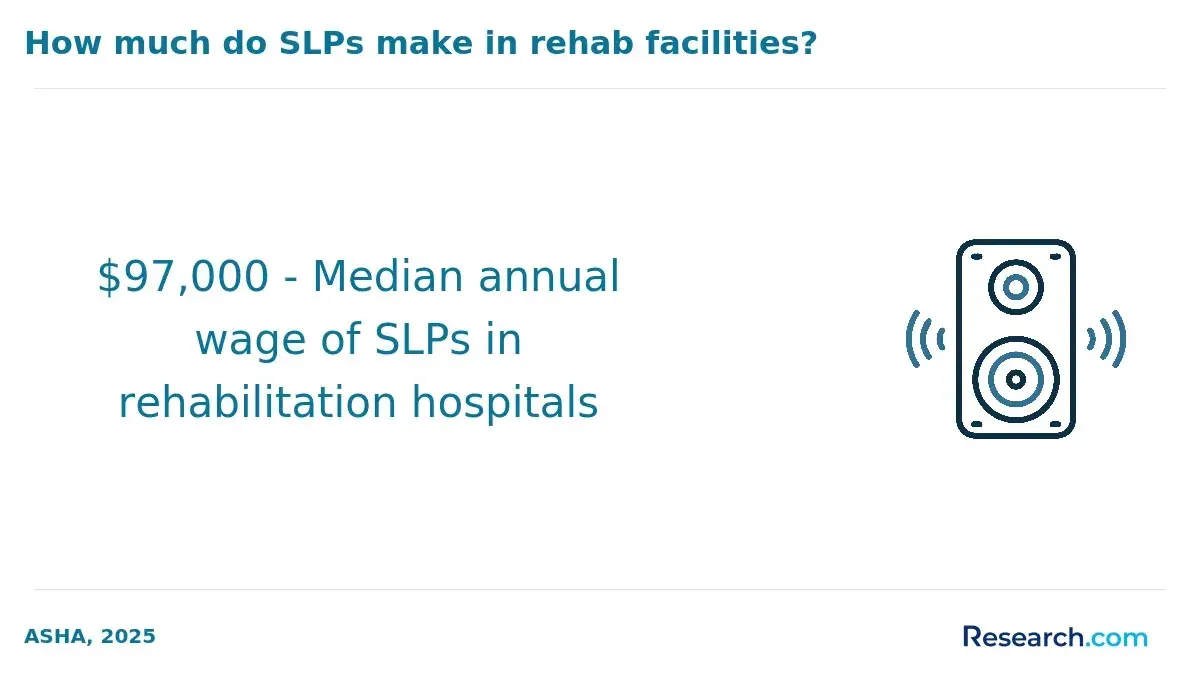
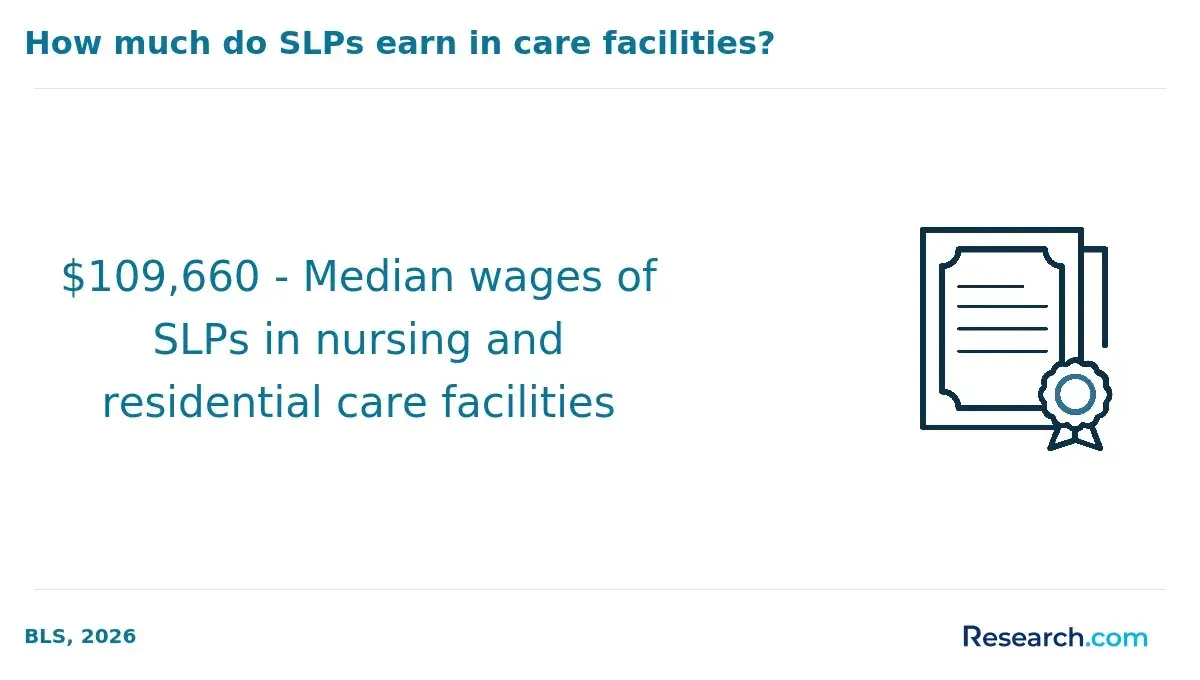
- The national median annual wage for speech-language pathologists was $97,870 in May 2025, and BLS projects 17% employment growth from 2025 to 2035; strong demand does not remove the need to verify Florida eligibility before enrolling.
Which online speech pathology master's programs accept Miami residents and offer Florida-focused clinical training?
For Miami applicants, the most useful online SLP options are programs that can enroll Florida residents, maintain CAA accreditation, provide a documented process for arranging supervised clinical education, and make their travel requirements clear. "Online" generally describes academic coursework; it does not mean that required patient-facing training can be completed without approved in-person sites and supervisors.
The programs below are examples of established online or distance-oriented master's pathways that commonly serve students outside their home states. Enrollment availability, Florida disclosures, cohort openings, and clinical-site capacity can change, so applicants should obtain written confirmation before paying an application deposit.
| Program | Format considerations for Miami residents | Clinical-training model | Best fit | Important trade-off |
| Baylor University, Master of Science in Communication Sciences and Disorders | Online coursework with required in-person components; students should confirm current Florida authorization and immersion details. | Program-supported clinical placements and supervised experiences; placements depend on site and supervisor availability. | Students seeking a cohort-based online pathway with structured faculty support. | Travel and clinical scheduling may be substantial, especially during immersion and placement periods. |
| New York University, MS in Communicative Sciences and Disorders | Distance-learning format with synchronous and clinical requirements; confirm Florida participation and on-campus expectations. | Clinical education is arranged through approved sites and must meet program requirements. | Students comfortable with live online learning and a highly structured academic calendar. | Private-university tuition and required travel can raise the total cost. |
| Emerson College, MS in Speech-Language Pathology | Online program with live learning elements and clinical experiences; applicants should verify Florida eligibility for their intended start term. | Program-coordinated clinical placement process with student participation in site requirements. | Students who value an online cohort and dedicated placement support. | Externship locations, schedules, and travel needs cannot be assumed in advance. |
| University of St. Augustine for Health Sciences, MS-SLP | Hybrid and campus-based availability can vary by location and cohort; Florida residents should confirm the specific delivery model offered. | In-person clinical education under approved supervision. | Applicants who prefer Florida-based institutional options and can attend required in-person components. | It may not offer the same level of location flexibility as a primarily online program. |
These are not interchangeable choices. A Miami applicant with a full-time job may prefer a program with part-time pacing and evening live sessions, while someone able to reduce work hours may prioritize the program's clinical-placement infrastructure and total travel burden. A broader comparison of SLP online programs can help identify additional cost-conscious options, but each school's Florida authorization and licensure disclosures should remain the final screening criteria.
Ask each admissions office whether it has recently placed students in Miami-Dade, Broward, or Palm Beach County. A school may be able to consider local sites, but it should not promise a particular hospital, school district, clinic, or commute radius before affiliation agreements and supervisor availability are confirmed.
How do Miami-eligible online speech pathology programs meet ASHA CAA accreditation requirements?
CAA accreditation evaluates the graduate program, not merely the university or its online platform. A CAA-accredited speech-language pathology master's program must demonstrate that its curriculum, faculty, assessment practices, clinical education, and student outcomes meet professional standards. This distinction matters because institutional accreditation alone does not establish eligibility for the standard professional pathway.
Online delivery does not lower the clinical standard. Students in CAA-accredited programs complete academic coursework and acquire supervised clinical experience across the scope of speech-language pathology practice. Programs must assess competencies and ensure that clinical educators meet applicable supervision qualifications.
The following comparison shows why accreditation language should be read carefully before a Miami resident enrolls.
| Term | What it means | Why it matters in Florida |
| CAA accredited | The program has been awarded accreditation by ASHA's Council on Academic Accreditation. | This is the strongest status to seek when planning ASHA certification and Florida professional licensure. |
| CAA candidate | A newer program is progressing through CAA's accreditation process under a defined status. | Applicants should confirm how the status applies to their entering cohort and ask about contingency planning. |
| Institutionally accredited | The college or university meets broad academic and administrative standards through an institutional accreditor. | Necessary for many federal aid and transfer considerations, but not a substitute for CAA programmatic accreditation. |
| State authorized | The institution is permitted to offer distance education to residents of a state. | It addresses enrollment legality, not whether the degree satisfies Florida clinical or licensing requirements. |
CAA status can change, and students should verify the status of the exact degree and location through ASHA's current program directory. Do not rely only on an old catalog page, a social-media post, or a statement that the university is "accredited." The relevant question is whether the speech-language pathology graduate program and the cohort you would enter are covered by the appropriate CAA status.
CAA requirements also help explain why reputable online master's programs can be demanding. Coursework may be delivered remotely, but competency assessments, clinical documentation, supervisor oversight, and direct patient services still require active participation and formal review.
Which online speech pathology master's programs best support Florida SLP licensure after graduation?
No online program can automatically grant a Florida license. The most supportive choices are those that clearly disclose their curriculum's relationship to Florida requirements, graduate students from a CAA-accredited pathway, track clinical education carefully, and provide graduates with documentation needed for the next steps. Florida requirements can change, so applicants should compare a school's disclosure with the current requirements of the Florida licensing authority.
For most aspiring Florida speech-language pathologists, the degree is one stage of a longer sequence: graduate education, supervised postgraduate experience when required, the national examination, and an application to the state. ASHA's Certificate of Clinical Competence in Speech-Language Pathology is a widely recognized professional credential, but state licensure is separately governed.
A program is generally more licensure-supportive when it can answer the following questions directly and in writing.
- Is the specific online or hybrid MS program CAA accredited, and does that status apply to my anticipated graduation date?
- Does the institution's professional-licensure disclosure state whether the curriculum meets, is designed to meet, or has not been determined to meet Florida requirements?
- How are clinical clock hours, supervisor qualifications, evaluations, and completion records documented for graduates?
- What postgraduation support is available for examination preparation, clinical fellowship planning, transcripts, and licensure verification?
- Has the program identified any Florida-specific limitations, background-check requirements, or placement restrictions for distance students?
Students should avoid choosing solely on the basis of an attractive online schedule. A lower-friction admissions process has limited value if the school cannot provide a clear Florida licensure disclosure or cannot explain how its clinical records support a graduate's application. Applicants who want to compare admissions accessibility should review speech language pathology programs while keeping accreditation and licensing fit ahead of perceived selectivity.
Florida licensure decisions are made by the state, not by a university. Treat institutional statements as planning information rather than a substitute for confirmation from the licensing authority.
What distinguishes top Miami-serving online SLP programs in cost, outcomes, and student support?
The best-value program is not always the one with the lowest published per-credit tuition. Miami students should compare tuition, required fees, travel, technology, health-clearance expenses, background checks, clinical clothing or equipment, and income lost if an externship schedule prevents full-time work. Private programs often publish a clear tuition structure, while public institutions may have different resident and nonresident rates or limited distance eligibility.
Use the table as a cost-and-support checklist rather than as a price ranking. Schools update tuition regularly, and a verified total cost should include all required program charges - not just instructional tuition.
| Decision factor | What to compare | Why it affects Miami students |
| Published tuition basis | Per-credit, per-term, or total-program tuition; whether rates are guaranteed for a cohort. | Figures cannot be compared fairly unless they use the same basis. |
| Required travel | Campus immersions, orientation, skills assessments, and the number of expected trips. | Airfare, lodging, meals, and time away from work can materially increase cost. |
| Clinical-placement expenses | Fingerprinting, immunizations, drug screening, liability coverage, parking, and commute costs. | South Florida traffic and placement distance can affect both budget and schedule. |
| Outcomes transparency | Program completion, Praxis examination, employment, and accreditation outcome information where published. | Published outcomes help evaluate preparation, but past results do not guarantee an individual result. |
| Student support | Clinical-placement team, disability services, tutoring, advising, technical help, and career support. | Distance students need responsive support when they are coordinating local sites and live coursework. |
National labor-market demand supports careful investment rather than rushed enrollment. The U.S. Bureau of Labor Statistics projects about 12,500 openings for speech-language pathologists each year, on average, from 2025 to 2035. That outlook can support long-term career planning, but it does not predict an individual Miami salary, job offer, or debt affordability. Local employers, setting, experience, bilingual skills, and payer mix influence opportunities.
Applicants evaluating return on investment should calculate a conservative budget before applying. Include the full expected program cost, likely borrowing, interest during repayment, and the possibility that clinical terms limit paid work. For wage context by role and work setting, see how much do speech therapists make.
A common mistake is treating employer-reported outcomes as comparable across schools without reading the definitions. Check the reporting period, cohort size, whether outcomes include part-time work, and whether employment data refers to all graduates or only respondents.
How do Miami students complete required clinical practicum and internships while studying online?
Clinical education is the least "online" part of an online SLP degree. Miami students typically complete observation, practicum, and external clinical placements in person under qualified supervision. Programs may help identify and secure sites, but students should expect to complete onboarding tasks and remain flexible about schedules, populations, and commute distances.
The exact sequence differs by curriculum, but students commonly move through the following process.
- Complete prerequisite clinical preparation, compliance modules, and any required skills or simulation activities.
- Submit health records, background checks, drug screening, insurance documents, and other site-specific onboarding materials by program deadlines.
- Work with the program's clinical education team to identify an approved placement and qualified supervisor.
- Attend scheduled clinical sessions, document hours and competencies, and receive formal supervisory evaluations.
- Complete advanced externships that may require daytime availability and a schedule similar to full-time professional work.
Miami-Dade County offers many possible healthcare, school, and private-practice environments, but supply does not guarantee placement availability. Clinical sites must agree to affiliate with the university, provide appropriate supervision, and have cases that support required competencies. A student's preferred school district, pediatric clinic, hospital, bilingual setting, or neighborhood may not be available when needed.
Ask prospective programs who bears responsibility if a placement falls through. Strong programs explain their escalation process, whether students may suggest sites, how long affiliation agreements can take, and whether a delayed placement can postpone graduation. Also ask whether the program requires travel for simulations, intensives, comprehensive examinations, or specialty clinical experiences.
Students who need the shortest possible timeline should be particularly cautious. Programs marketed as accelerated speech pathology programs online may compress academic terms, but required clinical experiences still depend on site calendars, supervisors, and demonstrated competence. Faster coursework does not eliminate clinical obligations.
What are the admission standards and prerequisite courses for competitive online SLP programs?
Admissions standards vary, but competitive online SLP programs commonly assess academic preparation, communication-related experience, references, writing, and readiness for graduate-level clinical study. A bachelor's degree in communication sciences and disorders can simplify admission, but applicants from other majors may qualify after completing prerequisite or leveling coursework.
These are common admissions elements Miami applicants should expect to encounter. Individual programs may add, remove, or revise requirements by cohort.
| Requirement area | What programs commonly review | Planning implication |
| Bachelor's degree | A completed undergraduate degree from an appropriately accredited institution. | A non-CSD major is often possible, but it may extend the timeline. |
| Prerequisite coursework | Foundational CSD courses and science, statistics, or social-science requirements aligned with professional standards. | Obtain a transcript evaluation early; do not assume similarly named courses will transfer. |
| Grade point average | Minimum cumulative and/or prerequisite GPA requirements. | Meeting a minimum does not necessarily make admission likely in a limited cohort. |
| Letters and personal statement | Academic readiness, communication skills, service orientation, and understanding of the profession. | Use specific examples rather than generic claims about wanting to help people. |
| Experience and observation | Relevant work, volunteer activity, shadowing, or exposure to communication disorders. | Follow each program's rules for documenting observation and confidentiality. |
| Testing and interviews | GRE policies, interviews, writing assessments, or recorded responses where required. | Verify the exact application cycle; policies can change without changing the overall degree title. |
Prerequisites often include introduction to communication disorders, phonetics, speech and hearing science, language development, anatomy and physiology related to speech and hearing, audiology, and research or statistics. Programs may also require courses satisfying ASHA's broader content areas, such as biological science, physical science, statistics, and social or behavioral science.
A common mistake is enrolling in inexpensive prerequisites without first asking the target graduate program whether they will be accepted. Send course descriptions and unofficial transcripts for preliminary guidance when a school offers that service. Also verify whether prerequisites must be completed before application, before enrollment, or by a stated deadline.
How do institutional and programmatic accreditations interact for online speech pathology degrees?
Institutional and programmatic accreditation answer different questions. Institutional accreditation evaluates the college or university as a whole, including governance, academic quality, and financial processes. Programmatic accreditation evaluates whether the specific professional SLP degree meets standards for preparing entry-level practitioners.
For a Miami resident comparing online programs, both matter, but CAA status is usually the decisive professional credential. Federal financial aid, transfer-credit recognition, and graduate-school legitimacy are closely tied to institutional accreditation. Clinical and certification planning depend much more directly on whether the specific master's program is CAA accredited or has a status that is clearly applicable to the student's cohort.
Use this three-part review before making an enrollment decision.
- Confirm the university's institutional accreditation through its official accreditation information and applicable federal resources.
- Confirm the exact speech-language pathology program's current CAA status, including whether the status covers the delivery pathway and anticipated graduation period.
- Read the university's Florida professional-licensure disclosure and compare it with current state licensing rules.
Do not confuse membership in a professional association, approval to operate in a state, or regional reputation with programmatic accreditation. Likewise, do not assume that a university's health-sciences focus means every degree it offers leads to a clinical license. A transparent institution should identify the accreditor, program status, and relevant limitations without requiring applicants to infer them from marketing language.
What state authorization and distance-education rules affect Miami residents in out-of-state programs?
State authorization determines whether an out-of-state institution may provide distance education to a Florida resident. It is separate from CAA accreditation and separate from professional licensure. A program can be CAA accredited yet temporarily unavailable to Florida residents because of authorization, clinical-placement, or institutional-policy constraints.
Many institutions participate in interstate distance-education arrangements, but participation does not automatically mean every program, practicum, or professional pathway is available in every state. Clinical education can trigger additional requirements because a student is physically working with clients in Florida and must meet both school and placement-site rules.
Before submitting an application, request answers to the following practical questions.
- May a Florida resident enroll in this specific online SLP cohort today?
- May I complete all required clinical education in Florida, subject to site availability and university approval?
- Does the program's Florida disclosure identify the curriculum as meeting, not meeting, or not yet determined to meet Florida educational requirements?
- What happens if state authorization or a placement agreement changes while I am enrolled?
- Are there required visits to another state, and are dates announced far enough ahead for travel planning?
Keep the answers with your admission records. Verbal assurances from a recruiter are useful starting points, but an official disclosure, catalog provision, or written confirmation from the program is more reliable if rules change. Students planning to move out of Florida during the degree should repeat the authorization and licensure review for the new state before relocating.
How can Miami applicants verify program accreditation, licensure alignment, and consumer protections?
A careful verification process protects applicants from spending on a degree that does not fit their professional objective. The goal is not simply to find an online master's program; it is to confirm that the exact program, delivery model, state of residence, and clinical plan work together.
Use this sequence before accepting an offer.
- Locate the program in ASHA's CAA directory and save the current accreditation-status record for the exact degree.
- Read the school's current Florida professional-licensure disclosure rather than relying on general statements about national eligibility.
- Request a written estimate of tuition, required fees, travel, clinical compliance costs, and payment schedule.
- Ask the clinical education office how Florida placements are secured, what support it provides, and what can delay a placement.
- Review the catalog for withdrawal, leave-of-absence, teach-out, transfer-credit, complaint, and refund policies.
- Compare the school's disclosure with current Florida licensing requirements and contact the appropriate state authority when the match is unclear.
Consumer protections matter because online clinical programs involve substantial commitments of money, time, and personal records. Read the policies governing complaints, disability accommodations, privacy, background-check failures, and clinical dismissal. A school should explain these policies in accessible official materials rather than only after a problem occurs.
Red flags include vague claims that a program "prepares students for licensure everywhere," refusal to identify CAA status, unclear responsibility for clinical placements, and tuition quotes that omit mandatory charges. Another warning sign is pressure to enroll before the program will confirm whether Florida residents are eligible. A credible program may not be able to guarantee a specific placement, but it should be transparent about its process and limitations.
What unique factors should Miami-based aspiring speech-language pathologists consider when choosing online study?
Miami creates opportunities and constraints that deserve attention beyond a national program ranking. The region's multilingual communities can make culturally and linguistically responsive practice especially important. Students interested in bilingual service delivery should ask how a program teaches assessment and intervention across languages, while recognizing that conversational proficiency alone does not qualify someone to provide services in another language.
Clinical logistics are equally important. South Florida's traffic, parking costs, hurricane disruptions, and long travel times can make a placement that appears geographically close much harder to manage around live classes or employment. Ask whether synchronous sessions are scheduled in Eastern Time, whether attendance is mandatory, and what happens when severe weather or a clinical-site closure affects required hours.
Miami applicants should also think realistically about work commitments. Early academic terms may be manageable alongside employment, but advanced practicum and externship schedules can require daytime availability. A part-time academic plan does not necessarily mean part-time clinical demands. Build a financial cushion before the first placement term and avoid assuming that all clinical work can occur on evenings or weekends.
Finally, choose a program based on the population and setting you hope to explore, not just brand recognition. Someone interested in pediatric schools may prioritize school-based exposure; someone aiming for medical practice may seek adult, dysphagia, rehabilitation, or acute-care experiences. The degree should provide broad entry-level preparation, while placements and electives can help you test longer-term interests.
Other Things You Should Know About Speech Language Pathology
Yes, if the online or hybrid degree meets applicable educational standards, includes required supervised clinical education, and supports the other steps required for Florida licensure. The degree being online does not remove in-person practicum and externship requirements. Confirm the specific program's CAA status and Florida licensure disclosure before enrolling.
Programs vary. Some have dedicated clinical-placement teams and coordinate sites, while others require greater student participation in identifying options. Even when a program leads the process, it may not guarantee a particular Miami site, specialty, commute distance, or schedule.
Completion time depends on full-time or part-time pacing, prerequisite needs, curriculum design, and clinical-placement timing. Many programs use a cohort sequence that runs across multiple terms. Students with a non-CSD bachelor's degree may need additional leveling coursework before or during graduate study.
Not always, but many students reduce work hours during clinical terms. Live classes, practicum, and externships can occur during regular business hours, and placement schedules are usually driven by the site's needs. Ask each program for a sample term schedule and realistic guidance about employment during clinical education.
References
- Florida Speech Pathology Degree Programs Online, Updated 2026 https://www.speechpathologydegrees.com/st/florida
- Online Master's in Speech-Language Pathology: 2026 Programs https://bestonlinecollege.org/programs/speech-pathology/masters
- Online Speech Pathology Programs: 2026 Guide https://www.speechpathology.org/online/
- 9 Best SLP Programs in Florida: Complete Guide for 2026 https://speechpathologyprograms.net/masters/florida/
- Council for Higher Education Accreditation. (n.d.). Recognized accrediting organizations. https://www.chea.org/search-accreditors-results-table
- U.S. Department of Labor, Bureau of Labor Statistics. (2026). Speech-language pathologists. Occupational Outlook Handbook. https://www.bls.gov/ooh/healthcare/speech-language-pathologists.htm
- Council on Academic Accreditation in Audiology and Speech-Language Pathology. (2026). Standards for accreditation. American Speech-Language-Hearing Association. https://caa.asha.org/reporting/standards/