2027 Best Online Speech Pathology Master's Programs for Residents of Fayetteville, NC

Co-Founder and Chief Data Scientist

Reviewed by Rhea Paul, PhD
SLP Education & Research Expert
Fayetteville residents choosing an online speech-language pathology master's program need more than a convenient class schedule: they need a CAA-accredited degree, a workable clinical-placement plan, and a clear route to North Carolina licensure. This guide compares credible online and hybrid options by the factors that matter locally, including travel, fieldwork coordination, cost transparency, admissions, and professional preparation. It is designed to help prospective students narrow their choices before applying.
Key Things You Should Know
- A Fayetteville resident should prioritize a program accredited by ASHA's Council on Academic Accreditation (CAA); CAA accreditation is central to eligibility for ASHA certification and is the safest starting point for North Carolina licensure planning.
- Online SLP master's degrees are not fully remote in the clinical sense: students complete supervised practicum and externship experiences, may need to travel for immersions, and should never assume a Fayetteville placement is guaranteed.
- The U.S. Bureau of Labor Statistics reports a $97,870 median annual wage for speech-language pathologists in May 2025 and projects 17% employment growth from 2025 to 2035, but completing a qualifying degree, clinical fellowship, examination, and state requirements remains essential.
Which online speech pathology master's programs are best for Fayetteville residents?
The best option is not necessarily the closest university or the most recognizable name. For a Fayetteville applicant, the strongest program is one that accepts North Carolina residents, holds appropriate CAA accreditation, provides a realistic placement process, discloses travel expectations, and fits the applicant's prerequisite background and work schedule.
Several established distance-delivery programs are commonly worth investigating because they combine online academic coursework with required in-person clinical education. Prospective students should confirm every current detail directly with the institution before applying, since eligibility, cohort dates, tuition, and state disclosures can change.
| Program | Delivery considerations | Why it may fit a Fayetteville resident | Important trade-off to verify |
| Emerson College, MS in Speech-Language Pathology | Online coursework with clinical education and required in-person immersion experiences | Designed for distance learners and structured cohort progression | Travel, live-session timing, total charges, and North Carolina placement support |
| New York University, MS in Communicative Sciences and Disorders | Online academic delivery paired with clinical training requirements | Established online pathway with a structured curriculum | Residency expectations, clinical-site availability, and cost |
| Baylor University, MS in Communication Sciences and Disorders | Online program format with hands-on clinical requirements | May appeal to students seeking an organized cohort model | On-campus immersion schedule and whether the program can arrange local experiences |
| University of St. Augustine for Health Sciences, MS-SLP | Online coursework with practical experiences and required residencies | Health-professions-focused learning environment | Residency travel, tuition and fees, and clinical placement process |
| James Madison University, MS in Speech-Language Pathology | Distance-oriented format with clinical and campus requirements | Can be attractive to students who prefer a public-university model | North Carolina enrollment eligibility, pacing, and required travel |
Use this comparison as a shortlist rather than a ranking. A program belongs on your final list only after admissions confirms that North Carolina residents may enroll, the program's CAA status is current, and the clinical education team explains how placements are handled for your location.
Applicants comparing broader online speech pathology masters should also distinguish between an institution's online coursework and its clinical-training model. A degree can be academically online while still requiring substantial in-person practicum, a clinical fellowship after graduation, and occasional campus travel.
Which programs are CAA accredited and North Carolina compliant?
CAA accreditation is the most important quality screen for an entry-level SLP master's degree. The Council on Academic Accreditation in Audiology and Speech-Language Pathology is ASHA's specialized accreditor for graduate education in the field. Students planning to pursue the Certificate of Clinical Competence in Speech-Language Pathology, commonly called the CCC-SLP, should select a program that is CAA accredited when they graduate.
Programs such as Emerson College, NYU, Baylor University, the University of St. Augustine for Health Sciences, and James Madison University should be checked in the current ASHA CAA directory before an application is submitted. Accreditation status can be accredited, on probation, candidate, or subject to other changes; do not rely on an old marketing page or an unofficial program list.
"North Carolina compliant" has two distinct meanings. First, the university must be authorized to enroll a North Carolina resident in the program. Second, the curriculum must be appropriate for the professional requirements administered by the North Carolina Board of Examiners for Speech-Language Pathologists and Audiologists. These are related but not identical questions.
Before paying an enrollment deposit, ask each school for a written response covering the following points. These questions protect against the common mistake of assuming that an accredited online degree automatically resolves every state-specific requirement.
- Is the program currently CAA accredited, and will it remain the qualifying accredited program for my expected graduation date?
- May North Carolina residents enroll in my intended cohort and modality?
- Does the institution's professional-licensure disclosure state that the curriculum meets, is intended to meet, or has not been determined to meet North Carolina requirements?
- Will the school support practicum and externship placement in North Carolina, including the Fayetteville area when feasible?
- What additional steps must I complete after graduation for North Carolina licensure, ASHA certification, and school employment?
A school's disclosure is useful but not a substitute for the licensing board's rules. Licensure requirements can change, and school-based employment may involve separate North Carolina Department of Public Instruction credentialing expectations.
Which schools offer online study with Fayetteville friendly fieldwork?
No online SLP program should promise a specific Fayetteville placement unless it has confirmed an affiliation and supervisor for your cohort. Clinical sites depend on capacity, patient populations, supervisor qualifications, university agreements, and the timing of each student's progression through the curriculum.
A Fayetteville-friendly fieldwork model usually has three features: a dedicated clinical education office, advance placement planning, and willingness to use approved North Carolina sites within a reasonable commuting radius when available. Programs may ask students to identify possible sites, but the university typically must approve the site and execute an affiliation agreement before clinical hours begin.
| Fieldwork model | What it means for a Fayetteville student | Best fit | Risk to manage |
| University-arranged placement | The clinical team leads outreach and site approval efforts | Applicants who need substantial placement support | Local availability may still be limited |
| Student-assisted placement search | The student may suggest sites while the school retains approval authority | Applicants with local professional contacts | A suggested site may decline or fail approval requirements |
| Regional placement model | The school may place students within a broader North Carolina or multistate area | Students able to commute, relocate temporarily, or travel | Housing, mileage, and schedule disruption can increase total cost |
| Campus-intensive model | Clinical skills and assessments may include required on-campus sessions | Students comfortable budgeting for planned travel | Travel is mandatory even if local placements are available |
Ask for the school's written clinical-placement policy, not simply a verbal assurance from admissions. A useful answer identifies who secures sites, whether students can decline a distant assignment, when placements are confirmed, whether background checks or health requirements are needed, and what happens if a site withdraws.
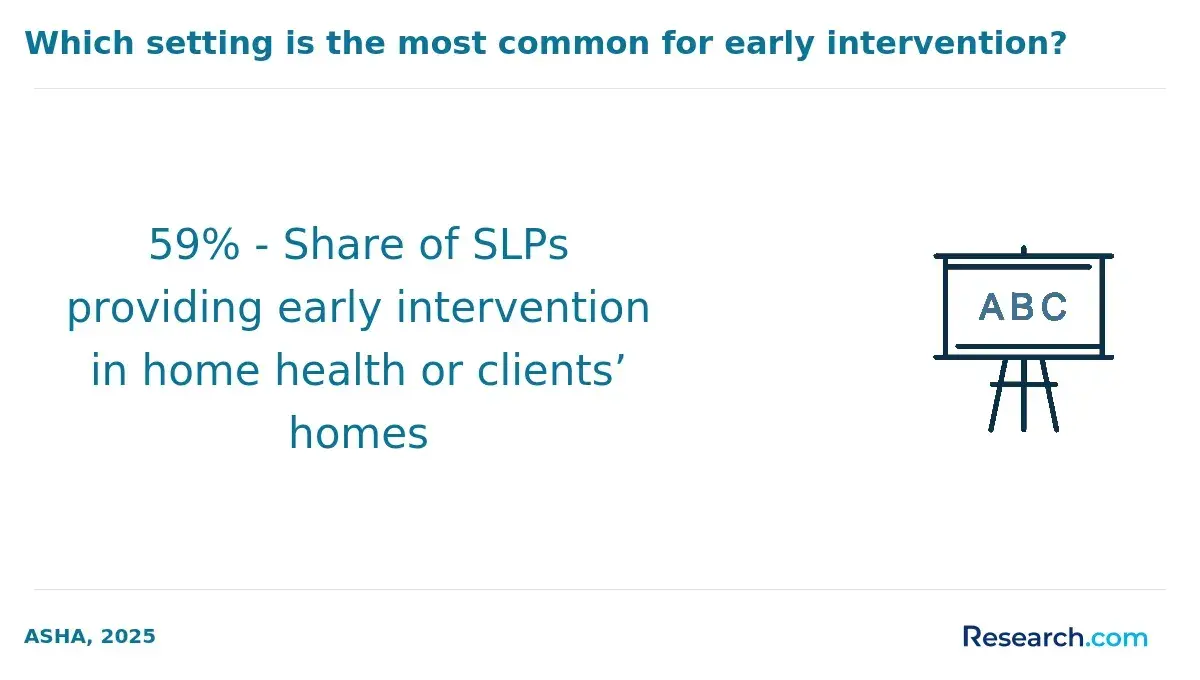
Fayetteville applicants should also consider the local health-care and education landscape realistically. Potential settings can include public schools, hospitals, rehabilitation providers, outpatient clinics, early-intervention providers, skilled-nursing facilities, and military-connected health settings, but each site must independently agree to participate and meet program requirements.
How do these programs compare on cost, length, and admissions?
Cost comparisons require caution because schools may quote tuition per credit, per term, or as a program estimate, while mandatory fees, travel, clinical supplies, background checks, and health-compliance expenses may be separate. The financially sound comparison is the estimated total educational cost for your own cohort, not the lowest advertised tuition figure.
| Comparison factor | What to verify | Why it matters |
| Total tuition and mandatory fees | Required credits, tuition rate for your start term, technology fees, clinical fees, and graduation charges | Allows a like-for-like comparison across programs |
| Program length | Full-time and part-time pathways, cohort sequence, and whether prerequisites extend the timeline | Determines when you can enter the post-degree clinical fellowship stage |
| Travel cost | Number and location of immersions or residencies, lodging, meals, and transportation | Can materially change the practical affordability of an online program |
| Admissions prerequisites | Required communication-sciences coursework, anatomy, statistics, observation hours, GPA, essays, and references | Shows whether you need leveling coursework before graduate study |
| Testing and application process | Whether GRE scores are required or optional, application system, deadlines, and interview expectations | Prevents missed deadlines and avoidable application costs |
Most entry-level SLP master's programs follow a lockstep sequence because clinical competencies build over time. A stated accelerated timeline can work well for students who can reduce employment hours, while a longer format may be safer for applicants balancing family responsibilities, work, or prerequisite coursework.
Do not treat "GRE not required" as a sign that admission is easy. Programs commonly evaluate prerequisite grades, cumulative GPA, writing, references, observation exposure, communication skills, and evidence that the applicant understands clinical work. Applicants without an undergraduate communication-sciences degree should confirm whether a program accepts them directly, requires leveling courses, or expects prerequisites before enrollment.
When comparing online SLP programs, prioritize published requirements and fit over a presumed admission difficulty level. A program with fewer testing requirements may still have limited seats, fixed cohort starts, or strict prerequisite standards.
What clinical placements can Fayetteville students complete in North Carolina?
SLP graduate students need supervised clinical education with clients across ages and communication needs. Depending on the program stage and available sites, a Fayetteville student may complete experiences in educational, medical, rehabilitation, outpatient, early-intervention, or long-term-care settings. The exact mix should support the program's competencies rather than simply maximize convenience.
North Carolina placements can be especially practical when they reduce relocation pressure, but they are not guaranteed. A site must have an appropriately qualified supervisor, an active agreement with the university, sufficient client volume, and capacity to teach at the time your placement begins.
Before accepting a program offer, build a practical placement plan. The following actions help a student identify potential obstacles early without attempting to arrange an unauthorized placement independently.
- Map the commuting area you can realistically manage, including the effect of school-day schedules, hospital shifts, parking, and child-care needs.
- Tell the clinical education office about relevant employment connections or volunteer relationships, while allowing the university to handle site approval and affiliation agreements.
- Budget for the possibility of a placement outside Fayetteville, including mileage, temporary lodging, and reduced availability for paid work.
- Confirm whether the program requires pediatric, adult, medical, school, bilingual, or other specific experiences that may limit site matching.
- Complete immunizations, background checks, drug screening, CPR training, and other compliance items early when the program requires them.
Students should not contact a school district, hospital, or clinic as though a placement is already approved. That can create confusion for the site and complicate the university's contracting process. Instead, ask the clinical team how and when it wants students to share prospective-site information.
Which programs prepare graduates for North Carolina licensure and ASHA certification?
A qualifying master's degree is only one stage of becoming a licensed, independently practicing speech-language pathologist. Graduates generally need a CAA-accredited graduate degree, passing Praxis examination results, a supervised post-graduate clinical fellowship, and approval from the relevant state licensing authority. ASHA certification and North Carolina licensure are separate credentials, although their requirements overlap substantially.
The practical value of a CAA-accredited program is that it organizes graduate coursework and clinical education around the professional preparation expected for the CCC-SLP pathway. Still, the student remains responsible for meeting application deadlines, documentation standards, examination rules, clinical fellowship requirements, and state-specific requirements in effect at the time of application.
| Career objective | Core credential pathway | What to confirm before enrolling |
| North Carolina health-care or private-practice role | Graduate degree, supervised experience, examination, and state license requirements | Current North Carolina Board requirements and program licensure disclosure |
| ASHA-certified clinical role | CAA-accredited degree, required clinical education, Praxis, and clinical fellowship toward CCC-SLP | CAA status at graduation and ASHA standards applicable to your cohort |
| North Carolina public-school role | Professional licensure plus school-system or educator credential requirements as applicable | North Carolina Department of Public Instruction expectations and district hiring rules |
| Military-connected or federal setting | Employer-specific credentialing in addition to professional licensure | Whether the employer requires a particular state license, CCC-SLP, or both |
The key question for admissions is not "Will this degree make me licensed?" No master's degree alone does that. Ask instead whether the program's accreditation, curriculum, clinical education, and state disclosures create an appropriate academic foundation for your intended North Carolina credential path.
How does online speech pathology study work for working adults in Fayetteville?
Online delivery can reduce relocation and daily commuting, but an entry-level clinical degree remains demanding. Students should expect a cohort sequence, recorded or live instruction, group assignments, skills practice, exams, clinical documentation, and in-person practicum. During full-time clinical rotations, the schedule may resemble professional employment and can substantially limit outside work.
The most workable program for an employed adult is one whose calendar matches the realities of the student's life. Fayetteville is in the Eastern Time Zone, so live sessions offered from another time zone should be checked carefully, particularly when classes, clinic meetings, or examinations occur in the evening.
Applicants considering accelerated options or 5 year SLP programs should separate undergraduate-to-graduate pathways from post-bachelor's master's programs. A five-year route may be efficient for a current undergraduate, but it is usually not the right comparison for an adult who already has a bachelor's degree in another field.
Working adults should request a sample term calendar before deciding. It should show synchronous expectations, immersion dates, practicum hours, exam timing, and the point at which clinical responsibilities increase. A school that clearly explains these demands is more useful than one that markets flexibility without defining it.
Online learning also depends on reliable technology. Students typically need a current computer, stable broadband, webcam and audio capability, secure testing tools when required, and a private setting for client-related discussions. Clinical work requires careful privacy practices; public Wi-Fi and shared devices may not be appropriate for protected information.
Which universities provide the strongest student support and technology?
Support quality matters because online SLP students must coordinate academic demands, clinical compliance, travel, and licensure planning across several years. Rather than assuming that a larger institution automatically offers better service, compare what each program specifically assigns to distance learners.
| Support area | Strong evidence to look for | Question to ask |
| Clinical education | A dedicated clinical-placement team and written process for site approval | Who is responsible if a local site is unavailable? |
| Academic advising | Named advisor, sequence map, and clear leave-of-absence policy | Can I receive a written plan based on my prerequisites? |
| Technology support | Extended-hours help desk, orientation, accessibility resources, and required-device guidance | What support is available during an evening exam or live class? |
| Student services | Library access, writing support, disability accommodations, counseling, and career guidance for online students | Are these services available remotely without additional travel? |
| Licensure guidance | State disclosures and staff who can explain documentation without making legal promises | What written information do you provide for North Carolina applicants? |
Ask to attend an information session or speak with a program representative who can explain the clinical process, not just admissions marketing. Also request the technical requirements in writing. A polished learning platform is helpful, but the critical support is prompt problem-solving when a clinical deadline, compliance record, or placement issue arises.
How should Fayetteville applicants verify program quality and consumer protection?
Verification protects both your career plan and your finances. The biggest avoidable error is enrolling based on a broad claim such as "online," "licensed," or "accredited" without confirming what that claim means for your cohort, state, and intended employment setting.
Use a document-based review before applying or accepting an offer. Keep copies of the materials you receive because policies, disclosures, and tuition schedules may be updated after an inquiry.
- Confirm current CAA accreditation through ASHA's official accreditation directory and save the result with the program name and expected graduation period.
- Read the university's North Carolina professional-licensure disclosure and ask for written clarification if it says the determination is unknown or incomplete.
- Request the complete estimated cost of attendance, including tuition, institutional fees, clinical charges, travel, supplies, health requirements, and likely living expenses.
- Review the student handbook for progression rules, remediation policies, clinical-placement requirements, withdrawal consequences, and refund rules.
- Verify whether scholarships, federal aid eligibility, employer assistance, and loan options apply to your enrollment status.
- Ask the clinical education office how it handles placement delays, site cancellations, geographic travel, and student responsibilities.
Red flags include a school that cannot identify its current accreditation status, gives only vague responses about North Carolina eligibility, treats fieldwork as the student's problem alone, or provides a tuition quote without required fees. Another warning sign is pressure to commit before you receive the program handbook and state-specific disclosure.
Consumer protection also means recognizing uncertainty. A university can describe its curriculum and support process, but it cannot guarantee a particular clinical site, employer, salary, license approval, or certification outcome. Written policies and direct confirmation are more reliable than verbal assurances.
Which program types fit career goals in schools, hospitals, or private practice?
Your intended setting should shape the program comparison. All entry-level CAA-accredited SLP programs cover core professional competencies, but their clinical opportunities, faculty expertise, schedule design, and placement networks may make one format more practical for a particular goal.
| Career goal | Program characteristics to prioritize | Questions to ask |
| Public or private schools | Pediatric experiences, school-based supervision, and guidance on North Carolina school credentials | How many school-based opportunities are typical, and what additional state education requirements may apply? |
| Hospitals, rehabilitation, or medical settings | Adult medical exposure, dysphagia coursework where offered, and medically oriented placements | How does the program help students access adult and medical clinical experiences? |
| Private practice | Broad lifespan training, business-aware mentorship, and varied outpatient experience | Will I have experience with evaluation, treatment planning, documentation, and family counseling? |
| Early intervention | Infant, toddler, caregiver-coaching, and interdisciplinary learning opportunities | Does the curriculum or placement plan include early-intervention service delivery? |
| Future specialty exploration | Electives, diverse placements, research opportunities, and advising | Can I explore pediatric, adult, voice, fluency, neurogenic, or bilingual practice interests before graduation? |
For many applicants, a broadly based program is the best investment because career interests evolve during clinical training. The role of a speech language pathologist can vary substantially by setting, population, schedule, and employer expectations, so avoid choosing a program solely because it appears narrowly aligned with one first-job goal.
The labor-market outlook supports careful preparation rather than rushed enrollment. The Bureau of Labor Statistics projects 17% employment growth for speech-language pathologists from 2025 to 2035, with about 12,500 openings per year on average over the decade. That demand can create opportunity, but employers still expect appropriate licensure, strong clinical judgment, documentation skills, and the ability to work effectively with clients and families.
Other Things You Should Know About Speech Language Pathology
Yes, many applicants enter from other majors, but they often need prerequisite or leveling coursework in communication sciences and disorders before or during graduate study. Each program sets its own policy, so obtain a transcript evaluation before assuming you qualify.
Many do. Required visits may be called immersions, residencies, clinical skills sessions, or orientations. Ask for the number, location, duration, and expected cost of every required in-person component before enrolling.
Policies vary. Some schools take the lead in arranging placements, while others expect students to help identify potential sites. Even in a university-arranged model, a specific site near Fayetteville cannot be guaranteed.
Graduation is followed by required examination and supervised post-graduate clinical experience before independent licensure is typically available. The exact timeline depends on the program sequence, clinical fellowship arrangement, examination timing, and current North Carolina requirements.
References
- Communication Sciences and Disorders, M.S. https://www.nccu.edu/academics/graduate-programs/communication-disorders-ms
- Speech-Language Pathology, M.A. | UNC Greensboro https://www.uncg.edu/academics-support/degrees-programs/online-degrees/speech-language-pathology-m-a/
- Healthcare Programs: Speech Language Pathology Assistant https://faytechcc.edu/academics/healthcare-programs/speech-language-pathology-assistant/
- Best Online Speech & Language Pathology Master's... https://www.onlineu.com/most-popular/masters-speech-pathology