
2027 How to Become a Special Education Teacher in Indiana: Requirements & Certification

Co-Founder and Chief Data Scientist
How to Become a Special Education Teacher in Indiana
Becoming a special education teacher in Indiana is a structured path: you need the right degree, supervised classroom practice, required exams and training, background clearance, and an Indiana teaching license. The decision also deserves a careful look at workload, salary, student needs, legal responsibilities, and long-term career options.
Indiana can be an attractive state for future educators. Students in the state have ranked above average in Math and Reading among states participating in the National Assessment of Educational Progress (NAEP) (Indiana Department of Education, 2024), and Indiana has been identified as one of the better states for teachers because of its competitive starting salary (WalletHub, 2024). For special education candidates, that means entering a school system where trained professionals are needed to support students with disabilities, learning differences, behavioral needs, and individualized education plans.
This guide explains the education, licensing, timeline, salary, demand, professional development, and advancement options for special education teachers in Indiana. It also covers practical questions to ask before choosing a program, common mistakes to avoid, and related credentials that can help experienced educators move into specialized or leadership roles.
Quick Answer: What Does It Take to Become a Special Education Teacher in Indiana?
To become a special education teacher in Indiana, you typically need to complete a bachelor’s degree through an approved educator preparation program, finish student teaching, pass the required licensing assessments, complete required safety training, pass background checks and fingerprinting, and apply for an Initial Practitioner License through the Indiana Department of Education. Candidates who already hold an out-of-state teaching license may be able to pursue an Indiana Reciprocal Permit if they meet state requirements.
| Requirement | What It Means for Indiana Candidates |
| Degree | Complete a bachelor’s degree, usually through an approved education or special education program. |
| GPA readiness | Many education programs expect applicants to maintain at least a 2.5 GPA before admission. |
| Field experience | Complete clinical practice and student teaching, commonly lasting 15 to 17 weeks. |
| Licensing exams | Prepare for required pedagogy and special education content assessments; confirm current testing rules before registering. |
| Safety and clearance | Complete required safety certifications, background checks, and fingerprinting. |
| License application | Apply for the Initial Practitioner License through the Indiana Department of Education after meeting requirements. |
Key Things to Know About Becoming a Special Education Teacher in Indiana
- Indiana’s special education teacher employment is projected to grow by 8% from 2020 to 2030 (O*NET OnLine, 2024).
- The average salary for special education teachers in Indiana is about $40,958 (Kolmar, 2024), although pay can vary by school district, experience, grade level, and credentials.
- Professional development is available through organizations and resources such as the Indiana Council for Exceptional Children and the Indiana Resource Center for Families with Special Needs.
- Large employers include Indianapolis Public Schools and Fort Wayne Community Schools, but opportunities also exist in suburban, rural, private, and specialized settings.
- Education requirements for Indiana special education teachers
- Indiana licensing requirements for special education teachers
- Demand for special education teachers in Indiana
- Special education teacher salary in Indiana
- Professional development options in Indiana
- Advanced roles for experienced special education teachers
- Major challenges in Indiana special education teaching
- Special education laws Indiana teachers must understand
- Scholarships and grants for Indiana special education candidates
- How additional credentials can support career growth
- Whether specialized certifications are worth pursuing
- How school psychologists can strengthen classroom planning
- Mental health cross-training for special education teachers
- Early childhood specialization and special education careers
- How Indiana compares with other teaching environments
- BCBA certification for Indiana special education careers
- How school counselors can improve student support
- Emerging trends in Indiana special education
- Elementary education cross-training for special education teachers
- Online and hybrid programs for career advancement
- Related careers for Indiana special education professionals
What are the educational requirements to be a special education teacher in Indiana?
Indiana special education teachers generally begin with an approved undergraduate education pathway. The goal is not only to earn a degree, but to build the legal, instructional, behavioral, and assessment skills needed to teach students whose learning plans may differ significantly from the general curriculum.
- Meet program admission standards: Many teacher preparation programs expect candidates to maintain a minimum GPA of 2.5 before entering the education major or clinical sequence. A strong academic record matters because special education teachers must understand assessment data, instructional design, compliance documentation, and evidence-based interventions.
- Earn a bachelor’s degree: Most candidates complete a bachelor’s degree in special education or a closely related teacher preparation program. Indiana University Bloomington and Ball State University are examples of institutions with undergraduate pathways designed for future special education teachers. Coursework commonly covers instructional methods, behavior management, assessment, inclusive practices, and disability-specific supports.
- Complete supervised fieldwork: Classroom observation, practicum experiences, and student teaching help candidates learn how to adapt lessons, collect progress data, collaborate with general education teachers, and implement individualized education programs.
- Consider graduate study later: A master’s degree is not always required for entry-level licensure, but it can help teachers develop deeper expertise in areas such as autism, behavioral intervention, assistive technology, or special education leadership. Purdue University is one example of a university offering specialized graduate study in the field.
If you already hold a bachelor’s degree in another field, an alternative or post-baccalaureate pathway may help you transition into teaching without completing a second full undergraduate degree. Before enrolling, confirm that the program is designed to meet Indiana educator licensing requirements.
Students comparing state-specific routes may also find it useful to review how requirements differ elsewhere, such as this Research.com guide to South Carolina teaching degree programs.
Which education path makes the most sense?
| Path | Best For | Key Trade-Off |
| Bachelor’s degree in special education | First-time college students who know they want to teach students with disabilities | Usually the most direct route, but it requires a full undergraduate program. |
| Post-baccalaureate teacher preparation | Career changers who already have a bachelor’s degree | Can be faster than another bachelor’s degree, but admission and licensing requirements vary by program. |
| Master’s degree in special education | Licensed teachers or graduates seeking advanced expertise | May support specialization or advancement, but it adds time and cost. |
| Additional certification or endorsement | Current teachers who want to expand their credentials | Can improve flexibility, but it may not replace initial licensure requirements. |
How long does it take to become a special education teacher in Indiana?
The most common route takes about the length of a traditional bachelor’s degree plus student teaching, testing, and licensing steps. Career changers and licensed teachers pursuing additional credentials may have different timelines depending on prior coursework and state requirements.
| Stage | Typical Timeframe | What Happens During This Stage |
| Bachelor’s degree | 4 years | You complete general education, teacher preparation coursework, special education methods classes, and field experiences. |
| Student teaching internship | 15 to 17 weeks | You teach under supervision, plan lessons, adapt materials, support IEP goals, and receive feedback from mentor educators. |
| Licensing assessments | approximately 1 year | You prepare for and complete required assessments, such as the Indiana CORE: Developmental (Pedagogy) Area Assessment and at least one of the five Indiana CORE Exceptional Needs assessments, while allowing time for scheduling and results. |
| Advanced study | 2 years or more | A master’s degree, doctorate, or shorter certificate can deepen specialization after initial preparation. |
The timeline can stretch if you attend part time, change majors, retake exams, wait for placement availability, or need additional coursework to qualify for licensure. Before choosing a program, ask whether student teaching is built into the degree plan and whether the school has placement partnerships in Indiana districts.
What are the licensing requirements for special education teachers in Indiana?
Indiana requires public school teachers to hold the proper educator license for the subject, grade level, and student population they teach. Special education candidates should treat licensing as a checklist that begins before graduation, not as a final paperwork step after completing a degree.
- Complete an approved educator preparation program: Candidates generally need a bachelor’s degree and completion of an Educator Preparation Program before applying for an initial license.
- Pass required licensing exams: Candidates must complete the required pedagogy and content assessments. The source material references ETS Praxis exams in Pedagogy and Teaching Content Area as well as Indiana CORE assessments, so applicants should verify the current exam system directly with the Indiana Department of Education before registering.
- Complete safety certifications: Indiana requires training or certifications related to suicide prevention, CPR, and AED so educators can respond appropriately to emergencies and student safety concerns.
- Pass background checks and fingerprinting: Candidates must complete required screening before licensure to help protect students and meet school employment standards.
- Apply for the Initial Practitioner License: After meeting degree, testing, safety, and clearance requirements, candidates submit their application through the Indiana Department of Education.
- Provide academic verification: Applicants must document that they completed the required coursework and clinical preparation for special education teaching.
Teachers licensed in another state may qualify for reciprocity through an Indiana Reciprocal Permit if they satisfy Indiana’s requirements. Reciprocity can shorten the transition, but it does not mean every credential transfers automatically. Out-of-state teachers should review testing, background check, and endorsement requirements before accepting a position.
Questions to ask before you enroll in a licensure program
- Is the program approved for Indiana teacher licensure in special education?
- Which disability categories, grade bands, or exceptional needs areas does the program prepare candidates to teach?
- Does the program include student teaching in an Indiana school setting?
- Which exams will I need to pass, and when should I take them?
- How does the program support candidates who need help with test preparation?
- Will this pathway work if I want to teach in another state later?
What is the demand for special education teachers in Indiana?
Indiana employed approximately 5,480 special education teachers across the elementary, middle school, and secondary school levels as of 2020 (O*NET OnLine, 2024). State employment trends project 8% growth from 2020 to 2030 for special education teachers in Indiana.
That outlook suggests continued need, but candidates should interpret demand carefully. Job availability can vary by district, grade level, disability category, funding, retirement patterns, and local staffing needs. Urban districts may offer more openings, while rural districts may have fewer positions but stronger need for teachers who can serve multiple roles.
Special education can also be more intensive than many candidates expect. Teachers often balance instruction, IEP meetings, progress monitoring, family communication, behavior planning, legal compliance, and collaboration with general education teachers. Anyone exploring special education job opportunities should weigh both demand and day-to-day fit.
Where Indiana special education teachers may work
| Setting | What the Work May Involve | Who It Fits Best |
| Public school districts | Teaching students with IEPs, co-teaching, managing caseloads, and coordinating services | Candidates who want a traditional school role with structured legal responsibilities |
| Private schools | Supporting students in smaller or specialized environments, depending on school services | Teachers seeking a different school model or instructional setting |
| Early childhood programs | Providing early intervention and developmental support for young learners | Educators interested in prevention, early identification, and family collaboration |
| Specialized programs | Working with students who need intensive behavioral, communication, or adaptive supports | Teachers who want deeper specialization in specific student needs |
How much do special education teachers in Indiana earn?
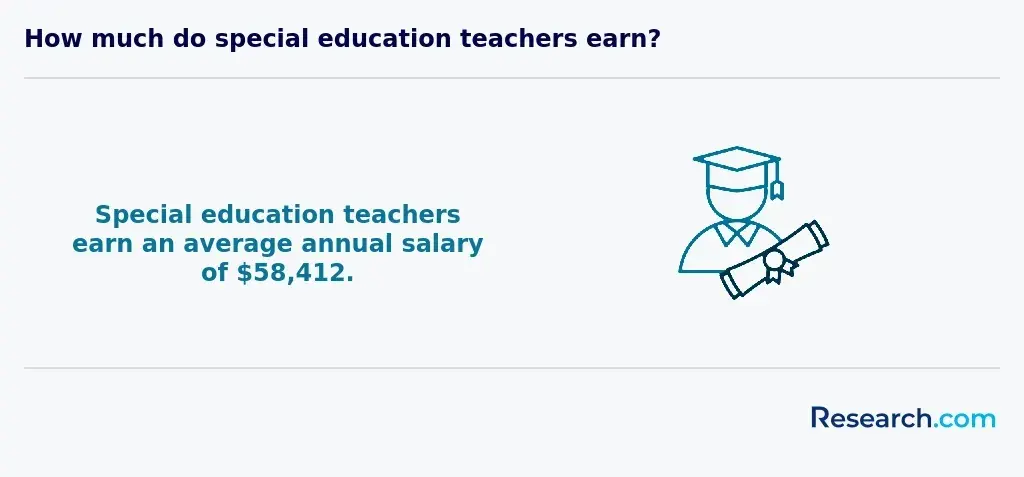
The average salary for special education teachers in Indiana is approximately $40,958 per year (Kolmar, 2024). Actual pay depends on district salary schedules, years of experience, education level, union agreements, location, and whether the position includes additional duties.
Some Indiana special education teachers with two to four years of experience may earn between $55,000 and $65,000. More experienced educators may find positions paying as much as $75,000 per year. Location also matters: ZipRecruiter data cited for 2024 lists an average annual salary of $64,271 in Michigan City and $59,853 in Whiteland.
| Salary Factor | How It Can Affect Pay |
| District location | Urban, suburban, and rural districts may use different salary schedules and staffing incentives. |
| Experience | Pay usually rises as teachers gain years of service and demonstrate classroom effectiveness. |
| Academic credentials | Graduate study or additional credentials may improve placement on some salary schedules. |
| Role complexity | Specialized assignments, behavioral support roles, or leadership responsibilities may affect compensation. |
| Grade level and setting | Elementary, middle, secondary, private, and specialized settings may compensate differently. |
Salary should be part of your decision, but not the only factor. Compare pay with caseload expectations, planning time, support staff availability, paperwork load, and access to mentoring. A higher salary may not offset an unsustainable workload if the district does not provide adequate support.
What professional development opportunities are available for special education teachers in Indiana?
Professional development is essential in special education because laws, interventions, assistive technologies, assessment practices, and behavioral supports continue to evolve. Indiana teachers can use workshops, conferences, online learning, and peer networks to strengthen practice and stay current.
- Indiana Council for Exceptional Children Annual Conference: This event gives educators access to research updates, instructional strategies, policy discussions, and networking with other special education professionals.
- Indiana IEP Resource Center workshops: These sessions focus on building stronger Individualized Education Programs, improving implementation, and helping educators connect compliance with practical classroom planning.
- Indiana Department of Education workshops: State-sponsored training can help teachers apply current research, strengthen instructional supports, and align classroom practice with Indiana expectations.
- CEC’s Learning Library: Online webinars and courses make it easier for teachers to continue learning without travel. Educators exploring adjacent student-support careers may also benefit from resources related to counseling, child psychology, and child life specialist career guidance.
When choosing professional development, look for training that solves an immediate classroom problem: behavior plans, IEP writing, data collection, co-teaching, assistive technology, transition planning, or family communication. Broad inspiration is useful, but practical tools are what change daily teaching.
Are there advanced roles for experienced special education teachers in Indiana?
Special education experience can lead to roles beyond the classroom. Many advanced positions require graduate study, specialized training, leadership experience, or additional certification, but classroom expertise gives teachers a strong foundation for these pathways.
| Advanced Role | Typical Focus | Why It May Appeal to Experienced Teachers |
| Educational diagnostician | Evaluating student needs, interpreting assessment results, and helping teams design effective supports | It suits teachers who enjoy assessment, problem-solving, and early intervention. A master’s degree is typically required. |
| Behavior intervention specialist | Developing strategies for students with challenging behaviors and collaborating with schools or mental health partners | It allows teachers to focus deeply on behavioral support and systems-level intervention. |
| Program manager | Coordinating special education services, resources, curriculum, and compliance within a school or district | It fits educators who want leadership responsibilities without fully leaving special education. |
| Adjunct professor | Teaching future educators in colleges or universities | It gives experienced teachers a way to mentor the next generation of special education professionals. |
| Autism specialist | Supporting students on the autism spectrum, training staff, advising families, and contributing to IEP planning | It is a strong fit for educators who want focused expertise in autism interventions and inclusive supports. |
Experienced teachers should choose advancement based on the kind of work they want more of. If you enjoy direct instruction, a specialist role may be better than administration. If you are drawn to systems, compliance, and program design, district leadership may be a stronger fit.
The chart below shows sectors where special education teachers commonly work. Most remain in education, while some move into related fields that use their assessment, advocacy, behavior support, and instructional skills.
What are the biggest challenges faced by special education teachers in Indiana?
Special education can be meaningful, but it is also demanding. Future teachers should understand the pressures of the job before committing to a program or accepting a position.
- Higher attrition: Special education teacher attrition in Indiana has been reported at 17.1%, higher than for other teacher groups (Billingsley and Bettini, 2019). Turnover can create staffing gaps, larger workloads, and less continuity for students.
- Emotional intensity: Teachers may support students and families facing academic, behavioral, medical, emotional, or social challenges. Without boundaries and support, compassion fatigue can develop.
- Heavy caseloads and paperwork: Special education teachers often manage IEP documentation, data tracking, service minutes, meetings, parent communication, and lesson adaptation in addition to teaching.
- Uneven access to specialized training: Some teachers may find it harder to access advanced professional development because of location, cost, scheduling, or limited awareness of available options.
Common mistakes to avoid before entering the field
| Mistake | Better Approach |
| Choosing a program without checking Indiana licensure alignment | Confirm that the program prepares you for the exact Indiana special education license or endorsement you need. |
| Looking only at tuition | Compare total cost, student teaching logistics, testing support, transfer credit policies, and graduation timeline. |
| Assuming online programs automatically meet licensing rules | Ask whether the program meets Indiana requirements and includes approved field placements. |
| Ignoring caseload and support questions during job interviews | Ask about paraprofessional support, planning time, IEP systems, mentoring, and administrator experience with special education. |
| Assuming demand guarantees an easy job search | Research district needs, certification areas, grade levels, and geographic flexibility. |
If you want to compare Indiana with another state’s teacher preparation environment, Research.com also offers a guide on Washington teacher education programs.
How do special education laws in Indiana impact teachers?
Special education teachers work within a legal framework that shapes how they assess students, document services, communicate with families, and deliver instruction. Understanding the law is part of the job, not an optional administrative detail.
- Indiana Article 7: Article 7 of the Indiana Administrative Code sets state rules for special education. Teachers must understand how IEPs are developed, implemented, monitored, and revised under these rules.
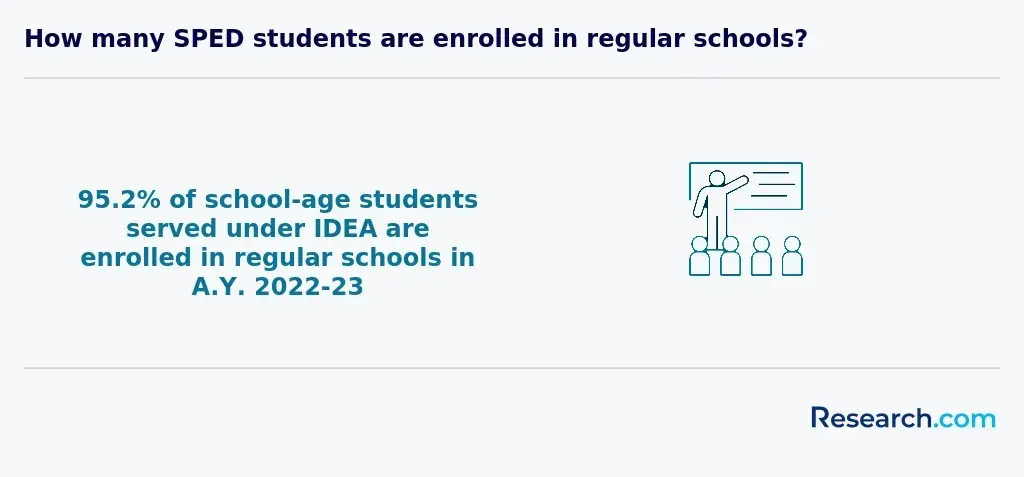
- Individuals with Disabilities Education Act: IDEA requires eligible students with disabilities to receive Free Appropriate Public Education (FAPE). Teachers must help ensure services are appropriate, documented, and connected to student needs.
- Section 504 of the Rehabilitation Act: Section 504 protects students from disability-based discrimination. Teachers may need to provide accommodations so students have equitable access to learning.
In practical terms, legal knowledge affects daily decisions: how goals are written, how progress is measured, when a meeting is needed, how accommodations are provided, and how general education teachers are supported. Strong documentation protects students and educators.
Are there scholarships and grants available for special education teachers in Indiana?
Teacher preparation can be expensive, so aspiring special education teachers should investigate state aid, institutional scholarships, and grant-funded licensure programs before taking on unnecessary debt. Some awards include service obligations, so read the fine print carefully.
- Next Generation Hoosier Educators Scholarship: This scholarship provides up to $10,000 per year for high-achieving Indiana students pursuing education degrees, including special education. Recipients must commit to teaching in Indiana for at least five years after graduation.
- William A. Crawford Minority Teacher Scholarship: This Indiana Commission for Higher Education program supports minority students pursuing teacher preparation. Recipients are typically expected to teach for at least three years at an accredited Indiana school after certification.
- Indiana Special Education Grant: I-SEAL is designed for individuals already teaching in special education who need licensure, and it can help cover tuition and related certification costs.
Because Indiana’s demand for special education teachers is projected to grow by 8% from 2020 to 2030 (O*NET OnLine, 2024), financial aid programs can play an important role in helping more candidates enter the profession. Before accepting aid, ask whether the award is renewable, whether it requires full-time enrollment, and what happens if you do not complete the service commitment.
If you are still comparing education-related options, review these alternative education careers before committing to a special education licensure path.
The chart below illustrates the shortage of special education teachers in the United States.
How can additional credentials boost my career advancement in Indiana?
Additional credentials can help special education teachers qualify for specialized assignments, strengthen their instructional practice, and prepare for leadership. Useful areas may include assistive technology, behavior intervention, curriculum design, autism support, transition planning, or literacy intervention.
The best credential is the one that matches your career goal. If you want to lead IEP teams, look for compliance and program leadership training. If you want to support students with intensive behavior needs, behavioral intervention coursework may be more relevant. If cost is the main concern, compare affordable options and review Research.com’s guide to teaching credential programs in Indiana.
Should Indiana special education teachers pursue specialized certifications?
Specialized certifications can be worthwhile when they help you solve a specific instructional problem or qualify for a role your district needs. For example, a literacy coach certification may be useful for special education teachers who work with students needing targeted reading support.
Before enrolling, compare the credential’s cost, time commitment, recognition by Indiana employers, and connection to your current caseload. A certificate that looks impressive but does not improve your classroom practice or career mobility may not be worth the investment.
How can collaboration with school psychologists enhance classroom strategies in Indiana?
School psychologists can help special education teachers interpret assessment data, identify learning and behavioral needs, and design interventions that are better aligned with student profiles. Collaboration is especially valuable during evaluations, behavior planning, eligibility discussions, and IEP reviews.
Teachers who understand the role of school psychologists can use that partnership more effectively. For a closer look at the training behind this role, see Research.com’s guide to school psychologist requirements Indiana.
Should special education teachers in Indiana consider cross-training in mental health support?
Mental health awareness can strengthen special education practice, especially when students experience anxiety, trauma, behavioral escalation, or family stress. Teachers are not a substitute for licensed mental health providers, but additional training can help them recognize concerns earlier, communicate more effectively with support teams, and use safer de-escalation practices.
Educators interested in broadening this skill set may want to understand related pathways, including how to become a substance abuse counselor in Indiana. The value is not in replacing counseling professionals, but in improving referral, collaboration, and classroom response.
Can early childhood specialization enhance a special education career in Indiana?
Early childhood specialization can be valuable for teachers who want to work with young learners or focus on early intervention. Developmental delays, communication needs, sensory differences, and early behavior concerns often appear before elementary school, making trained early childhood special education professionals important to long-term student support.
Teachers considering this direction should review preschool teacher requirements in Indiana so they can align early childhood preparation with special education goals.
How does Indiana compare to other teaching environments for special education?
Indiana offers a clear licensure structure, documented demand, competitive starting salary context, and access to state and professional development resources. However, candidates should compare more than salary. Caseload size, planning time, administrative support, legal compliance systems, and availability of related service providers can shape the actual teaching experience.
Some educators also consider private schools, specialized schools, or alternative teaching environments. If you are evaluating that option, Research.com explains how to become a private school teacher in Indiana.
The best way to compare Indiana with another teaching environment is to ask district-level questions: How many students will be on my caseload? How are IEP meetings scheduled? What software is used? Are paraprofessionals available? How often do special education teachers receive mentoring? These details often matter more than statewide averages.
How can a BCBA certification enhance special education careers in Indiana?
A BCBA certification can strengthen a special education career for educators who want advanced expertise in behavior analysis. It may support work involving behavior intervention plans, data-driven behavior strategies, staff coaching, and multidisciplinary student support.
This credential is most relevant for teachers who want to focus on behavioral systems rather than general classroom instruction alone. To understand the process in the state, review Research.com’s guide on how to become a BCBA in Indiana.
How can partnering with school counselors enhance special education outcomes in Indiana?
School counselors can help special education teams address academic planning, social-emotional needs, transitions, family communication, and student advocacy. When counselors and special education teachers coordinate, students receive more consistent support across classrooms, services, and schoolwide systems.
Teachers who want to collaborate more effectively can learn what counselors are trained to do by reviewing school counselor requirements in Indiana.
What emerging trends are shaping special education in Indiana?
Special education practice in Indiana is being influenced by digital tools, adaptive learning platforms, virtual learning supports, data-informed instruction, and assistive technology. These tools can help teachers personalize instruction, monitor progress, and improve access for students with communication, mobility, reading, or executive functioning needs.
Technology does not replace skilled special education teachers. It works best when educators understand student goals, choose tools intentionally, and measure whether the intervention is actually improving access or learning. Teachers expanding their instructional range may also find useful perspective in Research.com’s guide on how to become an English teacher in Indiana.
Can cross-training in elementary education benefit special education practice in Indiana?
Elementary education training can help special education teachers strengthen core instructional skills in reading, math, classroom routines, lesson pacing, and age-appropriate classroom management. This is especially useful for teachers who serve younger students or co-teach in general education classrooms.
Cross-training is not a substitute for special education expertise, but it can make a teacher more versatile. To understand the general education side of the pathway, see Research.com’s guide on how to become an elementary school teacher in Indiana.
Are online and hybrid programs a viable option for career advancement?
Online and hybrid programs can be practical for licensed teachers who need flexibility while working full time. They may be useful for graduate study, endorsements, certificates, or specialized professional development in areas such as assistive technology, curriculum design, or behavior support.
The main caution is licensure alignment. Before enrolling in an online program, confirm whether it meets Indiana requirements, how fieldwork is arranged, whether credits transfer, and whether the credential is recognized by Indiana employers. Teachers who want to expand their information management and research skills may also explore the easiest library science degree as a related academic option.
What other career paths are available to special education professionals in Indiana?
Special education training can lead to related careers that still serve students and families. Some professionals move into consulting, advocacy, assistive technology, early intervention, behavior support, higher education, or related services.
One closely connected path is becoming a speech-language pathologist, especially for professionals interested in communication disorders, language development, and school-based support. Other possible directions include educational consultant, special needs advocate, autism specialist, assistive technology specialist, or program coordinator.
What special education teachers in Indiana say about their careers
- "Working as a special education teacher in Indiana has given me a clear sense of purpose. The small milestones matter, and seeing students gain confidence makes the hard days easier to carry." - Olivia
- "My students have taught me patience, creativity, and persistence. The work can be difficult, but the progress we make together is what keeps me committed to this field." - Ethan
- "Special education has challenged me professionally and personally. The relationships with families, students, and other educators are the part of the job I value most." - Grace
Related Articles for Nearby States
- 2027 How to Become a Special Education Teacher in Ohio: Requirements & Certification
- 2027 How to Become a Special Education Teacher in Illinois: Requirements & Certification
- 2027 How to Become a Special Education Teacher in Kentucky: Requirements & Certification
- 2027 How to Become a Special Education Teacher in Michigan: Requirements & Certification
- 2027 How to Become a Special Education Teacher in Wisconsin: Requirements & Certification
- 2027 How to Become a Special Education Teacher in Missouri: Requirements & Certification
- 2027 How to Become a Special Education Teacher in Tennessee: Requirements & Certification
- 2027 How to Become a Special Education Teacher in Iowa: Requirements & Certification
- 2027 How to Become a Special Education Teacher in West Virginia: Requirements & Certification
- 2027 How to Become a Special Education Teacher in Minnesota: Requirements & Certification
Key Insights
- Indiana special education teachers typically need a bachelor’s degree, educator preparation, student teaching, required exams, safety training, background clearance, and state licensure.
- The most common preparation route includes a 4-year bachelor’s degree, a 15 to 17 week student teaching internship, and additional time for assessments and licensing.
- Indiana employed approximately 5,480 special education teachers across elementary, middle, and secondary levels as of 2020, with projected growth of 8% from 2020 to 2030.
- The average salary is about $40,958, but pay can be higher depending on location, experience, district salary schedules, and credentials.
- Licensure details can change, so candidates should verify current exam and application requirements with the Indiana Department of Education before enrolling or registering for tests.
- Special education offers strong mission-driven work, but candidates should be realistic about IEP responsibilities, caseloads, paperwork, emotional demands, and attrition risk.
- Career advancement can include roles such as educational diagnostician, behavior intervention specialist, autism specialist, program manager, adjunct professor, BCBA, or related service professional.
- The best program is not simply the cheapest or fastest. It is the one that is licensure-aligned, affordable, well-supported, and connected to the type of special education role you want.
References:
- Billingsley B. and Bettini, E. (2019). Special Education Teacher Attrition and Retention: A Review of the Literature. https://journals.sagepub.com/doi/10.3102/0034654319862495
- Council for Exceptional Children (n.d.). Professional Development. https://exceptionalchildren.org/improving-your-practice/professional-development
- Indiana Department of Education (14 Jun 2021). Laws and Resources. https://www.in.gov/doe/students/special-education/laws-and-resources/
- Indiana Department of Education (2024). Indiana's Education System in a Changing Global Context. https://www.in.gov/sboe/files/SBOE-Feb-2024_National-Center-on-Education-and-the-Economy.pdf
- Kolmar, C. (2024). Special Education Teacher Salary by State: Highest-Paid Special Education Teachers by State. Zippia. https://www.zippia.com/advice/special-education-teacher-salary-by-state/
- O*NET OnLine (2024). Indiana Employment Trends. https://www.onetonline.org/link/localtrends/25-2056.00?st=IN
- U.S. Department of Education (2023). 45th Annual Report to Congress on the Implementation of the Individuals with Disabilities Education Act, 2023. https://sites.ed.gov/idea/files/45th-arc-for-idea.pdf
- WalletHub (2024). The Best and Worst States for Teachers. https://wallethub.com/edu/best-and-worst-states-for-teachers/7159
- Western Governors University (n.d.). Special Education Teacher Career. https://www.wgu.edu/career-guide/education/sped-teacher-career.html
- ZipRecruiter (2024). Special Education Teacher Salary in Indiana. https://www.ziprecruiter.com/Salaries/Special-Education-Teacher-Salary--in-Indiana
Other Things You Should Know About Becoming a Special Education Teacher in Indiana
To apply for a Special Education Initial Practitioner License in Indiana, you must complete a state-approved educator preparation program, pass the Praxis Special Education exam, and submit your application with transcripts and fees to the Indiana Department of Education.
To become a certified special education teacher in Indiana in 2027, you must pass the Indiana CORE Assessments for Educator Licensure, specifically the Developmental (Pedagogy) Area Assessment and the Special Education content area assessments aligned with your licensure goals.
The Indiana Department of Education issues special education teaching licenses through the Office of Educator Licensing and Development. Applicants use the state licensing system to submit transcripts, exam scores, and program verification for review before a license is granted.


