
2027 How to Become a Private School Teacher in Indiana: Requirements & Certification

Co-Founder and Chief Data Scientist
Teaching in an Indiana private school can be a good fit if you want a classroom role with more school-level flexibility than many public schools offer. But the path is not the same everywhere. One private school may require a state teaching license, another may prefer one, and another may hire based on subject expertise, faith alignment, prior classroom experience, or a strong record working with children.
This guide explains how to become a private school teacher in Indiana in practical terms: what education is usually expected, when licensure matters, how much preparation may cost, how long the process can take, what salaries and job outlook look like, and how to decide whether this career path is worth pursuing. It is written for career changers, future teachers, current private school staff, substitute teachers, and educators comparing public and private school options in Indiana.
Quick Answer: How do you become a private school teacher in Indiana?
To become a private school teacher in Indiana, start by identifying the type of school where you want to teach, because private schools set many of their own hiring standards. A bachelor's degree is often preferred, but state licensure is not always required unless the school, accreditation rules, or program participation requires it. Schools participating in the Choice Scholarship Program may need to meet specific standards, including licensed teachers for certain subjects. Most candidates should also expect fingerprinting, background checks, interviews, and proof of subject knowledge or classroom experience.
Key Things You Should Know About Becoming a Private School Teacher
- Indiana private schools may decide for themselves whether a state teaching license is required for a position, so hiring standards can vary widely from one school to another.
- Some schools strongly prefer licensed educators, while others place more weight on subject expertise, classroom experience, tutoring, ministry work, coaching, or other child-focused experience.
- Private schools are not required to be accredited. However, schools that participate in the Choice Scholarship Program must meet certain state standards, including licensed teachers for specific subjects.
- If your goal is to teach in an accredited nonpublic school, you should plan on holding a valid teaching license.
- Fingerprinting and background checks are commonly required, and candidates should budget for fees that may differ by institution.
- What are the educational requirements for private school teachers in Indiana?
- What is the licensure application and renewal process for private school teachers in Indiana?
- Can I become a private school teacher in Indiana with just a certificate?
- What is the average cost of private education programs in Indiana?
- How long does it take to become a private school teacher in Indiana?
- How much does it cost to become a private school teacher in Indiana?
- What is the job outlook for private school teachers in Indiana?
- What are the benefits and challenges of teaching in Indiana's private schools?
- How much do private school teachers in Indiana make?
- Should Private School Teachers Pursue Special Education Certification?
- What are the benefits of earning an online teaching degree for private school educators in Indiana?
- What career paths are available for Private school teachers in Indiana?
- What other career opportunities are available for educators in Indiana?
- What emerging certification options can enhance my private school teaching career in Indiana?
- How is technology transforming classroom engagement for private school teachers in Indiana?
- How Can Teacher Certification Paths Influence My Private School Teaching Career in Indiana?
- How can career advancement strategies propel my private school teaching career in Indiana?
- Is Pursuing an Advanced Degree Beneficial for Private School Teachers in Indiana?
- How can ongoing professional development and networking enhance my private school teaching career in Indiana?
- How can mentorship programs enhance my private school teaching career in Indiana?
- How do private schools in Indiana support teacher well-being and work-life balance?
What are the educational requirements for private school teachers in Indiana?
Indiana private schools have more hiring flexibility than public schools, but that does not mean qualifications are unimportant. Most schools want evidence that a teacher can manage a classroom, teach a subject accurately, communicate with families, and support student growth. The exact standard depends on the school’s mission, grade level, accreditation status, and whether the school participates in state programs.
Requirements may look similar in broad outline to educator pathways in other states, such as South Carolina educator certification, but Indiana private school hiring is shaped by local school policies.
| Requirement area | What it usually means for Indiana private school candidates | Why it matters |
| Bachelor's degree | Often preferred, especially for lead classroom teachers or subject-specific roles. | It helps show academic preparation and subject readiness. |
| Teaching license | Not always required by every private school, but may be required by accredited nonpublic schools or for certain subjects. | Licensure can make you more competitive and may be necessary for some schools. |
| Subject knowledge | Important for middle school, high school, STEM, humanities, language, arts, and religious education roles. | Private schools often want teachers who can show command of the content they teach. |
| Classroom or youth experience | Tutoring, coaching, substitute teaching, ministry, childcare, or assistant teaching may help. | Experience can demonstrate classroom judgment, patience, and communication skills. |
| Background check | Fingerprinting and criminal background screening are typically part of hiring. | Schools must protect student safety and comply with institutional policies. |
- Degree expectations vary by school: A bachelor's degree is commonly favored, but the major may depend on the position. Some schools look for an education degree, while others may consider a degree in the subject area or a related professional field.
- Licensure is not universal: Public schools generally follow state licensure rules, but private schools may have different requirements. Still, licensure can be important for accredited nonpublic schools and for positions connected to Choice Scholarship Program standards.
- Experience can carry real weight: Private schools may value candidates who can show effective work with students, strong communication skills, and alignment with the school’s educational philosophy.
- Professional growth matters: Even when ongoing development is not mandated by the state for every private school role, many schools encourage workshops, graduate coursework, curriculum training, or subject-area development.
The safest approach is to review job postings from the specific schools you are targeting. If most openings in your preferred grade level request licensure, a degree, or a particular endorsement, treat that as your practical hiring standard even if state law gives schools flexibility.
What is the licensure application and renewal process for private school teachers in Indiana?
Private school licensure requirements in Indiana depend on the employer. Some private schools hire only licensed teachers, some prefer licensed teachers, and others consider candidates without a license for selected roles. This flexibility can create openings across different education jobs, but it also means applicants must check each school’s requirements before investing time and money in a credential.
- When licensure may be required: A private school may require a license because of accreditation expectations, participation in state programs, internal academic standards, or parent expectations.
- When alternative qualifications may be accepted: Some schools may consider applicants with subject-matter degrees, professional experience, substitute teaching experience, tutoring backgrounds, or specialized training even without a formal teaching license.
- What licensure usually involves: Candidates who pursue licensure should expect a teacher preparation pathway, state exam requirements, an application process, and renewal responsibilities tied to professional development.
- Why renewal matters: A valid license can help maintain eligibility for roles that require licensed teachers and can support future movement into public schools, leadership roles, or specialized positions.
| Decision point | Choose licensure if... | You may not need it immediately if... |
| Your target school type | You want to work in an accredited nonpublic school or a school that requires licensed educators. | You are applying to a school that clearly accepts non-licensed teachers for your role. |
| Your career mobility | You want the option to move between private and public schools later. | You plan to remain in a specific private school setting with flexible hiring rules. |
| Your subject area | You teach a subject for which the school must or strongly prefers to hire licensed teachers. | You teach an enrichment, elective, support, assistant, or specialized role where requirements differ. |
| Your competitiveness | You want to strengthen your application and salary negotiation position. | You already have unusually strong experience or subject expertise that the school values. |
Before applying for licensure, ask the school whether it requires a specific Indiana license, endorsement, grade-band coverage, or renewal status. That one conversation can prevent you from choosing a credential that does not match the role you want.
Can I become a private school teacher in Indiana with just a certificate?
It may be possible to teach in some Indiana private schools with a certificate rather than a bachelor's degree or full state teaching license, but this depends entirely on the school and the position. A certificate alone is more likely to be considered for assistant, enrichment, substitute, early childhood, tutoring, religious education, or specialized roles than for lead academic teaching positions in accredited settings.
- Private schools control many hiring criteria: Because private schools can set their own standards, some may evaluate a certificate alongside your experience, references, subject knowledge, and ability to work with students.
- Experience can help offset limited formal credentials: Coaching, tutoring, childcare, paraprofessional work, ministry, camp leadership, or substitute teaching may strengthen your case.
- Accreditation can narrow the path: Schools participating in Indiana's Choice Scholarship Program may need to meet standards that require licensed teachers for certain subjects, which can limit certificate-only opportunities.
If you are trying to enter teaching without a bachelor's degree, target roles strategically. Ask whether the school hires non-licensed teachers, whether the role is lead or assistant, whether a degree is required by policy, and whether the school expects you to pursue additional credentials after hiring.
| Candidate profile | Best first step | Risk to watch |
| Certificate only | Apply for assistant, substitute, enrichment, or support roles while asking about advancement options. | Lead teaching roles may be limited at accredited schools. |
| Associate degree plus experience | Look for schools that value practical classroom experience and ask whether a bachelor's degree is eventually expected. | Some schools may cap responsibilities without a four-year degree. |
| Bachelor's degree in a non-education field | Emphasize subject expertise and consider a teacher preparation or licensure route. | You may need pedagogical training to compete for classroom roles. |
| Licensed teacher | Target accredited private schools, Choice Scholarship Program schools, and specialized subject openings. | Private school pay and benefits may differ from public school compensation. |
Student-teacher ratios in private schools can vary by school size, grade level, budget, and educational model. Smaller schools may offer more individualized attention, but families and teachers should still ask how class size is handled in practice. This chart from the National Council Education Statistics shows that by 2030, the student ration will decrease to 10.3.
What is the average cost of Private education programs in Indiana?
Costs matter for two different groups: families paying for private K-12 education and future teachers paying for college or credential preparation. Understanding both helps aspiring private school teachers see the financial environment in which Indiana private schools operate.
| Cost category | Amount stated | What it means for decision-making |
| Average K-12 private school tuition in Indiana | Approximately $7,307 | Private school affordability can influence enrollment, hiring needs, and family expectations. |
| Average elementary private school tuition | Around $5,924 | Elementary schools may operate under different tuition and staffing constraints than high schools. |
| Average secondary private school tuition | About $10,009 | Secondary programs may require more subject-specialized teachers. |
| Average annual cost for a private four-year college in Indiana | About $45,382 | Future teachers should compare degree cost against likely earnings and career goals. |
| Tuition and mandatory fees share of that college cost | Roughly 73.6% | Tuition is only part of the budget; living expenses and supplies also matter. |
| Average grant through Indiana's private school voucher program for 2023-24 | $6,264 | Public funding can affect private school enrollment and staffing demand. |
| Voucher participation | Over 70,000 students | Participation scale can influence the number of schools subject to program standards. |
For future teachers, the key question is not only “Can I afford preparation?” but “Which preparation route makes me employable in the schools I actually want to work for?” A lower-cost certificate may be enough for some roles, while a degree and license may be more valuable for long-term mobility.
How long does it take to become a private school teacher in Indiana?
The timeline depends on your current education level, target role, and whether the school requires licensure. A candidate with a bachelor's degree and relevant experience may be able to apply quickly. A candidate who needs a teacher preparation program, student teaching, exams, or a license may need a longer runway.
| Starting point | Possible timeline | Best use of time |
| You already have a bachelor's degree | Potentially shorter if the school accepts your degree and experience. | Build a teaching portfolio, gather references, and confirm whether licensure is required. |
| You need a teaching certificate | A teacher preparation program can take anywhere from one to two years, depending on the institution and structure. | Choose a program aligned with your desired grade level and subject. |
| You lack classroom experience | Several months may be needed to gain experience through tutoring, volunteering, substitute teaching, internships, or assistant roles. | Prioritize supervised work with children and documented outcomes. |
| You need a full teaching license | Additional time may be required for preparation, exams, applications, and background checks. | Confirm the license type needed before enrolling in a program. |
- Education can be the longest step: Completing a teacher preparation program may take anywhere from one to two years if you do not already meet school expectations.
- Experience can speed up hiring: Private schools may respond well to applicants who already know how to manage groups, plan lessons, and communicate with families.
- Professional development continues after hiring: Many private schools expect teachers to keep improving through workshops, school training, peer coaching, or additional coursework.
- Accreditation can add requirements: If your target school must hire licensed teachers for certain subjects, plan for the time needed to meet that standard.
How much does it cost to become a private school teacher in Indiana?
The total cost depends on whether you need a degree, a teacher preparation program, licensure, exams, background checks, or continuing education. Candidates should budget beyond tuition because application fees, textbooks, supplies, and renewal requirements can add up.
- Licensing fees: Candidates with out-of-state or non-US credentials may face a $35 evaluation fee, followed by another $35 for the license application. A substitute permit adds $15.
- Education expenses: Tuition varies by institution. In-state students at Indiana University Bloomington or Purdue University may pay annual tuition between $10,000 and $12,000. Textbooks and supplies may add $1,000 to $1,500.
- Graduate study: Teachers considering advanced credentials can compare flexible options such as flexible teaching master's online programs, but they should evaluate total cost, accreditation, and whether the degree improves their target career path.
- Ongoing costs: Background checks, fingerprinting, professional development, certification renewal, and travel to training events may add recurring expenses.
| Expense | Amount stated | Planning tip |
| Evaluation fee for out-of-state or non-US credentials | $35 | Confirm whether this applies to your situation before applying. |
| License application fee | $35 | Budget for application costs in addition to program tuition. |
| Substitute permit | $15 | Useful if substitute teaching is your entry point. |
| Annual tuition for in-state students at Indiana University Bloomington or Purdue University | Between $10,000 and $12,000 | Compare tuition with transfer credits, scholarships, and program length. |
| Textbooks and supplies | $1,000 to $1,500 | Ask programs for estimated annual materials costs. |
Do not compare programs by tuition alone. A cheaper route that does not meet hiring requirements at your target schools may cost more in lost time than it saves upfront.
What is the job outlook for private school teachers in Indiana?
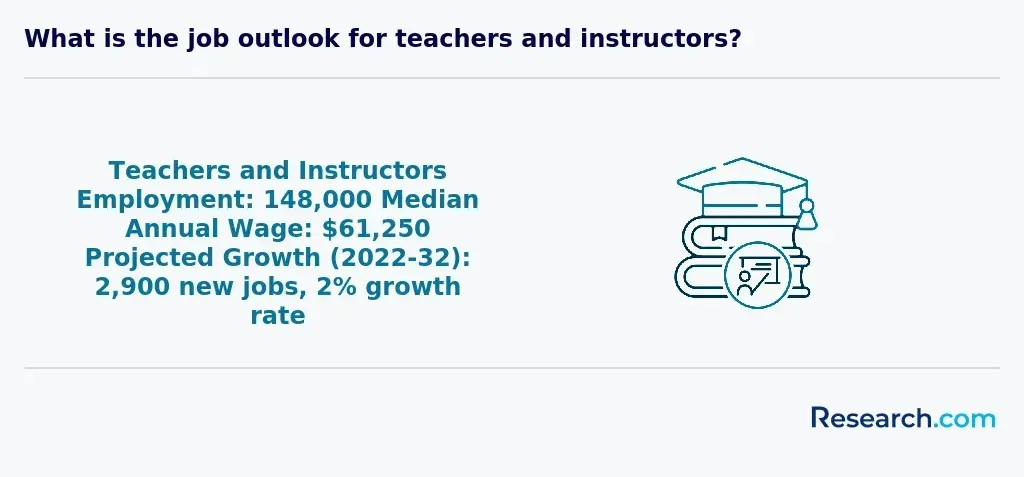
The job outlook for private school teachers in Indiana is shaped by enrollment trends, school budgets, teacher turnover, subject-area demand, and the requirements tied to accreditation or state programs. The original projection cited for teachers and instructors is projected growth of 2% for 2022-2032.
Private school opportunities may be strongest for candidates who bring hard-to-fill subject knowledge, classroom experience, licensure, special education skills, technology fluency, or the ability to support a school’s mission. However, salaries may be lower than public school salaries in some settings, and benefits can vary significantly by school.
Education professionals who want alternatives to classroom teaching can also explore roles connected to best online master's in library science pathways, instructional support, organizational leadership, curriculum design, or educational administration.
| Factor affecting job outlook | Why it matters for private school teachers | How to respond |
| Subject demand | Schools may compete more for teachers in specialized or difficult-to-staff areas. | Build evidence of subject expertise and consider endorsements where useful. |
| Licensure expectations | Some schools may align more closely with public school standards. | Consider licensure if you want broader employment options. |
| School funding and enrollment | Hiring depends on student enrollment and available budget. | Ask about enrollment stability during interviews. |
| Technology use | Schools increasingly expect teachers to use learning platforms and digital tools effectively. | Develop practical edtech skills and examples of digital lesson design. |
What are the benefits and challenges of teaching in Indiana's private schools?
Private school teaching can be rewarding, but it is not automatically easier than public school teaching. The experience depends heavily on the school’s leadership, mission, class sizes, parent community, compensation model, and workload expectations.
| Potential benefit | What it can look like | Question to ask before accepting a role |
| Smaller class sizes | More chances for individual feedback, mentoring, and relationship-building. | What is the average class size by grade and subject? |
| Instructional flexibility | Teachers may have more room to adapt lessons or use distinctive curricula. | How much freedom do teachers have in curriculum planning? |
| Mission-driven environment | Schools may emphasize faith, character education, classical education, college preparation, or specialized learning models. | How is the school mission reflected in daily teaching expectations? |
| Close community | Teachers may work closely with families, administrators, and students over multiple years. | How does the school handle parent communication and conflict? |
| Common challenge | Why it matters | Better way to evaluate it |
| Lower or variable salaries | Private school pay may not match public school compensation in every setting. | Compare salary, benefits, retirement options, tuition discounts, and workload together. |
| Multiple responsibilities | Teachers may advise clubs, coach, supervise, mentor, or help with school events. | Ask what duties are required beyond teaching. |
| Limited support in some schools | Smaller schools may have fewer specialists, aides, or technology resources. | Ask about instructional support, special education services, and planning time. |
| Different credential expectations | Requirements may change by subject, accreditation, or school policy. | Get hiring requirements in writing before committing to a credential path. |
If you need a credential but want to control costs, reviewing the cheapest teaching credential program in Indiana can help you compare lower-cost routes. Just make sure the credential matches your target schools and roles.
How much do private school teachers in Indiana make?
Private school teacher pay in Indiana varies by school, grade level, subject, location, education, experience, and the school’s financial model. The salary range commonly cited is between $30,000 and $60,000 annually. Teachers with advanced preparation, including accredited online teaching degrees, may be more competitive for certain roles, but a degree does not guarantee a specific salary.
- School type: Larger or elite private institutions may have more salary flexibility than smaller schools with tighter budgets.
- Experience and education: Years of teaching, advanced degrees, licensure, and specialized skills can influence compensation.
- Location: Urban private schools may offer different pay than rural schools, but cost of living and commute should also be considered.
- Total compensation: Benefits, retirement options, tuition remission, professional development support, and workload should be evaluated alongside base salary.
| Salary question | Why to ask it |
| What is the base salary range for this role? | It clarifies whether the offer aligns with the $30,000 to $60,000 annually range often cited. |
| Are benefits included? | Health coverage, retirement, and paid leave can change the real value of the job. |
| Is there a salary schedule? | Some schools have formal steps for experience and degrees; others negotiate individually. |
| Are extracurricular duties paid separately? | Coaching, clubs, events, and supervision can significantly affect workload. |
| Does the school support professional development? | Tuition assistance or paid training can reduce long-term career costs. |
Should Private School Teachers Pursue Special Education Certification?
Special education certification can be valuable for Indiana private school teachers because many classrooms include students with varied learning needs, even when the school does not operate like a public special education program. Training in accommodations, behavior support, individualized instruction, and family communication can make a teacher more effective and more competitive.
This path is especially worth considering if you want to teach students with disabilities, support intervention programs, move into student services, or strengthen your ability to differentiate instruction. Teachers comparing this option can review how to become a special education teacher in Indiana for more detailed requirements.
What are the benefits of earning an online teaching degree for private school educators in Indiana?
An online teaching degree can help private school educators build instructional, assessment, classroom management, and digital teaching skills while continuing to work. For career changers, online study may also provide a structured route into education without requiring relocation or a full pause in employment.
Online programs can be useful when they are accredited, accepted by licensing authorities when licensure is the goal, and aligned with the grade level or subject you want to teach. Before enrolling, ask whether field experiences can be completed near your location and whether the program supports Indiana licensure if you need it.
What career paths are available for Private school teachers in Indiana?
Private school teaching can lead to more than a long-term classroom role. Teachers who build strong instructional, leadership, and communication skills may move into academic coordination, student support, administration, curriculum, or consulting roles.
| Career path | What the role may involve | Helpful preparation |
| Lead classroom teacher | Planning lessons, teaching students, assessing learning, and communicating with families. | Degree, classroom experience, subject knowledge, and possibly licensure. |
| Department chair | Supporting teachers in a subject area and coordinating curriculum or assessment. | Strong teaching record, leadership ability, and curriculum experience. |
| Curriculum developer | Designing courses, instructional materials, pacing guides, and assessment resources. | Pedagogy training, subject expertise, and data-informed planning skills. |
| School administrator | Managing staff, operations, academics, discipline, parent relations, and school strategy. | Leadership experience, graduate study, and knowledge of school policy. |
| Educational consultant | Advising schools on instruction, assessment, technology, curriculum, or professional development. | Demonstrated expertise and a portfolio of results. |
| Higher education instructor | Teaching, advising, or training future educators at colleges or universities. | Advanced degree and specialized academic or professional experience. |
What resources are available for private school teachers in Indiana?
Indiana private school teachers can strengthen their practice through professional organizations, school-based training, higher education partnerships, and state education resources. The best resources are those that solve a specific need: classroom management, curriculum design, technology integration, assessment, student support, or leadership development.
- Professional organizations: Groups such as the Indiana Association of Private School Educators can provide networking, advocacy, and professional learning opportunities.
- Workshops and conferences: Education events can help teachers learn new instructional strategies and connect with peers outside their own school.
- Online teaching resources: Platforms such as Teachers Pay Teachers and Edutopia can offer lesson ideas, classroom strategies, and professional articles.
- Local colleges and universities: Higher education institutions may provide continuing education, graduate programs, certification support, or partnership training.
- Mentorship programs: New teachers can benefit from structured support from experienced educators who understand private school expectations.
- State education resources: The Indiana Department of Education can provide information on standards, assessment tools, licensing, and instructional resources.
Here’s What Graduates Have to Say About Becoming a Private School Teacher in Indiana
-
: "
“Teaching in an Indiana private school gave me the chance to know my students well. With smaller classes, I can adjust instruction more carefully and support students academically and personally.” — Gab. S.
"
-
: "
“Private school teaching opened opportunities I did not expect. I found a community that encouraged creative lessons, broader curriculum planning, and more student discussion.” — Don. M.
"
-
: "
“I chose private education because character development mattered to me. My work is not limited to content; I help students build habits, values, and confidence they can carry beyond school.” — Marshall. A.
"
What other career opportunities are available for educators in Indiana?
Educators who want to stay in a helping profession but move beyond classroom teaching can explore instructional coaching, curriculum design, school administration, tutoring businesses, educational technology, student services, and specialized therapy-related careers. One possible path is speech-language pathology, which focuses on assessing and treating communication and swallowing disorders. Educators interested in that transition can review how to become a speech pathologist in Indiana.
What emerging certification options can enhance my private school teaching career in Indiana?
Targeted certifications can help private school teachers respond to changing classroom needs and stand out in hiring or promotion decisions. Options to consider include special education, STEM instruction, digital learning, bilingual education, literacy intervention, early childhood education, and subject-specific endorsements.
For teachers working with young children, understanding preschool teacher requirements in Indiana can be a practical starting point. Choose certifications based on the students you teach, the roles you want next, and the credentials your target schools recognize.
How is technology transforming classroom engagement for private school teachers in Indiana?
Technology is changing how private school teachers plan lessons, communicate with families, track progress, personalize instruction, and support student participation. Learning management systems, digital assessments, adaptive practice tools, interactive content, and multimedia projects can make instruction more flexible when used well.
The key is not to use technology for its own sake. Effective teachers connect tools to learning goals, student feedback, collaboration, and assessment. Educators in subject-specific fields can also connect digital teaching methods with career pathways such as how to become a history teacher in Indiana.
How Can Teacher Certification Paths Influence My Private School Teaching Career in Indiana?
Certification can shape where you are eligible to teach, how competitive you are, and whether you can move into specialized or leadership roles. Private schools may not all require the same credential, but a recognized certification can signal preparation, commitment, and subject or grade-level readiness.
Teachers comparing routes should look at traditional licensure, alternative entry options, endorsements, substitute permits, and specialized certifications. For a broader breakdown, review the types of teacher certification in Indiana.
How can career advancement strategies propel my private school teaching career in Indiana?
Career advancement in private schools often comes from becoming the person who solves important school problems. That may mean leading curriculum work, mentoring new teachers, improving assessment systems, coordinating student support, integrating technology, developing enrichment programs, or helping with accreditation work.
- Volunteer for one strategic committee rather than saying yes to every extra duty.
- Document results from classroom projects, student growth, curriculum revisions, or family engagement efforts.
- Build expertise in a high-need area such as literacy, STEM, special education support, or digital learning.
- Ask administrators what skills are needed for department chair, instructional coach, or leadership roles.
- Explore online teaching skills through resources such as how to become a teacher online in Indiana.
Is Pursuing an Advanced Degree Beneficial for Private School Teachers in Indiana?
An advanced degree can be useful if it supports a clear goal: becoming a stronger teacher, moving into leadership, qualifying for specialized roles, improving curriculum expertise, or opening doors outside K-12 teaching. It may be less useful if the cost is high and your target school does not reward graduate education through salary, promotion, or new responsibilities.
Teachers comparing graduate options can start with cost-conscious choices such as the most affordable online master's degrees in higher education. Before enrolling, ask your employer whether the degree affects pay, role eligibility, tuition assistance, or leadership opportunities.
How can ongoing professional development and networking enhance my private school teaching career in Indiana?
Professional development helps private school teachers improve instruction, adapt to new curriculum expectations, use technology effectively, and build leadership capacity. Networking can also expose teachers to job openings, mentorship, conferences, and specialized training that may not be available inside one small school.
Useful development should be specific. Instead of collecting random workshops, choose training tied to your classroom needs or career goals: classroom management, reading instruction, assessment design, student support, AI-aware assignments, parent communication, or school leadership. For a broader overview of foundational preparation, see how to become a teacher in Indiana.
How can mentorship programs enhance my private school teaching career in Indiana?
Mentorship can shorten the learning curve for new private school teachers by offering practical guidance on lesson planning, classroom management, parent communication, school culture, and workload boundaries. A strong mentor can also help a teacher understand unwritten expectations that are hard to learn from policy documents alone.
Mentorship is also useful for teachers exploring specialized fields. For example, educators interested in arts education can compare their background with music teaching qualifications in Indiana and ask mentors how specialized roles are staffed in private schools.
How do private schools in Indiana support teacher well-being and work-life balance?
Support for teacher well-being varies widely among Indiana private schools. Some schools offer strong collegial support, flexible scheduling, wellness initiatives, mentoring, clear planning time, and manageable communication expectations. Others may expect teachers to cover many roles because the staff is small.
| Work-life balance factor | What to ask before accepting a job |
| Planning time | How many planning periods are protected each week? |
| Extra duties | Are clubs, coaching, supervision, events, or retreats required? |
| Parent communication | What are the expectations for response times and after-hours messages? |
| Class size and course load | How many students, classes, and preparations will I have? |
| Support services | What academic, counseling, behavioral, and special education supports are available? |
| Professional growth | Does the school fund training, certification, or advanced coursework? |
Teachers considering elementary roles can also review how to become an elementary school teacher in Indiana to compare preparation requirements and expectations.
Common Mistakes to Avoid When Becoming a Private School Teacher in Indiana
- Assuming no license is needed anywhere: Some private schools do require licensed teachers, especially accredited schools or those connected to certain state standards.
- Choosing the cheapest program without checking outcomes: A low-cost credential is only useful if it qualifies you for the roles you want.
- Ignoring accreditation: Accreditation can affect hiring standards, family confidence, and school expectations.
- Looking only at salary: Benefits, workload, class size, planning time, and school culture can matter as much as base pay.
- Not asking about extra duties: Private school teachers may be expected to supervise, mentor, coach, advise, or attend events beyond regular teaching.
- Assuming online programs automatically meet Indiana requirements: If you need licensure, confirm that the program aligns with Indiana expectations before enrolling.
- Relying only on rankings or reputation: Visit the school, speak with teachers, and ask specific questions about workload and support.
Questions to Ask Schools Before You Apply
- Do you require an Indiana teaching license for this position?
- Is this role affected by accreditation standards or Choice Scholarship Program requirements?
- What degree, subject background, or experience do you prefer?
- What background checks, fingerprinting, or fees are required?
- What is the salary range, and how are raises determined?
- How many students and course preparations will I have?
- What curriculum is required, and how much instructional flexibility do teachers have?
- What professional development support is available?
- How does the school support students with learning differences?
- What responsibilities are expected outside classroom teaching?
Key Insights
- Indiana private schools have hiring flexibility, but individual schools may still require a degree, license, subject expertise, background checks, and experience.
- Licensure is not always mandatory for every private school role, but it can improve job mobility and may be required in accredited nonpublic schools or for certain subjects tied to Choice Scholarship Program standards.
- A certificate alone may open some doors, but lead teaching roles are more competitive when candidates have a bachelor's degree, classroom experience, or a valid teaching license.
- Costs can include tuition, preparation programs, textbooks, supplies, licensing fees, substitute permit fees, fingerprinting, background checks, and continuing education.
- Private school teacher salaries in Indiana are commonly cited between $30,000 and $60,000 annually, but total compensation should be evaluated with benefits, workload, class size, and professional support.
- The best preparation path depends on your target school. Before paying for a credential, ask employers what they actually require for the grade level and subject you want to teach.
Related Articles for Nearby States
- 2027 How to Become a Private School Teacher in Ohio: Requirements & Certification
- 2027 How to Become a Private School Teacher in Illinois: Requirements & Certification
- 2027 How to Become a Private School Teacher in Kentucky: Requirements & Certification
- 2027 How to Become a Private School Teacher in Michigan: Requirements & Certification
- 2027 How to Become a Private School Teacher in Wisconsin: Requirements & Certification
- 2027 How to Become a Private School Teacher in Missouri: Requirements & Certification
- 2027 How to Become a Private School Teacher in Tennessee: Requirements & Certification
- 2027 How to Become a Private School Teacher in Iowa: Requirements & Certification
- 2027 How to Become a Private School Teacher in West Virginia: Requirements & Certification
- 2027 How to Become a Private School Teacher in Minnesota: Requirements & Certification
References:
- Anderson Community Schools. (N.D.). How do you become a teacher in Indiana? Retrieved from: https://www.acsc.net/apps/pages/index.jsp?uREC_ID=614802&type=d&pREC_ID=2342810
- educationdata.org. (2023). Average Cost of Private School. educationdata.org https://educationdata.org/average-cost-of-private-school
- Indeed. (2024). How To Become a Teacher in Indiana in 6 Steps (Plus Tips). Retrieved from: https://www.indeed.com/career-advice/finding-a-job/how-to-become-teacher-in-indiana
- National Council for Education Statistics. (2024). Report on the Condition of Education 2024. Retrieved from: https://nces.ed.gov/pubs2024/2024144.pdf
Other Things You Should Know About How to Become a Private School Teacher in Indiana
Private schools in Indiana have the autonomy to hire foreign nationals but the path is not straightforward. Many private institutions prefer candidates with a valid teaching license, which typically requires a degree from an accredited institution and passing state exams.
Foreign teachers must often navigate complex visa requirements.
- Some private schools may accept foreign credentials, but verification is crucial.
A teaching license from Indiana can enhance employability, even in private settings.
In 2027, private schools in Indiana do not require teachers to hold a state-issued teaching license. However, individual schools may have their own preferred qualifications, often valuing a bachelor’s degree in education or the subject area, along with relevant teaching experience.
To become a private school teacher in Indiana in 2027, candidates typically need a bachelor's degree and substantial subject knowledge. While Indiana doesn't mandate state certification for private school teachers, individual schools may have their own requirements. It's advisable to gain teaching experience and foster strong communication and instructional skills.
In 2027, to become a private school teacher in Indiana, candidates typically need a bachelor's degree in education or a related field. While state certification may not be mandatory for private schools, many prefer candidates with teaching credentials or experience.


