
2027 Fastest Online Bachelor's Degree Programs in Analytics

Co-Founder and Chief Data Scientist
Choosing the fastest online bachelor’s degree in analytics is really a timing, cost, and credibility decision. You want to finish quickly, but you also need a degree that teaches real analytics skills, accepts your prior credits, qualifies for financial aid, and is respected by employers. The challenge is that schools use “accelerated” in different ways: some mean short 5- to 8-week courses, some mean year-round enrollment, and others mean bachelor-completion programs for students who already have college credits.
This guide explains how accelerated online analytics degrees work, which programs offer some of the shortest completion timelines, what you should expect to pay, and how to compare options without sacrificing academic quality. It is designed for transfer students, working adults, career changers, military students, and first-time college students who want a practical route into data-focused roles.
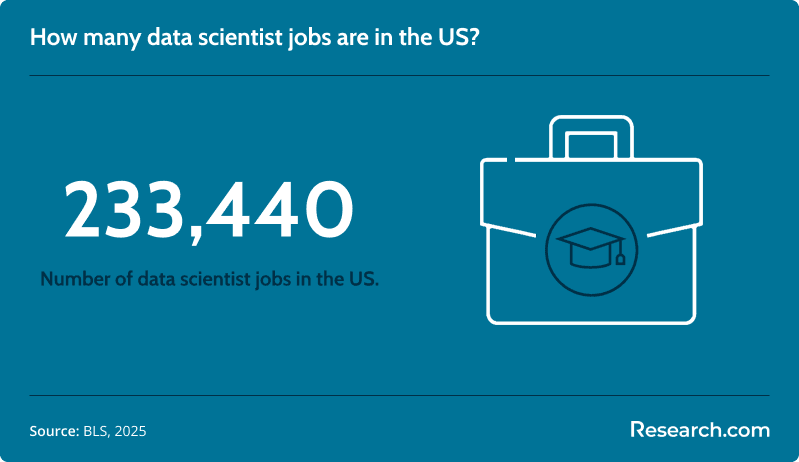
The urgency is understandable. The analytics labor market continues to expand, with over 276,000 data scientist jobs projected by 2033. Moving faster can help you enter the field sooner, but only if the program fits your schedule, budget, and career goals.
Quick answer: What is the fastest online bachelor’s degree in analytics?
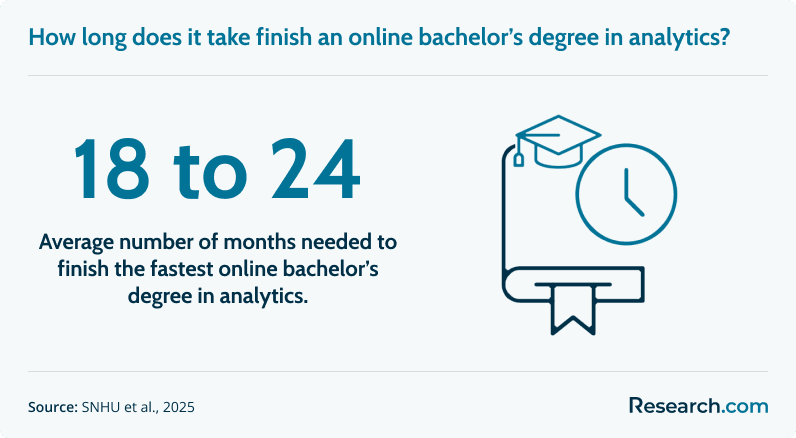
The fastest online bachelor’s degree programs in analytics can be completed in as little as 18 to 24 months, but that timeline usually requires transfer credits, an associate degree, or a bachelor-completion format. Students starting with no prior college credit should expect a longer path, often closer to 30 to 48 months depending on course load and school policies.
For most students, the “best” fast program is not simply the shortest one. It is the accredited program that lets you transfer the most credits, offers short or self-paced terms, includes hands-on work with tools such as Python, SQL, Tableau, SAS, or R, and provides career support for analyst roles.
What are the benefits of getting the fastest online bachelor’s degree in analytics?
- Earlier access to analytics jobs: Graduates may qualify for entry-level roles such as data analyst, operations analyst, business intelligence associate, marketing analyst, or healthcare data analyst.
- Stronger momentum: Short, intensive terms can help motivated students make steady progress instead of waiting for long semester cycles.
- Good earnings potential: The salary for data analytics roles, such as data scientists and operations research analysts, ranges from $76,950 to $131,450 per year, according to 2025 BLS data.
- Flexible study options: Online formats can work well for students balancing employment, caregiving, military service, or career changes.
- Graduate school preparation: A bachelor’s in analytics can support later study in data science, business analytics, information systems, finance, healthcare management, or an MBA program.
What can I expect from the fastest online bachelor’s degree programs in analytics?
Accelerated online bachelor’s programs in analytics usually cover the same major subject areas as traditional programs, but they compress the calendar. Instead of 16-week semesters, many use 5- to 8-week terms, multiple start dates, year-round enrollment, or competency-based pacing.
Most bachelor’s programs require 120 to 126 credits. Some schools use quarter-credit systems, so the total may appear higher, such as 180 quarter credits. If you already have college coursework, military training, AP exam scores, an associate degree, or industry certifications, you may be able to reduce the number of credits you still need to complete.
The curriculum typically combines statistics, programming, databases, visualization, business intelligence, data ethics, predictive analytics, and a capstone or applied project. The best fast programs do not simply rush through content. They structure courses so students build a portfolio of projects that can be shown to employers.
| Program feature | What it means for you | What to verify before enrolling |
| Short terms | You may complete courses in 5 to 8 weeks rather than a full semester. | Ask how many courses students realistically take per term while working. |
| Transfer-friendly policies | Prior college credits can shorten your timeline and lower total cost. | Request an official transfer evaluation before committing. |
| Self-paced coursework | You may move faster through material you already know. | Confirm whether pacing is truly flexible or limited by term deadlines. |
| Flat-rate tuition | You may save money if you complete more courses during each term. | Calculate total cost using your expected pace, not the advertised fastest pace. |
| Applied projects | You can build evidence of skills for job applications. | Look for capstones, dashboards, data cleaning projects, and portfolio support. |
Where can I work with the fastest online bachelor’s degree in analytics?
An online bachelor’s degree in analytics can prepare you for roles in any organization that collects, measures, reports, or uses data to make decisions. That includes technology companies, hospitals, banks, insurance firms, retailers, logistics companies, consulting firms, public agencies, schools, nonprofits, and startups.
According to 2025 data from Zippia, 52% of data analysts work in the public sector, while 39% are in the private sector. This means analytics careers are not limited to large tech employers. Government, healthcare, education, and nonprofit organizations also need professionals who can interpret data and communicate findings clearly.
| Role | What you do | Common employers |
| Data analyst | Clean, organize, analyze, and report data to identify patterns and trends. | Businesses, agencies, hospitals, universities, nonprofits |
| Business intelligence analyst | Create dashboards, reports, and metrics that support leadership decisions. | Corporations, finance firms, retailers, SaaS companies |
| Operations analyst | Use data to improve workflows, staffing, logistics, productivity, or costs. | Manufacturing, logistics, healthcare, retail, government |
| Marketing analyst | Study customer behavior, campaign results, web analytics, and market trends. | Marketing agencies, e-commerce firms, media companies |
| Healthcare data analyst | Analyze patient, billing, quality, and performance data. | Hospitals, insurers, clinics, public health organizations |
| Financial analyst | Review budgets, revenue, expenses, risk, and investment performance. | Banks, insurance firms, corporations, investment organizations |
How much can I make with the fastest online bachelor's degree in analytics?
A fast online bachelor’s in analytics can lead to careers with strong earning potential, although salary depends on your job title, employer, industry, location, technical skills, and experience. According to 2025 data from the BLS, related roles report the following salaries:
- Data scientists: $112,590
- Operations research analysts: $131,450
- Financial analysts: $101,910
- Market research analysts: $76,950
- Mathematical science occupations (overall): $104,620
These figures should not be treated as guaranteed starting salaries. Many bachelor’s graduates begin in junior analyst, reporting analyst, business analyst, marketing analyst, or operations analyst roles and grow into higher-paying positions after gaining experience with SQL, Python, dashboards, cloud tools, statistical modeling, and stakeholder communication.
- Fastest Online Bachelor's Degree Programs in Analytics for 2027
- How long does it take to complete the fastest online bachelor’s degree program in analytics?
- How does an online bachelor's degree in analytics program compare to an on-campus program?
- What is the average cost of the fastest online bachelor’s degree programs in analytics?
- What are the financial aid options for students enrolling in the fastest online bachelor’s degree programs in analytics?
- What are the prerequisites for enrolling in the fastest online bachelor’s degree programs in analytics?
- What courses are typically in the fastest online bachelor’s degree programs in analytics?
- What types of specializations are available in the fastest online bachelor’s degree programs in analytics?
- What challenges do students typically face in accelerated online bachelor's degree programs in analytics?
- How do accelerated online analytics programs compare to accelerated bachelor’s programs in other fields?
- How do accreditation and industry partnerships impact online analytics programs?
- How to choose the fastest online bachelor’s degree programs in analytics?
- What career paths are available for graduates of the fastest online bachelor’s degree programs in analytics?
- What is the job market for graduates of the fastest online bachelor’s degree programs in analytics?
Fastest Online Bachelor's Degree Programs in Analytics for 2027
How do we rank schools?
A fast degree is only valuable if it is credible, affordable enough for your situation, and structured to help you finish. Research.com evaluates programs using information from trusted education data sources, including IPEDS, Peterson’s, College Scorecard, and the National Center for Education Statistics. These sources help compare online bachelor’s programs in analytics using factors such as program availability, completion structure, tuition, institutional information, and accreditation. You can review the broader process on Research.com’s methodology page.
| School | Required credits | Fastest listed timeline | Cost | Accreditation |
| Southern New Hampshire University | 120 | As few as 24 months | $330 per credit | NECHE |
| Arizona State University | 120 | As few as 36 months | $580 per credit | HLC |
| Western Governors University | Approx. 120 (42 courses) | As few as 36 months | $4,035 per 6-month term | NWCCU |
| Franklin University | 120 | As few as 24 months | $398 per credit | HLC |
| Eastern Oregon University | 180 quarter credits | 24 to 48 months | $329 per credit | NWCCU |
| Pennsylvania State University | 122 | 24 to 48 months | $632–$678 per credit | MSCHE |
| ECPI University | 121 | 30 months | $8,712 per semester | SACSCOC |
| Capella University | 180 quarter credits | 18 to 78 months | $375–$415 per credit plus $175 resource kit | HLC |
| Walsh University | Varies | 12 to 24 months | ~$18,000 total | HLC |
| Rasmussen University | 90 | As few as 18 months | $307 per credit full-time; $348 per credit part-time | HLC |
1. Southern New Hampshire University
Southern New Hampshire University’s online data analytics degree is built around business problem-solving, technical analysis, and portfolio development. Students work with tools such as Python, SQL, Tableau, and SAS while learning how to manage data standards, interpret results, and present findings in professional settings.
- Required Credits to Graduate: 120
- Program Length: As few as 24 months (8-week terms)
- Cost: $330 per credit
- Accreditation: New England Commission of Higher Education (NECHE)
2. Arizona State University
Arizona State University’s business data analytics program focuses on using data to support decisions across business functions. Coursework includes big data tools, modeling, data warehousing, and performance measurement. Students also build leadership and communication skills, and an accelerated pathway may help eligible students move toward a master’s degree more efficiently.
- Required Credits to Graduate: 120
- Program Length: As few as 36 months (7.5-week terms)
- Cost: $580 per credit
- Accreditation: Higher Learning Commission (HLC)
3. Western Governors University
Western Governors University uses a competency-based structure that can appeal to disciplined students who want to progress through familiar material more quickly. The program emphasizes data storytelling, wrangling, visualization, and model deployment, and it includes certifications tied to analytics skills.
- Required Credits to Graduate: Approx. 120 (42 courses)
- Program Length: As few as 36 months (self-paced, term-based)
- Cost: $4,035 per 6-month term
- Accreditation: Northwest Commission on Colleges and Universities (NWCCU)
4. Franklin University
Franklin University offers online analytics pathways in business, healthcare, and applied data science. Students develop skills in Python, SQL, Tableau, machine learning, ethics, communication, and project management, making the program useful for learners who want a practical blend of technical and workplace skills.
- Required Credits to Graduate: 120
- Program Length: As few as 24 months (varies by pace and transfer credits)
- Cost: $398 per credit
- Accreditation: Higher Learning Commission (HLC)
5. Eastern Oregon University
Eastern Oregon University’s online data analytics program emphasizes applied learning, smaller class settings, and a capstone project tied to real industry problems. Students may encounter topics such as agricultural data and GIS tools, which can be useful for learners interested in analytics beyond traditional corporate settings.
- Required Credits to Graduate: 180 quarter credits
- Program Length: 24 to 48 months (depending on prior credits)
- Cost: $329 per credit
- Accreditation: Northwest Commission on Colleges and Universities (NWCCU)
6. Pennsylvania State University
Penn State’s online Functional Data Analytics degree combines mathematics, statistics, information technology, programming, project management, data governance, and communication. The program is designed for students who want to convert raw data into clear, usable insights for different audiences.
- Required Credits to Graduate: 122
- Program Length: 24 to 48 months (depending on course load)
- Cost: $632–$678 per credit
- Accreditation: Middle States Commission on Higher Education (MSCHE)
7. ECPI University
ECPI’s Data Analytics track connects analytics with software development, artificial intelligence, and machine learning. Students study how to build business applications, analyze datasets, and apply AI-supported tools to improve real-time decision-making and operations.
- Required Credits to Graduate: 121
- Program Length: 30 months (2.5 years, year-round)
- Cost: $8,712 per semester
- Accreditation: Southern Association of Colleges and Schools Commission on Colleges (SACSCOC)
8. Capella University
Capella’s BS in IT with a Data Analytics and AI specialization centers on using artificial intelligence, machine learning, automation, and data analysis to solve business and technology problems. Students also work in cloud-based IT environments, and the program includes an optional industry certification.
- Required Credits to Graduate: 180 quarter credits
- Program Length: 18 to 78 months (varies by transfer credit)
- Cost: $375–$415 per credit (plus $175 resource kit)
- Accreditation: Higher Learning Commission (HLC)
9. Walsh University
Walsh University’s Data Analytics program is structured for students seeking a faster move into technology-focused work. Coursework includes Python, cybersecurity, and applied projects using real datasets. Built in collaboration with Google and the University of California, Berkeley, the program also includes a practicum component.
- Required Credits to Graduate: Varies (based on course load and transfer credits)
- Program Length: 12 to 24 months
- Cost: ~$18,000 total
- Accreditation: Higher Learning Commission (HLC)
10. Rasmussen University
Rasmussen’s online Data Analytics degree is a bachelor-completer program that can suit students who already have prior college credit. The curriculum includes ETL, scripting, data visualization, business intelligence, data science preparation, and SAS certification. Self-directed assessments may allow students to move through familiar material more quickly.
- Required Credits to Graduate: 90 (Bachelor-Completer program)
- Program Length: As few as 18 months
- Cost: $307 per credit (full-time); $348 per credit (part-time)
- Accreditation: Higher Learning Commission (HLC)
How long does it take to complete the fastest online bachelor’s degree program in analytics?
The shortest online bachelor’s analytics programs can take as little as 18 to 24 months, but that is most realistic for students entering with transfer credits or enrolling in a bachelor-completion program. Students beginning from the first year of college often need closer to 30 to 48 months, even in an accelerated format.
Many students who finish quickly later consider the fastest online master's degree programs in analytics to deepen their skills after gaining work experience. The right timing depends on your career goal: some students benefit from entering the workforce first, while others prefer a faster graduate pathway.
| Estimated completion time | Who this timeline usually fits | Important caution |
| 18–24 months | Students with an associate degree, significant transfer credits, or a bachelor-completion program. | This pace can be demanding and may require year-round study. |
| 30 months (2.5 years) | Students in year-round accelerated formats with short terms. | Taking frequent courses with few breaks can be difficult while working full-time. |
| 36 months | Self-paced or accelerated students who complete more courses each term. | Progress depends heavily on motivation and available study time. |
| 48 months (4 years) | Students starting with few or no transfer credits or taking a lighter course load. | This may still be the best option if you need flexibility and lower stress. |
Students in other fields face similar timing questions. For example, an accelerated online specialist degree in education may also depend heavily on transfer policies, prior credentials, and year-round enrollment.
How does an online bachelor's degree in analytics program compare to an on-campus program?
An online bachelor’s degree in analytics can lead to similar career outcomes as an on-campus degree when the institution is accredited and the curriculum is rigorous. The main difference is not the credential itself but how you learn, how much structure you need, and how quickly you can complete courses.
| Factor | Online analytics degree | On-campus analytics degree |
| Schedule | Often asynchronous or flexible, with short terms and multiple start dates. | Usually follows fixed class times and semester schedules. |
| Pace | May offer accelerated, self-paced, or year-round options. | Often follows a traditional academic calendar. |
| Interaction | Relies on discussion boards, video meetings, email, and virtual labs. | Provides in-person class discussions, office hours, and campus activities. |
| Technology practice | Often uses cloud-based tools and remote collaboration platforms. | May include campus labs, in-person group work, and local networking. |
| Best for | Working adults, transfer students, military students, parents, and self-directed learners. | Students who want campus life, in-person support, and a more structured routine. |
Both formats can cover statistics, Python, SQL, data modeling, data visualization, databases, and business intelligence. If you are deciding between technical and business-focused roles, this comparison of business analytics vs data science can help clarify which direction fits your goals.
What is the average cost of the fastest online bachelor’s degree programs in analytics?
The average cost of the fastest online bachelor’s analytics degree programs ranges from $15,000 to $40,000, depending on transfer credits, tuition structure, pace, fees, and whether you qualify for aid. Listed tuition among programs in this guide ranges from $307 to $680 per credit, depending on the school and format. Some programs also use flat-rate term pricing, such as WGU’s $4,035 per 6-month term.
Earlier estimates for online analytics programs often cite an average price per credit from $250 to $450, but your real cost may be higher or lower based on transfer credit, residency rules, resource fees, technology fees, and how many terms you need to complete. The fastest advertised program is not always the least expensive program.
| Cost factor | Why it matters | How to reduce the cost |
| Transfer credits | Accepted credits reduce the number of courses you must pay for. | Submit all transcripts and ask for a written transfer evaluation. |
| Per-credit tuition | You pay for each credit attempted. | Compare total program cost, not just one course price. |
| Flat-rate terms | You may pay the same amount even if you complete more courses. | Use this model only if you can handle a heavier workload. |
| Fees and materials | Technology, resource, assessment, or lab fees can increase total cost. | Ask for a full cost breakdown before enrolling. |
| Time in program | More terms can mean more tuition, fees, and opportunity cost. | Build a realistic degree plan with an advisor before starting. |
Accelerated online bachelor’s degrees are different from short training programs. Some of the best value online IT training bootcamps may cost less and take less time, but they usually do not replace a bachelor’s degree for employers that require one. A bootcamp can be useful for targeted skills; a bachelor’s degree provides a broader credential and academic foundation.
The chart below lists the most common educational levels of data analysts, as reported by Zippia in 2025.
What are the financial aid options for students enrolling in the fastest online bachelor’s degree programs in analytics?
Students in accelerated online analytics programs may be eligible for many of the same aid options as traditional students, as long as the school and program meet eligibility requirements. This is also true for later graduate study, including fast-track online MBA entrepreneurship programs, where financial aid can help reduce out-of-pocket costs.
- Federal Student Aid (FAFSA): Completing the Free Application for Federal Student Aid is the starting point for federal grants, loans, and work-study. Eligible students may qualify for a Pell Grant.
- Institutional scholarships: Many universities offer scholarships for new students, transfer students, adult learners, military students, or students with financial need.
- Private scholarships: Technology and STEM-focused organizations may support analytics students, including programs such as the Google Women Techmakers Scholarship, the SMART Scholarship (Department of Defense), and the UNCF STEM Scholarship.
- Employer tuition assistance: If your current job uses business, data, finance, operations, marketing, or IT skills, your employer may reimburse some tuition.
- State aid: State grants, tuition programs, and tax benefits may be available depending on your residency and eligibility, including examples such as the Cal Grant in California or the Texas Grant for eligible residents.
- Military education benefits: Veterans, active-duty service members, and eligible family members may be able to use the GI Bill or Tuition Assistance (TA).
What are the prerequisites for enrolling in the fastest online bachelor’s degree programs in analytics?
Admission requirements vary by school, but most online bachelor’s analytics programs are designed to be accessible to first-time college students, transfer students, and working adults. The most common requirements include:
- High school diploma or GED: You generally need proof that you completed secondary education or an equivalent credential.
- Minimum GPA: Some schools accept students with a 2.0 GPA or higher, while others may prefer a 2.5 or above, particularly for transfer admission.
- Official transcripts: Schools typically require transcripts from high school and any colleges or universities you previously attended.
- Math readiness: Analytics programs involve statistics, algebra, and quantitative reasoning, so some students may need placement or preparatory coursework.
- Computer readiness: Prior exposure to spreadsheets, basic programming, or introductory computing can help, though many programs include beginner-level courses.
- English language proficiency: Non-native English speakers may need TOEFL or IELTS scores.
- Standardized tests: Many online analytics programs do not require SAT or ACT scores, especially for adult learners and transfer students.
After admission, some schools use placement assessments to determine the right math, writing, or technology starting point. These assessments are not necessarily barriers; they help the school place you in courses you are prepared to complete. After finishing the bachelor’s degree, students who want a shorter post-bachelor’s credential may consider a fast-track graduate certificate in data analytics online.
What courses are typically in the fastest online bachelor’s degree programs in analytics?
A fast online bachelor’s degree in analytics should teach the full analytics workflow: how to collect data, clean it, store it, analyze it, visualize it, explain it, and use it responsibly. Programs usually blend mathematics, business, information technology, and communication. This foundation can also prepare students for graduate options such as the most affordable online master’s programs in analytics.
| Course area | What you learn | Why employers value it |
| Introduction to Data Analytics | Core concepts in data use, business intelligence, and analytics workflows. | Shows you understand how data supports decisions. |
| Statistics and Probability | Methods for measuring trends, relationships, uncertainty, and patterns. | Helps you avoid weak or misleading conclusions. |
| Programming for Data Analysis | Python, R, SQL, or related tools used to manipulate and analyze data. | Builds technical credibility for analyst roles. |
| Data Visualization | Dashboards, charts, and storytelling with tools such as Tableau or Power BI. | Helps nontechnical stakeholders understand results. |
| Database Management | How data is stored, queried, organized, and maintained. | Supports reporting, data quality, and business intelligence work. |
| Business Intelligence Tools | How organizations track performance, customers, operations, and revenue. | Connects analytics skills to business outcomes. |
| Machine Learning or Predictive Analytics | Introductory modeling, forecasting, and pattern recognition. | Prepares you for more advanced analytics work. |
| Capstone Project or Internship | Applied analysis of a real or realistic data problem. | Creates portfolio evidence for job applications. |
What types of specializations are available in the fastest online bachelor’s degree programs in analytics?
Specializations help you align an analytics degree with a specific career path. Not every school offers every option, so review electives, capstone topics, software tools, and industry projects before enrolling.
| Specialization | Best for students interested in | Possible roles |
| Business Analytics | Operations, strategy, performance improvement, and decision support. | Business analyst, operations analyst, BI associate |
| Healthcare Analytics | Patient data, hospital performance, insurance data, and public health trends. | Healthcare data analyst, quality analyst, reporting analyst |
| Applied Data Science | Coding, algorithms, modeling, machine learning, and technical analysis. | Junior data scientist, data analyst, machine learning support role |
| Financial Analytics | Risk, budgets, investments, forecasting, and corporate finance data. | Financial analyst, risk analyst, reporting analyst |
| Marketing Analytics | Customer behavior, digital metrics, campaigns, and e-commerce performance. | Marketing analyst, digital analytics specialist, market research analyst |
| Information Technology Analytics | IT systems, cybersecurity, cloud tools, software environments, and data operations. | IT analyst, systems analyst, data operations specialist |
Students interested in markets, policy, and economic forecasting may also consider combining analytics study with an accelerated online bachelor's degree in economics. That combination can support work in financial analysis, policy research, forecasting, and business strategy.
The chart below lists the annual median salaries of various data analyst occupations, as published by the BLS in 2025.
What challenges do students typically face in accelerated online bachelor's degree programs in analytics?
Accelerated online analytics programs can be effective, but they are not easy. The same features that make them fast—short terms, frequent deadlines, dense technical content, and limited breaks—can also create pressure. Students often struggle most with time management, statistics, programming, data cleaning, and balancing school with work or family responsibilities.
| Common challenge | Why it happens | Better strategy |
| Underestimating the workload | Short courses move quickly and assignments stack up fast. | Block study time before the term starts and avoid overload in your first session. |
| Falling behind in math or coding | Analytics builds on statistics, logic, and technical tools. | Use tutoring, office hours, practice labs, and beginner tutorials early. |
| Choosing speed over learning | Some students rush through assignments without building skills. | Save projects, revise dashboards, and build a portfolio as you go. |
| Limited instructor interaction | Online courses may rely on asynchronous communication. | Ask questions early and use every available support channel. |
| Burnout | Year-round study can reduce recovery time. | Plan lighter terms during busy work or family periods. |
If you later want broader management training, an affordable MBA online may complement analytics experience, but it should not replace the technical foundation needed for data roles.
How do accelerated online analytics programs compare to accelerated bachelor’s programs in other fields?
Accelerated analytics degrees tend to be more technical than many fast bachelor’s programs in fields that emphasize management, communication, or theory. Analytics students must keep pace with quantitative assignments, software tools, coding exercises, database work, and applied projects. That makes program support especially important.
| Program type | Main intensity point | What students should look for |
| Analytics | Technical tools, statistics, programming, data projects, and quantitative reasoning. | Hands-on labs, tutoring, software access, portfolio projects, and career coaching. |
| Business or management | Case studies, writing, leadership, finance, and group projects. | Applied projects, faculty feedback, and strong networking support. |
| Creative or communication fields | Portfolio production, writing volume, critique, and revision cycles. | Portfolio review, instructor access, and industry-relevant assignments. |
| Sports or industry-specific programs | Applied industry knowledge, operations, leadership, and internships. | Relevant partnerships and practical experience, such as those discussed in an accelerated bachelor's in sports management online. |
How do accreditation and industry partnerships impact online analytics programs?
Accreditation is one of the most important checks when choosing a fast online analytics degree. It signals that an institution has been reviewed for academic quality, faculty standards, student services, and institutional stability. It can also affect transfer credit, employer recognition, and access to federal financial aid.
Industry partnerships can also matter, especially in analytics. Programs connected with employers, technology companies, software providers, or applied project partners may give students access to current tools, realistic datasets, professional certifications, practicum experiences, and networking opportunities. These features do not guarantee a job, but they can strengthen your preparation.
When comparing schools, look beyond the word “partnership.” Ask what students actually receive: software access, certification preparation, live projects, employer feedback, internship leads, guest lectures, or career placement support. Similar questions are useful when reviewing the top colleges for online MBA, where accreditation and market relevance also play a central role.
How to choose the fastest online bachelor’s degree programs in analytics?
The right program should help you finish efficiently without weakening your skills or creating unmanageable debt. Use the checklist below before applying.
- Confirm accreditation: Choose an institution accredited by a recognized agency. This affects credibility, aid eligibility, and transfer options.
- Request a transfer review: Do not rely on general transfer promises. Ask exactly how many credits will apply to your degree.
- Compare total cost: Include tuition, fees, materials, software, resource kits, transcript fees, and the number of terms you expect to attend.
- Study the curriculum: Look for statistics, SQL, Python or R, databases, visualization, business intelligence, ethics, and applied projects.
- Check hands-on requirements: Capstones, practicums, internships, and portfolio assignments can help you prove job-ready skills.
- Evaluate pacing: Ask whether students commonly complete the program in the advertised timeline or whether that pace assumes heavy transfer credit.
- Review career support: Strong programs help with resumes, portfolios, interview preparation, job boards, and employer connections.
- Ask about software access: Confirm whether tools such as Python, SQL, Tableau, SAS, R, Power BI, or cloud platforms are included or require extra purchases.
- Consider long-term goals: If you plan to move into management, a future option such as the shortest online MBA in healthcare management may build on your analytics background for leadership roles.
Questions to ask before enrolling
| Question | Why it matters |
| How many of my credits will transfer into the analytics major? | This may determine whether you finish in 18 months or much longer. |
| What percentage of courses are asynchronous? | This affects your ability to study around work and family obligations. |
| What tools will I actually use in assignments? | Employers often expect practical experience, not only theory. |
| Is there a capstone, practicum, internship, or portfolio requirement? | Applied work can strengthen your job search. |
| What is the full program cost after transfer credits and fees? | Advertised tuition may not reflect your actual total cost. |
| What support exists for math, statistics, programming, and career placement? | Accelerated students need quick access to help when they get stuck. |
Common mistakes to avoid
- Choosing the shortest timeline without checking accreditation: Speed is not useful if the credential is not widely recognized.
- Looking only at tuition per credit: Fees, pacing, transfer credits, and repeated courses can change the real cost.
- Assuming every online program is self-paced: Many online courses still have weekly deadlines.
- Ignoring transfer limits: A school may accept transfer credits generally but not apply them all to major requirements.
- Skipping the curriculum review: A strong analytics program should include technical tools and applied projects, not only broad business courses.
- Expecting salary outcomes to be automatic: Your portfolio, internships, technical practice, location, and networking all affect job opportunities.
What career paths are available for graduates of the fastest online bachelor’s degree programs in analytics?
Graduates of accelerated online analytics programs can pursue entry-level and early-career roles across business, technology, healthcare, finance, marketing, operations, and government. Your first job title may depend on how technical your program is, whether you completed projects or internships, and how well you can demonstrate tools such as SQL, Python, Excel, Tableau, Power BI, SAS, or R.
| Career path | Typical responsibilities | Skills to highlight |
| Data Analyst | Analyze datasets, create reports, build dashboards, and explain trends. | SQL, Excel, Python, visualization, data cleaning |
| Business Analyst | Review processes, identify problems, gather requirements, and recommend improvements. | Communication, process mapping, reporting, stakeholder analysis |
| Operations Analyst | Improve logistics, staffing, workflows, production, or service delivery through data. | Statistics, dashboards, forecasting, process improvement |
| Market Research Analyst | Study market trends, customer behavior, survey results, and campaign performance. | Survey analysis, visualization, marketing metrics, presentation |
| Financial Analyst | Analyze budgets, revenue, investments, costs, and financial risk. | Excel, modeling, finance fundamentals, reporting |
| Healthcare Data Analyst | Use clinical, billing, quality, or operational data to support healthcare decisions. | Data governance, healthcare metrics, privacy awareness, dashboards |
| Marketing Data Specialist | Track digital campaigns, web behavior, conversions, and customer segments. | Marketing analytics, dashboards, attribution metrics, reporting |
Business analyst roles are especially common for graduates who combine analytics with communication and operational insight. This guide to jobs for business analytics graduates can help you understand how analytics skills translate into business-facing careers.
Some graduates later specialize through graduate study. For example, the fastest MBA in marketing online programs may appeal to students who want to combine analytics, campaign strategy, and leadership.
What is the job market for graduates of the fastest online bachelor’s degree programs in analytics?
The job market for analytics graduates remains strong because organizations need people who can turn large amounts of information into decisions. Demand is especially visible in roles connected to data science, business intelligence, operations research, market research, finance, healthcare performance, and digital marketing.
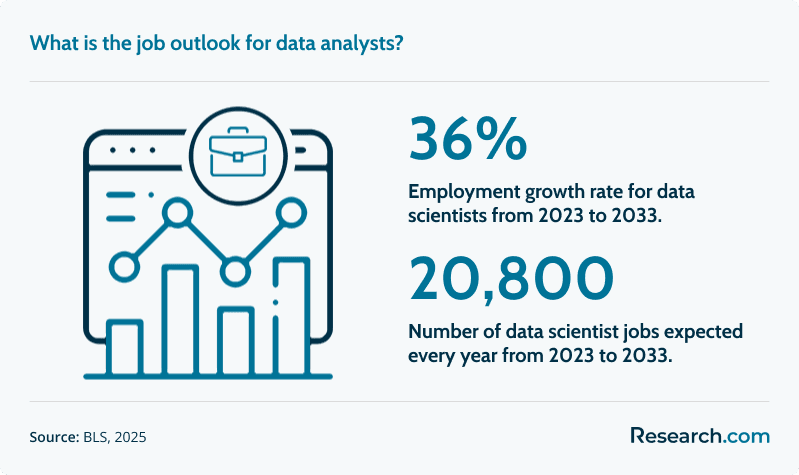
- High projected growth: According to 2025 data from the U.S. Bureau of Labor Statistics, jobs for data scientists are expected to grow by 36% between 2023 and 2033.
- Consistent annual openings: Around 20,800 new data scientist openings are projected every year.
- Broad industry adoption: Analytics is now used in retail, banking, healthcare, logistics, education, government, sports, marketing, and technology.
- Entry-level pathways exist: New graduates may start as junior data analysts, reporting analysts, marketing analysts, operations analysts, or business analysts.
- Graduate education can expand options: Some professionals use a bachelor’s degree as a foundation for an MBA, analytics master’s degree, or specialized certificate. If you are considering timing, this discussion of what is the best age to do MBA can help you think through experience, age, and return on investment.
Analytics skills can also support mission-driven leadership. For example, a graduate interested in public service or nonprofit work may eventually consider the shortest online MBA in non-profit management, where data-informed decisions are increasingly important for funding, operations, and program evaluation.
Here’s what graduates say about fast online analytics programs
-
: "
I had a full-time job and two children, so I needed a program that would not force me to pause my life. The pace was demanding, but the online structure helped me finish faster than I expected and move into analytics projects at work. — Devika
"
-
: "
After being laid off, I wanted a career change that felt practical. The degree helped me build marketing analytics skills quickly, and within 18 months I was applying for roles I could not have qualified for before. — Roman
"
-
: "
The eight-week rhythm kept me moving. Python and SQL were intimidating at first, but the project work helped me learn by doing, and now I use dashboards to help teams make better decisions. — Keoni
"
Key Insights
- The fastest online bachelor’s degree programs in analytics can take as little as 18 to 30 months, but the shortest timelines usually depend on transfer credits, bachelor-completion formats, or self-paced study.
- Most programs require between 120 and 122 credits to graduate, though quarter-credit programs may list 180 quarter credits.
- Listed costs vary widely. Among programs in this guide, tuition ranges from $307 to $680 per credit, with some schools using term-based pricing instead.
- Accreditation should be a non-negotiable factor. It affects financial aid, transfer credit, employer trust, and graduate school options.
- Speed should not replace skill-building. Look for programs with SQL, Python, statistics, visualization, databases, business intelligence, and a capstone or portfolio project.
- Data scientists earn a median salary of $112,590, based on 2025 BLS data, but individual outcomes depend on role, location, experience, industry, and technical ability.
- The job market is favorable: data scientist employment is projected to grow 36% from 2023 to 2033, with around 20,800 data scientist job openings expected each year.
- The best program for you is the one that gives you the fastest realistic path—not just the fastest advertised path—while keeping cost, support, accreditation, and career preparation in balance.
References:
- Bureau of Labor Statistics (BLS). (2025a). 15-2051 Data Scientists. May 2024 OEWS Profiles. BLS.
- Bureau of Labor Statistics (BLS). (2025b). Data Scientists. Occupational Outlook Handbook. BLS.
- Zippia. (2025a). Data Analyst demographics and statistics in the US. Zippia.
- Zippia. (2025b). What is a data analyst and how to become one. Zippia.
Other Things You Should Know About the Fastest Online Bachelor's Degree Programs in Analytics
Many accelerated online analytics bachelor’s programs accept up to 90 transfer credits from regionally accredited colleges. Some also grant credit for prior learning, CLEP exams, or military training, which can reduce the remaining coursework to as few as 30–60 credits.
Students enrolling in 2026 fastest online bachelor's degrees in analytics typically need a reliable computer, high-speed internet, and up-to-date software like statistical analysis programs. Some programs may also require specific hardware or subscriptions to industry-standard analytics platforms for effective coursework participation.


