2027 Calvin vs UW-Eau Claire Online SLP Master's: Compare Program Structure and Affordability

Co-Founder and Chief Data Scientist

Reviewed by Rhea Paul, PhD
SLP Education & Research Expert
Choosing between Calvin and UW-Eau Claire for an online speech-language pathology master's degree is primarily a decision about clinical-training logistics, total borrowing, and schedule fit - not just advertised tuition. Both pathways can prepare eligible graduates for speech-language pathology licensure, but their delivery models, residency expectations, clinical-placement processes, and published cost information require careful comparison.
This guide helps prospective SLP students identify which program structure and affordability profile better matches their academic background, location, work obligations, and licensure plans.
Key Things You Should Know
- UW-Eau Claire may be the stronger value for applicants who qualify for its public-university pricing and can follow its required cohort sequence, while Calvin may appeal to students seeking its particular private-university learning environment and program model.
- Neither "online" label eliminates clinical travel or placement obligations: SLP students must complete supervised practicum experiences and should confirm where placements, simulations, intensives, and required in-person activities occur before depositing.
- Career demand is favorable but does not remove financial risk: the Bureau of Labor Statistics projects 17% employment growth for speech-language pathologists from 2025 to 2035, while licensure still depends on graduation from an appropriate accredited program, supervised experience, examination requirements, and state rules.
How do Calvin and UW-Eau Claire structure their online SLP master's curricula and clinical training?
Calvin and UW-Eau Claire are both options for students seeking graduate preparation in speech-language pathology, the field that evaluates and treats communication, swallowing, voice, language, and cognitive-communication disorders. Their programs should be evaluated as clinically intensive professional degrees rather than as fully self-paced online graduate programs.
In both cases, a typical SLP curriculum combines foundational clinical science with assessment, intervention, research, ethics, and supervised practicum. Students generally move through courses in a prescribed sequence because later clinical work depends on earlier knowledge and skills. That cohort structure supports faculty oversight but limits the freedom to skip, pause, or rearrange courses.
The comparison below identifies the questions that matter more than a generic "online" designation. Applicants should request the current cohort plan directly from each institution because course names, modality, and clinical sequence can change.
| Comparison point | Calvin | UW-Eau Claire | Why it matters |
| Degree focus | Graduate professional preparation in speech-language pathology | Graduate professional preparation in communication sciences and disorders/speech-language pathology | The degree must support the clinical and academic requirements for the state where the graduate plans to practice. |
| Course progression | Typically cohort-based and sequenced | Typically cohort-based and sequenced | A sequenced program can make leaves of absence and reduced course loads more complicated. |
| Online learning | Online or hybrid elements may be paired with scheduled live or in-person requirements | Distance-learning elements may be paired with scheduled live, clinical, or in-person requirements | Students should confirm live-session times, time-zone expectations, and attendance rules. |
| Clinical education | Supervised practicum is required | Supervised practicum is required | Clinical assignments are central to graduation and can affect travel, employment, and childcare plans. |
| Program flexibility | Depends on the current cohort and leave policy | Depends on the current cohort and leave policy | Neither should be assumed to offer fully asynchronous or part-time completion. |
Students comparing SLP programs online should separate instructional convenience from clinical feasibility. A program can deliver lectures online while still requiring daytime clinical hours at schools, hospitals, private practices, rehabilitation settings, or university clinics.
A practical distinction is whether a student needs predictable local clinical access. Ask each program whether it identifies sites, asks students to suggest sites, approves sites individually, or uses a combination of these approaches. A school's willingness to review a site is not the same as a guarantee that a placement will be secured near a student's home.
What are the total estimated costs of Calvin vs UW-Eau Claire's online SLP master's degrees?
A defensible total-cost comparison must use the same components for both schools: required program tuition, mandatory fees, clinical charges, travel, technology, health insurance if applicable, background checks, immunizations, supplies, and lost work income during practicum. An advertised per-credit rate alone is not a total degree cost.
Because graduate tuition schedules, distance-learning rates, and mandatory fees can change by academic year and may differ by residency, enrollment term, or course type, applicants should obtain a written program-specific estimate from both schools before treating either option as lower cost. Do not assume that an out-of-state online student receives the same rate as a Wisconsin resident, or that a private university's published graduate rate includes all program charges.
This worksheet shows the appropriate way to compare the two offers without converting incomplete published information into a misleading exact total.
| Cost category | Calvin estimate to request | UW-Eau Claire estimate to request | Decision use |
| Required tuition | Written tuition estimate for all required credits in the entering cohort | Written tuition estimate for all required credits in the entering cohort | Compare total required credits and the applicable rate, not only one semester. |
| Mandatory university and program fees | Technology, student, clinical, graduation, and course-related fees | Technology, student, clinical, graduation, and course-related fees | Fees can materially change a close tuition comparison. |
| Travel and lodging | Required intensives, orientations, simulations, or campus activities | Required intensives, orientations, simulations, or campus activities | Include transportation, lodging, meals, parking, and time away from work. |
| Clinical compliance costs | Background checks, drug screening, immunizations, CPR, liability coverage, and site-specific requirements | Background checks, drug screening, immunizations, CPR, liability coverage, and site-specific requirements | These expenses often arise after admission and may not be included in tuition. |
| Living and employment impact | Budget effect of daytime placements and reduced work hours | Budget effect of daytime placements and reduced work hours | For many students, this is the largest non-tuition financial issue. |
For perspective, the Bureau of Labor Statistics reports a May 2025 median annual wage of $97,870 for speech-language pathologists. That is a national occupation median, not a starting-salary promise, and pay varies substantially by setting, region, experience, school calendar, and productivity expectations. It is useful for evaluating long-term borrowing only after a student estimates the debt needed to finish.
Applicants looking broadly at a masters in speech pathology online should compare net price rather than sticker price. A higher published tuition rate may become competitive after institutional scholarships, while a lower rate can lose its advantage if it requires repeated travel or makes full-time work impossible.
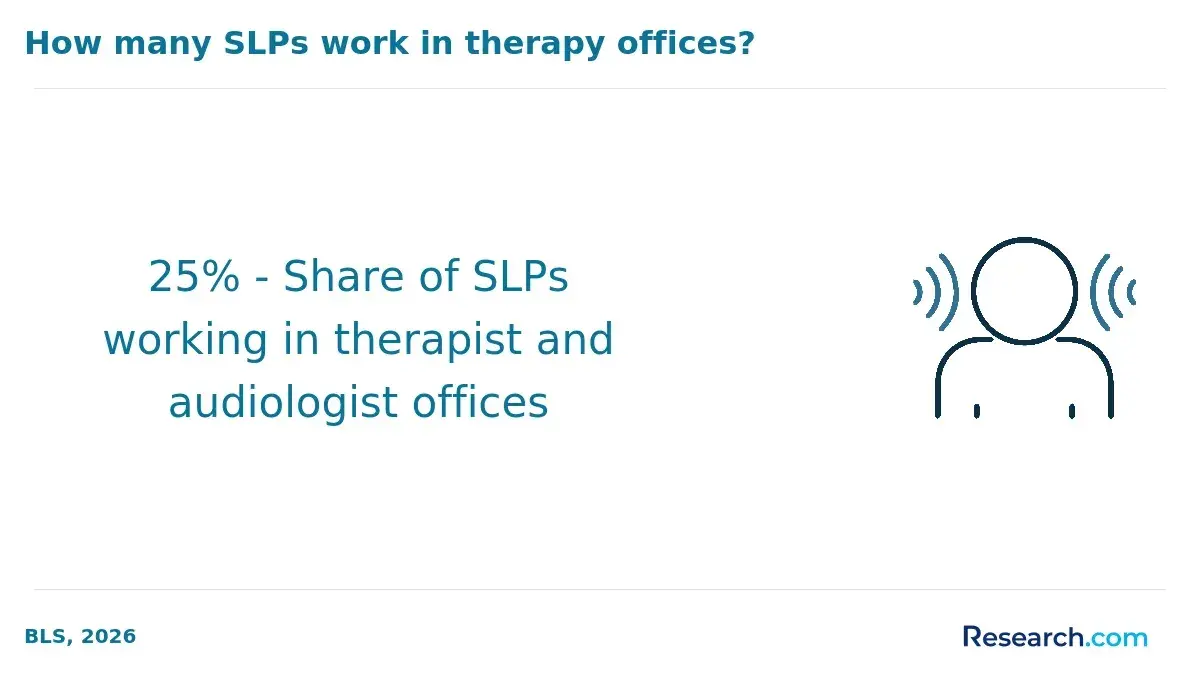
How do tuition, fees, and hidden expenses compare between Calvin and UW-Eau Claire online SLP programs?
The most important affordability distinction is often public-versus-private pricing structure. UW-Eau Claire is a public university, while Calvin is a private university. That institutional difference can affect tuition design and aid opportunities, but it does not establish which program costs less for a particular applicant. Residency classification, scholarship eligibility, the number of required credits, and living expenses can outweigh the institution type.
Applicants should ask admissions and financial-aid offices for an estimate that states whether every required item is included. The following expenses are frequently overlooked when students compare online clinical degrees.
- Required on-campus or in-person travel, including transportation, lodging, meals, parking, and missed work.
- Clinical-site compliance costs such as vaccinations, tuberculosis testing, criminal-background checks, drug screening, CPR certification, and fingerprinting when required.
- Professional expenses including ASHA student membership, liability coverage if not supplied, clinical attire, assessment materials, and graduation or licensing application costs.
- Technology needs such as a reliable computer, camera, headset, high-speed internet, secure testing capability, and software required by the program.
- Income reductions during full-time externships, when clinical schedules may conflict with a regular weekday job.
One common mistake is comparing Calvin's total estimated tuition against UW-Eau Claire's single-term charge, or comparing one school's tuition-only figure against the other school's tuition-and-fees figure. Use the same start term, the same credit assumptions, and the same treatment of fees. If either estimate excludes clinical travel, add a realistic personal travel budget to both sides.
Financial aid also deserves separate evaluation. Federal Direct Unsubsidized Loans and Graduate PLUS Loans may be available to eligible graduate students, but eligibility does not make borrowing inexpensive. Compare the amount that must be borrowed, expected interest accrual, and repayment flexibility - not merely the amount offered in an aid package.
How do admissions requirements and cohort profiles differ for Calvin and UW-Eau Claire online SLP students?
Admissions requirements for SLP master's programs typically assess academic readiness, communication-sciences preparation, writing, professional fit, and the ability to participate in clinical education. Both Calvin and UW-Eau Claire applicants should use the current official application instructions for their intended entry cycle, because prerequisites, deadlines, observation expectations, and test policies may change.
Applicants with a bachelor's degree in communication sciences and disorders may have the most direct route. Students from psychology, education, linguistics, health science, or unrelated majors may need prerequisite coursework before beginning graduate clinical coursework. A "career changer friendly" message does not necessarily mean that prerequisite courses are included in the graduate tuition or can be completed after enrollment.
This admissions comparison identifies the items worth verifying before investing in application fees or prerequisite courses.
| Application item | Calvin question to verify | UW-Eau Claire question to verify | Why it matters |
| Undergraduate degree and GPA | Current minimum GPA and holistic-review practices | Current minimum GPA and holistic-review practices | Minimum eligibility does not indicate likely competitiveness. |
| Prerequisites | Required CSD and supporting science courses, including acceptable equivalents | Required CSD and supporting science courses, including acceptable equivalents | Missing courses add time and cost before matriculation. |
| Observation or experience | Whether guided observation, shadowing, or relevant experience is required or recommended | Whether guided observation, shadowing, or relevant experience is required or recommended | Documentation rules can be specific and should be completed correctly. |
| Application system | Current institutional or centralized application instructions | Current institutional or centralized application instructions | Deadlines, references, transcripts, and supplemental questions may have separate due dates. |
| Geographic eligibility | Whether the program can enroll residents of the applicant's state | Whether the program can enroll residents of the applicant's state | Distance-education authorization can restrict enrollment even before licensure is considered. |
A strong applicant does more than meet prerequisites. They can explain why they are prepared for intensive graduate study, how they understand the profession, and how they will manage clinical scheduling. Students who need to keep full-time employment should be candid about that constraint before accepting a cohort seat.
Another avoidable error is treating a published minimum GPA as an admissions forecast. Cohort capacity, applicant volume, prerequisite grades, recommendations, essays, interviews when used, and demonstrated professional readiness can all influence selection.
What is the timeline to graduation and course pacing in Calvin vs UW-Eau Claire online SLP programs?
For both programs, the realistic timeline is determined by the required cohort sequence and clinical calendar, not simply by the phrase "online master's." Professional SLP programs are usually designed around full-time progression because clinical competencies and supervised hours build across successive terms.
Before enrolling, ask each school for the calendar from orientation through final externship. The key question is not only how many months the degree is advertised to take; it is how many weekdays and terms will be occupied by classes, simulations, practicum, and external placements.
| Timeline issue | Calvin planning question | UW-Eau Claire planning question | Financial implication |
| Start date | Confirm next cohort start and whether admissions occur annually | Confirm next cohort start and whether admissions occur annually | A missed deadline may delay enrollment by a full cycle. |
| Course load | Confirm full-time expectations and options for temporary reduced enrollment | Confirm full-time expectations and options for temporary reduced enrollment | Reduced pacing can affect aid, graduation timing, and cohort progression. |
| Academic breaks | Confirm whether summer terms and breaks are part of the plan | Confirm whether summer terms and breaks are part of the plan | Year-round enrollment can accelerate completion but reduces time for paid work. |
| Clinical sequence | Confirm when internal and external placements occur | Confirm when internal and external placements occur | Externship terms may be the least compatible with outside employment. |
| Leave and re-entry | Ask how a leave affects clinical sequence and return timing | Ask how a leave affects clinical sequence and return timing | A leave may create added living and borrowing costs. |
Students seeking the shortest possible pathway should remember that 5 year SLP programs are a different model from a post-baccalaureate master's degree. They usually combine undergraduate and graduate study for eligible students early in their college education; they generally do not shorten an already-completed bachelor's degree into a one-year clinical master's.
Choose Calvin or UW-Eau Claire only after testing the actual schedule against work, caregiving, and travel responsibilities. A program that seems less expensive per credit can become more costly if a student must extend enrollment or leave a job unexpectedly because clinical obligations were not planned for.
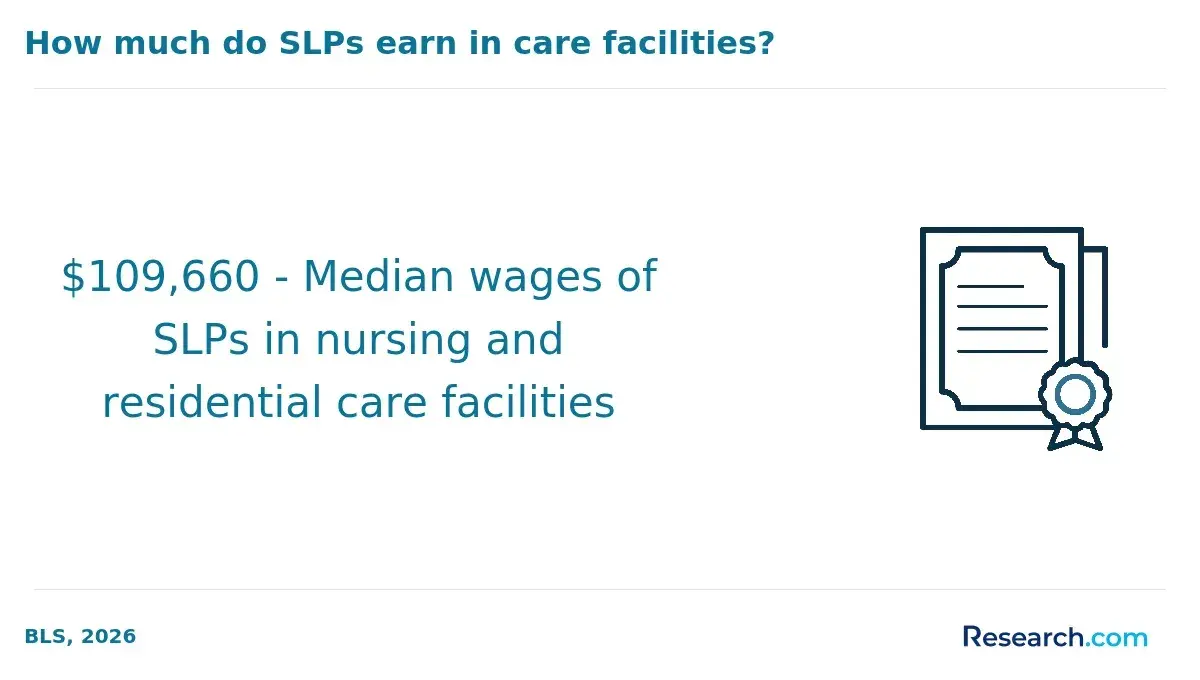
How do accreditation, state authorization, and ASHA recognition compare between Calvin and UW-Eau Claire SLP programs?
Accreditation and licensure compatibility are nonnegotiable checks. For entry-level clinical speech-language pathology education, the relevant specialized accreditor is the Council on Academic Accreditation in Audiology and Speech-Language Pathology, commonly called CAA. Applicants should verify each program's current status in the CAA directory for the exact degree and location before applying, because accreditation categories and effective dates matter.
CAA accreditation is distinct from institutional accreditation and from state licensure. Institutional accreditation concerns the university broadly. CAA accreditation concerns the professional program. State licensure is granted by the jurisdiction where the graduate plans to practice and may include additional requirements beyond the degree.
The table below separates questions that are often incorrectly treated as interchangeable.
| Requirement | What to verify for Calvin | What to verify for UW-Eau Claire | Why it matters |
| CAA status | Current CAA listing for the exact speech-language pathology degree | Current CAA listing for the exact speech-language pathology degree | Status affects professional education planning and should be confirmed before enrollment. |
| State authorization | Whether Calvin may enroll residents in the applicant's state | Whether UW-Eau Claire may enroll residents in the applicant's state | Authorization determines whether distance education can be offered to a resident. |
| Licensure disclosure | Whether the curriculum meets, does not meet, or has not been determined to meet requirements in the applicant's state | Whether the curriculum meets, does not meet, or has not been determined to meet requirements in the applicant's state | A program's disclosure is more relevant than a general statement that graduates pursue licensure. |
| ASHA certification pathway | How curriculum and clinical education align with the current certification standards | How curriculum and clinical education align with the current certification standards | CCC-SLP eligibility involves education, supervised clinical experience, examination, and post-graduate requirements. |
Do not confuse a program's intention to prepare students for ASHA certification with an individual guarantee of certification or licensure. The Certificate of Clinical Competence in Speech-Language Pathology, known as the CCC-SLP, has separate requirements that can change. States also retain authority over their own licenses, including school-based credentials in some jurisdictions.
Students planning to relocate should check both their current state and intended practice state. The safest approach is to save written confirmation from the university and review the destination licensing board's current requirements before enrolling.
How do clinical placement models and supervision standards differ for Calvin and UW-Eau Claire online SLP students?
Clinical placement is where affordability and convenience can change quickly. Both Calvin and UW-Eau Claire students need supervised clinical experiences that meet program and professional standards. The critical difference for an applicant is not merely whether the university "helps" with placements, but the precise division of responsibility among the program, the student, and the clinical site.
Ask each program for a written explanation of its placement model. The following questions reveal whether a location or employment constraint may create a problem.
- Does the program assign placements, develop placements from student leads, or use a hybrid approach?
- Can the program guarantee a placement within a specified distance of the student's home?
- Are students permitted to complete clinical work at their workplace, and under what independence and supervision conditions?
- What are the usual weekday hours, minimum availability expectations, and length of each placement?
- Who pays for background checks, site onboarding, commuting, housing, and any relocation needed for a placement?
- What occurs if a clinical site withdraws or cannot offer the required supervision?
Supervision must be provided by appropriately qualified professionals and documented according to program, certification, and site requirements. Students should not assume that a local SLP can supervise them informally. The site, supervisor credentials, supervision plan, affiliation agreement, and university approval process all matter.
A common red flag is a vague assurance that "placements are available everywhere." Placement availability changes with site capacity, contracts, school calendars, supervisors, and local competition. Applicants in rural areas, highly regulated states, or regions with many SLP programs should raise placement feasibility early.
What licensure and CCC-SLP readiness outcomes do graduates report from Calvin vs UW-Eau Claire?
Graduates of an appropriate CAA-accredited SLP program typically pursue a sequence that includes the required graduate education, supervised clinical experience, the Praxis examination, a clinical fellowship where required for certification, and state licensure. A master's degree is a major milestone, but it is not the final license itself.
Neither school should be judged solely by broad employment claims. A better approach is to request the most recent program outcome information available for the same reporting period, including completion, Praxis pass, employment, and certification-related outcomes where reported. Ask whether figures represent first-time or cumulative examination performance and whether they cover all graduates or only respondents.
The national labor market gives useful context for the investment decision. Speech-language pathologist employment is projected to grow 17% from 2025 to 2035, with about 12,500 openings projected each year on average over that decade. This suggests continued demand, but openings are not guaranteed jobs for individual graduates and may vary by state, setting, and specialty.
Applicants also should compare likely earnings against debt cautiously. This overview of how much do speech pathologists make can help frame setting and compensation differences, but national or specialty pay figures should not be substituted for local job offers. School employment may follow an academic-year schedule, while medical settings may have different productivity, benefit, and caseload expectations.
Choose the program that gives you clear documentation of accreditation, clinical requirements, and outcome reporting - not the program that implies a credential automatically transfers to every state or employer. Before accepting admission, confirm your target state's license requirements and whether you will need a teacher or educational-services credential for school-based work.
How do student support, faculty access, and online learning technology compare between the two programs?
Online clinical graduate education works best when academic support is specific, accessible, and compatible with a student's time zone and clinical schedule. Calvin and UW-Eau Claire applicants should evaluate support systems through direct questions rather than assume that a university-wide online-learning platform reflects the experience of an SLP cohort.
Faculty access matters especially during diagnostic assignments, treatment planning, clinical documentation, and placement transitions. Ask whether faculty hold scheduled office hours, how quickly they typically respond to clinical questions, who supervises practicum, and whether students have a dedicated clinical-placement contact.
Technology expectations also deserve attention. SLP education may use video-based clinical observation, virtual meetings, secure learning systems, simulation activities, electronic clinical records, and online assessment tools. These can make distance learning more practical, but they also require reliable equipment and a quiet private workspace.
When comparing the programs, ask both schools for a demonstration or student orientation outline addressing the following areas.
- Whether classes are synchronous, asynchronous, or mixed, and whether attendance at live sessions is mandatory.
- Expected weekly study time outside clinical hours and whether courses have daytime meetings.
- Availability of tutoring, writing support, disability services, counseling, library access, and career guidance for distance students.
- Procedures for technology failure, clinical documentation access, privacy, and remote examination requirements.
- How students communicate with cohort peers and faculty when they are completing placements away from campus.
The better support model is the one that fits the student's actual constraints. A working parent may value predictable live-session times and fast faculty access more than a platform's feature list; a student in a remote location may prioritize technical support and realistic placement planning.
For cost-conscious applicants, in which scenarios is Calvin or UW-Eau Claire the more affordable choice?
UW-Eau Claire is often the first option to investigate for applicants seeking a potentially lower public-university cost structure, particularly when the applicant's residency classification, available aid, and clinical geography align with the program. Calvin can be the more workable financial choice when its aid offer, schedule, required travel pattern, and clinical support create lower overall borrowing or a better chance of completing on time.
The right choice depends on total net cost and completion feasibility, not a single tuition figure.
| Applicant scenario | Potentially better fit | Reason to verify |
| Student prioritizing a public-university pricing model | UW-Eau Claire may merit first comparison | Confirm the applicable online graduate rate, residency treatment, required fees, and total credits. |
| Student receiving significant institutional aid from a private university | Calvin may become competitive | Compare written net-cost estimates after grants and scholarships, not tuition before aid. |
| Student with limited ability to travel | Whichever program has fewer or more manageable required visits | Travel costs and missed work can eliminate a tuition advantage. |
| Student needing local clinical access | Whichever program can clearly support placement in the student's region | A distant placement can add housing, commuting, and income-loss costs. |
| Student who must maintain full-time work | Possibly neither, unless the schedule is explicitly compatible | Daytime clinical obligations can make full-time employment unrealistic late in the program. |
| Student planning to practice in a particular state | Whichever program provides an affirmative state-specific licensure disclosure | An apparently inexpensive degree is poor value if it does not support the intended license pathway. |
Before deciding, request an itemized estimate from each program, map every required in-person and clinical term on a calendar, and compare the amount you would actually need to borrow. Then ask both admissions offices the same questions in writing: Can I enroll from my state? What travel is mandatory? Who arranges clinical placements? What costs are excluded from tuition? Does the curriculum meet my intended state's educational requirements?
The most costly mistake is enrolling based on a headline tuition rate without confirming state eligibility, placement responsibilities, and the income impact of clinical training. For a cost-conscious applicant, the more affordable program is the one that can be completed on schedule with the lowest realistic combination of tuition, fees, travel, and forgone earnings.
Other Things You Should Know About Speech Language Pathology
Some students work during early academic terms, but full-time employment can become difficult when practicum and externship schedules require weekday availability. Ask each program for typical clinical hours by term and plan finances around the most demanding placement period, not the most flexible semester.
Delivery format does not by itself determine licensure eligibility. What matters is whether the specific program has the appropriate accreditation, meets your state's educational requirements, and enables you to complete required clinical, examination, and post-graduate steps. Verify the rules with the state where you intend to practice.
Possibly, but it should never be assumed. Availability depends on the university's agreements, supervisor capacity, site approval, state rules, and local competition. Obtain a clear explanation of each program's placement process and any required travel before enrolling.
No. Compare net tuition after aid, mandatory fees, travel, clinical costs, and the likelihood of reduced work hours. Also verify accreditation and state licensure compatibility. A lower sticker price is only a better value if the program is feasible to complete and supports your intended career path.
References
- Master of Science in Speech-Language Pathology - UW-Eau Claire https://www.uwec.edu/academics/programs/graduate/master-science-speech-language-pathology
- Speech-Language Pathology, Online- Master of Science https://catalog.uwec.edu/graduate/programs/slhs/speech-languge-hearing-online-ms/index.html
- Master of Arts in Speech-Language Pathology - Calvin University https://calvin.edu/majors-programs/master-arts-speech-language-pathology