2027 Best Online Speech Pathology Master's Programs for Residents of Brownsville, TX

Co-Founder and Chief Data Scientist

Reviewed by Rhea Paul, PhD
SLP Education & Research Expert
Brownsville residents can pursue a speech-language pathology master's degree without moving for every lecture, but an "online" program still requires in-person clinical education and may require travel for immersions. This guide compares practical options by Texas eligibility, CAA accreditation, clinical-placement structure, cost transparency, and licensure alignment. It is designed for prospective SLPs who need to balance graduate school with work, family, or location constraints while protecting their path to Texas licensure and ASHA certification.
Key Things You Should Know
- A Texas SLP license generally requires a qualifying graduate degree, supervised postgraduate experience, and passage of the national Praxis examination; an online format does not waive these requirements.
- CAA accreditation is the central screening criterion: it supports eligibility for ASHA's Certificate of Clinical Competence and is the safest starting point for Texas licensure planning.
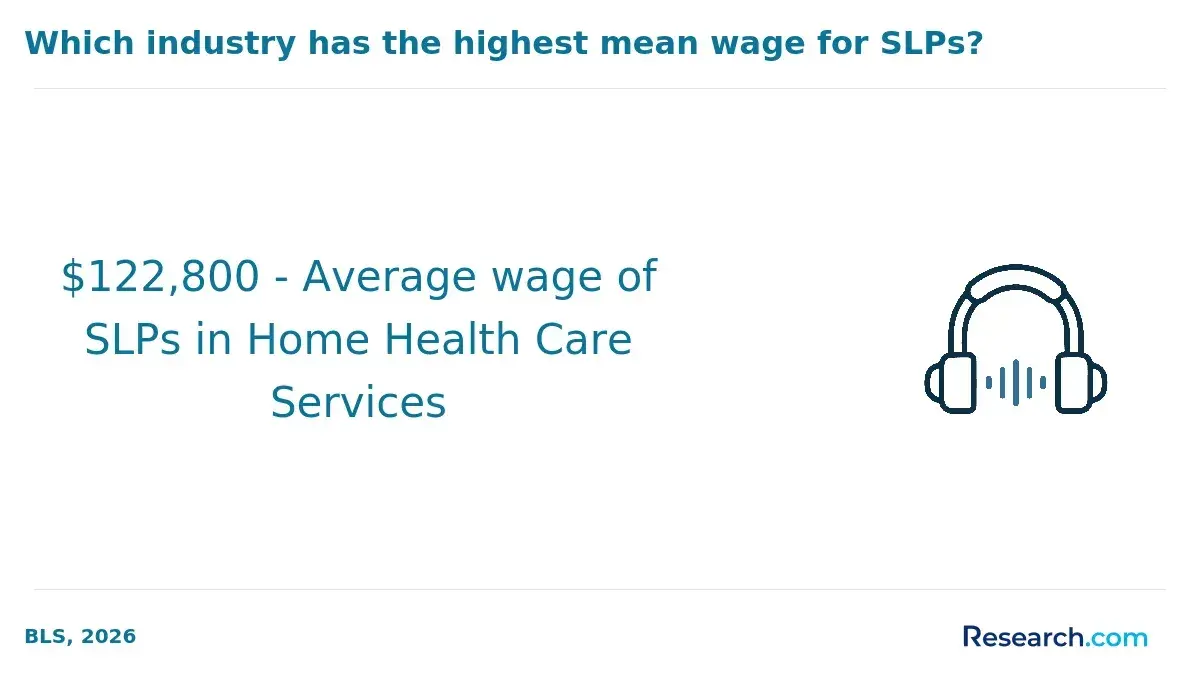
- The national median annual wage for speech-language pathologists was $97,870 in May 2025, and BLS projects 17% employment growth from 2025 to 2035; demand does not eliminate the need to verify program quality, placement support, and debt.
Which online speech pathology master's programs enroll Brownsville residents without relocating?
Brownsville residents should focus on programs that explicitly accept Texas students, hold CAA accreditation, and disclose how they handle clinical placements and state licensure. A fully online academic curriculum is not the same as a fully remote clinical degree: direct client contact, clinical supervision, and at least some travel are normal features of entry-level SLP preparation.
The options below are examples of programs or pathways commonly relevant to Texas applicants. Enrollment availability, clinical-site availability, and required travel can change by cohort, so obtain written confirmation from each admissions office before applying.
| Program or pathway | Delivery model | Brownsville decision point | Travel consideration |
| Baylor University MS in Communication Sciences and Disorders | Online academic coursework with in-person clinical training | Confirm current Texas enrollment eligibility, cohort schedule, and local-placement process | Program-sponsored immersion or residency requirements may apply |
| Emerson College MS in Speech-Language Pathology | Online coursework, live learning components, immersions, and clinical placements | Ask whether the program can secure or approve placements in the Rio Grande Valley | Required immersion experiences may involve out-of-state travel |
| New York University MS in Communicative Sciences and Disorders | Online program with clinical education and intensive experiences | Verify Texas authorization and the current policy for student-arranged or school-supported placements | In-person clinical and intensive requirements apply |
| UTRGV MS in Communication Sciences and Disorders | Primarily campus-based regional option | May reduce relocation needs for Brownsville-area students who can commute or relocate locally | Not an online substitute; confirm current format and campus obligations |
For a working adult, the best option is usually not the program calling itself "most flexible." It is the one that can document Texas enrollment permission, feasible live-session timing in Central Time, a realistic clinical-placement plan, and a total cost you can fund.
Which online speech pathology degrees meet Texas SLP licensure and ASHA CCC requirements?
For a Brownsville applicant seeking Texas practice and ASHA certification, the strongest degree choice is ordinarily a master's program accredited by the Council on Academic Accreditation in Audiology and Speech-Language Pathology (CAA). CAA accreditation evaluates the academic and clinical preparation of the program; it is different from institutional accreditation and should be checked separately.
ASHA's Certificate of Clinical Competence in Speech-Language Pathology, commonly called the CCC-SLP, generally requires a qualifying graduate degree, required clinical education, a passing Praxis score, and a Clinical Fellowship. Texas has its own licensing process, so applicants should treat a school's general statement about professional preparation as useful but not as a personal licensure determination.
| Goal | What to verify before enrolling | Why it matters |
| Texas SLP licensure | The curriculum is designed to meet Texas educational requirements and the school can enroll Texas residents | State boards, not universities, make final licensing decisions |
| ASHA CCC-SLP | Current CAA accreditation status and the program's clinical-hour structure | CAA status is a key credentialing safeguard |
| Clinical Fellowship | Whether career services and faculty support are available after graduation | Graduates still need a qualifying supervised fellowship position |
| School employment | Texas educator or school-service credential requirements, if applicable | School employers may have requirements beyond a state professional license |
Applicants with a bachelor's degree outside communication sciences and disorders should ask about prerequisite or leveling coursework early. Some programs admit non-CSD majors but require additional classes, which can increase both completion time and total cost.
How do the top online speech pathology programs serving Brownsville compare on quality and cost?
No program is universally "best" for Brownsville residents. The strongest choices combine current CAA accreditation, clear Texas disclosures, a credible clinical-placement process, manageable travel, and transparent pricing. Brand recognition alone is less important than whether the program works in your location and produces documentation you can use for licensure.
This comparison emphasizes decision factors that can materially change the experience of an online student. Tuition is intentionally described cautiously because universities may change rates by academic year, enrollment status, and fee category.
| Comparison factor | Why it affects Brownsville residents | Best fit | Potential trade-off |
| CAA accreditation | Supports the ASHA and licensure pathway | Applicants seeking the standard clinical SLP route | Accredited programs may have structured clinical and attendance requirements |
| Texas-specific disclosure | Confirms whether the school can enroll and prepare Texas residents | Applicants who plan to remain in Texas | Disclosures can be general and should be supplemented by board verification |
| Local clinical feasibility | Placements must be completed in person despite online courses | Students with flexibility for daytime clinical schedules | Site availability cannot be assumed in Brownsville |
| Travel burden | Immersions can add transportation, lodging, and missed-work costs | Students able to plan travel well in advance | Lower advertised tuition may not mean lower total cost |
| Part-time pacing | Can help students retain employment or caregiving responsibilities | Working applicants needing a longer runway | Longer enrollment can increase total living and fee costs |
Compare the school's published tuition schedule with all unavoidable costs: university fees, clinical fees, background checks, immunizations, liability coverage, testing, travel, technology, and lost work time. Applicants exploring an accelerated SLP master's program should also confirm that the faster academic calendar does not create an unmanageable clinical schedule.
What accreditation and ASHA CAA recognition should Brownsville applicants verify for online programs?
CAA accreditation is the first item Brownsville applicants should verify directly through the program and ASHA's official accreditation directory. Confirm the exact degree and delivery pathway, not simply the university name. A university can be institutionally accredited while a specific SLP program is not CAA accredited.
Use the following questions in writing, especially if a program is new, has recently changed delivery formats, or holds a status other than full accreditation.
- Is the specific master's SLP program currently accredited by CAA, and what is its current accreditation term or status?
- Can the program enroll a student physically located in Texas throughout the degree?
- Does the institution state that its curriculum meets, or is intended to meet, Texas SLP educational requirements?
- What happens if accreditation status changes while I am enrolled, and how will enrolled students be taught out?
- Will the school provide clinical-hour and graduate-degree documentation needed by the Texas licensing board and ASHA?
Do not confuse "ASHA aligned," "designed for certification," or "prepares students for careers" with CAA accreditation. Those phrases may describe curriculum intent but do not replace the accreditation status required for the most straightforward professional pathway.
How does Texas speech-language pathology licensure work for graduates of online programs?
Texas licensure is regulated by the Texas Department of Licensing and Regulation. Graduating from an online program can be acceptable when the degree and clinical preparation satisfy the board's requirements, but the board evaluates the applicant's credentials. Program completion is not itself a license.
A typical pathway includes graduate education, supervised professional experience, examination, and application materials. Exact rules, forms, fees, and supervision requirements can change, so verify the current requirements with the licensing board before enrolling and again before graduation.
- Complete a qualifying graduate degree in speech-language pathology or communication sciences and disorders with the required academic and clinical preparation.
- Meet Texas requirements for supervised professional experience, which is commonly completed through the post-graduation Clinical Fellowship period.
- Pass the national Praxis examination required for the applicable Texas licensure route.
- Submit the Texas application, documentation, and any required background-check or verification materials.
- Maintain the license under current Texas renewal and continuing-education rules after it is issued.
Students who may later move should check every intended state separately. Interstate mobility is not automatic, and schools may limit enrollment or clinical placements based on state authorization rules.
Which Texas and regional universities offer online or hybrid speech pathology pathways to Brownsville students?
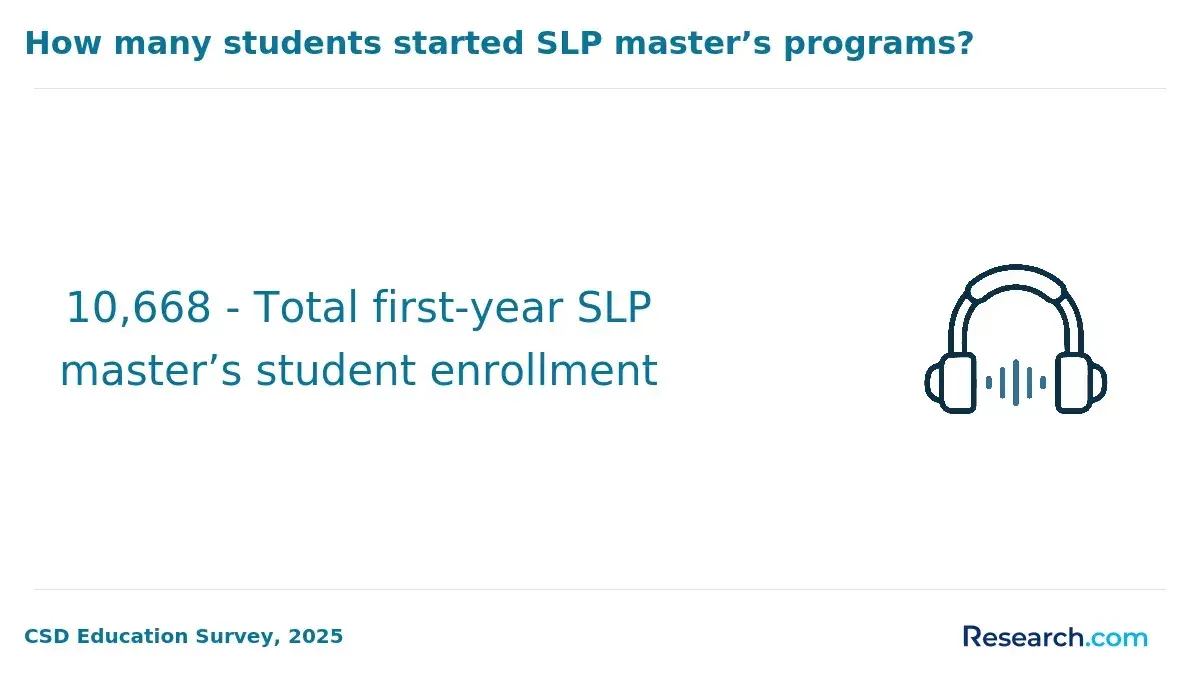
Texas-based options can be appealing because they may reduce distance, support familiarity with Texas practice expectations, and make regional networking easier. However, a nearby campus program and an online program solve different problems: commuting, daytime clinic access, and clinical rotations can still be substantial commitments.
UTRGV is especially relevant geographically because its Edinburg location is within the Rio Grande Valley, but prospective students should not assume its master's program is delivered online. Ask whether current coursework, clinic, and externship obligations can be completed while living in Brownsville.
For students who need distance coursework, compare Texas and national programs by whether they will enroll Texas residents and whether their clinical model is workable in the Valley. An SLP master's online option may widen course access, but it should never be chosen before confirming its in-person requirements.
| Pathway type | Primary advantage | Primary caution |
| Regional campus-based master's program | Potentially closer faculty, clinic, and regional professional network | May require regular campus attendance and has limited schedule flexibility |
| Texas-serving online or hybrid program | Remote lectures may reduce weekly travel | Still requires local clinical sites and possibly campus immersions |
| Out-of-state online CAA program | May offer more cohort dates or pacing choices | May have higher travel costs, state-authorization limits, or less local placement support |
Students whose main goal is a lower-cost nearby route should compare public-university tuition, commuting costs, and schedule constraints against private online programs rather than assuming either format is less expensive.
How do clinical placements and supervision work for Brownsville residents in online SLP programs?
Clinical education is where online SLP programs become location-sensitive. Students must complete supervised in-person experiences with clients across appropriate settings and populations. The school may identify sites, approve student leads, coordinate agreements, or use a mixed model; the exact division of responsibility should be clear before a deposit is paid.
Brownsville applicants should ask whether the program has recently placed students in the Rio Grande Valley and whether the answer reflects actual capacity rather than a general possibility. A program cannot ethically promise a specific school, hospital, pediatric clinic, or adult medical placement before affiliation and supervisor approvals are complete.
Ask admissions and clinical staff these questions in writing before committing:
- Who is responsible for locating each practicum and externship site: the university, the student, or both?
- Has the program placed students in the Brownsville, Harlingen, McAllen, or broader Rio Grande Valley area recently?
- What happens if a local placement is unavailable or a site cancels?
- Can placements require travel outside the Valley, and who pays for transportation and lodging?
- How many daytime hours per week should I expect during each clinical term?
- What credentials must supervisors hold, and how does the school verify supervision?
A common mistake is treating clinical placement as a final-semester issue. It should be evaluated before application because limited daytime availability, transportation, bilingual service needs, and local site capacity can determine whether an otherwise excellent online program is practical.
What are typical tuition, fees, and funding options for Brownsville students in online SLP programs?
Tuition is only one part of the financial decision. Online SLP programs may charge per credit, per term, or by cohort, while the total number of billed credits can differ from the number of graduate credits appearing on a transcript. Students who need leveling classes should estimate those costs separately.
The cost categories below provide a more useful budget framework than a single advertised tuition figure. Request a personalized estimate for the full planned sequence, including clinical terms.
| Cost category | Why it varies | What to request |
| Tuition | Credit load, resident status where applicable, and annual rate changes | Total tuition based on required degree credits and your expected pace |
| Mandatory university fees | Technology, enrollment, clinical, graduation, and service fees differ by institution | A term-by-term list of required fees |
| Clinical compliance costs | Background checks, drug screening, immunizations, training, and liability coverage may be required | Typical first-year and clinical-year compliance expenses |
| Travel and lodging | Immersions and distant clinical assignments can create major non-tuition costs | Required travel dates, locations, and expected frequency |
| Income impact | Clinical schedules may limit paid work, especially during full-time rotations | Typical weekly academic and clinic-hour expectations |
Federal aid eligibility generally depends on enrollment and individual financial circumstances. Start with the FAFSA, then ask about institutional scholarships, graduate assistantships where available, employer tuition benefits, and payment plans. Borrow only after comparing the full borrowing amount with realistic repayment capacity; the BLS wage figure is a national median, not a starting-salary promise for South Texas.
Career earnings can still be an important part of the equation. Use this overview of how much do speech pathologists make as context, then compare local job postings, setting preferences, benefits, and repayment terms rather than relying on a national figure alone.
How can Brownsville residents evaluate program outcomes like Praxis pass rates and employment?
Outcome data can reveal whether a program supports students through the milestones that matter: graduation, Praxis preparation, employment, and clinical fellowship transition. It should be interpreted carefully. A small cohort can produce volatile rates, and a high employment rate does not show whether graduates found jobs in their preferred setting or location.
Ask each program for the most recent outcomes report and the reporting period. The table identifies the most useful measures and the follow-up question that makes each figure more meaningful.
| Outcome measure | What it can show | Question to ask |
| Praxis pass rate | How graduates performed on a key credentialing exam | What cohort and testing window are included, and how many graduates are represented? |
| Program completion rate | Whether students generally finish on the expected timeline | How many students withdrew, delayed, or changed tracks, and why? |
| Employment rate | Whether graduates obtained relevant work after graduation | What counts as employment, how soon after graduation, and in what settings? |
| Clinical Fellowship support | Whether graduates receive preparation for the next required step | Does the school provide career advising, supervisor guidance, or employer connections in Texas? |
The broader market remains favorable: BLS projects about 12,500 openings for speech-language pathologists annually, on average, from 2025 to 2035. Use that national demand signal to evaluate career potential, but use program-specific outcomes and Texas job conditions to decide whether a particular degree is worth its cost.
If admission selectivity is also a concern, review the prerequisites, observation requirements, and cohort capacity associated with a speech pathologist degree pathway. "Easier to enter" should not outweigh accreditation, clinical quality, or licensure fit.
What consumer-protection steps should Brownsville applicants take before committing to an online SLP program?
Before paying an application fee, deposit, or tuition balance, create a written record of the claims that affect your eligibility and costs. This is especially important for distance programs because authorization, clinical affiliation, and course scheduling can vary by state and cohort.
The following safeguards reduce the risk of enrolling in a program that does not work for your Texas career plan.
- Verify the specific program's current CAA accreditation status rather than relying on marketing language or a university-wide accreditation statement.
- Request written confirmation that the institution may enroll students located in Texas and that its curriculum is intended to meet Texas professional requirements.
- Get a written description of clinical-placement responsibility, likely travel expectations, and the contingency plan if a local site cannot be secured.
- Calculate total attendance cost, including fees, compliance expenses, travel, and reduced work hours, before comparing loan offers.
- Review the refund, withdrawal, leave-of-absence, and teach-out policies before submitting a nonrefundable deposit.
- Speak with the Texas licensing board if any school disclosure is vague, conditional, or inconsistent with your intended practice setting.
Red flags include a school that will not identify its CAA status, cannot explain its Texas enrollment authorization, implies that online study removes clinical travel, or provides only a per-credit rate while refusing to estimate required fees. The safer choice is the program that documents constraints clearly, even when the answer is less convenient.
Other Things You Should Know About Speech Language Pathology
Yes, potentially. The delivery format is less important than whether the degree, supervised clinical education, examination, and post-graduate requirements satisfy Texas rules. Choose a current CAA-accredited program and verify Texas eligibility before enrolling.
Many do. Programs may require immersions, skills assessments, orientations, or other in-person experiences. Clinical practicum and externship work is also in person, even when lectures are online. Ask for all required dates and locations before applying.
Some students work during didactic coursework, particularly in part-time programs. Clinical terms often require substantial daytime availability, so maintaining full-time employment may become difficult. Compare the program's weekly schedule expectations with your work flexibility.
It can be valuable in a bilingual community, but language ability alone does not qualify someone to assess or treat bilingual clients. Look for programs that teach culturally and linguistically responsive assessment, and follow professional scope-of-practice and supervision standards.
References
- Online Speech-Language Pathology Graduate Program https://csd.robbins.baylor.edu/graduate/online-csd-graduate-program
- Online MS in Speech-Language Pathology (SLP) | Pepperdine https://healthscience.pepperdine.edu/online-masters-in-speech-language-pathology/
- Best Online Speech Pathology Programs https://www.forbes.com/advisor/education/healthcare/best-speech-pathology-programs-online/