2027 Best Online Speech Pathology Master's Programs for Residents of Pasadena, TX

Co-Founder and Chief Data Scientist

Reviewed by Rhea Paul, PhD
SLP Education & Research Expert
Pasadena residents can pursue an online master's in speech-language pathology without relocating, but "online" does not mean every program accepts Texas students, arranges Houston-area placements, or meets Texas licensure rules. This guide compares strong options using the factors that matter most: CAA accreditation, Texas eligibility, clinical training, required travel, cost transparency, and admissions fit. It also explains how to confirm that a program supports your route to Texas SLP licensure before you apply.
Key Things You Should Know
- For Texas practice, prioritize a master's program accredited by ASHA's Council on Academic Accreditation (CAA), then confirm that its curriculum and supervised clinical education meet Texas licensing requirements.
- Online SLP master's degrees still require extensive in-person clinical training; Pasadena students should ask whether placements can be completed in greater Houston and whether campus immersions or travel are required.
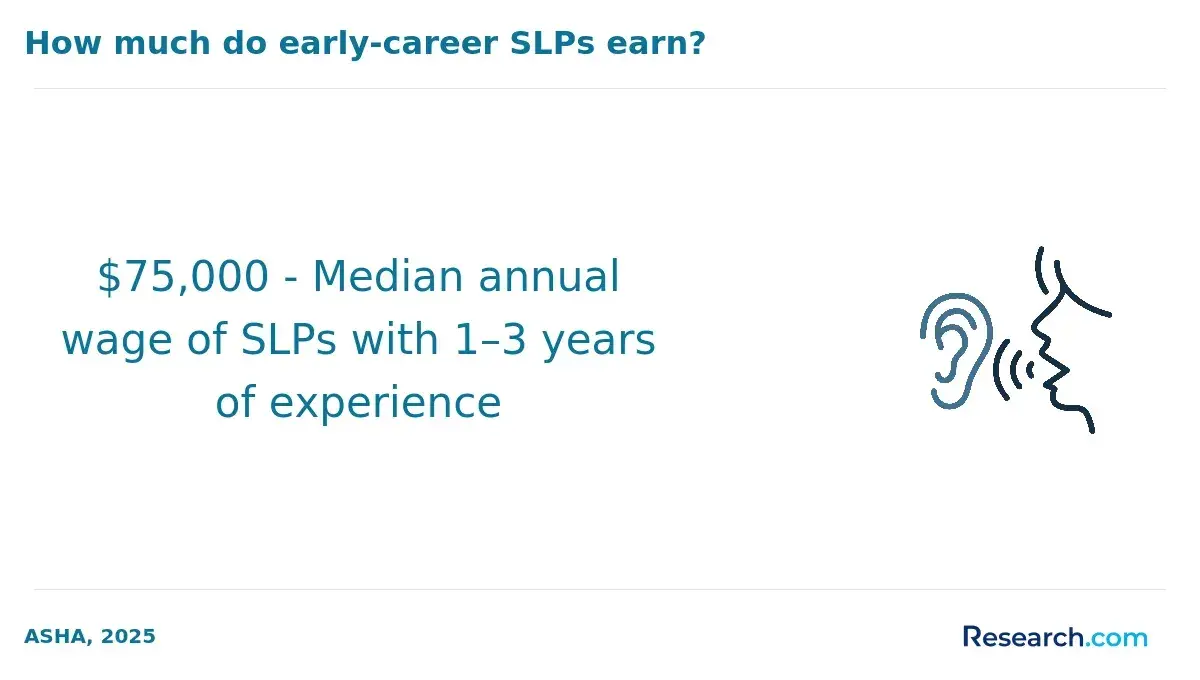
- The U.S. Bureau of Labor Statistics reports a $97,870 median annual wage for speech-language pathologists in May 2025 and projects 17% employment growth from 2025 to 2035, but a degree alone does not create licensure eligibility.
Which online speech pathology master's programs accept residents of Pasadena, Texas specifically?
Pasadena is part of the Houston metropolitan area, so the most useful programs are not necessarily located nearby. They are programs that can enroll Texas residents, hold appropriate CAA accreditation, provide a workable clinical-placement process, and disclose meaningful information about travel and state licensure.
The programs below are prominent online or distance-format SLP master's options that should be investigated by Pasadena applicants. Enrollment authorization and cohort availability can change, so applicants should obtain written confirmation from each institution before paying an application deposit or accepting admission.
| Program | Format consideration for Pasadena residents | Clinical-placement consideration | Key decision point |
| Baylor University, MS in Communication Sciences and Disorders | Online-delivery model with required in-person elements that may include immersions. | Students complete supervised clinical education; confirm whether the school can support placements in the Houston area. | Best investigated by applicants who want a structured online cohort and can accommodate required travel. |
| Emerson College, MS in Speech-Language Pathology | Online graduate format designed for distance learners, with clinical education completed in person. | Placement coordination is a central issue; ask about local site availability, timing, and student responsibilities. | Potential fit for applicants seeking an established online model, subject to current Texas eligibility confirmation. |
| New York University, MS in Communicative Sciences and Disorders | Online pathway may include live-learning expectations and immersive experiences. | Clinical work is in person and requires advance planning around site approval and supervision. | Consider it if you can meet a private-university budget and travel expectations. |
| James Madison University, MS in Speech-Language Pathology | Distance format may appeal to working adults who need a planned, cohort-based sequence. | Ask specifically how external clinical sites are identified and approved for Texas students. | Compare schedule and residency requirements carefully against local work and family commitments. |
| Texas Woman's University, MS in Speech-Language Pathology | Texas-based options can reduce uncertainty around state context, although delivery format and campus expectations must be checked by cohort. | Texas clinical relationships may be particularly relevant to students seeking in-state training. | Worth comparing if you prefer a Texas public-university option and can meet any in-person requirements. |
"Accepts Texas residents" is not the same as "is the best fit for a Pasadena resident." A school may be authorized to enroll Texans but have limited placement capacity, mandatory out-of-state immersions, fixed daytime clinical schedules, or a curriculum sequence that does not work with full-time employment.
Use the school's current admissions and state-authorization office - not an old social-media post or program directory - as the final source. For a broader starting point, compare online speech pathology programs masters while treating each school's Texas disclosure as the controlling information.
How do online speech pathology programs serving Pasadena meet accreditation and licensure requirements?
An online master's program can lead toward professional practice only when its academic and clinical components align with the requirements of the state where the graduate intends to be licensed. For Pasadena applicants, that state is usually Texas.
CAA accreditation is the most important program-level quality screen. CAA is ASHA's specialized accreditor for graduate education in audiology and speech-language pathology. A CAA-accredited master's program is designed to meet the educational standards commonly used for ASHA certification and state licensure, but each graduate still must complete individual licensing steps.
Texas SLP licensure is administered by the Texas Department of Licensing and Regulation. Requirements can include a qualifying graduate degree, supervised professional experience, examination, and an application process. Requirements and interpretations can change, particularly for applicants educated through distance programs, so students should verify the current rule directly with the licensing authority before enrolling.
Before choosing a school, obtain answers to these questions in writing. They distinguish a degree that is merely convenient from one that supports a realistic Texas licensure plan.
- Is the master's program currently CAA-accredited, rather than only institutionally accredited or awaiting a future review?
- Does the school's professional-licensure disclosure state that the program meets, or is intended to meet, Texas educational requirements?
- Can the program place or approve students at clinical sites in Texas, including sites near Houston when available?
- What supervised clinical experiences, graduate clinical hours, examinations, and post-degree steps remain after graduation?
- Will the school provide documentation needed for the Texas licensing application and, if desired, ASHA certification?
A common mistake is assuming that national accreditation eliminates every state-specific question. Accreditation is essential, but it does not replace state authorization, personal eligibility review, background-clearance requirements, or the logistics of securing clinical training.
What criteria and data are used to rank the best online speech pathology master's programs?
"Best" should not mean the most recognizable name or the program with the most advertising. For Pasadena residents, the strongest option is the one that creates the clearest, most manageable route to a CAA-accredited degree, Texas eligibility, and in-person clinical competence.
The comparison below shows the decision criteria that should carry the most weight. These criteria favor verifiable program features over vague reputation claims.
| Criterion | Why it matters for a Pasadena applicant | How to verify it |
| CAA accreditation status | It is the foundational academic-quality and licensure-readiness screen for an entry-level SLP master's degree. | Check ASHA's CAA program directory and the university's current accreditation statement. |
| Texas enrollment and licensure disclosure | A distance program must be authorized to educate Texas residents and should disclose its position on Texas professional requirements. | Request the school's current Texas state-authorization and professional-licensure disclosures. |
| Clinical-placement model | Clinical training is in person and may determine whether online study is feasible while living in Pasadena. | Ask who identifies sites, who approves them, when placements occur, and whether travel is likely. |
| Required travel and live sessions | Immersions, residencies, synchronous courses, and daytime practica affect work, caregiving, and transportation planning. | Review the cohort calendar and confirm Central Time meeting expectations. |
| Published tuition and mandatory charges | Tuition alone may exclude technology, clinical, travel, background-check, and student-service costs. | Request a written total-program estimate for your expected entry term. |
| Completion pace and prerequisite path | Applicants without a communication sciences and disorders background may need leveling coursework before graduate clinical study. | Compare the catalog curriculum with an individualized prerequisite evaluation. |
| Outcome transparency | Completion, Praxis, employment, and graduate-performance disclosures help applicants identify questions worth asking. | Review the program's CAA-required outcome data and definitions. |
Labor-market information adds context but should not drive the choice by itself. The Bureau of Labor Statistics projects 17% growth in SLP employment from 2025 to 2035 and about 12,500 openings annually on average. That outlook supports demand for qualified practitioners, yet it does not make a poorly matched or non-qualifying degree a sound investment.
Applicants comparing accelerated routes should distinguish a graduate-entry master's degree from undergraduate-plus-master's pathways. Some 5 year SLP programs are designed for students beginning earlier in their academic careers and may not be the most direct option for someone who already holds a bachelor's degree.
Which accredited online speech pathology master's programs lead to Texas SLP licensure eligibility?
A CAA-accredited graduate program can be part of the path to Texas licensure, but no school can determine licensure for every individual applicant. The Texas licensing authority makes the final decision after reviewing the person's education, supervised experience, examination record, and application materials.
For Pasadena residents, the most defensible short list includes CAA-accredited programs that confirm all of the following for the applicant's intended start term: Texas enrollment eligibility, curriculum compatibility with Texas educational requirements, a feasible clinical-placement process, and disclosure of any required residencies or travel.
Programs commonly considered in this category include Baylor University, Emerson College, New York University, James Madison University, and Texas Woman's University, subject to their current CAA status, cohort availability, and Texas disclosures. This is not a guarantee that every listed program can enroll every Pasadena applicant or arrange a nearby practicum.
The safest comparison method is to ask each school for the same written confirmations. This makes differences visible and avoids relying on marketing phrases such as "licensure track" or "designed to prepare students."
- Current CAA accreditation status and the date of the next scheduled review, if published.
- Whether the school currently enrolls residents of Texas in the specific online SLP track.
- Whether the program has determined that its curriculum meets Texas educational requirements for SLP licensure.
- Whether clinical placements may be completed in Texas and whether placement near Pasadena or Houston can be requested without assurance.
- All graduation, examination, supervised-experience, and application steps that occur after the master's degree.
Be especially cautious with programs that cite general institutional accreditation but do not clearly state CAA status. Regional or institutional accreditation evaluates the university as a whole; it is not a substitute for the specialized accreditation typically expected for an entry-level SLP degree.
How do state authorization rules affect Pasadena residents enrolling in out-of-state online SLP programs?
State authorization governs whether an out-of-state institution may deliver distance education to a student located in Texas. Professional-program disclosures address a separate issue: whether the program's educational requirements meet a Texas licensing standard. Pasadena applicants need both answers.
Authorization can change because of institutional participation agreements, regulatory updates, program changes, or clinical-placement arrangements. A university might be authorized to offer online coursework in Texas while restricting a clinical component, or it might disclose that it has not determined whether a particular program meets Texas professional requirements.
Before applying, contact the school's admissions office and, when necessary, its state-authorization or compliance office. Ask for a response that identifies the exact degree track, not simply the university's general online-learning policy.
These red flags merit a pause before enrollment:
- The school cannot confirm that Texas residents may enter the specific online SLP cohort.
- The professional-licensure disclosure is missing, outdated, or says the program has not made a determination for Texas.
- The placement policy shifts all responsibility to the student without explaining site approval, supervisor qualifications, or backup support.
- The admissions representative describes the degree as "licensure eligible" but will not provide the statement in writing.
- The program minimizes travel requirements or cannot provide an estimated calendar for immersions and clinical rotations.
State authorization does not concern only distance learners. It also affects consumer protection, complaint processes, records access, and the school's ability to continue serving a student when they move across state lines. If you may relocate during the program, ask the school whether your new state of residence would affect enrollment or clinical placement.
What role do ASHA's CAA and regional accreditors play in program quality for SLP students?
CAA and institutional accreditors perform different functions. Both matter, but they answer different questions for future speech-language pathologists.
| Quality signal | What it evaluates | Why it matters |
| ASHA Council on Academic Accreditation (CAA) | Specialized graduate education standards in speech-language pathology and audiology, including curriculum, faculty, assessment, resources, and clinical education. | CAA accreditation is the key program-level credential for applicants pursuing the conventional route to ASHA certification and state SLP licensure. |
| Institutional or regional accreditation | The university's broader academic governance, financial capacity, learning resources, and educational quality. | It supports degree legitimacy and federal-aid eligibility, but it does not by itself establish SLP professional preparation. |
| State professional licensure review | The individual applicant's compliance with Texas statutes, rules, and documentation requirements. | It determines whether a graduate can obtain the license required to practice in Texas. |
CAA outcome disclosures are particularly useful because accredited programs are expected to report defined measures related to student achievement. Read the definitions, reporting period, and cohort size before comparing outcomes. A high rate based on a very small graduating cohort is not necessarily directly comparable with a larger program.
ASHA certification is separate from state licensure, although many employers value it and many states align their standards with it. Students planning to move, pursue school-based roles, work with medical employers, or seek portability should ask how the program supports the certification pathway after graduation.
A practical rule is simple: do not enroll based solely on a university's name, its overall accreditation, or a claim that courses are online. Verify specialized program accreditation and your intended state's professional requirements separately.
How do clinical placement logistics work for online SLP students living in Pasadena and greater Houston?
Clinical education is the part of an online SLP degree that cannot be fully virtual. Students generally complete supervised clinical experiences with real clients or patients in settings such as schools, outpatient clinics, hospitals, rehabilitation facilities, and university clinics. The timing, location, and supervision model can determine whether a program is practical.
Greater Houston offers a large healthcare and education ecosystem, but applicants should never interpret that fact as a promise of placement availability. Sites must have capacity, qualified supervisors, suitable caseloads, contractual approval, and schedules that align with the university's curriculum.
Ask each school how it handles the following aspects of placement. The answers will reveal whether the program has a supported process or expects students to solve a highly regulated requirement alone.
- Whether the clinical education team identifies sites, approves sites proposed by students, or uses a hybrid approach.
- Whether the school has existing affiliation agreements in the Houston region, without treating those agreements as a placement guarantee.
- When external practica begin and whether students must be available during standard weekday business hours.
- Who pays for travel, immunizations, background checks, drug screening, liability coverage, site-specific onboarding, and clinical attire.
- Whether a student may need to travel outside Pasadena, Houston, or Texas if local capacity is limited.
- What happens if a site cancels, a supervisor becomes unavailable, or a placement does not provide the needed experience.
Working adults should be especially direct about availability. An asynchronous academic course schedule does not mean clinical rotations can occur at night or on weekends. Many placements operate during school or clinic hours, and the final practicum period may require a level of daytime availability that is incompatible with full-time work.
Technology also affects clinical education. Telepractice, electronic health records, secure videoconferencing, and digital therapy tools are increasingly part of SLP service delivery, but they do not eliminate the need for qualified supervision, client privacy protections, and approved hands-on clinical training.
How do tuition, fees, and total cost of attendance compare across top online SLP programs for Texans?
The most accurate cost comparison uses a written estimate for the entire degree rather than a headline per-credit rate. Private online programs may charge a uniform rate regardless of residence, while public institutions may apply residency rules, distance-learning rates, or cohort-specific charges. Program length and prerequisite needs can also substantially change the total.
This table identifies the cost categories Pasadena applicants should compare side by side. It is more reliable than treating a single tuition figure as the entire cost of becoming eligible for professional practice.
| Cost category | What to compare | Why it can change the value decision |
| Graduate tuition | Total required graduate credits multiplied by the applicable tuition rate. | A lower per-credit figure is not necessarily lower overall if credit requirements differ. |
| Prerequisite or leveling coursework | Required courses for applicants without a communication sciences and disorders background. | These courses may add time and cost before graduate enrollment or alongside the degree. |
| Mandatory university and program fees | Technology, clinical education, graduation, student-service, and course fees. | Fees may be charged by term, by course, or by clinical placement. |
| Travel and lodging | Required immersions, skills intensives, residencies, and travel to clinical sites. | Online delivery does not remove travel costs when in-person competencies are required. |
| Clinical compliance expenses | Background checks, immunizations, screenings, insurance, fingerprints, and site onboarding. | These small individual charges can accumulate and are often not included in tuition. |
| Income impact | Reduced work hours or lost wages during daytime practica and externships. | This can be a larger financial factor than a modest difference in published tuition. |
Request a program-specific estimate that identifies tuition, required fees, expected travel, and likely prerequisite cost separately. If a school provides only a per-credit amount, ask how many credits your admission plan requires and whether that rate is guaranteed for your cohort.
Financial aid may include federal student loans for eligible students, scholarships, employer education assistance, and payment plans, but availability and borrowing limits vary. Compare the amount you would need to borrow with realistic repayment capacity rather than assuming the field's earnings will automatically make any tuition level affordable.
For context, the Bureau of Labor Statistics reports a national median annual speech pathologist salary of $97,870 for May 2025. That is a national occupation-wide median, not a starting-pay estimate for a new Texas graduate, and pay differs by setting, experience, employer, and region.
What admissions standards and prerequisite coursework do leading online speech pathology master's programs require?
Admissions standards differ considerably across online SLP programs, particularly for applicants whose bachelor's degree is outside communication sciences and disorders. Do not equate a program's absence of a GRE requirement with easy admission; clinical graduate programs often evaluate academic preparation, communication skills, references, observation experience, and capacity for professional practice.
Many programs review a combination of undergraduate GPA, prerequisite GPA, letters of recommendation, a statement of purpose, résumé, transcripts, observation documentation, and an interview or recorded response. Some use CSDCAS, while others use an institutional application. The exact requirements, deadlines, and available start terms should come from the current admissions page and graduate catalog.
Applicants without a CSD background often need foundational coursework in areas such as phonetics, speech and hearing science, language development, anatomy and physiology of speech and hearing, audiology, aural rehabilitation, and speech/language disorders. Statistics and biological or social science requirements may also apply. A leveling sequence can be a sound option, but it usually extends the time and cost before graduate clinical training begins.
Use this application sequence to avoid a common and expensive mismatch between prior coursework and program expectations.
- Request an official transcript review or prerequisite checklist from each target program.
- Identify which courses must be completed before application, before enrollment, or during a formal leveling sequence.
- Confirm whether online prerequisite courses are accepted and whether they require a specific grade.
- Plan observation, recommendation, and transcript timelines well before the application deadline.
- Ask whether admission is contingent on completion of remaining prerequisites and whether clinical progression has separate requirements.
Applicants looking for a less selective route should still protect licensure eligibility and clinical quality. Resources discussing the easiest online SLP programs to get into can help frame the search, but a lower admissions barrier should never outweigh CAA status, Texas compatibility, and a workable placement plan.
How can Pasadena applicants verify program outcomes, exam pass rates, and consumer protection safeguards?
Verification should happen before you submit a nonrefundable deposit. Program websites are useful starting points, but high-stakes claims about licensure, outcomes, cost, and placement need confirmation from official disclosures and the relevant state authority.
CAA-accredited programs typically publish student-outcome information using required reporting categories. Review completion, Praxis examination, employment, and other outcomes in context. Look at the reporting window, cohort size, definition of employment, and whether the results reflect the specific online pathway rather than a combined campus-and-online population.
A disciplined verification file can protect you if policies later change. Keep dated copies or emails that answer the following questions.
- Is the program currently CAA-accredited, and does the official listing cover the degree format you plan to enter?
- Can a Texas resident enroll in the specific cohort, and does the school's licensure disclosure address Texas?
- What are the complete tuition, fees, clinical costs, travel requirements, and refund rules for your entry term?
- What outcomes does the program report, how are they defined, and what is the size of the reporting cohort?
- Who is responsible for finding, approving, and replacing clinical placements?
- What grievance process, student complaint process, and teach-out or continuity protections apply if the program changes?
Consumer protection also means reading enrollment agreements and refund policies before signing. Ask what happens if a required placement cannot be secured, if you move to another state, if you need a leave of absence, or if a course sequence changes. Do not rely on verbal assurances when a written policy is available.
The best final check is a three-way comparison: verify CAA status through ASHA, Texas professional requirements through the state licensing authority, and enrollment/placement commitments through the university. If any of those three sources conflict, pause and resolve the discrepancy before committing funds.
Other Things You Should Know About Speech Language Pathology
Possibly during some academic terms, but many students reduce work hours when clinical practica begin. Coursework may be online, while placements commonly occur during weekday school, clinic, or healthcare hours. Ask each program for a sample term-by-term schedule before assuming full-time employment is feasible.
Not always. Many programs consider applicants from other academic backgrounds, but they may require prerequisite coursework or a formal leveling sequence. The number of missing courses can affect both your application timeline and total cost.
Employers generally focus on whether you hold the required degree, Texas license, clinical competence, and any preferred certification. A CAA-accredited program with strong clinical preparation is more important than whether academic lectures were delivered online. Verify that the program's clinical training is robust and appropriately supervised.
The timeline varies because Texas licensure involves more than graduation. Depending on the current rules and your circumstances, you may need to complete supervised professional experience, pass the required examination, submit documentation, and wait for application processing. Confirm the current sequence with the Texas licensing authority while choosing your program.
References
- Hybrid Online SLP Programs in Texas | Austin & Dallas https://apply.usa.edu/speech-language-pathology-texas
- Online Speech-Language Pathology Graduate Program https://csd.robbins.baylor.edu/graduate/online-csd-graduate-program
- 2026 Most Affordable Online Speech Pathology Master's... https://www.onlineu.com/most-affordable-colleges/speech-pathology-masters-degrees
- Best Online Speech Pathology Programs https://www.forbes.com/advisor/education/healthcare/best-speech-pathology-programs-online/