2027 Best Online Speech Pathology Master's Programs for Residents of Tampa, FL

Co-Founder and Chief Data Scientist

Reviewed by Rhea Paul, PhD
SLP Education & Research Expert
Tampa residents choosing an online speech-language pathology master's program need more than a flexible class schedule: they need CAA accreditation, a workable clinical-placement plan, and a degree that supports Florida licensure. This guide compares online and hybrid options using those practical criteria. You will learn how to evaluate travel expectations, admissions prerequisites, clinical training, total cost, and Florida-specific licensing rules before committing to a program.
Key Things You Should Know
- A Tampa resident should prioritize a CAA-accredited master's program that confirms Florida enrollment eligibility and provides clear Florida professional-licensure disclosures.
- Online SLP degrees are rarely fully remote: CAA standards require supervised clinical education, and students may need local placements, virtual simulations, campus intensives, or travel for select requirements.
- The U.S. Bureau of Labor Statistics reports a $97,870 median annual wage for speech-language pathologists and projects 17% employment growth from 2025 to 2035, but licensure - not online delivery alone - determines whether a graduate can practice.
Which online speech pathology master's programs serve Tampa residents?
The strongest options for Tampa residents are not necessarily located in Tampa. A suitable program must be authorized to enroll Florida students, maintain an appropriate CAA status, disclose whether its curriculum is designed to meet Florida requirements, and have a realistic plan for clinical education in or near the student's community.
The following programs are commonly considered by Florida residents because they offer online or distance-oriented graduate SLP pathways. Enrollment availability, cohort start dates, state authorization, and clinical-placement policies can change, so applicants should obtain written confirmation directly from each university before applying.
| University program | Delivery approach | Why it may fit a Tampa resident | Important trade-off to verify |
| Emerson College, Master of Science in Speech-Language Pathology | Online coursework with clinical education requirements | Designed for distance learners and includes structured clinical education planning | Required in-person clinical experiences, placement process, schedule, and Florida eligibility |
| Baylor University, Online Master of Science in Communication Sciences and Disorders | Online academic coursework with clinical placements | Built for students seeking a distance-based route to an entry-level SLP degree | Clinical-site availability, travel expectations, cohort pacing, and total charges |
| New York University, Online MS in Communicative Sciences and Disorders | Online coursework with fieldwork and clinical training | May appeal to students seeking a nationally delivered program with live-learning components | Florida enrollment authorization, clinical placement logistics, and required synchronous attendance |
| Northwestern University, MS in Speech, Language, and Learning | Distance-oriented graduate pathway with clinical requirements | May suit applicants looking for a program with a structured cohort model | Program availability by state, practicum locations, campus requirements, and pace |
| Western Kentucky University, MS in Speech-Language Pathology | Distance or hybrid elements may be available depending on program pathway | Potential option for students comparing public-university structures with distance delivery | Whether the specific pathway accepts Florida residents and how clinical education is delivered |
Do not treat this as a ranking from best to worst. The right choice depends on whether the program can support your Florida licensure path, schedule, finances, and clinical training needs. For a broader cost-oriented comparison, review these online MS SLP programs alongside each university's current tuition and fee schedule.
Which programs are CAA accredited and license eligible in Florida?
For an aspiring speech-language pathologist, CAA accreditation is the central quality check. The Council on Academic Accreditation in Audiology and Speech-Language Pathology is the accreditor recognized by the profession for graduate education. A program may be accredited, in candidacy status, or not accredited; those categories are not interchangeable.
A CAA-accredited degree is generally the clearest educational foundation for Florida licensure and ASHA certification, but applicants should still verify the complete path. Florida eligibility also depends on supervised experience, examination requirements, application materials, and the rules in effect when the graduate applies.
| Question to ask | Why it matters for a Florida applicant | Good evidence |
| What is the program's current CAA status? | Accreditation status affects the degree's professional recognition and may affect licensure planning. | The university's accreditation disclosure and the current ASHA CAA program directory entry |
| Can Florida residents enroll in this specific program? | Distance education authorization can change by state and by program. | A written response from admissions or the institution's state authorization office |
| Does the school state that its curriculum meets Florida educational requirements? | Schools must provide state-specific professional licensure disclosures for distance programs. | The program's Florida licensure disclosure, not a general statement about national preparation |
| Who confirms the clinical plan? | Placement availability is often the practical constraint for online learners. | A written explanation of whether the school secures, approves, or expects students to find sites |
CAA accreditation does not mean every graduate is automatically licensed in Florida. It means the academic program meets the accreditor's standards; the Florida Board of Speech-Language Pathology and Audiology makes licensing decisions under state law.
How do Tampa students compare online speech pathology programs?
Compare programs in the order that can eliminate unsuitable choices quickly: Florida eligibility, accreditation, clinical-placement model, required travel, schedule, and then total cost. A lower advertised tuition rate has limited value if a program requires repeated travel, prevents full-time work, or leaves the student responsible for finding scarce practicum sites.
This comparison framework separates facts that affect licensure from preferences that affect convenience.
| Comparison factor | What to compare | Best fit for |
| Format | Asynchronous coursework, live class times, recorded sessions, and group-work expectations | Working adults should favor schedules compatible with Eastern Time work and family obligations |
| Travel | Campus visits, simulations, orientation, exams, and intensive weekends | Students needing predictable costs and limited time away from Tampa |
| Pacing | Full-time cohort, part-time option, leave policy, and typical completion sequence | Applicants balancing work, caregiving, or prerequisite coursework |
| Clinical support | School-arranged placements, student-led outreach, affiliation agreements, and placement timing | Students who cannot relocate or spend months searching for a site |
| Prerequisites | Required communication-sciences coursework, science courses, observation hours, and leveling options | Career changers without an undergraduate CSD degree |
| Cost | Tuition, mandatory fees, travel, technology, background checks, liability coverage, and lost work time | Students planning total borrowing rather than only comparing per-credit tuition |
A faster route is not automatically less demanding. Students considering accelerated speech language pathology programs should confirm that the compressed sequence still permits sufficient study time, required clinical hours, and schedule flexibility during placements.
Which universities offer fully online or hybrid delivery?
In entry-level SLP education, "online" usually describes didactic coursework rather than every degree requirement. Programs can deliver lectures, case discussions, simulations, and advising online while requiring in-person clinical practica. A program marketed as fully online may still include mandatory travel or local, face-to-face clinical work.
For Tampa students, delivery models generally fall into three practical categories.
| Delivery model | What happens online | What commonly happens in person | Decision implication |
| Primarily online with local practica | Most classes, advising, and some simulations | Supervised clinical placements near the student when available | Often the most location-flexible model, but placement arrangements must be confirmed early |
| Online coursework with campus intensives | Regular academic coursework | Skill labs, evaluations, orientation, or short residencies on campus | Can work well if travel dates and expenses are predictable |
| Hybrid regional program | Some lectures and meetings | Recurring campus or partner-site classes and clinical training | May offer more hands-on contact but can be impractical if regular travel is required |
Ask for the academic calendar before depositing. Specifically identify every date that requires travel, whether attendance is mandatory, and whether the university can change clinical locations or intensives after enrollment. Tampa's airport access can make short residencies manageable for some students, but airfare, hotels, transportation, and time away from work should be included in the decision.
What admissions requirements matter most for Tampa applicants?
Admissions requirements vary substantially between applicants with a communication sciences and disorders bachelor's degree and career changers. Many programs expect foundational coursework in areas such as phonetics, language development, anatomy and physiology of speech and hearing, audiology, speech science, and statistics. Some offer leveling coursework; others require prerequisites before application or enrollment.
Before paying application fees, review the program's current requirements against your transcript and ask admissions staff to identify any deficiencies in writing. The most consequential requirements usually include the following.
- Undergraduate GPA and any separate GPA calculation for communication sciences and disorders coursework.
- Completed prerequisite courses, including whether online, community-college, or post-baccalaureate courses are accepted.
- Observation-hour documentation, if required, and the format in which it must be submitted.
- Letters of recommendation, personal statement, résumé, and any interview or recorded-response requirement.
- Whether GRE scores are required, optional, or not considered for the intended entry term.
- Application platform, transcript deadlines, deposit rules, and background-check or immunization requirements before clinical placement.
Applicants should not choose a school solely because it appears less selective. A program with flexible admissions can still have strict prerequisite, clinical-readiness, or progression standards. If admissions accessibility is your main concern, compare the published requirements of easiest SLP programs to get into with their accreditation and Florida licensure disclosures.
How do clinical practica work for online speech pathology students?
Clinical education is the part of an online SLP degree that cannot be reduced to watching lectures remotely. Students work under qualified supervision with clients or patients, gradually developing assessment, treatment, documentation, counseling, and professional communication skills. Programs must meet CAA clinical education standards, and clinical experiences may occur in schools, medical settings, private practices, early-intervention programs, or university clinics.
The placement model differs by university. Some schools actively secure or coordinate sites; others require students to identify potential sites that the university must then approve and affiliate. Neither model guarantees a placement in Tampa, and a site's willingness to host a student can depend on supervisor capacity, contractual requirements, and timing.
Use this sequence to avoid a late clinical-placement surprise.
- Ask whether the university places students, supports their search, or expects student-led outreach.
- Request the usual timing for practica and the expected weekly on-site commitment at each stage.
- Confirm whether sites may be outside Hillsborough County or require a temporary relocation.
- Ask who completes affiliation agreements and how long those agreements typically take.
- Budget for health clearances, fingerprinting, background checks, drug screening, liability coverage, transportation, and professional attire.
- Keep work plans flexible because clinical schedules commonly follow school, clinic, or supervisor availability rather than evening-course schedules.
A common mistake is assuming that "online" means clinical training can occur only during evenings or weekends. Many placements operate during standard business or school hours. Applicants who must retain full-time employment should ask for realistic examples of clinical scheduling before enrolling.
What Florida licensure rules affect speech pathology graduates?
Florida regulates speech-language pathology through the Florida Board of Speech-Language Pathology and Audiology. A graduate who intends to practice in Florida should review the board's current application rules directly and treat a university's licensure disclosure as educational guidance rather than a licensing decision.
In broad terms, Florida applicants typically need a qualifying graduate degree, supervised professional experience that meets the board's requirements, a passing score on the required national examination, and a complete application. New graduates commonly use a provisional or supervised pathway while completing post-graduate clinical experience. Requirements, forms, fees, supervision rules, and processing expectations can change.
| Requirement area | Why it affects program selection | What to verify before enrollment |
| Graduate education | The degree must satisfy Florida's educational requirements. | CAA status and the school's current Florida professional-licensure disclosure |
| Clinical education | Graduate practica help prepare students for the supervised professional pathway. | How the program documents hours, supervision, competencies, and official records |
| Post-graduate experience | Florida has supervised experience requirements for full licensure. | Current provisional licensing process, supervisor qualifications, and employer support |
| Examination | Licensure applicants must meet the state's examination requirement. | Accepted exam, passing standard, score-report process, and timing |
| School employment | Public-school roles may involve education-agency requirements in addition to health-profession licensure. | District hiring rules and Florida educator certification requirements, if applicable |
Do not confuse Florida professional licensure with ASHA certification or a school-district credential. They are related credentials with overlapping expectations, but each is governed by a different body and may be requested by different employers.
Which programs have strong outcomes and student support?
Outcome quality is more than a school's reputation. For an online SLP student, strong support means transparent completion and Praxis data where published, timely clinical-placement assistance, accessible faculty, disability services, career support, and responsive help when a placement or schedule changes. Ask for the most recent program outcome disclosures rather than relying on marketing language or old reviews.
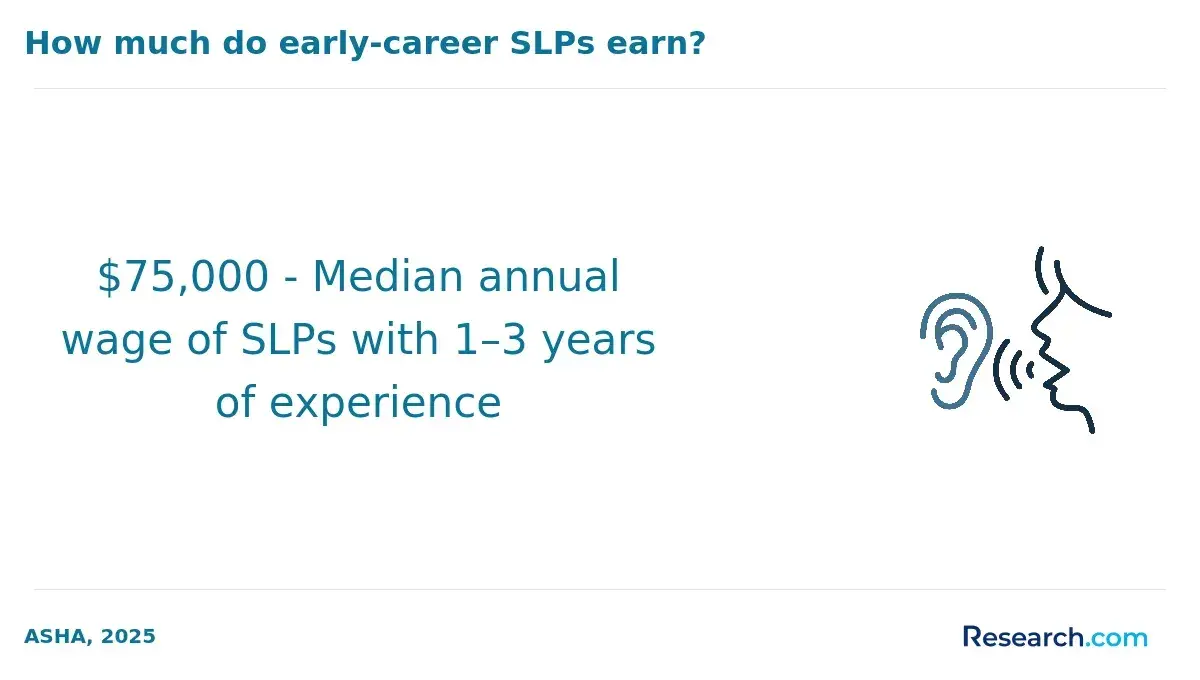
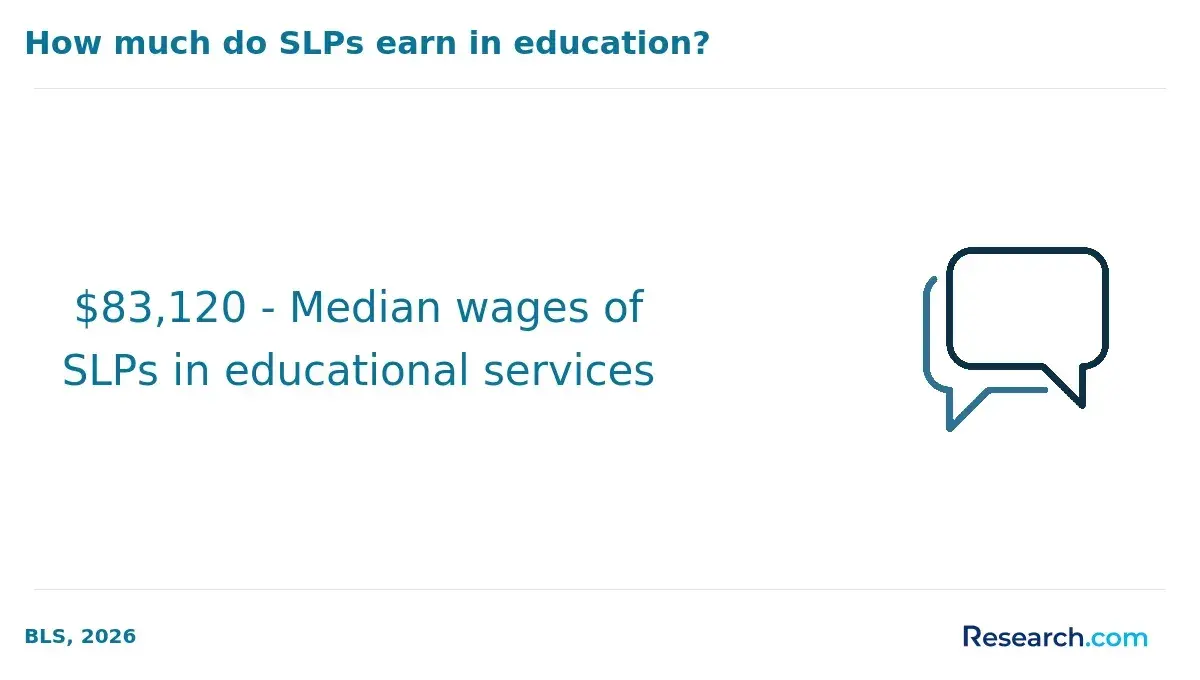
The labor market supports careful investment, not automatic assumptions. The Bureau of Labor Statistics reports that speech-language pathologists had a median annual wage of $97,870 in May 2025 and projects 17% employment growth from 2025 to 2035. These national figures do not predict an individual Tampa salary, which can vary by employer, setting, experience, hours, and credentials. Students interested in setting-specific earning differences can also review medical SLP salary information.
Ask each program for current outcome evidence and the support that produced it.
- CAA-required public outcome data, including completion, Praxis examination, and employment measures where available.
- How quickly students receive clinical-placement guidance and who handles affiliation agreements.
- Faculty access during live sessions, office hours, clinical remediation, and academic difficulty.
- Career services for clinical fellowship searches, résumé review, interviewing, and Florida employer connections.
- Student-support availability during evening hours for working students in the Eastern Time Zone.
Be cautious with any program that provides vague answers about outcomes, cannot explain clinical-placement responsibilities, or treats state licensure questions as the student's problem alone. Transparent documentation is a stronger signal than a broad claim that a degree is "career ready."
What costs should Tampa residents expect for these degrees?
Total cost is more useful than tuition alone. Online SLP programs may bill by credit, term, or cohort, and published rates can exclude university fees, clinical expenses, travel, technology, and insurance. Because programs vary in credits, pacing, and fee structures, do not compare a per-credit price from one university with an estimated total from another as though they are equivalent.
A realistic budget should include the categories below before you accept an offer.
| Cost category | What may be included | Why it matters for Tampa students |
| Direct academic charges | Tuition, enrollment fees, technology fees, and course-specific fees | These are the charges most likely to appear on the university bill |
| Clinical compliance costs | Background checks, fingerprinting, immunizations, drug screening, health insurance, and liability coverage | These may be required before a practicum site allows participation |
| Travel costs | Campus intensives, lodging, flights, local transportation, and parking | Online coursework does not eliminate costs associated with required residencies |
| Living and work costs | Childcare, reduced work hours, commuting to placements, and lost employer benefits | Full-time daytime clinical assignments can create the largest financial pressure |
| Licensure-transition costs | Examination, application, fingerprinting, and provisional-license expenses | These costs arise near graduation rather than at admission |
File the FAFSA early, compare federal aid before considering private loans, and ask each financial-aid office whether institutional scholarships apply to online graduate students. If you are employed in a school, hospital, rehabilitation provider, or large health system, ask whether tuition assistance is available and whether it requires a post-graduation work commitment.
One common error is borrowing based on the first year's bill without accounting for clinical semesters, travel, and reduced earnings. Build a term-by-term spending plan, then compare the plan with likely borrowing limits and your household budget.
How should Tampa students verify program quality before enrolling?
Verification should happen before submitting a nonrefundable deposit. The best program for a Tampa resident is one that documents - not merely suggests - its ability to enroll Florida students, provide an academically sound degree, support clinical education, and align with the student's professional goal.
Use this pre-enrollment checklist when speaking with admissions and clinical staff.
- Confirm the program's current CAA accreditation status through the university and the ASHA CAA directory.
- Obtain written confirmation that Florida residents may enroll in your intended start term.
- Read the institution's Florida professional-licensure disclosure and compare it with current Florida Board requirements.
- Request a complete academic calendar showing live classes, campus visits, clinical semesters, and likely travel dates.
- Ask exactly who secures practicum sites, whether Tampa-area placements are likely or merely possible, and what happens if a local placement cannot be arranged.
- Request an itemized estimate of tuition, mandatory fees, clinical costs, and travel-related requirements for the entire degree.
- Review current public outcomes and ask how the program supports graduates seeking Florida clinical fellowship positions.
- Compare the answers from at least two programs using the same questions and keep written records of material representations.
A final red flag is pressure to enroll before the school can answer state eligibility, practicum, or total-cost questions. A reputable program should be able to explain its processes clearly, identify uncertainties honestly, and direct you to the official disclosures that apply to Florida.
Other Things You Should Know About Speech Language Pathology
Yes, if the degree and your subsequent training satisfy Florida requirements. Online delivery is not the deciding factor; CAA status, qualifying clinical education, supervised post-graduate experience, examination requirements, and Florida Board approval are what matter.
Not always. Career changers may apply to programs with leveling coursework or complete prerequisites before enrollment. The exact courses and minimum grades vary by university, so have each program review your transcript.
Do not assume so. Some programs coordinate placements, some provide support while students identify sites, and others use a mixed model. Ask for a written explanation of the placement process, geographic limits, and what occurs if a Tampa-area site is unavailable.
Length depends on prerequisite completion, full-time or part-time pacing, clinical sequencing, and the university's cohort design. Programs often require multiple academic and clinical terms, so compare the published plan of study instead of relying only on an advertised fastest completion date.
References
- MS in SLP | CSD https://www.usf.edu/cbcs/csd/graduate/ms-slp.aspx
- Hybrid Online MS-SLP Program | Full & Part-Time | USAHS https://www.usa.edu/college-of-rehabilitative-sciences/master-science-speech-language-pathology-ms-slp/
- Florida Speech Language Pathology Master's Programs https://speechpathologymastersprograms.com/speech-pathology-programs/florida/
- Best Online Speech & Language Pathology Master's... https://www.onlineu.com/most-popular/masters-speech-pathology
- Florida Speech Pathology Degree Programs Online, Updated... https://www.speechpathologydegrees.com/st/florida