2027 Best Online Speech Pathology Master's Programs for Residents of Scottsdale, AZ

Co-Founder and Chief Data Scientist

Reviewed by Rhea Paul, PhD
SLP Education & Research Expert
Scottsdale residents choosing an online speech-language pathology master's program need more than a convenient class schedule. The degree must support Arizona licensure, include viable clinical training, and fit their budget and travel capacity.
This guide compares the factors that matter most, including CAA accreditation, Arizona authorization, placement responsibilities, tuition transparency, and career fit. It is designed for prospective SLPs who want to identify an online program they can realistically complete and use toward practice in Arizona.
Key Things You Should Know
- Choose only a master's program accredited by the ASHA Council on Academic Accreditation (CAA) or, when appropriate, holding CAA candidacy status that Arizona regulators and employers will recognize at graduation.
- Arizona licensure typically requires a qualifying graduate degree, supervised clinical preparation, a passing Praxis examination, and post-graduate supervised experience; an online format does not remove any of these requirements.
- The strongest option for a Scottsdale resident is not automatically the lowest-tuition or most recognizable program: compare Arizona enrollment eligibility, required travel, live-class timing, clinical-placement support, and the complete tuition-and-fee estimate.
Which online speech pathology master's programs truly serve Scottsdale, AZ residents best right now?
The best online SLP master's for a Scottsdale resident is a program that combines current CAA accreditation, permission to enroll Arizona residents, a workable clinical-placement model, and transparent expectations about travel and synchronous coursework. No school is universally best because an applicant with an unrelated bachelor's degree, a full-time job, or limited ability to travel may need a very different format.
The programs below are commonly considered by Arizona applicants because they offer distance or hybrid graduate SLP study and publish meaningful information about their professional preparation. Enrollment authorization, Arizona licensure disclosures, tuition, and placement availability can change; confirm each item directly with the institution before applying.
| Program | Format considerations for Scottsdale residents | Clinical-training consideration | Best fit | Important trade-off |
| Emerson College, Master of Science in Speech-Language Pathology | Online coursework with scheduled immersive experiences; applicants should confirm current Arizona distance-education eligibility. | Clinical education is arranged through the program's process and may require travel or schedule flexibility. | Students seeking a structured online cohort and substantial advising support. | Private-university pricing and required immersions can raise total cost. |
| New York University, MS in Communicative Sciences and Disorders | Online delivery is designed for distance learners, with scheduled clinical components; verify Arizona eligibility and live-session requirements. | Clinical placements are a central part of the degree and are subject to site and supervisor availability. | Applicants who want a large-university online pathway and can accommodate a prescribed cohort sequence. | Program pace and clinical requirements may be difficult to combine with inflexible employment. |
| Baylor University, MS in Communication Sciences and Disorders | Online academic delivery with required clinical education; confirm current authorization for Arizona residents before enrollment. | Students should ask how sites are developed, what travel may be required, and whether local placement preferences can be considered. | Applicants who value a cohort model and can plan ahead for clinical rotations. | Clinical scheduling is not fully under the student's control. |
| University of Cincinnati, Master of Science in Speech-Language Pathology | Distance-learning option with program-specific residency and scheduling expectations; Arizona eligibility should be confirmed in writing. | Externships and supervision must meet program and professional standards. | Students who want to compare a public-university option with online delivery. | Out-of-state tuition, required travel, and cohort availability can affect affordability. |
Use this as a shortlist rather than a ranking. Before treating any program as available, ask admissions for a written answer to three questions: "May an Arizona resident enroll now?", "Does the program's curriculum meet educational requirements for Arizona SLP licensure?", and "What travel, residency, or out-of-area clinical-placement costs should I plan for?"
A broad directory of online speech pathology programs can help applicants develop additional options, but eligibility and accreditation must still be checked program by program.
How does Arizona speech-language pathology licensure affect which online master's programs you can use?
Arizona licensure should drive the program decision. A master's degree is necessary, but the degree alone does not authorize independent SLP practice. Arizona applicants should review current requirements with the Arizona Department of Health Services, which regulates speech-language pathology licensing, and should not rely solely on a school's general statement that its program prepares graduates for licensure.
In practical terms, an Arizona-aligned path generally involves completing an acceptable graduate degree and clinical education, passing the national Praxis examination required by the state, and completing the supervised professional experience required for the applicable Arizona license. Requirements can differ for an initial, temporary, or full license and may change through regulation or statute.
The comparison below shows why a program's online label is less important than the evidence supporting its licensure pathway.
| Requirement area | Why it matters for an online student | What to verify before enrolling |
| Graduate degree | Employers and licensing authorities generally expect an accredited or otherwise qualifying professional SLP degree. | CAA status at the time you graduate and the school's Arizona professional-licensure disclosure. |
| Clinical education | Distance students still need supervised direct-client experience in approved settings. | Who secures sites, whether Arizona sites are possible, supervisor qualifications, and whether travel is likely. |
| Praxis examination | A national exam score is part of the licensure route and is also relevant to ASHA certification. | The current Arizona passing-score rule and the program's preparation and reporting practices. |
| Post-graduate supervision | Graduates commonly need a supervised transition period before independent practice. | Arizona's current supervised-experience requirements and whether prospective employers can support them. |
A common mistake is choosing a school because it says "licensure track" without confirming the state named in its disclosure. Ask for the disclosure applicable to Arizona, save it with your admissions records, and recheck it before paying a deposit because state authorization and program participation policies can change.
Applicants who already hold a bachelor's degree in communication sciences and disorders may have a more direct route. Those without prerequisites should verify whether a leveling sequence is built in, required before admission, or offered separately; a degree marketed as an 5 year accelerated speech pathology programs option is generally most relevant to students beginning earlier in the academic pipeline, not to every career-changing graduate applicant.
Which accredited online speech pathology master's programs accept students living in Scottsdale, AZ?
Arizona residency is an enrollment question separate from accreditation. A CAA-accredited program may limit enrollment in certain states because of state authorization, clinical-placement capacity, or institution-specific policies. Scottsdale applicants should obtain confirmation for the admission term they intend to enter rather than assuming an online program serves every state.
Programs such as Emerson College, New York University, Baylor University, and the University of Cincinnati have offered distance-oriented graduate SLP pathways that Arizona residents may investigate. However, a prospective student should treat "may investigate" differently from "is currently eligible to enroll." The school's admissions office and professional-licensure disclosure are the controlling sources for that decision.
The following screening process helps separate programs worth applying to from programs that only appear suitable on a general web search.
- Find the program in ASHA's CAA directory and confirm whether it is accredited or holds candidacy status.
- Read the school's current professional-licensure disclosure for Arizona and confirm that it applies to the exact online or hybrid degree.
- Ask admissions whether Arizona residents can enroll in your intended start term and request the answer by email.
- Ask the clinical-education office whether it has placed students in Arizona or can accept Arizona-based sites, without treating a past placement as a guarantee.
- Compare mandatory travel, live-class times, tuition, fees, and prerequisite requirements before submitting multiple applications.
Applicants should also distinguish between admission eligibility and competitiveness. CSDCAS materials, prerequisite grades, observation experience, recommendations, writing samples, interviews, and communication-science preparation may affect admission even when a program is authorized to enroll Arizona residents.
What accreditation and professional approvals must an online speech pathology master's have for Arizona practice?
For a future Arizona SLP, the central academic credential is accreditation by the American Speech-Language-Hearing Association's Council on Academic Accreditation in Audiology and Speech-Language Pathology. CAA accreditation evaluates whether a graduate program meets professional education standards; it is not the same as institutional accreditation, state authorization, or an Arizona license.
CAA standards include supervised clinical education. Programs commonly structure clinical preparation around at least 400 total clock hours, including at least 375 hours of direct client contact and 25 hours of guided observation, consistent with ASHA certification standards. Students should still confirm how their specific program documents hours and whether Arizona has additional requirements.
| Approval or credential | What it establishes | What it does not establish |
| Institutional accreditation | The college or university meets broad academic and administrative standards. | That the SLP degree meets profession-specific education standards. |
| CAA accreditation | The graduate SLP program meets ASHA professional accreditation standards. | Automatic Arizona enrollment authorization or an individual Arizona license. |
| Arizona state authorization | The institution may offer distance education to Arizona residents, subject to its policies. | That every clinical placement or licensure requirement is assured. |
| Arizona SLP license | The individual has met the state's current practice requirements. | ASHA Certificate of Clinical Competence eligibility by itself. |
| ASHA CCC-SLP | A voluntary national professional certification often preferred by employers. | A substitute for a state license where state licensure is required. |
CAA candidacy deserves careful attention. A candidacy program may be a legitimate option, but applicants should ask how accreditation timing applies to their entering cohort and whether graduation from that cohort will support Arizona licensure and ASHA certification. Do not confuse a school's regional or institutional accreditation with CAA program accreditation.
How do ASHA CAA-accredited online programs compare on Praxis pass rates and clinical outcomes?
CAA accreditation is the baseline quality screen, not a complete outcome comparison. Programs may publish Praxis pass rates, completion rates, employment rates, and clinical information in different formats and reporting periods. A school that does not publish a number should not be assumed to have a weak outcome; it means the applicant needs a direct, current answer before using that factor in a decision.
Rather than comparing unverified figures from different years, Scottsdale applicants should request the same outcome information from every finalist program. This produces a fairer comparison and reveals whether a school is transparent about results.
| Outcome to request | Why it matters | How to interpret it carefully |
| Praxis pass rate | Shows how recent graduates performed on a key national examination. | Ask for the cohort size, reporting year, and whether first-time or eventual pass rates are reported. |
| Program completion rate | Indicates whether students typically progress through the curriculum. | Ask whether leaves, part-time schedules, and prerequisite pathways are included. |
| Employment rate | Provides context about graduates entering SLP-related work. | Ask how employment is defined, how soon after graduation it is measured, and the response rate. |
| Clinical-placement outcomes | Shows whether the program can move students through required rotations. | Ask about placement timing, cancellation procedures, travel expectations, and support if a site falls through. |
A strong question for admissions is: "Please provide the most recent outcomes report and explain the denominator for each measure." Avoid relying on a marketing statement such as "high pass rates" if it does not identify the reporting period or cohort size. Outcomes inform risk; they do not guarantee an individual exam result, placement, or job.
Clinical quality also has a local dimension. Ask whether supervisors hold the credentials required by the placement setting and whether the program retains responsibility for verifying clinical hours. A student should not agree to find every site independently unless they understand the school's approval process and backup plan.
Which online speech pathology programs offer Arizona-friendly clinical placements and local supervision options?
No online SLP program should promise a Scottsdale placement unless it has specifically confirmed one for the student and term involved. Clinical sites depend on contracts, patient volume, supervisor availability, school calendars, and program requirements. The more accurate question is whether the program has a documented process for arranging and approving Arizona placements and a realistic contingency plan when a preferred site is unavailable.
Programs use several clinical-placement models. Knowing the model matters because it affects travel risk, time away from work, and how much placement-finding responsibility falls on the student.
| Placement model | What the program typically does | Implication for a Scottsdale student |
| Program-arranged placement | The clinical education team identifies and contracts with sites. | Usually reduces administrative burden, but local placement is still not guaranteed. |
| Student-suggested, program-approved placement | The student may identify a site, while the program evaluates the supervisor and agreement. | Can help students leverage local contacts, but contracts may take time or be declined. |
| Hybrid responsibility model | The program manages core placements while students assist with local leads. | Often practical, but applicants should clarify exactly which party is responsible at each stage. |
| Centralized or out-of-area rotation | The program uses selected sites that may be outside the student's community. | May produce strong training but adds lodging, transportation, and lost-work-time costs. |
Before committing, ask the clinical coordinator whether the program has active Arizona agreements, whether students have recently completed rotations in the Phoenix metropolitan area, and whether the school can require placements outside Arizona. The answer may be confidential at the site level, but the coordinator should be able to explain the process, likely timing, and student financial responsibility.
Arizona placements may occur in schools, early-intervention settings, outpatient clinics, hospitals, rehabilitation facilities, skilled nursing settings, or private practices. Each setting has different calendar demands and onboarding requirements. Background checks, fingerprinting, immunizations, drug screening, health insurance, and liability coverage can add time and cost.
For readers exploring the work itself, this overview of what does a speech pathologist do can help connect clinical rotations to later employment settings and responsibilities.
How do tuition, fees, and cost of living in Scottsdale impact total program affordability?
Tuition is only one part of an online SLP master's budget. Scottsdale residents may avoid relocating for coursework, but they can still face travel for immersions, clinical rotations, examination costs, health requirements, and periods when externship schedules limit paid work. Compare complete program cost rather than a per-credit price alone.
Federal aid eligibility, institutional scholarships, employer tuition benefits, and loan choices vary by student. A school's financial-aid office can provide a cost-of-attendance budget, but applicants should ask whether it includes required travel and clinical expenses or only standard educational charges.
| Cost category | Why it varies | Planning question |
| Tuition | Programs may charge by credit, term, cohort, or residency category. | What is the current total tuition for all required credits, assuming no future increases? |
| Mandatory university fees | Technology, enrollment, graduation, and clinical fees may be separate. | Which fees are mandatory for online and clinical terms? |
| Travel and lodging | Immersions and clinical assignments may occur outside Scottsdale. | How many trips are required, where might they occur, and who pays? |
| Clinical onboarding | Sites may require screenings, immunizations, training, and background checks. | Which costs are recurring and which are paid once? |
| Reduced work capacity | Full-time clinical rotations can conflict with regular employment. | Can my household budget absorb lower earnings during practicum terms? |
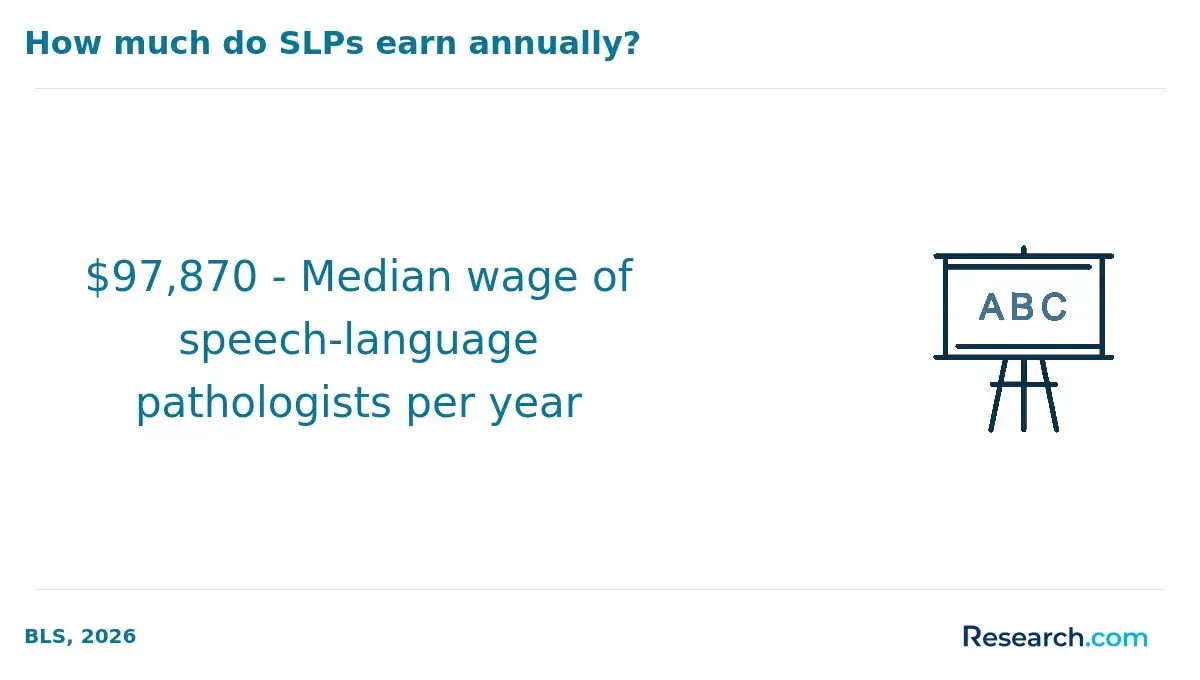
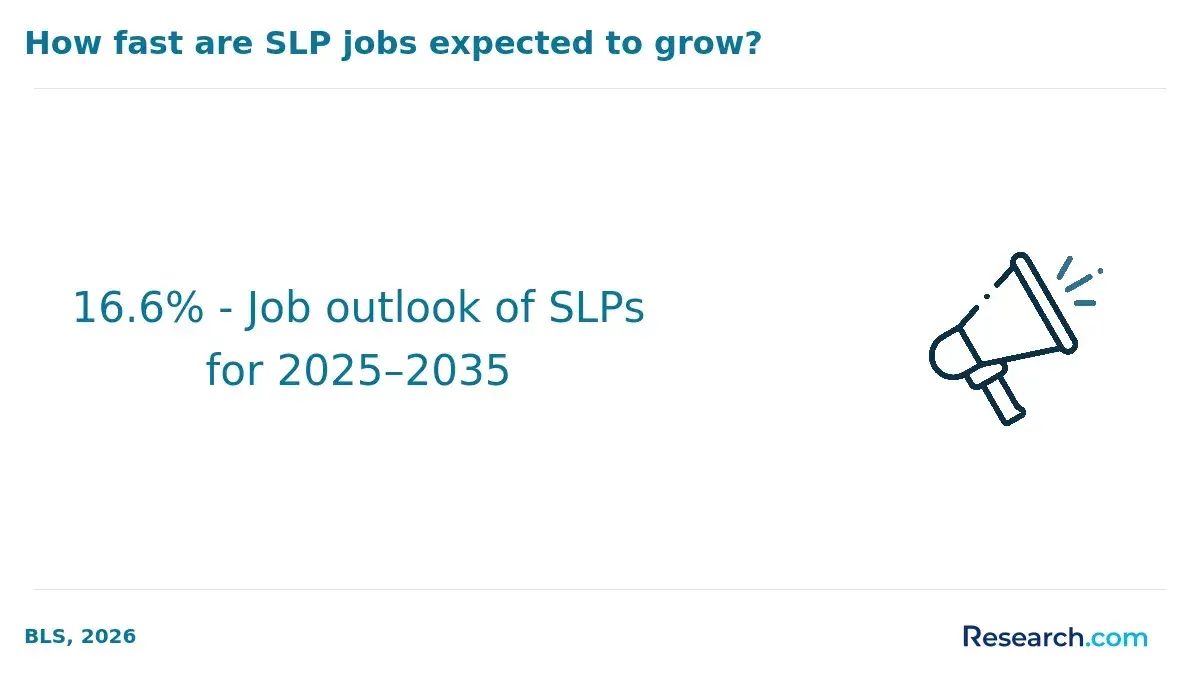
The labor-market upside can be meaningful, but it should not be used to justify any price. The U.S. Bureau of Labor Statistics reports a May 2025 median annual wage of $97,870 for speech-language pathologists and projects 17% employment growth from 2025 to 2035. Those national figures indicate sustained demand, not a guaranteed Arizona salary, job offer, or return on a particular program.
To reduce financial risk, compare each school's written total-cost estimate, seek scholarship and aid information early, and reserve funds for clinical travel. A guide to an SLP master's online pathway can provide a useful starting point for cost comparisons, but confirm the price and fee schedule directly with every institution because published charges change.
What should Scottsdale residents know about Arizona state authorization and distance education reciprocity?
State authorization governs whether a college may deliver distance education to a student in Arizona. It is different from professional licensure. A school might be authorized to teach an Arizona resident online but still state that its curriculum has not been determined to meet Arizona SLP licensing requirements. Conversely, a professionally appropriate curriculum does not override a school's enrollment restriction.
Many institutions participate in interstate distance-education arrangements, but participation does not eliminate program-level restrictions. Clinical education can create additional requirements because placements involve state practice rules, site contracts, and supervisor credentials.
Before enrolling, obtain written answers to these points:
- Whether the institution is currently authorized to enroll a student physically located in Arizona.
- Whether the specific online or hybrid SLP program is available to Arizona residents, not merely another online program at the university.
- Whether the school has a determination that its curriculum meets Arizona educational requirements for SLP licensure.
- Whether any practicum, immersion, or externship may require travel outside Arizona.
- How the university handles complaints, state disclosures, and changes in authorization while a student is enrolled.
Do not assume an institution's membership in a reciprocity arrangement answers the licensure question. The most dependable documentation is the university's current Arizona professional-licensure disclosure plus confirmation from the Arizona licensing authority for the license type you intend to seek.
How can Scottsdale applicants verify current accreditation, program status, and Arizona licensure alignment?
Verification should happen before application fees, deposits, or student-loan decisions. Accreditation, state eligibility, curriculum, and tuition can change between application and enrollment, so retain dated copies or emails of the information that influenced your decision.
Use this sequence to create a defensible shortlist and avoid the most expensive mistakes.
- Search ASHA's CAA program directory for the exact degree and campus or delivery pathway, then record its accreditation or candidacy status and review date.
- Read the university's official Arizona professional-licensure disclosure for that exact program, paying attention to language such as "meets," "does not meet," or "has not been determined."
- Contact admissions to confirm Arizona enrollment eligibility, prerequisites, application requirements, cohort start date, expected completion sequence, and any live-session expectations in Arizona time.
- Contact clinical education to ask about placement responsibility, required travel, active Arizona relationships where disclosable, and the fallback process if a site is unavailable.
- Request an itemized estimate of tuition, mandatory fees, travel requirements, and clinical onboarding expenses from financial aid or student accounts.
- Check current Arizona licensing requirements directly with the state authority before making a final enrollment commitment.
Red flags include vague licensure language, an inability to explain who obtains clinical sites, a tuition estimate that omits required fees or travel, and a program that will not state whether Arizona residents may enroll. These do not automatically mean a school is unsuitable, but they require a clear written explanation before you proceed.
What are realistic career pathways and employer expectations for Scottsdale graduates of online SLP programs?
After completing a qualifying graduate degree, examination, and required supervised transition steps, Scottsdale-area graduates may pursue work in school systems, hospitals, rehabilitation organizations, outpatient practices, early-intervention programs, skilled nursing facilities, and telepractice settings. Employers generally focus on licensure eligibility, clinical competence, population experience, documentation skills, and the ability to work within their service model - not whether lectures were delivered online.
The early-career pathway is usually structured. A graduate first completes required licensing and supervised practice milestones, then may pursue the ASHA Certificate of Clinical Competence in Speech-Language Pathology if eligible and valuable for the target employer. School-based employment can also involve Arizona Department of Education requirements or district-specific credential expectations, which are separate from the health-profession license.
| Career setting | What employers commonly evaluate | Useful graduate-school preparation |
| Public or charter schools | Arizona credentials, pediatric experience, special-education collaboration, and caseload management. | School practicum, IEP exposure, pediatric assessment, and family communication. |
| Medical and rehabilitation settings | Adult clinical skills, interdisciplinary teamwork, documentation, and medical-setting onboarding readiness. | Medical externship, dysphagia education where available, and evidence-based documentation practice. |
| Early intervention and pediatric clinics | Family coaching, developmental knowledge, flexible scheduling, and pediatric experience. | Infant and toddler clinical work, caregiver education, and culturally responsive practice. |
| Telepractice and private practice | State licensure, privacy practices, technology competence, and independent clinical judgment. | Telepractice exposure, ethical decision-making, and supervised experience with digital tools. |
Technology is changing documentation, telepractice workflows, and administrative tasks, but it does not replace the licensed clinician's assessment, clinical judgment, patient counseling, and ethical responsibility. Graduates should expect employers to assess communication, reliability, supervision readiness, and ability to serve diverse clients as closely as academic credentials.
A realistic career strategy is to choose practicum experiences that match a preferred setting while remaining open to adjacent roles during the supervised transition period. Students who know they want schools, medical speech-language pathology, bilingual services, or pediatric practice should ask each program whether it can support relevant clinical exposure rather than assuming every online curriculum offers the same rotations.
Other Things You Should Know About Speech Language Pathology
Yes, potentially. The delivery format is not the deciding issue. You need a qualifying graduate program, appropriate clinical education, required examination results, and compliance with Arizona's current licensing rules. Confirm that the specific online program accepts Arizona residents and supports Arizona licensure before enrolling.
Often, yes. Requirements vary by program. Some schools require campus immersions, while clinical rotations may occur near the student, elsewhere in Arizona, or outside the state depending on site availability. Ask for the required number of trips and likely costs in writing.
Coursework may be flexible, but clinical practicum and externship schedules can require daytime availability and substantial preparation time. Many students reduce work hours during intensive clinical terms. Review the term-by-term schedule before assuming full-time employment is sustainable.
Arizona licensure is the key legal requirement for practice where a state license is required. The ASHA CCC-SLP is a separate national credential that many employers prefer or require, especially in certain healthcare and school-related settings. Check the requirements of the employer and setting you intend to enter.
References
- Communication Disorders, MS - ASU degree https://degrees.asu.edu/masters-phd/major/ASU00/LACOMDISMS/communication-disorders-ms
- Master of Science in Speech-Language Pathology (M.S.) https://delval.edu/programs/graduate-programs/speech-language-pathology
- Master of Science in Speech-Language Pathology https://www.atsu.edu/arizona-school-of-health-sciences/academics/master-of-science-in-speech-language-pathology
- Best Online Master's Programs in Speech-Language... https://www.bestcolleges.com/healthcare/masters/speech-pathology/
- Online Master's in Speech Pathology Programs: 2026 Guide https://speechpathologymastersprograms.com/
- U.S. Department of Labor, Bureau of Labor Statistics. (2026). Speech-language pathologists. Occupational Outlook Handbook. https://www.bls.gov/ooh/healthcare/speech-language-pathologists.htm