2027 Online SLP Master's Application Deadlines: Compare Upcoming Cohorts

Co-Founder and Chief Data Scientist

Reviewed by Rhea Paul, PhD
SLP Education & Research Expert
Online SLP master's deadlines are not interchangeable: a program may admit one fall cohort, several annual cohorts, or students on a rolling basis until clinical capacity is filled. This guide helps prospective speech-language pathologists compare application calendars, recognize priority versus final deadlines, plan prerequisites and transcripts, and verify the requirements that can affect enrollment. It is designed for applicants deciding whether to apply for the next available start or build a stronger application for a later cohort.
Key Things You Should Know
- Online SLP programs do not follow one national deadline calendar; fixed fall-cohort programs commonly require applications many months before classes begin, while multi-start and rolling programs may close earlier than their posted final date when seats or clinical capacity are filled.
- CAA accreditation and state licensure compatibility matter more than a convenient start date: confirm both before paying an application fee or accepting an offer.
- The U.S. Bureau of Labor Statistics projects 17% employment growth for speech-language pathologists from 2025 to 2035, with about 12,500 annual openings; that demand does not reduce the need for careful planning around competitive graduate admissions and required clinical training.
How do online SLP master's application timelines differ across upcoming cohort start dates?
Online master's programs in speech-language pathology generally use one of three calendars: a single annual cohort, multiple fixed cohorts, or rolling admission. The calendar determines how much time an applicant has to finish prerequisites, submit CSDCAS materials, arrange recommendations, and prepare financially. A faster start is not automatically the better choice if it leaves little time to resolve academic gaps or placement restrictions.
The comparison below shows how deadline structures usually affect an applicant's decision. Schools set their own dates, so use this as a planning framework rather than a substitute for the current official admissions page:
| Admissions model | Typical cohort pattern | What the deadline means | Best fit |
| Single annual cohort | Usually one fall entry | The published deadline is often a firm annual cutoff, sometimes with an earlier priority review date. | Applicants who can plan well ahead and want a traditional academic calendar. |
| Multiple fixed cohorts | Two or more planned start terms | Each start has its own review window; missing one may mean waiting for the next scheduled group. | Applicants balancing work, prerequisite completion, or relocation. |
| Rolling admission | One or more starts with ongoing review | Applications are evaluated as complete files arrive, and a final date may not indicate remaining seat availability. | Applicants with a complete, competitive file ready early. |
For applicants comparing SLP online programs, calendar flexibility should be evaluated alongside total tuition, required travel, live-session times, and whether the school can serve residents of the applicant's state. A later cohort may be financially and academically smarter if it avoids rushing through costly prerequisite courses.
When are the earliest and latest application deadlines for online SLP master's cohorts this cycle?
The earliest deadlines are usually priority or early-review deadlines for the next fall cohort. They can occur well before the start term because programs need time to review applicants, build a class, coordinate clinical education, and allow admitted students to complete onboarding. The latest deadlines are typically attached to later-start cohorts or rolling-admission programs, but they are not promises that seats remain available.
Instead of treating "final deadline" as a target, use the following timing comparison to decide when to submit a completed application:
| Deadline point | What it usually affects | Applicant implication |
| Priority deadline | Earliest review, possible scholarship consideration, and strongest access to remaining seats | Submit when transcripts, recommendations, and prerequisite documentation are complete rather than waiting for the final date. |
| Regular deadline | Standard review for a stated cohort | Appropriate when the file is complete and the program confirms capacity remains available. |
| Final deadline | Last date a school says it will accept materials for that start | Use only if admissions confirms the cohort is still open and all required documents can be received in time. |
| Rolling close or waitlist | Seat availability rather than a predictable calendar date | Apply promptly; a strong file submitted late can still be reviewed after many available seats have been allocated. |
A practical rule is to work backward from the school's earliest listed deadline, not its final one. Allow extra time for transcript processing, recommender delays, course equivalency reviews, and any correction requested by the university or application service.
How do priority, regular, and final deadlines compare for major online SLP programs?
Priority, regular, and final deadlines describe different admissions opportunities, not different levels of eligibility. A priority deadline may provide earlier consideration but does not guarantee admission; a final deadline may still be unusable if a cohort has reached its enrollment or clinical-planning limit. Programs also differ in whether they use CSDCAS, a university application, or both.
Use these distinctions when reading an online SLP program's current application page:
| Deadline label | How to interpret it | Question to ask admissions |
| Priority | An earlier review point that may be relevant to scholarships, prompt decisions, or cohort availability. | Does priority review affect scholarships, interview timing, or seat availability? |
| Regular | The standard date for consideration in a designated intake. | Are applications reviewed only after this date or as files become complete? |
| Final | The last published date for submission or file completion, depending on the school's wording. | Must transcripts and recommendations arrive by this date, or only the application? |
| Rolling | Ongoing review until a program stops accepting applicants or fills a cohort. | Is the next cohort still open, and what is the latest recommended date for a complete file? |
Do not assume that programs described as easier to enter are less selective at the end of their cycle. A guide to the easiest speech pathology programs to get into can help frame admissions factors, but each school's current prerequisite, GPA, interview, and capacity rules still control the decision.
A common mistake is submitting the application before confirming what "complete" means. Some schools require official transcripts, observation documentation, recommendations, and prerequisite verification by the deadline; others permit limited supporting materials to follow. Get that answer in writing from the program.
Which online SLP master's programs still accept applications for the next cohort start?
The only reliable answer is the program's current official admissions page or a direct confirmation from its admissions office. Online SLP cohorts can close without much notice because schools must manage faculty capacity, clinical education sequencing, and state authorization. A public page that still displays a final date should not be read as confirmation that the cohort has seats.
Before prioritizing a program for the next intake, confirm these status details with the school:
- Ask whether the next cohort is open, full, waitlisted, or accepting applications for a later start.
- Confirm the exact deadline for a complete file, including transcripts, references, essays, prerequisite verification, and any application-service processing.
- Ask whether the program accepts applicants residing in your state and whether any state-specific limitation applies.
- Request the next available cohort date if the immediate intake is full, then compare the wait with the time needed to strengthen your application.
Applying late can make sense when your materials are already strong and the school confirms availability. It is less sensible when rushed coursework, missing observation records, or incomplete transcripts could weaken the application; in that situation, a later cohort may offer a better admissions outcome and less stressful transition.
How do rolling admissions policies affect online SLP master's application timing and competitiveness?
Rolling admissions means a school evaluates eligible applicants as applications become complete rather than waiting for one universal review date. It does not mean admission is first-come, first-served in a simple sense, nor does it mean every qualified applicant will receive an offer. However, earlier complete applications generally encounter more unallocated capacity than late applications.
Rolling review creates a meaningful trade-off. Applicants who are ready early may benefit from timely decisions and more cohort flexibility. Applicants still repairing a low prerequisite grade, finishing core courses, or securing stronger recommendations should avoid submitting an incomplete or weak file merely to be early.
For rolling programs, organize your application around the slowest component. Official transcripts and recommendation letters often create more delay than the application form itself. Ask whether a file enters review only after every item is received and whether prerequisite courses in progress are allowed.
Another red flag is treating a rolling deadline as a reason to skip financial planning. An admission offer may arrive before final aid information, clinical-travel estimates, or employer scheduling issues are resolved. Compare the full enrollment decision, not only the speed of the offer.
How do CAA accreditation and state licensure rules shape SLP cohort admission calendars?
CAA accreditation is central because most applicants need a graduate degree from a CAA-accredited program to pursue the standard professional pathway in speech-language pathology. Accreditation should be verified directly through ASHA's CAA or EdFind records, not inferred from a school's marketing language. A program's cohort availability is useful only if the credential supports the applicant's intended licensure path.
State licensure requirements add another layer. States may differ in rules concerning supervised clinical experience, examinations, background checks, school-based credentials, and whether an institution's distance program may enroll residents. Universities may also publish state professional licensure disclosures that identify where their curriculum is designed to meet requirements or where enrollment is restricted.
Before accepting a place, verify the following points with both the university and the licensing authority in the state where you expect to practice:
- Confirm the program's current CAA accreditation status and the degree title you will receive.
- Confirm that the university accepts students living in your state and can arrange the required clinical education there, or explain any travel expectation.
- Confirm your state's current licensure steps, including postgraduate supervised experience and examination requirements where applicable.
- For school employment, check whether a separate educator credential, state school license, or agency requirement applies.
Do not rely on another applicant's experience, including one from the same university. State rules and institutional authorization can change, and an online program cannot guarantee a clinical placement or licensure outcome before evaluating an individual student's circumstances.
What are typical prerequisite completion and transcript submission cutoffs for SLP online cohorts?
Many master's programs expect foundational preparation in communication sciences and disorders or specified equivalents, particularly for applicants whose undergraduate degree is in another field. Requirements vary widely: one program may accept several courses in progress, while another may require all prerequisites before review, admission, or matriculation. The key date is therefore not only the application deadline but also the school's prerequisite-completion cutoff.
The following document timeline helps applicants identify the questions that most often change eligibility:
| Application item | Timing issue to verify | Why it matters |
| Official transcripts | Whether they must be received by the deadline or only sent by that date | Processing delays can leave an otherwise submitted application incomplete. |
| Prerequisite courses | Whether courses may be in progress and the latest allowed completion term | Finishing too late can postpone enrollment even after conditional admission. |
| Course equivalencies | Whether the program pre-approves outside coursework | A course title alone may not satisfy a required content area. |
| Observation or experiential records | Whether documentation is required at application, admission, or program start | Requirements differ, and missing verification can delay file completion. |
Applicants changing fields should build extra time into their calendar. Some 5-year speech pathology programs integrate undergraduate and graduate preparation, but they are structurally different from a standalone online master's degree for someone who already holds a bachelor's degree.
A frequent mistake is enrolling in low-cost prerequisites without getting written confirmation that they satisfy the target program's requirement. Send course descriptions or syllabi when the school permits pre-review, and retain final transcripts showing grades and completion dates.
How do cohort sizes, clinical placement sequencing, and start terms vary by online SLP program?
Online SLP programs are cohort-based because clinical education must be sequenced with academic preparation, supervision, and placement availability. Schools may publish an entering-class size, but many do not provide a comparable current figure, and capacity can change by term. Applicants should not judge access solely by the number of advertised annual start dates.
These program-design differences affect how practical a cohort is for a working adult or an applicant who expects to remain in one location:
| Program feature | What can vary | Decision impact |
| Start terms | Annual fall entry, multiple fixed starts, or rolling intakes | More starts can reduce waiting time but may not reduce total program length. |
| Cohort size | Published cap, target enrollment, or no public figure | Size alone does not show selectivity, faculty access, or placement availability. |
| Clinical placement model | School-arranged, collaborative, or student-assisted site identification | Students need to understand their role, travel expectations, and what happens if a site cannot be secured. |
| Course delivery | Asynchronous work, live online classes, intensives, or campus visits | Live sessions and travel can conflict with employment or time-zone needs. |
Do not interpret "online" as fully location-free. Clinical practicum and externship requirements occur in real settings and can require daytime availability, commuting, travel, or schedule changes. Compare this operational reality before accepting the earliest available start.
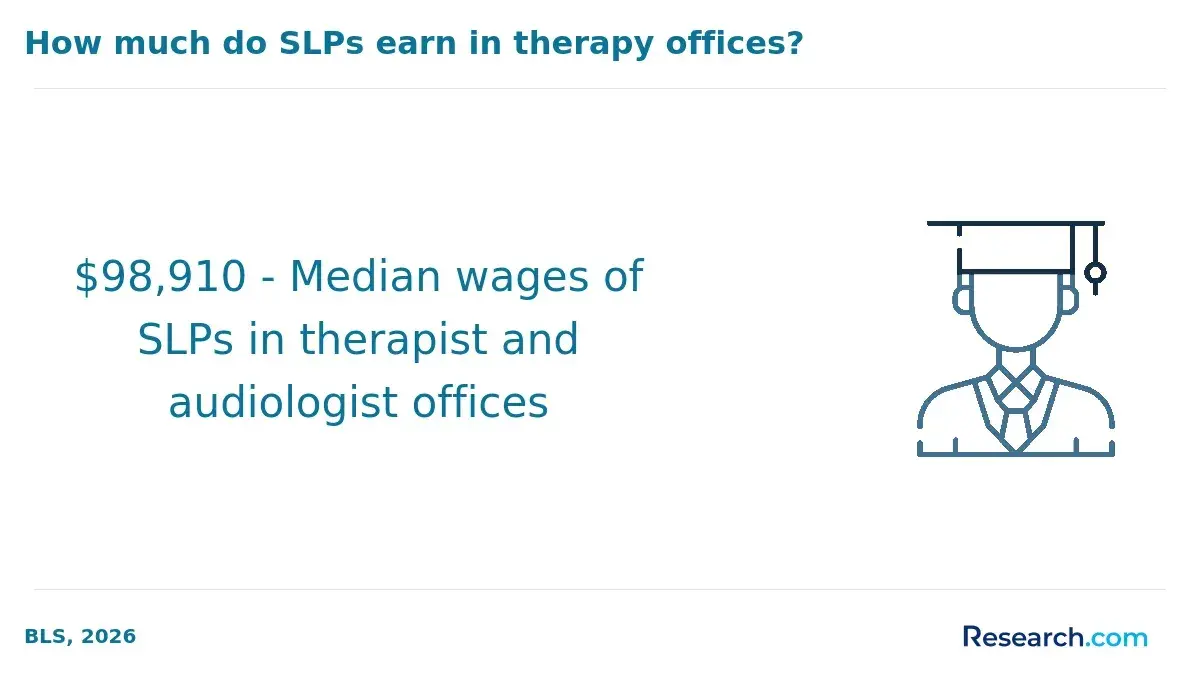
Career demand may support the long-term case for careful program selection: the median annual wage for speech-language pathologists was $97,870 in May 2025, according to the BLS. That national median is not an entry-level salary promise and varies by setting, region, experience, and licensure status; review speech-language pathologist salary information in the context of your intended practice setting.
What timeline should SLP applicants follow for Praxis, background checks, and clinical readiness?
Most applicants do not take the Praxis examination before beginning the master's program. Praxis timing is usually tied to graduation, state licensure, ASHA certification, or a school's internal guidance. Requirements can change, so students should follow their program, ASHA, and state board instructions rather than scheduling an exam solely because they have received an admission offer.
Background checks, drug screens, immunization records, CPR certification, health documentation, and site-specific onboarding often become urgent before clinical placements. These requirements can take longer than expected, especially when a placement site has its own compliance portal or vaccination deadlines.
A sensible readiness plan is to complete tasks in this order once admitted:
- Read the enrollment agreement and clinical handbook for required disclosures, travel expectations, and participation policies.
- Ask when the program expects background checks, health records, CPR documentation, and any other compliance items to be completed.
- Keep copies of every submitted record and track expiration dates for time-limited items.
- Ask the program when it recommends Praxis registration and verify the current state-specific licensure sequence before graduation.
Do not pay for testing or compliance services prematurely if the school has not identified an approved vendor, required timing, or placement-specific standard. Early preparation is valuable; paying twice because an item is outdated or not accepted is not.
How can prospective SLP students verify current cohort deadlines and accreditation before applying?
Verification should happen before you submit an application and again before you accept an offer. Program pages can change between admissions cycles, particularly for later cohorts, residency requirements, and state eligibility. Prioritize official university admissions, catalog, tuition, clinical education, and professional-licensure disclosure pages; then verify accreditation through CAA resources and licensure steps with the relevant state board.
Use this short verification process to make an apples-to-apples comparison:
- Record the exact cohort start date, priority date, final date, and definition of a complete application for every school.
- Confirm CAA accreditation status and whether residents of your state may enroll in the distance program.
- Request written clarification of prerequisite rules, required travel, synchronous class times, and the clinical placement model.
- Compare tuition, mandatory fees, likely travel, prerequisite costs, and the income impact of clinical scheduling before choosing a cohort.
- Save dated copies or screenshots of the official requirements and ask admissions to clarify any conflict between pages.
The strongest choice is not necessarily the program with the soonest opening. It is the accredited, state-compatible option whose calendar gives you enough time to submit a complete application and realistically meet its academic, clinical, and financial commitments.
Other Things You Should Know About Speech Language Pathology
Often, yes, but only if the individual program permits prerequisites in progress. Ask which courses may be unfinished at application, the minimum grade required, and the latest completion date. Conditional admission can be withdrawn if the stated conditions are not met.
Not always. Some programs require every item to be received and verified by the deadline, while others allow limited materials to arrive shortly afterward. Confirm the policy for official transcripts, recommendations, and application-service verification before submitting.
Models vary. A school may arrange placements, work collaboratively with students, or expect students to help identify sites. Ask who has final responsibility for securing a site, whether placement is guaranteed, and whether travel or daytime availability is likely.
Choose the earliest cohort only if your prerequisites, application materials, financial plan, state eligibility, and work schedule are ready. Waiting for a later cohort can be the better decision when it allows you to improve your academic record, complete required courses, or confirm clinical-placement feasibility.
References
- Speech Language Pathology (MS) https://bouve.northeastern.edu/programs/speech-language-pathology-ms/
- Online Admissions Overview - NYU Steinhardt https://speech.steinhardt.nyu.edu/admissions/
- Online SLP Master's Program https://www.misericordia.edu/speech-language-pathology/online-slp-masters-program
- Best Online Master's in Speech-Language Pathology for 2026 https://healthscience.pepperdine.edu/online-masters-in-speech-language-pathology/article/best-online-masters-in-speech-language-pathology-programs-guide.htm
- Emerson College Online Master's in Speech Pathology https://speech.emerson.edu/