2027 Best Online Speech Pathology Master's Programs for Residents of Olathe, KS

Co-Founder and Chief Data Scientist

Reviewed by Rhea Paul, PhD
SLP Education & Research Expert
Olathe residents choosing an online speech-language pathology master's program need more than a flexible class schedule. They need a degree that can support Kansas licensure, supervised clinical training, and eventual ASHA certification.
This guide compares practical online options using the factors that matter most locally, CAA accreditation, Kansas eligibility, placement support, travel, cost transparency, and outcomes. It also explains what to verify in writing before paying an application fee or accepting an offer.
Key Things You Should Know
- For Kansas clinical practice, prioritize a master's degree from a program accredited by the ASHA Council on Academic Accreditation (CAA), an "online" format alone does not establish Kansas licensure eligibility.
- Speech-language pathologists had a national median annual wage of $97,870 in May 2025, and the Bureau of Labor Statistics projects 17% employment growth from 2025 to 2035, those figures support demand but do not guarantee a local job or individual salary.
- The best fit for an Olathe resident is usually the program that confirms Kansas enrollment and licensure compatibility in writing, provides a workable clinical-placement process, and discloses every required immersion, fee, and travel expectation.
Which online speech pathology master's programs accept and serve residents of Olathe, Kansas most effectively?
For an Olathe applicant, "best" should mean viable for Kansas licensure and manageable in the Kansas City area - not simply highly ranked or fully asynchronous. Strong candidates typically combine CAA accreditation, clear distance-education operations, clinical-placement support, and published state-authorization or professional-licensure disclosures.
The programs below are reasonable starting points for a Kansas-focused comparison. Enrollment authorization, tuition, cohort availability, and placement arrangements can change, so applicants should obtain a written Kansas-specific response from each institution before enrolling.
| Program | Online model and likely trade-off | Why it may fit an Olathe resident | Questions to confirm before applying |
| Emerson College, Master of Science in Speech-Language Pathology | Online cohort model with required clinical education and immersion experiences; live participation may be part of the schedule. | A long-established distance SLP option for applicants who can plan for travel and a structured cohort pace. | Current Kansas authorization, number and location of immersions, current tuition, and whether placements can be pursued near Olathe. |
| Baylor University, Master of Science in Communication Sciences and Disorders | Online-delivered professional master's curriculum with clinical training and required in-person components. | May suit applicants seeking a cohort experience and a university-managed clinical education process. | Kansas eligibility, exact travel dates, synchronous attendance requirements, and responsibility for arranging clinical sites. |
| New York University, Master of Science in Communicative Sciences and Disorders | Online graduate pathway with clinical preparation; pacing and experiential requirements require close review. | Potential fit for applicants who value a large university structure and can accommodate its clinical and calendar requirements. | Whether the current online pathway accepts Kansas residents, required visits, total required charges, and Kansas licensure disclosure. |
| University of Nebraska at Kearney, Master of Science in Education in Speech-Language Pathology | Distance-oriented graduate study with clinical requirements that may include campus or regional commitments. | Regional proximity can make travel logistics more practical than for a distant institution. | Current delivery format, CAA status for the exact pathway, campus attendance, and Kansas placement and licensure compatibility. |
Do not treat this as a universal ranking. A program is more effective for you if it confirms it can enroll Kansas residents, gives a realistic clinical-training plan, and fits your finances and availability. Compare these options alongside other online SLP graduate programs only after screening for the same licensure and placement conditions.
How do Kansas licensure rules shape which online speech pathology master's degrees are viable options?
Kansas licensure is the central filter. An online master's program is viable only when its curriculum, clinical education, examinations, and postdegree supervised experience can support the requirements administered by the Kansas Board of Healing Arts. A degree may be academically strong yet still be a poor choice if the institution cannot confirm that its distance pathway is designed to meet Kansas requirements.
CAA accreditation matters because it is the principal academic-accreditation standard used in the profession. It also supports eligibility for the Clinical Fellowship and ASHA's Certificate of Clinical Competence pathway, which many employers value. However, CAA accreditation is not the same thing as a Kansas license, and neither credential replaces school-employer requirements for positions in Kansas public schools.
Before selecting a program, get answers to the following questions in writing. These checks prevent the common mistake of relying on a general statement that a program is "licensure-track."
- Ask whether the institution is currently authorized to enroll a student physically located in Kansas in the exact online SLP pathway.
- Request the school's Kansas professional-licensure disclosure and ask whether faculty believe the curriculum meets Kansas educational requirements for speech-language pathology licensure.
- Confirm how the program documents graduate clinical hours, whether it prepares students for the Praxis examination, and how it supports the Clinical Fellowship transition.
- If you want to work in a school, ask the Kansas school district or Kansas State Department of Education which educator credential, endorsement, or employment conditions apply to the role you want.
Kansas rules and institutional disclosures can change. Use a program's statement as planning information, then verify final requirements directly with the Kansas licensing authority before making an irreversible enrollment decision.
Which online speech pathology programs combine ASHA CAA accreditation and strong outcomes data for Olathe students?
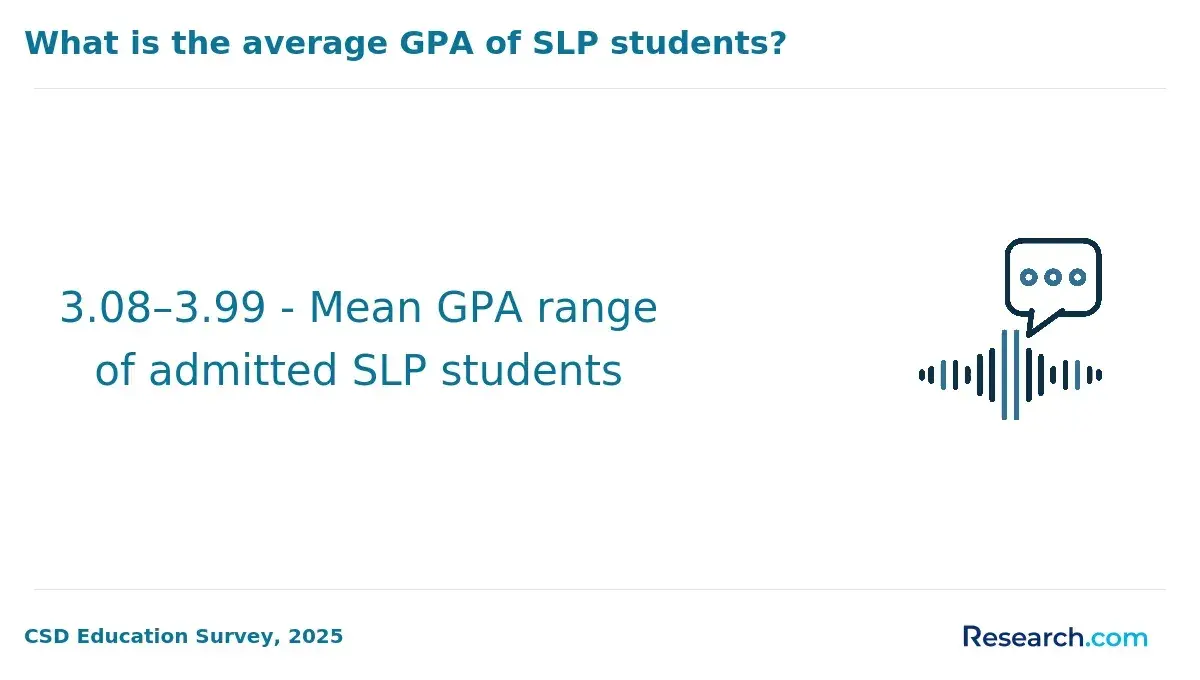
The strongest evidence-based choice is not necessarily the school with the most marketing claims. Look for the exact program in ASHA's CAA directory, then review the institution's most recent required outcome disclosures. CAA-accredited programs are expected to report measures such as program completion, Praxis examination performance, and employment outcomes, but publication format and cohort size differ.
This comparison shows how to interpret outcome information rather than treating one reported result as a promise of your result.
| Evidence to review | What a strong disclosure looks like | How an Olathe applicant should use it |
| CAA status | The exact degree and campus/pathway are listed as accredited by the CAA, with a current accreditation period. | Verify the precise online or distance-delivery program, not merely the university name. |
| Program completion | A recent cohort-based disclosure explains how many students completed within the program's stated timeframe. | Compare this with your work, caregiving, and travel constraints; accelerated pacing can increase completion pressure. |
| Praxis performance | Results identify the reporting period and the exam measure used. | Use it as one readiness indicator, not as proof that you will pass on a first attempt. |
| Employment outcomes | The school defines what counts as employment and identifies the reporting period. | Ask whether graduates found positions in schools, medical settings, or other settings, and whether Kansas placements are represented. |
| Clinical education support | The program explains who approves sites, supervises placements, and assists if a placement falls through. | This is especially important because distance students may complete clinical training far from the university. |
Emerson, Baylor, NYU, and University of Nebraska at Kearney are examples of institutions an applicant can investigate through official CAA and program disclosures. The best comparison starts with current evidence for the specific degree, because accreditation actions, outcome-reporting periods, and delivery formats can change.
Applicants should avoid choosing based on a school's overall reputation alone. A current list of ASHA accredited online SLP programs can help identify options, but admission accessibility should never outweigh accreditation, Kansas compatibility, and clinical-training quality.
What admission requirements and prerequisite courses do leading online speech pathology master's programs expect?
Most entry-level SLP master's programs expect a bachelor's degree, academic transcripts, recommendation letters, a statement of purpose, and evidence that the applicant can succeed in graduate science and clinical coursework. Requirements vary widely for applicants whose undergraduate degree was not in communication sciences and disorders.
Common prerequisites are not merely admissions hurdles; they provide the scientific foundation for diagnosis and treatment coursework. Programs often review coursework in speech and hearing science, language development, anatomy and physiology of speech and hearing mechanisms, phonetics, audiology, and speech-language disorders. Many also require the ASHA certification standards' foundational content areas, including biological science, behavioral or social science, statistics, and physical science.
The table distinguishes the major applicant profiles schools commonly evaluate.
| Applicant background | Typical admissions issue | Practical next step |
| Communication sciences and disorders bachelor's degree | Program verifies prerequisite grades, observation experience, GPA, and any missing foundational courses. | Match your transcript course by course against each school's published checklist. |
| Different bachelor's degree with some CSD courses | Remaining leveling coursework may delay admission or require a post-baccalaureate sequence. | Ask whether missing prerequisites may be completed before enrollment, concurrently, or only through an approved sequence. |
| Different bachelor's degree with no CSD coursework | A full leveling or post-baccalaureate plan is often needed before graduate clinical coursework. | Compare the added time and cost with programs that formally admit career changers through an integrated plan. |
| Applicant with a lower academic record | Minimum GPA rules, prerequisite GPA, and holistic-review practices may differ. | Ask whether recent coursework, explanations of academic trends, or conditional admission are considered; do not assume a waiver exists. |
GRE policies, observation-hour expectations, interview practices, and deadlines change frequently. Do not spend money on leveling courses until each target school confirms which courses it will accept. If speed matters, assess accelerated SLP programs carefully: faster academic calendars can still require the same clinical competencies and may leave less room for outside work.
How do clinical practicum placements work for Olathe-based online speech pathology students in local settings?
Clinical practicum is the part of an online SLP degree that cannot be fully virtual. Students develop competencies through supervised work with clients in settings such as schools, outpatient clinics, hospitals, rehabilitation facilities, early-intervention programs, and private practices. The program must approve the site and supervisor before clinical hours count.
Olathe's location in the Kansas City metropolitan area may create access to multiple potential clinical environments, but it does not guarantee placement at a particular employer, school district, hospital, or clinic. Many programs identify, vet, and contract with sites; others expect students to assist with leads or initiate local contacts. The written affiliation agreement, supervisor qualifications, capacity, and timing determine whether a placement is actually available.
Ask each admissions or clinical-education office the same practical questions before choosing an online option.
- Who has final responsibility for identifying, securing, and replacing a practicum or externship site?
- Has the program placed students in the Kansas City area recently, and can it describe the process without promising a specific site?
- What travel radius should students expect if an approved site is unavailable in Olathe or nearby Johnson County?
- Are daytime weekday hours required, and can clinical placements conflict with a full-time job?
- What happens if a supervisor becomes unavailable, a contract is delayed, or a site cannot provide required patient populations?
A major red flag is a program that gives vague assurances that "placements are available everywhere" but will not explain responsibility, contingency procedures, or travel expectations. Clinical education is often the least flexible part of a distance degree, so it should drive the enrollment decision more than the convenience of online lectures.
What total costs, funding options, and employer tuition benefits matter most for Olathe residents pursuing these degrees?
Total cost is more useful than advertised tuition. A professional SLP master's can include per-credit tuition, mandatory institutional fees, clinical fees, background checks, immunizations, testing, technology, books, travel to immersions, and lost work hours during full-time clinical rotations. Because schools update rates and some charge different amounts by cohort or term, compare written estimates covering the entire degree rather than comparing a single per-credit figure.
The table identifies costs that should be included in an Olathe-specific budget.
| Cost category | Why it changes the real price | What to request |
| Tuition and mandatory fees | Credit totals, cohort fees, and annual rate increases can materially affect the full program cost. | A written estimate for all required terms, including assumed future rate changes if the school provides them. |
| Clinical education expenses | Fingerprinting, health documentation, liability coverage, parking, and site travel may not appear in tuition. | An itemized clinical-expense list and any expected student-paid placement costs. |
| Immersion travel | Flights, lodging, meals, local transportation, and missed work can be substantial for programs requiring campus visits. | Number, location, approximate length, and required timing of every visit. |
| Living and opportunity costs | Daytime practicum schedules may reduce work availability even when classes are online. | A sample clinical schedule and an honest discussion of whether full-time employment is realistic. |
| Financing | Federal aid eligibility, scholarships, employer support, and private borrowing rules differ by student and institution. | Your financial-aid offer, scholarship renewal terms, and employer reimbursement restrictions. |
Start with the FAFSA when eligible, then compare institutional scholarships and assistantship availability. Ask an employer whether tuition assistance requires a minimum grade, continued employment, a repayment agreement, or enrollment at an accredited institution. Health systems, schools, and related service organizations may have different policies for staff pursuing licensure-track graduate education.
Borrowing should be evaluated against realistic - not guaranteed - career outcomes. The national median speech pathology salary was $97,870 in May 2025 according to the Bureau of Labor Statistics, but pay varies by setting, experience, employer, hours, and local labor conditions. Use that national benchmark to ask better questions about debt, not to assume a particular postgraduation income.
How can Olathe applicants verify program accreditation, institutional oversight, and state authorization before enrolling?
Verification should happen before you submit a deposit. Accreditation, institutional authorization, and state licensure compatibility answer different questions: whether the professional program meets accreditation standards, whether the institution is recognized and overseen, and whether its distance pathway can support practice in Kansas.
Use this sequence to create a record you can rely on if policies later change.
- Search the ASHA CAA program directory for the exact master's program and confirm its current status, location, and accreditation period.
- Review the university's official professional-licensure disclosure for Kansas and save a dated copy or PDF.
- Ask the admissions office by email whether Kansas residents may enroll in your intended start term and whether any state-specific restrictions apply.
- Ask the clinical-education office how placements, supervisors, affiliation agreements, and contingency plans work for a student based in Olathe.
- Confirm Kansas licensure requirements directly with the Kansas Board of Healing Arts and, if school employment is your goal, verify applicable Kansas education credential requirements.
- Keep copies of tuition estimates, curriculum plans, placement representations, refund terms, and all responses you receive.
Be cautious with vague phrases such as "meets national standards," "licensure-ready," or "available online." Those statements may omit a material limitation, such as a state enrollment restriction, an unapproved clinical site, a required residency, or a curriculum change. Written answers tied to your state and start term are more protective than verbal assurances.
In what ways do program length, pacing, and online formats differ across top speech pathology master's options?
Online SLP programs are usually hybrid professional programs rather than fully self-paced degrees. Lectures may be asynchronous, but cohort sequencing, live classes, skills practice, clinical placements, examinations, and immersion experiences create fixed commitments. The right pace depends on whether you can protect daytime availability for clinical education.
Programs commonly offer a full-time cohort path that can be completed in roughly two academic years, while part-time or extended plans may take longer. The exact timeline depends on prerequisites, summer terms, clinical-site timing, leaves of absence, and whether a program allows part-time enrollment. Do not equate an accelerated calendar with fewer requirements; CAA standards still require the curriculum and supervised clinical preparation needed for entry-level practice.
This format comparison helps applicants identify the trade-off behind an "online" label.
| Format feature | Potential advantage | Potential limitation |
| Mostly asynchronous academic content | Can reduce commuting and offer flexibility around reading and recorded coursework. | Deadlines, group work, clinical preparation, and exams still create structured weekly workloads. |
| Scheduled live online sessions | Supports direct faculty contact, case discussion, and cohort connection. | May conflict with work schedules; confirm Central Time attendance expectations from Olathe. |
| Required immersions or residencies | Provides hands-on skill development and faculty assessment. | Adds travel costs and may require time away from work or family. |
| Full-time cohort pacing | Offers a clearer, potentially shorter academic sequence. | Often makes full-time employment difficult during clinical phases. |
| Part-time or extended pacing | May better accommodate employment or caregiving during coursework. | Can increase total time in school and may not make clinical semesters part-time. |
Ask for a term-by-term plan, not just a completion-time claim. It should identify live sessions, campus visits, clinical semesters, anticipated daytime hours, and whether you can decelerate if work or family circumstances change.
How do graduate outcomes, Praxis pass rates, and employment patterns look for major online SLP programs?
Outcome data is useful when it is recent, defined clearly, and interpreted in context. CAA-accredited programs publish outcomes that can include completion, Praxis performance, and employment rates. Compare the same reporting period and definitions across programs; small cohorts and differing time windows can make simple percentage comparisons misleading.
National labor-market conditions remain favorable. The Bureau of Labor Statistics projects 17% growth in speech-language pathologist employment from 2025 to 2035 and about 12,500 openings annually on average over that decade. For an Olathe student, that indicates broad demand, but it does not replace checking local employers' setting preferences, school credential expectations, and Clinical Fellowship opportunities.
Employment patterns depend heavily on setting. Public schools, hospitals, outpatient clinics, rehabilitation facilities, skilled nursing settings, early-intervention programs, and private practices may differ in caseload, schedule, supervision, compensation structure, and required credentials. A program's employment figure is most useful when it identifies how graduates were employed rather than simply reporting that they were employed.
When comparing outcomes, request the program's most recent report and ask whether it can explain the following information:
- The reporting cohort size and the exact timeframe used for completion, Praxis, and employment reporting.
- Whether employment outcomes include graduates still seeking a Clinical Fellowship, working part-time, or working outside speech-language pathology.
- Whether graduates commonly obtain positions in school, medical, or private-practice settings and how the curriculum supports those pathways.
- How the program prepares students for the Praxis examination and supports them as they seek Clinical Fellowship placements.
Technology is also changing practice, but it is not replacing the need for licensed clinical judgment. Telepractice platforms, digital documentation, remote collaboration, and assistive communication technology can expand service delivery. Applicants should look for programs that teach ethical, evidence-based use of technology while maintaining strong in-person clinical competencies.
What consumer-protection steps should Olathe speech pathology students take if program quality or placement falls short?
Problems are easier to address when documented early. Keep a dated file of the catalog, tuition disclosures, placement communications, attendance requirements, student handbook, and any written representations that influenced your decision. If a program changes a material element - such as a required residency, clinical-placement responsibility, state eligibility, or cost - ask for a written explanation of your options.
If quality or placement falls short, use a measured escalation path. Start with the course instructor or clinical coordinator, then contact the program director, student-services office, and university complaint process. State the facts, identify the policy or representation involved, describe the impact on your progression, and request a specific remedy such as a placement timeline, alternate site process, academic accommodation review, or financial clarification.
These red flags should prompt immediate questions before they delay graduation.
- The institution will not confirm that Kansas residents may enroll or will not provide a Kansas professional-licensure disclosure.
- CAA accreditation is unclear, applies to a different program, or is described using vague language rather than the program's official current status.
- The school cannot explain who secures clinical placements, what happens when one falls through, or what travel students may need to complete.
- Published tuition excludes recurring mandatory fees, clinical costs, or required travel without a clear written estimate.
- Staff pressure you to deposit quickly while declining to provide written answers about accreditation, placement, or licensure.
If internal resolution fails, preserve your records and consider the institution's accreditor, relevant state higher-education complaint channel, or the Kansas licensing authority depending on the issue. Those channels have different roles: an accreditor addresses educational quality, while a licensing authority addresses professional practice requirements. Neither is a substitute for promptly using the university's own documented complaint process.
Other Things You Should Know About Speech Language Pathology
You can complete substantial academic coursework online, but entry-level SLP preparation includes supervised clinical education and may require immersions or residencies. Choose a CAA-accredited program that confirms Kansas eligibility and explains how clinical training will be completed.
Not always. Applicants with another major are often considered, but they commonly need prerequisite or leveling coursework first. Ask each program to evaluate your transcript before you commit to a post-baccalaureate sequence.
It may be possible during some academic terms, particularly in a part-time format. It is often much harder during clinical practica and externships because sites frequently operate during weekday daytime hours. Review a term-by-term schedule before relying on continued full-time employment.
Kansas licensure is the state authorization to practice under Kansas law. ASHA certification is a national professional credential with its own education, examination, clinical-fellowship, and continuing requirements. Many employers value or prefer ASHA certification, but you should verify the specific requirement for the job setting you want.
References
- Graduate Degree Programs | Speech-Language-Hearing https://splh.ku.edu/graduate-degree-programs
- Online SLP Master's Program https://www.misericordia.edu/speech-language-pathology/online-slp-masters-program
- 2026 Most Affordable Online Speech Pathology Master's... https://www.onlineu.com/most-affordable-colleges/speech-pathology-masters-degrees
- Best Online Speech Pathology Programs https://www.forbes.com/advisor/education/healthcare/best-speech-pathology-programs-online/
- U.S. Department of Labor, Bureau of Labor Statistics. (2026). Speech-language pathologists. Occupational Outlook Handbook. https://www.bls.gov/ooh/healthcare/speech-language-pathologists.htm
- American Speech-Language-Hearing Association. (n.d.). Speech-language pathology certification standards. https://www.asha.org/certification/2027-slp-certification-standards/