2027 Best Online Speech Pathology Master's Programs for Residents of Savannah, GA

Co-Founder and Chief Data Scientist

Reviewed by Rhea Paul, PhD
SLP Education & Research Expert
Savannah residents can pursue an online master's in speech-language pathology without relocating, but the degree choice is more complicated than comparing tuition or rankings. A program must be available to Georgia residents, hold appropriate accreditation, support clinical training, and fit Georgia licensure requirements.
This guide compares practical options and explains how to evaluate travel, placements, costs, admissions pathways, and school or healthcare career preparation before applying.
Key Things You Should Know
- Choose only a master's program accredited by the ASHA Council on Academic Accreditation in Audiology and Speech-Language Pathology (CAA), because CAA accreditation is central to ASHA certification and Georgia professional licensure planning.
- Online SLP programs still require in-person clinical practica and may require campus immersions; Savannah students should obtain written confirmation about Georgia eligibility, travel, and placement support before paying an enrollment deposit.
- Speech-language pathology is a growing field: the U.S. Bureau of Labor Statistics projects 17% employment growth from 2025 to 2035, with a median annual pay of $97,870 in May 2025, but local opportunities and pay vary by setting, employer, experience, and credentials.
Which accredited online speech pathology master's programs accept residents of Savannah, GA?
The strongest online speech-language pathology options for Savannah residents are not necessarily located in Savannah or even Georgia. The practical definition of "best" is a program that is CAA-accredited, permits enrollment from Georgia, has a workable clinical-placement model, provides clear professional-licensure disclosures, and has travel and tuition expectations you can realistically meet.
The programs below are examples worth screening. Availability, cohort openings, state authorization, and program policies can change, so applicants should obtain confirmation directly from each admissions office before applying.
| Program | Why it may fit a Savannah resident | Format considerations | Important trade-off to verify |
| University of West Georgia Master of Science in Speech-Language Pathology | Georgia public-university option that may be especially relevant for students seeking Georgia resident tuition treatment. | Distance-learning components combined with supervised clinical education. | Confirm current residency requirements, required campus attendance, cohort schedule, and where practica can occur. |
| Emerson College Master of Science in Communication Disorders | Established an online-oriented pathway with clinical placement support for eligible students. | Online coursework with live learning and in-person clinical experiences. | Confirm Georgia enrollment eligibility, scheduled online session times, immersion requirements, and total tuition plus fees. |
| Baylor University Master of Science in Communication Sciences and Disorders | Online SLP pathway designed around distance coursework and clinical experiences. | Online classes, clinical placements, and program-directed requirements that may include travel. | Ask about Georgia-specific licensure disclosures, placement responsibility, travel, and cohort pacing. |
| University of Cincinnati Master of Science in Speech-Language Pathology | Distance option that can appeal to applicants who want an established public research university. | Online academic instruction paired with hands-on clinical training. | Verify current Georgia authorization, residency sessions, practicum scheduling, and whether placements can be completed near Savannah. |
Do not treat this as a universal ranking. A lower-travel program can be better than a better-known program if it accepts Georgia residents, can support appropriate clinical education, and fits your work and caregiving obligations. Conversely, a program with an attractive online format may not be suitable if it requires frequent travel or cannot offer a realistic placement plan in southeast Georgia.
Before narrowing your list, ask each school four direct questions: "May a Georgia resident enroll in this cohort?" "Is the program currently CAA-accredited?" "What travel is mandatory?" and "Who secures each clinical placement?" Written answers are more useful than broad marketing statements about flexibility.
How do Georgia licensure rules shape online speech-language pathology program choices from Savannah?
An online degree is only useful if it supports the credential you need after graduation. Georgia regulates speech-language pathologists through the Georgia State Board of Examiners for Speech-Language Pathology and Audiology. Requirements can change, but applicants generally should plan for a qualifying graduate degree, supervised clinical experience, a passing national examination, and any other board-required documentation.
For many graduates, the larger professional pathway also includes ASHA's Certificate of Clinical Competence in Speech-Language Pathology (CCC-SLP). ASHA certification typically involves graduation from a CAA-accredited program, passing the Praxis examination, and completing a clinical fellowship. The Clinical Fellowship standard is commonly described as at least 1,260 supervised hours over a minimum of 36 weeks of full-time equivalent experience. A school program cannot waive postgraduate requirements simply because its coursework was online.
School employment has an additional layer. A Savannah-area public-school position may require certification or clearance through the Georgia Professional Standards Commission in addition to, or in coordination with, professional licensure requirements. Healthcare employers may focus more directly on state licensure, ASHA certification, payer requirements, and setting-specific competencies.
Use this comparison to match your intended career setting to the right questions before enrolling:
| Career goal | Primary credential issue | Question for an online program |
| Georgia hospital, outpatient clinic, rehabilitation facility, or private practice | Georgia professional licensure and employer credentialing | Does the program's Georgia licensure disclosure state that its curriculum meets or is intended to meet Georgia educational requirements? |
| Chatham County or other Georgia public school | Professional qualifications plus Georgia educator credential expectations | Does the curriculum include school-relevant practica and support documentation needed for school-based credential review? |
| Travel therapy or future multistate career | Licensure in each state of practice | What state-specific guidance and records will the program provide if I later seek licensure outside Georgia? |
| Telepractice provider | Licensure where the client is located, plus employer and payer rules | Does the program provide telepractice education, and does its clinical model include exposure to remote service delivery? |
A common mistake is assuming "ASHA-aligned" means Georgia-approved. Ask for the institution's current Georgia professional-licensure disclosure and independently compare it with Board requirements. If an advisor gives a general answer, request the relevant disclosure in writing and verify it before accepting admission.
What accreditation and ASHA CAA recognition must Savannah-based online SLP students verify?
CAA accreditation is the first nonnegotiable check. The Council on Academic Accreditation in Audiology and Speech-Language Pathology is ASHA's specialized accreditor for graduate programs in speech-language pathology. A program may describe itself as online, respected, regionally accredited, or designed for licensure, but those descriptions do not replace CAA accreditation.
Verify the exact degree program and campus or distance-delivery pathway in ASHA's EdFind directory and the CAA accreditation records. Do not assume a university's on-campus SLP program accreditation automatically covers a new online cohort or a separately administered distance pathway.
The following distinctions help prevent expensive errors:
| Status or term | What it means for an applicant | How to use it |
| CAA-accredited | The specific graduate program has recognized CAA accreditation. | Usually the clearest route for students planning ASHA certification and state licensure, subject to all other requirements. |
| CAA candidate or developing program | The program may be pursuing accreditation but does not have the same status as an accredited program. | Read the school's teach-out, accreditation, and eligibility statements carefully; do not rely on verbal assurances. |
| Institutional accreditation | The college or university is accredited at the institutional level. | Necessary for many forms of aid and academic legitimacy, but not a substitute for specialized SLP program accreditation. |
| State authorization | The institution is permitted to offer distance education to students in a state. | Important for Georgia enrollment, but it does not establish professional-licensure eligibility. |
Accreditation should not be your only screen. Review published outcome information, including completion rates, Praxis outcomes when reported, employment data, and whether results describe all graduates or only respondents. If a program does not clearly disclose these measures, ask how the information was calculated and what reporting period it covers.
Students comparing affordability should also separate program quality from price. A list of the cheapest speech pathology graduate programs can help identify lower-cost possibilities, but no tuition savings offsets a degree that does not support your Georgia credentialing plan.
Which online speech pathology master's programs offer in-state tuition or discounts to Georgians?
For a Savannah applicant, a Georgia public university is the most likely place to find a formal in-state tuition pathway. The University of West Georgia is therefore a logical program to investigate first. However, online tuition classifications, mandatory fees, distance-learning fees, and clinical-course charges can differ from standard campus tuition, so applicants should not assume that a Georgia address automatically produces the lowest final bill.
Private programs commonly charge one tuition rate regardless of the student's state of residence. That can make their pricing easier to understand, but it does not necessarily make them less expensive after scholarships, employer support, travel, required technology, and lost work time are considered.
This cost framework shows why advertised tuition alone is not a complete comparison:
| Cost factor | Georgia public-university scenario | Out-of-state or private online scenario | Why it matters |
| Base tuition | May vary by Georgia residency and online-program policy. | Often a uniform rate for all distance learners. | Compare the rate against the full required credit total, not one term's price. |
| University and technology fees | May apply even when coursework is online. | May be bundled or charged separately. | Fees can materially change a close tuition comparison. |
| Travel and lodging | Potentially lower for Georgia-based requirements, depending on campus location. | May be substantial if immersions occur outside Georgia. | Required travel is part of the degree cost, not an optional expense. |
| Clinical costs | Background checks, immunizations, transportation, and placement-related expenses may apply. | The same costs apply and may increase if a distant placement is required. | Clinical education is essential but often undercounted in online-program budgets. |
| Financial aid and scholarships | Institutional aid rules vary. | Institutional aid rules vary. | Compare net cost after confirmed aid, not advertised scholarship possibilities. |
Request a program-specific cost-of-attendance estimate that includes the entire degree, not just tuition per credit. Ask whether tuition is locked for a cohort, whether credits can increase after enrollment, and whether clinical semesters carry separate charges. If you work while studying, assess whether the practicum sequence will reduce your hours; that opportunity cost can outweigh a modest tuition difference.
Accelerated options deserve special caution. 5 year speech pathology programs may reduce total time for eligible students who plan early, but they are usually not a shortcut for someone who already holds an unrelated bachelor's degree and needs communication-sciences prerequisites.
How do Savannah-area clinical placement options work for online speech pathology students?
Online SLP education is not fully remote. Coursework may be delivered online, but students must complete supervised clinical experiences with real clients. For Savannah residents, potential training environments may include hospitals, rehabilitation providers, skilled-nursing facilities, early-intervention programs, outpatient clinics, and school systems. A possible site is not the same as a guaranteed placement.
Programs use different placement models. Some maintain affiliation agreements and assign sites; others ask students to identify potential sites while the program approves and contracts with them. The latter approach can be workable for a well-connected local applicant, but it creates more uncertainty for career changers and students new to the region.
Ask these questions before committing because they reveal whether the clinical model is realistic for your location and schedule:
- Does the program secure all placements, secure some placements, or require the student to locate sites?
- Has the program placed students in coastal Georgia or the Savannah region before, without identifying confidential site details?
- Can a placement be outside Savannah if local capacity is limited, and who pays for travel or lodging?
- What are the expected daytime hours, semester sequence, and minimum availability for practica?
- Which onboarding costs apply, such as background checks, drug screening, immunizations, liability coverage, and transportation?
- Can employment at a school or clinic count toward any clinical requirement, and under what supervision rules?
Clinical education usually becomes less flexible as a program progresses. Even a part-time academic schedule may lead to weekday clinical hours that conflict with full-time employment. A student who needs to keep working should request a sample term-by-term schedule rather than relying on a general "designed for working professionals" statement.
A major red flag is an institution that says placements are the student's responsibility but cannot explain approval timelines, affiliation agreements, or the consequences if a site falls through. Also avoid enrolling based on an informal promise from a local employer; only the university can confirm whether a supervisor, site, client population, and hours meet its requirements.
What Savannah-specific admission pathways exist for career changers entering online SLP programs?
Many Savannah applicants hold bachelor's degrees outside communication sciences and disorders. They can still pursue an SLP master's degree, but they typically need prerequisite coursework in areas such as phonetics, speech and hearing science, language development, anatomy and physiology of speech and hearing, audiology, and speech-language disorders. Program requirements differ, so a "leveling" certificate at one university may not satisfy every other university's prerequisites.
Career changers generally have three viable pathways. The right route depends on how much relevant coursework they already have, whether they need to preserve income, and how quickly they can begin graduate clinical training.
| Pathway | Best for | Main advantage | Main limitation |
| Complete prerequisites before applying | Applicants targeting programs with a defined prerequisite list. | Broadens the range of graduate programs available. | Delays graduate-program entry and requires careful course matching. |
| Apply to a program with integrated leveling coursework | Applicants who want one institution to manage the sequence. | May simplify advising and course approval. | Can lengthen the total program and may limit school choices. |
| Choose a post-baccalaureate CSD sequence | Applicants who want structured foundational preparation. | Provides a coherent academic transition into the field. | Does not itself qualify a person to practice as an SLP. |
Applicants should also confirm foundational non-CSD coursework, especially statistics and social or behavioral science requirements that may support ASHA certification standards. Admissions committees commonly review prerequisite grades, overall academic record, written statement, recommendations, observation experience, and evidence that the applicant understands the profession's clinical demands.
Do not select a graduate program solely because it appears among SLP programs online with more accessible admissions. A program can be a better admissions fit while still being a poor licensure, cost, or clinical-placement fit. The most practical strategy is to create a prerequisite audit for each school and apply only where you can meet both academic and geographic requirements.
How do online SLP programs differ in preparing Savannah graduates for Georgia school and healthcare roles?
Georgia schools and healthcare employers need overlapping clinical skills, but the work environment differs. School-based SLPs commonly address communication needs that affect educational access, collaborate with educators and families, and work within special-education processes. Healthcare SLPs may emphasize swallowing, cognitive communication, voice, motor speech, acute-care documentation, rehabilitation, and medical-team collaboration.
Every qualifying SLP program should provide broad preparation, but electives, clinical placements, faculty expertise, and simulation experiences can affect readiness for a particular setting. Applicants should seek a balanced program if they are unsure of their first job, while those with a clear interest should examine whether the curriculum and practica provide meaningful exposure to that setting.
| Preparation feature | Why it matters for school roles | Why it matters for healthcare roles |
| Pediatric and school-based practicum exposure | Builds experience with educational collaboration and child language needs. | Still useful for clinicians who may later serve pediatric medical populations. |
| Adult neurogenic and dysphagia coursework | Broadens professional competence beyond school practice. | Directly relevant to hospital, rehabilitation, and skilled-nursing settings. |
| Assessment and culturally responsive practice | Supports fair evaluation of diverse students and family communication. | Supports appropriate care planning across varied patient populations. |
| Documentation and interprofessional teamwork | Helps with service plans and collaboration with educators. | Helps with medical records, care coordination, and payer expectations. |
| Telepractice training | Can support remote service models where permitted. | Can support remote follow-up and access models where clinically appropriate. |
The employment outlook supports careful program selection rather than a rushed decision. The Bureau of Labor Statistics projects about 12,500 openings for speech-language pathologists annually on average from 2025 through 2035. That national projection does not guarantee a Savannah opening or a particular starting salary, but it indicates sustained demand across settings serving children, older adults, and people recovering from illness or injury.
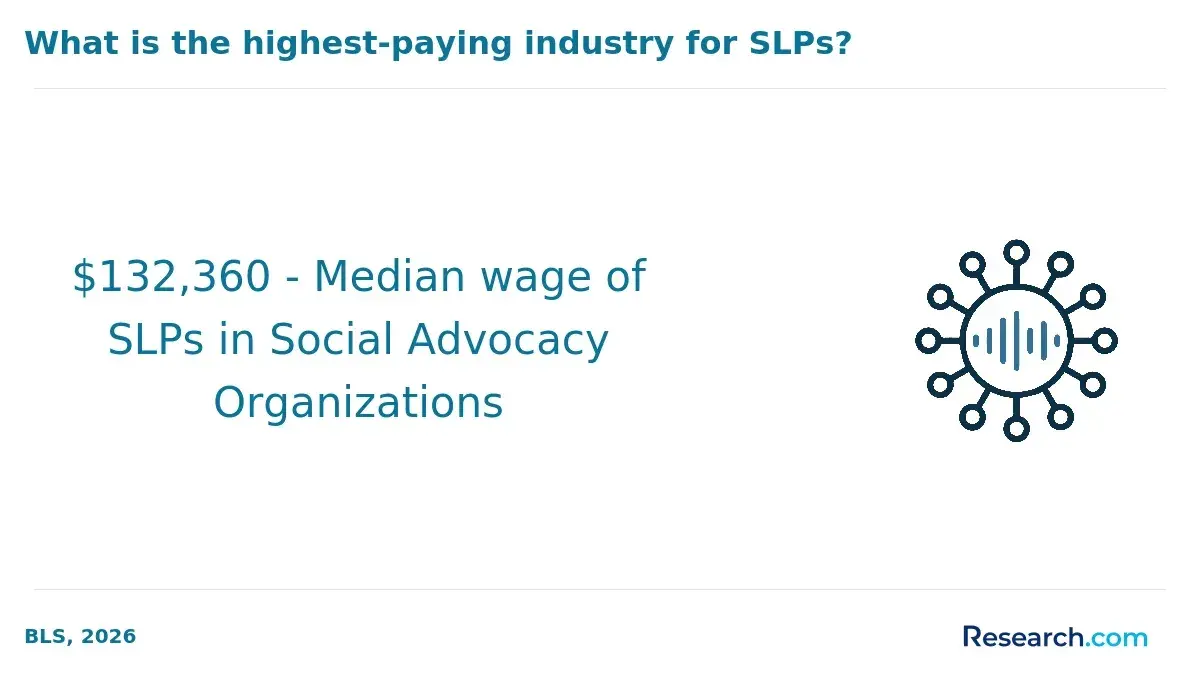
Applicants interested in compensation should compare setting, schedule, supervision, benefits, and caseload alongside pay. Reviewing the highest paying SLP jobs can clarify how medical specialization, leadership, location, and experience may affect earnings, but job titles and compensation vary substantially by employer and region.
What consumer-protection and complaint processes cover Savannah residents in out-of-state online SLP programs?
Savannah residents enrolled in an out-of-state online program should have a clear path for academic, financial, and distance-education complaints. Consumer protection is particularly important when a degree involves professional licensure, clinical placements, substantial tuition, and a multiyear sequence that can be difficult to transfer.
Start with the university's published process. Keep copies of the catalog, enrollment agreement, tuition disclosures, state licensure disclosure, clinical-placement communications, and any written statements about required travel or eligibility. These records make it easier to show what was represented at the time you enrolled.
The appropriate complaint route depends on the issue:
| Concern | Best first step | Possible escalation |
| Grade, clinical evaluation, dismissal, or academic progression | Use the program and university academic grievance process. | Follow the institution's formal appeal route; these matters are generally not handled as state-authorization complaints. |
| Billing, refund, misleading advertising, or failure to provide stated services | Submit a written complaint to the institution with supporting records. | Contact the relevant state consumer protection or postsecondary oversight authority if internal resolution fails. |
| Distance-education authorization issue involving a participating institution | Complete the institution's internal complaint process first. | Use the applicable state authorization reciprocity complaint pathway when the concern falls within its scope. |
| Professional licensure misinformation | Request correction from the program and preserve all disclosures. | Consult the Georgia licensing board directly about requirements and consider the relevant education oversight process. |
NC-SARA participation can provide a route for qualifying distance-education complaints, but it does not resolve every dispute and generally does not replace academic appeals, legal advice, or professional-board determinations. Georgia residents should also recognize that the Georgia Nonpublic Postsecondary Education Commission's jurisdiction may not cover every public or out-of-state institution. Ask the school which agency has oversight for its distance program before enrolling.
Red flags include missing Georgia licensure disclosures, pressure to enroll before receiving a financial-aid offer, vague answers about clinical placement, or a refusal to put eligibility statements in writing. A transparent program should be able to explain its complaint process without hesitation.
How should Savannah applicants compare program outcomes, PRAXIS pass rates, and employment in Georgia?
Outcomes can help separate programs that are merely available from programs that appear to support student progression. The most useful measures are completion rate, Praxis pass rate, employment rate, time period, denominator, and whether the program includes all graduates or only survey respondents. A high percentage without a reporting definition is less useful than a lower figure clearly explained.
Compare outcome disclosures using the same reporting period whenever possible. The table identifies what each number can and cannot tell you:
| Outcome measure | What it can reveal | What to ask before relying on it |
| On-time completion rate | Whether students commonly finish within the planned sequence. | Does "on time" include prerequisite or leveling coursework, leaves of absence, and part-time students? |
| Praxis pass rate | How graduates performed on a national examination during a stated reporting period. | How many test takers were included, which exam administration was used, and was the result a first-attempt or eventual pass rate? |
| Employment rate | Whether graduates reported employment or further education after graduation. | What counts as employment, how long after graduation was it measured, and what was the response rate? |
| Clinical placement outcomes | How well the program manages required experiential education. | How many students experienced delayed placements, and what support is offered when a placement changes? |
| Georgia-specific placement or employment information | Whether the program has experience supporting students in the state. | Can the school describe its Georgia experience without making unsupported promises about a Savannah site? |
Employment data should be interpreted cautiously. A graduate may be employed in a different state, in a fellowship role, part-time, or outside their preferred specialty. Ask whether the school tracks Georgia outcomes, but do not reject a strong national program solely because it does not publish city-level statistics; those datasets are often too small to be meaningful.
Use a consistent decision process when comparing finalists:
- Eliminate any program that cannot document CAA status, Georgia eligibility, and a workable licensure pathway.
- Estimate the full cost, including required travel, clinical expenses, and likely income reduction during practica.
- Compare outcomes using the same cohort years and definitions rather than isolated promotional figures.
- Speak with admissions and clinical education staff separately, because each team can answer different practical questions.
- Choose the program whose requirements you can complete reliably, not simply the one with the fastest advertised timeline.
Which emerging telepractice and rural-service trends matter most for Savannah online SLP graduates?
Telepractice is now a meaningful part of SLP service delivery, especially for follow-up care, school consultation, rural access, and patients who face transportation barriers. It is not a replacement for every in-person evaluation or treatment need, and it does not eliminate licensing responsibilities. In general, clinicians must be authorized where the client is located, while employers and payers may impose additional rules.
For Savannah graduates, telepractice competence can expand the range of roles they can consider across coastal and rural Georgia, but programs should teach more than videoconferencing. Look for training in privacy, remote assessment limits, caregiver coaching, technology troubleshooting, culturally responsive communication, documentation, and determining when an in-person referral is clinically necessary.
Several trends should shape how applicants evaluate an online program:
- Employers increasingly value clinicians who can move appropriately between in-person and virtual care rather than treating telepractice as a separate specialty.
- Rural and underserved communities may benefit from remote access models, but reliable broadband, privacy, supervision, and local referral relationships remain practical constraints.
- Healthcare systems continue to use digital records, remote monitoring tools, and virtual collaboration, making documentation and interprofessional communication important career skills.
- AI-enabled documentation and communication tools may reduce administrative tasks, but they do not replace clinical judgment, ethical decision-making, patient privacy protections, or licensed professional responsibility.
Ask whether telepractice is embedded in coursework and clinical discussion, whether students practice informed-consent and privacy procedures, and whether faculty address state licensure boundaries. A program that treats technology as a clinical tool rather than a shortcut is more likely to prepare graduates for changing service models.
Other Things You Should Know About Speech Language Pathology
Yes, if the program is appropriately CAA-accredited, available to Georgia residents, and supports all required clinical education. "Online" usually describes the academic delivery method; supervised clinical practica remain in person and may require daytime availability or travel.
Length varies by program format, prerequisite completion, and pacing. Applicants with a communication sciences and disorders background may start graduate coursework sooner, while career changers often need additional prerequisite or leveling coursework before or during the master's sequence.
It depends on the school. Some programs place students, while others expect students to help identify sites that the university must approve. Get the policy in writing and ask what happens if no appropriate local placement is available.
Some students work during early coursework, but clinical practica often require weekday hours and substantial preparation. Review a sample schedule for every term, especially clinical semesters, before assuming a full-time job will remain feasible.
References
- MS in Communication Sciences and Disorders https://www.georgiasouthern.edu/degrees/ms-in-communication-sciences-and-disorders
- Online Master's in Speech Pathology Programs: 2026 Guide https://speechpathologymastersprograms.com/
- Best Online Speech Pathology Programs https://www.forbes.com/advisor/education/healthcare/best-speech-pathology-programs-online/
- 2026 Most Affordable Online Speech Pathology Master's... https://www.onlineu.com/most-affordable-colleges/speech-pathology-masters-degrees