2027 Best Online Speech Pathology Master's Programs for Residents of Milwaukee, WI

Co-Founder and Chief Data Scientist

Reviewed by Rhea Paul, PhD
SLP Education & Research Expert
Milwaukee residents can complete much of a speech-language pathology master's degree online, but "online" does not mean location-free. You still need a CAA-accredited program, Wisconsin enrollment authorization, local or approved clinical placements, and a curriculum that supports Wisconsin licensure.
This guide compares strong online options and shows how to verify the details that matter before paying an application fee. It is designed for aspiring SLPs, career changers, and working adults who need a realistic route to professional practice.
Key Things You Should Know
- For Wisconsin practice, prioritize a master's program accredited by ASHA's Council on Academic Accreditation (CAA), then confirm its current Wisconsin professional-licensure disclosure and clinical-placement process in writing.
- Online SLP programs still require substantial supervised clinical education: ASHA certification standards include at least 400 clinical hours, including 375 direct client-contact hours and 25 guided observation hours.
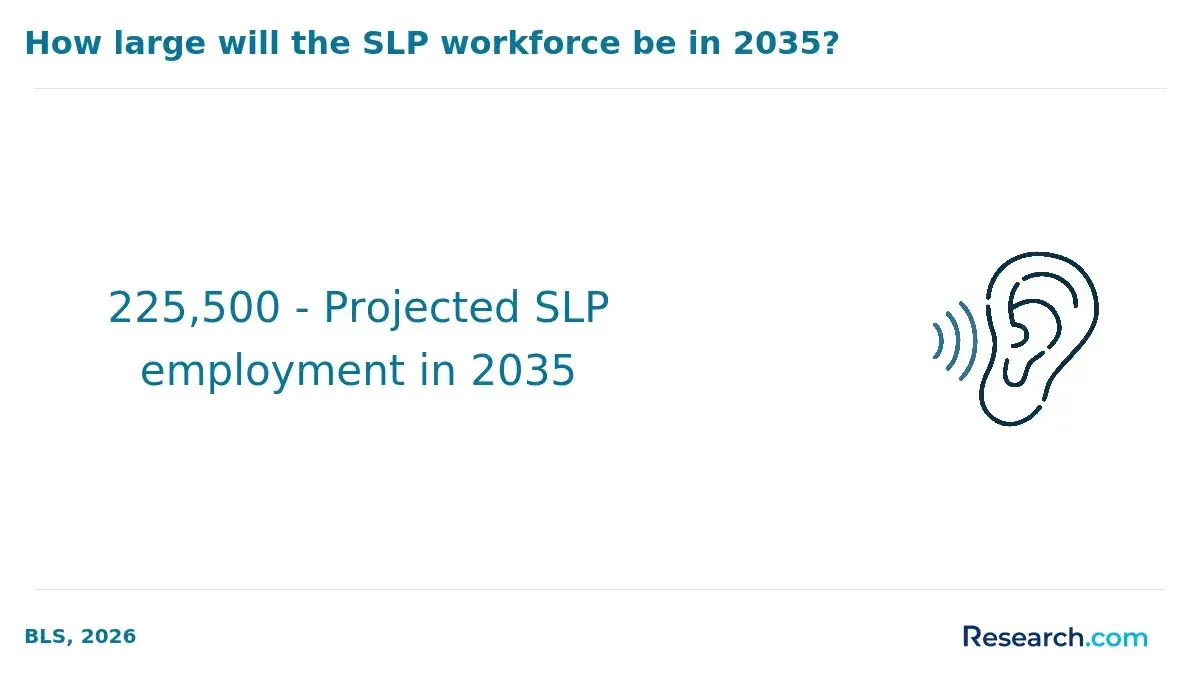
- Speech-language pathology remains a strong-demand field: the U.S. Bureau of Labor Statistics projects 17% employment growth from 2025 to 2035, with about 12,500 annual openings and a May 2025 median annual wage of $97,870.
Which online speech pathology master's programs actually serve Milwaukee residents without relocation?
Milwaukee applicants should treat program availability as a three-part test: the university must accept Wisconsin residents, the program must be CAA accredited, and the clinical education team must be able to arrange or approve placements that satisfy program and Wisconsin requirements. A school may be fully online academically while requiring campus immersions, assigned placements outside Milwaukee, or travel during clinical terms.
The programs below are established online or distance-oriented MS-SLP options worth investigating for Wisconsin eligibility. Enrollment authorization, placement availability, travel requirements, and tuition can change by cohort, so obtain written confirmation from each program before applying.
| Program | Online delivery considerations | Clinical-placement approach | Best fit |
| Emerson College | Online coursework with required in-person immersion experiences; full-time and part-time pacing may be available. | Clinical placement staff coordinate required experiences, but local placement is not guaranteed. | Applicants seeking a mature online program and structured placement support. |
| Baylor University | Online academic coursework with required on-campus immersion experiences. | Program-supported clinical placement process; students should ask whether Wisconsin sites are currently feasible. | Students comfortable with an intensive cohort model and travel to required immersions. |
| New York University | Online course delivery with in-person clinical training and required immersion components. | Clinical education team arranges placements subject to site capacity and program requirements. | Applicants who value a large university structure and can plan for travel and placement variability. |
| University of Cincinnati | Distance-oriented graduate study with program-specific synchronous, practicum, and residency expectations. | Clinical requirements are completed in approved settings; confirm Wisconsin placement availability before enrollment. | Applicants who want to compare a public-university option with private online programs. |
| Calvin University | Online coursework paired with required in-person clinical and residency components. | Students complete supervised practicum experiences in approved clinical settings. | Applicants seeking a cohort-based program and willing to travel when required. |
None of these options should be described as "no-relocation required" until the program confirms that it can support your individual placement plan. Clinical sites, supervisors, pediatric and medical placement capacity, and a student's prior experience can all affect location and travel.
For a wider starting list, review online master's speech pathology options, then narrow the list using Wisconsin eligibility and total travel burden rather than brand name alone. A practical first-contact email should ask: "Are Wisconsin residents eligible for the next cohort; does the program's curriculum meet Wisconsin SLP licensure educational requirements; how are Wisconsin clinical placements secured; and what travel is mandatory?" Ask for the response in writing and save it with your enrollment records.
Which Milwaukee-eligible online speech pathology programs meet Wisconsin licensure requirements?
No school can award a Wisconsin license. A university provides the qualifying education and supervised clinical preparation; the Wisconsin Department of Safety and Professional Services decides whether an applicant meets licensure requirements. For school-based employment, applicants may also need to meet Wisconsin Department of Public Instruction credential requirements.
The safest route is a CAA-accredited master's program that explicitly states it is designed to meet educational requirements for Wisconsin SLP licensure or confirms that conclusion after reviewing its curriculum. Do not rely on a general statement that a program "prepares students for licensure nationwide."
This comparison separates the main credentials that are often confused during program selection.
| Requirement or credential | Why it matters to a Milwaukee applicant | Who verifies it |
| CAA-accredited graduate program | Provides the strongest educational foundation for ASHA certification and is commonly central to state licensure eligibility. | CAA and the university |
| Wisconsin SLP license | Generally needed to practice as a speech-language pathologist in Wisconsin. | Wisconsin Department of Safety and Professional Services |
| ASHA Certificate of Clinical Competence in Speech-Language Pathology | Often preferred by employers and may support portability, but it is not a substitute for a state license. | ASHA |
| Wisconsin school credential | May be needed for public-school employment in addition to professional licensure requirements. | Wisconsin Department of Public Instruction |
Before choosing a program, compare the school's Wisconsin disclosure against your goal. A future medical SLP, school-based clinician, telepractice provider, and applicant seeking licensure in multiple states may face different employer and credentialing expectations. If a disclosure is unclear, ask the institution whether it has determined that the program meets Wisconsin educational requirements and whether any additional coursework is anticipated.
A common mistake is assuming that passing the Praxis examination alone creates licensure eligibility. Praxis is an important examination requirement for many pathways, but degree accreditation, supervised clinical education, post-graduate experience, application documentation, and state-specific rules also matter.
Which online speech pathology master's programs accept Milwaukee applicants for ASHA-accredited degrees?
Programs should be evaluated by their current CAA status, not by a university's general institutional reputation. CAA accreditation applies to the specific graduate speech-language pathology program. A school may hold regional or institutional accreditation while a particular SLP program has a different CAA status or is not accepting students from every state.
For Milwaukee applicants, Emerson College, Baylor University, New York University, the University of Cincinnati, and Calvin University are reasonable programs to screen because they offer distance-oriented graduate SLP pathways and maintain CAA program status. However, CAA status and Wisconsin enrollment availability should be rechecked in ASHA EdFind and with each admissions office for the exact entering term.
The distinction below helps applicants interpret program language accurately.
| Status or term | What it means for an applicant | Decision implication |
| CAA accredited | The program has been reviewed and holds CAA accreditation. | Usually the clearest choice for students seeking ASHA certification and Wisconsin licensure preparation. |
| CAA candidacy | A newer program is progressing through CAA's accreditation process. | Read the effective dates and graduate-eligibility language carefully before enrolling. |
| Institutionally accredited | The university meets institutional quality standards. | Important, but it does not by itself establish SLP professional accreditation. |
| Licensure-aligned curriculum | The institution states that its curriculum is intended to meet educational requirements in a state. | Useful evidence, but confirm it is specific to Wisconsin and your planned credential. |
CAA accreditation does not eliminate admissions competition. Programs commonly evaluate prerequisite preparation, GPA, writing, recommendations, observation or exposure to the profession, interviews where used, and fit with the cohort model. Admission requirements vary materially, especially for students whose bachelor's degree is outside communication sciences and disorders.
How can Milwaukee residents verify institutional and CAA programmatic accreditation for online SLP degrees?
Verification should take less than an hour and can prevent an expensive error. Start with ASHA EdFind or the CAA directory to verify the precise program name, degree, delivery location or modality, accreditation status, and next review information. Then review the university catalog and the program's official accreditation page.
Use this sequence before submitting a deposit:
- Find the exact master's program in the CAA directory and confirm its current status.
- Match the directory listing to the degree title and delivery format offered to your cohort.
- Review the university's institutional accreditation statement and graduate catalog.
- Read the program's Wisconsin professional-licensure disclosure, including any limitations or "not determined" language.
- Ask admissions to confirm in writing that Wisconsin residents may enroll and complete required placements.
- Save the webpages, emails, tuition sheet, and clinical-placement policy dated at the time of your decision.
Do not confuse "ASHA aligned," "ASHA standards," or "prepares students for certification" with CAA accreditation. Those phrases may describe curriculum goals, but they are not the same as an accredited graduate program. Also confirm the expected graduation date falls within the program's applicable accreditation or candidacy terms.
One red flag is a school that will discuss admissions but will not clearly identify its CAA status, Wisconsin licensure determination, or clinical education model. A legitimate program should be able to direct prospective students to formal disclosures and identify the office responsible for questions.
What state authorization and SARA rules govern Milwaukee enrollment in out-of-state online SLP programs?
Wisconsin participates in the State Authorization Reciprocity Agreement (SARA). In general, SARA allows participating institutions in other member states to offer distance education to Wisconsin residents without seeking separate authorization in every member state. It can make enrollment administratively easier, but it does not guarantee that an SLP program meets Wisconsin licensing rules or that a clinical site will accept a student.
SARA and professional licensure address different questions. The table shows why both must be checked.
| Question | What it addresses | What Milwaukee applicants should do |
| Is the institution authorized to enroll Wisconsin distance students? | State authorization and institutional eligibility. | Confirm with the university's compliance or admissions office. |
| Is the university a SARA-participating institution? | Its ability to use interstate distance-education reciprocity where applicable. | Verify current participation through the institution and its home-state portal. |
| Does the curriculum meet Wisconsin educational licensure requirements? | Professional licensing alignment. | Read the Wisconsin-specific disclosure and confirm with the Wisconsin licensing authority when needed. |
| Can required practicum be completed in Wisconsin? | Clinical-site and supervision feasibility. | Obtain the program's placement policy and ask about your geographic area. |
Federal consumer-information rules also require institutions to make professional-licensure disclosures for programs designed to lead to licensure. A "not determined" disclosure is not automatically disqualifying, but it shifts more risk to the applicant. In that situation, ask the school for a curriculum crosswalk and independently verify the plan with Wisconsin regulators before committing.
Do not assume an employer will resolve a licensing mismatch after graduation. Hospitals, schools, rehabilitation providers, and telepractice employers typically expect applicants to meet state credentialing requirements before or shortly after hire.
Which online speech pathology programs provide required clinical placements near Milwaukee or across Wisconsin?
Online SLP programs generally combine remote academic instruction with in-person practicum, externship, or clinical placement experiences. The program, not the student alone, must ensure that each placement meets its academic and supervision standards. Still, "program-assisted placement" is not the same as a promise of a site in Milwaukee, a preferred specialty, or a commute you consider manageable.
When comparing Emerson, Baylor, NYU, Cincinnati, Calvin, or another distance option, ask the clinical education office the same questions. The answers will reveal more than a general statement that placements are "available nationwide."
- Does the program place students in Wisconsin now, and has it placed students in the Milwaukee metropolitan area recently?
- Who contacts sites, negotiates affiliation agreements, and finds a replacement if a site falls through?
- Can I suggest a site or supervisor, and does that suggestion create any responsibility for me to secure the placement?
- How far may I be required to travel, and can a placement require temporary housing or out-of-state travel?
- What populations and settings are required, such as schools, hospitals, outpatient clinics, early intervention, or adult rehabilitation?
- What are the expected weekly hours, and can clinical terms be completed while maintaining full-time employment?
- Who pays for background checks, drug screening, immunizations, liability coverage, parking, transportation, and any extra travel?
A strong fit for a working Milwaukee resident is a program that provides a written placement process, clearly states student responsibilities, gives realistic travel expectations, and discusses contingency planning. A weaker fit is one that relies heavily on students to locate sites without explaining affiliation timelines or geographic limitations.
Clinical availability can fluctuate because health systems and school districts must balance patient needs, supervisor capacity, affiliation agreements, and existing student commitments. Apply early, be flexible about specialty preference, and maintain a financial reserve for commuting or short-term travel.
How do Milwaukee-accessible online SLP programs compare on outcomes, Praxis pass rates, and employment?
Outcome data are useful only when compared carefully. CAA programs publish student outcome information that commonly includes program completion, Praxis examination pass rates, and employment rates for defined reporting periods. Compare the reporting years, cohort sizes, definitions, and number of graduates before deciding that one program is stronger than another.
The following measures are the most decision-relevant because they connect a program's claims to its ability to move students toward professional practice.
| Measure | What it can tell you | How to use it wisely |
| On-time program completion | Whether students generally finish within the published time frame. | Ask whether the figure includes students delayed by placement availability, leaves, or academic remediation. |
| Praxis pass rate | How program completers performed on the professional examination. | Check the reporting period and denominator; it does not measure all clinical or licensing requirements. |
| Employment rate | Whether graduates reported employment in the field or pursuit of further education after graduation. | Ask how employment is defined and whether the jobs were in Wisconsin, schools, health care, or other settings. |
| Attrition and transfer information | Whether students leave or change programs before completion. | Use it to ask better questions about workload, advising, prerequisites, and placement support. |
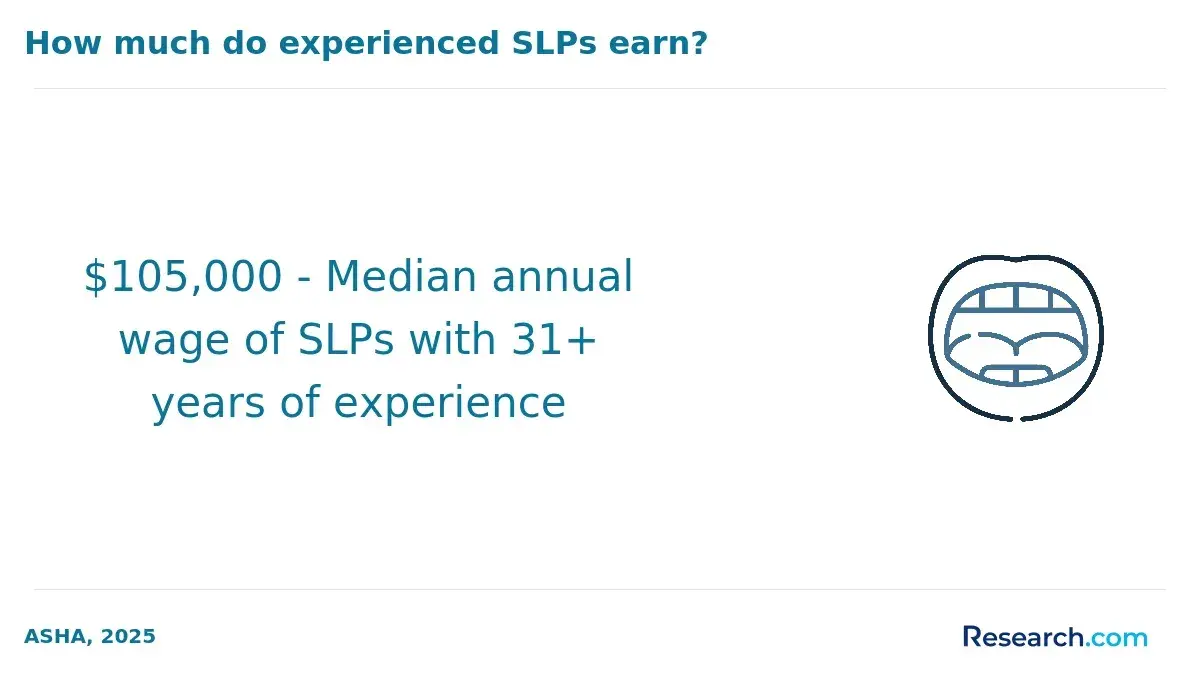
National labor-market conditions support careful investment in the field, not automatic enrollment in any program. The Bureau of Labor Statistics reports a May 2025 median annual wage of $97,870 for speech-language pathologists and projects 17% employment growth from 2025 to 2035. Actual pay varies by setting, experience, schedule, payer mix, and local employer; explore roles and medical SLP salary context before using compensation to estimate repayment capacity.
Ask each program for its current CAA outcome-disclosure page and compare only like periods. A small cohort can produce a high percentage from a small number of test takers, while a larger cohort may offer a broader but not necessarily better picture. Employment outcomes should inform your choice alongside placement support, Wisconsin alignment, total cost, and required travel.
What are typical tuition, fees, and funding options for Milwaukee students in online SLP programs?
The total cost of an online SLP master's degree is more than advertised tuition. Private programs may charge a uniform online rate, while public universities may use resident, nonresident, distance-learning, or cohort pricing. Because required credits, fees, and clinical-travel expectations differ, comparing a single per-credit figure can be misleading.
Request an itemized estimate covering the full published program, not just the first term. This cost framework identifies the expenses that most often change the final bill.
| Cost category | Why it matters | What to request |
| Tuition for all required credits | Credits and rates may differ by term or cohort. | A written estimate based on your planned start term and pace. |
| Mandatory university and program fees | Technology, clinical, graduation, and enrollment fees may not appear in headline tuition. | A complete fee schedule and notice of expected increases. |
| Immersion and residency travel | Airfare, lodging, meals, local transportation, and time away from work can be substantial. | Required locations, number of visits, length, and typical timing. |
| Clinical compliance expenses | Background checks, immunizations, health insurance, testing, liability coverage, and parking are common. | A clinical-readiness checklist with estimated student-paid costs. |
| Placement travel or temporary housing | A distant placement can materially change affordability. | The program's geographic-placement policy and contingency expectations. |
Funding may include federal Direct Unsubsidized Loans, Graduate PLUS Loans, employer tuition assistance, institutional scholarships, external scholarships, military or veteran education benefits where eligible, and limited work opportunities. File the FAFSA early and ask whether scholarships are renewable, whether awards apply to online cohorts, and whether a reduced course load affects aid eligibility.
Accelerated study can reduce the time you remain enrolled, but it can also limit paid-work capacity and concentrate travel expenses. Compare pacing options with accelerated speech pathology programs online only after confirming that an accelerated schedule still supports your finances, clinical availability, and learning needs.
A frequent mistake is selecting the lowest tuition rate while ignoring placement travel and lost work hours. Build a term-by-term cash-flow plan that includes tuition, living costs, travel, and a contingency amount for clinical requirements.
How should Milwaukee residents evaluate program disclosures, consumer protections, and complaint pathways?
Read disclosures as decision documents, not fine print. The most important documents are the university catalog, enrollment agreement, refund policy, clinical-placement policy, professional-licensure disclosure, student complaint policy, and CAA outcome data. Save copies because online pages can change after you enroll.
Before accepting an offer, review these issues with an admissions or compliance representative:
- Whether the university has determined that the program meets Wisconsin educational requirements for SLP licensure and whether the determination applies to your delivery format.
- Whether Wisconsin residents are eligible for the specific start term and whether any future state-authorization changes could affect continued enrollment.
- Which costs are mandatory, which can change, and what happens financially if a clinical placement is delayed.
- Whether students are guaranteed placement support, responsible for finding sites, or expected to accept placements outside their preferred region.
- What refund, withdrawal, leave-of-absence, remediation, dismissal, and teach-out policies apply to the cohort.
- How to file an academic, financial, discrimination, accessibility, or distance-education complaint internally and externally.
Start complaints with the university office identified in its policy and keep dated records of emails, invoices, enrollment documents, and responses. If the concern remains unresolved, the appropriate pathway may involve the institution's home-state authorization agency, Wisconsin's relevant higher-education or consumer-protection office, a SARA portal where applicable, or CAA for accreditation-related concerns. These pathways handle different issues, so describe the problem precisely.
Red flags include vague licensure language, no named office for compliance questions, pressure to enroll before clinical details are available, inconsistent tuition information, or a promise that a student will "definitely" receive a preferred placement. In professional programs, careful documentation is a consumer protection tool.
What application timelines and prerequisite strategies work best for Milwaukee applicants to online SLP programs?
Most applicants benefit from starting 12 to 18 months before the intended term, especially if they need communication sciences and disorders prerequisites, observation hours, letters of recommendation, or financial planning. Cohort programs can have early deadlines and limited seats; applying late may reduce both admissions and clinical-planning flexibility.
Use this planning sequence to avoid the most common avoidable delays:
- Identify your intended start term and create a spreadsheet of deadlines, Wisconsin eligibility, CAA status, tuition, travel, and clinical-placement rules.
- Order transcripts early and have each school evaluate whether you need foundational courses in phonetics, anatomy and physiology, language development, speech science, audiology, statistics, or related subjects.
- Complete prerequisites through an approved route that each target program accepts; do not assume one school's leveling coursework transfers everywhere.
- Build relevant exposure through observation, employment, volunteering, or informational conversations while following privacy and facility requirements.
- Request recommendations well before deadlines from people who can assess your academic readiness, communication, reliability, and ability to work with diverse clients.
- Prepare a focused statement explaining your career goal, understanding of clinical training, and ability to manage online coursework plus in-person practicum.
- Submit financial-aid materials early and compare written aid offers against the full cost estimate, not tuition alone.
Career changers should not rush into the first program that waives prerequisites or offers a fast timeline. Leveling courses are valuable when they prepare you for graduate clinical science and make you competitive across several programs. Applicants who already hold a communication sciences and disorders degree may need fewer foundational courses but should still verify each school's exact prerequisites.
Combined undergraduate-and-graduate pathways can be efficient for students still early in college, but they are usually not the solution for someone who already has a bachelor's degree in another field. If you are evaluating that route, compare 5-year accelerated speech pathology programs with traditional master's pathways and confirm whether their clinical and residency structure works for a Wisconsin resident.
Do not confuse an easier application with an easier degree. The right program is one you can complete while meeting clinical, travel, financial, and licensure requirements - not simply the one with the nearest deadline or fewest application materials.
Other Things You Should Know About Speech Language Pathology
Yes, but you will usually need prerequisite communication sciences and disorders coursework before or alongside admission to a qualifying master's program. Each graduate program decides which courses it accepts, so obtain a transcript review before enrolling in leveling classes.
Many do. Required immersions, skills intensives, orientations, or residency experiences are common even when academic courses are online. Ask for the number, location, duration, and approximate timing of required visits before applying.
It may be possible during some academic terms, particularly in part-time formats, but clinical placements often require daytime weekday hours and can resemble full-time commitments. Evaluate the clinical schedule rather than judging flexibility only by online course delivery.
No. ASHA certification can support professional mobility and employer recognition, but each state controls its own license. If you may move after graduation or provide telepractice across state lines, review the destination state's requirements before selecting a program.
References
- Speech-Language Pathology | PennWest Global Online https://online.pennwest.edu/programs/speech-language-pathology-grad/index.php
- Communication Sciences and Disorders, MS - UWM Catalog https://catalog.uwm.edu/health-professions-sciences/rehabilitation-sciences-technology/communication-sciences-disorders-ms/
- Online Master's in Speech Pathology Programs: 2026 Guide https://speechpathologymastersprograms.com/
- Best Speech-Language Pathology Programs in America https://www.usnews.com/best-graduate-schools/top-health-schools/pathology-rankings
- Wisconsin Speech Pathology Degrees, Online MSLP Included https://www.speechpathologydegrees.com/st/wisconsin
- Masters SLP programs - preferably online: r/slpGradSchool https://www.reddit.com/r/slpGradSchool/comments/s5p0p0/masters_slp_programs_preferably_online/
- Fully online speech language pathology masters programs? https://www.facebook.com/groups/123939594310021/posts/26153063910970900/