2027 Shortest Online Public Policy Degree Master's Programs That Pay Well: Cost, Time to Completion, and Salary Outlook

Co-Founder and Chief Data Scientist
Choosing an online public policy master’s program is often a trade-off between speed, cost, academic depth, and career payoff. Accelerated programs can help working professionals move into policy analysis, government affairs, consulting, nonprofit leadership, or public-sector management faster, but the shortest option is not automatically the best option. Students need to compare completion time, credit load, tuition structure, specialization options, and whether the curriculum supports their target role.
This guide focuses on the shortest online public policy master’s programs and what to check before enrolling. It explains typical program lengths, credit requirements, curriculum formats, tuition ranges, extra fees, financial aid options, job paths, and salary considerations. It is designed for professionals who want a practical, decision-ready overview before committing time and money to a fast-track graduate degree.
Key Benefits of the Shortest Online Public Policy Degree Master's Programs That Pay Well
- Shortest online public policy master's programs allow completion in as little as 12 to 18 months, enabling faster entry or advancement in competitive job markets.
- Accelerated programs often reduce tuition costs by limiting semesters, offering a more cost-efficient path compared to traditional two-year degrees.
- Graduates benefit from strong salary growth, with median early-career earnings rising by 15% to 25% within five years of program completion in policy-related roles.
What Are the Shortest Online Public Policy Master's Programs Available Today?
The shortest online public policy master’s programs are typically accelerated degrees that can be completed in 12 to 18 months. These programs are built for students who want graduate-level policy training without spending several years in school. They usually compress coursework into shorter terms, offer year-round enrollment, and reduce long breaks between classes.
These formats can work well for career-focused students, but they require careful planning. A 12-month program may be efficient for someone who can study full time, while an 18-month option may be more realistic for a working professional with family or job responsibilities.
| Program format | Typical completion time | Best fit | Key trade-off |
| Full-time accelerated | About 12 months | Students who can prioritize school heavily for one year | Fastest path, but the weekly workload can be demanding |
| Part-time accelerated | Around 15 months | Working professionals who want speed with some flexibility | More manageable than full-time study, but still faster than a standard part-time plan |
| Hybrid accelerated | About 18 months | Students who want online convenience with some scheduled interaction | May include synchronous sessions or limited in-person expectations |
When comparing accelerated public policy programs, look beyond the advertised completion time. Confirm how many courses you must take at once, whether courses are offered every term, whether the capstone can be completed online, and whether the program allows a slower pace if your schedule changes.
Students comparing accelerated graduate options in related fields may also want to review cheapest 1 year online MBA programs, especially if their career goals include public management, consulting, or organizational leadership.
How Many Credits Are Required for the Shortest Online Public Policy Master's Programs?
The shortest online public policy master’s programs commonly require 30-36 credits. This lighter credit structure is one reason many accelerated programs can be completed in 12 to 18 months. By comparison, traditional programs may require 40 or more credits, which can extend both time in school and total tuition cost.
A lower credit requirement does not necessarily mean a weaker degree. Strong accelerated programs focus the curriculum on core policy competencies: policy analysis, economics, statistics, research methods, public management, ethics, and applied decision-making. The main difference is that students usually have fewer electives and less room to explore unrelated topics.
- Total credit range: Most accelerated programs require 30-36 credits, helping students shorten the time to graduation while still completing graduate-level policy training.
- Core requirements: The curriculum is usually built around policy analysis, economics, quantitative methods, governance, and public-sector decision-making.
- Electives: Shorter programs often limit electives, so students should confirm that available courses match their career goals before enrolling.
- Capstone or thesis: Many accelerated programs use an applied capstone instead of a traditional thesis, or they integrate the final project into the last term to avoid extending the program.
- Course delivery: Online programs may use shorter terms and continuous enrollment, allowing students to complete credits more quickly than in a traditional semester calendar.
Before applying, ask for a term-by-term degree plan. This shows whether the 12- to 18-month timeline is realistic for your schedule. It also helps you identify heavy terms, prerequisite sequences, and any courses that are offered only once per year.
Students researching affordable advanced degrees in other fields can compare these requirements with cheapest online doctoral programs to understand how credit load affects cost and completion time at different graduate levels.
Are There Specializations Available in the Shortest Online Public Policy Master's Programs?
Yes, some of the shortest online public policy master’s programs offer specializations, but options may be more limited than in longer programs. About 65% of online master’s programs still offer concentrations, which can help students align the degree with a specific policy sector or career path.
In an accelerated program, the best specialization is one that supports a clear professional goal. Students should avoid choosing a concentration only because it sounds interesting. The limited number of electives means each course should strengthen the skills, sector knowledge, or portfolio needed for the next role.
- Health Policy: Focuses on healthcare systems, policy development, and public health management. This path can support roles in government health departments, healthcare organizations, and policy-focused nonprofits.
- Environmental Policy: Covers sustainability, resource management, climate change strategies, and regulatory issues. It can be useful for students targeting environmental agencies, advocacy organizations, or sustainability-focused roles.
- Urban and Regional Planning: Examines land use, infrastructure, community development, and local governance. It can support work with municipal governments, planning agencies, or consulting organizations.
- Nonprofit Management: Emphasizes leadership, fundraising, program evaluation, budgeting, and mission-driven strategy. It is often relevant for students pursuing management roles in the social sector.
When evaluating a specialization, review the actual course list rather than relying on the concentration title. A strong accelerated concentration should include applied projects, current policy problems, and skills that translate directly to the workplace, such as data analysis, budgeting, stakeholder communication, or program evaluation.
What Is the Typical Curriculum Structure of the Shortest Public Policy Master's Programs?
The shortest public policy master’s programs usually compress the curriculum into 12 to 18 months through year-round scheduling, shorter academic terms, and a carefully sequenced course plan. Many programs include three to four terms per year, with students taking two to three courses each term.
The curriculum is usually practical and skills-focused. Instead of spreading requirements across several years, accelerated programs place the most important analytical, management, and communication courses early so students can apply them in later electives and the capstone.
- Core courses: These typically include policy analysis, economics, statistics, research methods, governance, public administration, ethics, and decision-making. These courses build the foundation for evaluating public problems and recommending evidence-based solutions.
- Electives: Electives allow students to focus on areas such as health policy, environmental policy, urban development, nonprofit management, budgeting, or public leadership. In shorter programs, elective choice may be limited, so alignment matters.
- Capstone project: The capstone is often completed in the final term and may involve a real-world policy issue, data analysis, implementation plan, or client-based project. It gives students a work sample they can discuss in interviews.
- Term sequencing: Core courses usually come first, followed by electives and the capstone. Minimal breaks help students maintain momentum, but they also make time management essential.
Students should ask whether courses are asynchronous, synchronous, or mixed. Asynchronous classes offer more schedule flexibility, while synchronous sessions may provide stronger peer and faculty interaction. Neither format is automatically better; the right choice depends on work schedule, learning style, and availability for live discussions.
What Is the Average Tuition Cost for the Shortest Online Public Policy Master's Programs?
The total tuition cost for the shortest online public policy master’s programs generally falls between $20,000 and $35,000, with an average total tuition of about $28,000. Accelerated programs may cost less overall than longer two-year options because students spend fewer terms enrolled, but the payment schedule can feel more intense because credits are packed into a shorter period.
Cost comparisons should focus on total program cost, not only tuition per credit or tuition per term. A program with a lower per-credit rate may still cost more if it requires more credits, while a faster program may require larger payments over fewer billing periods.
| Cost item | Typical amount or pattern | Why it matters |
| Average total tuition | $20,000 to $35,000 | Shows the main cost of completing the degree |
| Average fast-track tuition | About $28,000 | Useful benchmark when comparing accelerated options |
| Tuition per term | Usually between $5,000 and $10,000 | Helps students plan cash flow during a compressed schedule |
| Additional program fees | Several hundred to a few thousand dollars | Can change the true cost of attendance beyond tuition |
Before enrolling, request a full cost breakdown from the school. Ask whether tuition is charged by credit, term, or program; whether online students pay separate technology fees; and whether tuition is locked for the full program. Also confirm whether financial aid disbursement timing matches the accelerated calendar.
Students comparing online degree costs in other fields may find additional context in this guide to can you get an engineering degree online.
Do the Shortest Online Public Policy Master's Programs Charge Out-of-State Tuition?
Many online public policy master’s programs do not charge a higher out-of-state tuition rate, but policies vary by institution. Unlike on-campus programs, online degrees often use a single tuition rate for all distance learners. A 2023 study by the Online Learning Consortium found that nearly 70% of online graduate programs across the U.S. use this standardized pricing model.
Even so, students should verify residency rules before applying. Some public universities maintain different tuition categories, and some programs may add fees if the degree includes campus-based sessions, internships, residencies, or other location-specific requirements.
- Tuition parity: Many schools charge the same tuition to online students regardless of state residency, which can make a public university affordable for nonresidents.
- Residency exceptions: Some programs still require proof of state residency for lower rates or apply different charges when on-campus components are involved.
- Program-specific fees: Technology, library, advising, or student service fees may apply separately from tuition and may vary by program format.
- Additional costs: Textbooks, software, proctoring, optional residencies, travel, or internship-related expenses can affect total affordability even when tuition is the same for all online students.
The safest approach is to ask the admissions or bursar’s office for a written estimate of total program cost based on your residency status and enrollment pace. This helps prevent surprises after you have already committed to the program.
What Additional Fees Are Associated With the Shortest Online Public Policy Master's Programs?
Additional fees can make a fast online public policy master’s program more expensive than the tuition page suggests. These charges may be small individually, but they can add up across several accelerated terms. Students should review the full cost of attendance, not just advertised tuition.
- Technology fee: Supports online learning platforms, software systems, technical support, and digital classroom tools. This fee is common in fully online programs.
- Library or resource fee: Covers access to digital databases, journals, research tools, and academic materials used for coursework and capstone projects.
- Application fee: A one-time admissions charge paid before enrollment. It is usually nonrefundable, so applicants should confirm program fit before applying broadly.
- Student services fee: Funds advising, career services, tutoring, online student support, and other administrative services.
- Graduation or diploma fee: Charged near program completion to cover degree processing, diploma production, or ceremony-related administration.
Other possible costs include textbooks, software licenses, transcript fees, proctoring fees, background checks for internship placements, and travel for optional or required in-person activities. These expenses are not always included in tuition estimates.
When comparing programs, create a simple budget that includes tuition, mandatory fees, books, technology, and any travel. This gives a clearer picture of affordability than tuition alone. Students considering related graduate programs can also compare cost structures with online educational leadership programs.
What Financial Aid Options Are Available for the Shortest Online Public Policy Master's Programs?
Financial aid can make accelerated online public policy master’s programs more manageable, but students need to plan early because shorter timelines compress payment deadlines. Recent data shows that nearly 75% of online graduate students receive some form of financial assistance.
Most students use a combination of loans, scholarships, employer benefits, payment plans, and institutional aid. The best funding strategy minimizes debt while keeping the program schedule realistic.
- Federal loans: Eligible graduate students may use federal loans to cover tuition and approved educational expenses. Borrowers should compare repayment terms carefully and avoid borrowing more than needed.
- Scholarships and grants: Universities, professional associations, nonprofits, and external organizations may offer merit-based or need-based awards that do not require repayment.
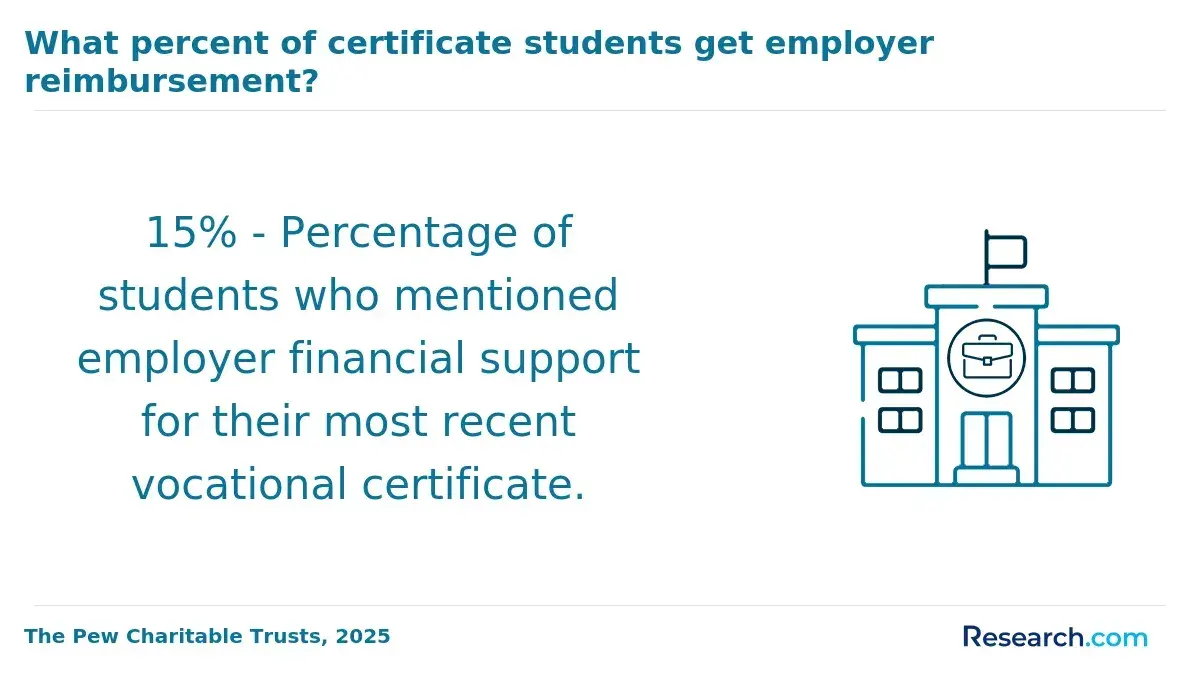
- Employer tuition assistance: Some employers reimburse tuition or pay part of the cost for job-related graduate study. Students should confirm annual limits, grade requirements, service commitments, and reimbursement timing.
- Institutional aid: Schools may offer internal scholarships, fellowships, discounts, or payment plans that spread costs across the program.
Before enrolling, students should complete required aid forms, ask the school how aid is disbursed in accelerated terms, and confirm whether dropping below a certain credit load affects eligibility. Employer-sponsored students should also check whether the program’s condensed schedule fits reimbursement rules.
What Job Opportunities Open Up with an Online Public Policy Master's Degree?
An online public policy master’s degree can support advancement in government, consulting, nonprofit organizations, advocacy groups, healthcare organizations, research centers, and private companies that work with regulation or public-sector strategy. The U.S. Bureau of Labor Statistics projects an 11% growth from 2021 to 2031 in employment for management, scientific, and technical consulting services, which includes many roles relevant to policy graduates.
The degree is most valuable when paired with strong analytical skills, writing ability, data interpretation, budgeting knowledge, and experience working with stakeholders. Graduates from accelerated programs should be ready to explain not only that they earned the degree quickly, but also what practical policy problems they learned to solve.
- Policy Analyst: Evaluates public problems, analyzes data, reviews legislation or regulations, and recommends policy options for agencies, think tanks, advocacy organizations, or research groups.
- Government Affairs Manager: Tracks legislation, develops advocacy strategies, prepares policy briefs, and manages relationships between organizations and policymakers.
- Program Manager for Nonprofits: Oversees grant-funded initiatives, manages budgets and outcomes, evaluates program impact, and ensures services align with community needs and policy goals.
- Urban and Regional Planner: Works on land use, transportation, housing, infrastructure, and community development while considering environmental, economic, and social effects.
- Consultant in Public Sector or Healthcare: Advises agencies, healthcare organizations, or contractors on compliance, operations, strategy, performance improvement, and policy implementation.
Students should choose electives, internships, capstones, and networking opportunities based on the role they want after graduation. A public policy degree can be broad, so career focus matters. Those comparing adjacent human-services career paths may also explore marriage and family therapy programs online.
The growing demand for policy expertise reflects the need for professionals who can interpret evidence, communicate trade-offs, manage programs, and help organizations respond to complex public challenges.
What Is the Salary Outlook for Graduates of the Shortest Online Public Policy Master's Programs?
Graduates of accelerated online public policy master’s programs may improve their earning potential by qualifying for more advanced policy, management, consulting, or public-sector leadership roles sooner. For professionals with a public policy master’s degree, the median annual wage typically reaches around $125,000, though actual earnings vary widely by role, employer, location, and experience.
Program speed alone does not determine salary. Employers care more about analytical ability, relevant experience, communication skills, sector knowledge, and evidence of applied work. A short program can be financially valuable when it reduces time out of the workforce, lowers total education costs, and leads to a credible credential aligned with the student’s career path.
- Industry sector: Government agencies, consulting firms, healthcare organizations, nonprofits, and private companies have different compensation structures and budget limits.
- Geographic location: Salaries are often higher in major metropolitan areas, where demand for policy expertise and cost of living may be greater.
- Work experience: Professionals who enter the program with relevant experience often have a stronger salary position after graduation than students making a complete career change.
- Specialization within public policy: Skills in healthcare, environmental regulation, economic development, public finance, or data-driven program evaluation may support stronger compensation depending on employer demand.
- Networking and skills: Quantitative analysis, policy writing, stakeholder communication, and professional connections can influence access to higher-paying roles.
Students evaluating salary return should compare total program cost with realistic job outcomes in their target sector. A lower-cost accelerated program may offer strong value if it provides career support, applied projects, and a curriculum that matches the roles students are pursuing.
What Graduates Say About the Shortest Online Public Policy Degree Master's Programs That Pay Well
- : "Completing the shortest online public policy master's degree was a game-changer for me. The relatively low cost compared to traditional programs made it accessible without sacrificing quality. Plus, finishing the degree in under two years meant I could re-enter the workforce quickly, which directly boosted my salary potential within months. — Bowden"
- : "I've come to appreciate how the length of an online public policy program impacts overall expenses and career momentum. Shorter durations mean less tuition per semester and fewer living costs, which was crucial for my budget. This efficiency helped me accelerate my role shift and, notably, my paycheck grew as a direct result of this streamlined education. — Waylon"
- : "The financial commitment of a public policy master's degree was an important consideration, and I chose one of the shortest online programs to reduce cost and time away from work. This decision paid off because I managed to increase my salary within the first year after graduation without incurring substantial debt. The quick turnaround of the shortest program really enhanced my professional prospects. — Curtis"
Other Things You Should Know About Public Policy Degrees
Many do not require a thesis, but they often require a capstone or final policy project instead. A common 2027 format is a 30- to 36-credit master’s that ends with an applied research paper, portfolio, or practicum, which schools use to show competency without a full dissertation.
The typical course load for completing the shortest online Public Policy master's programs in 2027 involves taking around 9 to 12 credit hours per term. This load allows students to finish within approximately one year while balancing work commitments and academic requirements.
References
- Online Master's in Public Policy (MPP): Find Your Program https://www.publicservicedegrees.org/online-degrees/masters-public-policy-mpp/
- Best Online MPP Programs for 2024 | Master of Public Policy https://www.mastersofpublicadministration.org/online/mpp
- Quickest Online Master of Public Policy (MPP) Programs in 2025 https://publicadministrationpolicy.org/degree/master-of-public-policy/fastest-online-master/
- Online Master’s Degree in Public Policy: A Guide https://careerkarma.com/blog/online-masters-in-public-policy/
- Online Public Policy & Governance Certificates & Short Courses https://teach.com/online-ed/short-courses/online-public-policy-courses/
- What Are the Benefits of a Public Policy Degree? https://www.ivywise.com/ivywise-knowledgebase/what-are-the-benefits-of-a-public-policy-degree/
- Easiest Online Master’s Degree Programs: What's Easiest for You? https://www.onlinemastersdegrees.org/features/easiest-masters-degrees/
- Best Online Master's in Public Policy Degree Programs of 2025 - Intelligent https://www.intelligent.com/best-online-masters-in-public-policy-degree-programs/
- 10 Most Affordable Online Master's In Public Policy | GradSchoolHub https://www.gradschoolhub.com/affordable/online/masters/public-policy/
- Top Public Policy Careers after Earning an MSL https://onlinelaw.pacific.edu/blog/public-policy-careers/