
2027 How to Become a Criminal Psychologist in Massachusetts

Co-Founder and Chief Data Scientist
Becoming a criminal psychologist in Massachusetts is not a quick credential upgrade; it is a long professional pathway that combines psychology, law, clinical training, ethics, and supervised practice. The state offers strong opportunities because of its courts, correctional systems, law enforcement agencies, universities, hospitals, and mental health networks, but independent practice generally requires advanced education and licensure as a psychologist.
This guide is for students, career changers, and psychology graduates who want to understand what it actually takes to work in criminal psychology in Massachusetts. You will learn which degrees make sense, how licensure works, where internships may be available, what employers look for, how salaries compare, and what mistakes to avoid before investing years and tuition into this career path.
Quick Answer: How Do You Become a Criminal Psychologist in Massachusetts?
To become a criminal psychologist in Massachusetts, you typically need a bachelor’s degree, graduate training in psychology or forensic psychology, a doctoral degree for independent psychologist licensure, supervised professional experience, and successful completion of state licensing requirements. Massachusetts requires approximately 3,200 hours of supervised clinical practice, including at least 1,600 hours after the doctorate, along with the Examination for Professional Practice in Psychology (EPPP), a Massachusetts jurisprudence exam, and a background check.
The path is competitive, but it can lead to work in courts, correctional facilities, law enforcement agencies, hospitals, private practice, victim services, research, consulting, and teaching. Criminal psychology is not usually a separate license category; it is more often a specialization within licensed psychology, forensic psychology, clinical psychology, counseling psychology, or related behavioral health work.
Key Points About Becoming a Criminal Psychologist in Massachusetts
- Some criminal psychology-related roles in Massachusetts are projected to grow faster than others, with selected occupations expecting employment growth of up to 22% through 2030.
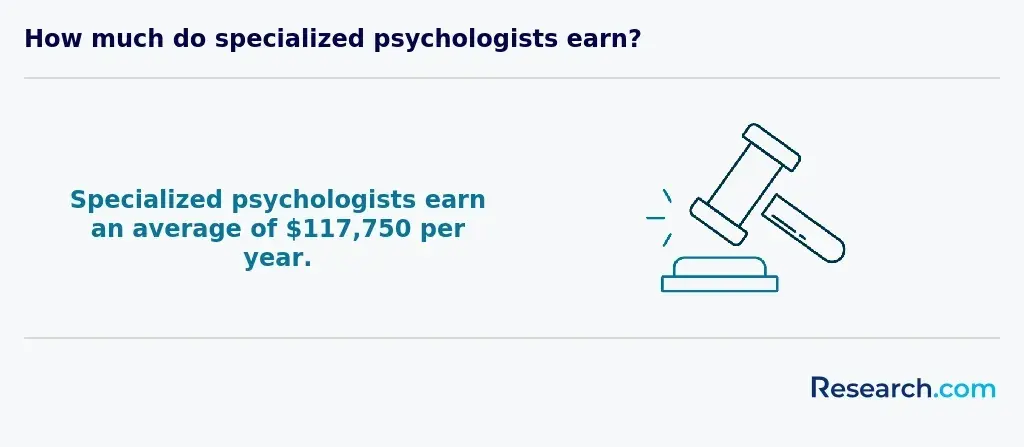
- The average salary for criminal psychologists in Massachusetts is approximately $101,000 per year, but compensation can differ widely by employer, experience, credentials, setting, and location.
- Boston College, Northeastern University, and the University of Massachusetts Amherst are among the schools students often consider because of their psychology, criminal justice, and related academic offerings.
- A strong undergraduate foundation matters, but graduate-level clinical training, supervised experience, research ability, and legal-system knowledge are what usually determine long-term career options.
- Students should verify accreditation, licensure alignment, field placement quality, faculty expertise, and cost before choosing a program.
- Academic requirements for criminal psychologists in Massachusetts
- Recommended undergraduate majors
- How to choose a criminal psychology program
- Massachusetts psychologist licensure steps
- Internship and field experience options
- Job outlook in Massachusetts
- Criminal psychologist salary in Massachusetts
- Common work settings
- Advanced roles and career growth
- How interdisciplinary training can expand opportunities
- How criminal psychologists can move into related specialties
- Professional resources in Massachusetts
- Why accreditation matters for this career path
- Continuing education and certification options
- Legal and ethical issues in criminal psychology
- Telepsychology in criminal psychology practice
- Collaboration with education professionals
- Emerging trends in Massachusetts criminal psychology
- Community engagement and multidisciplinary practice
- Licensing and regulatory standards
- Substance abuse counseling and criminal psychology
What are the academic requirements to become a criminal psychologist in Massachusetts?
The academic route depends on the type of work you want to do. If your goal is independent psychological assessment, expert testimony, clinical treatment, or forensic evaluation, you should plan for doctoral-level training and psychologist licensure. If you want to work in adjacent roles, such as case management, corrections, victim advocacy, probation, research assistance, or behavioral health counseling, a bachelor’s or master’s degree may support entry into related positions.
| Education stage | Purpose | Why it matters for criminal psychology |
| Bachelor’s degree | Builds the foundation in psychology, research methods, statistics, criminal justice, sociology, or related fields. | Helps students understand behavior, crime, courts, social systems, and evidence-based thinking before graduate study. |
| Master’s degree | Can deepen training in psychology, counseling, forensic psychology, or criminal justice. | May improve preparation for doctoral admission or lead to related behavioral health and justice-system roles. Students comparing options can review a forensic psychology major pathway. |
| Doctoral degree | Usually required for psychologist licensure and independent clinical practice. | Provides advanced training in assessment, diagnosis, intervention, ethics, research, and supervised clinical practice. |
| Supervised clinical experience | Massachusetts requires approximately 3,200 hours of supervised clinical practice. | Connects classroom theory with real cases, evaluations, treatment planning, documentation, and professional decision-making. |
| Dissertation or thesis | Demonstrates the ability to complete independent research. | Can help students specialize in topics such as violence risk, offender rehabilitation, trauma, juvenile justice, competency, or recidivism. |
Students should be careful with terminology. “Criminal psychologist” is a career description, not always a separate academic degree or license. Many professionals in this area are licensed psychologists with forensic, clinical, counseling, correctional, or legal-system expertise. That distinction matters because employers, courts, and licensing boards often care more about licensure eligibility, supervised clinical training, and assessment competence than the exact title printed on a diploma.
What undergraduate majors are recommended for aspiring criminal psychologists in Massachusetts?
The best undergraduate major is the one that prepares you for graduate-level psychology training while also giving you exposure to the legal and social systems connected to crime. Psychology is the most direct route, but it is not the only useful option. Criminal justice, sociology, forensic science, social work, and legal studies can also be valuable when paired with the right psychology coursework.
| Major | Best for students who want to... | What to add through electives or experience |
| Psychology | Prepare for graduate study in clinical, counseling, forensic, or applied psychology. | Criminal justice, abnormal psychology, assessment, statistics, research methods, trauma, and ethics. Boston University offers psychology pathways that can support advanced study preparation. |
| Criminal Justice | Understand policing, courts, corrections, crime policy, and legal processes. | Developmental psychology, psychopathology, research methods, counseling skills, and behavioral assessment. Northeastern University is known for criminal justice education and experiential learning connections. |
| Sociology | Study crime, inequality, institutions, deviance, and social behavior. | Psychology prerequisites, statistics, law-related coursework, and fieldwork. The University of Massachusetts Amherst offers sociology programs that can help students examine crime in a broader social context. |
| Forensic Science | Work closer to evidence, investigation, laboratory processes, or crime-scene-related systems. | Psychology courses and legal-system exposure. Students who want a science-heavy route can compare online forensic science programs. |
| Social Work or Human Services | Work with justice-involved clients, victims, families, juveniles, or community programs. | Psychological assessment, criminal law, crisis intervention, trauma-informed care, and research. |
A strong undergraduate plan should include research experience, writing-intensive courses, statistics, internships, and faculty mentorship. Graduate programs often look for evidence that applicants can handle research, ethics, clinical reasoning, and emotionally demanding work. Students should also seek volunteer or internship experience in courts, victim services, community mental health, correctional programs, youth services, or advocacy organizations when possible.
Do not choose a major only because it sounds close to criminal psychology. Instead, ask whether it helps you meet graduate prerequisites, develop research skills, understand human behavior, and gain relevant field exposure. A student who majors in psychology and adds criminal justice coursework may be just as competitive as a criminal justice major who takes enough psychology, statistics, and research courses.
What should students look for in a criminal psychology program in Massachusetts?
A criminal psychology program should be judged by outcomes, not marketing language. The strongest choice is usually a program that aligns with your licensing goal, provides supervised field experience, teaches assessment and ethics thoroughly, and gives you access to faculty or placements connected to forensic, correctional, court, or behavioral health settings.
- Licensure alignment: Confirm whether the degree supports the professional license you eventually want. If you plan to become a licensed psychologist, pay close attention to doctoral training, internship expectations, supervised hours, and state requirements.
- Accreditation: Accreditation can affect transferability, doctoral admission, internship competitiveness, licensure eligibility, and employer confidence. Students considering doctoral clinical training should compare program quality carefully, including options such as APA accredited PHD clinical psychology programs.
- Cost and debt: Massachusetts higher education can be expensive, and private institutions often cost more than public options. Compare total cost, not just tuition.
- Specialization fit: Look for coursework or practica in forensic assessment, violence risk, juvenile justice, trauma, victimology, correctional psychology, substance use, competency, or legal psychology.
- Faculty expertise: Faculty with forensic, correctional, court, clinical, or research experience can help students understand real practice conditions and build stronger applications for internships or doctoral programs.
- Field placements: Programs connected to correctional facilities, mental health courts, hospitals, legal aid organizations, victim services, or forensic units may provide more relevant preparation.
- Research opportunities: A thesis, lab role, or independent project can strengthen doctoral applications and help students develop expertise in a focused area.
| Question to ask before enrolling | Why it matters |
| Does this program lead to the license or role I want? | A degree may sound relevant but still fail to meet requirements for psychologist licensure or clinical practice. |
| Where do students complete practica or internships? | Field placement quality can shape your resume, supervision, references, and career direction. |
| How many graduates enter doctoral programs, licensure pathways, or justice-system roles? | Graduate outcomes reveal whether the program actually supports the careers it advertises. |
| Are forensic or criminal psychology courses taught by experienced practitioners? | Faculty experience can improve applied learning and professional networking. |
| What is the total estimated cost after fees, books, living expenses, and lost work time? | A lower advertised tuition does not always mean a lower total cost. |
| Will online coursework satisfy future licensure, internship, or doctoral admission expectations? | Online study can be flexible, but students must verify clinical and licensure compatibility. |
Students should also compare broader psychology options in the state through resources on psychology colleges in Massachusetts. A general psychology program with strong clinical training and forensic electives may be more useful than a narrowly branded program with limited supervision or weak licensure alignment.
What are the steps for obtaining licensure as a criminal psychologist in Massachusetts?
Massachusetts licensure is essential if you want to practice independently as a psychologist. Criminal psychology work often involves high-stakes assessments, court-related opinions, confidential records, risk evaluations, and vulnerable populations, so the state requires a structured process before independent practice.
- Complete the required doctoral education for psychologist licensure.
- Accumulate a minimum of 3,200 hours of supervised professional experience, including at least 1,600 hours after earning the doctorate.
- Complete supervised experience that ideally includes a formal health services internship and training relevant to clinical or forensic practice.
- Submit a licensure application to the Massachusetts Board of Registration of Psychologists.
- Pass the Examination for Professional Practice in Psychology (EPPP).
- Pass the Massachusetts jurisprudence exam covering state-specific laws and professional rules.
- Complete the required background check.
- Maintain the license through continuing education and compliance with state regulations.
Students should review the Massachusetts psychology license requirements early, preferably before choosing a graduate program. Waiting until graduation to check requirements can create expensive problems if coursework, supervised hours, internship structure, or documentation does not match state expectations.
Students interested in adjacent investigative or evidence-based careers can also review how to become a forensic scientist, especially if their interests lean more toward physical evidence, laboratory work, or crime-scene-related analysis than clinical assessment.
Are there internship opportunities for criminal psychologists in Massachusetts?
Yes. Massachusetts offers internship and field placement possibilities in law enforcement, prosecution, corrections, victim services, child protection, forensic mental health, hospitals, and community agencies. Availability depends on the student’s degree level, background check eligibility, university partnerships, supervision requirements, and whether the placement is appropriate for clinical training.
- Massachusetts State Police Crime Laboratory: Students may gain exposure to forensic analysis, investigation support, and the relationship between behavioral questions and criminal evidence.
- Northwestern District Attorney's Office: Placements can introduce students to prosecution work, victim advocacy, case preparation, and the legal handling of criminal behavior.
- Hampden County Correctional Center: Correctional settings can help students observe rehabilitation, mental health assessment, treatment planning, and the realities of justice-involved populations.
- International Centre for Missing and Exploited Children: Work related to child protection and exploitation can deepen understanding of trauma, victimization, prevention, and multidisciplinary response.
Internships are not just resume builders. They help students test whether they can handle the emotional intensity, documentation standards, ethical boundaries, and interagency collaboration that criminal psychology often requires. They also create references and professional contacts, which can matter when applying to graduate school, internships, fellowships, or entry-level roles.
| Placement type | What students may learn | Who it fits best |
| Correctional facility | Risk factors, rehabilitation, mental health screening, treatment planning, and institutional procedures. | Students interested in offender assessment, correctional psychology, or reentry services. |
| District attorney or court-related office | Legal process, victim advocacy, case documentation, and courtroom context. | Students who want to understand how psychological issues appear in legal decision-making. |
| Law enforcement or crime laboratory | Investigation support, forensic evidence systems, and interdisciplinary communication. | Students considering police consultation, investigative support, or forensic science-adjacent work. |
| Nonprofit victim services | Trauma-informed support, advocacy, crisis response, and community resources. | Students interested in victims, families, children, or community-based intervention. |
| Hospital or forensic mental health unit | Assessment, diagnosis, treatment planning, risk management, and clinical documentation. | Students preparing for clinical or doctoral-level psychology training. |
What is the job outlook for criminal psychologists in Massachusetts?
The employment outlook is strongest for professionals who combine psychology training with practical justice-system experience, licensure readiness, and the ability to work across agencies. Criminal psychology itself is not always tracked as a single occupation, so students should review related roles such as clinical and counseling psychologists, correctional treatment specialists, detectives and criminal investigators, postsecondary teachers, and behavioral health counselors.
The U.S. Bureau of Labor Statistics projects approximately 7% nationwide growth for psychologists by 2033, which could represent around 13,000 new positions. In Massachusetts, O*NET OnLine data for 2020-2030 shows different growth levels across related occupations:
- Clinical and Counseling Psychologists - 13%
- Detectives and Criminal Investigators - 4%
- Postsecondary Criminal Justice and Law Enforcement Teachers - 15%
- Postsecondary Psychology Teachers - 13%
- Probation Officers and Correctional Treatment Specialists - 1%
- Substance Abuse, Behavioral, and Mental Health Counselors - 22%
These figures show why career planning should be specific. A student aiming for licensed clinical forensic work faces a different market than someone pursuing probation, counseling, investigation support, research, or college teaching. Related options can also be explored through criminology degree jobs, especially for readers who want a broader view of careers connected to crime, law, and public safety.
How much do criminal psychologists in Massachusetts make?
ZipRecruiter 2024 salary information lists the average annual salary for criminal psychologists in Massachusetts at $101,363, compared with a national average of $92,813. Reported wages range from $72,600 to $127,800, depending on factors such as experience, employer, credentials, location, role responsibilities, and whether the work involves clinical practice, consultation, government employment, teaching, or private services.
Advanced education and licensure can improve access to higher-responsibility roles, but no degree guarantees a specific salary. Students should weigh earning potential against years of graduate study, supervised training requirements, exam costs, living expenses, and debt. Those comparing justice-system compensation more broadly can review high paying criminal justice professions.
| State or district | Average annual salary for criminal psychologists based on 2024 ZipRecruiter data |
| Washington | $105,120 |
| District of Columbia | 104,881 |
| New York | $101,541 |
| Massachusetts | $101,363 |
| Alaska | $99,955 |
The chart below shows the range of annual wages for criminal psychologists in the United States.
Where do criminal psychologists in Massachusetts typically work?
Criminal psychologists and closely related professionals may work in public agencies, courts, correctional environments, hospitals, private practice, universities, nonprofit organizations, and consulting settings. The right setting depends on licensure, training level, risk tolerance, preferred population, and whether the professional wants clinical, investigative, research, teaching, or advisory responsibilities.
| Work setting | Common responsibilities | Important considerations |
| Law enforcement agencies | Behavioral consultation, investigative support, crisis response input, training, or offender behavior analysis. | Work may require rapid judgment, interagency communication, and careful boundaries around opinion and evidence. |
| Correctional facilities | Mental health assessment, treatment planning, rehabilitation support, risk-related documentation, and crisis intervention. | Professionals must manage safety, confidentiality limits, institutional policies, and complex clinical needs. |
| Courts and legal teams | Competency-related evaluations, expert testimony, mitigation consultation, jury-related consulting, or case review. | Court work requires neutrality, strong documentation, and the ability to explain psychological findings clearly. |
| Mental health institutions | Treatment of individuals with mental illness who are involved in the justice system. | Clinical training, diagnosis, risk management, and coordination with legal or correctional systems are central. |
| Universities and research centers | Teaching, research, program evaluation, policy analysis, and student supervision. | Advanced degrees, publication experience, and methodological strength are especially important. |
| Private practice or consulting | Assessment, expert consultation, therapy, training, or legal-system services. | Independent practice usually requires licensure, business planning, insurance, ethical safeguards, and referral networks. |
The chart below provides information on top employers of probation officers and correctional treatment specialists, which can help readers understand where related justice-system roles are concentrated.
What types of advanced roles can criminal psychologists explore in Massachusetts?
Experienced criminal psychology professionals can move into leadership, consultation, expert witness, clinical, academic, and policy roles. Advancement usually depends on licensure, specialized experience, reputation, supervision history, research skills, and the ability to communicate psychological findings to non-psychologists.
- Clinical Director: Oversees behavioral health services in correctional, forensic, hospital, or community programs and may supervise staff, quality improvement, treatment models, and compliance.
- Forensic Psychologist: Conducts psychological evaluations in legal contexts, including assessments involving defendants, victims, competency, risk, or treatment needs.
- Police Consultant: Supports law enforcement through training, crisis consultation, behavioral analysis, interview strategy, or organizational wellness initiatives.
- Victim Advocate: Helps crime victims navigate systems, access resources, understand options, and cope with trauma during and after legal proceedings.
- Jury Consultant: Advises legal teams on juror perceptions, case themes, communication strategy, and trial preparation using psychological principles.
- Postsecondary Instructor or Researcher: Teaches psychology, criminal justice, or forensic topics and contributes to research on behavior, law, crime, treatment, or policy.
| Advanced role | Most useful preparation | Best fit for professionals who... |
| Forensic evaluator | Doctoral training, licensure, supervised forensic assessment, report-writing experience. | Enjoy structured evaluation, legal questions, and high-stakes documentation. |
| Correctional mental health leader | Clinical experience, program management, crisis response, correctional practice knowledge. | Want to improve treatment systems inside institutional environments. |
| Legal consultant or expert witness | Specialized expertise, courtroom communication, defensible methods, strong ethics. | Can explain complex findings under scrutiny and maintain neutrality. |
| Academic or researcher | Doctoral research, teaching experience, publications, statistics, grant or program evaluation skills. | Prefer scholarship, teaching, and policy influence. |
| Community program specialist | Trauma-informed care, victim services, reentry knowledge, nonprofit or public agency experience. | Want to connect clinical knowledge with prevention, advocacy, and rehabilitation. |
How Can Interdisciplinary Training Expand Career Opportunities for Criminal Psychologists in Massachusetts?
Criminal psychology rarely happens in isolation. Professionals often work with attorneys, judges, police, social workers, correctional officers, physicians, school staff, counselors, victim advocates, and family-service agencies. Interdisciplinary training can make a practitioner more useful because many cases involve trauma, family conflict, substance use, disability, school problems, domestic violence, or community instability.
For example, learning about family systems can strengthen work with juveniles, domestic cases, and reentry planning. Professionals who want that perspective may compare requirements for how to become a marriage and family therapist in Massachusetts. The goal is not necessarily to collect unrelated credentials, but to build targeted skills that improve assessment, treatment planning, referrals, and collaboration.
Can Criminal Psychologists Transition to Other Specialization Areas in Massachusetts?
Yes. Skills used in criminal psychology can transfer into several psychology and behavioral health specialties, including trauma treatment, crisis intervention, correctional counseling, school-based behavioral support, substance use treatment, performance psychology, victim services, and public-sector mental health. The easiest transitions are usually into areas that use similar competencies: behavioral assessment, interviewing, documentation, risk awareness, ethics, and evidence-based intervention.
Some professionals explore different psychology specialties to understand how long additional training might take. For example, readers comparing specialization timelines may look into how long does it take to become a sports psychologist. A transition should be planned carefully because new specialties may require different supervised hours, licenses, certifications, populations, or graduate coursework.
What professional resources are available to criminal psychologists in Massachusetts?
Professional development is especially important in criminal psychology because practice standards, court expectations, assessment tools, trauma research, and legal rules can change. Massachusetts-based students and practitioners can benefit from training, conferences, agency resources, and interdisciplinary programs connected to mental health and law.
- Center of Excellence for Children, Families, and the Law: Offers interdisciplinary education on the relationship between psychological practice, courts, children, and family systems.
- American Academy of Psychiatry and the Law (AAPL): Provides forensic psychiatry guidelines, publications, events, and resources that can also help psychologists understand legal-mental health issues.
- Harvard Program in Psychiatry and the Law: Presents topics at the intersection of mental health and legal systems, including issues relevant to forensic and criminal justice settings.
- Massachusetts Department of Mental Health Forensic Services: Addresses mental health needs for people involved with courts, correctional systems, and other legal contexts.
Students should use professional resources strategically. A seminar is most valuable when it connects to your next career step: choosing a dissertation topic, finding a practicum, preparing for a forensic internship, understanding court testimony, improving trauma-informed practice, or building a referral network.
How Essential Is Program Accreditation for Advancing Your Criminal Psychology Career in Massachusetts?
Accreditation is one of the first things students should verify because it can affect licensure eligibility, doctoral admission, internship access, financial aid, transfer options, and employer confidence. A program’s name may sound impressive, but students should confirm whether it is recognized by the appropriate institutional and professional bodies for their intended path.
For future licensed psychologists, program quality and clinical training structure matter heavily. Students should ask whether coursework, supervision, practicum hours, internship expectations, and documentation align with Massachusetts requirements. Accreditation does not guarantee a job, but lack of proper alignment can limit licensure options and create delays after graduation.
How Can Continuing Education and Certification Elevate Your Practice in Massachusetts?
Continuing education helps criminal psychology professionals stay current on ethics, assessment tools, treatment approaches, trauma research, risk management, legal standards, and cultural competence. It also supports license maintenance and can make a practitioner more effective in specialized roles.
Targeted certification can be useful when it directly improves practice. For example, behavior analysis may help professionals working with intervention planning, institutional behavior, developmental disabilities, or structured behavioral programs. Readers interested in that route can review how to become a board certified behavior analyst in Massachusetts. The best continuing education choices are those connected to real client needs, employer requirements, or specialization goals.
What are the legal and ethical considerations for criminal psychologists in Massachusetts?
Criminal psychologists must balance clinical care, legal relevance, public safety, confidentiality, consent, documentation, and impartiality. The work can involve people who are incarcerated, court-involved, traumatized, accused of serious crimes, or required to participate in evaluations. That makes ethical clarity essential.
- Confidentiality limits: Clients and examinees must understand when information may be shared with courts, agencies, supervisors, or treatment teams.
- Informed consent: The professional must explain the purpose of an evaluation or treatment relationship, who requested it, and how the information may be used.
- Objectivity: Court-related work requires neutral, evidence-based opinions rather than advocacy for one side.
- Competence: Psychologists should not accept forensic assignments without appropriate training, supervision, and knowledge of relevant methods.
- Documentation: Records must be clear, accurate, timely, and defensible, especially when they may be reviewed in legal proceedings.
- Dual relationships: A treating clinician and forensic evaluator may have conflicting roles, so boundaries must be managed carefully.
Because ethics and law are central to this work, students should seek programs and supervisors that teach forensic documentation, testimony, confidentiality, mandated reporting, cultural competence, and risk-related decision-making in depth.
What Criminal Psychologists in Massachusetts Say About Their Careers
Professionals in this field often describe the work as meaningful but demanding. The rewards can include helping people stabilize, supporting victims, improving justice-system decisions, and contributing to safer communities. The challenges can include heavy documentation, emotionally difficult cases, legal scrutiny, safety concerns, and the need to remain neutral under pressure.
- "Massachusetts has given me access to diverse clients, strong mental health networks, and serious professional expectations. The work is challenging, but the chance to support people at critical moments keeps me committed." - Ari
- "The most valuable part of practicing here has been collaboration. Courts, hospitals, community agencies, and other clinicians all shape the work, and those relationships make better outcomes possible." - Lucas
- "This career requires compassion and discipline at the same time. You have to care about people while also documenting carefully, respecting legal boundaries, and staying objective." - Donna
How Can Telepsychology Enhance Your Criminal Psychology Practice in Massachusetts?
Telepsychology can make certain services more accessible, especially consultation, follow-up care, supervision, training, and some forms of therapy. It can also help practitioners coordinate with agencies or clients who face transportation, scheduling, or geographic barriers. However, it is not appropriate for every forensic or criminal psychology task.
Before using telepsychology, practitioners must consider confidentiality, emergency planning, identity verification, informed consent, record security, jurisdiction, platform privacy, and whether remote assessment is clinically and legally appropriate. Students and professionals exploring counseling-related pathways in the state can compare options such as the fastest way to become a counselor in Massachusetts, but they should also verify scope-of-practice rules before offering services.
How Can Collaboration with Educational Professionals Enhance Your Criminal Psychology Practice in Massachusetts?
Education professionals can be important partners when cases involve juveniles, school violence concerns, behavioral problems, trauma, disability, truancy, family instability, or transition from school systems into court or community programs. Collaboration can help identify risk factors earlier and support intervention before problems escalate.
Criminal psychology professionals may coordinate with school psychologists, counselors, teachers, administrators, special education teams, and social workers. Those who want to understand the school-based side of psychology can review how to become a school psychologist in Massachusetts. This knowledge can be especially useful for juvenile justice, threat assessment, diversion programs, and family-centered intervention.
What are the emerging trends in criminal psychology practices in Massachusetts?
Several developments are shaping criminal psychology practice in Massachusetts and beyond. Technology is changing how professionals communicate, review records, deliver some services, and analyze behavioral information. At the same time, courts and agencies continue to expect defensible, ethical, evidence-based work.
- Greater attention to mental health in justice settings: Correctional systems, courts, and law enforcement increasingly encounter people with complex behavioral health needs.
- Telepsychology and hybrid service models: Remote tools can improve access but require careful ethical and legal safeguards.
- Interdisciplinary case management: Criminal psychology work increasingly overlaps with social work, counseling, psychiatry, education, substance use treatment, and victim advocacy.
- Data-informed decision-making: Structured assessments, research literacy, and program evaluation are becoming more important in forensic and correctional contexts.
- Forensic science collaboration: Some cases require coordination with evidence specialists, investigators, and scientists. Students interested in that side of the field can explore a forensic science degree in Massachusetts.
How Can Community Engagement Enhance Your Criminal Psychology Practice in Massachusetts?
Community engagement can improve criminal psychology practice because many justice-involved people need support beyond individual therapy or evaluation. Housing, employment, family stability, substance use treatment, education, and community safety all influence long-term outcomes.
Criminal psychologists who build relationships with local agencies, advocacy groups, reentry programs, domestic violence organizations, youth programs, and behavioral health providers may be better able to connect clients with practical support. Collaboration with social workers is especially common, and readers can review social worker education requirements in Massachusetts to understand how that profession fits into multidisciplinary care.
What Impact Do Licensing and Regulatory Standards Have on Your Career?
Licensing and regulatory standards shape where you can work, what services you can provide, how you document care, how you advertise services, whether you can practice independently, and how employers evaluate your qualifications. In criminal psychology, these standards are particularly important because work may affect court decisions, liberty, treatment access, child safety, victim support, or public protection.
Regulatory compliance is not only an administrative task. It protects clients, strengthens professional credibility, and reduces the risk of ethical or legal problems. Students should track requirements from the beginning of graduate training and keep careful records of coursework, supervision, practica, internships, and continuing education.
Can Integrating Substance Abuse Counseling Enhance Criminal Psychology Practice in Massachusetts?
Yes. Substance use issues often overlap with criminal justice involvement, trauma, family stress, mental illness, homelessness, and reentry challenges. Criminal psychology professionals who understand substance use assessment and treatment can contribute more effectively to rehabilitation planning, risk assessment, diversion programs, and coordinated care.
This does not mean every criminal psychologist must become a substance abuse counselor. It means that knowledge of co-occurring disorders, relapse risk, motivational interviewing, treatment referral, and recovery systems can improve practice. Professionals who want deeper preparation can explore how to become a substance abuse counselor in Massachusetts.
Common Mistakes to Avoid When Planning This Career
| Mistake | Why it can hurt you | Better approach |
| Choosing a program because it uses the phrase “criminal psychology” | The title may not align with licensure, doctoral admission, or forensic practice requirements. | Check curriculum, accreditation, field placements, supervised hours, and graduate outcomes. |
| Ignoring licensure until after graduation | Missing coursework or supervision requirements can delay or block independent practice. | Compare your program plan with Massachusetts licensure rules before enrolling. |
| Focusing only on tuition | Fees, living costs, unpaid internships, exam fees, and years out of the workforce affect total cost. | Calculate full cost and compare it with likely roles and salary ranges. |
| Assuming online programs automatically meet requirements | Some online programs may not provide appropriate clinical training or state-aligned supervision. | Ask the school directly about Massachusetts licensure preparation and placement support. |
| Skipping research and statistics | Forensic opinions must be evidence-based, and graduate programs often expect research competence. | Take statistics, research methods, assessment, and writing-intensive courses seriously. |
| Overlooking emotional demands | Work may involve violence, trauma, incarceration, victimization, and high-stakes legal decisions. | Seek supervised exposure early and develop consultation, self-care, and ethical support systems. |
How to Decide Whether Criminal Psychology in Massachusetts Is Worth It
This path may be worth it if you are prepared for graduate education, supervised training, ethical complexity, and emotionally demanding work. It is a strong fit for people who are interested in behavior, law, assessment, rehabilitation, trauma, public safety, and evidence-based decision-making.
It may not be the best path if you want a fast route into a high-paying role, dislike documentation, prefer minimal contact with legal systems, or do not want to complete doctoral training for independent psychologist practice. In that case, related options such as counseling, social work, forensic science, criminal justice, victim advocacy, probation, or behavioral health roles may be more practical.
- Choose this path if: You want to combine psychology and law, can commit to advanced training, and are comfortable with complex ethical responsibilities.
- Consider a related path if: You want to enter the workforce sooner, focus on investigations rather than clinical work, or provide support services without becoming a licensed psychologist.
- Pause before enrolling if: You have not verified accreditation, licensure alignment, internship access, total cost, or the difference between master’s-level and doctoral-level roles.
Related Articles for Nearby States
- 2027 How to Become a Criminal Psychologist in Rhode Island
- 2027 How to Become a Criminal Psychologist in Connecticut
- 2027 How to Become a Criminal Psychologist in New Hampshire
- 2027 How to Become a Criminal Psychologist in New York
- 2027 How to Become a Criminal Psychologist in Vermont
- 2027 How to Become a Criminal Psychologist in New Jersey
- 2027 How to Become a Criminal Psychologist in Maine
- 2027 How to Become a Criminal Psychologist in Pennsylvania
- 2027 How to Become a Criminal Psychologist in Delaware
- 2027 How to Become a Criminal Psychologist in Maryland
References:
- National Center for Education Statistics (2024). Table 330.20. Average undergraduate tuition, fees, room, and board charges for full-time students in degree-granting postsecondary institutions, by control and level of institution and state: Academic years 2021-22 and 2022-23. https://nces.ed.gov/programs/digest/d23/tables/dt23_330.20.asp
- O*NET OnLine (n.d.). See All Occupations. Data retrieved from: https://www.onetonline.org/find/all
- U.S. Bureau of Labor Statistics (2024). May 2023 State Occupational Employment and Wage Estimates, Arizona. https://www.bls.gov/oes/2023/may/oes_az.htm
- U.S. Bureau of Labor Statistics (2024). Psychologists: Occupational Outlook Handbook. https://www.bls.gov/ooh/life-physical-and-social-science/psychologists.htm
- ZipRecruiter (2024). Criminal Psychologist Salary in Arizona. https://www.ziprecruiter.com/Salaries/Criminal-Psychologist-Salary--in-Arizona
- ZipRecruiter (2024). What Is the Average Criminal Psychologist Salary by State. https://www.ziprecruiter.com/Salaries/What-Is-the-Average-Criminal-Psychologist-Salary-by-State
Key Insights
- Criminal psychology in Massachusetts is usually a specialization within licensed psychology rather than a standalone license.
- Independent practice typically requires doctoral education, approximately 3,200 supervised clinical hours, the EPPP, a Massachusetts jurisprudence exam, and a background check.
- Psychology is the most direct undergraduate major, but criminal justice, sociology, forensic science, and social work can also be useful when paired with the right psychology and research coursework.
- Program choice should be based on accreditation, licensure alignment, supervised fieldwork, faculty expertise, total cost, and graduate outcomes—not branding alone.
- Massachusetts offers opportunities in courts, corrections, law enforcement, mental health systems, victim services, universities, consulting, and private practice.
- Salary potential is strong compared with the national average, but earnings vary and should be weighed against graduate school cost, licensure time, and career fit.
- The best-prepared professionals combine clinical skill, legal-system knowledge, ethical discipline, cultural competence, research literacy, and the ability to collaborate across agencies.
Other Things to Know About Being a Criminal Psychologist in Massachusetts
To become a criminal psychologist in Massachusetts in 2027, you typically need a doctoral degree in psychology, often with a focus or specialization in forensic psychology. After earning your degree, you'll also need to complete state licensing requirements, which include supervised professional experience and passing relevant exams.
A doctoral degree is the standard path, usually a PhD or PsyD in psychology from an accredited program. In Massachusetts, psychologist licensure is regulated by the Board of Registration of Psychologists, and applicants also need supervised postdoctoral experience before independent practice.


