2027 West Virginia Psychology Licensure Requirements – How to Become a Psychologist in West Virginia

Co-Founder and Chief Data Scientist
Choosing a psychology school in West Virginia is not just a question of which campus looks strongest on paper. Your decision can affect whether you qualify for licensure, how much supervised experience you need, whether your training fits clinical, school, counseling, behavior analysis, or business psychology work, and how quickly you can move into a role that serves West Virginia communities.
This guide explains how psychology education and licensure work in West Virginia, what salary and employment data show, how to compare accredited programs, and which career paths are realistic for students at the bachelor’s, master’s, and doctoral levels. It also connects psychology training to related pathways such as counseling, social work, applied behavior analysis, school psychology, substance abuse counseling, and forensic practice.
The job outlook for psychologists remains strong, with an expected growth rate of 5% from 2024 to 2034, resulting in approximately 22,400 new job openings annually (U.S. Bureau of Labor Statistics, 2024). In 2024 in the USA, psychologists earned an estimated median annual salary of $90,780 nationwide, or $43.61 per hour (BLS, 2024).
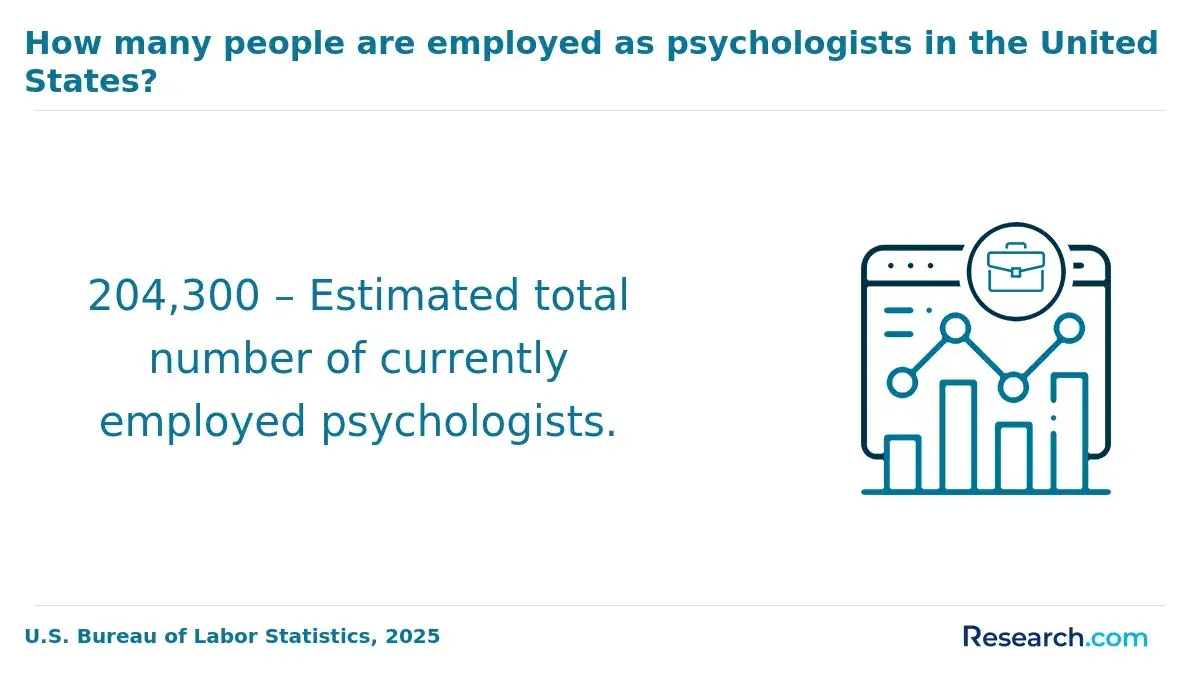
In May 2024, West Virginia had the following estimated numbers of psychologists with their median annual salaries: 620 clinical and counseling psychologists earning $75,340, 340 school psychologists earning $66,890, and 250 psychologists classified under all other types earning $58,450 (U.S. Bureau of Labor Statistics, 2024).
Research.com reviewers evaluated current information on psychology schools in West Virginia, licensure rules, program formats, accreditation, career outcomes, and clinical psychology degree costs and career options to help prospective students make a more informed choice.
Quick Answer: What Should You Know About Psychology Schools in West Virginia?
The best psychology program in West Virginia depends on your goal. Students who want independent clinical practice generally need a doctoral path such as a Ph.D. or Psy.D. Students interested in school psychology, counseling, behavior analysis, social services, business psychology, or research may have strong options at the master’s level, but licensure rules vary by role. West Virginia is notable because it allows certain master’s-level psychology licensure routes, although independent practice is still limited and supervision requirements matter.
Before enrolling, confirm four things: the program’s accreditation status, whether it satisfies West Virginia licensure requirements, whether practicum or internship placements are available, and whether the total cost is reasonable for your intended career path.
Best Psychology Schools in West Virginia Table of Contents
- Psychology Industry Overview in West Virginia
- Education Requirements for Psychologists in West Virginia
- West Virginia Psychology Licensure and Renewal Process
- How Accreditation Affects Psychology Program Choice
- Career Options With a Psychology Degree in West Virginia
- How Psychology Professionals Can Address Substance Abuse in West Virginia
- Financing Options for Psychology Education in West Virginia
- Using a Psychology Degree to Pursue a BCBA Credential in West Virginia
- Ethical Considerations for Psychology Practice in West Virginia
- How to Become an LPC in West Virginia
- How Social Work Can Complement a Psychology Career in West Virginia
- Mental Health Access in Rural West Virginia
- Shortest Path to Become a Counselor in West Virginia
- Professional Development and Advanced Certifications in West Virginia
- Jobs You Can Get With an Applied Behavior Analysis Degree
- What Makes School Psychology Different in West Virginia
- How to Become a Criminal Psychologist in West Virginia
Psychology Industry Overview in West Virginia
West Virginia’s psychology workforce includes clinical and counseling psychologists, school psychologists, supervised psychologists, researchers, and professionals in related behavioral health roles. The state’s licensing structure is distinctive because it permits master’s-level licensure in some circumstances, but those practitioners must work under supervision rather than practice independently.
From 2000 to 2022, the total number of licensed psychologists and school psychologists in WV increased from 930 to 1,056, a decrease compared to 2021’s 1,198 (The West Virginia Board of Examiners of Psychologists, 2024). That slow long-term increase, combined with mental health access challenges, means students considering psychology in West Virginia should think carefully about specialization, practice setting, and whether they are willing to serve rural or underserved communities.
Salary Outlook for Psychologists in West Virginia
Salary varies by license level, specialization, employer type, location, seniority, and whether the role is clinical, educational, correctional, research-based, or organizational. The numbers below should be used as planning estimates rather than guaranteed outcomes.
| Psychologist category in West Virginia | Estimated employment in May 2024 | Median annual salary in May 2024 |
| Clinical and counseling psychologists | 620 | $75,340 |
| School psychologists | 340 | $66,890 |
| Psychologists, all other types | 250 | $58,450 |
Some higher-paying psychology-related roles reported in the source material include academic child and adolescent psychiatrist at $305,218, clinical psychologist serving as chief psychologist in the justice, bureau of prisons/federal prison system at $151,000, and licensed clinical psychologist at $107,891. These positions typically require advanced credentials, years of experience, and specialized preparation.
Other reported annual salaries include trainee health psychologist at $109,850, clinical psychologist private practice at $96,200, child psychologist at $94,400, clinical psychologist at $92,150, health psychologist at $87,600, school psychologist at $79,000, research psychologist at $76,500, criminal psychologist at $74,300, hospital psychologist at $74,300, sports psychologist at $71,350, licensed professional mental health counselor in gerontology at $70,200, industrial-organizational psychologist at $69,450, mental health therapist at $63,200, forensic psychologist at $62,900, and psychology professor at $58,250 (Bureau of Labor Statistics, 2024).
Cost of Living Considerations
Cost of living matters because psychology training can take several years, especially for students pursuing doctoral education, internships, and supervised professional experience. The average cost of living for a single person in West Virginia is $1,256, which is 1.15 times more expensive than the average COL in the U.S., and ranked 53rd most expensive state and 49th best state to live in in the USA (Livingcost.org, 2024).
The monthly cost of living in West Virginia for a single person is $1,640 with rent, $706 without rent, $510 for food, and $915 for rent and utilities. For a family of four, it is $3,712 with rent, $2,271 without rent, $1,356 for food, and $1,432 for rent and utilities (Livingcost.org, 2024).
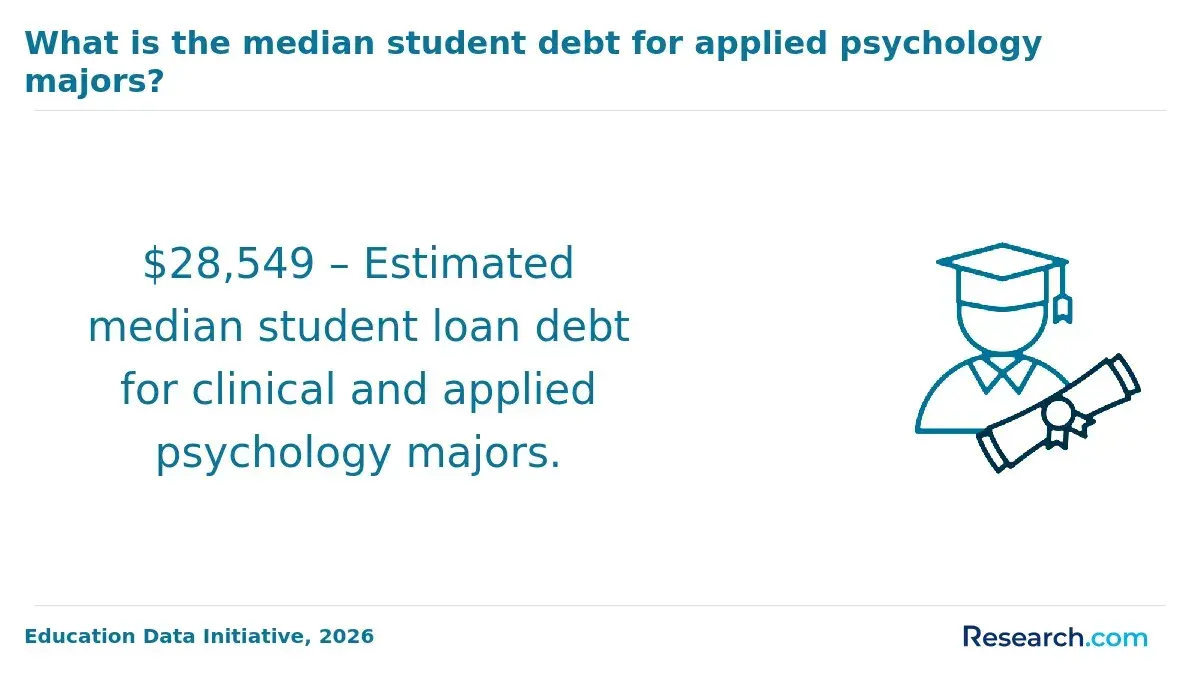
When comparing psychology programs, do not look only at tuition. Add fees, books, commuting, unpaid practicum time, internship relocation, exam costs, lost wages, and the amount of debt you may need to carry during supervised practice.
Specializations and Community Needs
West Virginia has strong need for mental health professionals in clinical care, school-based services, substance use treatment, crisis intervention, and rural behavioral health. From 2021 to 2023, the average percentage of adults 18 or older in West Virginia experiencing serious thoughts of suicide was 6.2%, compared to 4.8% for Region 3, which includes Delaware, the District of Columbia, Maryland, Pennsylvania, Virginia, and West Virginia. The U.S. national average was 4.7% (Substance Abuse and Mental Health Services Administration, 2024).
Doctoral production also affects workforce supply. In 2024, professional doctorate recipients in West Virginia were concentrated in medical, health, and life sciences fields. Clinical psychology ranked eighth with 9 recipients in one reported comparison, and another listed figure reported clinical psychology at 11 recipients.
The reported professional doctorate counts in West Virginia included medicine at 192, pharmacy at 173, physical therapy at 128, law at 104, dentistry at 46, other business, management, marketing, and related support services at 36, nursing administration at 24, clinical psychology at 11, audiology at 10, nursing practice at 10, general education at 7, educational and instructional technology at 2, physical education teaching and coaching at 1, and family practice nurse at 1.
For students, this means specialization choice should be tied to real workforce needs. Clinical psychology, school psychology, substance abuse counseling, behavior analysis, and rural mental health are especially relevant pathways to evaluate in West Virginia.
Education Requirements for Psychologists in West Virginia
Most students who want to become independently practicing psychologists in the United States should expect to complete a doctoral degree and obtain state licensure. West Virginia, however, permits master’s-level licensure under specific conditions. Master’s-level licensees are not allowed to practice independently and must work under the supervision of a licensed psychologist.
School psychologists and guidance counselors employed by public or private schools may be exempt under the Practicing Psychology Licensing Act when they are properly certified in education and work only within the school-authorized scope. A Doctor of Education (EdD) degree in West Virginia may also support broader work in educational settings, depending on role and certification requirements.
The West Virginia Board of Examiners of Psychologists regulates psychology licensure, reviews relevant credentials, and sets requirements for professional practice in the state.
West Virginia participates in the Psychology Interjurisdictional Compact (PSYPACT), which supports authorized telepsychology and temporary in-person psychology practice across participating state lines. This matters for students and practitioners interested in telehealth, regional practice, or serving clients in areas with limited local access.
Students in psychology programs should also plan for practicum and internship requirements. When possible, applicants should ask whether programs help secure American Psychological Association (APA) accredited internships or other approved supervised training placements.
| Goal | Typical education path | Important West Virginia consideration |
| Independent clinical psychology practice | Doctoral degree such as Ph.D., Psy.D., or Ed.D. in a clinical form of psychology | State licensure is required, and applicants must complete exams and supervised experience rules. |
| Master’s-level supervised psychology work | Master’s degree in psychology that meets state requirements | West Virginia allows this route, but practice must be supervised. |
| School psychology | Graduate-level preparation and school certification | Requirements depend on education certification and work setting. |
| Counseling or LPC work | Master’s degree in counseling or related field | LPC licensure is separate from psychologist licensure. |
| Behavior analysis | Psychology or behavior analysis degree plus specialized coursework and supervised fieldwork | BCBA preparation may require additional certification steps. |
West Virginia Psychology Licensure and Renewal Process
The West Virginia Board of Examiners of Psychologists manages psychology licensing and renewal. These rules support the professional standards connected to the major goals of psychology, including assessment, explanation, prediction, and behavior change.
The standard pathway to psychology licensure generally includes the following steps:
- Complete an eligible doctoral degree in psychology from a regionally accredited or government-chartered institution.
- Meet the state’s supervised professional experience requirement.
- Pass the West Virginia jurisprudence examination.
- Pass the Examination for Professional Practice in Psychology (EPPP), as required by the state.
- Complete any additional written, oral, documentation, or employment requirements set by the board.
Step 1: Earn an Eligible Doctoral Degree
To become a psychologist in West Virginia, applicants generally need a doctoral degree in psychology, such as a Ph.D., Psy.D., or Ed.D. in a clinical form of psychology, from a regionally accredited or government-chartered institution. As of 2024, the state of West Virginia has streamlined licensure pathways, with approximately 85% of licensed psychologists holding doctoral degrees according to the West Virginia Board of Psychology, reflecting national trends toward higher educational standards in psychology practice. While a master’s level option for licensure was available in WV, recent regulations indicate a decline in its use, with less than 10% of licensed psychologists now licensing at the master’s level, aligning with broader U.S. movements toward doctoral standards for independent practice.
Recognized regional accrediting agencies listed in the source material include:
- Middle States Association of Schools and Colleges
- New England Association of Schools and Colleges
- North Central Association of Colleges and Schools
- Northwest Association of Schools and Colleges
- Southern Association of Colleges and Schools
- Western Association of Schools and Colleges
If a doctoral program is not APA accredited, ASPPB accredited, or National Register-designated, the board may review the applicant’s curriculum. This review can be especially important for degrees earned outside the United States, even when the degree is in an applied health services field. APA accreditation is accepted but not required, and CPA accreditation is also not required.
Step 2: Complete Supervised Professional Experience
Supervised experience gives future psychologists guided practice under a licensed psychologist. Depending on the program and state rules, this may include practicum, internship, and other approved supervised training. West Virginia does not accept postdoctoral hours.
Starting in 2018, West Virginia’s minimum required number of supervised hours is 1,800 hours. Across states, requirements may range from 1,500 to 6,000 hours, so West Virginia falls toward the lower end of that range. Master’s-level supervised psychologists in WV must complete five years of supervised practice under a licensed psychologist.
Because West Virginia participates in PSYPACT, licensed psychologists who qualify under compact rules may have additional flexibility for telepsychology and temporary in-person practice across state boundaries.
Step 3: Pass the West Virginia Jurisprudence Exam
Applicants must pass the State Board of Psychological Examiners’ Jurisprudence Examination. The exam includes 50 true-false and multiple-choice questions covering laws and regulations that govern psychology practice in West Virginia. The passing score is 75%.
Applicants must pass the jurisprudence exam before receiving approval to take the national EPPP examination.
Step 4: Pass the EPPP
The Association of State and Provincial Psychology Boards (ASPPB) administers the Examination for Professional Practice in Psychology. West Virginia requires applicants to pass part 1 of the EPPP.
West Virginia has not adopted EPPP part II at this time, so it is not required for licensure. The passing score is a minimum of 70 percent or 500 on the computer-based exam in most states. Applicants preparing for the exam can review the EPPP Candidate Handbook.
West Virginia also requires an oral exam. A passing score of sixty percent (60%) on the written and/or oral examination derived from the ratings of all board examiners is required before a license can be granted.
License Renewal and Continuing Education
Psychology licenses in West Virginia renew every two years. Licensed psychologists must complete 20 hours of continuing professional development or continuing education every two years. Of those hours, 10 must come from APA or NASP-approved continuing education providers, and three hours must cover ethics.
Licensed psychologists who work with U.S. Veterans must complete two of the 20 CE hours in topics related to mental health conditions common among veterans and their family members. Approved topics include suicide risk screening and prevention, posttraumatic stress and related disorders, and/or marital counseling.
Licensed school psychologists must complete 30 hours of continuing education every three years. Of those, 15 hours must come from APA or NASP-approved providers, and three hours must cover ethics. Nationally Certified School Psychologists (NCSPs) through NASP may receive automatic renewal when they submit documentation.
For more detail, review the West Virginia Board of Examiners of Psychologists continuing education guidelines.
Documentation and Employment Requirements
Doctoral-level supervised psychologists must be W-2 employees. Applicants must submit evidence of current or future W-2 employment with their licensure materials.
Students should keep digital copies of transcripts, syllabi, advisor names, faculty credentials, practicum records, internship documentation, supervision logs, and exam records. It can also be useful to register doctoral, internship, and postdoctoral credentials with the National Psychologist Trainee Register or ASPPB’s Credentials Bank.
How Accreditation Affects Psychology Program Choice
Accreditation is one of the most important checks before enrolling in a psychology program. It signals that a school or program has been reviewed against recognized academic and professional standards. More importantly, it can affect licensure eligibility, internship competitiveness, transferability, doctoral admissions, and employer confidence.
Students comparing West Virginia psychology programs should verify both institutional accreditation and program-level accreditation or recognition where relevant. For doctoral clinical psychology students, APA accreditation is especially important to evaluate, even though West Virginia accepts APA accreditation but does not require it in every case.
Students can start by reviewing Research.com’s guide to the best colleges for psychology in West Virginia, then confirm details directly with each school and the licensing board.
| Question to ask | Why it matters |
| Is the institution regionally accredited? | Regional accreditation is central to licensure review, credit transfer, and graduate admissions. |
| Is the psychology program APA accredited or otherwise recognized? | Program accreditation can strengthen internship and licensure preparation. |
| Does the curriculum meet West Virginia licensure rules? | Not every psychology degree prepares students for licensure as a psychologist. |
| Are practicum and internship placements built into the program? | Supervised experience is required for licensure and career readiness. |
| What are the outcomes for graduates? | Ask about licensure exam performance, internship placement, employment, and doctoral admissions. |
Career Options With a Psychology Degree in West Virginia
A psychology degree can lead to several types of work, but the right path depends heavily on degree level and licensure. Some roles require a doctoral degree and psychologist license. Others are available with a master’s degree, counseling credential, school certification, behavior analysis credential, or social services training.
Clinical Psychologist
Clinical psychologists assess, diagnose, and treat mental health conditions through psychological testing, therapy, consultation, and evidence-based interventions. In West Virginia, clinical psychologists may work in private practice, hospitals, community mental health centers, correctional settings, universities, or telehealth services.
To pursue this path, students usually complete a doctoral program, supervised clinical experience, state exams, and licensure requirements.
School Psychologist
School psychologists support students’ academic, emotional, behavioral, and social development. They collaborate with teachers, families, administrators, and other specialists to evaluate students, design interventions, and improve school-based support systems.
This path usually requires graduate-level preparation and state certification. Students should confirm whether a psychology program meets West Virginia school psychology requirements before enrolling.
Industrial-Organizational Psychologist
Industrial-organizational psychologists apply psychology to workplaces. Their work may involve employee selection, training, leadership development, organizational change, productivity, workplace culture, or employee well-being. In West Virginia, relevant employers may include healthcare, education, manufacturing, government, and consulting organizations.
A master’s degree in industrial-organizational psychology may support entry into human resources, organizational development, consulting, or workforce analytics roles.
Research or Policy Analyst
Psychology graduates who enjoy data, program evaluation, and public systems may work in research, policy, or evaluation roles. These professionals may analyze behavioral health programs, education initiatives, public health interventions, or mental health access policies.
Research-heavy roles often require a master’s or doctoral degree, along with strong training in statistics, research design, and data analysis.
Social Services, Counseling, and Case Management
Students with psychology backgrounds may also enter counseling, substance abuse services, family support, case management, community mental health, or human services. These roles may require additional licensure, especially for independent counseling or therapy.
If you are considering graduate school, see Research.com’s guide on what you can do with a master’s in psychology to compare career options before choosing a specialization.
| Career direction | Best fit for students who want to | Likely credential issue to verify |
| Clinical psychology | Diagnose and treat mental health conditions | Doctoral degree, supervised experience, EPPP, state licensure |
| School psychology | Support students in K-12 settings | School psychology certification and education requirements |
| Business or I-O psychology | Apply psychology in workplace and organizational settings | Employer expectations and whether licensure is needed |
| Behavior analysis | Design behavior-change interventions | BCBA-related coursework, fieldwork, and certification rules |
| Counseling | Provide therapy or mental health counseling | LPC or related counseling licensure |
| Social work | Combine mental health support with systems, advocacy, and case management | Social work degree and licensure requirements |
How Psychology Professionals Can Address Substance Abuse in West Virginia
Substance abuse is one of West Virginia’s most urgent behavioral health challenges. Psychology professionals can contribute through assessment, prevention, relapse prevention, crisis response, family support, trauma-informed care, and evidence-based behavioral interventions.
Students who want to work in this area should seek coursework and supervised experiences related to addiction, co-occurring disorders, motivational interviewing, crisis intervention, group counseling, community treatment, and ethical work with vulnerable populations. Those who want a specialized credential can review Research.com’s guide on how to become a substance abuse counselor in West Virginia.
Financing Options for Psychology Education in West Virginia
Psychology education can be expensive, especially when students pursue graduate study, internships, and unpaid clinical training. Prospective students should compare the full cost of attendance, not just published tuition.
Common financing options include scholarships, grants, federal aid, state aid, institutional aid, work-study, graduate assistantships, teaching assistantships, research assistantships, and employer tuition support. Doctoral students should ask whether funding is guaranteed, competitive, renewable, or tied to teaching or research duties.
Students looking for a flexible or lower-cost graduate pathway may want to compare campus programs with an affordable online master’s in psychology, while confirming that the program fits their career and licensure goals.
Questions to Ask Before Borrowing
- What is the total program cost after fees, books, travel, and practicum expenses?
- Are assistantships available, and do they include tuition support?
- Will credits transfer if I later enter a doctoral program?
- Does the program qualify for the licensure route I want?
- What salaries are realistic for graduates in my intended role?
- How long will I be in supervised practice before reaching my target job?
Using a Psychology Degree to Pursue a BCBA Credential in West Virginia
A psychology degree can be a strong foundation for applied behavior analysis because it introduces learning theory, behavior, assessment, research design, ethics, and intervention planning. However, a psychology degree alone may not satisfy every certification requirement for Board Certified Behavior Analyst preparation.
Students interested in behavior analysis should verify required coursework, supervised fieldwork, and exam eligibility early. For a step-by-step credential overview, see how to become a BCBA in West Virginia.
Ethical Considerations for Psychology Practice in West Virginia
Ethical practice is central to psychology because clients often disclose sensitive information and rely on psychologists during vulnerable periods. West Virginia practitioners must understand state law, board rules, professional ethics, privacy expectations, and the limits of their competence.
- Confidentiality and privacy: Psychologists must safeguard client information, including records used in telepsychology and electronic health systems. HIPAA standards and state rules must be followed.
- Informed consent: Clients should understand the nature of services, potential risks, fees, confidentiality limits, and their right to stop treatment.
- Cultural competence: Effective care requires awareness of cultural, regional, family, economic, and community factors that shape client needs in West Virginia.
- Dual relationships: Psychologists should avoid relationships that may impair judgment, objectivity, boundaries, or client welfare.
- Scope of competence: Practitioners should not provide services in areas where they lack adequate education, supervision, or training.
- Telepsychology safeguards: Providers using remote care must consider privacy, emergency planning, client location, and cross-state practice rules.
How to Become an LPC in West Virginia
The LPC pathway is separate from psychologist licensure. In West Virginia, Licensed Professional Counselors generally prepare for counseling practice through a master’s degree in counseling or a related field from an accredited institution, supervised clinical experience, and required examinations.
This route may be a better fit than psychology licensure for students who want to provide counseling services but do not want to complete a psychology doctorate. For the full process, see how to become an LPC in West Virginia.
How Social Work Can Complement a Psychology Career in West Virginia
Social work and psychology overlap in mental health, crisis response, case management, family support, community outreach, and advocacy. Adding social work training can help psychology graduates understand how housing, poverty, healthcare access, family systems, schools, and community services affect client outcomes.
This combined perspective can be especially useful in underserved areas where professionals often coordinate care across agencies. If you are comparing the two fields, review what degree you need to be a social worker in West Virginia.
Top Psychology Programs in West Virginia for 2027
The following programs represent Research.com’s selected options among psychology programs serving West Virginia students. This is not a complete list of every program in the state, and students should independently verify accreditation, tuition, admission requirements, licensure alignment, and program outcomes before applying.
Because West Virginia permits some master’s-level psychology licensure pathways, this list includes both doctoral and master’s programs. Many students begin with a bachelor’s degree, continue into a master’s program, and later pursue doctoral training or supervised practice depending on career goals. Students comparing formats may also want to research online psychology graduate programs.
| Program | Degree | Format or focus | Length | Credits | Accreditation noted |
| West Virginia University | Ph.D. in Psychology: Clinical Psychology | Scientist-practitioner clinical psychology | 5 years | 79 graduate-level credit hours | American Psychological Association (APA) |
| Marshall University | Psy.D. in Clinical Psychology | Clinical psychology with supervised clinical training | 5 years | 111-123 credit hours | American Psychological Association (APA) |
| West Liberty University | M.A. in Clinical Psychology | Master’s-level clinical psychology preparation | 3 years | 57 credits | APA master’s accreditation process noted as in progress as of September 2024 |
| Franklin University | M.S. in Business Psychology | 100% online business psychology | 14 months | 36 credits | The Higher Learning Commission (HLC) |
| West Virginia University | M.S. Psychology: Behavior Analysis | Behavior analysis research and practice preparation | 3 years | 36 graduate-level credit hours | American Psychological Association (APA) |
1. West Virginia University
West Virginia University offers an APA-accredited Ph.D. in Psychology with a Clinical Psychology specialization. The program has been accredited by the American Psychological Association since 1966 and follows the scientist-practitioner, or Boulder, model. Students are trained to conduct research and provide clinical services, with faculty expertise across the lifespan, including children, adolescents, pediatrics, adults, and older adults. The department also offers Ph.D. specializations in Behavior Analysis, Behavioral Neuroscience, and Life-Span Developmental Psychology.
- Program length: 5 years
- Track: Clinical psychology
- Tuition cost per semester: Graduate Resident $5,454; Graduate Nonresident $14,130
- Credits required: 79 graduate-level credit hours in Psychology or related disciplines
- Accreditation: American Psychological Association (APA)
2. Marshall University
Marshall University offers a Psy.D. in Clinical Psychology designed to prepare students in human behavior, research, data management, program development, observation, findings interpretation, and technical writing. Students receive supervised clinical training and may study full time or part time. An advanced standing option is available for students who already hold a master’s degree in psychology with a clinical emphasis.
- Program length: 5 years
- Tracks/concentrations: Various
- Tuition cost per semester: WV residents: $5,675; Nonresidents: $12,494
- Credits required: 111-123 credit hours
- Accreditation: American Psychological Association (APA)
3. West Liberty University
West Liberty University offers an M.A. in Clinical Psychology for traditional students, nontraditional students, current mental health workers, and students planning to continue to doctoral study. The program follows the American Psychological Association Core Learning Goals for master’s degree candidates and is designed to prepare students for licensure as clinical psychologists in West Virginia. Practicum and internship work takes place under clinical supervision at the WLU Behavioral Health Center, usually about 20 hours a week and unpaid during official operating hours. Competitive graduate assistantships are available, and the program does not require a thesis.
- Program length: 3 years
- Tracks/concentrations: N/A
- Tuition cost per credit: U.S. students: $495; International students: $625
- Credits required: 57 credits, including 30 credit hours coursework, 9 credit hours practicum, and 18 credit hours internship
- Accreditation: As of September 2024: in progress with the APA Commission of Accreditation Master’s Accreditation Work Group (MAWG) for the accreditation of master’s programs. The program is not yet accredited by the APA. According to the latest data from the American Psychological Association, over 85% of doctoral programs in psychology are accredited by 2024, reflecting ongoing efforts to maintain quality standards across institutions.
4. Franklin University
Franklin University offers a 100% online M.S. in Business Psychology for students who want to apply psychological principles in organizational and business settings rather than pursue a traditional clinical or school psychology route. The curriculum combines business strategy with psychological and neuroscience research, preparing students to address motivation, management challenges, behavior, and organizational performance.
- Program length: 14 months
- Tracks/concentrations: N/A
- Tuition program cost: $24,865
- Credits required: 36 credits
- Accreditation: The Higher Learning Commission (HLC)
5. West Virginia University, Morgantown
West Virginia University offers an M.S. Psychology: Behavior Analysis program focused on behavior-analytic research, quantitative and data-visualization methods, ethical research standards, and applied preparation. Students complete coursework and a master’s thesis based on an empirical behavior analysis research project by year three. Doctoral applicants are automatically considered for financial support, including traineeships, university fellowships, and teaching and research assistantships.
- Program length: 3 years
- Tracks/concentrations: N/A
- Tuition cost per semester: Graduate Resident $5,454; Graduate Nonresident $14,130
- Credits required: 36 graduate-level credit hours in Psychology
- Accreditation: American Psychological Association (APA)
Students planning doctoral clinical psychology training should review the 2025 APA Accredited Doctoral programs list and confirm the current status of any program before applying.
For a broader view of employment options and long-term planning, see Research.com’s psychology career outlook guide.
Mental Health Access in Rural West Virginia
Rural access is one of the most important issues for future psychologists in West Virginia. Barriers may include provider shortages, long travel distances, limited transportation, poverty, stigma, and fewer specialized services. With over 60% of the state’s population living in rural areas, students who are willing to practice outside larger population centers may find meaningful opportunities to serve high-need communities.
The Scope of the Problem
According to the Substance Abuse and Mental Health Services Administration (SAMHSA), rural areas in West Virginia report higher rates of mental health conditions, including depression and substance use disorders, compared to urban regions. Some areas may have very limited access to licensed psychologists, which makes school-based services, telehealth, integrated care, and community partnerships especially important.
Where Psychologists Can Make an Impact
- Local practice: Opening or joining clinics in underserved areas can expand direct access to care.
- School partnerships: Collaboration with schools can support early intervention for children and adolescents.
- Telepsychology: Remote services can reduce geographic barriers, especially when providers follow West Virginia law and PSYPACT rules.
- Community trust-building: Working with local leaders, health systems, and nonprofits can reduce stigma and improve engagement.
- Affordable care models: Sliding-scale fees and grant-supported programs may help clients who cannot afford private-pay services.
How PsyD Programs May Support Rural Practice
Students who need flexibility may compare campus programs with online PsyD programs. Before enrolling, confirm whether any online or hybrid program includes required in-person clinical training, internship support, and licensure alignment for West Virginia.
Shortest Path to Become a Counselor in West Virginia
The fastest practical route to counseling work is usually a licensure-focused master’s program that includes required coursework, practicum, internship, exam preparation, and supervised clinical experience planning. Students should avoid programs that are inexpensive or fast but do not meet state requirements.
For details on accelerated and realistic options, see Research.com’s guide to the shortest path to become a counselor in West Virginia.
Professional Development and Advanced Certifications in West Virginia
Psychology professionals can strengthen their career options through continuing education, specialized training, supervision, and credentials in areas such as trauma, addiction, assessment, gerontology, telehealth, school-based intervention, behavior analysis, forensic evaluation, or counseling methods.
Professionals considering counseling-adjacent roles should review state rules carefully. Research.com’s overview of West Virginia LPC license requirements can help psychology graduates understand how counseling credentials differ from psychologist licensure.
Jobs You Can Get With an Applied Behavior Analysis Degree
Applied behavior analysis graduates may work in schools, behavioral health clinics, autism services, developmental disability programs, hospitals, community agencies, research settings, or organizational behavior roles. The work is often data-driven and focuses on measuring behavior, designing interventions, monitoring outcomes, and adjusting plans ethically.
For a deeper look at role options, review what jobs you can get with an applied behavior analysis degree.
Other Fields You Can Enter With a Psychology Background in West Virginia
A psychology background can support several helping professions, but many require additional graduate education and licensure. Related fields include counseling, social work, marriage and family therapy, substance abuse counseling, behavior analysis, human services, research, human resources, and education support.
Students interested in therapy careers outside psychology should compare requirements early. For example, marriage and family therapy has its own credentialing pathway, including the MFT license in West Virginia.
What Makes School Psychology Different in West Virginia
School psychology blends educational assessment, child development, mental health, consultation, and intervention. School psychologists work directly with students and also support teachers, parents, administrators, and multidisciplinary teams.
This path is a strong fit for students who want to work in schools rather than private clinical practice. To understand education, certification, and licensure details, see how to become a school psychologist in West Virginia.
How to Become a Criminal Psychologist in West Virginia
Criminal psychology requires psychology training plus specialized exposure to forensic assessment, criminal behavior, risk assessment, correctional settings, court-related evaluation, ethics, and legal systems. Many students enter this area through clinical psychology, counseling psychology, or forensic psychology coursework and supervised experiences.
Students interested in this specialization should choose graduate programs with forensic-relevant coursework or placements and confirm that the program still meets psychology licensure requirements. For more detail, review how to become a criminal psychologist in West Virginia.
Common Mistakes When Choosing a Psychology Program in West Virginia
| Mistake | Why it can hurt you | Better approach |
| Choosing a program without checking accreditation | You may face licensure, transfer, internship, or employer barriers. | Verify institutional and program accreditation before applying. |
| Assuming every psychology degree leads to licensure | Some programs are academic, business-focused, or nonclinical. | Match the curriculum to your intended license or credential. |
| Looking only at tuition | Fees, relocation, unpaid practicum, and exam costs can change affordability. | Calculate total cost of attendance and likely borrowing. |
| Ignoring supervised experience rules | You may graduate without a clear route to required hours. | Ask how practicum, internship, and supervision are arranged. |
| Confusing psychologist, LPC, social worker, and MFT pathways | Each profession has different education and licensing rules. | Compare requirements before selecting a graduate program. |
| Relying only on rankings | A highly ranked program may not fit your location, budget, or career goal. | Use rankings as a starting point, then verify fit and outcomes. |
| Assuming online means licensure-ready | Some online programs do not meet state clinical requirements. | Confirm West Virginia licensure alignment in writing. |
How to Choose the Right Psychology School in West Virginia
Use a decision process rather than choosing based on reputation alone. The strongest program for you is the one that fits your intended license, specialization, finances, learning format, and geographic constraints.
- Define your target role. Decide whether you want to become a psychologist, school psychologist, counselor, BCBA, researcher, social worker, business psychology professional, or another type of behavioral health worker.
- Work backward from licensure. Check the West Virginia Board of Examiners of Psychologists or the appropriate licensing board before enrolling.
- Verify accreditation. Confirm institutional accreditation and program-level accreditation where relevant.
- Ask about supervised training. Look for clear practicum, internship, and supervision support.
- Compare total cost. Include tuition, fees, living expenses, transportation, exam costs, and unpaid clinical hours.
- Review faculty and specialization fit. Choose a program with faculty, labs, clinics, or placements that match your interests.
- Check outcomes. Ask about internship placement, graduation rates, licensure exam preparation, employment, and doctoral placement.
- Consider location and service goals. If you want to serve rural West Virginia, ask whether the program includes rural mental health training or placements.
Is a Psychology Degree in West Virginia Worth It?
A psychology degree in West Virginia can be worth it for students who understand the credential requirements and choose a program aligned with a specific career goal. The strongest return is usually tied to licensure-ready graduate education, funded doctoral study, high-need specializations, or related credentials such as counseling, school psychology, social work, or behavior analysis.
It may be less worthwhile if you enroll in a costly program without confirming licensure eligibility, take on debt for a role that requires additional schooling, or assume that a bachelor’s degree alone will qualify you for clinical practice. Students interested in behavior and mental health but unsure about clinical psychology may also compare related pathways through Research.com’s guide to top behavioral science colleges.
Key Insights
- West Virginia offers multiple psychology pathways. Doctoral study is the standard route for independent psychology practice, while master’s-level routes may support supervised psychology work, counseling, behavior analysis, school psychology, business psychology, or social services.
- Licensure rules should drive your school choice. Before enrolling, confirm accreditation, supervised experience requirements, exam expectations, and whether the program satisfies West Virginia rules for your intended role.
- Salary varies by specialization. In May 2024, West Virginia reported 620 clinical and counseling psychologists earning a median annual salary of $75,340, 340 school psychologists earning $66,890, and 250 psychologists in all other categories earning $58,450.
- Rural mental health access is a major workforce issue. Students willing to work in rural communities, schools, telehealth, substance use treatment, or community mental health may find meaningful service opportunities.
- Accreditation is not optional due diligence. It affects licensure preparation, internship options, transferability, doctoral admissions, and employer trust.
- Psychology is not the only helping-profession route. LPC, social work, MFT, school psychology, substance abuse counseling, and BCBA pathways may be faster or better aligned depending on your career goal.
- Do the ROI math before committing. Compare total program cost, funding, unpaid training time, expected supervision period, and realistic salary outcomes for your specialization.
References:
- College Factual. (2025). 2025 Psychology Degree Guide. https://www.collegefactual.com/majors/psychology/
- Education Data Initiative. (2026). Student Loan Debt by Major [2026]. https://educationdata.org/student-loan-debt-by-major
- U.S. Bureau of Labor Statistics. (2025). Psychologists: Occupational Outlook Handbook. https://www.bls.gov/ooh/life-physical-and-social-science/psychologists.htm
- Livingcost.org. (2024). Cost of living in West Virginia. https://livingcost.org/cost/west-virginia
- West Virginia Board of Examiners of Psychologists. (2018). Title 17 Legislative Rule West Virginia Board of Examiners of Psychologists. Psychologists: Series 3 Requirements for Licensure as a Psychologist and/or A School Psychologist. West Virginia Board of Examiners of Psychologists.
- The West Virginia Board of Examiners of Psychologists. (2024). Annual licensure statistics report. https://www.wvpsychologyboard.org/statistics
Related Articles for Nearby States
- 2027 Virginia Psychology Licensure Requirements – How to Become a Psychologist in Virginia
- 2027 Ohio Psychology Licensure Requirements – How to Become a Psychologist in Ohio
- 2027 Kentucky Psychology Licensure Requirements – How to Become a Psychologist in Kentucky
- 2027 Pennsylvania Psychology Licensure Requirements – How to Become a Psychologist in Pennsylvania
- 2027 Maryland Psychology Licensure Requirements – How to Become a Psychologist in Maryland
- 2027 North Carolina Psychology Licensure Requirements – How to Become a Psychologist in North Carolina
- 2027 Tennessee Psychology Licensure Requirements – How to Become a Psychologist in Tennessee
- 2027 Indiana Psychology Licensure Requirements – How to Become a Psychologist in Indiana
- 2027 South Carolina Psychology Licensure Requirements – How to Become a Psychologist in South Carolina
- 2027 Georgia Psychology Licensure Requirements – How to Become a Psychologist in Georgia
Other Things You Should Know About The West Virginia Psychology Licensure
To become licensed in West Virginia, applicants must earn a doctoral degree in psychology from an accredited program, complete a minimum of 2,000 supervised hours each during pre-doctoral and post-doctoral experiences, pass the Examination for Professional Practice in Psychology, and submit an application to the West Virginia Board of Examiners of Psychologists.
In 2024, clinical and counseling psychologists in West Virginia earned a median annual salary of $78,650, school psychologists earned $68,230, and other types of psychologists earned $60,410. These figures may vary based on experience, specialization, and location.
To become a licensed psychologist in West Virginia, one must obtain a doctoral degree in psychology (Ph.D., Psy.D., or Ed.D. in clinical psychology) from a regionally accredited institution. West Virginia also offers a master's level licensure option, which is less common in the U.S.
Yes, licensed psychologists in West Virginia must complete 20 hours of continuing education (CE) every two years, with specific requirements for ethics training and courses relevant to mental health conditions common among veterans.
Some of the top psychology programs in West Virginia include West Virginia University's Ph.D. in Clinical Psychology, Marshall University's Psy.D. in Clinical Psychology, and West Liberty University's M.A. in Clinical Psychology. These programs offer various specializations and are accredited by the American Psychological Association (APA).
No, master's level psychologists in West Virginia cannot practice independently. They must work under the supervision of a licensed psychologist and complete five years of supervised practice to obtain full licensure.