
2027 Idaho Psychology Licensure Requirements – How to Become a Psychologist in Idaho

Co-Founder and Chief Data Scientist
Becoming a licensed psychologist in Idaho is a long-term professional path, but it is also a path tied to a clear public need. A report from Mental Health America released in 2025 placed Idaho 48th for mental health in the United States, and one contributing issue is the limited supply of licensed psychologists and other mental health professionals across the state. For students, career changers, and out-of-state psychologists considering Idaho, the central question is not only “How do I get licensed?” but also “Is this the right state, program, timeline, and specialty for my goals?”
This guide explains Idaho psychology licensure requirements, including education, supervised experience, examination, continuing education, endorsement, prescriptive authority, and career options. It also compares psychology programs in Idaho, outlines salary and job market considerations, and highlights practical decisions to make before investing years in graduate training.
Quick Answer: How do you become a psychologist in Idaho?
To become a licensed psychologist in Idaho, you generally need a doctoral degree in psychology or a related doctorate accepted by the Idaho Board of Psychologist Examiners, at least two years of board-approved supervised experience totaling a minimum of 2,000 hours, a passing score on the Examination for Professional Practice in Psychology (EPPP), a background check, and approval from the Board. Psychologists who want prescriptive authority must also complete a master’s degree in clinical psychopharmacology from an accredited program and meet Idaho’s certification requirements.
Key Benefits of a Psychology Career in Idaho
- Idaho’s population growth and documented mental health workforce gaps can create meaningful opportunities for qualified psychologists, especially in rural and underserved communities.
- The annual mean wage for psychologists in Idaho was $93,890 in 2023 [U.S. Bureau of Labor Statistics (BLS), 2024].
- Idaho is one of only seven jurisdictions in North America that issue prescriptive authority certification to licensed psychologists.
- Psychology Programs in Idaho for 2027
- Education Requirements for Idaho Psychologist Licensure
- Idaho Psychologist License Application Process
- How Long It Takes to Become a Psychologist in Idaho
- Supervised Experience Accepted for Idaho Psychology Licensure
- Completing Supervised Experience While Working Full-Time
- Continuing Education Requirements for Idaho Psychologists
- Licensure by Endorsement for Out-of-State and International Psychologists
- Average Psychologist Salary in Idaho
- Skills and Certifications That Can Strengthen a Psychology Career in Idaho
- Where Licensed Psychologists Work in Idaho
- Substance Abuse Counseling as a Psychology Specialty in Idaho
- Idaho Job Market for Licensed Psychologists
- Specialized Certifications for Idaho Psychologists
- Choosing an Online Master’s in Psychology Program in Idaho
- Industrial-Organizational Psychology Careers in Idaho
- How Social Work Training Can Complement Psychology Practice
- How to Become a School Psychologist in Idaho
- Forensic Psychology Career Options in Idaho
- Fastest Ways to Move Into Counseling Careers in Idaho
- Telepsychology Benefits in Idaho
- How Online PsyD Programs May Help Idaho’s Mental Health Workforce
- Other Licensure Options for Idaho Mental Health Professionals
- How to Become a Licensed Professional Counselor in Idaho
- Key Steps for Idaho LPC License Requirements
- Career Paths for Child Psychologists
Psychology Programs in Idaho for 2027
How to use this program list
Psychology licensure in Idaho requires a major education investment, so program choice matters. The right option depends on where you are in the pathway: undergraduate preparation, graduate research training, clinical doctoral training, or a flexible route designed for working adults. When comparing schools, look beyond tuition. Review accreditation, transfer credit policy, internship support, faculty expertise, doctoral placement outcomes, and whether the program is designed for licensure preparation.
Our school research uses information from sources such as the College Scorecard database, the IPEDS database, the National Center for Education Statistics (NCES), and Peterson’s database, including Peterson’s Distance Learning Licensed Data Set. You can also review the Research.com ranking methodology for details on how Research.com evaluates education data.
| School | Degree Options Listed | Program Length | Cost Information Stated | Accreditation Information Stated | Best Fit |
| Brigham Young University-Idaho | BS General Psychology; BS Health Psychology; BS Industrial Organizational Psychology | Four years | $194 per credit | Northwest Commission on Colleges and Universities (NWCCU) | Students seeking an undergraduate psychology foundation in a faith-centered campus environment |
| Lewis-Clark State College | BA in Psychology; BS in Psychology | Four years | Fixed rate tuition of $3,805 for part-time students (10-11 credits) and full-time students (12-19 credits), and $389 per credit (1-9 credits or for 20+ credits) | Northwest Commission on Colleges and Universities (NWCCU) | Students who want a small-college setting and preparation for graduate study or human services careers |
| University of Idaho | BA in Psychology; BS in Psychology; 2 + 2 Transfer Pathways | Four years | In-state tuition of $454 per credit for part-time students (1-9 credits) or $4,542 for full-time enrollees (10-20 credits), $1,416 per credit for part-time students and $14,160 for full-time enrollees who are non-Idaho residents; U of I offers in-state tuition rates to all full-time online students | Northwest Commission on Colleges and Universities (NWCCU) | Students comparing online, campus, and transfer-friendly psychology options |
| Idaho State University | PhD in Clinical Psychology | Approximately five years | $11,268 for in-state students and $30,152 for out-of-state enrollees for the first year cohort tuition; ISU is a member of the Western Interstate Commission for Higher Education (WICHE) Western Regional Graduate Program (WRGP) | American Psychology Association Commission on Accreditation (APA-CoA) | Doctoral students pursuing clinical psychology licensure preparation through an APA-accredited program |
| Northwest Nazarene University | PsyD in Clinical Psychology; PsyD in Clinical Psychology Accelerated Track | Four to five years | $950 per credit | Northwest Commission on Colleges and Universities (NWCCU); NNU says it meets the education requirements for licensure as a psychologist in Idaho and is in the process of applying for accreditation from APA-CoA | Students seeking a clinically oriented PsyD with faith integration and possible accelerated standing |
1. Brigham Young University-Idaho
Brigham Young University-Idaho (BYU-Idaho) offers a Bachelor of Science in Psychology with three listed tracks. The program is built around psychological theory, applied concepts, and research preparation, while the broader university environment emphasizes lifelong learning, service, spirituality, and leadership. Students are limited to one internship per semester during their junior or senior year.
- Program length: Four years
- Tracks/concentrations: BS General Psychology; BS Health Psychology; BS Industrial Organizational Psychology
- Cost per credit: $194 per credit
- Required credits to graduate: 120 credits
- Accreditation: Northwest Commission on Colleges and Universities (NWCCU)
2. Lewis-Clark State College
Lewis-Clark State College (LCSC) provides psychology students with a BA or BS pathway and also offers psychology as a minor. The curriculum covers core psychology subfields and gives particular attention to counseling/clinical psychology, developmental psychology, and social psychology, which can be useful for students planning graduate study or careers connected to health, social services, medicine, law enforcement, and related fields.
- Program length: Four years
- Tracks/concentrations: BA in Psychology; BS in Psychology
- Cost per credit: LCSC provides a fixed rate tuition of $3,805 for part-time students (10-11 credits) and full-time students (12-19 credits), and $389 per credit (1-9 credits or for 20+ credits)
- Required credits to graduate: 120 credits
- Accreditation: Northwest Commission on Colleges and Universities (NWCCU)
3. University of Idaho
The University of Idaho (U of I) offers BA and BS psychology options through the Department of Psychology and Communication, with online and campus delivery. The program emphasizes biological and cognitive foundations of behavior, research and statistics, applied psychology, and the ability to work thoughtfully with diverse communities and sensitive issues involving discrimination, power, and privilege. U of I also lists a master’s and minor in psychology and a PhD program focused on human factors through experimental psychology.
- Program length: Four years
- Tracks/concentrations: BA in Psychology; BS in Psychology; 2 + 2 Transfer Pathways in partnership with certain local community colleges in Idaho
- Cost per credit: In-state tuition of $454 per credit for part-time students (1-9 credits) or $4,542 for full-time enrollees (10-20 credits), $1,416 per credit for part-time students and $14,160 for full-time enrollees who are non-Idaho residents; U of I offers in-state tuition rates to all full-time online students
- Required credits to graduate: 120 credits
- Accreditation: Northwest Commission on Colleges and Universities (NWCCU)
4. Idaho State University
The Idaho State University (ISU) PhD in Clinical Psychology program was established in the late 80s. GRE scores are not required, although applicants may submit them as part of the holistic admission review. Before formal PhD training, students must complete the program’s MS in Psychology requirements or equivalent preparation, pass the qualifying examination, and receive a recommendation from the Clinical Admissions Committee of the ISU Psychology Department. ISU reports a 93% licensure percentage.
- Program length: Approximately five years
- Tracks/concentrations: PhD in Clinical Psychology
- Cost per credit: ISU provides a quote of $11,268 for in-state students and $30,152 for out-of-state enrollees for the first year cohort tuition; ISU is a member of the Western Interstate Commission for Higher Education (WICHE) Western Regional Graduate Program (WRGP)
- Required credits to graduate: Minimum of 36 credit hours of approved MS in Psychology coursework and at least 70 credit hours for the PhD degree; ISU accepts transfer credits for MS or MA degrees completed at other accredited institutions
- Accreditation: American Psychology Association Commission on Accreditation (APA-CoA)
5. Northwest Nazarene University
Northwest Nazarene University (NNU) offers a Doctor of Psychology in Clinical Psychology built around academic rigor, clinical competence, and faith integration. Applicants may enter with a bachelor’s degree or a master’s degree in a social science field. Students entering with a master’s may qualify for accelerated standing, while bachelor’s-level entrants may have the option to receive a master’s in psychology after completing 41 credits in the Pre-PsyD track.
- Program length: Four to five years, including three to four years of full-time academic residency depending on entry and one year of full-time internship experience
- Tracks/concentrations: PsyD in Clinical Psychology; PsyD in Clinical Psychology Accelerated Track
- Cost per credit: $950 per credit
- Required credits to graduate: 109-123 credits; NNU accepts up to 14 transfer credits from accredited and approved master’s degree coursework
- Accreditation: Northwest Commission on Colleges and Universities (NWCCU); NNU says it meets the education requirements for licensure as a psychologist in Idaho and is in the process of applying for accreditation from APA-CoA
Questions to ask before choosing a psychology program in Idaho
- Does the degree level match your goal: bachelor’s preparation, master’s preparation, or psychologist licensure?
- If you want to become a licensed psychologist, does the doctoral program clearly support Idaho licensure requirements?
- Is the institution regionally accredited, and is the doctoral clinical program APA-CoA accredited or pursuing APA-CoA accreditation?
- How are internships, practica, and postdoctoral placements arranged?
- Can you complete fieldwork close to where you live, especially if you are in a rural area?
- What is the total cost after tuition, fees, travel, books, internship costs, and lost work time?
- How many credits can transfer, and will transfer credit shorten the timeline meaningfully?
Education Requirements for Idaho Psychologist Licensure
The Idaho Board of Psychologist Examiners identifies the core education and training requirements for psychologist licensure. In practical terms, Idaho expects applicants to show doctoral-level preparation, supervised professional experience, and competence through examination and board review.
| Requirement | What Idaho Requires | Decision Point for Students |
| Doctoral education | A doctoral degree in psychology from an accredited college or university, or a doctorate in a related field with experience and training acceptable to the Board | Choose a doctoral program early with licensure in mind; not every psychology-related doctorate is automatically equivalent |
| Supervised experience | Two years of board-approved supervised experience totaling at least 2,000 hours; one year, or at least 1,000 hours, may include a predoctoral internship or practicum, and one year must be postdoctoral | Confirm whether your internship, practicum, and postdoctoral setting meet Idaho rules before counting hours |
| Prescriptive authority preparation | A master’s degree in clinical psychopharmacology from an accredited program for psychologists seeking certification as prescribing psychologists | This is an additional pathway, not a standard requirement for all psychologist licensees |
Idaho’s rules may allow some applicants with related doctoral preparation to seek review, but this flexibility should not be treated as a shortcut. If your long-term goal is licensure, a program with substantial coursework aligned with the goals of psychology, clinical training, assessment, ethics, research methods, and supervised practice will usually make it easier to document readiness for board review.
According to the National Center for Education Statistics (NCES), the number of psychology doctoral degrees conferred was 7,503 in 2024, following a steadily increasing trend. For Idaho students, the rise in psychology doctoral education matters because more universities now offer flexible formats, specialized tracks, financial aid options, and online or hybrid coursework. Students comparing flexible options can start with accredited online psychology degrees, but they should always verify whether a specific program supports the licensure rules of the state where they plan to practice.
Idaho Psychologist License Application Process
After completing the required education and supervised training, applicants must submit their materials to the Idaho Board of Psychologist Examiners. The process is document-heavy, so it is wise to collect transcripts, supervisor forms, internship records, and examination documentation before you begin the formal application.
Steps to apply for a new Idaho psychologist license
- Complete the required doctoral education.
- Finish the required supervised professional experience.
- Pass the Examination for Professional Practice in Psychology (EPPP).
- Submit a licensure application to the Idaho Board of Psychologist Examiners.
- Include documentation such as proof of doctoral degree, official transcripts, and verification of supervised experience.
- Have the testing authority send your EPPP passing score directly to the Board office.
- Complete the required background check.
- Pay the application fee.
Application for certification of prescriptive authority
Licensed Idaho psychologists who want prescriptive authority must complete a separate certification process. The stated steps include:
- Submit a complete and notarized application.
- Pay the necessary fees.
- Provide proof that provisional training has been completed.
As of 2024, the Association of State and Provincial Psychology Boards (ASPPB) reports that eight states and jurisdictions in the U.S. issue prescriptive authority to licensed psychologists, and Idaho is one of them. Because scope-of-practice rules can change, applicants should verify current requirements directly through Idaho’s Division of Occupational and Professional Licenses before making education or career decisions based on prescriptive authority.
Common application mistakes to avoid
- Waiting until the end of a doctoral program to ask whether internship or practicum hours meet Idaho standards.
- Assuming a related doctorate will automatically satisfy the Board’s psychology education requirement.
- Submitting unofficial or incomplete transcripts when official documentation is required.
- Not arranging for EPPP scores to be sent directly from the testing authority.
- Starting postdoctoral work without confirming supervision expectations.
- Overlooking background check timing and fee requirements.
How Long It Takes to Become a Psychologist in Idaho
The full timeline depends on degree format, transfer credits, internship availability, postdoctoral placement, EPPP preparation, and how quickly application documents are reviewed. Students often begin by asking how long a psychology degree takes, but licensure requires more than finishing coursework.
Based on the pathway outlined in this guide, becoming a licensed psychologist in Idaho typically takes 8-10 years after completing a bachelor’s degree. A common timeline looks like this:
| Stage | Estimated Time Stated | What to Plan For |
| Bachelor’s degree | 4 years | Complete psychology prerequisites, statistics, research methods, and experiences that strengthen graduate applications |
| Master’s degree in psychology | 2 years | May be part of a doctoral pathway or used to strengthen graduate preparation |
| Doctoral program | 4-7 years | Traditional or online psychology doctoral programs often include the 1,000-hour predoctoral internship |
| Postdoctoral supervised experience | 1-2 years | Complete 1,000 hours of supervised work experience within 2 years of receiving the doctoral degree |
| EPPP preparation and testing | 1-3 months | Schedule study time and plan around testing availability |
| Board application processing | A few weeks or months | Delays are more likely if documentation is incomplete or supervisors are slow to verify hours |
Students looking for a shorter route should compare accelerated degree formats and combined master’s-to-doctoral options. However, “faster” should not mean weaker clinical preparation. A program that saves time but creates internship, accreditation, or licensure problems can cost more in the long run.
Supervised Experience Accepted for Idaho Psychology Licensure
Idaho applicants must follow the rules for supervised experience set by the Idaho Board of Psychologist Examiners. The Board may require approval of supervision arrangements, so applicants should not assume that all clinical, counseling, research, or fieldwork hours will count automatically.
Types of supervised experience commonly used
- Internship: A formal internship accredited by the American Psychological Association (APA) or a program that meets comparable standards. Internships commonly involve one year of full-time training or two years part-time.
- Residency: A postdoctoral training arrangement that provides supervised experience in a specialized psychology practice area.
- Practicum or field experience: Supervised work completed during doctoral education, usually involving direct service, assessment, or professional psychology activities under a licensed psychologist.
- Postdoctoral supervision: Supervised professional practice after the doctoral degree, which may take place in clinical, research, assessment, or other approved professional settings.
Potential Idaho settings for supervised training
- Hospitals and medical centers
- Mental health clinics
- Private practices
- Community mental health centers
- Non-profit organizations
- Government agencies
- Correctional facilities
- Schools and universities
Supervised experience requirements vary across jurisdictions. According to a report from the Association of State and Provincial Psychology Boards, 73% of ASPPB jurisdictions in the U.S. and Canada require an internship, 48% accept practicum hours, and 65% require postdoctoral experience hours for licensure. This is why students who may move later should compare Idaho’s rules with the rules in any other state where they might practice.
Completing Supervised Experience While Working Full-Time
Yes, it may be possible to complete Idaho supervised experience requirements while working full-time, but it requires careful planning. The biggest challenge is not simply accumulating hours; it is ensuring those hours occur in an approved setting, under appropriate supervision, with documentation that the Board will accept.
| Option | When It Can Work | Trade-Off |
| Full-time job plus part-time supervised experience | You have a flexible employer and a supervisor who can meet outside standard business hours | The timeline may be longer and workload may be demanding |
| Licensure-focused job placement | Your employer provides eligible clinical duties and approved supervision | You must confirm the placement qualifies before relying on the hours |
| Reduced work schedule during supervised training | You can temporarily lower paid work hours to prioritize licensure progress | Income may drop during an already expensive training period |
| Structured university-supported placement | Your doctoral program has advising, placement coordination, and supervisor relationships | Placement availability may depend on geography and competitiveness |
How to make full-time work and supervision more realistic
- Ask potential supervisors whether evening, weekend, or hybrid supervision is possible.
- Discuss scheduling accommodations with your employer before committing to a supervision plan.
- Track hours weekly instead of trying to reconstruct records months later.
- Build in recovery time; full-time work plus clinical supervision can increase burnout risk.
- Use academic advising or career services if your program offers help with internship and postdoctoral placement.
Before choosing this route, be honest about your time, finances, family responsibilities, commute, and mental workload. Completing the requirement while working full-time can be feasible, but it is rarely effortless.
Continuing Education Requirements for Idaho Psychologists
Licensed psychologists in Idaho must meet continuing education requirements to maintain licensure. Continuing education is not just a renewal formality; it is meant to keep practitioners current in ethics, law, clinical practice, public safety, and specialized areas of work.
| License Type | Continuing Education Requirement | Special Requirement |
| Psychologist | 30 hours of CE every two years | 4 hours must be in Laws and Ethics |
| Prescribing Psychologist | 30 hours of CE every two years, plus 30 hours of CE in psychopharmacotherapy | 4 hours must be in Laws and Ethics |
The Board identifies several organizations and sponsors that may be appropriate sources of continuing education, including:
- Idaho Psychological Association
- The American Psychological Association
- Other state, regional, or international psychological associations
- Regionally accredited institutions of higher education
- The American Medical Association
- A regional medical association
- Activities or programs from sponsors accredited by the Accreditation Council for Continuing Medical Education (ACCME), the Accreditation Council for Pharmacy Education (ACPE), and the American Nurses Credentialing Center (ANCC)
CE compliance details to remember
- Prescribing psychologists in Idaho should plan for 60 hours of continuing education in a two-year period.
- Psychologists must keep CE completion records for three years.
- The Board may request proof of CE completion during an audit.
- If a license is not renewed on time, the licensee must submit proof of completed CE hours and reinstate the license.
- Licenses renew annually, and renewal opens four weeks before the licensee’s birth date.
- Newly licensed psychologists are treated as having met CE requirements for the remainder of the year in which the license is issued.
Licensure by Endorsement for Out-of-State and International Psychologists
Psychologists licensed in another state may be able to work in Idaho through licensure by endorsement, but they still need Board approval. Endorsement is not automatic portability; it is an application pathway for professionals who already hold qualifying credentials elsewhere.
Idaho psychologist licensure by endorsement
- Submit an application and required education-related documents to the Board.
- Have the testing authority send your EPPP passing score directly to the Board office.
- Provide licensure certification from every state where you are currently licensed or have ever been licensed.
- Submit verification of Certificate of Professional Qualification, if applicable.
- Provide letters from supervisors, employers, or colleagues documenting five years of experience within the previous seven years.
- Pay all required fees.
Prescriptive authority by endorsement
Psychologists who are already certified or licensed as prescribing psychologists in another state with substantially similar requirements may use the following process:
- Submit a complete and notarized application.
- Pay the necessary fees.
- Have proof of certification or licensure in good standing sent directly to the Board by the issuing state authority.
- Include a copy of the laws and/or rules for prescribing psychologists from the state where the applicant is certified or licensed.
Foreign-educated psychologists may need a credential evaluation to show whether their education is equivalent to a doctoral degree in psychology from a regionally accredited U.S. institution. The Idaho Board of Psychologist Examiners will also review supervised experience to determine whether it meets Idaho standards.
Idaho is a member of the Psychology Interjurisdictional Compact (PSYPACT) states. Through PSYPACT, Idaho psychologists may provide temporary in-person and telepsychology services across participating jurisdictions, and psychologists from other PSYPACT jurisdictions may provide similar services to patients in Idaho when compact conditions are met.
Average Psychologist Salary in Idaho
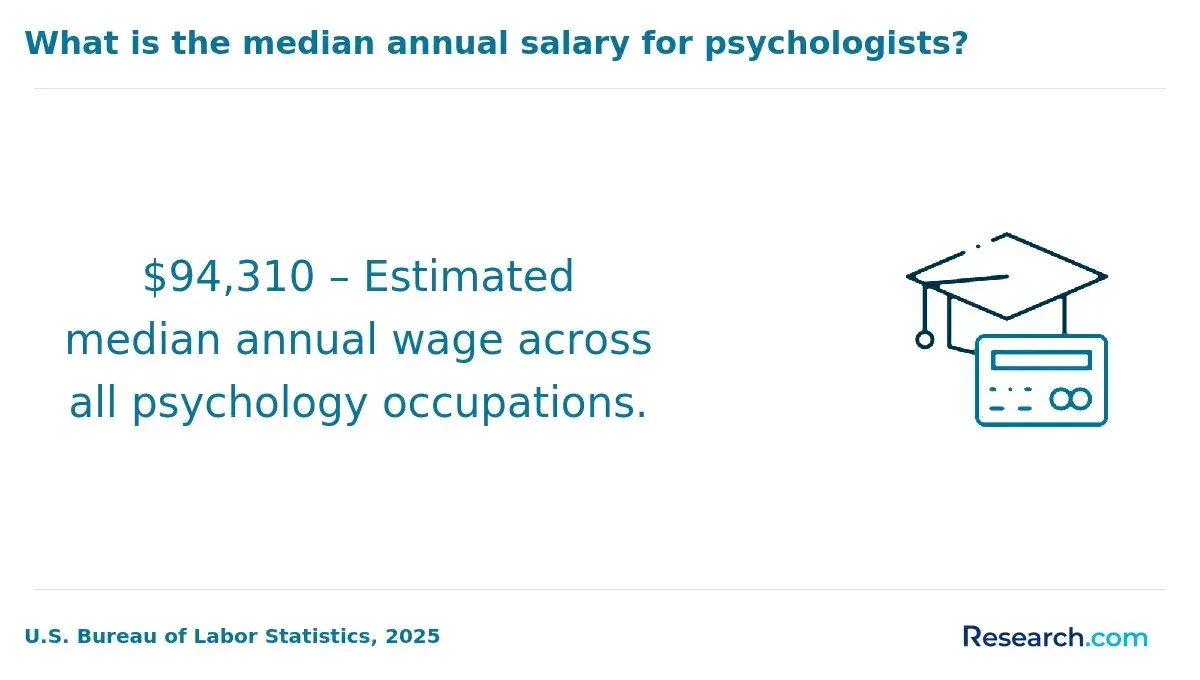
Salary data should be interpreted carefully because job title, specialty, location, employer, experience, and license type all matter. According to 2024 data from the US Bureau of Labor Statistics, the median annual wage for clinical and counseling psychologists in Idaho was $75,330. The reported national median annual wage was $94,310.
The median does not mean every psychologist earns that amount. Half earned more and half earned less. OEWS data released in 2024 shows that the top 10% of clinical and counseling psychology earners in Idaho earned $127,960 in 2023.
Psychologists working in clinical, counseling, school, industrial-organizational, forensic, or behavioral roles can see different salary patterns. Education level, specialization, credentials, workplace, and region within Idaho can also affect pay. Students exploring applied behavioral roles can compare options related to a behavioral psychology degree.
| Salary or Cost-of-Living Measure | Figure Stated | How to Use It |
| Annual mean wage for psychologists in Idaho in 2023 | $93,890 | Useful as a broad wage reference, but not a guarantee for any specialty or employer |
| Median annual wage for clinical and counseling psychologists in Idaho | $75,330 | Helpful for comparing typical clinical and counseling earnings in the state |
| National median annual wage reported | $94,310 | Provides context when comparing Idaho earnings with national figures |
| Top 10% of clinical and counseling psychology earners in Idaho in 2023 | $127,960 | Shows upper-end earnings but should not be treated as a typical early-career salary |
| Living wage in Idaho for an individual with no children | $23.60 per hour | Useful for judging whether local salaries meet personal budget needs |
| Median hourly wage for clinical and counseling psychologists in Idaho as of May 2024 | $36.22 | Useful when comparing hourly compensation with living wage estimates |
Before choosing a city or employer, compare salary with housing, transportation, student loan payments, professional liability insurance, licensing costs, and continuing education expenses. A salary that looks strong statewide may feel different in a higher-cost local market.
Skills and Certifications That Can Strengthen a Psychology Career in Idaho
Idaho’s mental health workforce needs make specialized skills valuable, but credentials should be chosen strategically. A certification is most useful when it aligns with your patient population, employer type, and long-term scope of practice.
Core skills for Idaho psychologists
- Assessment and diagnosis: Ability to select, administer, interpret, and explain psychological assessments appropriately.
- Evidence-based treatment planning: Capacity to match interventions to client needs, diagnosis, risk level, and treatment goals.
- Crisis response: Skill in identifying safety concerns, coordinating care, and responding to acute mental health needs.
- Cultural competence: Ability to serve diverse communities, including rural populations and clients with different cultural, religious, economic, and geographic backgrounds.
- Ethical decision-making: Strong understanding of confidentiality, informed consent, boundaries, mandated reporting, and Idaho laws and rules.
- Telehealth readiness: Competence with remote care delivery, documentation, privacy expectations, and cross-jurisdictional practice limitations.
Certifications that may support specialization
- Certified Clinical Trauma Professional (CCTP): May be relevant for psychologists who focus on trauma-related conditions.
- Board Certified Behavior Analyst (BCBA): May be useful for professionals working with developmental, behavioral, or child-focused concerns, depending on their role and scope.
- Prescriptive authority certification: Relevant only for licensed psychologists who complete Idaho’s additional requirements for prescribing psychologists.
Students who want training aligned with certification goals can compare the best colleges for psychology in Idaho and ask each program how coursework, practicum, and faculty expertise support the specialty they plan to pursue.
Where Licensed Psychologists Work in Idaho
Licensed psychologists in Idaho can work in health care, education, government, private practice, community services, corrections, research, and business settings. The right setting depends on your license, training, risk tolerance, preferred client population, and interest in direct practice versus assessment, consultation, teaching, or research.
| Work Setting | Examples Mentioned | Common Psychology Roles |
| Hospitals and medical centers | St. Luke's Boise Medical Center and Saint Alphonsus Regional Medical Center | Clinical assessment, integrated care, health psychology, crisis services, consultation |
| Schools | The 100+ school districts in Idaho | School psychology, assessment, intervention planning, student support, consultation |
| Private and community-based care | Private psychology practices, rehabilitation centers, and mental and behavioral health clinics in Boise, Nampa, and Meridian | Therapy, psychological testing, substance use treatment, family services, specialty practice |
| Government and public agencies | State and local agencies providing mental health and social services | Program evaluation, forensic assessment, public mental health, policy-related work |
| Universities | Boise State University and University of Idaho | Teaching, research, student services, supervision, applied psychology |
Clinical psychology graduates can pursue several applied paths. If you are asking what you can do with a clinical psychology degree, examples include substance abuse counseling, forensic psychology, learning disabilities work, organizational psychology, marriage and family services, and child psychology, depending on education, license, certification, and scope of practice.
Substance Abuse Counseling as a Psychology Specialty in Idaho
Substance abuse counseling can be a practical specialization for Idaho psychologists because it connects clinical assessment, intervention planning, relapse prevention, recovery support, and coordination with community services. This focus may be especially relevant in clinics, rehabilitation centers, hospitals, justice-related programs, and rural community health settings.
Psychologists considering this direction should verify whether they need additional credentials beyond psychology licensure for specific substance use counseling roles. For a more detailed pathway, review Research.com’s guide on how to become a substance abuse counselor in Idaho.
Idaho Job Market for Licensed Psychologists
Idaho’s job market for psychologists is shaped by population growth, limited access to care, substance use concerns, rural service gaps, and shortages across the mental health workforce. The opportunity is real, but job availability will still vary by specialty, region, employer budget, and whether the psychologist can provide assessment, therapy, supervision, telehealth, or integrated care.
- Idaho is one of the fastest-growing states in the country, which contributes to a rising need for psychologists.
- According to the Health Resources and Services Administration (HRSA), all counties in Idaho were federally designated as having mental health professional shortages in 2024.
- The opioid crisis and substance abuse problems have increased demand for specialized mental health services.
- For rankings connected to prevalence of mental illness and access to care, Idaho ranks 44th for adults and 47th for youth.
- Based on a U.S. Bureau of Labor Statistics report, there were 370 psychologists in Idaho as of 2024, equal to only 19 psychologists per 100,000 of the population.
O*NET provides positive projections for psychologists in Idaho, including clinical and counseling psychologists, school psychologists, and postsecondary psychology teachers. The chart below provides additional context.
Specialized Certifications for Idaho Psychologists
Specialized credentials can help psychologists build a more focused practice, but they should be selected based on actual job requirements and client needs. For example, behavior analysis training may support work with developmental or behavioral concerns, particularly in child, school, clinical, or autism-related services. Professionals interested in that direction can review the steps for how to become a BCBA in Idaho.
When a specialty certification makes sense
- You want to work with a defined population, such as children, trauma survivors, or clients with substance use disorders.
- Employers in your region list the credential as preferred or required.
- The certification adds supervised practice, coursework, or examination standards that improve your competence.
- The credential fits your legal scope of practice and does not create confusion about what services you may provide.
Choosing an Online Master’s in Psychology Program in Idaho
An online master’s in psychology can be useful for career advancement, doctoral preparation, research roles, or human services work, but it usually does not, by itself, qualify someone to become a licensed psychologist. Students should compare program purpose carefully. Some master’s programs are research-oriented, some are counseling-adjacent, and others are designed as stepping stones toward doctoral study.
When reviewing a master's in psychology online accredited option, check institutional accreditation, curriculum fit, faculty background, online course format, internship expectations, career services, transfer policies, and whether graduates commonly continue to doctoral training. If your goal is licensure in any mental health profession, ask the program directly which license, if any, the degree is designed to support.
Industrial-Organizational Psychology Careers in Idaho
Industrial-organizational psychology applies psychological research and measurement to workplaces. In Idaho, this specialty can connect to human resources, employee development, organizational assessment, workplace wellness, training, leadership development, and change management in public and private organizations.
This route may appeal to students who like psychology but do not want a traditional therapy role. It can also be a strong fit for people interested in data, personnel decisions, employee behavior, and organizational performance. To compare the education and career sequence, see Research.com’s guide on how to become an industrial organizational psychologist.
How Social Work Training Can Complement Psychology Practice
Social work and psychology overlap in mental health care, but they are not identical professions. Psychology often emphasizes assessment, diagnosis, research, behavior, cognition, and treatment. Social work adds strong training in systems, community resources, advocacy, case management, and social factors affecting wellbeing.
For Idaho professionals, combining psychological expertise with social work-informed collaboration can improve care coordination, especially in rural or underserved communities where clients may need housing support, crisis resources, family services, medical referrals, or public benefits. If you are comparing related mental health careers, review what degree you need to be a social worker in Idaho.
How to Become a School Psychologist in Idaho
School psychology is a specialized route focused on student learning, mental health, behavior, assessment, intervention, consultation, and collaboration with educators and families. In Idaho, this path typically requires graduate-level preparation, supervised internship experience in educational settings, and satisfaction of state licensure or endorsement requirements.
Students should distinguish between psychologist licensure and school psychology credentialing, because the requirements, work settings, and governing authorities may differ. For a state-specific overview, see Research.com’s guide on how to become a school psychologist in Idaho.
Forensic Psychology Career Options in Idaho
Forensic psychology involves applying psychological knowledge to legal and criminal justice contexts. In Idaho, this may include work with correctional facilities, courts, law enforcement agencies, attorneys, victims, juveniles, custody-related matters, competency questions, risk assessments, or expert consultation.
Forensic roles often require strong assessment skills, careful documentation, courtroom readiness, and a clear understanding of ethical boundaries. Students interested in this field can use Research.com’s guide on how to become a criminal psychologist in Idaho to explore a related pathway.
Fastest Ways to Move Into Counseling Careers in Idaho
If your primary goal is to provide counseling rather than become a licensed psychologist, a counseling licensure route may be faster than the doctoral psychology pathway. However, faster does not mean simple. Counseling licensure still requires graduate education, supervised clinical experience, examination, and state approval.
Career changers and recent graduates should compare the psychologist, counselor, marriage and family therapist, and social work routes before enrolling. The best path depends on the services you want to provide, the clients you want to serve, and the level of assessment or independent practice you need. For a focused comparison, see the shortest path to become a counselor in Idaho.
Telepsychology Benefits in Idaho
Telepsychology can be especially important in Idaho because geography and rural access barriers can make in-person mental health care difficult. For licensed psychologists, telehealth can expand reach, improve continuity of care, and create more flexible practice models, but it also requires attention to privacy, documentation, emergency planning, and cross-state practice rules.
- Improved rural access: Telepsychology can help psychologists serve clients who live far from clinics or specialty providers.
- Flexible practice structure: Remote appointments may help psychologists balance clinical work, supervision, consulting, or part-time practice.
- Lower overhead: Some practitioners may reduce office-related costs, although technology, compliance, and insurance expenses still matter.
- Patient comfort: Some clients may engage more consistently when receiving care from a familiar or private setting.
- PSYPACT participation: Idaho’s participation in PSYPACT may allow eligible psychologists to provide telepsychology across compact jurisdictions when requirements are met.
How Online PsyD Programs May Help Idaho’s Mental Health Workforce
Idaho’s shortage of licensed psychologists is especially challenging for rural and underserved communities. Online and hybrid Doctor of Psychology programs may help by reducing relocation barriers for students who want doctoral training but cannot easily move to a campus-based program. Still, students must evaluate these programs carefully because psychologist licensure depends on more than online coursework.
Potential advantages of online PsyD programs for Idaho students
- Access for rural residents: Online coursework can make doctoral education more reachable for students who live far from campus-based programs.
- Flexibility for working adults: Some online PsyD formats are designed for students balancing employment, family responsibilities, and graduate study.
- Licensure-focused planning: Strong programs help students understand coursework, practicum, internship, and supervision expectations connected to state licensure.
Before enrolling, verify accreditation status, residency requirements, clinical placement support, internship match preparation, and whether the program’s graduates are eligible for licensure in Idaho. Students comparing flexible doctoral options can start with online PsyD programs accredited, then confirm all details directly with the school and the Idaho Board.
Other Licensure Options for Idaho Mental Health Professionals
Psychology is not the only route into mental health practice. Some professionals may also consider an MFT license in Idaho, Licensed Clinical Social Worker credentials, or Licensed Professional Counselor licensure. These routes can support work in marriage and family therapy, counseling, community mental health, case-informed care, or behavioral health settings.
The right license depends on your intended scope of practice. If you want doctoral-level psychological testing and diagnosis, psychologist licensure may be the better fit. If your goal is counseling, family systems work, or community-based therapy, another license may align more directly with your timeline and career plan.
How to Become a Licensed Professional Counselor in Idaho
Licensed Professional Counselor candidates in Idaho generally need an accredited master’s degree in counseling or a related field, supervised clinical experience that meets state standards, and successful completion of required examinations. LPC training focuses on counseling techniques, ethical practice, client engagement, assessment within scope, and treatment planning.
Students comparing counseling and psychology should note that LPC licensure is distinct from psychologist licensure. For detailed steps, review Research.com’s guide on how to become an LPC in Idaho.
Key Steps for Idaho LPC License Requirements
To pursue an LPC in Idaho, verify that your degree, supervised clinical hours, examination results, and application materials match the Board’s requirements. Keep copies of transcripts, supervision verification, exam documentation, and any supplemental forms. Because licensure standards can change, applicants should regularly review state guidance and program disclosures.
For a more complete checklist, see Research.com’s overview of Idaho LPC license requirements.
Career Paths for Child Psychologists
Child psychology includes several practice directions, each with different training needs and work settings. If you are exploring how to become a child psychologist, start by identifying the population and setting you want: hospitals, schools, private practice, courts, early intervention, or family services.
| Career Path | Main Focus | Typical Settings |
| Clinical Child Psychologist | Assessment and treatment of emotional, behavioral, and mental health concerns in children and families | Clinics, hospitals, private practice, community mental health |
| School Psychologist | Learning, behavior, emotional wellbeing, intervention planning, and consultation in education systems | Elementary, middle, and high schools |
| Pediatric Psychologist | Psychological aspects of illness, medical procedures, chronic conditions, and child health | Hospitals and pediatric health settings |
| Forensic Child Psychologist | Psychological evaluation and consultation in legal matters involving children | Courts, correctional systems, custody-related cases, child welfare settings |
| Play Therapist | Use of play-based methods to help children express feelings and work through emotional challenges | Private practice, clinics, child-focused agencies |
Common Mistakes When Planning a Psychology Career in Idaho
- Choosing a program based only on tuition: Low tuition is helpful, but accreditation, clinical placement support, and licensure alignment are just as important.
- Assuming any psychology degree leads to licensure: Idaho psychologist licensure generally requires doctoral-level preparation and supervised experience.
- Ignoring supervised experience rules: Hours may not count if the setting, supervisor, documentation, or timing does not meet Board expectations.
- Confusing psychologist, counselor, school psychologist, MFT, and social work licenses: These credentials can lead to related careers, but they have different requirements and scopes.
- Overlooking rural practice realities: Rural Idaho may offer strong service need, but psychologists should evaluate supervision, referral networks, crisis resources, and professional isolation.
- Assuming salary outcomes are guaranteed: BLS and OEWS figures are useful benchmarks, not promises of income for a specific graduate or location.
- Enrolling in an online program without checking licensure fit: Online coursework can be convenient, but practicum, internship, residency, and accreditation still matter.
Key Insights
- Idaho psychologist licensure generally requires a doctoral degree, at least 2,000 hours of board-approved supervised experience, EPPP passage, a background check, and Board approval.
- The typical path can take 8-10 years after a bachelor’s degree, so students should choose programs with licensure planning, supervised placement support, and strong accreditation information.
- Idaho’s mental health workforce shortage and statewide shortage designations create meaningful need, but job opportunities still depend on specialty, location, employer type, and credentials.
- Prescriptive authority is a distinctive option in Idaho, but it requires additional education and certification beyond standard psychologist licensure.
- Online psychology and PsyD programs may improve access for rural students, but applicants must verify accreditation, internship support, and Idaho licensure alignment before enrolling.
- Students who want counseling careers should compare psychologist licensure with LPC, MFT, school psychology, and social work routes before committing to a doctoral pathway.
- Salary data should be evaluated alongside cost of living, student debt, practice expenses, and regional demand rather than treated as a guaranteed outcome.
Related Articles for Nearby States
- 2027 Montana Psychology Licensure Requirements – How to Become a Psychologist in Montana
- 2027 Washington Psychology Licensure Requirements – How to Become a Psychologist in Washington
- 2027 Oregon Psychology Licensure Requirements – How to Become a Psychologist in Oregon
- 2027 Nevada Psychology Licensure Requirements – How to Become a Psychologist in Nevada
- 2027 Utah Psychology Licensure Requirements – How to Become a Psychologist in Utah
- 2027 Wyoming Psychology Licensure Requirements – How to Become a Psychologist in Wyoming
- 2027 California Psychology Licensure Requirements – How to Become a Psychologist in California
- 2027 Colorado Psychology Licensure Requirements – How to Become a Psychologist in Colorado
- 2027 Arizona Psychology Licensure Requirements – How to Become a Psychologist in Arizona
- 2027 New Mexico Psychology Licensure Requirements – How to Become a Psychologist in New Mexico
References:
- All Psychology Schools (n.d.) Idaho State Licensing Requirements. https://www.allpsychologyschools.com/licensing/idaho/
- Fink III, J. & Schwartz, M. (2025, April 23). States Grant Prescribing Authority to Psychologists. Pharmacy Times. https://www.pharmacytimes.com/view/states-grant-prescribing-authority-to-psychologists
- Glasmeier, A.K. and Massachusetts Institute of Technology (2026, February 15). Living Wage Calculation for Idaho. Living Wage Calculator. https://livingwage.mit.edu/states/16
- Mental Health America (2025). The State of Mental Health in America 2025. https://mhanational.org/wp-content/uploads/2025/09/State-of-Mental-Health-2025.pdf
- National Center for Education Statistics. Digest table reference. https://nces.ed.gov/programs/digest/d23/tables/dt23_318.20.asp
- Occupational Information Network (n.d.). Idaho Employment Trends, 19-3033.00 - Clinical and Counseling Psychologists. https://www.onetonline.org/link/localtrends/19-3033.00?st=ID
- Occupational Information Network (n.d.). Idaho Employment Trends, 19-3034.00 - School Psychologists. https://www.onetonline.org/link/localtrends/19-3034.00?st=ID
- Occupational Information Network (n.d.). Idaho Employment Trends, 25-1066.00 - Psychology Teachers, Postsecondary. https://www.onetonline.org/link/localtrends/25-1066.00?st=ID
- Mental Health America (2023). State of Mental Health in America Report. https://mhanational.org/sites/default/files/2023-State-of-Mental-Health-in-America-Report.pdf
- U.S. Bureau of Labor Statistics. Occupational Employment and Wage Statistics, Idaho, May 2023. https://www.bls.gov/oes/2023/may/oes_id.htm
- U.S. Bureau of Labor Statistics (2024). 19-3033 Clinical and Counseling Psychologists. https://www.bls.gov/oes/current/oes193033.htm
- U.S. Bureau of Labor Statistics (2025). Psychologists. https://www.bls.gov/ooh/life-physical-and-social-science/psychologists.htm
Other Things You Should Know About Idaho Psychology Licensure Requirements
In 2027, to become a licensed psychologist in Idaho, you must earn a doctoral degree in psychology from a program accredited by the APA or meet state equivalency standards. This is followed by completing a supervised experience, typically an internship or postdoctoral residency, before applying for licensure.
In 2027, Idaho requires aspiring psychologists to complete 2,000 hours of supervised professional experience, typically through internships or postdoctoral training. This experience must be under the supervision of a licensed psychologist to ensure comprehensive training.
To maintain a psychology license in Idaho in 2027, psychologists must complete 20 hours of continuing education every two years, including 4 hours in ethics. Additionally, they must renew their license biennially and meet any other requirements set by the Idaho Board of Psychologist Examiners.


