
2027 How to Choose Between a Psychologist vs Psychiatrist Career

Co-Founder and Chief Data Scientist
Choosing between a psychologist vs psychiatrist career is really a choice between two different ways of helping people with mental health conditions: one centered mainly on behavior, assessment, and therapy, and the other grounded in medicine, diagnosis, and psychiatric treatment. The distinction matters because the education path, cost, scope of practice, daily work, salary expectations, and licensing requirements are not the same.
Mental illness affects nearly one in five adults in the United States. Within that group, serious conditions such as schizophrenia affect 2%, bipolar disorders affect 4.3%, and 8.1% experience substance use disorder, according to the National Alliance on Mental Illness. These needs create demand for trained mental health professionals who can provide therapy, assessment, medication management, crisis care, research, and support across schools, hospitals, community clinics, private practices, and specialized care settings.
This guide compares psychologist and psychiatrist careers in practical terms. You will learn how the roles differ, how long each path takes, what each profession can and cannot do, what salary and job outlook data show, and how to decide which route fits your strengths, finances, and long-term goals. If you are also comparing related options, Research.com’s guide to the highest paying psychology careers can help you understand where psychology training may lead.
Psychologist vs Psychiatrist Career Table of Contents
- Psychologist vs psychiatrist: the quick answer
- Major differences in education, training, practice, and pay
- Why continuing education matters in mental health careersCompare both roles in more detail
- How to choose between becoming a psychologist or psychiatrist
- Affordable online options for advanced psychology degrees
- Ethical and legal issues in mental health practice
- Therapist pathways without a psychology degree
- How combined M.S. and PsyD programs support career preparation
- Accelerated online master’s programs in psychology
- Online advanced degrees in clinical mental health counselingAccelerated psychology master’s optionsIntegrated M.S. and PsyD pathwaysAlternative therapist education routesEthics and legal practice considerationsAffordable psychology graduate programsCareer decision factors
- Work-life balance for psychologists and psychiatrists
- Forensic psychology as a specialized career option
- Career paths with a psychology degree
- BCBA professionals in mental health and education
Psychologist vs Psychiatrist: Quick Answer
A psychologist is a mental health professional trained to study behavior, emotions, cognition, assessment, and therapy. Most licensed psychologists need a doctoral degree, such as a PhD, PsyD, or EdD, and they typically provide psychological testing, counseling, behavioral interventions, and psychotherapy.
A psychiatrist is a medical doctor who specializes in mental health. Psychiatrists complete medical school and residency training, diagnose mental disorders, evaluate physical and psychiatric symptoms, prescribe medication, and may provide psychotherapy or coordinate medical treatment for complex psychiatric conditions.
The best choice depends on the kind of work you want to do. Choose psychology if you are most interested in therapy, assessment, behavior change, research, education, or organizational applications of mental health. Choose psychiatry if you want to become a physician, prescribe medication, treat severe psychiatric conditions medically, and work at the intersection of neuroscience, pharmacology, and clinical care.
| Decision Factor | Psychologist | Psychiatrist |
| Core focus | Behavior, emotions, cognition, testing, therapy, and research | Medical diagnosis, psychiatric treatment, medication, and biological factors |
| Typical education | Doctorate in psychology, such as PhD, PsyD, or EdD | Medical degree followed by psychiatry residency |
| Can prescribe medication? | Generally no, except in some states with additional training | Yes |
| Common work settings | Private practice, schools, clinics, universities, businesses, and research settings | Hospitals, clinics, private practice, community health centers, military settings, and medical systems |
| Best fit for students who want to | Provide therapy, conduct assessments, study behavior, or work in education and counseling-related roles | Practice medicine, prescribe psychiatric medication, and treat complex mental illness medically |
Psychologists vs Psychiatrists: Key Differences
Psychologists and psychiatrists often collaborate, but they are not interchangeable careers. Both support people with mental health concerns, yet they approach care through different training models. Psychology is rooted in behavioral science, testing, psychotherapy, and research. Psychiatry is rooted in medicine, diagnosis, pharmacology, and the physical dimensions of mental illness.
Education and Training
The psychology path usually begins with undergraduate study in psychology or a related field. Students may complete one of the best online bachelor degree programs or a campus-based bachelor’s program before moving into graduate study. To become a licensed psychologist, the minimum professional requirement is commonly a doctorate, such as a PsyD, PhD, or EdD, according to the American Psychological Association. Students can find campus-based and online options, including PsyD online degree programs, but they should verify internship, practicum, residency, and state licensure requirements before enrolling. Many states also require supervised postdoctoral experience before independent practice.
The psychiatry path is a medical route. Future psychiatrists commonly complete a bachelor’s degree in biology, psychology, or another premedical field before entering medical school. Because psychiatrists prescribe medication and evaluate medical contributors to mental health symptoms, their training includes anatomy, pharmacology, biology, neurology, disease processes, and clinical medicine. After medical school, psychiatrists complete four years of residency before pursuing licensure.
| Training Step | Psychologist Route | Psychiatrist Route |
| Undergraduate preparation | Psychology, social science, education, or related field | Premedical coursework, biology, psychology, or related field |
| Graduate education | Doctoral degree such as PhD, PsyD, or EdD | Medical school leading to a medical degree |
| Clinical training | Practicum, internship, supervised clinical work, and often postdoctoral fellowship | Four-year psychiatry residency after medical school |
| Licensure focus | Psychological assessment, ethics, therapy, and supervised practice | Medical licensure, psychiatry training, prescribing, and clinical diagnosis |
| Main training emphasis | Human behavior, assessment, psychotherapy, research, and development | Medicine, psychiatric diagnosis, neuroscience, pharmacology, and biological treatment |
Career Opportunities
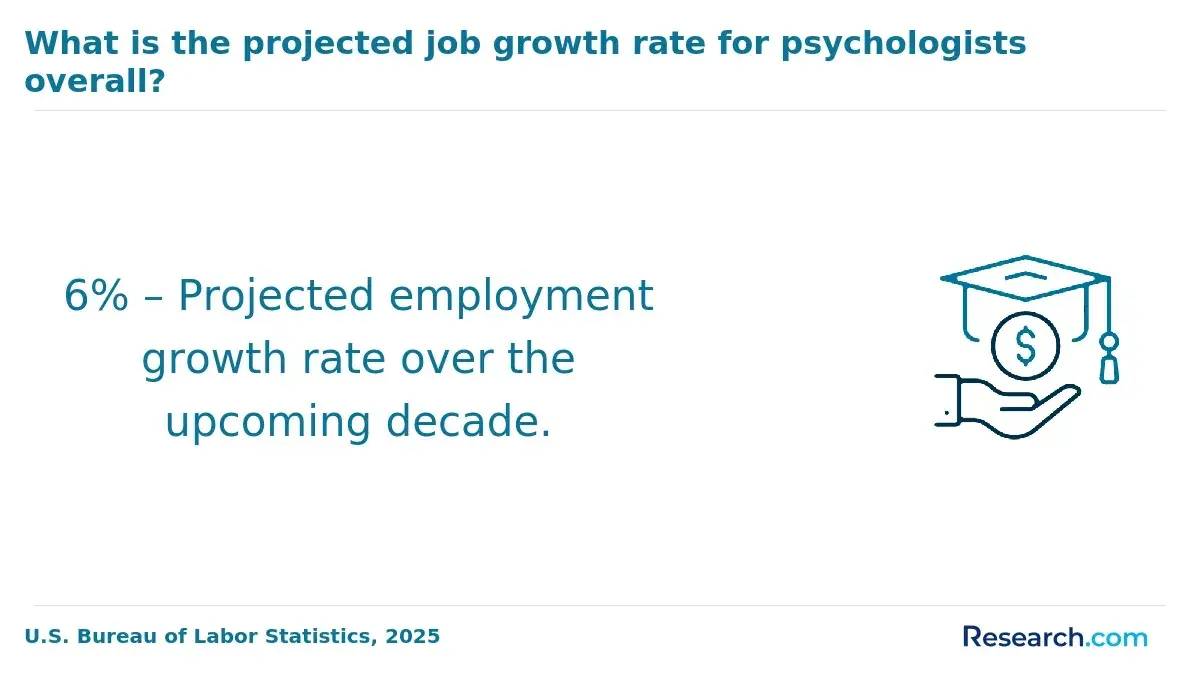
Psychology and psychiatry lead to different job markets, even though both sit within mental health care. Through 2034, overall employment for psychologists and psychiatrists is projected to grow by 6%, producing between 900 to 12,900 annual jobs, according to the Bureau of Labor Statistics, 2025. The best career path depends on whether you want your work to center more on therapy and assessment or medical treatment and psychiatric diagnosis.
Common Psychologist Careers
- School psychologists. A school psychology career focuses on learning, development, behavior, and mental health in educational settings. School psychologists assess student needs, support families, consult with teachers, develop intervention plans, and help schools respond to academic, behavioral, and emotional concerns.
- Clinical and counseling psychologists. These professionals assess and treat people with mental and emotional health concerns, including depression, bipolar disorder, borderline personality disorder, and other disorders. They may provide therapy, design treatment plans, conduct research, and work with children, adults, older adults, families, or specialized populations.
- Marriage and family therapists. Students who complete an online counseling psychology degree or related graduate training may pursue work focused on relationships, family systems, and interpersonal issues. Marriage and family therapists help individuals, couples, and families address conflict, communication problems, emotional distress, and relationship patterns.
Common Psychiatrist Careers
The BLS reports that there are more than 27,000 psychiatrists in the workforce. Demand remains a major concern because many communities face shortages in mental health care access, and the need for psychiatrists continues to grow. Psychiatric specialties vary by population, setting, and type of condition treated.
- Child psychiatrists. Child psychiatrists evaluate and treat mental, emotional, and behavioral disorders in children. They may work with children and families in hospitals, courts, schools, community agencies, educational centers, and private practice.
- Child and adolescent psychiatrists. These physicians treat children and young people up to age 18. Their work may include depression, autism spectrum disorder, eating disorders, and other psychiatric or developmental concerns.
- Geriatric psychiatrists. Geriatric psychiatrists specialize in the mental health of older adults. They evaluate, diagnose, and treat psychiatric and emotional disorders in elderly patients and help improve psychiatric care for aging populations.
Salary Outlook
Both fields can offer earnings above the average for all occupations in the United States, but salary levels vary by specialty, location, employer, experience, education, and practice setting. Psychiatry usually has higher compensation because it requires medical school, residency, and physician licensure.
Psychologists have an annual median wage of $94,310. The BLS reports yearly average salaries of $86,930 for school psychologists, $95,830 for clinical and counseling psychologists, and $109,840 for industrial-organizational psychologists, based on 2025 data.
Psychiatrists have an annual average pay equal to or more than $239,200, although earnings vary by practice location and specialty. Psychiatrists in North Dakota, California, and Indiana receive the highest pay, with a median yearly salary of more than $300,000. Child psychiatrists could earn $307,473 every year.
| Role | Reported Pay Figure | What to Remember |
| Psychologists overall | $94,310 annual median wage | Pay varies by specialty, setting, and level of experience. |
| School psychologists | $86,930 yearly average salary | Often work in K-12 schools, districts, or education-related agencies. |
| Clinical and counseling psychologists | $95,830 yearly average salary | Commonly provide assessment, therapy, and treatment planning. |
| Industrial-organizational psychologists | $109,840 yearly average salary | Apply psychology to workplace behavior, productivity, training, and organizational systems. |
| Psychiatrists | Equal to or more than $239,200 annual average pay | Higher pay reflects physician training and prescribing authority. |
| Child psychiatrists | $307,473 every year | Specialty, location, and employer can strongly affect pay. |
Scope of Practice
Psychologists and psychiatrists may treat the same patient, but they usually contribute different expertise. A psychiatrist may conduct a medical evaluation, diagnose a psychiatric disorder, prescribe medication, and monitor side effects or medical interactions. A psychologist may provide psychological testing, psychotherapy, behavioral treatment, and long-term support for emotional and cognitive patterns.
Psychologists commonly work in offices of health practitioners, private practice, schools, academia, research centers, clinics, and organizational settings. Psychiatrists often work in hospitals, but they may also practice in clinics, private offices, military settings, nursing homes, hospice programs, and offices of health practitioners.
Both professionals can assess and diagnose mental health conditions and provide psychotherapy. The key difference is that psychiatrists have broad medical training and can prescribe psychiatric medication. They may also evaluate physical health, monitor the effects of medication, coordinate medical care, and provide brain stimulation treatments such as electroconvulsive therapy. Psychologists focus more deeply on behavior, personality, development, psychological testing, psychotherapy, research, and ethics. In some states, psychologists can prescribe psychiatric medication after completing additional training.
Conditions Treated
Psychologists often treat mental health concerns using therapy, behavioral interventions, testing, and evidence-based psychological treatment. Common areas include:
- Behavioral and learning difficulties
- Anxiety
- Low self-esteem
- Fears and phobias
- Drug and alcohol abuse
- Depression
Psychiatrists frequently treat complex mental illnesses that may require medication, medical evaluation, or integrated psychiatric care. These may include:
- Schizophrenia
- Bipolar disorder
- Severe depression
- Anxiety disorders
- Attention deficit hyperactivity disorder, or ADHD
- Obsessive-compulsive disorder, or OCD
- Post-traumatic stress disorder, or PTSD
- Borderline personality disorder
Psychiatrists also treat people who have suicidal thoughts or who have attempted suicide, often as part of urgent, inpatient, outpatient, or coordinated crisis care.
Roles of Psychologists and Psychiatrists in Different Fields
Mental health professionals are needed in more than therapy offices. Psychologists and psychiatrists contribute to education, medicine, research, legal systems, disability services, community health, and specialized care programs. Their roles differ by setting, but both professions help improve functioning, safety, treatment access, and quality of life.
Mental Health Care
The United States continues to face major mental health challenges. In 2024, 17.7% of adults had a substance abuse disorder, while 5.5% reported serious suicidal thoughts, according to Mental Health America, 2025. Among youths, 15.4% experienced a major depressive episode. Public reporting has also described a mental health crisis, reinforcing the need for accessible, qualified care.
Psychologists address these needs through psychological assessment and evidence-based therapies, including cognitive behavioral therapy. They help clients manage anxiety, depression, fear, negative thinking, behavior problems, trauma responses, and relationship concerns. Psychiatrists diagnose psychiatric conditions, develop treatment plans, order tests when needed to rule out physical causes, and treat patients through medication, psychotherapy, or a combination of both.
Special Education
Special education student enrollment is almost at 8 million, according to a K12Dive report. This makes school-based mental health, behavioral support, and disability-informed care increasingly important.
-
: "
In “Social Inclusion of Students with Special Educational Needs Assessed by the Inclusion of Other in the Self Scale,” published in PLoS One, Vyrastekova (2021) found that school served as an important setting for friendship formation among students with special educational needs. The study reported that SEN students formed most friendships at school regardless of school type, while those attending regular schools had more friends who lived closer to them than peers attending special schools. The finding suggests that inclusive school placement can support local social networks and broader social inclusion.
"
As schools expand inclusion in special education, psychologists help design supports for students with disabilities, learning differences, behavioral challenges, and social-emotional needs. They collaborate with families, teachers, administrators, community providers, and other specialists. Educational psychology can guide instruction, assessment, intervention planning, and student support across ability levels and learning environments.
Psychiatrists may also support people with learning disabilities, especially when mental health conditions, developmental concerns, medication needs, or complex psychiatric symptoms are involved. Their work can include person-centered planning, coordination with mainstream services, and access to specialized health resources.
Research
Research is another area where both fields shape care. Psychologists study human behavior, cognition, therapy outcomes, development, assessment methods, learning, workplace behavior, and mental health interventions. Their findings help clinicians, counselors, schools, employers, and public agencies improve practice.
Psychiatry research investigates the causes, progression, prevention, and treatment of mental illness. It can improve medication use, diagnostic methods, biological understanding, and care models. Together, psychological and psychiatric research supports better treatment planning, stronger prevention efforts, and improved patient outcomes.
The Value of Continuing Education for Mental Health Professionals
Mental health practice changes as new research, treatment methods, technologies, ethical standards, and state regulations emerge. Continuing education helps psychologists and psychiatrists maintain licensure, improve clinical judgment, stay current with evidence-based care, and respond to increasingly complex client needs.
Psychologists may pursue postdoctoral training, workshops, supervised specialization, or certifications in areas such as cognitive behavioral therapy, trauma-focused treatment, assessment, child psychology, health psychology, or forensic practice. Students who want advanced clinical preparation may also compare clinical psychologist programs online, while confirming that any program meets state licensure and supervised training requirements.
Psychiatrists rely on continuing medical education, medical conferences, specialty fellowships, and updates in pharmacology, neuroscience, emerging treatments, and medical technology. Because psychiatric medications and treatment protocols evolve, ongoing professional development is central to safe practice.
Continuing education also strengthens interdisciplinary collaboration. Psychologists, psychiatrists, counselors, social workers, BCBAs, physicians, educators, and community providers often coordinate care. Professionals who keep learning are better prepared to communicate across disciplines, use current evidence, and avoid outdated or unsupported practices.
Choosing Between a Psychologist vs Psychiatrist Career
The right career is not simply the one with the higher salary or shorter training path. It is the one that fits your interests, tolerance for school debt, preferred daily work, academic strengths, and long-term professional identity. Use the following decision points before committing to either route.
1. Identify Your Academic and Personal Strengths
Psychology may fit you if you are drawn to human behavior, communication, research, therapy, assessment, and helping people understand patterns in thinking and emotion. Psychologists need strong listening skills, analytical thinking, ethical judgment, patience, and comfort with long-term client relationships.
Psychiatry may fit you if you are strongly interested in medicine, biology, neuroscience, pharmacology, and the physical dimensions of mental illness. Psychiatrists also need excellent communication skills, but they must be prepared for the demands of medical training, diagnostic complexity, medication management, and high-stakes clinical decision-making.
2. Decide How Much Time You Can Commit
The time investment differs sharply. Psychiatry requires a medical education pathway that includes undergraduate preparation, medical school, and four years of residency. The full route requires at least 12 years of education and training. Psychology generally requires eight to 10 years of education before licensing, depending on degree type, internship requirements, postdoctoral experience, and state rules.
If you want to enter independent practice sooner, psychology may be the more practical option. If becoming a physician is central to your goal, psychiatry is the appropriate route despite the longer timeline.
3. Evaluate the Financial Commitment
Both professions require significant educational investment. Total cost depends on the institution, location, residency requirements, specialization, financial aid, transfer credits, assistantships, scholarships, and whether you attend public, private, online, or campus-based programs.
A psychologist education requires a doctorate, with an average cost of approximately $104,000. A PhD costs about $116,000. Students pursuing psychiatry should expect an annual average cost of around $230,000 from medical school. These figures make financial planning essential before choosing a path.
| Question to Ask | Why It Matters | Better Decision Move |
| Can I handle the required years of training? | Psychiatry usually takes longer because it is a medical pathway. | Map the full timeline before applying, including supervised practice and licensure steps. |
| How much debt am I willing to take on? | Both routes can be expensive, and medical school costs can be especially high. | Compare net cost, aid, assistantships, repayment options, and realistic earnings. |
| Do I want to prescribe medication? | Prescribing authority is one of the clearest differences between the careers. | Choose psychiatry if medication management is central to your career goal. |
| Do I prefer therapy and assessment? | Psychologists usually spend more time on psychotherapy, testing, and behavioral treatment. | Choose psychology if that work is what motivates you most. |
| Which setting do I want? | Schools, hospitals, clinics, private practice, and research jobs differ greatly. | Shadow professionals or interview practitioners in your preferred setting. |
4. Think Carefully About Professional Identity
Titles matter because they communicate training, authority, and scope of practice. In some states, professionals with master’s degrees in psychology may use certain psychology-related titles, but the title “psychologist” is often tied to doctoral-level training and licensure. Psychiatrists complete medical school and earn an MD or related medical credential before completing residency in psychiatry.
Do not choose a route based on title alone. Instead, ask what kind of responsibility you want. If you want to diagnose and treat as a physician, psychiatry is the aligned path. If you want to specialize in psychological testing, psychotherapy, research, or behavioral interventions, psychology is usually the better fit.
5. Match the Career to Your Long-Term Goals
Before asking whether you should become a psychiatrist or psychologist, define what you want your work life to look like. Consider income goals, preferred patient population, workplace environment, tolerance for administrative work, interest in research, desired autonomy, and whether you want to work with individuals, groups, schools, hospitals, or organizations.
If maximizing earning potential is a priority, psychiatry generally pays more. If your primary motivation is counseling, behavior change, testing, or helping clients through talk therapy, psychology may align better. If you want to work in corporate settings on employee productivity, training, or human resources, industrial-organizational psychology may be more relevant than psychiatry.
What Are the Affordable Online Options for Advanced Degrees in Psychology?
Online psychology programs can be useful for students who need flexibility, especially working adults and career changers. They may reduce relocation costs and make scheduling easier, but affordability should never be judged by tuition alone. Students should also check accreditation, in-person requirements, practicum placements, internship expectations, transfer credit policies, technology fees, and whether the program supports licensure in their state.
If cost is a major concern, compare programs using Research.com’s guide to the cheapest masters in psychology online. A lower-cost program is only a good choice if it also provides credible training, transparent outcomes, and a pathway that matches your career goal.
What are the key ethical and legal considerations in mental health practice?
Mental health professionals work with sensitive information, vulnerable clients, and situations that can involve safety risks. Core ethical and legal duties include confidentiality, informed consent, accurate documentation, professional boundaries, competence, cultural responsiveness, mandated reporting, and appropriate responses to risk of harm.
Ethical dilemmas can arise when patient privacy intersects with safety, legal reporting duties, family involvement, school concerns, or court requirements. Training should help professionals understand both the law and the ethical reasoning behind clinical decisions. Students seeking faster graduate routes should still evaluate whether programs such as a one year masters psychology option provide enough depth, supervision, and preparation for their intended role.
Can I Become a Therapist Without a Psychology Degree?
You do not always need a psychology degree specifically to become a therapist, but you do need the education and supervised experience required by your state and profession. Many therapists come from counseling, social work, marriage and family therapy, or related mental health programs. Certification courses alone usually do not replace licensure requirements for independent clinical practice.
Alternative pathways can be legitimate when they lead to recognized credentials, supervised practice, and state-approved licensure. Requirements vary widely, so verify the rules in the state where you plan to practice before enrolling. For a more detailed breakdown of degree and credential options, review Research.com’s guide on what degree do I need to be a therapist.
How do integrated M.S. PsyDd programs enhance career readiness?
Integrated graduate pathways can reduce fragmentation between master’s-level study and doctoral training. Programs such as M.S. PsyDd programs are designed to combine advanced psychology coursework, clinical theory, assessment preparation, and supervised practice within a more connected sequence.
These programs may help students build career readiness by linking classroom learning with applied clinical skills. However, students should still check accreditation, internship match expectations, total cost, faculty expertise, licensure alignment, and how the program handles students who decide not to continue through the doctoral phase.
How Can Accelerated Online Master’s Programs Elevate My Psychology Career?
Accelerated online master’s programs can help students complete graduate coursework more quickly, but speed should not be the only reason to choose a program. A shorter format may be useful for professionals who already have relevant experience, clear goals, and enough time each week for intensive study.
Before enrolling in a fast masters in psychology online, compare curriculum depth, faculty qualifications, fieldwork requirements, student support, licensure relevance, and whether the pace is realistic. A fast program that does not support your intended credential or career path can cost more in the long run.
Are online advanced degrees in clinical mental health counseling right for my career?
Online advanced degrees in clinical mental health counseling can be a strong option for students who want flexible study while preparing for counseling-related roles. The best programs combine rigorous coursework with supervised practical training, ethical preparation, and clear licensure guidance.
When comparing online counseling programs, look beyond convenience. Ask about practicum placement support, state licensure alignment, faculty experience, student outcomes, counseling skill development, and how the program evaluates clinical readiness. Research.com’s guide to the fastest clinical mental health counseling master's programs online can help you compare accelerated options more carefully.
Which is Better: Psychologist vs Psychiatrist?
Neither career is universally better. A psychologist vs psychiatrist career comparison is about fit. Both professions can reduce suffering, improve mental health, and support people facing serious challenges. Students may begin with a campus-based psychology degree or a fast-track bachelor degree online, then continue into the graduate or medical route required for their chosen profession.
Psychiatry is often the better fit if you want to practice medicine, prescribe medication, and treat psychiatric conditions from a medical perspective. Psychology is often the better fit if you want to focus on therapy, assessment, research, education, behavior change, or organizational applications of mental health. The strongest choice is the one that matches your abilities, financial situation, preferred training length, and desired daily work.
What are the work-life balance considerations for psychologists and psychiatrists?
Both careers can be emotionally demanding. Work-life balance depends less on the job title alone and more on setting, specialty, caseload, schedule control, administrative burden, and the severity of patient needs.
- Work environment. Psychologists may have more flexibility across private practice, schools, universities, clinics, and corporate settings. Psychiatrists often work in hospitals or clinics, where on-call duties, urgent cases, and medical system demands can affect schedules.
- Patient load. Psychologists may work with clients over longer periods through therapy and assessment. Psychiatrists may have shorter but more frequent appointments focused on diagnosis, medication management, and follow-up care.
- Emotional intensity. Both roles involve distress, trauma, crisis, and complex cases. Psychologists may carry the emotional weight of long-term therapeutic relationships. Psychiatrists may see more severe psychiatric symptoms, acute risk, or medically complex cases.
- Administrative duties. Psychiatrists often manage prescriptions, medical documentation, insurance requirements, lab coordination, and communication with other healthcare providers. Psychologists also handle documentation and administrative work, especially in private practice, but may have more control over scheduling and caseload design.
The Emerging Role of Forensic Psychology in Mental Health Careers
Forensic psychology is a specialized area for students interested in psychology and the legal system. It applies psychological knowledge to courts, corrections, criminal investigations, competency evaluations, rehabilitation, risk assessment, and legal decision-making.
Forensic psychologists may evaluate whether defendants are competent to stand trial, provide expert testimony, assess risk, support offender rehabilitation programs, consult with attorneys, or conduct research related to law and behavior. Their work can influence individual cases and broader justice policies.
This field can appeal to students who want mental health expertise but do not want a traditional therapy-only career. Opportunities may exist in government agencies, law enforcement-related settings, private practice, academia, and correctional systems. To explore education requirements, compensation, and the job outlook for forensic psychologists, review Research.com’s dedicated forensic psychology career guide.
Forensic psychology is not the same as psychiatry, and it does not usually involve prescribing medication. It is better suited to students interested in assessment, behavior, law, ethics, and expert analysis within legal contexts.
What career paths can I pursue with a degree in psychology?
A psychology degree can lead to more than clinical practice. Depending on the degree level, license, and specialization, graduates may pursue roles in counseling-related fields, research, human services, school psychology, organizational psychology, behavioral health, case management, market research, human resources, and academic settings.
A master’s degree can expand options, but it does not automatically qualify graduates for every clinical role. Licensure requirements vary by profession and state. To compare career options, see Research.com’s guide, What can you do with a masters in psychology.
What is the role of BCBA professionals in mental health education?
Board-Certified Behavior Analysts, or BCBAs, use behavior analysis to assess behavior, design interventions, measure progress, and teach adaptive skills. They often work across education, autism services, behavioral health, developmental disability services, and clinical programs. Students considering this pathway should compare training requirements carefully, including options for BCBA certification online.
Role of BCBAs in Mental Health
In mental health and behavioral health settings, BCBAs often support individuals with behavioral or emotional challenges, including people diagnosed with autism spectrum disorder, anxiety, depression, and other psychological conditions. They use Applied Behavior Analysis to identify behavior patterns, create individualized plans, reduce harmful or disruptive behaviors, and build new skills.
Role of BCBAs in Education
In schools, BCBAs help students whose behaviors interfere with learning, communication, social participation, or classroom functioning. They may create behavior intervention plans, train teachers and staff, analyze behavior data, and support students in special education programs.
Collaboration Between BCBAs, Psychologists, and Educators
BCBAs often work alongside psychologists, teachers, counselors, speech-language pathologists, physicians, and families. For example, a psychologist may conduct diagnostic or psychological assessments, while a BCBA designs behavior interventions and monitors progress. This team-based model can provide more complete support for children and adults with complex needs.
Common Mistakes to Avoid When Choosing a Mental Health Career Path
- Choosing based only on salary. Psychiatry pays more in many cases, but it also requires medical school, residency, and physician-level responsibility.
- Ignoring licensure rules. Mental health credentials are regulated by state. Always verify whether a degree meets requirements where you plan to practice.
- Assuming online always means easier. Quality online programs still require demanding coursework, supervision, fieldwork, and assessment.
- Overlooking accreditation and clinical placement support. A program that lacks proper recognition or supervised training pathways can limit licensure and employment options.
- Confusing psychology, counseling, psychiatry, and therapy roles. These careers overlap, but they have different scopes of practice, credentials, and training expectations.
- Underestimating emotional strain. Mental health work can be rewarding, but burnout risk is real without supervision, boundaries, peer support, and manageable caseloads.
Questions to Ask Before You Choose
- Do I want to prescribe medication, or do I prefer therapy and assessment?
- Am I willing to complete medical school and residency?
- Can I afford the education route I am considering?
- Does the program I want meet licensure requirements in my state?
- Which populations do I want to serve: children, adults, older adults, families, students, employees, or people with severe mental illness?
- Do I want to work in hospitals, schools, private practice, research, legal settings, or community health?
- How much schedule flexibility do I need?
- What kind of supervision, internship, residency, or practicum will I need before independent practice?
Key Insights
- Psychologists and psychiatrists both treat mental health concerns, but their training models differ. Psychologists are trained primarily in behavior, assessment, therapy, development, and research. Psychiatrists are medical doctors trained in psychiatric diagnosis, medication, and medical treatment.
- Psychiatry usually takes longer and costs more because it is a physician pathway. Future psychiatrists complete medical school and four years of residency. Psychologists typically complete doctoral training and supervised clinical experience.
- Prescribing authority is a major dividing line. Psychiatrists can prescribe medication. Psychologists generally cannot, except in some states after additional training.
- Salary is higher for psychiatrists, but salary should not be the only factor. Psychologists have an annual median wage of $94,310, while psychiatrists have annual average pay equal to or more than $239,200. Training length, debt, job duties, and lifestyle should also shape the decision.
- Psychology offers broader nonmedical career variety. Psychologists may work in schools, private practice, research, universities, corporations, clinics, and forensic settings.
- Psychiatry is best for students who want medical responsibility. If you are interested in neuroscience, pharmacology, severe mental illness, and integrated medical care, psychiatry is the better match.
- Program choice matters. Before enrolling in any psychology, counseling, BCBA, or clinical program, verify accreditation, licensure alignment, supervised training requirements, total cost, and career outcomes.
References:
- American Psychiatric Association. (n.d.). What is Mental Illness? Retrieved March 2026, from https://www.psychiatry.org/patients-families/what-is-mental-illness
- Arundel, K. (2025). Special education enrollment climbs to nearly 8M. K12DIve. https://www.k12dive.com/news/number-of-special-education-students-climbs-to-near-8-million/740413
- Hanson, M. (2025). Student Loan Debt by Major. Education Data Initiative. https://educationdata.org/student-loan-debt-by-major
- Mental Health America. (2025). State of Mental Health in America 2025. https://mhanational.org/the-state-of-mental-health-in-america/data-rankings/ranking-the-states/
- Precedence Research. (2025). Behavioral Health Market Size to Hit USD 330.35 Billion By 2034. https://www.precedenceresearch.com/behavioral-health-market
- U.S. Bureau of Labor Statistics. (2025). Psychologists. https://www.bls.gov/ooh/life-physical-and-social-science/psychologists.htm
- Vyrastekova, J. (2021). Social Inclusion of Students with Special Educational Needs Assessed by the Inclusion of Other in the Self Scale. PLoS One. https://doi.org/10.1371/journal.pone.0250070
- Zippia. (2025). What is a psychiatrist? Retrieved March 2026, from https://www.zippia.com/psychiatrist-jobs
- ZipRecruiter. (2026). Child Psychiatrist Salary. Retrieved March 2026, from https://www.ziprecruiter.com/Salaries/Child-Psychiatrist-SalaryPsychiatrist job profile reference
Other Things You Should Know About Psychologist and Psychiatrist Careers
In 2027, psychiatrists generally earn more than psychologists. Median salaries for psychologists range around $80,000-$100,000, depending on their specialization and location, while psychiatrists, being medical doctors, often earn a median salary exceeding $200,000 due to their extensive training and ability to prescribe medication.
In 2027, psychiatrists must complete medical school, a residency in psychiatry, and pass the United States Medical Licensing Examination (USMLE) for licensure. Additional state-specific requirements may apply, often involving ongoing education to maintain certification.
Becoming a psychiatrist requires an MD or DO degree followed by a residency in psychiatry, which typically lasts four years. After this, passing the American Board of Psychiatry and Neurology certification is essential. This path contrasts with psychologists, who typically need a doctoral degree like a PhD or PsyD.
Psychiatry residents must pass the United States Medical Licensing Examination, usually Step 3, before full unsupervised practice. They also need completion of an ACGME-accredited residency and state medical licensure, with board certification later available through the American Board of Psychiatry and Neurology.
Generally, psychologists cannot prescribe medication. However, in some states, with additional training and certification, they may have limited prescribing authority.
Psychiatrists use a combination of psychotherapy, medication, and other treatments such as electroconvulsive therapy (ECT) to treat mental health conditions.


