2027 North Dakota Psychology Licensure Requirements – How to Become a Psychologist in North Dakota

Co-Founder and Chief Data Scientist
Becoming a licensed psychologist in North Dakota is a long but clearly defined path: you need the right doctoral education, supervised professional experience, board approval, and successful completion of required exams. The decision matters because psychology licensure affects what services you can legally provide, which titles you can use, where you can work, and whether your graduate program will qualify you for independent practice.
This guide is for students comparing psychology programs, master’s graduates deciding whether a doctorate is worth the investment, out-of-state psychologists considering North Dakota practice, and career changers exploring psychology careers outside teaching. It explains North Dakota psychology licensure requirements, school psychology pathways, supervised experience rules, renewal expectations, program options, online degree considerations, costs, specializations, and common mistakes to avoid.
Quick Answer: How do you become a licensed psychologist in North Dakota?
To become a licensed psychologist in North Dakota, you generally need a doctorate in psychology from an APA- or CPA-accredited program, supervised professional experience, a complete application to the ND State Board of Psychologist Examiners, a passing EPPP score of 500, and successful completion of the required oral exam. Licensed psychologists must renew every two years, complete 40 continuing education credits, and pay the required renewal fees.
North Dakota Psychology Licensure Requirements Table of Contents
- Psychology careers and mental health demand in North Dakota
- Education requirements for North Dakota psychology licensure
- Application, exams, supervised hours, and renewal rules
- How internships affect psychology licensure and career readiness
- Certifications and specializations that may strengthen your psychology careerLicensure application details
- Substance abuse counseling as a related mental health career
- Criminal psychology and forensic-focused career options
- BCBA credentials and applied behavior analysis training
- Marriage and family therapy as an adjacent pathway
- LPC licensure as a counseling-focused alternative
- Social work credentials and interdisciplinary practiceCounseling licensure options
- Specialized training, mentorship, and clinical growth
- Top psychology programs in North Dakota for 2027
- Accelerated psychology programs and whether they shorten the path
- Financial and regulatory costs of psychology licensure
- Online psychology degrees in North Dakota
- Other licensure options for psychology professionals
- EPPP and oral exam preparation strategies
- Telepsychology and mental health access in North DakotaExam preparationOther licensesOnline degreesAccelerated programsProgram list
Overview of the Psychology Industry in North Dakota
North Dakota has a smaller psychology workforce than many larger states, but the profession plays an important role in clinical care, schools, research, higher education, assessment, and organizational consulting. The state has 320 psychologists employed across clinical and counseling psychology, school psychology, and postsecondary psychology teaching: 150 clinical and counseling psychologists, 110 school psychologists, and 60 psychology teachers at the postsecondary level.
The need for qualified mental health professionals is not abstract. In North Dakota, 150,000 adults reported having a mental health condition. For future psychologists, that demand creates meaningful opportunities, but it also raises the importance of choosing a program that supports ethical practice, supervised training, cultural competence, and licensure preparation.
Research activity also supports the profession in the state. Psychology faculty and students contribute to work in emotion, decision-making, biopsychology, vision science, brain function, perception, and related areas. Institutions such as North Dakota State University provide research laboratories and encourage undergraduate participation with graduate students and faculty, which can help students build stronger applications for graduate school.
Job Outlook and Salary Expectations for Psychologist Occupations
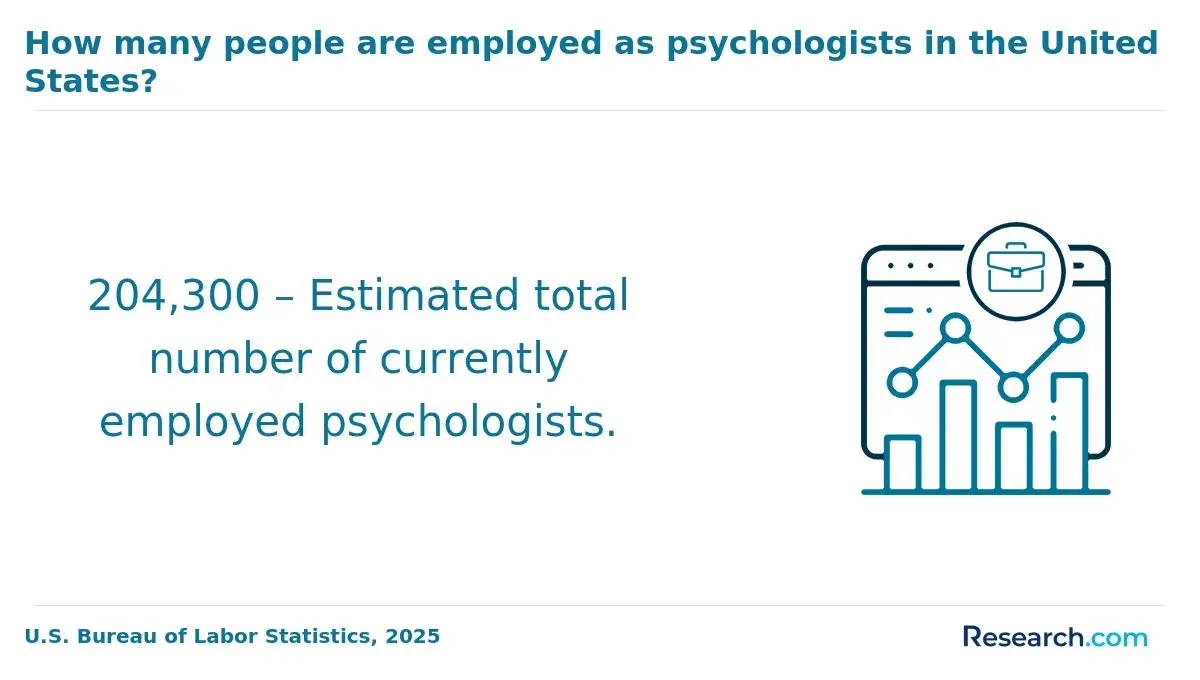
North Dakota psychology graduates can pursue several career directions depending on their degree level. According to NDSU, psychology jobs should grow faster than most fields through 2034. Graduates with a bachelor’s degree in psychology average a yearly salary of $55,000 and may work in human resources, case management, social services, behavioral support, research assistance, and related roles.
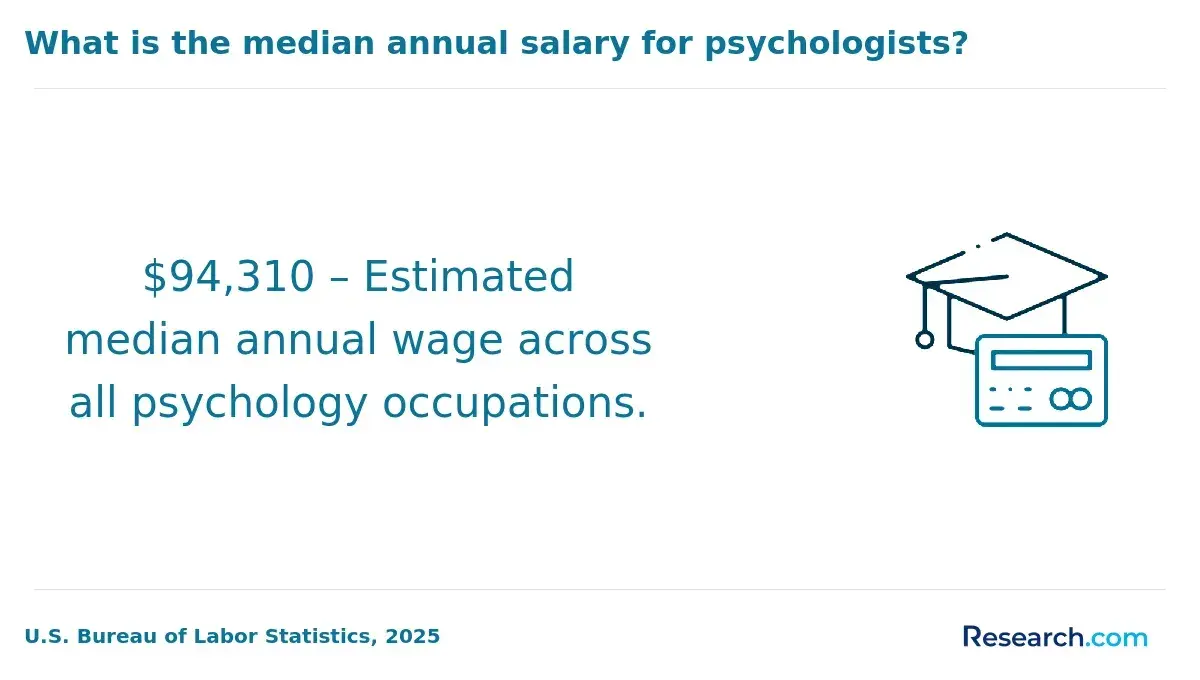
Licensure changes the career ceiling. As of writing in 2026, the average annual salary of psychologists in North Dakota is $138,378, higher than the national average. Clinical psychologists earn $134,286, 54% above the national average. Some salary summaries report different figures, including $173,725 for clinical psychologists, so candidates should treat salary aggregators as estimates rather than guaranteed outcomes. Your actual pay will depend on specialization, employer, experience, work setting, rural or urban location, benefits, and whether you work in private practice, hospitals, schools, academia, government, or consulting.
Every year, it is projected that there will be 430 job openings for psychologist positions, a little more than 12% of the workforce. Students considering specializations such as a masters in business psychology should compare the credential’s intended use with North Dakota’s licensure rules before enrolling.
| Career level | Typical minimum education | What you can usually pursue | Licensure note |
| Bachelor’s degree | BA or BS in psychology | Human resources, case management, behavioral support, research assistant roles, social service positions | Does not qualify you to practice independently as a licensed psychologist |
| Master’s degree | MA, MS, specialist degree, or related graduate credential | School psychology intern pathways, counseling-adjacent roles, research support, some non-psychologist roles | May support related credentials, but doctoral training is typically required for psychologist licensure |
| Doctoral degree | PhD or PsyD in psychology | Clinical practice, assessment, diagnosis, therapy, I/O psychology, research, teaching, consultation | Required for North Dakota Licensed Psychologist and I/O Psychologist pathways described in this guide |
North Dakota Psychology Licensure Requirements: Educational Requirements
North Dakota psychology licensure is regulated by the state board for Licensed Psychologists and Industrial/Organizational Psychologists, while school psychology credentials follow a separate school psychology pathway connected to the National Association of School Psychologists. For most independent psychologist roles, you should plan on earning a doctorate in psychology. A master’s degree may help with school psychology, counseling, behavioral analysis, social work, or related mental health roles, but it is not the standard route to independent psychologist licensure.
| License or credential | Education generally required | Best fit | Important limitation |
| Licensed Psychologist | Doctorate in psychology, such as a PhD or PsyD, from an accredited program | Clinical assessment, diagnosis, psychotherapy, supervision, and psychological services | Applicants must also meet supervised experience, exam, and board requirements |
| Industrial/Organizational Psychologist | Doctorate in psychology | Workplace research, organizational consultation, personnel systems, performance, and human behavior in organizations | The scope does not include direct psychological services to individual clients receiving clinical care |
| Limited License Certificate | Existing licensure in another US jurisdiction | Short-term practice in North Dakota | Valid for no more than 30 days in a calendar year |
| Provisional License | Applicant must be in good standing while the application is pending | Temporary authorization while the board completes review | May be restricted or denied if disciplinary action occurred within the previous five years |
| School Psychologist | Specialist, master’s, or graduate-level school psychology pathway depending on credential type | School-based assessment, consultation, intervention, and student support | Requirements differ from the Licensed Psychologist pathway |
Licensed Psychologist
To use the title “psychologist” in North Dakota, applicants must meet the state’s statutory and board requirements, including doctoral education. Under North Dakota law, licensed psychologists may provide psychological assessment, therapy, diagnosis, and services that address mental and emotional well-being, relationships, personal effectiveness, groups, organizations, and the public. The scope also includes supervision of individuals practicing under limited authority when permitted by law. The statutory language is available through the North Dakota Century Code, including the section that addresses use of the title “psychologist".
Industrial/Organizational Psychologist
Industrial/organizational psychologists also need doctoral-level preparation to use the protected title and provide psychological research or consultation services to organizations. This path is best for people interested in workplace behavior, organizational assessment, employee selection, leadership, motivation, training, performance systems, and applied research. It is not the same as a clinical license and does not authorize direct clinical services to individual clients.
Limited License Certificate
The limited license certificate is designed for psychologists or I/O psychologists already licensed in another US jurisdiction who need short-term authorization in North Dakota. It is not a substitute for full licensure because it is valid for no more than 30 days in a calendar year. If you plan to practice in North Dakota regularly, you should pursue full licensure rather than relying on limited permission.
Provisional License
A provisional license may allow an applicant in good standing to begin practice while the full application is still under review. However, it is not automatic. The board may deny or restrict provisional authority, including when the applicant has faced disciplinary action in another jurisdiction within the previous five years.
School Psychologist
School psychology in North Dakota follows its own credentialing structure. The National Association of School Psychologists provides detailed state credentialing information here. The main school psychology credentials include:
- Initial Restricted License, Two-Year: This credential is for first-time applicants who hold a specialist degree in school psychology from a NASP-accredited institution and are expected to earn national certification within two years.
- School Psychologist Intern: Applicants may qualify with a master’s degree that includes a minimum of 30 credits from a NASP-accredited institution, an advisor recommendation, and a coursework completion plan that includes the thesis requirement. Students who need flexible graduate options may compare psychology degree online cheap programs, but they should verify that any program meets school psychology credentialing expectations before enrolling.
- Regular Five-Year School Psychologist License: This credential is available to individuals who currently hold an initial restricted license. It requires a master’s degree from a NASP-accredited program with at least 60 graduate hours and a 1200-hour internship, including at least 600 hours in a school setting. Candidates also need 18 months of full-time equivalent work in North Dakota, including being under contract for at least 30 days within a 5-year period.
North Dakota State Law also requires teachers to complete a Native American and multicultural studies course. Approved options are available through state institutions and by correspondence. This requirement applies to in-state and out-of-state applicants and must be completed during the initial two-year license period in which the educator is contracted in North Dakota. If the course is not completed, the license cannot be renewed until the requirement is satisfied.
North Dakota Psychology Licensure Requirements: Application and Renewal Process
The licensure process is more manageable when you view it as a sequence: complete the correct doctorate, document supervised experience, submit the application, pass exams, receive board approval, and maintain the license through renewal and continuing education. The biggest planning mistake is waiting until graduation to verify whether your program, internship, and supervision meet North Dakota rules.
How to Become a Psychologist in North Dakota: Step-by-Step Process
- Earn the required doctoral degree. Applicants must hold a doctoral-level psychology degree from a program accredited by the American Psychological Association or the Canadian Psychological Association. These are the only two approved accrediting bodies for this pathway.
- Complete supervised applied professional experience. Licensed Psychologist applicants must complete 3,000 hours of supervised experience, including at least 1,500 hours in the pre-doctoral internship. I/O Psychologist applicants must complete 1,500 hours of supervised experience, including at least 750 hours in the pre-doctoral internship.
- Submit the licensure application and required documentation. Applicants provide proof of education, supervised experience, and other materials required by the board. The initial North Dakota psychology license cost is $450. Because fees and forms can change, applicants should check the board’s current instructions before submitting.
- Pass the Examination for Professional Practice in Psychology. The EPPP is the standardized licensing exam used in the United States and Canada. North Dakota requires a scaled score of 500.
- Complete the oral exam. Applicants must also complete an oral examination. The board determines whether the applicant has performed successfully, and a majority board decision is required before a license can be issued.
- Receive the license. After education, supervised experience, application review, the EPPP, the oral exam, and board approval are complete, the applicant may be issued a full license.
- Renew and maintain the license. North Dakota licenses expire every two years on the 1st of January. Renewal materials and fees must be submitted on or before November 15. The renewal cost is $250 as of writing, and late renewal applications are assessed a $100 fine. Licensees must complete 40 continuing education credits. CE may be earned through activities such as publishing, teaching, and coursework, including distance learning such as behavioral psychology courses online. A $50 fine applies for incomplete CE credits.
How long does it take to get a psychology license in North Dakota? The full timeline can take up to 10 years when undergraduate study, doctoral coursework, internship, supervised experience, exam preparation, and board review are included. The board application itself may move more quickly once documents are complete, but EPPP scheduling, oral exam timing, and verification can still add weeks.
| Stage | What to verify early | Why it matters |
| Before choosing a doctoral program | APA or CPA accreditation | North Dakota requires one of these accrediting bodies for psychologist licensure |
| Before internship | Whether internship hours meet state requirements | Psychologist applicants need 1,500 pre-doctoral internship hours within 3,000 total supervised hours |
| Before applying | Transcripts, supervision forms, exam eligibility, and fees | Incomplete documentation can delay board review |
| Before renewal | 40 CE credits and November 15 renewal deadline | Late or incomplete renewal can lead to fines and licensing problems |
How do internship opportunities influence your psychology career in North Dakota?
Internships are not just résumé builders in psychology. They are part of licensure preparation, professional identity formation, and skill development. A strong internship helps you apply assessment, diagnosis, intervention, consultation, documentation, ethics, and supervision concepts in real clinical, school, hospital, community, research, or organizational settings.
In North Dakota, internship planning is especially important because supervised hours are part of the licensure pathway. Candidates for Licensed Psychologist status must complete 3,000 supervised hours, including at least 1,500 pre-doctoral internship hours. I/O candidates need 1,500 supervised hours, including at least 750 pre-doctoral internship hours. If your internship does not match your intended license category, you may lose time correcting the gap later.
Students attending programs connected with the best colleges for psychology in North Dakota should ask how placements are assigned, how supervision is documented, whether placements support licensure, and whether the program has relationships with hospitals, schools, community mental health agencies, correctional settings, or research centers.
| Internship choice | When it makes sense | Questions to ask before accepting |
| Hospital or medical setting | You want clinical, health psychology, assessment, or integrated care experience | Will I receive supervision from a licensed psychologist, and what assessments will I conduct? |
| School setting | You are pursuing school psychology, child assessment, consultation, or intervention roles | Will my hours count toward the 600 school-setting hours required for the regular school psychologist pathway? |
| Community mental health agency | You want broad exposure to therapy, crisis work, underserved populations, and case coordination | What client populations will I serve, and how is supervision documented? |
| Forensic or correctional setting | You are interested in criminal psychology, risk assessment, legal systems, or forensic evaluation | Will I receive training in ethical boundaries, court-related documentation, and safety procedures? |
| I/O or organizational placement | You plan to work in workplace psychology, consulting, applied research, or organizational assessment | Will the experience align with I/O psychology supervised hour requirements? |
What additional certifications or specializations can enhance a psychologist’s career in North Dakota?
Specialization can make a psychology career more focused, but it should be chosen strategically. A certificate or concentration is most useful when it aligns with your license, target population, employer demand, and supervision background. It should not be used as a substitute for required licensure.
- Child and adolescent psychology: Useful for psychologists who want to serve children, teens, families, pediatric clinics, schools, or child advocacy settings.
- Neuropsychology: Appropriate for those interested in cognition, brain-behavior relationships, traumatic brain injury, neurodevelopmental disorders, rehabilitation, and medical settings.
- Health psychology: Helpful for work in hospitals, public health, chronic illness management, pain, wellness, behavioral medicine, and integrated care teams.
- Forensic psychology: Relevant for professionals who want to work with courts, correctional systems, law enforcement, evaluations, expert testimony, and public safety agencies.
- Substance abuse counseling: Valuable for psychologists and related professionals who want stronger preparation in addiction assessment, relapse prevention, recovery planning, and behavioral health treatment.
The best specialization is not always the most popular one. Choose based on the clients you want to serve, the settings where you want to work, and whether your supervised experience supports that focus.
Should I Consider a Career in Substance Abuse Counseling in North Dakota?
Substance abuse counseling may be a strong option if you want to focus on addiction, recovery, relapse prevention, motivational interviewing, crisis support, and community-based behavioral health. It can be a primary career path or a complementary skill area for psychologists who serve clients with co-occurring mental health and substance use concerns.
The requirements are different from psychologist licensure, so do not assume that one credential automatically qualifies you for the other. If this path interests you, review the state-specific steps for how to become a substance abuse counselor in North Dakota and compare training, supervised practice, fees, and job settings before committing.
Can additional specialization in criminal psychology benefit my career in North Dakota?
Criminal psychology can be useful if you want to work at the intersection of psychology, law, public safety, corrections, and behavioral analysis. This specialization may support roles involving risk assessment, offender treatment, victim services, forensic interviewing, consultation, or research, depending on your education and license.
Students should understand that “criminal psychologist” is not a shortcut around licensure. It is a focus area that should be built on an appropriate psychology, counseling, forensic, or legal-behavioral foundation. If you are exploring this niche, review degree options connected to becoming a criminal psychologist and ask programs how they support fieldwork, ethics, assessment training, and justice-system partnerships.
Can Pursuing a BCBA Credential Complement My Psychology Career in North Dakota?
A BCBA credential can complement psychology training when your work involves applied behavior analysis, behavior intervention plans, autism services, developmental disabilities, school-based behavioral support, or data-driven treatment planning. It is especially relevant for professionals who want a structured behavioral framework alongside broader psychological training.
However, BCBA certification is a distinct credential with its own coursework, supervised fieldwork, and examination expectations. If applied behavior analysis fits your goals, use this guide to how to become a BCBA in North Dakota to compare the credential with psychologist licensure before investing in additional training.
Could Expanding Into Marriage and Family Therapy Enhance My Career in North Dakota?
Marriage and family therapy may be a practical expansion if you want to work with couples, family systems, parenting challenges, relationship conflict, premarital counseling, or systemic approaches to mental health. It can also be relevant for psychologists who want deeper preparation in family-centered intervention.
LMFT licensure is separate from psychologist licensure, so it requires careful planning. If you want to broaden your practice toward couples and family systems, compare the requirements for how to become an LMFT with your psychology training plan, especially if you want to avoid duplicating graduate coursework or supervised hours.
Could pursuing an LPC license enhance my practice in North Dakota?
An LPC license may be a better fit than psychologist licensure for people whose main goal is counseling, talk therapy, crisis intervention, behavioral support, and client-centered mental health services rather than doctoral-level psychological assessment, research, or diagnosis-focused practice. It may also appeal to students who want a graduate counseling route instead of a psychology doctorate.
If you are comparing counseling and psychology pathways, review how to become an LPC in North Dakota. Pay close attention to degree requirements, supervised experience, exam requirements, scope of practice, and whether the credential supports the type of work you actually want to do.
Can social work credentials enhance my psychology practice in North Dakota?
Social work training can strengthen a mental health career by adding expertise in client advocacy, systems navigation, public benefits, case management, community resources, crisis response, and social determinants of mental health. This can be especially useful in rural or underserved areas where professionals often coordinate with schools, hospitals, tribal communities, agencies, and family systems.
Social work is also a separate licensure structure, not an automatic add-on to psychology licensure. If you are considering this route, review What degree do you need to be a social worker in North Dakota? and compare the educational investment with your career goals.
How can specialized training and mentorship enhance my clinical practice in North Dakota?
Specialized training and mentorship can help bridge the gap between academic knowledge and professional judgment. Workshops, supervised consultation, advanced assessment training, ethics seminars, population-specific certificates, and mentorship from licensed professionals can sharpen clinical reasoning and help you avoid early-career mistakes.
Mentorship is especially helpful when you are choosing between clinical, school, forensic, I/O, counseling, or behavioral pathways. For example, if you are drawn to schools, review how to become a school psychologist in North Dakota and speak with practicing school psychologists about workload, testing responsibilities, intervention planning, and district expectations.
List of Top Psychology Programs in North Dakota for 2027
The programs below can help students begin or advance their psychology education in North Dakota. Use this list as a starting point, not as a final decision. Before enrolling, confirm accreditation, licensure alignment, supervised training support, faculty expertise, research opportunities, cost, transfer policies, and whether the program matches your target license or career outcome.
| Program | Format | Best for | Licensure consideration |
| University of North Dakota PhD in Clinical Psychology | On campus | Students pursuing clinical psychology and scientist-practitioner training | APA-accredited doctoral program that supports licensure preparation |
| North Dakota State University PhD in Psychology | On campus | Students targeting research, teaching, and academic careers | Strong for research careers; verify clinical licensure alignment based on your path |
| University of North Dakota MA in Forensic Psychology | Online | Students interested in forensic psychology knowledge and justice-related roles | Does not specifically prepare students for North Dakota psychologist licensure |
| North Dakota State University BA/BS in Psychology | On campus | Undergraduates preparing for graduate study or entry-level psychology-related work | Bachelor’s degree alone does not qualify for psychologist licensure |
| Mayville State University BA in Applied Psychology | On campus | Students seeking applied undergraduate preparation and internship exposure | Useful foundation for employment or graduate study, not independent psychologist licensure |
1. University of North Dakota: On-Campus PhD in Clinical Psychology
The University of North Dakota offers a PhD in Clinical Psychology designed around the scientist-practitioner model in health services psychology. The program includes student support, licensure preparation, and a rigorous curriculum with coursework such as Multivariate Statistics, Behavior Pathology, and Clinical Practice.
- Program Length: 4 to 6 years
- Required Credits to Graduate: 92
- Cost per Credit: $498.45 (in-state); $498.45 (Minnesota); $747.68 (out-of-state); $996.90 (international)
- Accreditation: American Psychological Association (APA)
2. North Dakota State University-Main Campus: PhD in Psychology
North Dakota State University offers a PhD in Psychology for students preparing for research, teaching, and academic careers. Students who enter without a master’s degree can earn an MS in Psychology during the first two years or so of the doctoral program. Coursework includes cognitive psychology, neuroscience, social psychology, college teaching, and grant writing.
- Program Length: about 5 years
- Required Credits to Graduate: 31
- Tuition Cost: $421.39 (in-state); $535.16 (Minnesota); $632.08 (out-of-state); $737.43 (international)
- Accreditation: Higher Learning Commission (HLC)
3. University of North Dakota: Online MA in Forensic Psychology
The University of North Dakota offers an online MA in Forensic Psychology for students who want advanced knowledge of psychology in legal and forensic contexts. The program includes courses such as psychology and law, research methods in forensic psychology, and advanced social psychology. It does not specifically prepare students to meet North Dakota psychology licensure requirements, but graduates may pursue roles in organizations such as the FBI, the Department of Veteran Affairs, and jury consulting.
- Program Length: 2 years
- Required Credits to Graduate: 30
- Tuition Cost: $588.65
- Accreditation: Higher Learning Commission (HLC)
4. North Dakota State University-Main Campus: On-Campus BA/BS in Psychology
North Dakota State University offers undergraduate psychology pathways leading to either a BA or BS. The BA generally emphasizes liberal studies, while the BS places more weight on natural and formal sciences. Students are encouraged to participate in research and may access facilities such as human research laboratories, sound-attenuated chambers, a driving simulator, and a virtual reality display system.
- Program Length: 4 years
- Required Credits to Graduate: 120
- Tuition Cost: $383.08 (in-state); $492.05 (Minnesota); $574.62 (out-of-state); $670.39 (international)
- Accreditation: Higher Learning Commission (HLC)
5. Mayville State University: On-Campus BA in Applied Psychology
Mayville State University offers a BA in Applied Psychology focused on human behavior and practical approaches to psychological issues. Graduates may pursue roles such as employment counselor, HR specialist, probation officer, or case manager. The program requires a minor, such as sociology or biology, and includes internships in settings such as community corrections, state hospitals, social service agencies, and public counseling offices.
- Program Length: 4 years
- Required Credits to Graduate: 120-131
- Tuition Cost: $330.62 (in-state); $363.20 (Minnesota); $398.50 (contiguous states); $466.39 (out-of-state); $534.27 (international)
- Accreditation: Higher Learning Commission (HLC)
Can an accelerated psychology program help me become a psychologist in North Dakota faster?
An accelerated psychology program can shorten part of the academic journey, especially at the undergraduate level, but it will not remove the doctoral, supervised experience, exam, and board approval requirements for licensed psychologists in North Dakota. Some accelerated programs condense a traditional four-year psychology degree into a two-year or three-year program, which may help students reach graduate study sooner.
The key question is not only speed. It is whether the program is credible, accredited, transferable, and appropriate for your next step. Before enrolling, ask whether credits will transfer into graduate programs, whether prerequisites for doctoral admission are included, whether research or lab experience is available, and whether the school has advising for psychology graduate applications.
Online psychology degrees may also be useful, particularly for students balancing work, family, or rural access challenges. However, accreditation is essential. If you want to compare fast-track options, review Research.com’s guide to accelerated psychology degree programs online.
What Are the Financial and Regulatory Costs for Obtaining Psychology Licensure in North Dakota?
Psychology licensure involves more than tuition. Candidates should budget for application fees, examination fees, exam preparation materials, transcript requests, background or documentation costs if required, travel for exams or interviews if applicable, continuing education, and renewal. The initial North Dakota psychology license cost is $450, and the license renewal cost is $250 as of writing. Late renewal applications are assessed a $100 fine, and incomplete CE credits carry a $50 fine.
Students should also compare opportunity costs. A doctorate can take several years, and internship or practicum placements may limit full-time work. Before choosing a pathway, calculate total program cost, expected debt, assistantship options, employer support, relocation costs, and whether the credential leads to the role you want. Those comparing counseling instead of psychology should also review North Dakota LPC license requirements to understand the different financial and regulatory obligations.
| Cost area | What to include | Common mistake |
| Education | Tuition, fees, books, technology, travel, housing, and lost income | Comparing only tuition per credit and ignoring total time to completion |
| Licensure | $450 initial application cost, exam-related expenses, documentation, and board requirements | Waiting until graduation to check whether the program meets licensure standards |
| Renewal | $250 renewal cost, 40 CE credits, and deadline tracking | Missing the November 15 renewal deadline before the January 1 expiration |
| Penalties | $100 late renewal fine and $50 fine for incomplete CE credits | Assuming the board will waive deadlines or incomplete continuing education |
Benefits of Pursuing Online Psychology Degrees in North Dakota
Online psychology degrees can be useful in North Dakota because students may live far from campus-based programs or need to balance school with employment, caregiving, or military obligations. Online learning can expand access, but students must be especially careful about accreditation, licensure fit, supervised experience options, and graduate school acceptance.
- Flexible scheduling: Online courses may make it easier to study during evenings, weekends, or nontraditional hours.
- More specialization options: Students may find online concentrations in clinical psychology, forensic psychology, behavioral psychology, industrial-organizational psychology, or related areas. For example, an online master's in clinical psychology may support professional development, though students must confirm whether it meets their intended licensing or doctoral admission goals.
- Access to accredited programs: Accreditation affects transfer, graduate admission, financial aid, employer recognition, and licensure eligibility.
- Potential cost savings: Online students may reduce commuting, relocation, and housing expenses, although tuition and fees still vary widely.
- Broader professional network: Virtual programs can connect students with faculty, classmates, webinars, and professional communities beyond their local area.
Online programs also require self-discipline, reliable technology, and careful planning for internships or supervised fieldwork. If your long-term goal is licensure, ask the school to explain in writing how the program supports North Dakota requirements.
| Question to ask an online program | Why it matters |
| Is the institution accredited, and is the psychology program recognized for my intended pathway? | Accreditation affects licensure, transfer, graduate admission, and employer confidence |
| Does the program lead to psychologist licensure, counseling licensure, school psychology credentials, or none of these? | Different credentials have different legal scopes of practice |
| How are practicum, internship, and supervision arranged for North Dakota students? | Online coursework alone may not satisfy supervised experience requirements |
| Are credits transferable to doctoral programs? | Students pursuing psychologist licensure usually need doctoral admission later |
| What is the total program cost, including fees? | The lowest tuition rate may not equal the lowest total cost |
What Other Licensure Options Are Available to Psychologists in North Dakota?
Psychology is not the only mental health credential to consider. Depending on your goals, a counseling, marriage and family therapy, school psychology, behavior analysis, substance abuse counseling, or social work pathway may fit better than a doctorate in psychology. For example, professionals who want to work with couples and families may explore an MFT license in North Dakota.
The right credential depends on the services you want to provide. If you want to conduct psychological testing, diagnose complex conditions, supervise certain clinical work, or practice as a psychologist, the Licensed Psychologist route may be appropriate. If your primary interest is counseling, family therapy, addiction recovery, school-based support, or community casework, another license may be more efficient.
What exam preparation strategies can help ensure licensure success in North Dakota?
Licensure exam preparation should begin before the application deadline. The EPPP covers a broad body of psychology knowledge, so candidates should create a structured study plan, take practice exams, review weak content areas, and schedule study time around internship or work responsibilities. North Dakota also requires an oral exam, so candidates should be prepared to discuss ethics, scope of practice, supervision, professional judgment, and state-specific expectations.
- Start with a diagnostic practice test: Identify weak areas before buying every prep resource available.
- Use a realistic timeline: Short daily study sessions over several months often work better than last-minute cramming.
- Study ethics and professional practice carefully: These topics are central to safe independent practice and may appear in written and oral formats.
- Practice explaining clinical reasoning aloud: Oral exams require clarity, judgment, and professionalism, not just memorization.
- Ask licensed mentors for feedback: Supervisors can help you prepare for board-style questions and professional scenarios.
If you are pursuing a niche such as forensic work, review additional resources such as how to become a criminal psychologist in North Dakota, but keep your core EPPP and North Dakota licensure requirements as the priority.
How is telepsychology reshaping mental health services in North Dakota?
Telepsychology can improve access to mental health care in North Dakota, especially for rural communities, clients with transportation barriers, and areas with limited provider availability. It can also help psychologists expand service reach, conduct follow-up sessions, and coordinate care more efficiently.
Remote practice is not simply in-person therapy over video. Psychologists must understand confidentiality, informed consent, technology reliability, emergency planning, recordkeeping, cross-jurisdiction practice, and data security. They should also stay current with state board rules and professional ethics before offering services across locations.
For people exploring faster entry into mental health services through counseling rather than psychologist licensure, Research.com explains the shortest path to become a counselor in North Dakota. Compare that route carefully with psychology licensure if your long-term goal is independent psychological practice.
Is it worth it to be a licensed psychologist in North Dakota?
Becoming a licensed psychologist in North Dakota can be worth it if you want doctoral-level clinical authority, assessment responsibilities, independent practice opportunities, research or academic options, and a career centered on mental health, behavior, and human functioning. The state’s workforce is small, but mental health needs are significant, and the projected openings suggest continuing demand.
The trade-off is the investment. You may spend up to 10 years completing undergraduate study, doctoral training, internship, supervised experience, examination, and board approval. You should also budget for tuition, lost income during training, application fees, renewal costs, CE requirements, and potential relocation for internship or doctoral study.
Before committing, compare accredited doctoral programs, assistantship funding, internship match support, licensure outcomes, faculty fit, and career placement. Students who need flexible early-stage pathways can also find the best online psychology degrees available, but they should confirm whether those programs support graduate admission and long-term licensure goals.
Common Mistakes to Avoid When Pursuing Psychology Licensure in North Dakota
| Mistake | Why it can hurt you | Better approach |
| Choosing a program without checking accreditation | A degree that does not meet North Dakota requirements can delay or block licensure | Confirm APA or CPA accreditation for doctoral psychologist pathways before enrolling |
| Assuming a master’s degree is enough for psychologist licensure | North Dakota generally requires a doctorate for Licensed Psychologist and I/O Psychologist status | Use a master’s degree strategically for related roles or as preparation for doctoral study |
| Ignoring supervised hour rules | Hours may not count if supervision, setting, or documentation is incomplete | Track hours, supervisor credentials, setting type, and forms throughout training |
| Focusing only on salary averages | Published salary estimates vary and do not guarantee personal earnings | Compare employers, geography, specialization, benefits, debt, and private practice risk |
| Waiting too long to prepare for the EPPP | The exam covers broad content and may delay licensure if not passed on schedule | Create a study plan before application deadlines and use practice exams |
| Missing renewal and CE deadlines | Late renewal and incomplete CE credits can result in fines | Track the November 15 renewal deadline and maintain CE documentation year-round |
| Assuming online programs automatically meet licensure rules | Online format does not guarantee accreditation, practicum access, or state eligibility | Ask the program for written licensure alignment information for North Dakota |
Key Insights
- Doctoral education is the central requirement: North Dakota Licensed Psychologist and I/O Psychologist pathways typically require a doctorate in psychology, with APA or CPA accreditation required for the psychologist licensure route.
- Supervised experience must be planned early: Licensed Psychologist applicants need 3,000 supervised hours, including 1,500 pre-doctoral internship hours; I/O applicants need 1,500 supervised hours, including 750 pre-doctoral internship hours.
- Licensure is more than graduation: Candidates must apply to the board, pay the $450 initial license cost, pass the EPPP with a scaled score of 500, complete the oral exam, and receive board approval.
- Renewal carries real obligations: North Dakota licenses expire every two years on January 1, renewal is due by November 15, the renewal cost is $250, and licensees must complete 40 CE credits.
- Career options depend on credential choice: Psychology, school psychology, LPC, LMFT, BCBA, substance abuse counseling, and social work pathways serve different populations and have different scopes of practice.
- Salary data should be used carefully: Reported averages include $138,378 for psychologists and $134,286 for clinical psychologists, while other sources cite different figures such as $173,725. Use salary data as a planning tool, not a guarantee.
- Program fit matters more than speed: Accelerated and online psychology programs can save time or improve access, but only if they support accreditation, transfer, graduate admission, supervised experience, and licensure goals.
Related Articles for Nearby States
- 2027 South Dakota Psychology Licensure Requirements – How to Become a Psychologist in South Dakota
- 2027 Minnesota Psychology Licensure Requirements – How to Become a Psychologist in Minnesota
- 2027 Montana Psychology Licensure Requirements – How to Become a Psychologist in Montana
- 2027 Nebraska Psychology Licensure Requirements – How to Become a Psychologist in Nebraska
- 2027 Wyoming Psychology Licensure Requirements – How to Become a Psychologist in Wyoming
- 2027 Iowa Psychology Licensure Requirements – How to Become a Psychologist in Iowa
- 2027 Wisconsin Psychology Licensure Requirements – How to Become a Psychologist in Wisconsin
- 2027 Colorado Psychology Licensure Requirements – How to Become a Psychologist in Colorado
- 2027 Kansas Psychology Licensure Requirements – How to Become a Psychologist in Kansas
- 2027 Illinois Psychology Licensure Requirements – How to Become a Psychologist in Illinois
References:
- Indeed. (2026). Psychologist salary in North Dakota. Retrieved from Indeed.
- Indeed. (2026). Clinical psychologist salary in North Dakota. Retrieved from Indeed.
- NAMI (2025). Mental Health in North Dakota. Retrieved from NAMI.
- Projections Central. (n.d.). Labor Market Projections. Retrieved from PMP.
- Psychology Education Center (2026). Best Psychology Master’s Programs in North Dakota (2026 Guide). Retrieved from Psychology Education Center.
- U.S. Bureau of Labor Statistics. (2024). Occupational Employment and Wage Statistics. Area: North Dakota. Retrieved from BLS.
- ZipRecruiter (2026). Clinical Psychologist Salary in North Dakota. Retrieved from ZipRecruiter
- ZipRecruiter (2026). Psychologist Salary in North Dakota. Retrieved from ZipRecruiterClinical Psychologist Salary in North Dakota
Other Things You Should Know About The North Dakota Psychology Licensure Requirements
To become a licensed psychologist in North Dakota, you must obtain a doctoral degree (PhD or PsyD) in psychology from an accredited program. This is necessary for both clinical and industrial/organizational psychologists.
In 2027, North Dakota psychologists must complete 40 hours of continuing education every two years, with a minimum of 3 hours in ethics. This ensures professionals maintain current knowledge and ethical standards.
To obtain a psychology license in North Dakota, you must complete a doctoral degree, accumulate supervised experience, pass the Examination for Professional Practice in Psychology (EPPP), and undergo an oral examination.
Psychologists in North Dakota need to renew their licenses every two years. The renewal process includes completing 40 continuing education credits.
Out-of-state psychologists can practice in North Dakota with a limited license for up to 30 days per calendar year. They must fulfill North Dakota's licensure requirements for extended practice.