2027 Psychology Degree Completion Time Report: How Long Students Actually Take to Graduate

Co-Founder and Chief Data Scientist
Students pursuing a Psychology degree often face diverse challenges that shape their time to graduation beyond standard program durations. Factors such as part-time enrollment, work commitments, transfer credits, and the need for practicum or research hours significantly influence progression. According to recent NSC data from 2024, less than 60% of bachelor's students finish within four years, highlighting common delays that disrupt ideal timelines.
These realities reflect a complex interplay between academic demands and external pressures, particularly in fields requiring applied experience. This report examines how long students actually take to complete a Psychology degree and the key patterns informing realistic educational planning.
Key Things To Know About Psychology Degree Completion Time
- Mapping out your graduation timeline allows you to strategically target versatile career paths, such as human resources manager, market research analyst, substance abuse counselor, or training coordinator. Having a clear target date helps you secure competitive, structured internships and align your entry-level job applications with peak seasonal corporate hiring cycles.
- Projecting your exact degree completion date helps you manage your long-term return on investment, as undergraduate psychology majors earn a median annual wage of $60,000 to $65,000. Knowing this timeframe also allows you to calculate the precise gap before entering necessary graduate training, where specialized, licensed roles command median salaries exceeding $94,000.
- Clarifying your expected graduation schedule makes it significantly easier to maximize the structural advantages of an online program, whether you choose a self-paced track or an accelerated format. This clear timeline enables you to seamlessly balance advanced behavioral science coursework with current employment, protecting your current stream of income while eliminating commuting overhead.
- What Is the Average Graduation Time for Psychology Students? Average Graduation Timeline
- What Factors Have the Biggest Impact on Graduation Speed? Graduation Timeline Factors
- How Does Full-Time Versus Part-Time Enrollment Affect Graduation Timelines? Full-Time vs. Part-Time Graduation Timeline
- Do Online Psychology Students Graduate Faster Than Campus-Based Students? Online vs. On-Campus Graduation Timeline
- How Many Months or Years Can Transfer Credits Save? Transfer Credits
- Do Accelerated Psychology Programs Significantly Reduce Completion Time? Accelerated Program Timeline
- Which Psychology Program Requirements Most Often Extend Graduation Timelines? Factors Extending Graduation Timeline
- Does Taking Longer to Graduate Increase the Cost of a Psychology Degree? Impact on Program Cost
- Does Graduating Faster Improve Career Prospects? Impact on Career Prospects
- Which Scheduling Mistakes Commonly Delay Graduation? Mistakes to Avoid
What Is the Average Graduation Time for Psychology Students?
Completing a psychology bachelor's degree traditionally aligns with a four-year full-time schedule, yet real-world data shows most students extend beyond this timeframe. The average time to graduate with a psychology degree in the US often stretches closer to five years, with around 60% to 70% of students not finishing within the standard four years, according to recent educational reports from 2024.
This extension reflects a variety of student circumstances, including part-time enrollment and external obligations that interrupt continuous, full-time study. Consequently, while the nominal degree path is four years, practical completion timelines are frequently longer, especially for those balancing education with work or family responsibilities.
Variations in graduation time largely hinge on academic structure and individual student paths. Enrollment intensity-full versus part-time-directly affects course load and pacing, while program design influences progression through required prerequisites that often must be taken sequentially, creating bottlenecks. Internships, research involvement, and co-curricular opportunities common in psychology programs add valuable experiential elements but can extend timelines.
Transfer students encounter additional delays due to credit acceptance policies and differing curricular requirements. Additionally, the growing availability of online options calls for considering how delivery mode impacts pacing and time to completion. These factors collectively create a dynamic landscape where pathways to the degree vary widely based on program policies and student choices, which is critical for advisors and students to understand in setting realistic expectations.
The timing of graduation carries significant implications beyond academic scheduling. Longer completion periods can increase tuition and living expenses, affecting the overall financial investment and potentially delaying workforce entry in a competitive field. Yet, extended study sometimes indicates deeper engagement and readiness that employers may value, balancing the risks of appearing less efficient against the benefits of enhanced preparation.
Students seeking optimal routes should consider institutional advising and structured pathways that can reduce delays. In parallel, those exploring advanced degrees might reference resources like the cheapest online MSW programs to anticipate further educational commitments and costs within healthcare and social service sectors experiencing sustained demand.
What Factors Have the Biggest Impact on Graduation Speed?
Graduation speed in psychology degree programs is shaped by a complex interplay of academic planning, program design, and individual circumstances rather than any single factor. Students' decisions about course load and enrollment status combine with institutional policies and external obligations to create a varied range of completion times.
Gaining clarity on these dynamics helps students and advisors make more informed choices aligned with realistic timelines and career goals.
- Enrollment Status and Course Load: Full-time enrollment generally accelerates degree completion because students take a heavier course load and maintain momentum through continuous study. A 2024 NCES report highlights that around 60% of full-time psychology undergraduates finish within four years, whereas only 25% of part-time students achieve the same, emphasizing how splitting workload over longer periods delays graduation.
- External Work and Life Commitments: Balancing employment, family responsibilities, or caregiving duties can require students to reduce course loads or take breaks, which extends degree timelines. This is particularly relevant for working adults returning to education, who often prioritize scheduling flexibility-such as online classes-to manage non-academic demands but consequently face a slower progression.
- Program Structure and Experiential Requirements: Psychology programs with mandatory practicum hours, research projects, or capstone experiences inherently lengthen completion time but deliver essential hands-on skills needed in the field. Students planning to pursue advanced degrees or licenses may deliberately pace themselves to meet these intensive requirements, making accelerated paths less feasible.
- Transfer Credit Policies and Administrative Alignment: Transfer students frequently encounter credit evaluation challenges and curriculum mismatches that can add semesters to their program. Research from the American Psychological Association finds transfer students average 6.2 years to graduate compared to 4.9 years for direct entrants, a gap reflecting how articulation agreements and advising quality shape progression speed.
- Academic Preparedness and Institutional Support: Students' prior academic background and access to support services like advising, tutoring, and mentoring significantly affect progression efficiency. Institutions with strong academic support infrastructure report an 18% higher four-year graduation rate among psychology majors, as these resources address learning gaps and streamline course sequencing.
The choice between online versus on-campus psychology master's program completion rates also factors into these considerations, as program format influences flexibility and pacing. For those exploring options, evaluating how enrollment strategies intersect with personal commitments and institutional resources can clarify realistic timelines.
Those interested in multidisciplinary approaches might also examine related fields like game development degree online, which can offer different structural and scheduling models worth comparing.
How Does Full-Time Versus Part-Time Enrollment Affect Graduation Timelines?
Enrollment status significantly shapes the duration required to complete a Psychology degree, with full-time students generally finishing within four to five years, aligning with typical undergraduate program timelines. In contrast, part-time students often face elongated pathways, frequently doubling standard completion periods to six or more years. This divergence reflects how course intensity impacts credit accumulation and progression pacing, as concentrated full-time schedules allow more consistent engagement with academic content and sequence-dependent courses.
According to recent data from the National Center for Education Statistics (2024), the average Psychology bachelor's completion time for full-time students remains steady, while part-time students experience more variability and delays.
The interplay between program structure and student circumstances underlies these timing differences. Full-time enrollment facilitates smoother progression by enabling steady credit loads each term and better access to sequential classes essential in Psychology curricula. Conversely, part-time students often juggle employment, family obligations, or financial limitations, which restrict course load and can cause scheduling conflicts, delaying required coursework and experiential components such as internships.
Additionally, the increasing adoption of flexible or hybrid program formats offers some mitigation, yet external responsibilities remain a primary factor slowing completion. These dynamics underscore how program delivery and life demands jointly influence whether students advance expediently or encounter protracted timelines.
Enrollment decisions also carry longer-term consequences beyond graduation dates. Full-time students may incur higher short-term costs due to concentrated tuition payments but often benefit from earlier workforce entry and graduate study opportunities, which employers frequently regard as indicators of discipline and reliability. Part-time pathways, while offering necessary adaptability for non-traditional learners, tend to extend the financial and academic burden, requiring sustained motivation over several years.
Understanding this balance between immediate intensity and extended flexibility is crucial for students weighing the tradeoffs between timely degree completion and accommodating life's complexities within Psychology programs.
Do Online Psychology Students Graduate Faster Than Campus-Based Students?
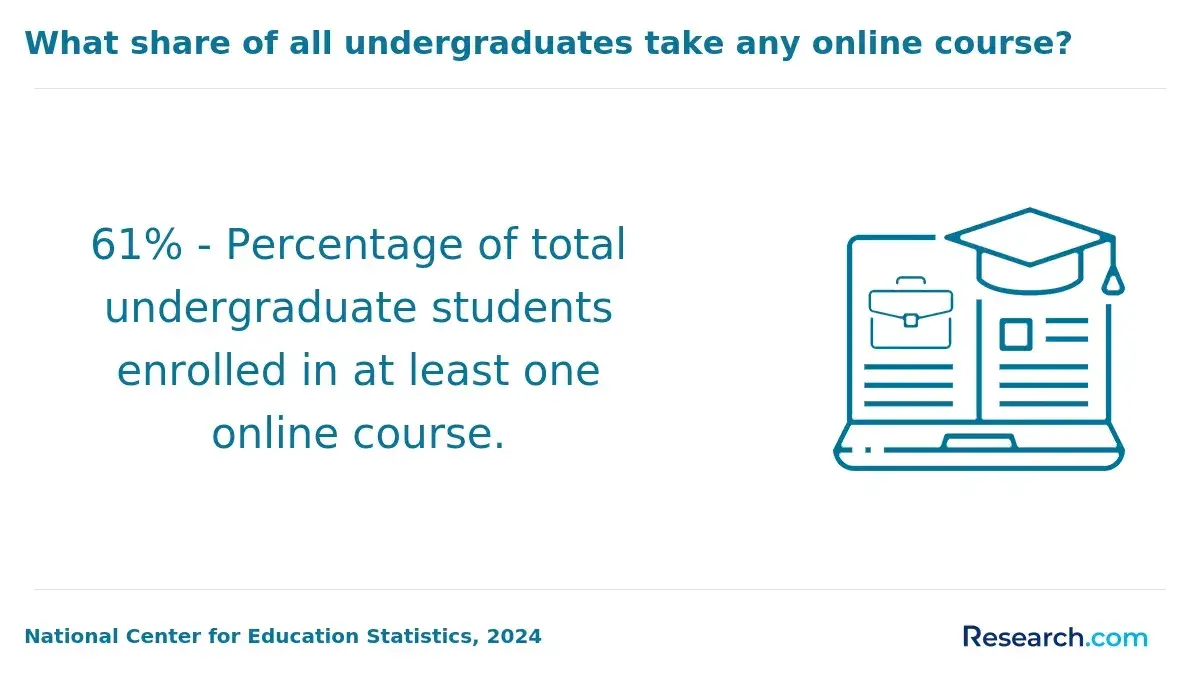
The assumption that online psychology students graduate faster than their campus-based counterparts is common but oversimplified. Data from the National Center for Education Statistics in 2024 reveals that students in online psychology programs often take about five to six years to complete their degrees, compared to four to five years for traditional on-campus students. However, individual outcomes vary considerably depending on course load, pacing, and external commitments. The flexibility of online programs does not automatically translate into accelerated graduation times; in fact, many online learners extend their studies due to balancing education with full-time work or family responsibilities.
Completion speed in psychology degree programs is shaped by several factors beyond delivery mode. Online students frequently enroll part-time and take advantage of asynchronous classes, which allow studying outside conventional hours but may reduce the structured momentum present in campus programs. Transfer credit policies, internship requirements, and program pacing control whether students progress steadily or encounter delays.
Meanwhile, campus-based students might face a more rigid semester schedule but benefit from direct academic support and cohort-based learning, which can drive faster completion for some. The need to juggle personal and professional responsibilities often slows online learners who rely heavily on self-discipline without the campus environment's built-in structure.
The choice between online and campus formats influences more than just timing; it also impacts how students manage academic discipline and approach professional entry. Online pathways demand advanced time management given their self-directed nature, and students must navigate prolonged intervals of independent study that can disrupt completion momentum.
For psychology students aiming to enter the workforce efficiently, understanding how modality interacts with individual circumstances and program features becomes critical. This nuanced reality suggests no universal advantage in speed but highlights varying tradeoffs between flexibility and paced progression.
How Many Months or Years Can Transfer Credits Save?
Transfer credits can substantially reduce psychology degree completion time with transfer credits, allowing students to shorten their path to graduation by several months to over a year depending on how many relevant credits they bring in and how well those credits align with their degree requirements. Data from the National Center for Education Statistics highlights that students who utilize transfer credits tend to cut their graduation timelines by approximately 12 to 18 months compared to peers who start all coursework anew. This potential time savings primarily comes from bypassing foundational courses such as introductory psychology, research methods, and general education, which commonly appear early in most psychology programs.
The actual transfer credit impact on psychology graduation timeline depends heavily on institutional rules governing credit acceptance. Factors such as accreditation compatibility, course equivalency evaluations, and residency requirements determine how many credits can be legitimately applied toward degree completion.
Many universities enforce limits on maximum transferable credits or require core psychology classes to be completed in-house to maintain program rigor, which may restrict time reductions to a single semester or less. Conversely, some institutions-especially those tailored to adult learners or offering flexible online formats-allow a larger proportion of credits to be transferred, sometimes enabling students to halve the usual four-year degree duration.
These policies shape academic planning and influence students' financial and temporal investment in their education. Careful evaluation of transfer credit applicability can prevent unexpected additional coursework that might extend graduation timelines rather than shorten them. For students balancing work and study, understanding the nuances of transfer credit policies and course sequencing is critical to maximize time savings without compromising essential competencies.
Transfer credits remain a strategic tool, and their effective use is a key consideration alongside searching for alternative options such as construction management degrees online programs tailored for accelerated progress.
Do Accelerated Psychology Programs Significantly Reduce Completion Time?
Accelerated psychology programs aim to condense the traditional timeline for earning degrees, often targeting a completion window notably shorter than standard tracks. These programs typically reduce duration by increasing the academic pace, either by increasing credit loads per term or by offering courses year-round without extended breaks.
The design intention is to allow students to finish their bachelor's or master's degrees in less time, sometimes cutting the timeline by several months to over a year. This structure, however, relies heavily on the institution's ability to compress curricula and streamline progression without compromising mandatory academic milestones.
The actual time savings achieved depend on several critical factors. Programs that maintain the same requirements for internships, practicum hours, or thesis work inherently limit how much they can shorten overall completion time. Additionally, the need to complete prerequisite courses in a specific order or the availability of required classes within a condensed schedule can slow progression.
While students might take heavier course loads, sustained academic intensity and limited flexibility often challenge consistent enrollment in accelerated formats. These elements mean that not all accelerated programs deliver the full theoretical reduction in time, especially when external professional or personal responsibilities intervene.
Trade-offs in workload intensity and scheduling flexibility are among the most significant considerations. Accelerated pacing tends to increase academic pressure, reducing opportunities for experiential learning or enriching activities that extend beyond coursework. This compression may diminish the depth of engagement with complex psychological concepts and decrease chances for meaningful internships or research involvement.
As a result, students must weigh whether shorter timelines align with their capacity for sustained effort and their career goals without sacrificing critical learning experiences.
Which Psychology Program Requirements Most Often Extend Graduation Timelines?
Extended graduation timelines in psychology degree programs often stem less from total credit hours than from specific embedded requirements. These components, integral to ensuring academic rigor and alignment with professional standards, frequently impose scheduling constraints and progression bottlenecks. While essential for practical and theoretical preparation, they interact with workload and institutional offerings in ways that delay student completion.
- Research Projects and Theses: Completing a thesis or independent research is a hallmark of many psychology programs, particularly at the bachelor's and master's levels. These projects require substantial time for design, data collection, analysis, and written reporting. Variability in faculty supervision availability and project complexity often stretches timelines beyond standard coursework durations.
- Internships and Practicum Requirements: Hands-on field experience is critical for skill development but often conflicts with academic schedules. Students frequently balance internships with ongoing classes, employment, or personal responsibilities, resulting in extended periods needed to fulfill required hours, especially for working adults and transfer students.
- Comprehensive or Capstone Examinations: Cumulative exams assessing broad domain knowledge and specialization proficiency can cause delays when students must allocate additional semesters for preparation or retake assessments. Programs emphasizing certification or licensing readiness intensify this effect by raising the exam rigor.
- Course Sequencing and Prerequisites: Psychology's layered curriculum often includes complex prerequisite chains, especially in specialized subfields like neuropsychology. Limited course offerings and scheduling conflicts force students to postpone essential classes, impeding steady progress through degree requirements.
- Attrition in Research Labs and Practicum Sites: High turnover rates in demanding research environments slow project completion and can lead to gaps in required experiential learning, further extending time to degree completion.
A 2024 report by Lightcast highlights that 37% of psychology graduates identified research obligations as a primary factor for delayed graduation, underscoring the significant impact of these program elements. Understanding these intertwined academic and administrative factors helps students and planners anticipate potential delays and strategize to mitigate extended timelines without compromising educational quality or professional readiness.
Does Taking Longer to Graduate Increase the Cost of a Psychology Degree?
Extended timelines for completing a psychology degree typically increase total tuition and associated expenses, especially in programs charging per semester or credit hour. Students who enroll beyond a standard four-year window often face additional tuition payments, mandatory fees, and extended living costs, all contributing to higher cumulative expenses. Financial aid structures also play a crucial role-some grants or subsidized loans have duration limits, so students taking longer may lose eligibility, raising out-of-pocket costs.
According to the National Center for Education Statistics, estimates indicate students who delay graduation can incur about 30% greater overall education costs compared to those finishing on time. These cost implications are heightened by the indirect financial impact of postponed workforce entry, where delayed income shifts can compound the average expenses associated with delayed psychology degree completion for many candidates.
However, the financial impact of extended completion time varies depending on program pricing models and enrollment behavior. Some psychology programs use flat-rate tuition for full-time students regardless of credit load, allowing flexible pacing without proportional cost increases. Part-time enrollment pricing can also alter expense dynamics-while slower progress accumulates more terms, the per-credit cost may be lower, balancing total cost burdens.
Additionally, employer tuition assistance and scholarship policies can mitigate extra costs for working adults. Enrollment decisions, such as course load adjustments or taking fewer credits per term, indirectly influence cost accumulation by extending the program timeline. These nuanced interactions underscore why longer degree timelines sometimes-but not invariably-translate into significantly higher costs, requiring careful analysis of each program's financial architecture and student circumstances.
Students interested in related fields can also explore alternatives like library science degrees online as part of their educational planning amid shifting cost considerations.
Does Graduating Faster Improve Career Prospects?
Graduating faster from a psychology degree program can enable earlier entry into the workforce, potentially reducing student debt and shortening the initial job search period. However, employers rarely assess candidates solely on the speed of degree completion. While quicker graduation offers a timing advantage, hiring decisions in psychology-related fields prioritize demonstrated competencies, practical experience, and professional readiness over how rapidly a degree was earned. The impact of accelerated graduation is thus nuanced and context-dependent, especially given the competitive nature of psychology careers.
The impact of psychology degree completion time on job opportunities largely hinges on factors beyond mere graduation speed. Internships, practicum experiences, and relevant hands-on work are critical for building a compelling portfolio and skill set that employers seek. Networking, involvement in professional organizations, and mastery of core competencies often influence hiring outcomes significantly more than graduation timelines.
According to a 2024 report by the American Psychological Association Workforce Office, candidates with substantial exposure to research and practical settings are 35% more likely to receive job offers within six months post-graduation. These elements tend to outweigh any advantage gained by finishing earlier.
For sustainable career benefits, students should consider the trade-offs between accelerating degree completion and acquiring thorough experiential depth. Balancing academic rigor with meaningful opportunities to develop applied skills typically enhances long-term employability in psychology. A measured approach often proves more valuable than speed alone, particularly for those pursuing graduate education or specialized roles.
Prospective students should evaluate how their pace aligns with skill development demands and labor market expectations, much like assessing options found in best GIS graduate programs, where practical experience and program fit play integral roles.
Which Scheduling Mistakes Commonly Delay Graduation?
Delays in graduating from psychology degree programs often stem less from academic difficulty and more from avoidable scheduling and enrollment mistakes. These disruptions occur across program levels and formats, undermining steady academic progression. Understanding these pitfalls clarifies how institutional course sequencing and credit requirements interact with student planning failures to extend time-to-degree.
- Inconsistent or Part-Time Enrollment: Enrolling without a deliberate plan frequently leads to stretched timelines. According to a 2024 National Center for Education Statistics report, nearly 40% of part-time psychology undergraduates take over six years to graduate, underscoring how fewer courses per term increase overall duration.
- Misaligned Prerequisite Sequencing: Psychology curricula demand strict progression where advanced courses build on foundational ones. When students take prerequisites late or out of order, it creates bottlenecks that force term-by-term delays, a common issue worsened by transfer students whose prior credits may not align well.
- Overloading or Underloading Course Loads: Overestimating capacity leads to withdrawal or repetition, adding semesters, while spreading courses too thin over many terms dilutes momentum. Students often fail to realistically assess the demands of full course loads alongside external commitments.
- Poor Transfer Credit Integration: Inadequate alignment of transferred credits with core program requirements results in unexpected additional courses. This oversight often demands extra semesters to fulfill missing prerequisites or core classes, complicating academic sequencing and timeline predictability.
References:
- Top 10 Highest Paying Jobs with Psychology Degree 2025 | Nexford University https://www.nexford.edu/insights/highest-paying-jobs-with-psychology-degree
- 12 Types of Psychology: From Biopsychology to Sports Psychology https://und.edu/blog/types-of-psychology.html
- Recognized Specialties, Subspecialties and Proficiencies https://www.apa.org/ed/graduate/specialize/recognized
- Psychologists https://www.bls.gov/ooh/life-physical-and-social-science/psychologists.htm
- 5 Psychology Degrees and What You Should Know About Them https://www.verywellmind.com/psychology-degrees-2795151
- 16 Psychology Specializations: Which is Right For You? https://www.alliant.edu/blog/16-psychology-specializations-which-right-you
- Accelerated Psychology Degree | 4+1 Psychology Program https://www.adelphi.edu/program/undergraduate/accelerated-psychology/
- Fastest Growing Careers In Psychology | Psychology.org https://www.psychology.org/resources/fastest-growing-careers-in-psychology/
- 48 Jobs You Can Get with a Psychology Degree - Mid-Atlantic Christian University https://www.macuniversity.edu/48-jobs-you-can-get-with-a-psychology-degree/
- Career options in psychology | BPS https://www.bps.org.uk/career-options-in-psychology
Other Things You Should Know About Psychology
Practicum and internship placements often extend the time needed to complete a psychology degree, especially in programs emphasizing clinical or counseling tracks. These experiential components require substantial hours on-site, sometimes after regular classes, which can lengthen the overall timeline. Students should prioritize programs that offer integrated, clearly scheduled placements to minimize delays, as poorly coordinated internships can disrupt course progression and graduation planning.
Choosing a highly flexible program may increase completion time since it often accommodates part-time progression or varied course pacing, which can delay graduation. However, flexibility is crucial for working adults balancing jobs or family responsibilities. Prospective students should assess their personal commitments critically; if career advancement or licensure timelines demand speed, prioritizing structured, less flexible programs usually offers clearer pathways to timely graduation.
Engaging deeply in research projects can significantly add to the duration of a psychology degree, particularly for students aiming for graduate-level positions or academia. The benefits include stronger resumes and skill development, yet the time investment may delay graduation compared to students focusing solely on coursework. Those planning to enter the workforce quickly should weigh whether research obligations align with their career goals or risk postponing degree completion unnecessarily.
Employer expectations can influence students' sense of urgency but do not significantly impact the actual time it takes to complete a psychology degree. Most degree timelines are determined by program requirements, personal circumstances, and any experiential learning components rather than employer pressure.